
钢铁

Search documents
金融工程日报:沪指震荡微升,周期股走强、热点题材调整-20260211
Guoxin Securities· 2026-02-11 14:55
- The report does not contain any quantitative models or factors for analysis [1][2][3][4]
债市基本面高频数据跟踪:2026年2月第1周:生产较往年节前坚挺
SINOLINK SECURITIES· 2026-02-11 14:24
1. Report Industry Investment Rating No relevant information provided. 2. Core Viewpoints - The overall production is more robust than in previous years before the Spring Festival, but there are differences in various production indicators; the improvement trend of the new - house sales volume in 30 cities has weakened; the decline of pig prices has widened; and oil prices have risen [2][3][4]. 3. Summary by Directory 3.1 Economic Growth: Production is More Robust than in Previous Years before the Spring Festival 3.1.1 Production - **Power plant daily consumption shows seasonal decline**: On February 10, the average daily consumption of 6 major power - generating groups was 792,000 tons, a 2.8% decrease from February 3; on February 8, the daily consumption of power plants in eight southern provinces was 2.03 million tons, an 8.6% decrease from January 30 [4][11]. - **Blast furnace operating rate rises before the festival**: On February 6, the national blast furnace operating rate was 79.6%, a 0.5 - percentage - point increase from January 30; the capacity utilization rate was 85.7%, a 0.3 - percentage - point increase. The blast furnace operating rate of Tangshan steel mills was 92.3%, a 2.5 - percentage - point increase [4][16]. - **Tire operating rate is more robust than in previous Spring Festivals**: On February 5, the operating rate of all - steel truck tires was 60.7%, a 1.7 - percentage - point decrease from January 29; the operating rate of semi - steel car tires was 72.8%, a 2.1 - percentage - point decrease. The operating rate of looms in the Jiangsu - Zhejiang region shows a seasonal decline [4][18]. 3.1.2 Demand - **The improvement trend of new - house sales volume in 30 cities weakens**: From February 1 - 10, the average daily sales area of commercial housing in 30 large - and medium - sized cities was 185,000 square meters, a 27.3% increase from January, a 116.3% increase from February last year, and a 3.2% increase from February 2024 [4][23]. - **The retail growth of the auto market strengthens**: In February, retail sales increased by 54% year - on - year, and wholesale sales increased by 46% year - on - year [4][25]. - **Most steel prices decline**: On February 10, compared with February 3, the prices of rebar, wire rod, hot - rolled coil, and cold - rolled coil were flat, down 1.3%, down 0.6%, and down 0.1% respectively [4][31]. - **The decline of cement prices slows down before the festival**: On February 10, the national cement price index decreased by 0.3% compared with February 3 [4][32]. - **Glass prices fluctuate within a narrow range**: On February 10, the active futures contract price of glass was 1,079 yuan/ton, a 0.6% increase from February 3 [4][38]. - **The decline of the container shipping freight rate index slows down**: On February 6, the CCFI index decreased by 4.5% compared with January 30, and the SCFI index decreased by 3.8% [4][42]. 3.2 Inflation: The Decline of Pig Prices Widens 3.2.1 CPI - **The decline of pig prices widens**: On February 10, the average wholesale price of pork was 18.3 yuan/kg, a 1.6% decrease from February 3 [4][47]. - **The agricultural product price index declines moderately**: On February 10, the agricultural product wholesale price index decreased by 0.3% compared with February 3 [4][53]. 3.2.2 PPI - **Oil prices rise**: On February 10, the spot prices of Brent and WTI crude oil were $72.4 and $64.0 per barrel respectively, a 3.6% and 1.2% increase from February 3 [4][55]. - **Copper and aluminum prices decline**: On February 10, the prices of LME 3 - month copper and aluminum decreased by 2.0% and 0.7% respectively compared with February 3 [4][59]. - **The domestic commodity index turns to decline month - on - month**: On February 10, the Nanhua Industrial Products Index increased by 0.01% compared with February 3, and the CRB index decreased by 0.4% [4][59].
PPI上行验证,继续重视涨价链
Ge Long Hui· 2026-02-11 14:09
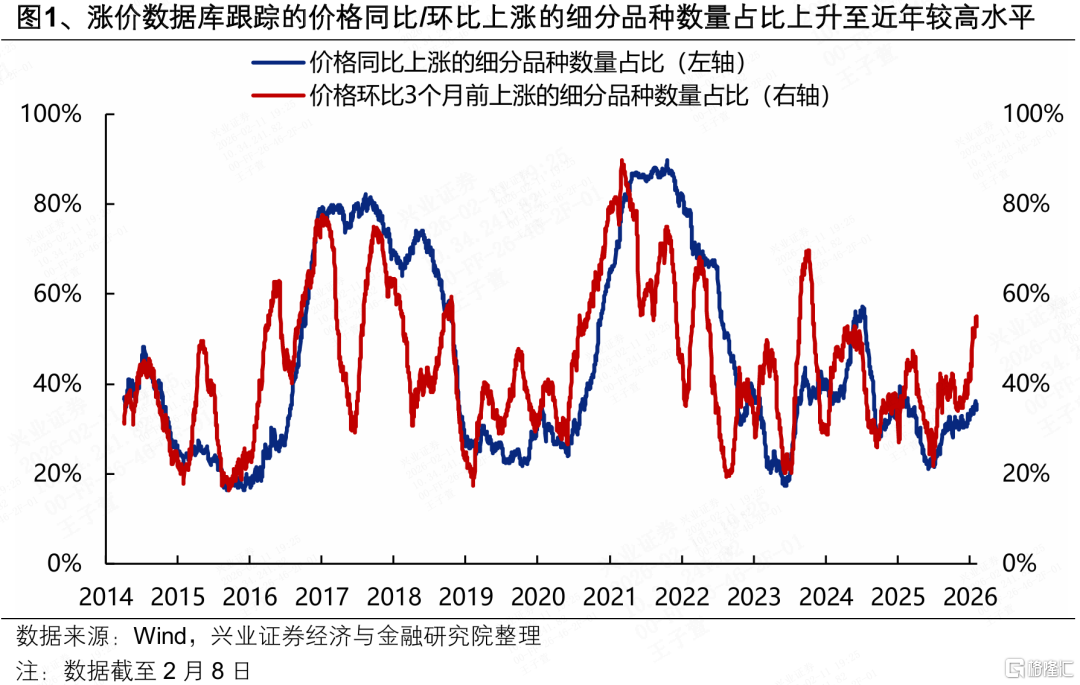
Core Viewpoint - The recovery of prices is identified as the most critical logic supporting corporate profit improvement in 2026, which may also influence market styles [1]. Price Trends and Data Analysis - The first inflation data of the year validates the momentum of price improvement, with the Producer Price Index (PPI) reaching a year-on-year high not seen since August 2024 and a month-on-month high since October 2023 [1]. - The proportion of price-increasing subcategories in the comprehensive price database has risen to a relatively high level, indicating a strong correlation with the month-on-month PPI trends [1]. - Recent price increases are characterized by a broader range and richer clues, driven by international commodity price transmission, favorable policies, and trends in the technology industry [4]. Sector-Specific Insights - The sectors with significant month-on-month PPI increases in January include non-ferrous metals, non-metallic mineral products (such as building materials), black metals, technology manufacturing, chemical fibers, and agricultural processing [4]. - The price increases in these sectors correspond with the high-frequency tracked price subcategories, indicating a robust link between input inflation and domestic price recovery [4]. Price Increase Clues - The proportion of subcategories with price increases over the past three months is at its second-highest level since 2016, only surpassed by the supply-side reform period in 2017 and the significant inflation period in 2021 [4]. - A detailed table shows various subcategories with significant price increases in January, such as oxygen pressure (62.5%), lithium concentrate (52.3%), and DRAM index (35.7%), indicating strong upward price trends across multiple sectors [6][7]. Future Outlook - The post-holiday period is seen as a critical window for validating price increases, with expectations for further price clues to emerge as the spring construction season begins and policies are implemented after the March meetings [9]. - Historical data suggests that the first quarter is typically a key period for PPI acceleration during inflation cycles, indicating a potential for sustained price increases [9]. Sector Performance Expectations - The relative performance of sectors such as TMT (Technology, Media, and Telecommunications), advanced manufacturing, and resource & infrastructure chains is expected to be strong post-Spring Festival, with higher win rates anticipated [10]. - A statistical analysis shows that industries with a positive correlation to PPI include chemicals, steel, building materials, transportation, petrochemicals, non-ferrous metals, and coal, among others [14].

策略点评:市场持续缩量,周期板块领涨
Tebon Securities· 2026-02-11 13:11
Market Analysis - The A-share market experienced slight volume contraction and consolidation, with the Shanghai Composite Index rising by 0.09% to 4131.98 points on February 11, 2026. The overall trading volume was 2 trillion yuan, down from 2.12 trillion yuan the previous day [5][6]. - The Producer Price Index (PPI) data exceeded market expectations, contributing to the outperformance of cyclical sectors. The PPI rose by 0.4% month-on-month in January, marking the fourth consecutive month of increase, with a growth rate 0.2 percentage points higher than the previous month [6][7]. - Key sectors such as construction materials, non-ferrous metals, and petrochemicals saw significant gains, with increases of 3.29%, 2.39%, and 2.18% respectively [6][7]. Bond Market - Government bond futures mostly rose, with the 30-year main contract increasing by 0.05% to 112.750 yuan. The 10-year main contract rose by 0.06% to 108.540 yuan [10]. - The People's Bank of China conducted a net injection of 403.5 billion yuan into the market, maintaining a stable liquidity expectation [10]. Commodity Market - The commodity market saw most prices rise, with lithium carbonate increasing by 9.18%. Basic metals also experienced gains, with nickel rising by 4.02% [10]. - The increase in nickel prices was attributed to production cuts in Indonesia, which reduced the approved nickel mining quota for 2026 compared to 2025 [10]. - The rise in lithium carbonate prices was influenced by low trading volumes ahead of the Spring Festival, with total industry inventory at a one-year low of 107,056 tons [10]. Trading Hotspots - Recent hot sectors include AI applications, commercial aerospace, nuclear fusion, quantum technology, brain-computer interfaces, robotics, and consumer goods, with a focus on technological advancements and policy support [11][12]. - The report suggests a balanced allocation strategy in technology and consumer sectors, with an emphasis on low-cost entry points [13]. Core Thoughts Summary - The market is showing a differentiated upward trend, with a continuation of the spring rally. Short-term effects from the pre-holiday period are evident, and a balanced allocation in technology and consumption is recommended [13]. - The bond market is expected to remain favorable due to a generally loose monetary policy and ongoing demand for bond investments [13]. - In the commodity sector, fluctuations in precious metals are anticipated due to margin adjustments, while the long-term outlook remains positive [13].
河北迁安:钢铁企业有“三变”
Xin Hua She· 2026-02-11 13:06
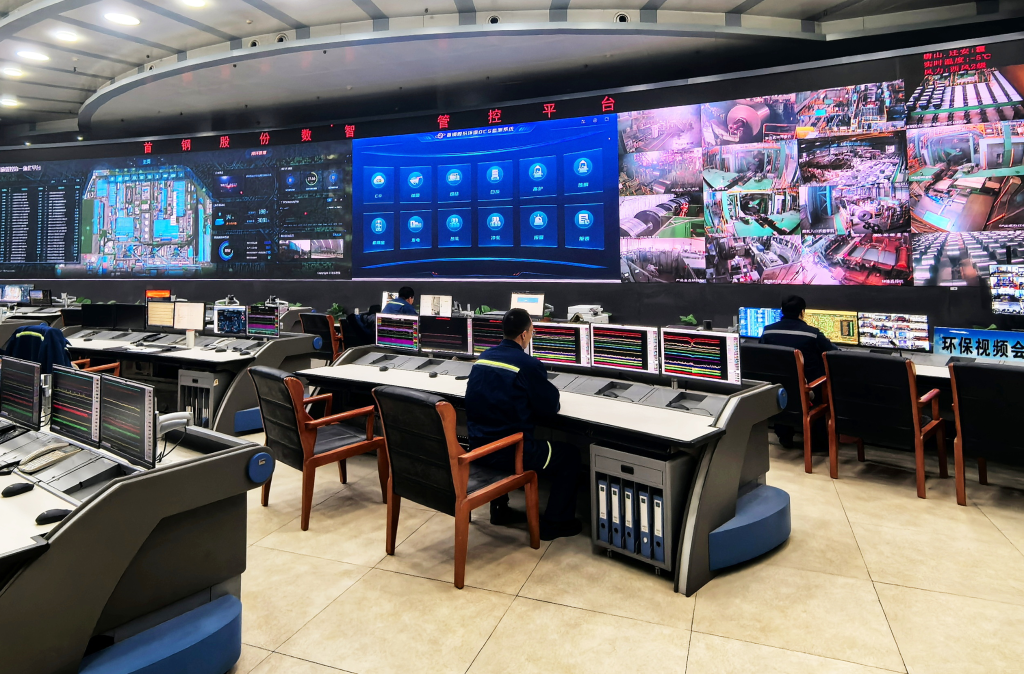
Group 1 - The core viewpoint of the articles highlights the significant advancements in digitalization and green transformation within the steel industry in Mian'an, driven by the integration of artificial intelligence and hydrogen energy [1][2][3] Group 2 - Shougang Mian'an Steel Company has implemented AI models in over 20 processes, resulting in annual cost savings of 70 million yuan and a reduction of 40,200 tons of CO2 emissions [1] - The local steel industry has achieved AI demonstration applications in 45 scenarios across 12 processes, including ironmaking and steelmaking [1] - Hebei Yanshan Steel Group has deployed 643 hydrogen energy heavy trucks, emphasizing the integration of steel production with hydrogen energy [3] Group 3 - Mian'an's steel and supporting coking enterprises have a total coking capacity of 10.8 million tons, with the potential to produce 200,000 tons of hydrogen from coke oven gas [2] - The local government aims to deepen cooperation with leading AI companies to enhance the intelligence of steel production processes during the 14th Five-Year Plan period [1] - Mian'an has achieved full coverage of environmental performance A-grade for long-process steel enterprises, indicating a commitment to green transformation [1]
太钢不锈:2月11日召开董事会会议
Mei Ri Jing Ji Xin Wen· 2026-02-11 12:49
Group 1 - Company announced that its 10th second board meeting was held on February 11, 2026, via telecommunication voting [1] - The meeting reviewed the proposal regarding the annual plan for financial derivatives business for the year 2026 [1] Group 2 - The film industry experienced a surge in stock prices due to the release of a new Chinese video model capable of generating 15-second videos from a few prompts [1] - The model has been referred to as the "strongest on earth," indicating significant advancements in technology within the industry [1]

四中全会精神在基层丨河北迁安:钢铁企业有“三变”
Xin Hua Wang· 2026-02-11 12:35
Group 1: Digital Transformation - The Shougang Group's steel company in Qian'an has implemented digital control for iron water transportation, utilizing data management systems [1] - The company has integrated artificial intelligence models into over 20 processes, resulting in annual cost savings of 70 million yuan and a reduction of 40,200 tons of carbon dioxide emissions [3][4] - Qian'an's steel enterprises have achieved AI demonstration applications in 45 scenarios across 12 processes, with plans to enhance collaboration with leading AI companies [4] Group 2: Green Transformation - Qian'an's steel companies are pursuing green transformation, achieving A-level environmental performance across all long-process steel enterprises [4] - The local steel and coking enterprises have a total coking capacity of 10.8 million tons, with the potential to produce 200,000 tons of hydrogen from coke oven gas [5] - The Hebei Yanshan Steel Group has deployed 643 hydrogen-powered heavy trucks, emphasizing the integration of hydrogen energy and steel production [6]
黑色金属日报-20260211
Guo Tou Qi Huo· 2026-02-11 12:23
| | | | SDIC FUTURES | 操作评级 | 2026年02月11日 | | --- | --- | --- | | 螺纹 | ☆☆☆ | 曹颖 首席分析师 | | 热卷 | ☆☆☆ | F3003925 Z0012043 | | 铁矿 | な女女 | 何建辉 高级分析师 | | 焦炭 | ★☆☆ | F0242190 Z0000586 | | 焦煤 | ★☆☆ | | | 證硅 | ★☆★ | 韩惊 高级分析师 | | 硅铁 | ★☆★ | F03086835 Z0016553 | | | | 李啸尘 高级分析师 | | | | F3054140 Z0016022 | | | | 010-58747784 | | | | gtaxinstitute@essence.com.cn | 【钢材】 今日盘面震荡为主。随着春节临近,螺纹表需加速下滑,产量同步回落,库存继续累积。热卷需求有所回落,产量短期趋稳, 库存小幅累积。钢厂利润欠佳,下游承接能力不足,高炉复产放缓,铁水产量趋稳。从下游行业看,地产投资降幅继续扩大, 基建、制造业投资增速持续回落,内需整体依然偏弱,钢材出口维持高位。持续调整后盘面稍 ...
【11日资金路线图】两市主力资金净流出超430亿元,有色金属等行业实现净流入
证券时报· 2026-02-11 12:14
盘后数据出炉。 2月11日,A股窄幅整理,周期股普遍走强,热点题材悉数调整。截至收盘,上证指数涨0.09%,深证成指跌0.35%,创业板指跌1.08%。A股全天成交2万 亿元,上日成交2.12万亿元。 1.两市主力资金净流出超430亿元 今日沪深两市主力资金开盘净流出121.12亿元,尾盘净流出59.95亿元,两市全天主力资金净流出433.5亿元。 | | | 沪深两市最近五个交易日主力资金流向情况 (亿元) | | | | --- | --- | --- | --- | --- | | 日期 | 净流入金额 | 开盘净流入 | 尾盘净流入 | 超大单净买入 | | 2026-2-11 | -433.50 | -121.12 | -59.95 | -221.13 | | 2026-2-10 | -322.04 | -144.75 | -44.52 | -115.38 | | 2026-2-9 | 116.42 | 55.21 | -8.75 | 215.38 | | 2026-2-6 | -185.40 | -142.68 | -67.59 | 4.49 | | 2026-2-5 | -579.46 | -2 ...

春节持股VS持币抉择:近十年节后首日6涨4跌,机构建议持股过节
Di Yi Cai Jing· 2026-02-11 12:02
Core Viewpoint - The strategy of "holding light positions during the holiday" is considered a prudent and historically reasonable approach in the current A-share market context, balancing the risks of market fluctuations before the holiday and the opportunities for participation in the post-holiday spring rally [1][8]. Market Performance Analysis - Over the past decade, the A-share market has shown mixed performance on the first trading day after the Spring Festival, with the Shanghai Composite Index rising 6 times and falling 4 times [2][3]. - The Shanghai Composite Index experienced a 2.89% increase from February 3 to February 11, while the Shenzhen Component Index rose by 2.43% during the same period [2]. - The A-share market is currently in a state of consolidation, with the four major indices showing varied performance on February 11, 2023 [2]. Historical Data Insights - Historical data indicates that the average increase for the Wind All A index in the 10 trading days following the Spring Festival is 3.3%, while the average decline in the 10 trading days before is -1.3% [4]. - The TMT sector has shown a high success rate in the post-holiday period, with a 100% success rate in the first 10 trading days after the Spring Festival [4][9]. Fund Flow and Market Sentiment - Historical trends suggest that market activity tends to contract before the holiday due to uncertainties and cash withdrawal demands, while funds typically flow back into the market post-holiday, indicating a recovery in risk appetite [5]. - Analysts suggest that the current market conditions, including government policies focusing on domestic demand and the potential for improved economic outlook, support a "hold positions" strategy during the holiday [6]. Sector Recommendations - Analysts recommend focusing on sectors that are expected to benefit from policy shifts and economic recovery, such as materials, financials, and technology, particularly in light of the upcoming political and economic events [8]. - The strategy includes maintaining positions in cyclical industries and sectors with improving profitability, such as non-ferrous metals, basic chemicals, and construction materials [8].