
金融

Search documents
海南封关正式启动,如何影响你我?哪些产业将受益
2 1 Shi Ji Jing Ji Bao Dao· 2025-12-18 01:36
Group 1 - The core viewpoint of the news is that the official launch of the Hainan Free Trade Port's full island closure operation marks a new stage in China's opening-up strategy, establishing Hainan as a significant gateway for foreign trade [1] - The "zero tariff" policy has been significantly expanded, with the range of zero-tariff goods increasing to approximately 6,600 items, resulting in 74% of imported goods entering Hainan being exempt from import duties, VAT, and consumption tax [1] - The closure operation is seen as a new starting point for industrial upgrades, with plans to develop a modern industrial system characterized by Hainan's unique advantages [1] Group 2 - The four main industries targeted for development include tourism, modern services, high-tech industries, and tropical efficient agriculture, with a focus on optimizing and upgrading these sectors [2] - Investment opportunities are identified in modern service industries such as tourism, exhibition, transportation, and finance, as well as in specialized sectors like marine economy, aerospace, duty-free shopping, and high-end healthcare [2] - Companies with significant foreign trade operations in Hainan, infrastructure firms benefiting from the free trade port's development, tourism-related businesses, and local enterprises enjoying tax benefits are expected to see substantial gains [2]
盘前必读丨海南自贸港正式启动全岛封关;中金“三合一”吸并预案出炉
Di Yi Cai Jing Zi Xun· 2025-12-17 23:25
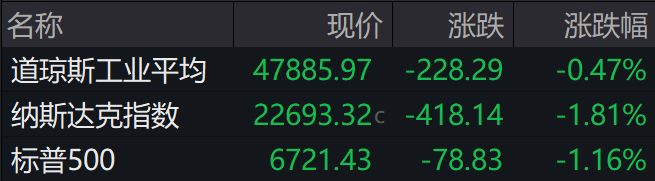
Market Overview - The U.S. stock market experienced a decline, with the Dow Jones Industrial Average falling by 0.47% to close below 48,000 points, the Nasdaq dropping by 1.81%, and the S&P 500 decreasing by 1.16% [1] - The VIX, a measure of market volatility, surged by 6.9% to 17.62, indicating increased investor anxiety [1] Technology Sector Performance - Major tech stocks saw significant declines, with Nvidia down 3.8%, Microsoft down 0.1%, Amazon down 0.6%, Apple down 1.0%, Meta down 1.2%, Google down 3.1%, and Tesla down 4.6% [2] - The Philadelphia Semiconductor Index fell by 3.3%, with notable drops in chip manufacturers such as Broadcom down 4.4% and AMD down 5.3% [3] Corporate Developments - Oracle's stock dropped by 5.4% following news that its largest data center partner, Blue Owl Capital, would no longer fund a $10 billion data center project, raising market concerns despite Oracle's clarifying announcement [3] - Warner Bros. Discovery's stock fell by 2.3% after the board rejected a $108.4 billion hostile takeover bid from Paramount-DreamWorks, opting instead for a more certain offer from Netflix [3] Commodity Market Movements - International oil prices rebounded significantly, with WTI crude oil increasing by 1.21% to $55.94 per barrel and Brent crude oil rising by 1.29% to $59.68 per barrel [3] - Precious metals saw gains driven by risk-averse sentiment, with COMEX gold futures rising by 1.00% to $4,347.50 per ounce and COMEX silver futures increasing by 5.64% to $66.237 per ounce, both reaching historical closing highs [3] Regulatory and Policy Updates - The Ministry of Finance reported that from January to November 2025, stamp duty revenue reached 404.4 billion yuan, a year-on-year increase of 27%, with securities transaction stamp duty at 185.5 billion yuan, up 70.7% [3] - The National Development and Reform Commission, along with five other departments, issued a notice promoting clean and efficient coal utilization, encouraging upgrades and modifications to existing projects to meet benchmark levels [4]


金融添“翼” 向新而行 农行广东分行助力科技创新和产业创新深度融合
2 1 Shi Ji Jing Ji Bao Dao· 2025-12-17 23:16
12月13日,在2025年粤港澳大湾区人工智能与机器人产业大会暨广东省人工智能与机器人技能大赛(下称"XAIR大会")现场,农行展位上一 个可爱的人形机器人备受关注。这是来自广州高擎机电科技有限公司(下称"高擎机电")的Mini Pi Plus人形机器人,全身搭载着高擎机电自研 的高精度伺服关节模组,可以完成上下楼梯、踢足球、后空翻等高难度动作。 这家正处于产品研发和市场开发关键阶段的高科技企业,今年获得了农行一笔大额信用贷款,加速了企业的研发进程。 "十五五"规划建议提出,要加快建设现代化产业体系,巩固壮大实体经济根基。2025年中央经济工作会议强调,建设粤港澳大湾区国际科技创 新中心,并提出实施新一轮重点产业链高质量发展行动,深化拓展"人工智能+",完善人工智能治理,创新科技金融服务。 农行广东分行紧跟国家战略,融入产业发展大局,主动对接人工智能与机器人产业发展规划的相关政府部门、行业协会及龙头企业等主体,将 服务科技创新的产品和服务深度融入产业生态圈,为产业链上下游企业提供全方位金融服务。 赋能人工智能产业链创新 作为粤港澳大湾区规格最高的人工智能与机器人产业盛会,本届XAIR大会吸引逾600家行业代表 ...

留不住打工人的6座城市:工资低、房租贵,买房难
Sou Hu Cai Jing· 2025-12-17 22:14
Core Insights - The article discusses the challenges faced by young workers in second and third-tier cities in China, highlighting the mismatch between salary growth and rising living costs, particularly housing prices [1][8][9] - It emphasizes the trend of population outflow from these cities as young professionals seek better opportunities in larger cities, leading to a cycle of economic stagnation [9][10] Group 1: Salary and Living Costs - In Nanchang, the average salary for a white-collar worker is around 10,000 yuan, while rent for a decent one-bedroom apartment starts at 2,000 yuan, making homeownership unattainable for many [2] - In Changsha, financial professionals earn between 10,000 to 15,000 yuan monthly, but the cost of living, including rent for a two-bedroom apartment at approximately 2,500 yuan, is rising faster than salaries [4] - Xi'an has a low average salary of 6,000 to 8,000 yuan, with rent ranging from 1,000 to 1,500 yuan, making it difficult for young graduates to afford housing [5] Group 2: Population Outflow and Employment Opportunities - Cities like Shenyang and Harbin are experiencing significant population loss due to stagnant wages and high housing costs, with many young professionals leaving for cities like Beijing and Shanghai [5][6] - Guizhou's average salary is 8,000 yuan, but the rising cost of living means many young workers struggle to save for a home, leading to further outmigration [6] - The article notes that many young professionals in these cities feel a lack of career advancement opportunities, prompting them to seek employment in larger cities [8][9] Group 3: Government Policies and Urban Development - Local governments are aware of the issues and have implemented various policies to attract talent, such as subsidies for graduates and relaxed residency requirements, but these measures have not yet proven effective [1][9] - The article suggests that cities need to diversify their industries and improve their innovation environments to retain talent and stimulate economic growth [9][10] - Successful examples like Hangzhou demonstrate that targeted reforms and support for high-paying industries can reverse population decline and attract talent [10]

多重金融工具注入强劲动能 筑牢海南自贸港资本根基
Sou Hu Cai Jing· 2025-12-17 22:14
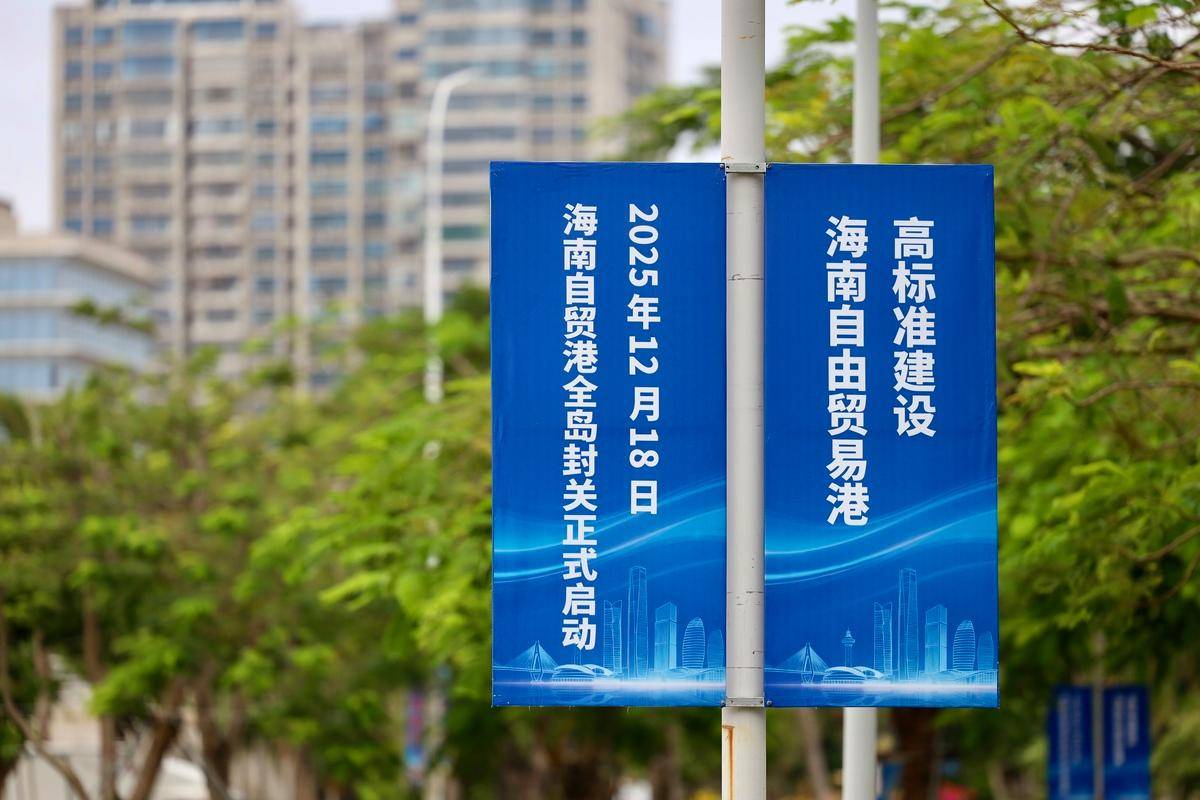
Core Viewpoint - The construction of Hainan Free Trade Port has transitioned from initial stages to a significant development phase, with the full island closure operation set for December 18, 2025, marking a historic milestone for the region's economic growth and capital market development [1][9]. Financing and Market Growth - Over the past five years, Hainan has achieved direct financing of 78.821 billion yuan, with equity financing at 26.299 billion yuan and bond financing at 52.522 billion yuan, significantly supporting enterprise transformation and internationalization [2]. - The total market capitalization of listed companies in Hainan reached 462.111 billion yuan, an 85% increase compared to the end of the 13th Five-Year Plan, with the number of companies valued over 10 billion yuan rising to 14 [2]. Capital Market Development - Hainan's capital market has seen a continuous improvement in its multi-layered system, with service efficiency on the rise, including the establishment of service bases by major stock exchanges and the creation of specialized boards for technology-oriented SMEs [2][6]. - A total of 106 mergers and acquisitions were completed, involving 80.5 billion yuan, enhancing core competitiveness through resource integration [2]. Industry Optimization and Innovation - More than 70% of listed companies are engaged in key sectors such as technological innovation and green development, contributing to a 30% increase in operating income to 811.517 billion yuan from 2021 to the third quarter of 2025 [3]. - The introduction of innovative financial products, including the first green rural revitalization bonds, has effectively met the needs of the real economy [6]. Shareholder Returns and Investor Engagement - Listed companies have increased their focus on shareholder returns, with total dividends reaching 5.789 billion yuan, an 86% increase from the previous five-year period, alongside share buybacks and stakeholder purchases [4]. - Investor protection mechanisms have been strengthened, with over 5,000 educational activities conducted, reaching more than 10 million investors [5]. Regulatory Environment and Risk Management - The Hainan Securities Regulatory Bureau has implemented strict regulatory measures, resulting in 137 regulatory actions and nearly 150 million yuan in penalties since 2021, aimed at maintaining market integrity [8]. - Risk monitoring and assessment mechanisms have been enhanced, with proactive measures taken to address potential risks in key sectors [8]. Future Outlook - With the full closure operation of the Hainan Free Trade Port, the capital market is expected to focus on high-standard development goals, enhancing the quality of listed companies and expanding cross-border asset management pilot businesses [9].
海南今日封关运作,零关税商品超6600个,会成为下一个香港吗?
Sou Hu Cai Jing· 2025-12-17 20:38
Group 1 - Hainan Island will officially open to global investors and consumers with a new policy of "one line open, two lines controlled, and free movement within the island" starting from December 18, 2025 [1][3] - The number of zero-tariff goods will increase from 1,900 to 6,600, raising the coverage rate to 74% [1][6] - Enterprises will benefit from a unified corporate income tax rate of 15%, and 85 countries' citizens will be able to enter Hainan visa-free [1][6] Group 2 - The infrastructure for Hainan's closure has been completed, including the world's largest new roll-on/roll-off hub at Haikou Port, capable of handling 35 million passengers and 5.6 million vehicles annually [3] - Three airports on the island can accommodate an annual passenger throughput of 68 million, supported by a matrix of eight open ports and ten "second-line ports" [3][4] Group 3 - The term "closure" signifies a higher level of openness, allowing free movement of goods and people between Hainan and foreign countries, while implementing precise management with the mainland [4][6] - The policy will significantly relax import and export management, effectively reducing costs for enterprises [4][6] Group 4 - The zero-tariff policy will cover 6,600 categories of goods, with tax exemptions potentially amounting to hundreds of billions of RMB post-closure [6][15] - Consumers will have access to a wider range of duty-free products, with authorities considering a positive list management for imported goods for residents [7][15] Group 5 - Hainan's closure is part of China's broader opening-up strategy, aiming to explore and accumulate beneficial experiences for institutional opening [15][16] - The island will establish a trade management system for free movement, improve financial policies, and enhance entry and exit management [15][16] Group 6 - In the short term, Hainan may compete with Hong Kong in tourism and shopping, benefiting consumers with more competitive duty-free products [16][18] - Long-term cooperation is expected, leveraging Hainan's manufacturing and consumption advantages alongside Hong Kong's expertise in finance and professional services [16][18]
新华财经晚报:前11个月全国一般公共预算收入同比增长0.8%
Xin Hua Cai Jing· 2025-12-17 16:51
【重点关注】 ·财政部:前11个月全国一般公共预算收入同比增长0.8% ·市场监管总局:平台要求商家"全网最低价"可能构成垄断 ·六部门:充分利用现有政策工具和工作机制,加大煤炭清洁高效利用市场调节和督促落实力度 【国内要闻】 ·财政部12月17日发布数据显示,今年前11个月,全国一般公共预算收入200516亿元,同比增长0.8%。 其中,前11个月,全国税收收入164814亿元,同比增长1.8%;非税收入35702亿元,同比下降3.7%。分 中央和地方看,前11个月,中央一般公共预算收入88464亿元,同比下降1%;地方一般公共预算本级收 入112052亿元,同比增长2.2%。 ·云南省人民政府办公厅印发《关于加快完善生育支持政策体系推动建设生育友好型社会的十五条措 施》,其中提出,健全生育补贴等制度。深入实施国家育儿补贴制度,稳妥推进省级政策与国家政策精 准衔接,将云南省二孩、三孩每孩每年800元育儿补助统一并轨至国家每孩每年3600元育儿补贴。 ·深圳市人力资源和社会保障局等部门近日印发《关于加强青年人才来深发展服务保障的若干措施》, 其中提出,青年人才可以申请租住过渡性住房,租金标准为市场参考租金的6 ...
美国 10-11 月非农数据点评:就业不温不火,降息条件未熟
Guoxin Securities· 2025-12-17 14:28
Employment Data Overview - In November, the U.S. added 64,000 non-farm jobs, exceeding the expected 50,000[2] - The unemployment rate rose to 4.6%, higher than the anticipated 4.4%[2] - In October, non-farm employment decreased by 105,000, primarily due to a reduction of 157,000 jobs in the government sector[4] Sector Performance - The private sector added 52,000 jobs in October, while November saw an increase of 69,000 jobs[3] - Education and healthcare sectors were significant contributors, adding 65,000 jobs in November[8] - The construction sector improved with an addition of 28,000 jobs in November[8] Labor Market Dynamics - The labor force participation rate increased, contributing to the rise in the unemployment rate[14] - The unemployment rate for Black or African American individuals rose significantly, indicating structural issues in the labor market[14] - Average duration of unemployment decreased, suggesting some easing in re-employment pressures[16] Wage Trends - Average wage growth showed signs of slowing, with service sector wages dropping to approximately 3.4% year-on-year[20] - Wage growth in the goods-producing sector remained stable at around 4.0%[20] Monetary Policy Implications - Following the employment data release, the market slightly increased expectations for a rate cut in January, now at 26%[23] - The Federal Reserve is likely to consider a 25 basis point rate cut in March, contingent on further employment data[23]
2026年海外宏观经济及大类资产展望:风潮转轨:从宏观叙事到微观腹地
Guo Tai Jun An Qi Huo· 2025-12-17 14:28
1. Report Industry Investment Rating - Not provided in the content 2. Core Views of the Report - In 2026, the global macro - economy is expected to maintain resilience, supporting risk sentiment. The macro - economic mainline will shift from trade policies and geopolitical relations to economic fundamentals, and major economies will be in a period of relatively abundant macro - liquidity mainly driven by fiscal expansion [2][49]. - The global economy, led by the US, will maintain resilience in 2026, continuing to support the performance of risk assets. The structure may be more balanced than in 2025, with the technology sector, industry prosperity logic, and macro - cycle opportunities intertwined [3][50]. - The long - term US Treasury bond yield has limited trends in 2026, with an upward - risk bias. The US dollar index is expected to maintain a wide - range oscillation throughout the year, with an upward - risk bias [3][163][172]. 3. Summary According to the Directory 3.1 2025 Overseas Macroeconomic Mainline Logic and Performance Review of Major Asset Classes - **Economic fundamentals**: In 2025, the US economy maintained a relatively high growth rate, but the actual GDP growth rate declined marginally compared to 2024. Non - US economies were stronger in the first half of the year, and the US economy was stronger in the second half. The inventory and net exports of the US GDP fluctuated greatly in the first half due to trade policies, and personal consumption and private fixed investment showed certain resilience. The US industrial output increased, and there were signs of an early - cycle expansion. Monetary policy continued to cut interest rates, and the yield of US Treasury bonds declined, but the stock - market valuation remained basically unchanged. The fiscal deficit ratio decreased [7][8][16][17][26]. - **Adapting to the new reality of the tariff era**: In 2025, tariff policies were the most important macro - risks. The overall US tariff rate remained high, and the "severe decoupling" between China and the US turned into "slow decoupling." The "tariff - inflation" transmission was relatively mild, and the US inflation expectation became stable and desensitized to tariff uncertainties [30][37][39]. - **Performance review of major asset classes**: In 2025, the global market had a good year. Global equity markets rose significantly, with the Philadelphia Semiconductor Index and the STAR 50 Index leading the way. The bond market also had positive returns, and the commodity market was highly differentiated [47][48]. 3.2 2026 Overseas Macroeconomic Outlook 3.2.1 "From Politics to Economy", "From International to Domestic" - The mainline of the global macro - economy will shift from trade policies and geopolitical relations to economic fundamentals, and the focus of geopolitics will shift from international to domestic. The US mid - term elections, China's 14th Five - Year Plan, the eurozone's fiscal expansion, and Japan's new policies will all focus on domestic economic and political issues [55]. - **Tariff policy changes**: The "general tariff" under the IEEPA framework is facing challenges. If the government loses the lawsuit, the IEEPA tariff will be revoked. Relevant industry tariffs may become an important legal tool for rebuilding the high - tariff system, and attention should be paid to changes in key industries and commodity trade flows [56][58]. - **US National Security Strategy**: The US National Security Strategy focuses on economic and financial security, including trade balance, ensuring key supply chains, re - industrialization, energy dominance, revitalizing the US dollar, and tax cuts and deregulation. It shows a shift from maintaining global leadership to focusing on national interests [61]. 3.2.2 Macro - liquidity - **Monetary policy**: The Fed is expected to cut interest rates to 3.25% in 2026, with two 50bp cuts in total. There is a risk that the final interest - rate cut space is less than expected, and there is a probability of an early end to the interest - rate cut cycle or a start of an interest - rate hike cycle. The Fed is expected to restart balance - sheet expansion in the second half of 2026 [65][67][68]. - **Fiscal policy**: The US fiscal policy will expand marginally in 2026. The "Great Beauty Act" will have a positive impact on the economy, and the fiscal deficit ratio is expected to expand moderately. The risk of concerns about the sustainability of US Treasury bonds is relatively controllable [78][79][80]. - **Macro - liquidity**: The US financial conditions index is expected to continue to expand in 2026, mainly driven by factors such as the decline in the benchmark interest rate, credit expansion, and the resilience of the equity market. The expansion of the financial conditions index is expected to have a more significant impact on the real economy [86][94][96]. 3.2.3 Economic Structure - **Forward - looking and backward - looking indicators**: The US economy is currently in a situation where forward - looking indicators are improving while backward - looking indicators are still weak. It is expected that the backward - looking indicators will improve in 2026 [101]. - **Inflation**: Inflation is expected to remain above the Fed's target in 2026, with a CPI growth rate of 2.8%. The "pro - cyclical inflation" will have a relatively limited impact on macro - assets [103][104]. - **Employment**: The employment market is trending downward, supporting the Fed's interest - rate cut tendency. The unemployment rate is expected to rise to 4.5% in the first half of 2026 and then fall to 4.4% in the second half [114]. - **Consumption**: Personal consumption is expected to remain stable in 2026, showing a K - shaped differentiation. Consumption may be weak in the first half due to income factors and will be boosted by the employment market and fiscal policies in the second half [121][122]. - **Private fixed investment**: Private fixed investment is expected to be a highlight in 2026, with a significant improvement in the quarter - on - quarter growth rate. However, the structure is differentiated, and it is necessary to follow industry Alpha [128][129]. 3.2.4 Debate on the "AI Bubble" - The "AI bubble" reflects concerns about the sustainability of AI investment, debt, and return on investment. At the index level, there is no systematic risk for now, but the risk is concentrated in leading technology companies. It is recommended to track risks through indicators such as ROIC - WACC, credit market risk exposure, and the profit erosion of depreciation and amortization [135][137][147]. 3.3 US Treasury Bond Market - In 2026, the long - term US Treasury bond yield has limited trends, with an upward - risk bias. The 10 - year US Treasury bond interest - rate center may be around 4.20%, with support at 3.95 - 4.00 and the first target at 4.35% and the second target at 4.65%. The 2 - year US Treasury bond yield has support at around 3.20% and a target of 3.68%. The yield curve may show a "bull steepening" in the first half and a "bear steepening" in the second half [163][164]. 3.4 US Dollar Index - The US dollar index is expected to maintain a wide - range oscillation in 2026, with an annual oscillation range of 96 - 108 and an upward - risk bias. The oscillation range in the first quarter of 2026 is 97.7 - 102. Attention should be paid to the rhythm of economic relative strength, the marginal change of interest - rate differentials, and carry - trade themes [172][180].
中央财办十问十答,一起来学习!
Xin Lang Cai Jing· 2025-12-17 14:25
Economic Outlook - The central economic work conference indicates that 2025 will be a significant year, with China's economy showing strong resilience and vitality while facing challenges [3][38] - The expected annual economic growth is around 5%, maintaining China's position among the world's major economies, with the total economic output projected to reach approximately 140 trillion yuan [4][39] - Active flows of factors and innovation are expected to inject new momentum into development, with investment and consumption growth anticipated to recover next year [4][41] Macro Policy Implementation - The central economic work conference has decided to continue implementing a more proactive macro policy next year, focusing on stability and quality improvement [6][42] - A more active fiscal policy will be maintained, ensuring necessary fiscal deficits and total debt levels while leaving room to address future risks [6][44] - An appropriately loose monetary policy will be continued, with a focus on stabilizing economic growth and allowing for reasonable price recovery [7][44] Key Tasks for Economic Work - Expanding domestic demand is prioritized as the key task for next year, focusing on structural changes in consumption and boosting investment [9][45] - Investment in both physical and human resources will be combined to stimulate consumption and expand investment, with an emphasis on building consumer infrastructure [9][47] International Technology Innovation Centers - Significant achievements have been made in the construction of international technology innovation centers in Beijing, Shanghai, and the Guangdong-Hong Kong-Macao Greater Bay Area, which support China's innovation capabilities [12][48] - The expansion of these centers aims to enhance their global influence and competitiveness [12][49] Unified National Market - Targeted measures will be taken to enhance the effectiveness of the unified national market, ensuring efficient allocation of resources [15][52] - Continuous improvement of market operation rules and the establishment of a foundational institutional framework for the unified market will be prioritized [15][53] High-Level Opening Up - The focus will be on steadily advancing institutional opening up, expanding service sector autonomy, and promoting diverse open platforms [18][59] - Efforts will be made to achieve a basic balance in international payments and to hold numerous import promotion activities [18][60] Regional Coordinated Development - Implementation of regional development strategies will be guided to promote urban-rural integration and regional linkage [20][63] - Support for major economic provinces and coordinated regional development will be emphasized to create a complementary and interconnected development pattern [20][63] Green Transition - Collaborative efforts will be made to reduce carbon emissions, pollution, and enhance green growth [23][66] - The first year of transitioning to dual control of carbon emissions will focus on solidifying statistical foundations and implementing control measures [23][66] High-Quality Employment - Employment policies will prioritize stability and quality, focusing on promoting employment for key groups such as graduates and migrant workers [29][70] - Support for flexible employment and new employment forms will be strengthened, including labor rights protection [29][71] Real Estate Development - There is significant potential for high-quality development in the real estate sector, with a focus on new models to drive growth [32][72] - Measures will be taken to control new supply, revitalize existing stock, and encourage the acquisition of existing properties for reasonable uses [32][73]
