
创新药

Search documents
创新药周报20251123:首个APOC3 siRNA疗法获批上市用于治疗FCS-20251123
Huachuang Securities· 2025-11-23 13:50
Investment Rating - The report indicates a positive investment outlook for the innovative drug sector, particularly focusing on RNA-targeted therapies for metabolic diseases [5][6]. Core Insights - The approval of the first APOC3 siRNA therapy for treating Familial Chylomicronemia Syndrome (FCS) marks a significant milestone in the RNA-targeted therapy landscape, showcasing the potential of these therapies in managing lipid disorders [17][28]. - RNA-targeted therapies, including small interfering RNA (siRNA) and antisense oligonucleotides (ASOs), are being developed to effectively lower triglyceride levels and improve patient compliance due to reduced dosing frequency [5][10]. - The report highlights ongoing clinical trials and the promising results of therapies like volanesorsen and olezarsen, which have shown significant reductions in triglyceride levels and lower incidence of acute pancreatitis in patients with FCS [17][28][34]. Summary by Sections Section 1: Focus on Innovative Drugs - The report emphasizes the rapid advancements in RNA-targeted therapies for metabolic diseases, particularly in the context of lipid management [5][6]. - Key developments include the approval of siRNA therapies that target APOC3 mRNA, which is crucial for regulating triglyceride levels in patients with FCS [10][17]. Section 2: Clinical Developments - The report details various therapies in clinical stages, including volanesorsen and olezarsen, which have received FDA approval and demonstrated efficacy in lowering triglyceride levels significantly [17][28]. - Clinical trial results indicate that patients treated with these therapies experienced substantial reductions in triglyceride levels compared to placebo groups, with olezarsen showing a 43.5% reduction at six months [28][34]. Section 3: Market Dynamics - The report outlines the competitive landscape, noting that several companies are advancing their RNA-targeted therapies through clinical trials, with a focus on improving patient outcomes and safety profiles [33][34]. - The potential market for these therapies is substantial, given the prevalence of metabolic diseases and the need for effective treatment options [5][6].
A股分析师前瞻:更多是短期扰动,中国资产已调整出性价比?
Xuan Gu Bao· 2025-11-23 13:49
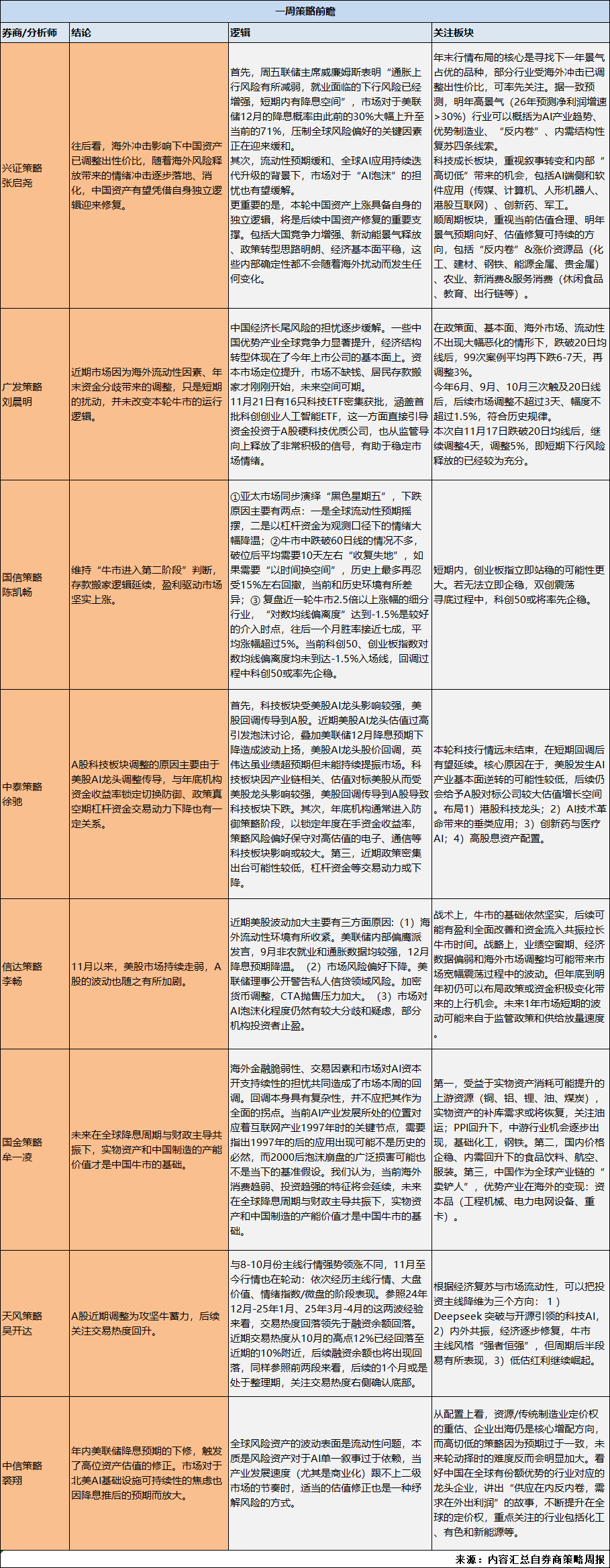
Core Viewpoint - The consensus among brokerage strategy analysts indicates a rebound in the market, as multiple factors that led to last week's stock index adjustments have improved over the weekend [1] Group 1: Market Sentiment and Economic Indicators - The market's perception of the Federal Reserve's potential interest rate cuts has shifted significantly, with the probability of a rate cut in December rising from 30% to 71%, alleviating global risk aversion [1] - The expectation of liquidity improvement and the ongoing iteration of global AI applications are likely to ease concerns regarding an "AI bubble" [2] - The internal logic supporting the rise of Chinese assets remains strong, driven by enhanced national competitiveness, the release of new economic momentum, clear policy transformation, and stable economic fundamentals [2][3] Group 2: Sector Focus and Investment Opportunities - Analysts suggest focusing on sectors that are expected to outperform in the coming year, particularly those benefiting from high growth forecasts, such as AI, advanced manufacturing, and structural recovery in domestic demand [3] - The approval of 16 technology ETFs, including those focused on AI, is expected to guide capital towards high-quality technology companies in the A-share market, providing a positive regulatory signal [2][3] - The technology sector's recent adjustments are attributed to the influence of U.S. AI leaders and year-end institutional fund strategies, but the overall tech market is expected to continue its upward trajectory post-correction [2][4] Group 3: Long-term Market Outlook - The current market adjustments are viewed as short-term disturbances that do not alter the underlying bull market logic, with expectations of continued capital inflow and improved earnings across sectors [3][4] - The potential for a significant reversal in the fundamentals of the AI industry in the U.S. is considered low, which should provide substantial valuation growth opportunities for comparable companies in China [4] - The overall sentiment indicates that the market is not lacking in liquidity, and the concerns regarding long-tail risks in the Chinese economy are gradually easing [3][4]

内外资机构密集调研创新药企业
Shang Hai Zheng Quan Bao· 2025-11-23 13:47
Core Viewpoint - The Chinese innovative drug sector is at a critical turning point, transitioning from a "research investment phase" to a "commercial harvest phase," indicating significant long-term growth potential [1][2][3] Group 1: Market Performance - The Dongcai Innovative Drug Index has increased by over 32% year-to-date as of November 20 [1] - The sector experienced a strong rally in the first half of the year, followed by a notable decline [1] Group 2: Institutional Interest - Numerous innovative drug companies, including BeiGene, have attracted intensive research from both domestic and foreign institutions, signaling heightened market interest [1] - BeiGene was researched by 88 public and foreign institutions, while Zai Lab received attention from 36 institutions [1] Group 3: Growth Potential - The sales revenue of domestic innovative drugs is growing rapidly but currently accounts for only about 10% of the overall domestic pharmaceutical market, suggesting over three times potential growth [2] - The next three years are expected to see a significant commercial breakthrough for Chinese innovative drugs in overseas markets, positively impacting the performance of these companies [2] Group 4: R&D and Policy Support - Chinese innovative drug companies have significantly improved their R&D capabilities and gained international recognition, now ranking among the top tier globally in terms of R&D pipeline [2] - Continuous policy support and improvements in commercial insurance payment methods are anticipated to provide additional support for the innovative drug sector [2] Group 5: Investment Opportunities - The Chinese innovative drug industry is perceived to be entering a "historic" investment opportunity phase, with a clear logic chain from scientific breakthroughs to commercialization [3] - As the industry transitions to the "commercial harvest phase," the commercial value of the innovative drug sector is expected to continue to be released, enhancing its growth logic and investment value [3]

国泰海通 · 晨报1124|宏观、海外策略
国泰海通证券研究· 2025-11-23 13:47
Macro Analysis - The Federal Reserve exhibits significant internal disagreements regarding monetary policy direction [4] - Major economic indicators show mixed results, with U.S. non-farm payrolls exceeding expectations but unemployment rising to 4.4% [3][4] - Eurozone services PMI continues to decline, while manufacturing PMI falls below the growth line [4] Global Asset Performance - Most asset prices experienced notable declines during the week of November 17-23, 2025, with Brent crude oil futures down 2.8% and the S&P-Goldman commodity index down 2.2% [3] - The Hang Seng Index saw the largest drop at 5.1%, while the Shanghai Composite Index and Nikkei 225 fell by 3.9% and 3.5%, respectively [3] - The 10-year U.S. Treasury yield decreased by 8 basis points to 4.06% [3] Hong Kong Stock Market - The Hong Kong stock market has entered a phase of adjustment since October, with the Hang Seng Index and Hang Seng Tech Index reaching yearly highs before the downturn [8] - The adjustment is attributed to tighter U.S. dollar liquidity and concerns over AI market bubbles [8] - The market is expected to continue its bullish trend post-adjustment, supported by the ongoing AI industry cycle and potential easing of short-term pressures [9] Investment Opportunities - The Hong Kong market is characterized by unique asset advantages, particularly in AI, new consumption, and innovative pharmaceuticals, aligning with current industry trends [8][9] - There is potential for continued inflow of incremental capital into the Hong Kong market, driven by institutional investments and the scarcity of quality assets [9] - The AI-driven technology sector remains a key focus for market performance, with expectations for sustained growth in the coming periods [9]

年末重新增配A股迎来契机?投资主线有哪些?十大券商策略来了
Feng Huang Wang· 2025-11-23 13:21
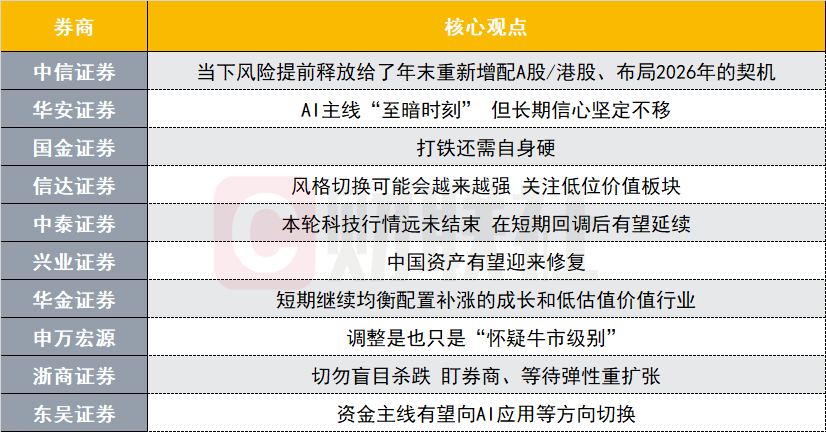
Core Viewpoints - Current risk release provides an opportunity for reallocating A-shares and Hong Kong stocks by year-end and planning for 2026 [2] - The AI sector is experiencing a "darkest hour," but long-term confidence remains unwavering [4] - The adjustment phase is merely a "doubtful bull market level" [11] Industry Insights - Focus on resource and traditional manufacturing opportunities, particularly in chemicals, non-ferrous metals, and new energy [3] - The AI industry is expected to continue its growth trajectory, with significant valuation growth potential for A-share companies [8] - The market is likely to experience a style switch, with increasing attention on low-valued sectors [6] Investment Recommendations - Emphasize sectors benefiting from physical asset consumption, such as upstream resources (copper, aluminum, lithium, oil, coal) and midstream industries [5] - Maintain a balanced allocation between growth sectors and undervalued value industries, particularly in the consumer sector as year-end approaches [10] - Focus on AI applications and sectors closely related to the "14th Five-Year Plan," such as hydrogen energy, nuclear energy, and quantum technology [14]



江苏南京:链接全球资本!宁企赴港上市热潮涌动
Sou Hu Cai Jing· 2025-11-23 12:56
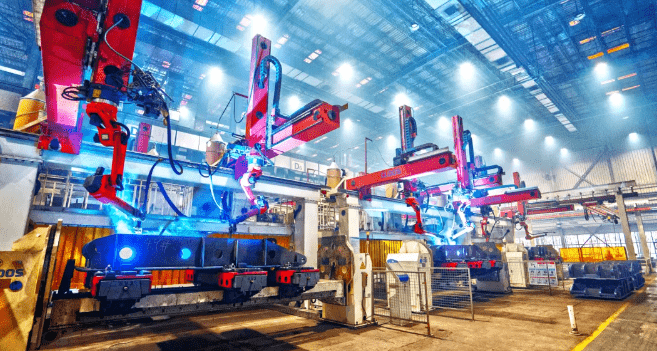
Core Viewpoint - A significant wave of companies from Nanjing is pursuing IPOs in Hong Kong, contributing to a broader trend of increased overseas listings by Chinese firms in 2023, with 60 companies listed on the Hong Kong Stock Exchange and a financing share of 58.9% from the exchange [1][10]. Group 1: Nanjing Companies Going Public - Four companies from Nanjing successfully listed this year, including Jiangsu Aisidun Automation Co., which leads the industrial robot market with a 10.5% market share [2][4]. - Thirteen Nanjing enterprises have submitted applications to the Hong Kong Stock Exchange, indicating a strong interest in international capital markets [7][10]. Group 2: Innovative Pharmaceutical Companies - Nanjing's innovative pharmaceutical companies are particularly active, with Jiangsu Aisidun and Weili Zhibo both successfully listing on the Hong Kong Stock Exchange within a month [8][9]. - The Nanjing Jiangbei New Area has implemented supportive policies to facilitate the overseas listing of innovative drug companies, including a 1 billion yuan investment fund [10][11]. Group 3: Market Dynamics and Trends - The trend of Nanjing companies going public is driven by both the unique advantages of the Hong Kong market and the urgent financing needs of enterprises, particularly in emerging sectors like biomedicine and artificial intelligence [11][12]. - The Hong Kong Stock Exchange has optimized its listing system, providing broader capital access for companies at different development stages, which is attracting more firms to consider overseas listings [12].
年内医药“翻倍基”清零,机构称调整近尾声
Di Yi Cai Jing· 2025-11-23 11:57
Group 1 - The pharmaceutical sector is experiencing a significant adjustment, with the number of funds doubling in value sharply decreasing within the month [1][2] - As of November 23, all pharmaceutical funds with over 100% annual returns have dropped to zero, compared to six funds achieving this milestone as of September 1 [1][2] - The adjustment is particularly pronounced in innovative drug funds, with all 48 innovative drug-themed funds recording declines since September, and 30 of them falling over 10% [2][3] Group 2 - Analysts suggest that the recent downturn in the pharmaceutical sector may be nearing its end, with potential for a rebound as funds may return to the innovative drug sector [4][6] - The domestic innovative drug and medical device industry is transitioning from a "research and development investment phase" to a "value realization phase," with significant growth in approved innovative drugs and medical devices [4][5] - The Chinese biopharmaceutical market is now the second largest globally, with approximately 30% of the world's innovative drugs under development, indicating a growing international recognition of Chinese innovative drugs [4][5] Group 3 - Companies like Heng Rui Pharmaceutical and Fosun Pharmaceutical are showing promising sales growth in innovative drugs, with Heng Rui's innovative drug sales reaching 9.561 billion yuan in the first half of 2025, accounting for 60.66% of its revenue [4][5] - The penetration rate of domestic medical devices has increased significantly, from less than 3% in 2017 to 20%-30% currently, indicating a strong commercialization trend [5] - The development of advanced technologies, such as AI in medical devices, is opening up new commercial opportunities in international markets [5]
上海促G60科创走廊迈向世界级,请看《浪尖周报》第50期
Xin Lang Cai Jing· 2025-11-23 11:42
Core Insights - The "Wave Plan" launched by the Zhituo Finance's think tank, Pengpai Research Institute, aims to promote industrial collaboration and technological innovation in the Yangtze River Delta region [1] Industry Highlights - Shanghai is focusing on the G60 Science and Technology Innovation Corridor, targeting two major industries to achieve world-class status [1] - Nanjing is accelerating the establishment of more "Hema Village" direct supply bases [1] - Hangzhou is striving to develop the "China Vision Valley" into a trillion-yuan visual intelligence cluster [1] - Hefei has a significant presence in quantum enterprises, accounting for one-third of the national total [1] - Suzhou is deepening cooperation with Singapore to build a 600 billion yuan industrial cluster [1] - Ningbo's Cixi home appliance industry is rapidly transitioning to smart manufacturing, aiming to cultivate export brands [1] - Wuxi has seen a concentration of innovative pharmaceutical companies receiving approvals, with new Class I and Class III drugs being launched [1] - Nantong is collaborating with provincial coastal groups to establish a marine industry characteristic park [1] - Changzhou's Kangyuan Group is setting up a biopharmaceutical innovation base in Xitai Lake [1]
帮主郑重:沪指失守3900点下周能否企稳?
Sou Hu Cai Jing· 2025-11-23 09:53
Core Viewpoint - The recent market decline, with the Shanghai Composite Index dropping 2.45% and the Shenzhen and ChiNext indices falling over 3%, is seen as a short-term fluctuation rather than a trend reversal, driven by both external and internal factors [3]. Group 1: Market Analysis - The drop below 3900 points is attributed to external pressures such as a 2.15% decline in the Nasdaq and a global sell-off of risk assets, combined with internal issues like weak tech narratives and insufficient economic data [3]. - The current market adjustment is viewed as a release of previously accumulated risks, suggesting that a rapid decline is more likely to establish a market bottom compared to a gradual decline [3]. - Key indicators to monitor for market stabilization include whether trading volume exceeds 2 trillion yuan, the impact of the upcoming Central Economic Work Conference, and the support level around 3850 points for the Shanghai Composite Index [3]. Group 2: Investment Strategies - Recommended strategies include focusing on undervalued assets in sectors like semiconductors and innovative pharmaceuticals, as well as textiles and commercial vehicles that are experiencing supply-demand improvements [3]. - Defensive investments in high-dividend sectors are advised to provide a safety net for portfolios during market volatility [3]. - Investors are encouraged to maintain cash reserves and adopt a patient approach to capitalize on market fluctuations for potential excess returns [3].
4-1BB:复盘历史失败原因,维立志博做对了什么?
Huafu Securities· 2025-11-23 09:20
Investment Rating - The industry investment rating is "Outperform" [1] Core Viewpoints - The report emphasizes the potential of second-generation 4-1BB agonists, particularly dual-target antibodies, which have shown promising efficacy while addressing safety concerns associated with liver toxicity [4][24] - The report highlights significant recent industry events, including Merck's acquisition of Cidara for approximately $9.2 billion and Pfizer's acquisition of Metsera, indicating a trend of consolidation in the biopharmaceutical sector [6] - The report suggests a long-term positive outlook for China's innovative drug sector, driven by increasing data catalysts and new product sales, recommending specific companies for investment [6] Summary by Sections 4-1BB Overview - 4-1BB (CD137) is a key member of the tumor necrosis factor receptor superfamily, crucial for T cell activation and immune response enhancement [4][10] - The second-generation CAR-T cell technology utilizing 4-1BB has been validated for inducing prolonged activation and survival of CAR-T cells in vivo [4][12] First-Generation 4-1BB Agonists - First-generation 4-1BB agonists like urelumab and utomilumab faced limitations due to liver toxicity and insufficient efficacy [16][22] - Urelumab demonstrated significant hepatotoxicity at doses ≥1.0 mg/kg, leading to its discontinuation [21][22] Second-Generation 4-1BB Agonists - Second-generation 4-1BB agonists are primarily dual-specific antibodies targeting various pathways, with a focus on balancing efficacy and safety [24][26] - LBL-024, a promising candidate, has shown unprecedented efficacy and is expected to submit a BLA by Q3 2026 [4][6] Recent Industry Events - Merck's acquisition of Cidara for $9.2 billion and Pfizer's acquisition of Metsera highlight ongoing consolidation in the biopharmaceutical industry [6] - The report notes that the innovative drug sector is under pressure but is expected to rebound with a focus on companies with strong revenue capabilities [6] Investment Strategy - The report recommends focusing on companies with differentiated innovation pipelines and strong revenue capabilities, including specific biopharma and pharma leaders [6] - Suggested companies for investment include Innovent Biologics, BeiGene, and I-MAB, among others [6]