家电

Search documents
乔诺咨询创始人龙波2026致辞:增长,本质是价值观的外化体现
Sou Hu Cai Jing· 2026-01-07 14:22
Core Insights - The article discusses the challenges companies face in achieving growth and highlights the importance of understanding their current stage and market conditions [2][3] - It emphasizes that many companies have successfully transformed and maintained growth through strategic changes and innovations [6][7] Group 1: Reasons for Growth Challenges - Companies often rush to implement new projects without fully understanding their unique challenges and market conditions, leading to ineffective strategies [2] - The article suggests that many businesses are stuck in outdated growth models and need to adapt to the changing market landscape [3] Group 2: Key Drivers of Sustained Growth - The pursuit of high growth has led to innovative business models, as seen in companies like Yadea, which transformed its growth targets from 15% to 50% and significantly increased revenue [8][11] - A focus on product quality and customer experience is crucial, with companies like Tesla and Apple exemplifying how high-quality products lead to customer loyalty and recommendations [12][13] - Retail transformation is essential, emphasizing the importance of consumer experience over mere channel focus, which has been adopted by companies like Yadea and TCL [15][17] - Companies are increasingly recognizing the need for extreme cost management and efficiency, as demonstrated by firms like Zero Run and TCL, which have successfully reduced costs while improving quality [17][18] - Global expansion is becoming a necessity for survival, with companies like DJI and Shein successfully penetrating international markets, highlighting the importance of understanding local cultures and markets [19][20] Group 3: Organizational Vitality and Transformation - Successful companies exhibit traits such as ambitious goals that exceed current capabilities, fostering a culture of innovation and growth [24][26] - Emphasis on internal talent development over reliance on external hires is crucial for sustainable growth, as internal teams better understand the company's unique challenges [27][28] - Companies that embrace open growth and learning from global best practices tend to outperform their peers, as seen in the investment in training and development by firms like Yadea and TCL [30][31] Group 4: Value System Upgrades - The article posits that growth is a reflection of an organization's evolving values, with companies needing to shift their focus from merely attracting customers to prioritizing quality and customer satisfaction [32][33] - Continuous self-reflection and adaptation of values are essential for companies to navigate challenges and achieve long-term success [33]



万亿外资巨头,加仓!
中国基金报· 2026-01-07 13:49
Group 1 - BlackRock increased its holdings in Haier Smart Home, WuXi Biologics, Midea Group, and Bank of China on January 2, 2026, as disclosed by the Hong Kong Stock Exchange [2][5] - The shareholding percentages for WuXi Biologics rose from 5.32% to 6.14%, Midea Group from 5.15% to 6.75%, Bank of China from 5.98% to 6.11%, and Haier Smart Home from 7.72% to 8.34% [5] - Previously, on December 29, 2025, BlackRock had reduced its holdings in several H-shares, including Midea Group, where the shareholding dropped from 7.03% to 5.16% [3][6] Group 2 - Goldman Sachs released a report on January 5, 2026, predicting that China's real GDP growth rate will exceed market expectations, recommending an overweight position in Chinese stocks [8] - The report anticipates that the Chinese stock market will continue its bull run, with annual growth rates of 15% to 20% in 2026 and 2027, supported by earnings growth and valuation re-rating [8] - UBS Wealth Management expressed optimism for the Chinese market, highlighting advanced manufacturing and technological self-reliance as new growth engines, with a projected 37% earnings growth for the Hang Seng Tech Index in 2026 [9]

去年上海以旧换新商品销售额超1212亿元,惠及近2200万人次
Xin Lang Cai Jing· 2026-01-07 13:27
Group 1 - The first batch of digital subsidies for home appliances in Shanghai was successfully distributed on January 7, 2026, benefiting over 21.95 million people with a total sales volume exceeding 121.23 billion yuan in 2025 [1][4] - Suning.com generated its first subsidy order on the same day, with a customer purchasing a high-end refrigerator at a discounted price after applying for subsidies, demonstrating the effectiveness of the subsidy program [3] - The subsidy policy covers various home appliances, encouraging the consumption of energy-efficient and smart products, while also enhancing the "trade-in" service system for consumers [3][4] Group 2 - In 2025, the trade-in program for home appliances and household goods involved 4.9 million units, contributing to a sales increase of 21.2 billion yuan, with 1.47 million participants specifically in home appliances [4] - The retail sales of consumer goods in Shanghai grew by 5% year-on-year from January to November 2025, surpassing the national average by 1 percentage point, with the trade-in program contributing 2.7 percentage points to this growth [2][4]

全国特大镇发展潜力100强!湛江上榜的工业重镇是……
Xin Lang Cai Jing· 2026-01-07 12:05
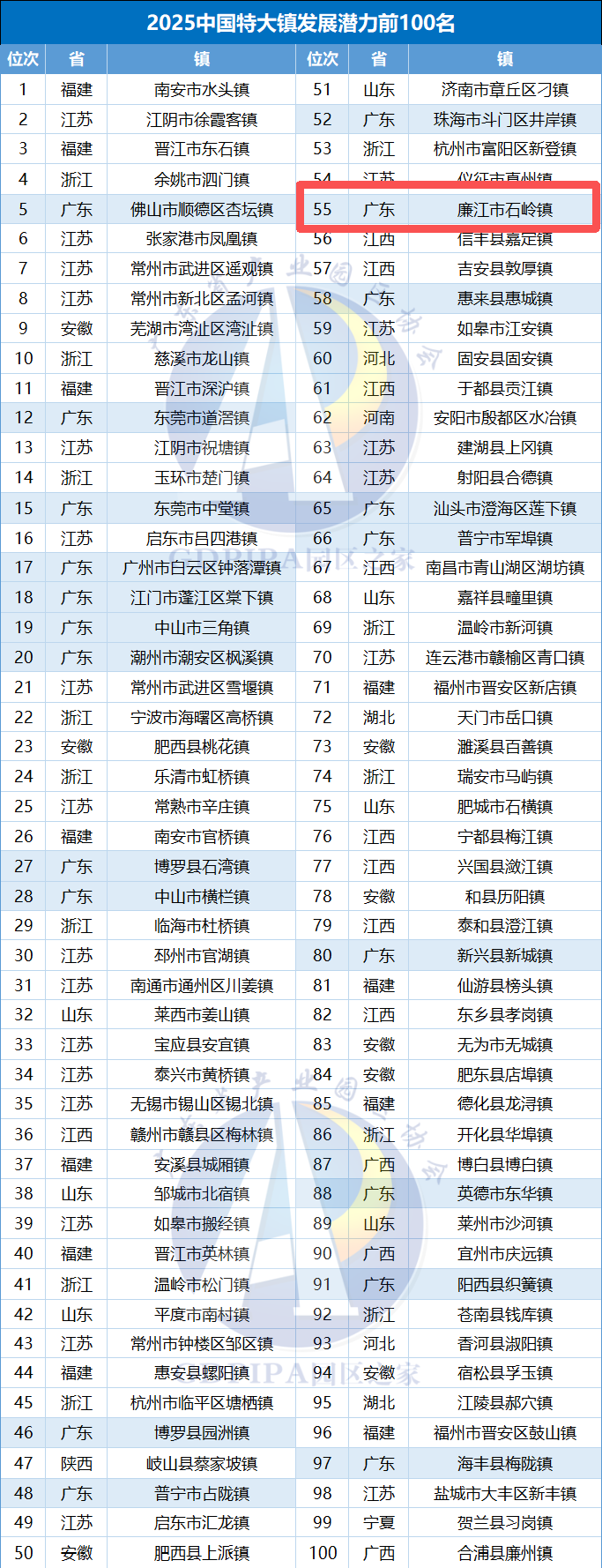
Core Insights - The "China Super Town Research Report 2025" was recently released, highlighting the development potential of super towns in China, with Lianjiang's Shiling Town ranked 55th among the top 100 [1][4]. Group 1: Super Town Rankings - The report lists the top 100 super towns in China for 2025, with Shiling Town in Lianjiang ranked 55th [1][2]. - The top five towns include: 1. Waterhead Town, Nan'an City, Fujian 2. Xuxiake Town, Jiangyin City, Jiangsu 3. Dongshi Town, Jinjiang City, Fujian 4. Simen Town, Yuyao City, Zhejiang 5. Xingtan Town, Shunde District, Foshan City, Guangdong [2]. Group 2: Economic Contribution of Super Towns - As of the end of 2024, there are 701 super towns in China, contributing approximately 6.3% of the national GDP while occupying less than 1% of the country's land area [4]. - The economic output per unit area of these towns is 10.5 times the national average [4]. Group 3: Shiling Town Overview - Shiling Town has a history of over 400 years, established during the Ming Dynasty, and covers an area of 255 square kilometers with a population of nearly 110,000 [6]. - It serves as a transportation hub and goods distribution center in the region, hosting the largest red orange production base, largest pig production base, and largest precious flower breeding base in Lianjiang [8]. - The town's industrial economy is vital, with 21 large-scale industrial enterprises and an annual industrial output value exceeding 2 billion yuan [8].
亮出“资本强区”新名片!顺德区企业上市工作大会即将召开
Nan Fang Du Shi Bao· 2026-01-07 11:44
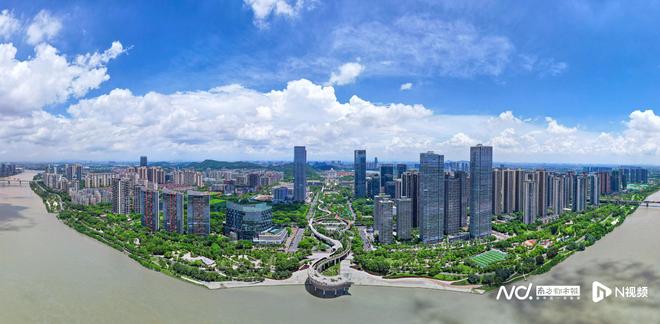
Core Viewpoint - Shunde District is focusing on enhancing its capital market and promoting high-quality development of listed companies through initiatives like the Yunlu Listing Town and various supportive measures for enterprises [1][4]. Group 1: Capital Market Development - Shunde District has 44 listed companies, accounting for 52% of the total number of listed companies in Foshan, with a total market capitalization of approximately 880 billion yuan [3]. - The district's listed companies achieved a total revenue of 505.215 billion yuan in the first three quarters of 2025, representing a year-on-year growth of 11.56%, and a net profit of 48.447 billion yuan, up 19.25% year-on-year [3]. Group 2: Mergers and Acquisitions - Since 2021, Shunde enterprises have completed mergers and acquisitions totaling over 30 billion yuan, with notable transactions including Yingfeng Group's acquisition of Gujia Home and Midea Group's investment in Wandong Medical [4]. Group 3: Supportive Measures - Shunde has introduced a specialized task force for the high-quality development of listed companies, a set of supportive policies, and the Yunlu Listing Town platform to facilitate the growth of enterprises and attract investment [5]. - The "three initiatives" include a dedicated task force, a set of supportive policies for listed companies, and the establishment of the Yunlu Listing Town to create a conducive ecosystem for capital and industry integration [5].
小米2025:大模型怎么走向现实?答案在“人车家”
Xin Lang Cai Jing· 2026-01-07 10:52
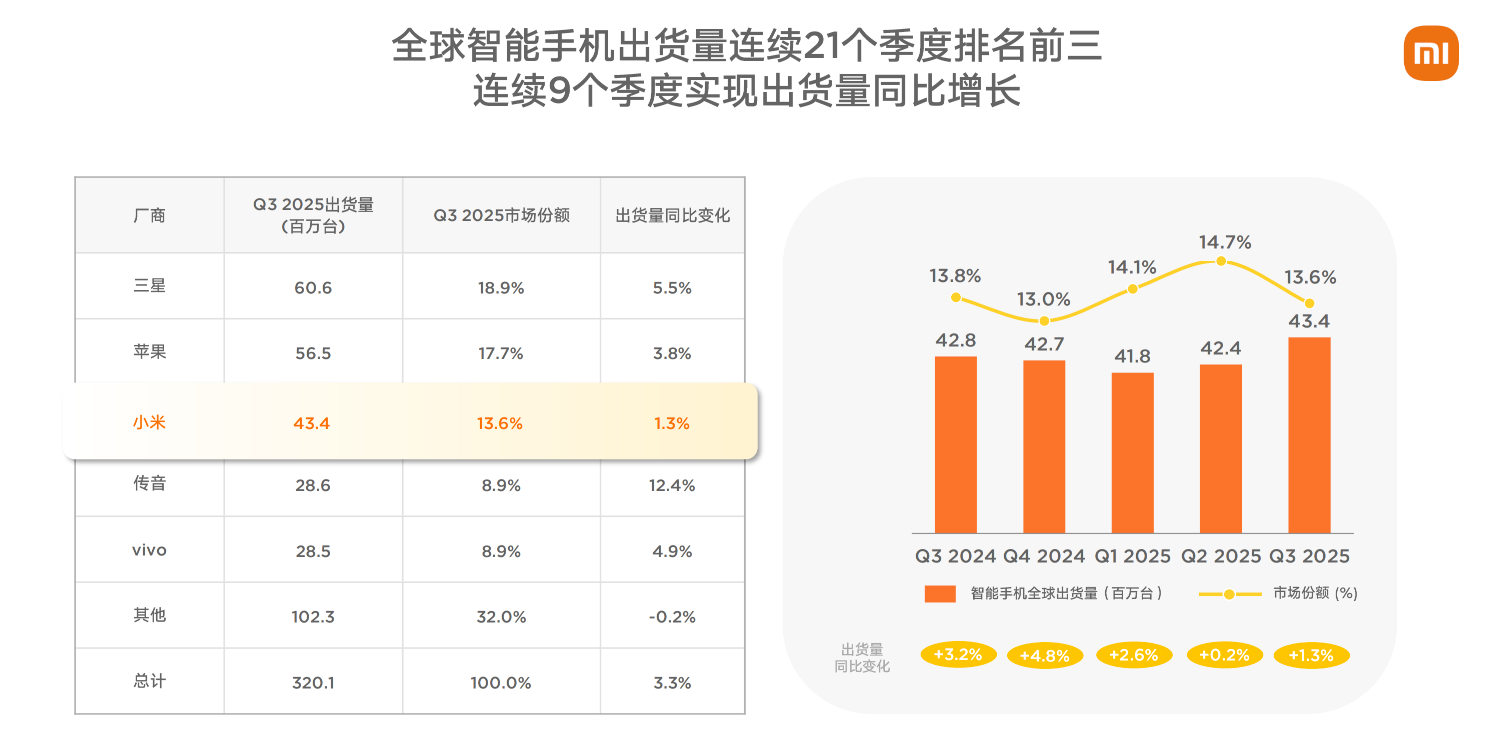
Core Insights - Xiaomi's transformation by 2025 is driven by three key factors: the density of its engineering team, long-term R&D investment capability, and the will to continue betting on uncertain directions [1][53][102] - The focus is not merely on the success of individual products but on the formation of a cohesive structure within the larger AI wave, where the competition is about having complex, real, and continuous application scenarios [1][53] Smartphone Business - Xiaomi's smartphone shipments in Q3 2025 reached 43.4 million units, maintaining a global market share of 13.6%, and showing a 1.3% year-on-year increase [3][54] - In the Chinese market, Xiaomi's sales in the 4000 yuan and above price segment rose to about 25%, indicating a shift from occasional high-end hits to a structural component of its offerings [5][56] - The smartphone has evolved from a high-cost-performance terminal to an ecological entry point, serving as a personal identity credential and a control hub for the interconnected ecosystem of vehicles and home appliances [5][56] Automotive Business - Xiaomi's electric vehicle deliveries reached a record high of 108,800 units in Q3 2025, with total deliveries exceeding 250,000 units in the first three quarters, and an annual target of over 400,000 units [8][59] - The automotive business transitioned from loss-making to operational profitability, with Q3 2025 revenue of approximately 28.3 billion yuan, nearly tripling year-on-year, and a gross margin of around 25% [11][62] - Xiaomi's self-developed intelligent driving technology has received multiple high-level driving licenses, showcasing its commitment to full-stack self-research in smart driving [13][64] AIoT Ecosystem - By Q3 2025, Xiaomi's AIoT platform connected over 1 billion devices, marking a significant increase from 624 million devices at the end of 2023 [22][73] - The AIoT ecosystem has evolved from "connecting everything" to "intelligent interconnection," with the voice assistant, Xiao Ai, upgraded to serve as a smart home hub capable of executing complex cross-device commands [23][74] - Xiaomi's AIoT devices are now part of a dynamic system that integrates user intent, cloud-based models, and home devices, enhancing the overall user experience [22][73] R&D and Manufacturing - Xiaomi's R&D investment in 2025 is projected to exceed 30 billion yuan, with a focus on building long-term capabilities rather than just optimizing functions and experiences [34][96] - The establishment of the Wuhan smart home appliance factory, with a planned annual capacity of 7 million air conditioners, represents a significant step in achieving a complete closed-loop from R&D to mass production [18][69] - Manufacturing capabilities have been enhanced through automation and digitalization, with the Beijing smartphone factory achieving high production efficiency and the automotive factory implementing advanced manufacturing techniques [41][94] Future Outlook - Xiaomi's strategy is to integrate all dispersed devices, scenarios, data, and capabilities into a cohesive system, positioning itself uniquely in the AI landscape [99][101] - The company is seen as an "ecological empire," with a complete structure that connects smartphones, vehicles, home appliances, and IoT, continuously expanding its boundaries and capabilities [50][101] - Xiaomi's long-term vision emphasizes patience in building foundational capabilities, which will support the expansion of its interconnected ecosystem [102]

【微聚焦】金融活水润科创!崂山以“科创大走廊”为核,构建科产融合新生态
Xin Lang Cai Jing· 2026-01-07 10:52
Group 1 - Laoshanshan District has established an innovative financing system covering industrial investment funds, intellectual property pledge loans, and guarantee-loan linkage, leveraging the advantages of the Jinjialing Financial District [1][7] - By optimizing collaborative innovation space layout and constructing a full-chain technology financial service system, the district accelerates the efficient gathering of innovative elements [1][7] - As of November 2025, the district has 102 registered fund managers, 697 managed funds, and a total fund size of 96.491 billion yuan, leading the city in all three metrics [1][7] Group 2 - On June 17, Haier Smart Home Co., Ltd. successfully issued the first technology innovation bond in Qingdao, with a scale of 2 billion yuan and a coupon rate of 1.66%, marking a new low for the company [2][8] - On June 23, Qingdao Rural Commercial Bank became the first rural commercial bank in the country to issue technology innovation financial bonds, with a scale of 1 billion yuan and a coupon rate of 1.75% [2][8] - The district has effectively identified and supported "specialized, refined, unique, and innovative" small and medium-sized enterprises through a dynamic list of potential companies for technology innovation bonds [3][8] Group 3 - The Laoshanshan District launched a 3 billion yuan mother fund to drive capital aggregation and support the integration and upgrading of the technology innovation industry [4][9] - The district has created a "linking and winning" ecological platform, facilitating over 100 financial enterprise matchmaking events, benefiting more than 300 technology innovation companies and over 100 financial institutions [4][9] - The Jinjialing Financial District hosts over 1,500 financial and quasi-financial enterprises, with a loan scale of 660 billion yuan and a wealth management product scale of 2.2 trillion yuan [4][9] Group 4 - The district has implemented an innovative "advance and then equity" funding model to address the pain points of high-growth startups, allowing for initial financial support followed by equity conversion [5][10] - This model has been practiced in collaboration with the Inspur Artificial Intelligence Industry Technology Research Institute, converting incubation funds into equity investments after project establishment [5][10] - The district aims to continue innovating technology financial service models to better support the integration of technology and finance, striving to become a leading region for technology and industry integration [6][11]
海信在CES 2026首发全新一代RGB-Mini LED技术,国际足联主席到访参观,多款AI家居产品同步亮相
Mei Ri Jing Ji Xin Wen· 2026-01-07 10:48
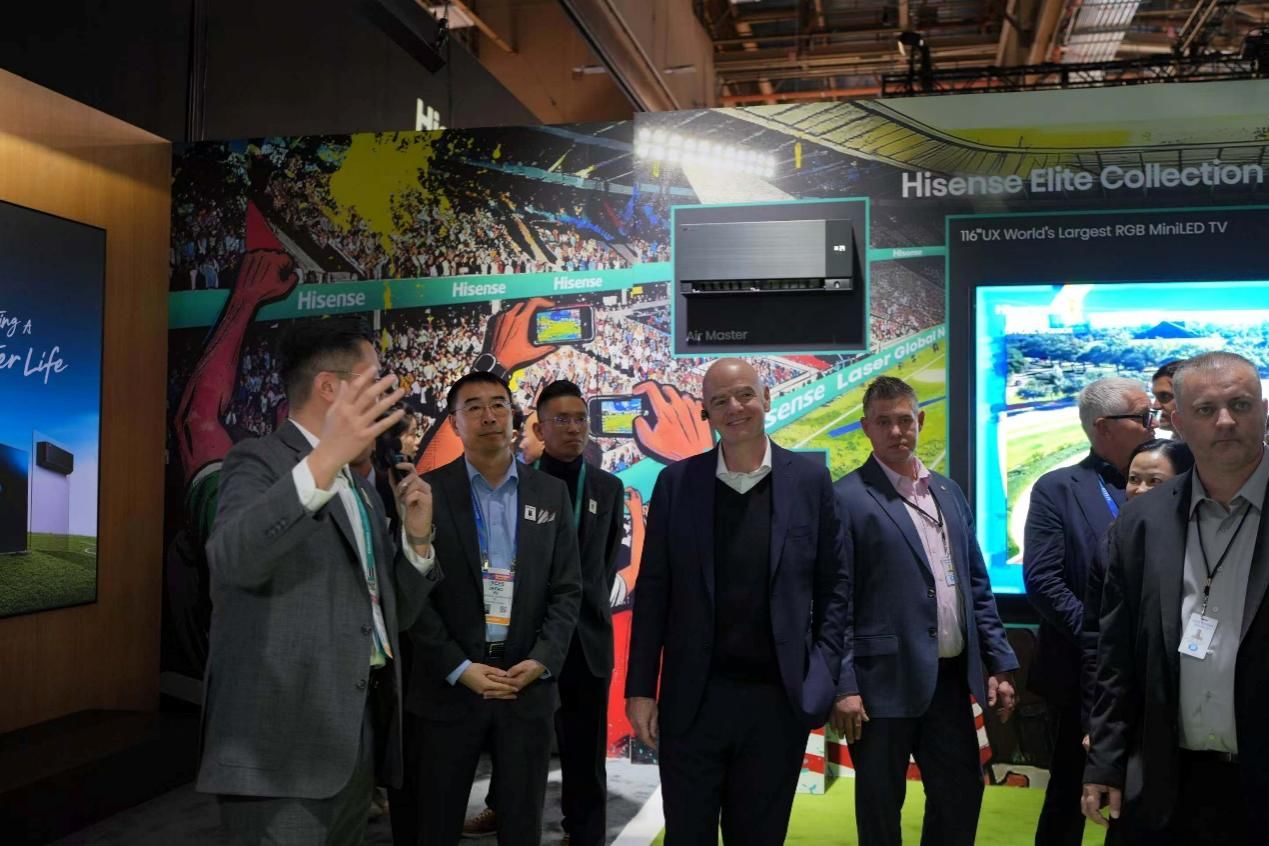
Core Insights - Hisense showcased its new generation RGB-Mini LED technology and World Cup customized products at CES 2026, attracting significant attention [1] - FIFA President Infantino visited Hisense's booth and signed the L9Q laser television, highlighting the company's role as an official sponsor of the 2026 World Cup [1] Product Innovations - The newly launched RGB-Mini LED television UX features upgrades in light source, chip, and color management system, achieving a color gamut of 110% BT.2020 and color accuracy of 134 bits, both leading in the industry [1] - Hisense has established a product matrix covering RGB-Mini LED, RGB-Micro LED, and RGB three-color laser display technologies, making it the only brand in the industry with a high-end layout across all three RGB technology categories [1] - The product sizes range from 75 to 116 inches, catering to various consumer preferences [1] Expansion into Smart Home and AI - In addition to display products, Hisense exhibited smart home appliances such as refrigerators, washing machines, and air conditioners at the event [1] - The company introduced its commercial humanoid robot, Harley, which features shopping assistance and multimodal interaction capabilities, indicating a shift from high-end display technology to practical AI home solutions [1]

CES2026开幕,国际足联主席因凡蒂诺点赞海信世界杯定制产品
Xin Hua Cai Jing· 2026-01-07 09:43
Core Viewpoint - Hisense showcases cutting-edge technology at CES 2026, including the innovative RGB-Mini LED technology, as the official sponsor of the 2026 FIFA World Cup, highlighting its commitment to enhancing the viewing experience for sports fans [1][4]. Group 1: Product Launches and Innovations - Hisense launched the new RGB-Mini LED TV UX, which replicates the details of the soccer field and jerseys with stunning picture quality, impressing visitors including FIFA President Infantino [3]. - The company introduced a series of World Cup-themed products, including a refrigerator with AI culinary management features that can intelligently recognize ingredients and optimize storage, and an air conditioner that adjusts airflow based on human movement for a comfortable viewing experience [3]. Group 2: Brand Positioning and Partnerships - Hisense has a long-standing relationship with the FIFA World Cup, having been the first Chinese consumer electronics brand to sponsor the event in 2018, which has significantly enhanced its global brand recognition [4]. - The collaboration with FIFA is based on shared values, allowing Hisense to expand its partnership and leverage technological innovations, particularly in the RGB-Mini LED technology, which is becoming a trend in high-end televisions [4].
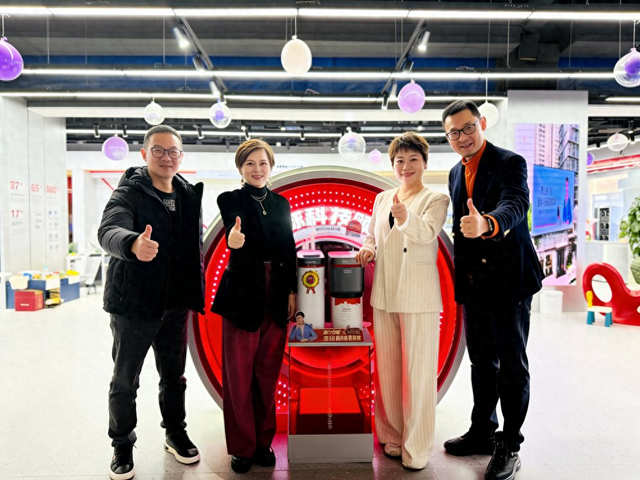
安吉尔与京东电器战略合作升级 共同引领全屋净饮水新时代
Huan Qiu Wang· 2026-01-07 08:19
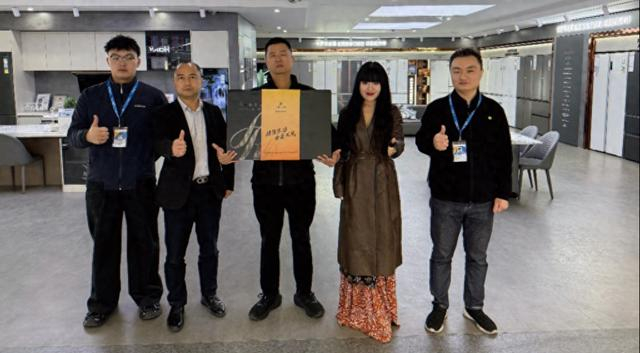
Core Viewpoint - The strategic partnership between Angel and JD Electronics aims to accelerate the upgrade of whole-house drinking water solutions through a combination of online and offline initiatives, enhancing consumer engagement and experience [1][4]. Group 1: Strategic Collaboration - Angel and JD Electronics have established a solid foundation for cooperation, with recent activities marking an upgrade in their strategic partnership [4]. - The collaboration leverages JD Electronics' strengths in user scale, omnichannel operations, and logistics to effectively reach consumers [4]. - The series of joint events responds to the growing demand for whole-house drinking water solutions amid rising consumer interest in quality of life [4]. Group 2: Online and Offline Integration - The partnership represents a significant practice of the "new traffic" model, combining online and offline efforts to enhance consumer interaction [2]. - A nationwide Douyin live broadcast event was held, featuring executives from both companies, which successfully aggregated and released new online traffic [2]. - Following the online event, joint product launch conferences were held in multiple cities, converting online interest into offline consumer engagement [2]. Group 3: Consumer Engagement and Promotions - To reward consumer support, Angel launched the "Space Master New Year Renewal Season" campaign, offering significant subsidies for upgrading to whole-house drinking water systems [4]. - Consumers can benefit from a trade-in subsidy of up to 2,000 yuan for single products when using UnionPay's cloud payment, along with additional promotions for bundled purchases [4]. - The campaign aims to lower the barriers for families to upgrade their water systems, making it more cost-effective [4]. Group 4: Future Directions - Angel plans to continue deepening its collaboration with JD Electronics in product innovation, channel synergy, and service experience [6]. - The focus will be on responding to changing household water needs with advanced water purification technology and products [6].