钢铁行业

Search documents
武进不锈:三名股东拟合计减持不超0.11%公司股份
Xin Lang Cai Jing· 2025-09-29 09:44
Core Viewpoint - The company announced that three executives plan to reduce their shareholdings due to personal financial needs, which may impact investor sentiment and stock performance [1] Summary by Relevant Categories Executive Shareholding Reduction - Executive Zhou Zhibin plans to reduce holdings by up to 157,500 shares, representing 0.03% of the total share capital [1] - Executive Liu Yiming intends to reduce holdings by up to 345,100 shares, representing 0.06% of the total share capital [1] - Executive Wu Fangmin aims to reduce holdings by up to 120,800 shares, representing 0.02% of the total share capital [1] Timing and Method of Reduction - The share reduction will occur within three months following a 15 trading day period after the announcement [1] - The reduction will be executed through centralized bidding and block trading methods [1]

宏观纵览 | “反内卷”的下一步:盈利改善如何向中下游传导
Sou Hu Cai Jing· 2025-09-29 08:32
Core Insights - The recovery of upstream industry prices has been observed, while downstream sectors still require more policy support [2][6] - The "anti-involution" campaign has shown positive results, with expectations for further policy actions to enhance industry health and sustainable development [2][8] Industrial Profit Growth - From January to August, industrial profits for large-scale enterprises turned from a 1.7% decline to a 0.9% increase, marking a significant recovery [3][5] - August saw a notable profit increase of 20.4% compared to July, reversing a previous decline [3][4] - The improvement in industrial profits is attributed to macro policy effectiveness, low base effects, and strong support from the equipment manufacturing sector [3][6] Price Improvement and Its Impact - Price recovery is a key factor in profit growth, with the Producer Price Index (PPI) decline narrowing to 2.9% in August, the smallest drop since March [4][5] - Specific industries such as coal processing and steel have seen reduced price declines, contributing to the overall PPI improvement [4][6] Downstream Industry Challenges - Despite profit improvements in upstream sectors, downstream industries still face weak demand and operational pressures, indicated by rising inventory levels and extended accounts receivable periods [5][7] - Analysts suggest that targeted policies to stimulate downstream demand, such as expanding consumption incentives, are necessary for broader profit recovery [7][8] Policy Measures and Future Outlook - Continuous policy support is essential for sustaining profit growth, particularly in the context of "anti-involution" measures aimed at reducing excessive competition [7][8] - The Ministry of Industry and Information Technology has outlined specific growth plans for various sectors, including steel and automotive, focusing on governance and competition regulation [9][10]


废钢早报-20250929
Yong An Qi Huo· 2025-09-29 01:01
Report Summary Report Information - Report Title: Scrap Steel Morning Report [1] - Report Date: September 29, 2025 [2] - Research Team: Black Team of the Research Center [2] Core View - The report presents the scrap steel prices in different regions (East China, North China, Central China, South China, Northeast China, and Southwest China) from September 22 to September 26, 2025, along with the week - on - week changes [3] Price Data - **East China**: Prices ranged from 2261 on September 22 to 2264 on September 25, with a week - on - week decrease of 1 [3] - **North China**: Prices dropped from 2333 on September 22 to 2327 on September 26, with a week - on - week decrease of 2 [3] - **Central China**: Prices were 2081 on September 22 and remained at 2085 on September 26, with no week - on - week change [3] - **South China**: Prices fluctuated between 2261 on September 22 and 2263 on September 25, with a week - on - week decrease of 3 [3] - **Northeast China**: Prices went from 2293 on September 22 to 2291 on September 26, with a week - on - week decrease of 2 [3] - **Southwest China**: Prices were 2170 on September 22 and 2165 on September 26, with no week - on - week change [3]
“反内卷”下一步施政展望: 盈利改善如何向中下游传导
Sou Hu Cai Jing· 2025-09-28 17:01
Core Viewpoint - The ongoing efforts to combat "involution" and disordered competition in various industries have shown positive results, with expectations for further policy support to sustain this momentum [1][7]. Group 1: Industrial Profit Improvement - From January to August, industrial profits for large-scale enterprises turned from a decline of 1.7% to a growth of 0.9%, marking a significant recovery [2]. - In August alone, industrial profits saw a notable increase of 20.4%, reversing the previous month's decline of 1.5% [2]. - The improvement in industrial profits is attributed to macroeconomic policies, a unified national market, and a low base effect from the previous year [2][3]. Group 2: Price and Cost Dynamics - The Producer Price Index (PPI) saw a narrowing decline of 2.9% in August, the smallest drop since March, indicating a recovery in pricing power [3]. - Specific industries, such as coal processing and steel manufacturing, experienced reduced price declines, contributing to the overall improvement in industrial profits [3][4]. - The recovery in prices is linked to enhanced market competition and effective governance of industry practices [3][7]. Group 3: Policy Support and Future Outlook - The government is expected to continue implementing targeted policies to stimulate downstream demand, particularly in consumer goods and real estate [1][6]. - Analysts suggest that if policies effectively boost demand, the benefits of profit improvements could extend to downstream sectors, leading to a more comprehensive recovery in industrial profits [6][8]. - Recent government initiatives focus on stabilizing growth in key industries such as steel and automotive, emphasizing the need for structured governance and competition regulation [8][9].
“反内卷”的下一步:盈利改善如何向中下游传导
Di Yi Cai Jing· 2025-09-28 13:29
Core Viewpoint - The recovery of upstream industry prices has been observed, while the midstream and downstream sectors still require more policy support to combat "involution" and promote sustainable development [1][5][7] Group 1: Industrial Profit and Price Trends - From January to August, the profit of the raw materials manufacturing industry increased by 22.1% year-on-year, with the steel industry turning from loss to profit [1][5] - The overall industrial profit growth turned positive, with a 0.9% increase in profits for large-scale industrial enterprises from January to August, reversing a decline since May [2][4] - In August, the Producer Price Index (PPI) decline narrowed to 2.9% year-on-year, marking the first reduction in the decline since March [3][4] Group 2: Policy Measures and Industry Support - The State-owned Assets Supervision and Administration Commission (SASAC) emphasized the need for state-owned enterprises to resist "involution" and promote healthy competition [1][7] - The Ministry of Industry and Information Technology (MIIT) has released multiple industry stabilization plans, focusing on sectors like automotive, steel, and non-ferrous metals to enhance governance and competition order [7][8] - Future policies should focus on expanding domestic demand and ensuring the effective implementation of "anti-involution" measures to support downstream industries [6][8] Group 3: Market Dynamics and Challenges - Despite improvements in industrial profits, revenue growth indicates that demand has not significantly improved, with rising inventory levels and longer accounts receivable periods [4][6] - The structural differentiation of profits between upstream and downstream industries persists, with upstream benefiting from "anti-involution" policies while downstream remains constrained by weak terminal demand [6][8] - The steel industry faces challenges with excess capacity and demand imbalance, necessitating precise capacity control and supply-demand coordination [9]
0.9%、20.4%、7.2%,增长!多维度“数”览全年工业利润改善有基础
Yang Shi Wang· 2025-09-28 02:14
Group 1 - The core viewpoint is that from January to August 2025, the profits of large-scale industrial enterprises in China increased by 0.9% year-on-year, reversing a trend of decline since May 2025 due to effective macro policies and the deepening of a unified national market [1][3][17] - In August 2025, profits of large-scale industrial enterprises showed significant improvement, with a growth of 20.4%, compared to a decline of 1.5% in July [3] - The equipment manufacturing sector was a major contributor to profit recovery, with a profit growth of 7.2% from January to August 2025 [6] Group 2 - Among the eight industries in the equipment manufacturing sector, seven experienced profit growth, with notable increases in the railway, shipbuilding, aerospace, and electrical machinery industries [9] - The raw materials manufacturing sector saw a profit increase of 22.1% year-on-year, driven by rising market demand, price recovery, and cost reductions, with the steel industry turning profitable [14] - The consumer goods manufacturing sector also turned around, with profits growing by 1.4% year-on-year, particularly in the beverage and agricultural products industries, which achieved double-digit growth [15]
增长0.9%,透过工业利润数据看经济韧性
Yang Shi Wang· 2025-09-27 08:22
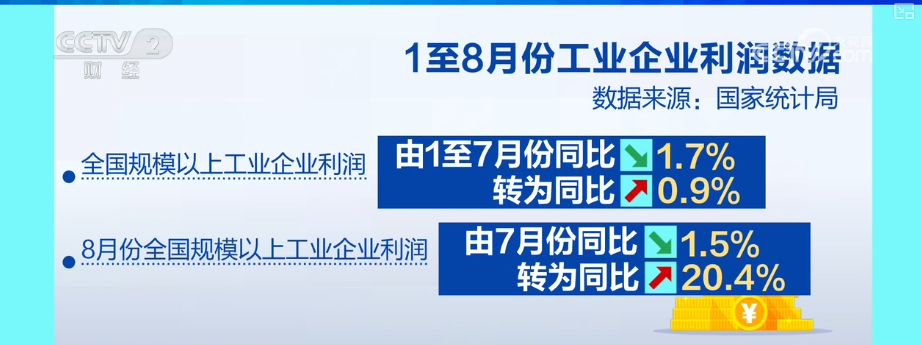
Core Insights - The profits of industrial enterprises above designated size in China increased by 0.9% year-on-year from January to August this year, reversing a decline that had persisted since May [1][3]. Group 1: Profit Trends - From January to August, the profits of industrial enterprises shifted from a 1.7% year-on-year decline in the first seven months to a 0.9% increase, indicating a significant recovery [3]. - In August alone, profits for industrial enterprises experienced a notable improvement, achieving a growth of 20.4%, compared to a decline of 1.5% in July [3]. Group 2: Sector Performance - The equipment manufacturing sector saw a profit increase of 7.2% from January to August, making it one of the strongest contributors to the overall profit recovery of industrial enterprises [5]. - Among the eight industries within the equipment manufacturing sector, seven reported profit growth, with the railway, shipbuilding, aerospace, and electrical machinery industries showing particularly rapid profit increases [5]. Group 3: Raw Materials and Consumer Goods - The profits of the raw materials manufacturing sector rose by 22.1% year-on-year, accelerating by 10 percentage points compared to the first seven months, driven by increased market demand, price recovery, and reduced costs [7]. - The steel industry turned from losses to profits, while the non-ferrous metals sector also saw significant profit growth [7]. - The consumer goods manufacturing sector transitioned from a year-on-year decline to a 1.4% profit increase, with the beverage and agricultural products industries achieving double-digit growth [7]. Group 4: Economic Outlook - The improvement in industrial profits is corroborated by revenue growth, cost reductions, and other positive financial indicators, suggesting a favorable impact on market expectations and laying a solid foundation for overall industrial profit improvement for the year [7].
数“读”1至8月工业企业营收保持稳定增长 装备制造业“压舱石”作用明显
Yang Shi Wang· 2025-09-27 05:14
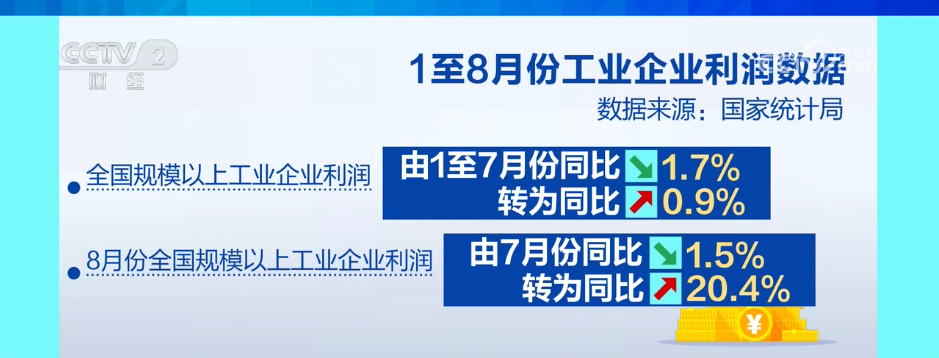
Group 1 - In the first eight months of the year, the total profit of industrial enterprises above designated size reached 46,929.7 billion yuan, a year-on-year increase of 0.9%, while operating income was 89.62 trillion yuan, up 2.3% [1] - The profit of the equipment manufacturing industry increased by 7.2%, significantly supporting the recovery of profits in industrial enterprises, with rapid profit growth in the railway, shipbuilding, aerospace, and electrical machinery sectors, achieving growth rates of 37.3% and 11.5% respectively [3] - In August, the profit of industrial enterprises turned from a decline in July to a growth of 20.4%, with operating income increasing by 1.9%, accelerating by 1.0 percentage points compared to July [4] Group 2 - The profit of the raw materials manufacturing industry increased by 22.1% year-on-year, accelerating by 10 percentage points compared to the first seven months, with the steel industry turning profitable with a total profit of 83.7 billion yuan, and the non-ferrous industry profit growing by 12.7%, accelerating by 5.8 percentage points [6] - Experts indicate that in the next phase, it is essential to further expand domestic demand and promote the construction of a unified national market to create favorable conditions for the sustained recovery of industrial enterprise profits [8]
重要数据公布!同比增长20.4%
Zhong Guo Zheng Quan Bao· 2025-09-27 02:58
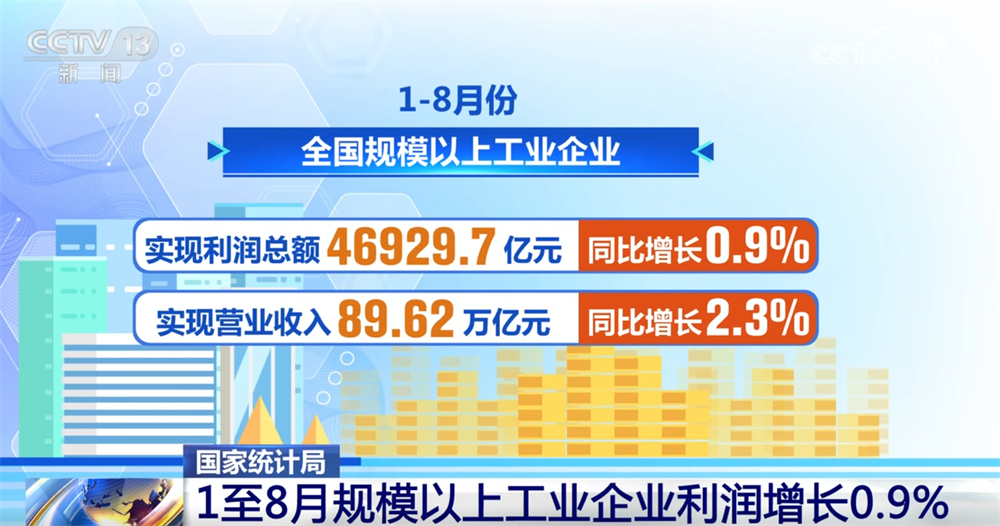
Core Insights - The total profit of industrial enterprises above designated size in China reached 46,929.7 billion yuan from January to August, marking a year-on-year increase of 0.9% [1][4] - In August, profits for these enterprises saw a significant turnaround, growing by 20.4% year-on-year, compared to a decline of 1.5% in July [1][4] - The recovery in profits is attributed to effective macro policies, the deepening of a unified national market, and a low base from the previous year [1][4] Profit Trends - From January to August, the profit decline of industrial enterprises was reversed, with a shift from a 1.7% decrease in the first seven months to a 0.9% increase [4] - Revenue for these enterprises also showed stable growth, with a 2.3% year-on-year increase from January to August, and a 1.9% increase in August alone [4] - Different scales of enterprises saw profit improvements, with private enterprises experiencing a notable profit growth of 3.3%, surpassing the average growth of all industrial enterprises [4][6] Cost and Profitability - In August, the cost per hundred yuan of revenue for industrial enterprises decreased by 0.20 yuan, marking the first year-on-year decline since July 2024 [5] - The profit margin for these enterprises improved to 5.83%, reflecting a year-on-year increase of 0.90 percentage points [5] Sector Performance - The equipment manufacturing sector played a crucial role, with profits growing by 7.2% from January to August, contributing 2.5 percentage points to the overall profit growth of industrial enterprises [6] - Among the eight industries within equipment manufacturing, seven reported profit increases, with notable growth in the railway, shipping, aerospace, and electrical machinery sectors [6][7] - The raw materials manufacturing sector also saw significant profit growth of 22.1%, while the consumer goods manufacturing sector turned from a 2.2% decline to a 1.4% increase in profits [6][7] Future Outlook - The government emphasizes the need to expand domestic demand and further develop a unified national market to support the continuous recovery of industrial enterprise profits [7]
国泰海通|海外策略:每周海内外重要政策跟踪(25/09/26)
国泰海通证券研究· 2025-09-26 11:08
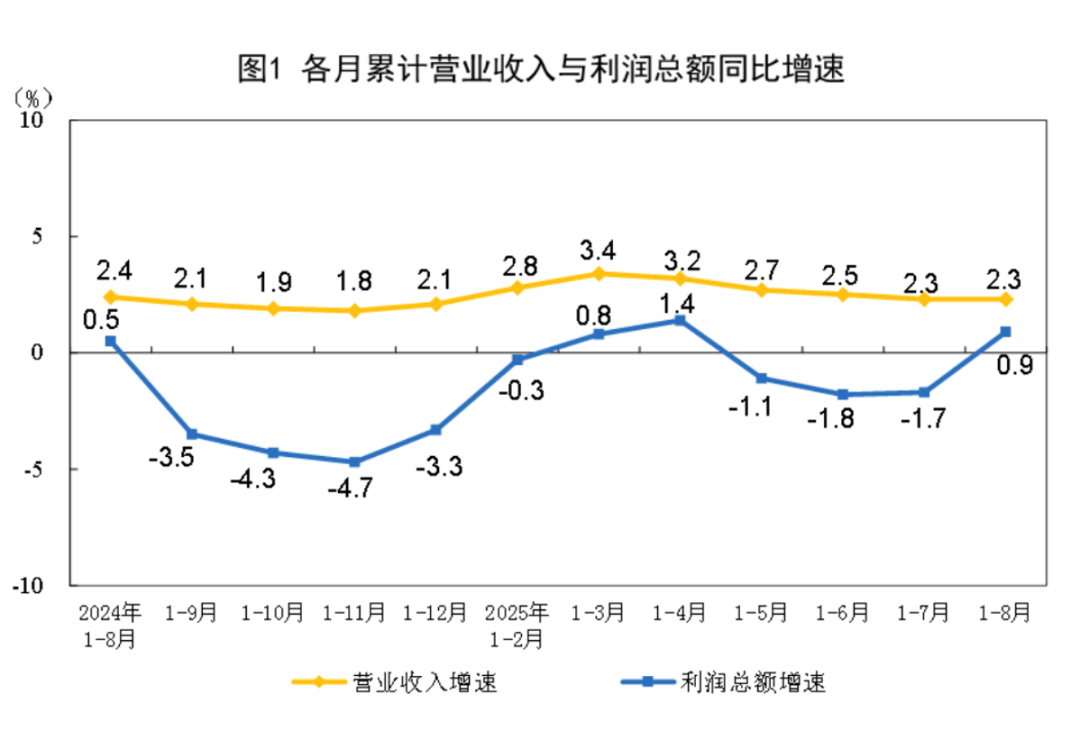
Domestic Macro - On September 19, the State Council discussed the revised draft of the Banking Supervision Law of the People's Republic of China [1] - On September 22, the State Council Information Office held a press conference on achieving high-quality completion of the 14th Five-Year Plan, highlighting the financial sector's achievements during this period [1] - The Shanghai Stock Exchange Party Committee announced efforts to promote long-term capital entering the market [1] - The Ministry of Finance indicated guidance for local governments to implement a series of incremental debt support policies [1] - On September 23, the Ministry of Commerce and nine other departments issued policies to promote service exports, including optimizing zero tax rate declaration procedures and increasing export credit insurance support [1] - On September 24, the People's Bank of China announced a 600 billion yuan MLF operation, with a net injection of 300 billion yuan this month, marking the seventh consecutive month of increased operations [1] Industry Policy - On September 20, the National Healthcare Security Administration released the 11th batch of drug procurement documents [2] - On September 21, the China Academy of Science and Technology Development Strategy published the "China Regional Science and Technology Innovation Evaluation Report 2025" [2] - The State Council's Food Safety Office is accelerating the establishment of national standards for prepared dishes [2] - On September 22, the Ministry of Industry and Information Technology and other departments jointly issued the "Steel Industry Growth Stabilization Work Plan (2025-2026)", setting an average annual growth target of around 4% for the steel industry's added value [2] - The National Sports Administration released guidelines to promote the high-quality development of sports for health [2] - On September 23, the Ministry of Commerce and eight other departments issued guidelines to vigorously develop digital consumption, including trials for smart connected vehicles [2] - On September 24, the Ministry of Industry and Information Technology and six other departments issued the "Building Materials Industry Growth Stabilization Work Plan (2025-2026)", with strict capacity control for cement and glass [2] - On September 25, the National Healthcare Security Administration published the "National Long-term Care Insurance Service Project Directory (Trial)" [2] Local Policy - On September 19, Shanghai issued a notice optimizing the personal housing property tax pilot policies, exempting the first home for talent with residence permits and families with residence permits for over three years, and exempting the second home within 60 square meters per person [3] - On September 21, Sanya passed the "Implementation Measures for the Development of Guaranteed Rental Housing", with rental prices for guaranteed rental housing guided by the government [3] - On September 25, Tianjin will conduct a pilot for the registration of real estate trust property [3] Overseas Dynamics - On September 19, the Bank of Japan decided to maintain the benchmark interest rate at 0.5% [4] - The European Commission approved a new round of sanctions against Russia, covering energy, financial services, and trade restrictions [4] - On September 20, U.S. President Trump signed an executive order significantly reforming the H-1B visa program, requiring applicants to pay a fee of $100,000 [4] - On September 22, President Trump stated he would meet with Chinese leaders during the APEC informal leaders' meeting [4] - On September 24, Li Qiang met with European Commission President Ursula von der Leyen in New York; the U.S. officially imposed a 15% tariff on EU cars and automotive products [4] - On September 25, the Ministry of Commerce announced the inclusion of three U.S. entities, including Flat Earth Management, in the export control list and initiated an investigation into trade and investment barriers related to Mexico [4]