
房地产

Search documents
美联储2026或现超预期降息,黄金牛市再获强力支撑
Jin Shi Shu Ju· 2026-01-06 03:04
Group 1 - The core viewpoint of the articles indicates that the Federal Reserve is likely to lower interest rates more than currently anticipated due to a deteriorating labor market and weak economic indicators [1][2][4] - The labor market shows signs of continued loosening, with a decrease in the quit rate and a rise in unemployment rates, suggesting weak labor demand rather than structural labor shortages [1][4] - The Federal Reserve's recent employment report highlights modest job growth concentrated in education and health services, while cyclical industries show weakness [1][4] Group 2 - Internal divisions within the Federal Reserve are evident, with differing opinions on the extent of interest rate cuts, as some members advocate for larger cuts while others prefer to maintain current rates [2][3] - The Fed's "dot plot" indicates that only one additional rate cut is expected in 2026, based on assumptions of stronger economic growth and lower unemployment [2][3] - The concept of the "natural rate" (R*) is discussed, with estimates ranging from 2.6% to 3.9%, indicating that the current policy is approaching a neutral stance but remains restrictive [3] Group 3 - The real estate sector and other interest-sensitive industries are under pressure, reflecting the ongoing suppression of economic activity by current policies [4] - Attention is shifting towards the potential successor of Jerome Powell, with Kevin Hassett being a leading candidate, raising concerns about the independence of the Federal Reserve [5][6] - The market's response to a politically aligned nominee may be muted in the short term, but the fundamental economic conditions will be more significant in the medium term [6] Group 4 - Investors are advised to diversify their portfolios beyond stocks and bonds to hedge against inflation, especially in a more unstable macroeconomic environment [7] - Gold tends to perform well during periods of weak economic growth, while commodities perform better during strong growth, indicating a tactical approach to investment strategies [7] - The dollar faces challenges in a changing economic landscape, and its response to negative growth news will be crucial for its status as a safe-haven currency [7]
深圳、苏州、福州……超100城出台或优化多子女家庭住房支持政策
Sou Hu Cai Jing· 2026-01-06 02:42
Core Viewpoint - In 2025, Fuzhou and over 100 cities are implementing housing support policies for multi-child families, including purchase subsidies and adjustments to public housing, aimed at reducing housing costs for these families [1][2][4]. Group 1: Housing Purchase Support - Various cities are combining housing support policies for multi-child families with measures to promote housing consumption, such as providing purchase subsidies and increasing public housing loan limits [2][3]. - Specific purchase subsidies for multi-child families include fixed amounts or percentage-based subsidies, with cities like Wuhan and Yiwu offering subsidies of up to 120,000 yuan for eligible families [2]. - Increasing the maximum public housing loan limits for families with multiple children is a key policy, with cities like Suzhou and Shenzhen allowing significant increases in loan amounts [3]. Group 2: Housing Supply and Rental Support - Cities are also focusing on increasing the supply of affordable housing and rental support for multi-child families, with policies aimed at optimizing the allocation of public rental housing [7][8]. - For instance, Yunnan and Fujian are implementing policies to provide larger public rental housing units and prioritize multi-child families in housing allocations [7][8]. - Rental policies are being adjusted to allow multi-child families to withdraw more from their housing provident fund to cover rent, with cities like Nanjing increasing the withdrawal limits [8]. Group 3: Policy Coordination and Future Directions - Experts suggest that future policies should better coordinate housing support with family needs in areas such as education and childcare, ensuring that housing policies align with the requirements of multi-child families [6][9]. - The emphasis is on creating a supportive environment for multi-child families by integrating housing policies with broader social support systems, including education and healthcare [9].

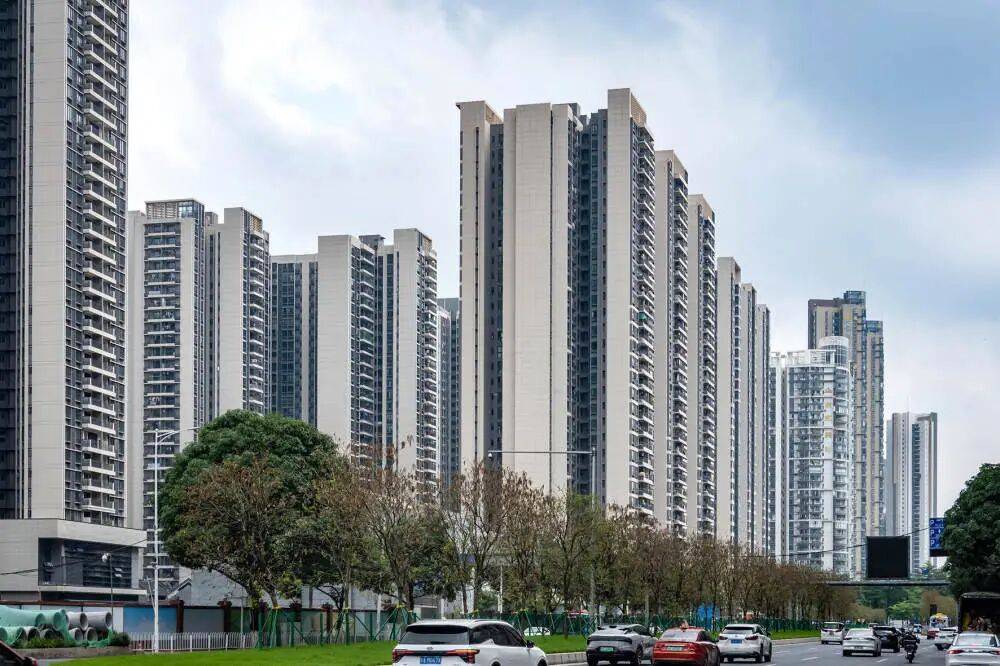
中国经济 2026 展望- 关注差距-China Economics 2026 Outlook Mind the Gap
2026-01-06 02:23
Summary of Key Points from the Conference Call Industry Overview - The report focuses on the **Chinese economy** and its outlook for **2026**. - A **K-shaped growth pattern** is identified, where the new economy thrives while the old economy and domestic demand struggle [1][5][8]. Core Insights and Arguments - **Positive Shift in Investor Narrative**: 2025 saw a significant improvement in how investors view China, particularly in the new economy and supply side [1][4]. - **K-Shaped Growth**: The economy is experiencing a bifurcation, with industrial production up by **11.5%** compared to 2023, while domestic demand remains weak, particularly in the property sector [8][5]. - **Fiscal and Monetary Policy**: The base case for 2026 includes approximately **RMB1 trillion** in additional fiscal stimulus, **20bps** rate cuts, and **50bps** RRR cuts, with a GDP growth forecast of **4.7%** [1][6][51]. - **Consumer Confidence**: Consumer sentiment remains low, with retail sales growth at around **3.6%** for 2024-25, indicating a disconnect between macroeconomic indicators and micro-level confidence [5][9]. - **Trade Surplus**: A historic trade surplus exceeding **US$1 trillion** was noted, driven by high-tech exports, despite ongoing tariff disputes [5][8]. Important but Overlooked Content - **Investment Trends**: Fixed Asset Investment (FAI) is expected to grow by **2.0%** in 2026, with a significant divergence between the new and old economies [68]. - **Exchange Rate Outlook**: The RMB is expected to experience "managed appreciation," with forecasts suggesting a USDCNY rate of approximately **6.8** in 6-12 months [1][75]. - **Policy Continuity**: The report anticipates a continuation of existing policies without major breakthroughs, indicating a cautious approach to economic management [43][51]. - **Consumption Rebalancing**: While there are expectations for consumption to contribute **2.8ppts** to growth in 2026, the actual impact may be limited due to structural issues [63][62]. Conclusion - The Chinese economy is projected to face challenges in 2026, with a K-shaped recovery likely to persist. Policymakers are expected to adopt a cautious approach, focusing on incremental changes rather than aggressive reforms. The outlook for consumer confidence and domestic demand remains subdued, while external factors and the new economy will continue to play a crucial role in shaping economic performance [1][61][68].
沪指刷新逾10年新高!突破2025年11月14日阶段高点,脑机接口概念延续强势、智能驾驶概念表现活跃
Jin Rong Jie· 2026-01-06 01:56
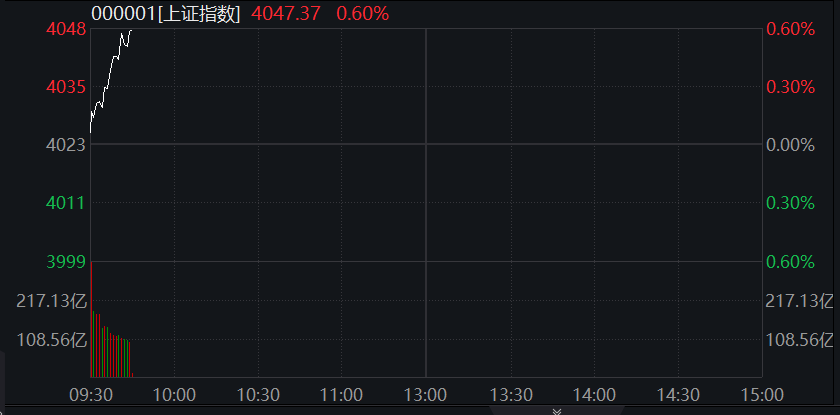
Market Performance - The Shanghai Composite Index surged after the opening, breaking the high point from November 14, 2025, and reaching the highest level since July 2015, closing at 4047.37 points, up 0.6% [1] - The Shenzhen Component Index rose by 0.69% to 13923.61 points, while the ChiNext Index increased by 0.46% to 3309.76 points, and the Sci-Tech 50 Index jumped 1.85% to 1429.42 points [1] - The total trading volume in the Shanghai and Shenzhen markets reached 567.525 billion yuan, with over 3500 stocks rising [1] Sector Highlights - The brain-computer interface sector continued to perform strongly, with several companies hitting the daily limit up, following a breakthrough in implant technology at Fudan University [3] - Semiconductor equipment stocks showed resilience, with companies like Jin Hai Tong hitting the daily limit up and others like Bei Fang Hua Chuang and Zhong Ke Fei Ce rising over 5%, reaching historical highs [3] - The solid-state battery concept saw significant gains, with Jin Long Yu hitting the daily limit up, as a Finnish company announced the launch of the world's first commercially viable all-solid-state battery [4] - The commercial aerospace sector experienced a rebound, with Lei Ke Defense achieving five consecutive limit-ups, following a capital increase announcement from China Aerospace Science and Technology Corporation [4] Institutional Insights - Huatai Securities expressed optimism about the spring market, suggesting a focus on growth sectors like electric equipment and renewable energy, as well as domestic demand improvement themes [5] - CITIC Securities noted that the cross-year market may exhibit characteristics of "growth leading and liquor accumulating," with a focus on sectors like snacks and dairy [5] - Huaxi Securities highlighted 2026 as a year of multiple positive factors, with a solid foundation for a bull market, driven by macro policies and improving corporate earnings [6] - Guojin Securities projected 2026 to be the year of recoverable commercial rockets, emphasizing the importance of cost reduction through recoverable technology in the aerospace sector [7] - Tianfeng Securities recommended focusing on cosmetics, gold jewelry, and duty-free sectors, which are expected to grow amid the recovery of high-end consumption [7]
A股指数涨跌不一:创业板指跌0.45%,商业航天、CPO等板块跌幅居前
Feng Huang Wang Cai Jing· 2026-01-06 01:36
Market Overview - The three major indices opened mixed, with the Shanghai Composite Index up 0.06% and the Shenzhen Component Index up 0.01%, while the ChiNext Index opened down 0.45% [1] - The human brain engineering and lithium mining sectors showed significant gains, while commercial aerospace and CPO sectors experienced declines [1] Index Performance - Shanghai Composite Index: 4026.02, up 0.06%, with 1018 gainers and 808 losers [2] - Shenzhen Component Index: 13830.30, up 0.01%, with 1318 gainers and 1066 losers [2] - ChiNext Index: 3279.81, down 0.45%, with 650 gainers and 552 losers [2] External Market - U.S. stock indices closed higher, with the Dow Jones reaching a record high, driven by strong financial stocks [3] - The Dow Jones increased by 594.79 points (1.23%) to 48977.18, the Nasdaq rose by 160.19 points (0.69%) to 23395.82, and the S&P 500 gained 43.58 points (0.64%) to 6902.05 [3] - Most Chinese concept stocks saw gains, with the Nasdaq Golden Dragon China Index up 0.49% [3] Institutional Insights - Huatai Securities anticipates a strengthening spring market, recommending investments in growth sectors such as electric equipment and renewable energy, as well as sectors related to domestic demand improvement [4] - CITIC Securities highlights a "growth first, liquor accumulation" trend in the cross-year market, with a focus on sectors like snacks and dairy that show clear growth potential [5] - Huaxi Securities predicts 2026 will be a significant year for the market, supported by favorable macro policies and improving corporate earnings [6] - Guojin Securities expects 2026 to be the year of recoverable commercial rockets, emphasizing the importance of cost reduction through recoverable technology [7][8] - Tianfeng Securities sees growth potential in cosmetics, gold jewelry, and duty-free sectors amid the recovery of high-end consumption [9]





华泰证券:春季行情预期或进一步强化 建议沿两条主线布局
Xin Lang Cai Jing· 2026-01-06 00:08
Core Viewpoint - The report from Huatai Securities is optimistic about the spring market, indicating a strengthening trend with most broad-based indices showing a rebound in scores and the Shanghai Composite Index entering a bullish zone [1] Group 1: Market Outlook - The macroeconomic environment suggests that the all-weather strategy in January is betting on growth exceeding expectations and increasing stock allocations [1] Group 2: Investment Recommendations - The report recommends two main investment themes: 1. Growth style, with a positive outlook on the electric equipment and new energy sectors [1] 2. Focus on the improvement of domestic demand in the context of the 14th Five-Year Plan, recommending sectors such as social services, real estate, home appliances, and beverages [1]
华泰证券:春季行情预期或进一步强化,建议沿两条主线布局
Sou Hu Cai Jing· 2026-01-05 23:59
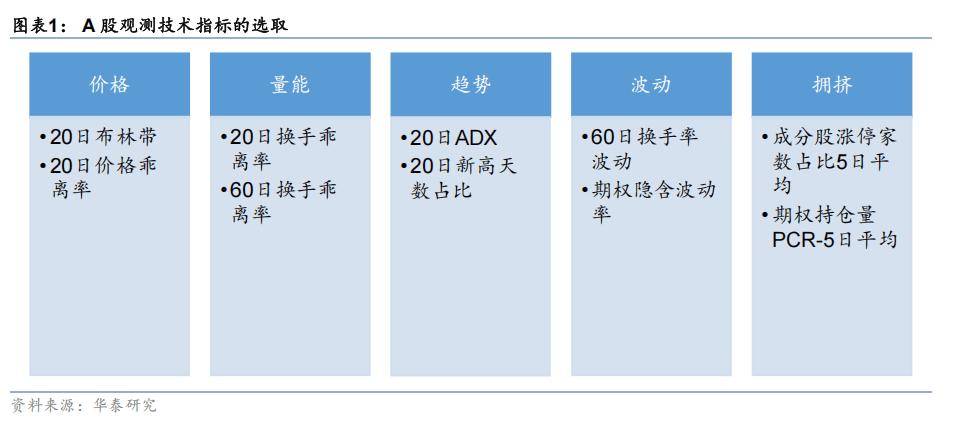
Core Viewpoint - The expectation for the spring market may further strengthen, with A-share indices showing signs of recovery and entering a bullish phase [2][3] Technical Analysis - The A-share technical scoring model indicates that most broad indices have seen a slight rebound in technical scores, with the Shanghai Composite Index surpassing the bullish threshold [3][10] - The model's performance for 2025 shows a timing return of 12.54%, while the overall return for the Wind All A index is 27.65%, resulting in an underperformance of -15.11% [10] Market Strategy - The macro strategy for January is focused on an optimistic growth outlook, with an increased allocation to equities [2][6] - Recommended investment themes include: - Growth style, particularly in the electric equipment and new energy sectors - Domestic demand improvement themes, focusing on consumer services, real estate, home appliances, and beverages [2][5] Style Timing Model - The style timing model has shifted from neutral to bearish on dividend style since December 22, 2025, favoring growth style instead [4][14] - The model indicates a preference for small-cap stocks, operating in a low crowding zone, which suggests a bullish outlook for small-cap stocks [20][23] Industry Rotation Model - The industry rotation model, which utilizes genetic programming techniques, has identified consumer services, electric equipment and new energy, real estate, home appliances, and beverages as favorable sectors [5][24] - The model achieved an absolute return of 40.34% in 2025, outperforming the industry equal-weight benchmark by 15.88 percentage points [24] All-Weather Strategy - The all-weather enhanced portfolio strategy for 2025 has yielded an absolute return of 13.86%, with a Sharpe ratio of 2.22 and a maximum drawdown of 2.67% [6][34] - The strategy has significantly over-allocated to the "growth exceeding expectations" quadrant and slightly to the "inflation below expectations" quadrant [34][35]
中金 • 联合研究 | 消费和地产回暖——香港经济金融季报
中金点睛· 2026-01-05 23:50
Economic Overview - Hong Kong's GDP grew by 3.8% year-on-year in Q3 2025, an increase of 0.7 percentage points from Q2, with a quarter-on-quarter growth of 0.7% [3][6] - Private consumption expenditure rose by 2.1% year-on-year in Q3 2025, up 0.2 percentage points from Q2 [3][8] - Local fixed capital formation increased by 4.3% year-on-year in Q3 2025, a rise of 2.4 percentage points from Q2, indicating a recovery in real estate-related investments [3][9] External Demand - Goods exports accelerated, with a year-on-year growth of 12.1% in Q3 2025, up 0.6 percentage points from Q2 [10] - Service exports grew by 6.3% year-on-year, but this was a decrease of 2.3 percentage points from Q2, primarily due to a slowdown in transportation and tourism services [11] Employment and Inflation - The unemployment rate rose to 3.9% in Q3 2025, an increase of 0.4 percentage points from Q2, with notable rises in the consumption, real estate, and manufacturing sectors [13] - The overall Consumer Price Index (CPI) increased by 1.1% year-on-year in Q3 2025, a decline of 0.7 percentage points from Q2, indicating moderate inflation [14] Financial Market - The Hong Kong dollar experienced fluctuations, initially weakening before strengthening due to interest rate differentials and capital inflows [16] - The benchmark interest rate was lowered in Q3 2025, while the Hong Kong Interbank Offered Rate (HIBOR) rebounded significantly [18] - The Hang Seng Index rose by 11.6% in Q3 2025, continuing its upward trend, with average daily trading volume increasing by 20% compared to Q2 [21][25] Real Estate Market - The total transaction volume in Hong Kong's real estate market grew significantly, with new and second-hand home transactions increasing by 125% and 43% year-on-year, respectively [4][26] - Rental prices continued to rise, with a year-on-year increase of 3.3% in Q3 2025 [27] - The number of new housing starts and land auctions improved, signaling potential increases in housing supply [31][32] Banking Sector - The net interest margin for Hong Kong banks remained stable or slightly increased, outperforming expectations, with credit structure adjustments continuing [5][37] - Customer deposits grew at a rate of 2.4% in Q3 2025, although the growth rate for Hong Kong dollar deposits declined [38] - Asset quality remained stable, with non-performing loan ratios holding steady, while the commercial real estate sector showed signs of stabilization [45][47]

房地产税收新政实施一年 全省53.7万户家庭累计享减免契税61.1亿元
He Nan Ri Bao· 2026-01-05 23:25
河南财经政法大学副教授徐晓表示:"房地产税收政策的实施直接降低了居民购房成本,有助于释放刚 性和改善性住房的市场需求。同时,税收杠杆的运用有效稳定了市场预期,提升了市场活跃度,推动了 房地产行业向可持续发展模式平稳转型。"(记者 贾永标) 责任编辑: 王苑 在郑东新区工作的市民张先生近期购置了一套120平方米的首套住房,按照新政1%的优惠税率,需缴纳 契税2.1万元。他算了笔账:"按之前政策1.5%税率要缴3.5万元契税,新政实施后省了1.4万元,这笔钱 可以用来给新家添置智能家电,安居更有底气了。" 为保障房地产税收政策落地见效,河南省税务部门构建"宣传全面覆盖+政策精准落地+服务便捷高 效"的工作体系,助力房地产市场平稳健康发展。郑州市税务局聚焦不动产涉税业务需求,积极推动与 房管、不动产登记、公安等7个部门的业务协同配合,实现了29项数据的共享集成,将新房契税网上申 报系统和不动产交易网上申报系统接入郑好办APP"税务一件事",实现"数据多跑路、群众少跑腿",让 契税缴纳更便捷,政策享受零距离,办证交易无负担。 1月5日,记者获悉,国家税务总局河南省税务局最新数据显示,财政部、税务总局、住房城乡建设部发 ...
申万宏源:随着重估效应与外资配置效应逐步修复 人民币升值有望推动港股上涨
Zhi Tong Cai Jing· 2026-01-05 22:45
Core Viewpoint - The report from Shenwan Hongyuan indicates a significant positive correlation between the Renminbi (RMB) and Hong Kong stocks historically, but recent rapid appreciation of the RMB has not translated into gains for Hong Kong stocks due to weak earnings and the absence of revaluation and foreign capital allocation effects [1][2]. Group 1: RMB and Hong Kong Stocks Relationship - Historically, there has been a notable positive correlation between the RMB and Hong Kong stocks, particularly since 2016, with a correlation coefficient of -0.54 between the Hang Seng Index and the USD/RMB exchange rate [2]. - When the RMB appreciates by more than 1.5% in a month, the Hang Seng Index has a 93.5% probability of rising; however, since November 13, the RMB has appreciated by 1.9%, while the Hang Seng Index has declined by 4.8%, indicating a significant divergence [2][3]. Group 2: Factors Affecting Hong Kong Stocks - The weak performance of key sectors in Hong Kong stocks has limited the positive impact of RMB appreciation on earnings, with the Hang Seng Index's expected earnings per share (EPS) continuing to decline since Q4 2025 [3]. - The appreciation of the RMB can amplify both profits and losses for Hong Kong stocks, but recent declines in property and oil prices have hindered the asset revaluation logic that typically benefits the market [3]. Group 3: Future Outlook for Hong Kong Stocks and RMB - The potential for a return to a positive correlation between Hong Kong stocks and the RMB hinges on improvements in earnings and the restoration of foreign capital allocation effects [4]. - The combination of upward earnings growth expectations for the next fiscal year and downward expectations for the current fiscal year may signal a recovery in profit expectations for Hong Kong stocks [4]. - As the year-end profit-taking period concludes, the January effect is expected to be strong, and the resilience of the RMB may continue, supported by the gradual restoration of revaluation and allocation effects [4].
