
货币金融服务

Search documents
彭永涛:上半年服务业经济持续向好 发展动能不断增强
Guo Jia Tong Ji Ju· 2025-07-16 02:04
Group 1: Economic Growth of the Service Sector - The service sector maintained a rapid growth rate, with a value added of 39,031.4 billion yuan in the first half of the year, representing a year-on-year increase of 5.5% [2] - The contribution rate of the service sector to national economic growth was 60.2%, an increase of 5.8 percentage points compared to the same period last year [2] - In the second quarter, the service sector's value added accelerated to 195,172 billion yuan, with a year-on-year growth of 5.7% [2] Group 2: High-Quality Development and New Momentum - Modern service industries, such as information technology and business services, showed strong growth, with value added increasing by 11.1% and 9.6% respectively in the first half of the year [3] - The combined value added of these sectors contributed 1.7 percentage points to the overall growth of the service sector [3] - High-tech service industries saw significant investment growth, with fixed asset investment in high-tech services increasing by 8.6% year-on-year [4] Group 3: Service Consumption Trends - Service consumption showed steady improvement, with service retail sales growing by 5.3% year-on-year, outpacing the growth of goods retail sales [5] - Online retail sales increased by 8.5% year-on-year, indicating a positive trend in new business models such as instant retail and live e-commerce [5] - Cultural and tourism services also experienced significant growth, with transaction volumes increasing by 31.9% and 7.4% respectively [5] Group 4: International Trade and Investment in Services - The total import and export value of service trade reached 32,543.6 billion yuan, a year-on-year increase of 7.7% [6] - The actual use of foreign capital in the service sector was 259.64 billion yuan, accounting for over 70% of total foreign capital utilization [6] - The e-commerce service industry saw a remarkable increase in foreign investment, growing by 146% year-on-year [6] Group 5: Market Sentiment and Future Outlook - The business activity index for the service sector remained above the critical point, averaging 50.2, indicating expansion [8] - The business activity expectation index averaged 56.7, reflecting a positive market sentiment [8] - The service sector is expected to continue its upward trend, but external uncertainties remain, necessitating further policy support to strengthen domestic circulation and enhance service quality [8]
美国疯狂收割全球,为什么唯独割不动中国?
Sou Hu Cai Jing· 2025-07-09 05:07
Group 1: Dollar's Dominance - The US dollar has long been the world's primary reserve currency, often accounting for over 40% of global trade, making it a core pillar of the global economy [1][4] - The dollar's dominance has allowed the US to enjoy rapid economic growth, but it also leads to wealth extraction from other countries during economic bottlenecks [1][8] - The Bretton Woods system established in 1944 marked the formal beginning of the dollar's status as the world's leading currency, linking it to gold and creating a stable exchange rate mechanism [6][4] Group 2: Historical Context - The transition of dominant currencies throughout history is closely related to the rise and fall of great powers, with the dollar maintaining its position since the Bretton Woods agreement [4][6] - Post-World War II, the US emerged as a global economic power due to its minimal war impact and significant gold reserves, which fueled industrial and trade growth [3][6] Group 3: Economic Strategies - The US solidified the dollar's position by establishing oil trade agreements in the 1970s, making the dollar the sole currency for oil transactions, further enhancing its global economic influence [7][8] - The US has utilized a debt issuance strategy to bring dollars back into the domestic economy, promoting investment and consumption without immediate large costs [7][8] Group 4: Global Economic Impact - By 2022, US debt exceeded thirty trillion dollars, yet as long as interest payments can be met, the economy can continue to function, allowing the US to maintain its global economic advantage [8][10] - The cyclical nature of US monetary policy, including interest rate adjustments, has led to economic crises in emerging markets, allowing the US to acquire assets at lower prices during downturns [8][10] Group 5: Challenges and Future Outlook - Despite the wealth gained through dollar dominance, the US faces challenges from rising global manufacturing and the potential for economic instability due to its hollowing-out trend [15] - China's significant economic size, manufacturing capabilities, and strategic autonomy present a challenge to US economic hegemony, making it difficult for the US to exert the same level of influence as before [13][15]


日本6月基础货币同比 -3.5%,前值 -3.4%。
news flash· 2025-07-01 23:50
Core Viewpoint - Japan's monetary base in June decreased by 3.5% year-on-year, compared to a previous decline of 3.4% [1] Group 1 - The monetary base contraction indicates a continued tightening in Japan's monetary policy environment [1]
经济景气水平总体保持扩张(锐财经)
Ren Min Ri Bao· 2025-06-30 22:36
Core Insights - The manufacturing PMI for June is at 49.7%, indicating a slight expansion in the manufacturing sector, with 11 out of 21 surveyed industries in the expansion zone, an increase of 4 from the previous month [2][3] - The non-manufacturing business activity index is at 50.5%, showing continued expansion in the non-manufacturing sector [4][6] - The comprehensive PMI output index is at 50.7%, reflecting an overall acceleration in production and business activities [6] Manufacturing Sector - The manufacturing PMI increased to 49.7%, with production and new orders indices at 51.0% and 50.2%, respectively, indicating improved production activities and market demand [2][3] - The purchasing volume index rose to 50.2%, up by 2.6 percentage points, suggesting enhanced procurement willingness among enterprises [2] - Price indices for major raw materials and factory prices improved, with indices at 48.4% and 46.2%, respectively, influenced by rising international oil prices [2] Key Industries - Key industries such as equipment manufacturing, high-tech manufacturing, and consumer goods continue to expand, with PMIs at 51.4%, 50.9%, and 50.4%, respectively [3] - The construction sector shows a significant recovery, with the business activity index at 52.8%, indicating robust infrastructure project progress [4][5] Market Expectations - The service sector's business activity expectation index is at 56.0%, indicating optimism among service enterprises regarding future development [5] - The construction industry's business activity expectation index rose to 53.9%, reflecting increased confidence among construction firms [5] Overall Economic Outlook - The overall economic activity is expected to improve as policy effects continue to manifest, with investment and consumption-related demands likely to be released [7]
PMI连续回升彰显经济韧性
2 1 Shi Ji Jing Ji Bao Dao· 2025-06-30 22:10
Economic Resilience - In the first half of the year, the Chinese economy demonstrated resilience amid complex domestic and international conditions, supported by a series of proactive policy measures [1] - The manufacturing PMI and composite PMI both showed a rebound for two consecutive months in June, indicating a gradual stabilization and improvement in the economy [1] Manufacturing Sector - The manufacturing PMI in June was 49.7%, up 0.2 percentage points from the previous month, marking a continuous recovery in the economic climate [1] - Production activities in June accelerated despite it being a traditional off-peak season, showing a seasonal anomaly [1] - The purchasing volume index rose significantly by 2.6 percentage points to 50.2%, while raw material inventory increased by 0.6 percentage points to 48%, the highest level this year [1] - The new orders index rose by 0.4 percentage points to 50.2%, indicating an overall improvement in market demand [1] Key Industries - The three major industries—equipment manufacturing, high-tech manufacturing, and consumer goods—maintained good expansion momentum, with PMIs of 51.4%, 50.9%, and 50.4% respectively, all remaining in the expansion zone for two consecutive months [2] - Equipment manufacturing showed particularly active production and demand, driving collaborative development across related industries [2] - The high-tech manufacturing sector provided strong support for economic transformation and high-quality development [2] - The consumer goods sector's steady expansion reflected improving consumer confidence and recovering market demand [2] Construction Sector - The construction business activity index rose to 52.8%, an increase of 1.8 percentage points from the previous month, indicating a significant improvement in the sector's climate [2] - The positive trend was supported by government policies and funding guarantees, including the issuance of long-term special bonds and local government special bonds [2] Service Sector - The service sector maintained steady expansion, with a business activity index of 50.1%, despite a slight decline due to seasonal factors [3] - Certain service industries, such as telecommunications, financial services, and insurance, remained robust with business activity indices above 60% [3] - The service sector's business activity expectations index remained high, reflecting optimism about future market developments [3] Fiscal and Monetary Policies - The issuance of new special bonds accelerated significantly in June, focusing on key areas to support economic growth [4] - The first round of interest rate cuts and reserve requirement ratio reductions for the year has been fully implemented, alleviating pressure on the banking system and reducing financing costs [4] - The central bank and other departments are expected to introduce more incremental policies to further promote high-quality economic development [4] Real Estate Support - The central and local governments are increasing support for the real estate sector, with measures aimed at stabilizing the market and optimizing existing policies [5] - More special bond funds are expected to be allocated to areas such as shantytown renovation and old community upgrades to improve living conditions [5]
49.7%!6月份制造业PMI出炉→
新华网财经· 2025-06-30 09:24
Core Viewpoint - The overall economic climate in China is showing signs of expansion, with key indices indicating a recovery in both manufacturing and non-manufacturing sectors in June. Group 1: Manufacturing Sector - The Manufacturing Purchasing Managers' Index (PMI) rose to 49.7% in June, with 11 out of 21 surveyed industries in the expansion zone, an increase of 4 from the previous month [3] - Production and new orders indices were at 51.0% and 50.2%, respectively, indicating accelerated manufacturing activities and improved market demand [3] - The purchasing volume index increased to 50.2%, up by 2.6 percentage points, reflecting enhanced procurement willingness among enterprises [3] - Large enterprises showed a PMI of 51.2%, indicating significant support for the manufacturing sector, while medium and small enterprises had PMIs of 48.6% and 47.3%, respectively [4] - Key industries such as equipment manufacturing, high-tech manufacturing, and consumer goods continued to expand, with PMIs of 51.4%, 50.9%, and 50.4% [4] Group 2: Non-Manufacturing Sector - The Non-Manufacturing Business Activity Index reached 50.5%, indicating continued expansion, with a slight increase of 0.2 percentage points from the previous month [5] - The service sector's business activity index was at 50.1%, showing stability, although some consumer-related sectors experienced a decline in activity [5] - The construction industry saw a significant increase, with a business activity index of 52.8%, up by 1.8 percentage points, indicating a recovery in construction activities [5] Group 3: Composite PMI - The Composite PMI Output Index rose to 50.7%, reflecting an overall acceleration in production and business activities across sectors [7][8]

2025年6月PMI数据点评:稳增长政策效应显现叠加贸易局势缓和,6月宏观经济景气度延续回升
Dong Fang Jin Cheng· 2025-06-30 09:09
Economic Indicators - In June 2025, China's manufacturing PMI was 49.7%, up 0.2 percentage points from May[1] - The non-manufacturing business activity index in June was 50.5%, also up 0.2 percentage points from May[1] - The comprehensive PMI output index rose to 50.7%, an increase of 0.3 percentage points from May[1] Policy Impact - The rebound in manufacturing PMI is attributed to the ongoing effects of growth-stabilizing policies, including a series of financial measures announced on May 7, which led to a sustained increase in social financing[2] - The new orders index increased by 0.4 percentage points, returning to the expansion zone, indicating strong market demand[2] Trade Environment - The easing of trade tensions, particularly following the May 12 de-escalation of the "tariff war," contributed to a slight recovery in the new export orders index, which rose to 47.7%, up 0.2 percentage points from the previous month[2] Sector Performance - The construction PMI in June was 52.8%, up 1.8 percentage points, indicating robust activity despite a slight decline in civil engineering indices[6] - The high-tech manufacturing PMI remained stable at 50.9%, reflecting strong demand and policy support[4] Challenges Ahead - Despite the positive indicators, the overall export slowdown may continue due to high tariffs exceeding 40% on Chinese goods[3] - The real estate market shows signs of intensified adjustment, which may limit the PMI's rebound potential[3] Future Outlook - GDP growth for the first half of the year is projected at around 5.2%, with no major new policy measures expected in the short term[7] - The manufacturing PMI is anticipated to remain around 49.7% in July, but with significant downward risks due to external pressures[8]
亚洲货币因中国PMI积极数据走强,美元因降息预期走弱
Sou Hu Cai Jing· 2025-06-30 08:10
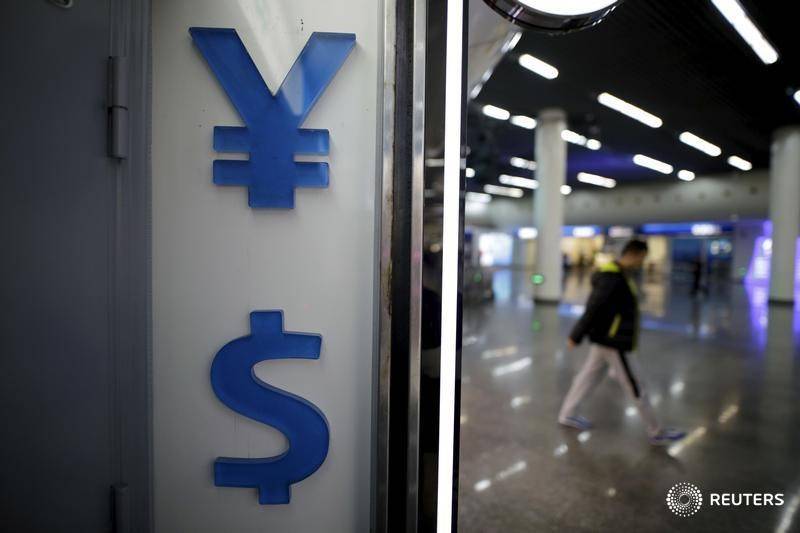
Group 1 - Most Asian currencies strengthened as data indicated improvement in Chinese business activity, while the US dollar weakened due to heightened expectations of a Federal Reserve rate cut [1][3] - The US dollar remains at a three-year low, pressured by rising government debt concerns, especially with a comprehensive tax cut and spending reduction bill progressing in the Senate [3][7] - The Chinese yuan appreciated slightly, with the June PMI showing a smaller-than-expected contraction in manufacturing and a rebound in non-manufacturing activity [4][5] Group 2 - The data reflects an improvement in Chinese business activity, with a recovery in overseas orders following the agreement to reduce trade tariffs between the US and China [5] - Despite the improvement, Chinese manufacturing has contracted for the third consecutive month, indicating ongoing pressure from relatively high US tariffs and weak domestic demand [5] - The US dollar index and futures fell by 0.2%, remaining close to the lowest level since early 2022, amid market expectations for a rate cut by the Federal Reserve [6] Group 3 - Concerns over rising US government debt due to the tax cut bill are weighing on the dollar, with the Congressional Budget Office estimating an increase of nearly $3.3 trillion in debt over the next decade [7] - The Asian currencies generally benefited from the weak dollar, although some lackluster data and uncertainty regarding Trump's trade policies limited larger gains [7] - The Japanese yen fell by 0.4% against the dollar, despite lower-than-expected industrial production growth in May [9]
2025年6月PMI点评:外部扰动减弱,内生动能修复
EBSCN· 2025-06-30 07:43
Manufacturing Sector - The manufacturing PMI for June 2025 is 49.7%, up from 49.5% in May, aligning with market expectations[2] - The production index increased by 0.3 percentage points to 51.0%, while the new orders index rose by 0.4 percentage points to 50.2%[5] - Large and medium enterprises showed improved sentiment, with large enterprises' PMI rising to 51.2% and medium enterprises' PMI to 48.6%, while small enterprises' PMI fell to 47.3%[5] Economic Recovery Indicators - External disturbances have weakened, leading to a recovery in new export orders, which continue to rise[3] - High-energy-consuming industries are stabilizing, with their PMI increasing by 0.8 percentage points to 47.8%[15] - The service sector's business activity index slightly decreased to 50.1%, primarily due to the end of holiday effects, but remains in the expansion zone[27] Price and Inventory Trends - The raw material purchase price index rose to 48.4%, and the factory price index increased to 46.2%, both recovering from previous declines[23] - The raw material inventory index increased by 0.6 percentage points to 48.0%, indicating improved production activity[23] Construction Sector - The construction sector's business activity index rose significantly to 52.8%, reflecting a positive trend in housing construction activities[32] - The government is implementing policies to stabilize the real estate market, which is expected to further improve supply-demand dynamics[33]
【权威解读】6月份制造业采购经理指数继续回升 非制造业商务活动指数扩张有所加快
中汽协会数据· 2025-06-30 07:19
Group 1: Manufacturing Purchasing Managers Index (PMI) Recovery - In June, the manufacturing PMI rose to 49.7%, with 11 out of 21 surveyed industries in the expansion zone, an increase of 4 industries from the previous month, indicating an overall expansion in manufacturing sentiment [2] - The production index and new orders index were at 51.0% and 50.2%, respectively, both showing improvements of 0.3 and 0.4 percentage points from the previous month, suggesting accelerated production activities and improved market demand [2] - The purchasing volume index increased to 50.2%, up by 2.6 percentage points, reflecting enhanced procurement willingness among enterprises due to the recovery in production and demand [2] Group 2: Price Index Recovery - The main raw material purchase price index and factory price index were at 48.4% and 46.2%, respectively, both rising by 1.5 percentage points, indicating an overall improvement in manufacturing market prices [3] - The increase in prices was influenced by rising international crude oil prices, particularly affecting the petroleum, coal, and other fuel processing industries, while the black metal smelting and rolling processing industries saw a decline in price indices due to falling iron ore prices and insufficient terminal demand [3] Group 3: Business Activity Index in Non-Manufacturing Sector - The non-manufacturing business activity index was at 50.5%, up by 0.2 percentage points, indicating continued expansion in the non-manufacturing sector [5] - The service industry business activity index was at 50.1%, slightly down by 0.1 percentage points, with certain sectors like telecommunications and financial services showing strong growth, while consumer-related sectors experienced a decline [5] - The construction industry business activity index rose to 52.8%, an increase of 1.8 percentage points, indicating a recovery in construction activities, particularly in civil engineering [5] Group 4: Comprehensive PMI Output Index - The comprehensive PMI output index was at 50.7%, up by 0.3 percentage points, indicating an overall acceleration in production and business activities across enterprises [6] - The manufacturing production index and non-manufacturing business activity index were at 51.0% and 50.5%, respectively, contributing to the overall expansion reflected in the comprehensive PMI output index [6]
