高端制造

Search documents
【发展之道】以产业创新助力消费增长
Zheng Quan Shi Bao· 2025-12-29 19:29
Core Viewpoint - Expanding domestic demand is essential for maintaining long-term economic health in China and meeting the growing needs of the population for a better life. The shift from high-speed to medium-high-speed growth necessitates increasing the consumption rate and addressing consumption shortfalls through industrial innovation and high-value-added industries, particularly in high-tech sectors like artificial intelligence [1][2]. Group 1: Economic Context - China's economy faces long-term pressures from an aging population, with the consumer rate at approximately 39.6% in 2023, significantly lower than developed countries (50%-70%) and the global average for middle-income countries (55%) [1]. - The traditional approach of income distribution adjustment is limited, necessitating a focus on industrial innovation to create new consumption demand and enhance overall economic growth [1][2]. Group 2: Industrial Innovation and Consumption - Developing high-value and high-tech industries is crucial for expanding economic growth during the medium-high-speed growth phase. Historical examples from the U.S. and Japan illustrate how technological advancements in sectors like information technology and healthcare have led to significant increases in service consumption [2]. - Artificial intelligence is identified as a key driver for consumption growth, enhancing production efficiency and creating high-income jobs, particularly in sectors like smart manufacturing and new energy vehicles [3]. Group 3: Synergy Between Technology and Consumption - The integration of artificial intelligence in consumer sectors is transforming traditional products into smarter, higher-end offerings, while also tailoring services to meet consumer needs. For instance, online retail sales are projected to account for 26.8% of total retail sales by 2024, with AI systems improving conversion rates by over 40% [4]. - The growth in high-tech industries has led to an average annual real income growth of 6.1% for residents from 2013 to 2024, with incomes in high-tech sectors growing faster than in traditional industries, highlighting the positive impact of industrial innovation on income distribution [4]. Group 4: Policy and Market Dynamics - The pathway of "industrial policy—developing domestic demand—expanding growth—income distribution—promoting consumption" has shown significant advantages over mere income distribution adjustments, creating new value through technological innovation and industrial upgrades [5]. - Initiatives like the trade-in policy for consumer goods and the promotion of AI in consumption are fostering a positive interaction between policy guidance, industrial upgrades, and consumption expansion, benefiting both industry and consumer welfare [5]. Group 5: Future Outlook - China is at a critical juncture for industrial and consumption upgrades, with a vast market of 1.4 billion people and a growing middle-income group providing ample opportunities for industrial innovation [5]. - Focusing on key sectors such as artificial intelligence, high-end equipment, and biomedicine, while optimizing income distribution, is essential for activating consumption potential and ensuring domestic demand becomes a primary driver of economic growth [5][6].
野村-结构分化进入下半场
野村· 2025-12-29 15:51
Investment Rating - The report maintains a structural investment focus, emphasizing opportunities in high-value manufacturing, aesthetic exports, and passive fund inflows, particularly in the context of improving liquidity in the market [1][6][24]. Core Insights - The A-share market is expected to continue its structural differentiation into 2026, driven by industry prosperity, corporate profitability, and internal and external demand dynamics [1][3][9]. - The profitability forecast for the CSI 300 index has been raised to 7.2% for 2026 and 8.4% for 2027, indicating that market growth will increasingly rely on fundamental factors rather than valuation expansion [4][22]. - The TMT sector has maintained high trading activity, becoming a significant market driver, with passive funds contributing to increased liquidity [8][26]. Summary by Sections Market Performance and Trends - The A-share market is projected to be driven by breakthroughs in AI technology and geopolitical developments, with a focus on a "barbell strategy" that balances growth and dividend assets [2][3]. - Structural differentiation is anticipated to manifest in three areas: industry prosperity, corporate profitability, and internal/external demand dynamics [3][9]. Profitability Forecast - The profitability of the CSI 300 index has been adjusted upward, with forecasts of 7.2% and 8.4% for 2026 and 2027, respectively, indicating a reliance on fundamental growth rather than valuation expansion [4][22]. Capital Flow Characteristics - Key capital flow characteristics include the export of high-value manufacturing goods, aesthetic exports, and the passive nature of incremental capital, particularly following the implementation of the OCI policy [6][24]. - The total scale of OCI accounts for major insurance companies increased by nearly 41 billion yuan in the first half of 2025 compared to the end of 2024, highlighting the growing appeal of dividend-centric state-owned enterprises [6]. Sectoral Performance - The technology sector's net profit share has been increasing, while the financial and real estate sectors have seen declines in revenue and profit shares [10][11][12]. - Companies with over 20% of revenue from overseas have shown significant growth in both revenue and net profit, reflecting the impact of external demand on A-share performance [14][15]. Future Market Expectations - The market is expected to continue exhibiting fundamental differentiation, influenced by technological innovation, corporate leadership disparities, and enhanced external demand [16][20]. - The baseline scenario includes a neutral to accommodative stance from the Federal Reserve and ongoing structural adjustments in domestic policy [17]. Recommended Investment Directions - Three key areas for investment are identified: high-end manufacturing, globalization of Chinese consumer products, and the passive inflow of incremental capital [24][25]. - High-end manufacturing is expected to leverage global R&D and capital advantages, while Chinese consumer products are anticipated to gain traction in overseas markets through effective marketing strategies [25].
外资持续看好中国资产:盈利接棒估值,科技仍是主线
2 1 Shi Ji Jing Ji Bao Dao· 2025-12-29 14:08
Core Viewpoint - Foreign institutions are optimistic about the Chinese stock market for 2026, shifting their focus from "valuation repair" in 2025 to "profit growth" in 2026, driven by accelerating corporate earnings, macro policy support, and RMB appreciation [1][2][5]. Investment Trends - As of December 20, 2025, global investment in Chinese assets through ETFs has seen a net inflow of $83.1 billion, with the technology sector receiving the most inflow at $9.5 billion [1][9]. - Active foreign capital is expected to return to the Chinese stock market, with some institutions already increasing their positions in preparation for 2026 [10][12]. Earnings Forecasts - Goldman Sachs predicts a 38% increase in the Chinese stock market by the end of 2027, with corporate earnings expected to grow by 14% in 2026 and 12% in 2027 [3]. - UBS forecasts an increase in the Hang Seng Tech Index target to 7,100 points and the MSCI China Index target to 100 points by the end of 2026, indicating significant upside potential [3]. Valuation Insights - Morgan Stanley and Goldman Sachs believe there is still about a 10% potential for valuation repair in the Chinese stock market, which will support market growth [4][5]. - JPMorgan has upgraded its rating on the Chinese market to "overweight," citing reasonable valuations and light positions among international investors [4]. Sector-Specific Opportunities - The technology sector is highlighted as a core focus for profit growth, with opportunities in artificial intelligence, semiconductors, and high-end manufacturing [6]. - Traditional industries are also attracting foreign investment, with improvements in state-owned enterprise profitability and dividend increases acting as a dual engine for market growth [7][8]. Market Dynamics - The report indicates that the Chinese stock market will enter a new phase dominated by fundamentals, with a focus on structural investment opportunities [2][5]. - The anticipated return of active foreign capital is expected to be driven by improving corporate fundamentals, a weaker dollar, and the attractiveness of RMB assets [12].



外资暴跌,美国以为得逞,中国反手掏出钱:投资中国就是投资未来
Sou Hu Cai Jing· 2025-12-29 12:13
Group 1 - The Chinese venture capital sector has undergone significant changes in recent years, driven by U.S. government policies that have led to a sharp decline in U.S. dollar fund investments in Chinese technology [1][5] - In response, the Chinese government has established a National Venture Capital Guidance Fund with an investment of 100 billion RMB, planning for a long-term investment cycle of up to 20 years [1][14] - This fund aims to address the challenges posed by the withdrawal of foreign capital and to reshape the innovation capital ecosystem in China, focusing on strategic investments in hard technology [19] Group 2 - Over the past decade, foreign capital, particularly U.S. dollar funds, played a crucial role in China's venture capital market, accounting for approximately 40%-50% of the total investment in 2021, which was around 114 billion USD [3] - However, due to geopolitical tensions and policy adjustments, there has been a notable reduction in U.S. dollar fund investments in sensitive technology sectors, with a reported 40% year-on-year decline in 2023 [5][12] - Despite the contraction in sensitive areas, foreign capital has maintained stable investments in non-sensitive sectors, indicating that the overall foreign venture capital landscape has not experienced a complete collapse [6] Group 3 - The National Venture Capital Guidance Fund is designed with a unique structure of a 10-year investment period followed by a 10-year exit period, contrasting with the traditional 7-year investment and 3-year exit model of dollar funds [16] - This long-term approach allows for a focus on nurturing early-stage and startup companies, with 70% of the fund's capital allocated to seed and early-stage enterprises, promoting a more patient capital strategy [16][18] - The initiative is part of a broader effort to enhance China's technological innovation ecosystem, supported by fiscal policies and long-term bonds, aiming to cultivate globally competitive technology firms [18][19]


九连阳!谁在推A股冲向4000点?
格隆汇APP· 2025-12-29 08:16
Core Viewpoint - The A-share market has shown strong performance recently, with the Shanghai Composite Index rising for nine consecutive trading days and surpassing 3900 points, indicating a robust influx of capital into the market [2]. Group 1: Reasons for Strength - The first reason for the recent strength in the A-share market is macro liquidity and policy expectations, with a supportive fiscal and monetary policy anticipated for 2026, which is expected to enhance market risk appetite [4]. - The second reason is the expectation of new economic drivers for the upcoming year, particularly in high-tech manufacturing and equipment manufacturing, which align with the "14th Five-Year Plan" and provide a fundamental anchor for market growth [5][6]. - The third reason is the healthy rotation within the market, with a broad-based structural rotation rather than reliance on a single sector, indicating a sustainable upward momentum [7][8]. Group 2: Market Rotation Dynamics - The market has experienced a clear cyclical rotation between high-growth sectors led by AI and value sectors represented by large-cap blue chips, creating a repetitive market pattern [9]. - This rotation is driven by multiple factors, including valuation constraints, policy rhythms, capital behavior, and macro expectations, reflecting a rational choice in response to different macro environments [10]. - Quantitatively, the market has completed at least two full cycles of growth and value style switching since September 2024, with clear trajectories observed [11]. Group 3: A500 Index Insights - The CSI A500 index has emerged as a significant player in the market, with a net inflow of 960.65 billion yuan since December, indicating a shift towards more balanced and stable investment styles [14]. - The A500 index is strategically positioned to adapt to market conditions, combining defensive and offensive characteristics, and covers a broad range of industries, making it a core asset for investors [18][24]. - The index has shown resilience during market fluctuations, outperforming the Shanghai Composite Index during growth phases and experiencing less volatility during value recovery phases [19][21]. Group 4: Investment Opportunities - The A500 index offers a balanced investment option that includes both emerging sectors and established companies with stable cash flows, appealing to long-term investors seeking to capitalize on China's economic growth [22][24]. - The A500 ETF has become a mainstream tool for market participants, providing diverse options for long-term capital allocation in the A-share market [25].

智库报告:“黑天鹅”风险或成常态,考验企业声誉管理应变力
Sou Hu Cai Jing· 2025-12-29 07:19
南都讯记者潘珊菊 发自北京 12月29日,中国传媒大学媒介与公共事务研究院发布研究报告,分析2025年 企业声誉十大负面影响因素,并对2026年影响企业声誉的十大因素作出预测。 公众所理解的许多专业概念,大多存在于固有认知中,通过口口相传或者非权威渠道解读,长时间被误读 误解,与专业界定存在较大出入。比如"预制菜""智能驾驶(辅助驾驶)""零添加""0糖0脂0卡"等等,有的 概念看起来"凶险可怕",实则被长期污名化;有的概念看起来"人畜无害",实则被夸大宣传、刻意美化。 上述两种情况对于企业来讲,都十分不利。由于一个概念解释不清,导致一个企业甚至一个行业受到重创 的情况屡见不鲜。用好行业概念的定义权和解释权,打造稳固企业与行业发展的"助力器"而不是"绊脚 石",成为企业声誉管理面临的一项重要课题。 报告认为,在国家政策护航和多方协同发力下,2025年国内企业声誉整体形势向好,但也存在以下十个方 面的挑战和压力,影响了企业声誉管理效果。 1.生产经营管理中的硬伤,成为引发企业声誉危机的导火索 政府监管力度持续加码,行业治理标准不断提升,但企业在生产经营管理环节的问题仍有发生,包括安全 漏洞、质量缺陷、服务短板、 ...

年末关键日!1.4万亿资金暗战两大主线,跨年行情布局图清晰了!
Sou Hu Cai Jing· 2025-12-29 04:27
Core Viewpoint - The market is experiencing structural differentiation, with a strong performance in specific sectors, particularly in hard technology and resource revaluation, while some traditional sectors face pressure [1][2]. Market Overview - As of the midday close, the Shanghai Composite Index rose by 0.31% to 3975.92 points, while the Shenzhen Component Index saw a slight increase of 0.03%. The STAR 50 Index performed notably well, increasing by 0.91%, indicating strong momentum in the hard technology sector. The ChiNext Index, however, fell by 0.32% [1]. - The total trading volume across both markets reached nearly 1.4 trillion yuan, reflecting an active trading atmosphere despite a slight decrease from the previous day [1]. - The Hang Seng Technology Index surged by 1.55%, showing a strong correlation with the A-share technology sector [1]. Sector Performance - The leading sectors included oil and petrochemicals, defense and military, and electronics, which collectively drove market momentum. The metals sector, particularly non-ferrous metals, attracted significant attention with a trading volume exceeding 100 billion yuan, making it a focal point for capital [1][2]. - Conversely, sectors such as utilities, pharmaceuticals, and food and beverage faced temporary adjustments, indicating a clear "offensive and defensive" market sentiment [1]. Non-Ferrous Metals Sector Analysis - The non-ferrous metals sector is experiencing heightened activity driven by multiple macroeconomic and industrial factors. Expectations of global liquidity easing are strengthening, particularly following lower-than-expected U.S. CPI data, which bolsters predictions of a potential interest rate cut by the Federal Reserve [2]. - The ongoing energy revolution is creating long-term structural demand for various metals, not just lithium, cobalt, and nickel. The integration and price increases in the lithium battery separator industry reflect a reallocation of profits across the entire supply chain [2]. - Geopolitical uncertainties and proactive domestic fiscal policies provide dual support for both "safe-haven" investments in precious metals and potential demand for industrial metals [2]. Supply and Demand Dynamics - The silver market is facing a significant supply-demand gap, with the global shortfall expected to exceed 100 million ounces in 2025, marking the fifth consecutive year of expansion. Any marginal improvement in demand could significantly impact prices [3]. Investment Outlook - Three key areas for future investment focus include: 1. Non-ferrous metals such as copper, aluminum, and silver 2. Technology growth sectors supported by industrial policies, including semiconductors, artificial intelligence, and commercial aerospace 3. High-end manufacturing sectors that may benefit from fiscal stimulus and possess global competitiveness [4]. - The current market environment suggests that a cross-year rally may be underway, driven by sustained market trends, positive policy expectations, and improved overseas liquidity conditions [3][4].
并购聚力,产质跃升 “新质生产力-并购新浪潮”金融论坛成功举办!
Xin Lang Cai Jing· 2025-12-29 02:55
Group 1 - The "New Quality Productivity - New Wave of Mergers and Acquisitions" financial forum was successfully held on December 26, 2025, to explore new paths for industrial integration and value creation in the field of mergers and acquisitions for technology innovation enterprises [2][15] - The forum was hosted by Shanghai Jiao Tong University’s Shanghai Advanced Institute of Finance (SAIF) and aimed to create a high-end communication platform for the integration of new quality productivity and the M&A market [2][5] - Key industry experts and leaders attended the forum to share cutting-edge practices and analyze industry bottlenecks, aiming to serve industrial upgrades and promote the development of new quality productivity [2][15] Group 2 - Li Feng, in his speech, highlighted that China's M&A market for technology innovation enterprises is entering a new wave of development characterized by a dual drive of "independent development of new quality productivity enterprises + technological transformation and upgrading of traditional enterprises" [4][17] - The forum aimed to leverage the research capabilities of academic think tanks and the resources of professional platforms to build an efficient communication bridge for the deep integration of new quality productivity cultivation and the M&A market [5][18] Group 3 - Wang Jianjun shared the current situation and research achievements of the Shanghai International M&A Research Center, emphasizing the need for policy formulation to shift towards classified and precise regulation, avoiding blind encouragement [7][20] - He stressed the importance of maintaining a dynamic balance between risk prevention and development promotion in regulatory guidance, advocating for a focus on sustainable development rather than short-term gains [7][20] Group 4 - The roundtable discussion featured deep dialogues among industry leaders on the dual drive of "independent development of new quality productivity enterprises + technological transformation and upgrading of traditional enterprises," addressing challenges such as valuation recognition and strategic integration [13][26] - The forum underscored the vision of building an efficient communication bridge for the deep integration of new quality productivity cultivation and the M&A market, aiming for high-quality mergers and acquisitions [26]

年内19家A股公司成功发行H股 合计募资占港股新股募资
Zheng Quan Ri Bao· 2025-12-29 02:33
Group 1 - The enthusiasm for A-share companies to list in Hong Kong has surged since 2025, with a significant increase in the "A+H" dual listing model, as evidenced by 19 A-share companies successfully listing in Hong Kong by December 28, 2025, a 533% increase from 3 companies in 2024, accounting for over 50% of the total fundraising in the Hong Kong IPO market [1][3] - Over 160 A-share listed companies have disclosed plans to list in Hong Kong across various sectors, including renewable energy, healthcare, and smart home technology, with many achieving "announcement to listing" within the same year [2][3] - The total amount raised by 111 companies listed in Hong Kong in 2025 reached approximately 2786.78 million HKD, with A-share companies contributing about 1399.93 million HKD [3] Group 2 - The Hong Kong Stock Exchange has implemented significant reforms in 2025, enhancing its role as a capital hub connecting mainland China and global markets, which is crucial for A-share companies' globalization strategies [4] - Companies like Dize (Jiangsu) Pharmaceutical Co., Ltd. and Shenzhen Lulian Technology Co., Ltd. have announced plans to issue H-shares and list on the Hong Kong Stock Exchange, emphasizing the importance of this move for their global strategy and brand image [4] - A-share companies listing in Hong Kong can significantly broaden their financing channels, improve governance and transparency to meet international standards, and enhance their global brand recognition [5][6]
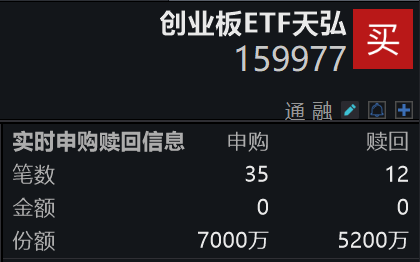
年内超百家战略性新兴产业企业上市!创业板指上周5连阳涨近4%,创业板ETF天弘(159977)上周五全天净申购1800万份同类居首!
Sou Hu Cai Jing· 2025-12-29 01:39
Group 1 - The core viewpoint of the news highlights the significant performance of the Tianhong ChiNext ETF (159977), which saw a turnover of 2.53% and a transaction volume of 216 million yuan, with the underlying ChiNext Index (399006) rising by 0.14% [1] - The Tianhong ChiNext ETF experienced a net subscription of 18 million units, ranking first among similar products, and its total shares increased by 1.025 billion units over the past six months [1] - Key stocks within the ChiNext Index showed strong performance, with Guangwei Composites (300699) up 8.43%, Tianhua New Energy (300390) up 8.01%, and Sunshine Power (300274) up 7.86% [1] Group 2 - The Tianhong ChiNext ETF focuses on strategic emerging industries such as high-end manufacturing, photovoltaics, and new energy vehicles, and is characterized by a 20% price fluctuation limit, providing high elasticity advantages [2] - The Ministry of Industry and Information Technology emphasized the need to address "involution" competition and to curb low-price, low-quality competition during the national industrial and information technology conference [2] - In 2023, over 100 strategic emerging industry companies have listed on the A-share market, raising a total of 125.324 billion yuan, with a focus on new-generation information technology and high-end sectors [3] Group 3 - According to Debon Securities, the current market environment is stabilizing, leading to an increase in market risk appetite, with the offshore RMB breaking the 7 yuan mark against the US dollar, potentially accelerating foreign investment in quality Chinese assets [4] - The Central Economic Work Conference highlighted the importance of technological innovation in building a modern industrial system, with commercial aerospace, artificial intelligence, and semiconductors identified as key development areas [4]