生猪养殖

Search documents
湾财周报 大事记 外卖大战,奶茶店迎泼天富贵;罗马仕停工
Nan Fang Du Shi Bao· 2025-07-13 14:51
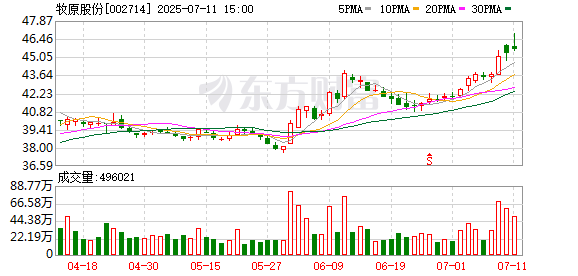
Company News - Romashi has officially ceased operations and closed multiple flagship stores on various platforms due to ongoing quality issues, with employees reportedly packing their belongings and seeking legal counsel for unpaid benefits [8][9] - The first low-altitude economy asset-backed security (ABS) in China has been listed on the Shenzhen Stock Exchange, with a total issuance scale of 584 million yuan, aimed at supporting the development of the low-altitude economy [11] - Muyuan Foods, known as "Pig King," has reported a staggering net profit increase of 9 times for the first half of 2025, with expected profits between 10.5 billion to 11 billion yuan, driven by increased pig sales and reduced breeding costs [12][13] - Renrenle, once a leading retail chain, has officially delisted from the stock market after entering the delisting period on June 13, 2025, marking the end of its 15-year journey in A-shares [14] - Knight Dairy has been investigated for significant losses in futures trading and failure to disclose these losses in a timely manner, highlighting the struggles of regional dairy companies [15][16] - Seres Group has projected a net profit of 2.7 billion to 3.2 billion yuan for the first half of 2025, representing a year-on-year increase of 66.2% to 97% [16] - GAC Fiat Chrysler has been declared bankrupt due to its inability to repay debts, as confirmed by the management [17] - Honda China reported a 24% year-on-year decline in vehicle sales for the first half of 2025, with total sales of 315,152 units [18] Industry Insights - The real estate market in Chengdu has outperformed Shanghai, with over 176,000 homes sold in the first half of 2025, making it the top city for residential transactions in China [19] - Hong Kong's real estate market has seen a resurgence, with 37,000 transactions in the first half of 2025, the highest in three and a half years [20] - Guangdong has 17 banks listed among the world's top 1,000 banks, reflecting a strong presence in the financial sector [21] - Santander Bank has received approval to establish a branch in Shenzhen, expanding the presence of foreign financial institutions in the region [22][23] - The banking wealth management market has shown resilience, with a total market size of 30.97 trillion yuan as of June 2025, despite declining deposit rates [25]






农林牧渔行业研究:重视生猪供给侧改革,看好牧业景气周期
SINOLINK SECURITIES· 2025-07-13 13:50
Investment Rating - The report suggests a positive outlook for the agricultural sector, particularly in pig farming and livestock, with a focus on high-quality, low-cost expansion companies [2][20][36]. Core Insights - The agricultural sector index has shown a weekly increase of 1.09%, but it has underperformed compared to the Shanghai Composite Index [2][13]. - The pig farming sector is experiencing a slight adjustment in prices, with expectations of improved mid-term profitability due to better management of supply pressures [20][22]. - The poultry farming sector is facing price pressures due to weak demand, but there are expectations for recovery as consumer demand improves [30][33]. - The livestock sector is seeing a stabilization in beef prices, with potential for a new cycle of growth as supply constraints continue [36][37]. - The planting industry is stabilizing, with potential improvements if there are significant reductions in grain production due to external uncertainties [42][43]. - The feed and aquaculture sectors are showing stable prices, with a positive outlook for aquatic product prices [60][61]. Summary by Sections 1. Market Review - The agricultural index closed at 2759.14 points, with a weekly increase of 1.09%, while the Shanghai Composite Index increased by 1.09% as well [2][13]. 2. Key Data Tracking 2.1 Pig Farming - The average price of pigs is 14.81 yuan/kg, with a weekly decrease of 3.52%. The average weight of pigs at market is 129.03 kg, showing a slight increase [20][21]. - Profits for self-breeding and self-raising are reported at 133.87 yuan/head, indicating a positive trend in profitability [20][22]. 2.2 Poultry Farming - The average price of white feather chickens is 6.24 yuan/kg, with a weekly decrease of 7.56%. The profitability for parent stock chickens is negative, indicating pressure on margins [30][33]. 2.3 Livestock - The price of live cattle is 26.44 yuan/kg, with a slight decrease of 0.71%. The dairy sector is stabilizing, with expectations for milk prices to recover in the second half of 2025 [36][37]. 2.4 Planting Industry - Domestic corn prices are 2351.43 yuan/ton, showing a slight decrease. The report highlights the importance of grain production stability amid external uncertainties [42][43]. 2.5 Feed & Aquaculture - Feed prices remain stable, with no significant changes reported. Aquaculture prices are showing a positive trend, particularly for shrimp and abalone [60][61].
【光大研究每日速递】20250714
光大证券研究· 2025-07-13 13:47
Core Viewpoint - The article discusses the performance predictions for various industries in the upcoming mid-year reports, highlighting sectors that may show strong growth or improvement in performance [4]. Industry Performance Predictions - The manufacturing sector is expected to have the highest growth rate in performance, while the TMT (Technology, Media, and Telecommunications) sector may show the most significant improvement [4]. - Industries such as light industry, non-ferrous metals, and non-bank financials are predicted to have higher growth rates in their mid-year performance reports [4]. - Conversely, industries like construction materials, electronics, and telecommunications are anticipated to show substantial improvement in performance metrics [4]. Market Trends - The convertible bond market has seen a continuous increase for three weeks, with the China Convertible Bond Index rising by 0.8% in the last week, outperforming the equity market [5]. - The copper market is facing potential supply pressure due to a recent announcement of a 50% tariff on copper imports by the U.S., which may affect global copper inventory flows [6]. - Oil prices have rebounded due to seasonal demand increases and anticipated supply constraints from OPEC+, with Brent and WTI crude oil prices rising by 3.1% and 3.4% respectively [8]. Specific Industry Insights - Dow Chemical's decision to close its organic silicon plant in the UK is expected to reduce supply in Europe, potentially alleviating price pressures in the organic silicon market and benefiting high-quality exports from Chinese companies [8]. - The pork market is experiencing a decline in prices due to weak demand and increased storage costs, with the average price of live pigs dropping by 3.52% week-on-week [9]. - China State Construction's high dividend yield is becoming competitive compared to banks, with a stable dividend policy and a strong order book growth despite the low-interest-rate environment [10].

行业周报:生猪龙头2025Q2利润高增,犊牛价格持续上行牛周期景气有支撑-20250713
KAIYUAN SECURITIES· 2025-07-13 12:51
Investment Rating - The industry investment rating is "Positive" (maintained) [1] Core Viewpoints - The supply contraction and macroeconomic catalysts are expected to resonate positively, with strong support for pig prices in Q3 2025 [4][5] - The leading pig companies are reporting significant profit increases for Q2 2025, with a notable rise in pig output and a decrease in production costs, indicating a potential for sustained profitability [4][13] - The beef cycle remains supported by rising calf prices and a decrease in cattle inventory, suggesting a favorable outlook for beef prices in the latter half of 2025 and into 2026 [6][29] Summary by Sections Weekly Observation - Leading pig companies are expected to report substantial profit growth for H1 2025, with estimates for Muyuan Foods indicating a net profit of 10.2-10.7 billion yuan, a year-on-year increase of 1129.97% to 1190.26% [4][13] - The average cost of production for Muyuan Foods has decreased to below 12.1 yuan/kg, supporting profitability through the cycle [4][13] Market Performance - The agricultural index has risen by 1.09% in the week of July 4-11, 2025, aligning with the overall market performance [39][41] - The pig farming sector is experiencing a supply contraction, which is expected to drive pig prices upward after a period of fluctuation [5][14] Price Tracking - As of July 11, 2025, the average price of pigs is 14.81 yuan/kg, reflecting a decrease of 0.54% from the previous week, while the price of piglets has increased by 1.79% to 31.89 yuan/kg [48][49] - The wholesale price of beef is reported at 69.82 yuan/kg, showing a slight increase of 0.07% [56] Recommendations - The report recommends investment in leading companies such as Muyuan Foods, Wens Foodstuffs, and others in the pig farming sector due to improving investment logic and favorable market conditions [6][35] - In the feed sector, companies like Haida Group and New Hope are recommended due to strong domestic and overseas demand [35]
沸腾了!引爆市场
Zhong Guo Ji Jin Bao· 2025-07-13 12:45
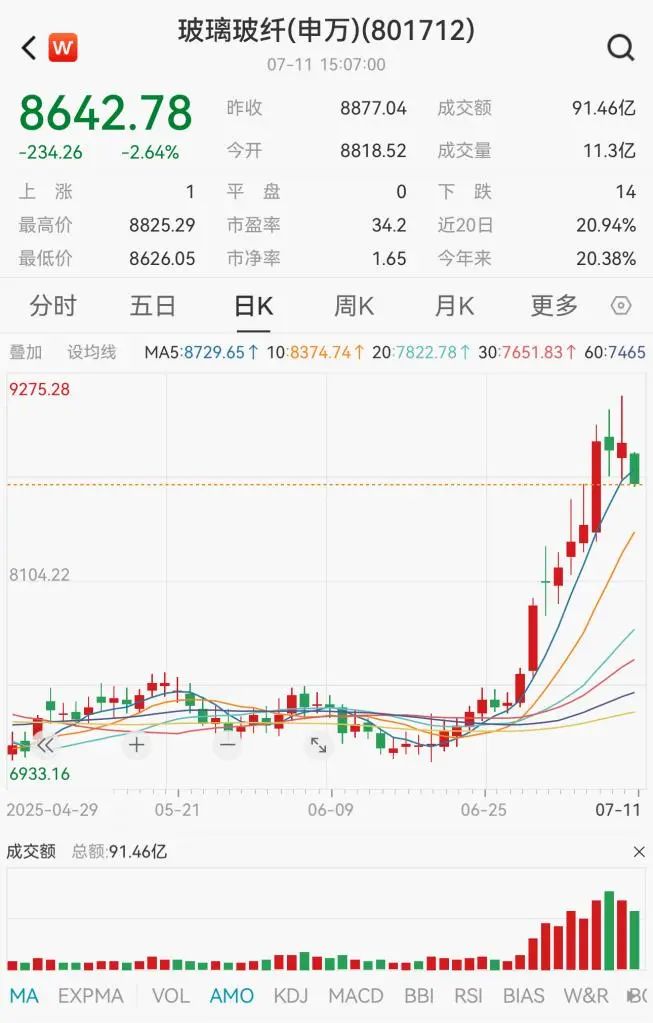
Core Viewpoint - The recent "anti-involution" policies in China aim to construct a unified national market, improve product quality, and promote high-quality economic development, with a focus on addressing low-price and disorderly competition [1] Market Performance - Since the announcement of "anti-involution" policies on July 1, the Shenyin Wanguo Glass Fiber sector has seen a cumulative increase of 14.2%, while the Shenyin Wanguo Steel and Photovoltaic Equipment sectors have risen by 11.36% and 9.73% respectively [1] Economic Implications - Comprehensive governance of "involution" is expected to enhance overall productivity by correcting low-price competition and overcapacity, thereby preventing "bad money from driving out good" [7] - The policies are anticipated to accelerate industry consolidation and improve corporate profit expectations, particularly in sectors like steel and cement [7][8] - The construction of a unified market is expected to reduce cross-regional transaction costs and stimulate domestic demand [7] Capital Market Impact - The governance of "involution" is likely to lead to the accelerated exit of outdated capacities, enhancing the market share and pricing power of leading companies, thus stabilizing profitability [8] - The "anti-involution" trend is seen as a long-term process that will create systematic investment opportunities as industry concentration increases [10] Sectoral Opportunities - Industries such as photovoltaic, new energy vehicles, steel, and cement are expected to benefit from the "anti-involution" policies [12] - In the photovoltaic supply chain, leading companies in silicon materials and glass are likely to benefit from price stabilization and capacity exit [12] - Traditional industries like steel and cement may see improved profitability through production limits and price stabilization [12][13] Investment Focus - Investors are advised to focus on sectors with real capacity exits and technological upgrades, avoiding speculative investments in companies without actual production cuts [13] - Key areas for investment include supply-demand optimization in steel and cement, technology barriers in photovoltaic and lithium battery sectors, and cost advantages in industries like pig farming [12][13]
沸腾了!引爆市场
中国基金报· 2025-07-13 12:37
Core Viewpoint - The article discusses the significance of the "anti-involution" policy in promoting high-quality economic development and the construction of a unified national market in China, emphasizing the need to address low-price disorderly competition and improve product quality [2][10]. Market Performance - Since the announcement of the "anti-involution" policies on July 1, the Shenyin Wanguo Glass Fiber sector has seen a cumulative increase of 14.2%, while the Shenyin Wanguo Steel and Photovoltaic Equipment sectors have risen by 11.36% and 9.73%, respectively [2]. Economic and Market Implications - Comprehensive governance of "involution" is expected to enhance overall productivity by correcting low-price competition and overcapacity, thereby preventing "bad money from driving out good" [10]. - The policy is anticipated to accelerate industry consolidation and improve corporate profit expectations, particularly in sectors like steel and cement [10]. - The construction of a unified market is expected to reduce cross-regional transaction costs and stimulate domestic demand [10]. Industry Beneficiaries - Industries likely to benefit from the "anti-involution" policies include photovoltaic, new energy vehicles, steel, and cement [16][18]. - In the photovoltaic supply chain, leading companies in silicon materials and glass are expected to benefit from price stabilization and capacity clearance [16]. - In the new energy vehicle sector, leading manufacturers are likely to restore profitability through production control and price stabilization [16]. Market Dynamics and Sustainability - The sustainability of the "anti-involution" market rally is contingent on demand-side support, with short-term market reactions driven by policy-induced supply reductions [13][14]. - Traditional industries like steel and coal are expected to see basic support for their market performance due to clear capacity constraints [14]. - The performance of related sectors will exhibit differentiation, with traditional industries benefiting from actual capacity reductions, while technology-intensive sectors will need to focus on innovation and efficiency [14][17]. Long-term Opportunities - Key opportunities include supply-demand optimization in sectors like steel and cement, technology barriers in photovoltaic and lithium battery sectors, and cost advantages in industries like pig farming [17]. - Companies with the ability to set technical standards within their supply chains are expected to achieve excess returns, highlighting the importance of long-term structural changes in the industry [17].

光大证券农林牧渔行业周报:6月猪企销售月报解读-20250713
EBSCN· 2025-07-13 09:15
Investment Rating - The report maintains a "Buy" rating for the agriculture, forestry, animal husbandry, and fishery sector [4] Core Viewpoints - Recent policy guidance has led to a rapid decline in post-slaughter weight, allowing for a rebalancing of volume and price, with positive expectations for pig prices [3] - The long-term perspective indicates that the bottom of the production capacity cycle is becoming clearer, suggesting a potential long-term profit upturn for the sector [3] - The report highlights investment opportunities in various segments, including pig farming, feed, and planting chains, as well as the pet food sector [3] Summary by Sections Pig Farming Sector - In June, 13 listed pig companies collectively slaughtered 16.2681 million pigs, a month-on-month increase of 2.65% and a year-on-year increase of 47.55% [2][13] - The average selling price of pigs decreased by approximately 3% month-on-month and about 20% year-on-year, with prices ranging from 13.23 to 15.57 yuan/kg [14][15] - The average weight of slaughtered pigs in June was 125.06 kg, down 0.77 kg from May, indicating a trend towards reducing weight [17] Market Dynamics - The national average price for live pigs was 14.81 yuan/kg as of July 11, reflecting a week-on-week decline of 3.52% [28] - The demand for pork is weakening due to high temperatures affecting consumption and rising storage costs, leading to a gradual loosening of supply-demand dynamics [28] Investment Recommendations - The report recommends focusing on leading companies such as Muyuan Foods, Wens Foodstuff, and Juxing Agriculture, as well as companies in the feed and animal health sectors like Haida Group and Ruipu Biological [3] - In the planting chain, opportunities are highlighted for companies like Suqian Agricultural Development and Beidahuang [3] Other Segments - The pet food industry is experiencing growth, with increasing recognition of domestic brands and continuous growth of leading companies [3]


上市分化明显!猪企6月销售数据出炉!下半年猪价走向如何?
Di Yi Cai Jing· 2025-07-13 01:56
Core Viewpoint - The domestic pig farming industry is experiencing a weak price environment due to strong supply and weak demand, leading to a slow recovery in profitability for listed pig companies [3][4][9] Group 1: Sales Performance of Listed Pig Companies - In June, the average sales price of live pigs for listed companies generally declined year-on-year and month-on-month, with a drop of 15% to 20% [4][5] - Muyuan Foods (002714.SZ) achieved a record monthly sales volume of 7.019 million pigs in June, with a month-on-month increase of 9.57%, resulting in a sales revenue of 12.799 billion yuan, a year-on-year increase of 27.65% [5][6] - Wens Foodstuff Group (300498.SZ) maintained a sales volume of over 3 million pigs, selling 3.0073 million pigs in June, with a revenue of 4.92 billion yuan, reflecting a month-on-month price drop of 1.98% [6] - Smaller pig companies showed significant sales variation, with some doubling their sales while others saw a decrease of over 10% [4][5] Group 2: Market Trends and Price Movements - The pig price hit a 16-month low in June, dropping to 13.96 yuan/kg, but began to recover in July, reaching 15.31 yuan/kg, the highest since the Spring Festival [4][8] - The agricultural authorities are guiding the industry towards destocking and capacity reduction, indicating that the current pig cycle has moved past its bottom [3][9] - Analysts suggest that the "anti-involution" measures may help stabilize prices and improve profitability in the long term, as the industry shifts towards higher quality competition [9][10] Group 3: Future Outlook - The Ministry of Agriculture plans to reduce the breeding sow inventory by approximately 1 million heads to optimize production and improve quality [10] - The industry is expected to enter a new era of high-quality competition, with a focus on cost management and disease prevention becoming critical for large-scale farming enterprises [10] - The supply constraints in the pig industry may become a new normal, with limited expansion expected in the coming years, potentially leading to improved profitability for quality enterprises [10]




“宇宙第一猪企”的降本扭亏记
华尔街见闻· 2025-07-12 09:03
Core Viewpoint - The article highlights the significant turnaround in the performance of Muyuan Foods (牧原股份) in the first half of the year, with a projected net profit of 10.2 billion to 10.7 billion yuan, representing a year-on-year increase of over 1100% [2][3]. Group 1: Company Performance - Muyuan's profit surge is attributed not to pig prices but to increased output and effective cost control [3]. - The company achieved a sales volume of 38.394 million pigs in the first half, a year-on-year increase of 18.54%, with a notable 168% increase in piglet sales [26]. - The average breeding cost for Muyuan in 2024 is projected to be 14 yuan per kilogram, with costs decreasing to 12-12.1 yuan per kilogram by June, nearing the annual target of 12 yuan per kilogram [17][18]. Group 2: Industry Trends - The "anti-involution" policy is reshaping the pig farming industry, with government efforts to reduce inventory, capacity, and optimize structure [4][5]. - The number of breeding sows has been adjusted, with a reduction in the breeding sow inventory to stabilize supply and ensure food safety [33][41]. - The industry is experiencing a shift towards larger-scale operations, with over 70% of pig farming now being industrialized, enhancing capital reserves and risk management capabilities [45]. Group 3: Market Dynamics - The pig price is expected to stabilize after a decline, with the market anticipating a recovery due to the reduction in breeding sow inventory and overall weight control of pigs [7][43]. - The prices of key feed ingredients like corn and soybean meal have decreased, contributing to the overall reduction in breeding costs [22][23]. - The industry is likely to see narrow fluctuations in the pig cycle, with profitability increasingly dependent on companies' cost control capabilities rather than price volatility [50].

牧原股份秦军:赴港上市是公司国际化战略的重要一环
Xin Jing Bao· 2025-07-12 03:01
Core Viewpoint - The conference focused on the theme "China's Economy: Coexistence of Openness and Resilience," highlighting the strategic direction of Muyuan Foods in transforming traditional pig farming into a modern industry through technological advancements and international expansion [2]. Group 1: Company Strategy - Muyuan Foods has been listed on the A-share market for over 10 years, with a total market capitalization exceeding 200 billion yuan [2]. - The company emphasizes continuous investment in research and development, equipment upgrades, and talent development to modernize the pig farming industry [2][3]. - The company aims to reshape the public perception of pig farming by referring to its workers as "pig engineers," focusing on the integration of intelligent equipment to enhance efficiency and improve working conditions [3]. Group 2: International Expansion - Muyuan Foods announced its plan to list in Hong Kong, viewing this as a crucial step in its internationalization strategy [4]. - The Southeast Asian market, starting with Vietnam, is identified as a key opportunity due to existing gaps in equipment levels, research investment, and African swine fever control capabilities [4]. - The IPO is seen as a financing action that will enhance the company's visibility, reputation, and access to global resources, thereby strengthening its competitive position in Southeast Asia and beyond [4].