
农产品

Search documents
想要“垄断”大豆生意?巴西打错了算盘,中国恢复进口美国大豆
Sou Hu Cai Jing· 2025-11-03 15:27
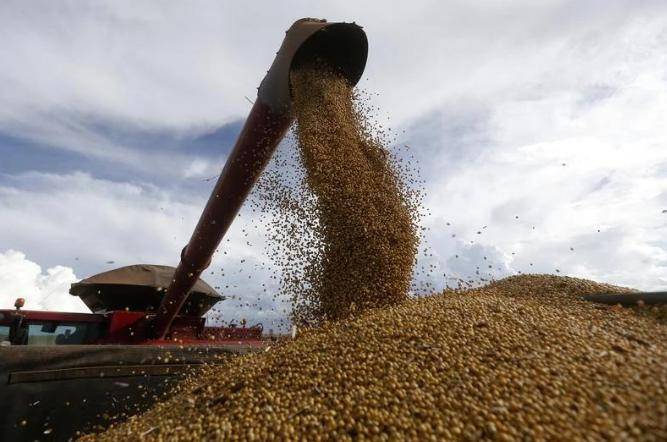
前言 最近不少朋友纳闷:之前都说巴西大豆要彻底替代美国大豆,怎么咱突然又下手买美国豆了?还一下子订了三批,总共 18 万吨。 大豆 别觉得这量不大,这可是今年头一回买美国新收的大豆,更是打破了之前的贸易僵局,背后的门道,小韩可得好好说道说道 —— 这不仅是一次简单的采 购,更是给飘了的巴西提了个醒! 巴西为啥敢 "坐地起价" 所以要想让巴西降价,唯一的办法就是转头找美国 —— 美国每年能产 2 亿吨以上大豆,是唯一能压得住巴西的 "底牌"。 过去这大半年,巴西大豆简直把中国市场当成了 "提款机",涨价让人看到都生气,给人感觉做完这一单就撤了的错觉。 可能有人没概念,大豆可不是超市里几毛钱的小菜,咱每月要进口 1000 万吨大豆,这些钱最后谁扛?要么进口商亏本,要么一层层传到下游,超市里的豆 油、豆腐涨价,最后还是老百姓买单。 巴西敢这么硬气,全靠它近乎垄断的地位,今年 1-9 月,咱进口的大豆里 70% 以上来自巴西,有些月份更夸张,占比直接冲到 93%。这是什么概念? 相当于咱想买大豆,几乎只能找巴西。也正因如此,巴西的大豆商家飘了,觉得 "中国离了我不行",于是肆无忌惮涨价,可他们忘了,做生意讲究 "适可 ...

泡菜制作季临近 韩国政府将发布原材料稳供应措施
Xin Hua She· 2025-11-03 15:10
Group 1 - The core issue is the rising prices of key ingredients for kimchi, such as cabbage and radish, as the kimchi-making season approaches in South Korea [1] - The South Korean government plans to announce measures on November 4 to ensure a stable supply of kimchi ingredients, aiming to keep prices reasonable for consumers [1] - South Korean Prime Minister Kim Boo-kyum visited a market in Seoul's Dongdaemun area to assess the supply and demand situation for kimchi ingredients, including cabbage, radish, garlic, and chili powder [1]
市场震荡反弹,红利与微盘领涨
Tebon Securities· 2025-11-03 13:39
Market Analysis - The A-share market experienced a rebound with reduced trading volume, led by the dividend and micro盘 indices. The Shanghai Composite Index closed at 3976.52 points, up 0.55%, while the Shenzhen Component Index rose 0.19% to 13404.06 points. The ChiNext Index initially dropped about 2% but ended up 0.29% at 3196.87 points. The total market turnover was 2.13 trillion, down 9.2% from the previous trading day, but still above 2 trillion [3][6]. - The market style showed a rotation between high and low sectors. The Hainan Free Trade Port concept surged by 4.25%, driven by new policies and expectations for full island closure in 2026. The nuclear power sector rose 4.23% due to accelerated commercialization of fourth-generation nuclear technology. In contrast, the non-ferrous metals sector lagged, influenced by recent tax policy adjustments [6][7]. Bond Market - The bond market showed weak fluctuations, with the 30-year main contract closing at 116.51, down 0.11%. The 10-year contract slightly increased by 0.01% to 108.680. The People's Bank of China conducted a 783 billion yuan reverse repurchase operation, maintaining a 1.40% interest rate, resulting in a net withdrawal of 259 billion yuan [8][11]. - Despite significant net withdrawals, market liquidity remains ample, with short-term interest rates declining. The overnight Shibor fell by 0.5 basis points to 1.316%, while the 7-day Shibor decreased by 2.7 basis points to 1.412% [11]. Commodity Market - The commodity market displayed a clear divergence, with the Nanhua Commodity Index closing at 2542.22 points, up 0.13%. Agricultural products showed strength, particularly with菜粕 rising 4.23% due to supply-demand mismatches. Conversely, energy and black commodities faced downward pressure [9][12]. - The price of lithium carbonate rebounded, maintaining strength due to expectations of supply tightening. The price closed at 82,280 yuan per ton, reflecting a significant increase in battery production [12]. Investment Strategy - The report suggests maintaining a balanced allocation in the current policy and performance vacuum period, with a focus on technology sectors and new directions outlined in the 14th Five-Year Plan. The bond market is expected to remain supported by a loose monetary policy, while commodity investments in precious metals are becoming increasingly attractive [13][15]. - Key investment themes include artificial intelligence, nuclear fusion, domestic chip production, quantum technology, and consumer sectors, driven by economic recovery and market style shifts [15].
建信期货玉米月报-20251103
Jian Xin Qi Huo· 2025-11-03 11:57
Group 1: Report Information - Report Name: Corn Monthly Report [1] - Date: November 03, 2025 [2] - Researcher: Lin Zhenlei, Yu Lanlan, Wang Haifeng, Hong Chenliang, Liu Youran [3][4] - Core Viewpoint: Substitution decreases and cost provides support. Pay attention to the grain selling rhythm and replenish stocks in a timely manner [5] Group 2: Report Core Viewpoints Supply - side - New - crop corn has increased production, and the combined port cost has moved down to around 2,100 yuan/ton. In November, the supply of new corn in Northeast and North China will continue to increase, and port inventories are stabilizing and rising [8]. - With the listing of new corn and the rise in wheat prices, wheat no longer has a feed substitution advantage over corn, and the substitution volume is gradually decreasing. The auction of imported corn has stopped, and the price advantage of alternative imported grains has weakened. Future imports may remain at a low level [8]. Demand - side - The continuous growth of pig inventory drives the feed demand to improve, but the breeding sector is in a loss, the willingness to build corn inventories is low, and spot purchases are not active. Feed enterprises mainly replenish stocks as needed, and their inventories may stabilize and slightly increase [8]. - Deep - processing enterprises have turned losses into profits, the operating rate has rebounded, enterprise inventories have slightly increased, and procurement enthusiasm has increased [8]. Price Trend - Spot prices may fluctuate around the cost price, mainly affected by the grain selling progress and the downstream inventory - building willingness. The supply - demand situation remains loose in November [8]. - For futures, the 2601 contract is still in the peak period of new grain sales, with large supply pressure. However, it is supported by planting costs and the decrease in substitutes. Contracts after 2605 are also supported by the minimum purchase price of wheat [8]. Strategies - Spot enterprises: Mainly replenish stocks appropriately [8]. - Futures investors: Consider lightly entering long positions and set stop - losses [8]. Important Variables - Purchase and storage policies, tariff policies, geopolitical situations, and weather [8] Group 3: Market Review Spot Market - In October, new grain continued to be listed, and corn prices declined seasonally. In Northeast China, prices initially decreased due to large supplies and then increased in the middle of the month. In North China, prices declined due to rainy weather and then rebounded at the end of the month. In the sales areas, prices followed the decline in the production areas [10]. - As of October 31, the reference price of corn in Harbin was 2,010 yuan/ton, and the second - grade corn in Changchun, Jilin was 2,070 yuan/ton. The price of deep - processed corn in Shouguang, Shandong was 2,136 yuan/ton, a decrease of 154 yuan/ton from the previous month. The purchase price of new grain in Jinzhou Port was 2,070 yuan/ton, and the mainstream price of second - grade Northeast corn in Shekou Port, Guangdong was 2,230 yuan/ton, a decrease of 230 yuan/ton month - on - month [10]. Futures Market - As of October 31, the main contract 2601 of Dalian corn futures closed at 2,130 yuan/ton, unchanged from the end of the previous month [11] Group 4: Fundamental Analysis Corn Supply - By the end of October, the autumn grain harvest was nearly completed, and winter wheat sowing progress varied by region [14]. - As of October 24, the total corn inventory in the four northern ports was 1.08 million tons, an increase of 180,000 tons month - on - month and a decrease of 720,000 tons year - on - year. The total corn inventory in southern ports was 607,000 tons, an increase of 157,000 tons from September and an increase of 404,000 tons year - on - year [14]. Domestic Substitutes (Wheat) - As of October 31, the national average corn price was 2,203 yuan/ton, and the average wheat price was 2,510 yuan/ton, with a price difference of 307 yuan/ton [16]. - In October, wheat prices rose widely. Supply was tight in the early stage due to reduced circulation and transportation difficulties, and then the supply - demand situation eased [16]. Imported Substitute Grains - In September 2025, China's grain imports were 15.83 million tons, a month - on - month increase of 12.3% and a year - on - year increase of 12.5%. From January to September, the cumulative grain imports were 106.73 million tons, a year - on - year decrease of 16.1% [20]. - The import volume of various grains showed different trends in September. The future import volume of substitute grains may remain low due to quota restrictions and the listing of domestic new - crop corn [20][33]. Feed Demand - In September 2025, the national industrial feed output was 30.36 million tons, a month - on - month increase of 3.4% and a year - on - year increase of 5.0% [35]. - The theoretical pig slaughter volume shows different trends according to different data sources. Overall, feed production is expected to continue to increase slightly [37]. - As of October 30, the average inventory days of sample feed enterprises were 24.10 days, a month - on - month decrease of 7.34% and a year - on - year decrease of 13.74% [38]. Deep - processing Demand - In October, the raw material corn price decreased, the starch industry's operating rate increased, and the output increased. The consumption of corn by deep - processing enterprises also increased [40]. - The processing profit of starch enterprises has been repaired. The inventory of deep - processing enterprises first decreased and then increased in October [40][41]. Supply - demand Balance Sheet - The 2025/26 production and consumption forecasts of Chinese corn remain the same as last month, with imports reduced by 1 million tons to 6 million tons [47]. - The planting area of corn is expected to increase by 0.3%, and the total output is expected to increase by 0.4%. The consumption is expected to be basically the same as the previous year [47]. Group 5: Future Outlook Supply - side - New - crop corn has increased production, and the supply will continue to increase in November. Port inventories are stabilizing and rising [49]. - The substitution volume of wheat and imported substitute grains will decrease, and future imports may remain at a low level [49]. Demand - side - Feed enterprises' inventory - building willingness is low, mainly replenishing stocks as needed. Deep - processing enterprises' procurement enthusiasm has increased [49]. Price and Strategy - Spot prices may fluctuate around the cost price. Futures prices are supported by costs and substitution factors [49]. - Spot enterprises should replenish stocks appropriately, and futures investors can consider lightly entering long positions [49]
溯源直播引爆千万流量!三师农产品“云端”出圈
Nan Fang Nong Cun Bao· 2025-11-03 11:35
Core Insights - The article highlights the success of a series of live-streaming events promoting agricultural products from the Third Division of the Xinjiang Production and Construction Corps, showcasing the effectiveness of e-commerce in boosting local agriculture and enhancing brand recognition [10][11]. Group 1: Live Streaming Events - The live-streaming initiative, part of the "Yuan Products Southbound, Canton Products Northbound" campaign, has featured over 50 sessions, achieving a total exposure of more than 10.32 million and generating sales of 3.2 million yuan [9][10]. - The live broadcasts have effectively showcased the region's agricultural products, emphasizing the quality of cotton grown in the area, which benefits from over 12 hours of sunlight daily [3][4][6]. Group 2: Short Video Content - In addition to live streaming, 50 short videos were created during the campaign, achieving a total exposure of 25 million, highlighting the collaboration between Guangdong and the Third Division [14][17]. - These videos feature interactions between hosts and farmers, as well as stories of cooperation and development, contributing to the popularity of local products such as jujubes, oilseed, lamb, dairy, and cotton products [15][16]. Group 3: Talent Development - The campaign has also focused on talent cultivation, with over 300 e-commerce professionals trained through systematic programs, enhancing the local workforce's capabilities in digital marketing [25][26]. - Training sessions included practical demonstrations on video editing and live-streaming techniques, empowering local farmers to market their products effectively [19][20][24]. Group 4: Future Prospects - The ongoing initiative, organized by the Xinjiang Production and Construction Corps and the Guangdong Provincial Support Command, aims to continue until November 10, promoting the region's agricultural products and establishing a digital bridge for resource sharing [29][31].


美豆、美豆粕价格上涨,外盘走势强于内盘
Guo Fu Qi Huo· 2025-11-03 10:28
Report Information - Report Title: [Guofu Bean Series Research Weekly Report] US Soybeans and US Soybean Meal Prices Rise, with External Market Performance Stronger than Domestic Market [1] - Report Date: November 3, 2025 [1] Report Industry Investment Rating - Not provided in the report Core Viewpoints - The prices of US soybeans and US soybean meal increased, with the external market outperforming the domestic market. The price of CBOT soybeans was mainly influenced by the expected improvement in Sino - US trade relations and the rise in CBOT soybean meal prices. The price of CBOT soybean meal was supported by the expected improvement in US soybean exports and its low - level price advantage. The price of CBOT soybean oil declined due to the fall in international competing vegetable oil prices and the "strong meal, weak oil" situation. The domestic soybean and soybean product markets were also affected by international market trends, as well as factors such as domestic supply and demand, inventory, and import and export conditions [9][13][20] Summary by Directory I. Market Review 1. Soybeans - External market: As of October 31, the CBOT soybean 11 - contract closed at 1100.00 cents per bushel, up 5.59% from the previous week, and the 01 - contract closed at 1115.00 cents per bushel, up 5.14%. The price increase was due to the expected improvement in Sino - US trade relations and the rise in CBOT soybean meal prices. The dry weather in the US soybean - producing areas was beneficial for harvesting, but the cumulative export inspection volume was still lower than the same period last year [9] 2. Soybean Meal - External market: As of October 31, the CBOT soybean meal 12 - contract closed at 321.4 dollars per short - ton, up 9.36% from the previous week. The price increase was supported by the expected improvement in US soybean exports and the low - level price advantage [13] - Domestic market: As of October 31, the DCE soybean meal 01 - contract closed at 3021 yuan per ton, up 3.00%. The price increase was driven by the rise in CBOT soybean prices, but was restricted by the decline in Brazilian soybean premium quotes and high domestic soybean meal inventories [16] 3. Soybean Oil - External market: As of October 31, the CBOT soybean oil 12 - contract closed at 48.62 cents per pound, down 3.32%. The price decline was due to the fall in international competing vegetable oil prices and the "strong meal, weak oil" situation [20] - Domestic market: As of October 31, the DCE soybean oil 01 - contract closed at 8128 yuan per ton, down 0.81%. The price decline was affected by the fall in domestic competing vegetable oil prices and high domestic soybean oil inventories [23] II. Production Area Weather 1. Brazilian Soybean Production Area Weather - Past week (October 24 - 31): Rainfall was mainly concentrated in the southern region, with slightly lower rainfall in the central - western region than normal, and the overall temperature was lower than normal [24][25] - Next week (November 2 - 9): Rainfall is expected to mainly occur in the southern region, and the temperature in the central part of the production area will be higher than normal [27] 2. Argentine Soybean Production Area Weather - Past week (October 24 - 31): Local rainfall in the main production areas was higher than normal, and the temperature was lower than normal [31] - Next week (November 2 - 9): Rainfall is expected to be slightly higher than normal, and the temperature will be slightly lower than normal [33] III. International Supply and Demand 1. US Soybeans - USDA drought monitoring report: As of the week of October 28, about 34% of US soybean - growing areas were affected by drought, down from 39% the previous week and 73% in the same period last year [38] - Export inspection: The weekly export inspection volume met expectations, but the cumulative year - on - year decline continued to widen. As of the week of October 23, 2025, the export inspection volume was 1,061,375 tons. As of the week of October 24, 2024, it was 2,630,651 tons. The cumulative export inspection volume this crop year was 6,715,111 tons, a year - on - year decrease of 36.91% [40] - D4 RINs price: As of October 31, 2025, the US D4 RINs price was 100 cents, unchanged from October 24 [43] - Other important news: The Sino - US economic and trade teams reached consensus on issues such as tariff cancellation, export control suspension, and expansion of agricultural product trade through consultations in Kuala Lumpur [45] 2. Brazilian Soybeans - Soybean production forecast: Different institutions' forecasts for the 2025/26 Brazilian soybean production range from 1.75 billion to 1.8 billion tons [47] - Soybean sowing: As of the week of October 25, 2025, the soybean planting rate was 34.4%. The sowing progress in some states such as Mato Grosso and Parana was also reported [47][48] - Export sales: Anec lowered the October export forecast to 7 million tons. As of the week of October 31, 2025, the cumulative export volume was 99.297 million tons, a year - on - year increase of 6.26% [50][52] - Soybean premium: As of the week of October 31, 2025, the Brazilian soybean premium declined [55] - Brazilian soybean crushing profit: As of October 31, 2025, the crushing profit was 28.16 dollars per ton, down from 28.87 dollars per ton on October 24 [58] 3. Argentine Soybeans - Farmer sales: As of the week of October 22, 2025, the pre - sale of 2025/26 soybeans by Argentine farmers increased compared to the previous week [60] - Argentine soybean crushing profit: As of October 31, 2025, the crushing profit was 9.08 dollars per ton, down from 18.88 dollars per ton on October 24 [65] IV. Domestic Supply and Demand 1. Soybean Oil Supply and Demand - China's imported soybean procurement progress: The procurement progress data for the week of October 28, 2025, was provided [68] - Port and oil - mill soybean inventories: As of October 24, 2025, the national port soybean inventory was 9.731 million tons, a decrease of 153,000 tons from the previous week, and the oil - mill soybean inventory was 7.5129 million tons, a decrease of 174,100 tons [70] - Imported soybean arrivals and crushing: In the 43rd week (October 18 - 24, 2025), the arrival volume was about 2.145 million tons, and in the 44th week (October 25 - 31, 2025), the actual crushing volume was 2.2534 million tons, with an operating rate of 61.99% [72] - Soybean oil trading volume: As of the week of October 31, 2025, the weekly trading volume was 80,700 tons, an increase from the previous week [74] - Soybean oil production and apparent consumption: In the 44th week (October 25 - 31, 2025), the production was 416,900 tons, and in the 43rd week (October 18 - 24, 2025), the apparent consumption was 411,700 tons [76] - Soybean oil inventory: As of October 24, 2025, the commercial inventory of soybean oil in key regions was 1.2503 million tons, an increase of 26,300 tons from the previous week [80] 2. Soybean Meal Supply and Demand - Soybean meal production and apparent consumption: As of the week of October 31, 2025, the production was 1.7802 million tons, a decrease of 90,100 tons from the previous week. As of the week of October 24, 2025, the apparent consumption was 1.7918 million tons, a decrease of 22,400 tons from the previous week [82] - Oil - mill soybean meal inventory and feed - mill physical inventory days: As of October 24, 2025, the soybean meal inventory was 1.0546 million tons, an increase of 78,400 tons from the previous week. As of October 31, 2025, the physical inventory days of feed enterprises were 8.02 days, an increase of 0.06 days from October 24 [85] - Soybean meal trading volume and pick - up volume: As of the week of October 31, 2025, the trading volume was 558,900 tons, an increase of 3.16% from the previous week, and the pick - up volume was 981,800 tons, a decrease of 2.06% from the previous week [88] - Downstream demand: The losses in pig - breeding and piglet - purchasing breeding profits continued to narrow. The live - pig ex - factory price and the pig - grain ratio increased [91] - Soybean meal warehouse receipt quantity: As of October 31, 2025, the registered quantity of Dalian Commodity Exchange soybean meal warehouse receipts was 42,332 lots [93] V. Domestic and International Vegetable Oil Futures and Spot Prices, and Spread Situations 1. Basis, Calendar Spread, and Product Spread Situations - Soybean oil basis and calendar spread: Data on the basis of first - grade soybean oil in different regions against the 01 contract and the 1 - 5 spread were presented [97][98] - Soybean meal basis and calendar spread: Data on the basis of 43% soybean meal in different regions against the 01 contract and the 1 - 5 spread were presented [100][102] - Product spread: Data on the spreads between soybean oil and palm oil, rapeseed oil and soybean oil, and the ratios of soybean oil to soybean meal and corn to soybean meal were presented [104][105] 2. FOB Quotes - Quotes and spreads of soybean oil, Brazilian soybean meal, US soybean meal, and Argentine soybean meal FOB were presented [108][110][112] 3. CFTC Positioning - The net long positions of CBOT soybean, soybean meal, and soybean oil managed funds were presented [114][115]
广东广西协作双向奔赴 三地优品齐聚江门 140多个展位解锁“舌尖上的丰收”
Nan Fang Ri Bao Wang Luo Ban· 2025-11-03 08:21
Core Viewpoint - The event held in Jiangmen City showcased the achievements in agricultural modernization and industry integration, promoting local and regional agricultural products while supporting the "Hundred Million Project" for rural revitalization [1] Group 1: Event Overview - The celebration of the 2025 "Chinese Farmers' Harvest Festival" and the Jiangmen-Chongzuo specialty agricultural product promotion event took place from October 31 to November 1 [1] - Over 140 enterprise booths displayed local delicacies and specialty products from Guangxi Chongzuo and Heilongjiang Qitaihe, highlighting the collaboration between urban and rural consumption [1] Group 2: Agricultural Collaboration - The event emphasized the importance of collaborative assistance in promoting consumption, showcasing local products like Magang goose and Waihai noodles alongside Chongzuo nuts and Qitaihe black fungus [1] - The initiative aims to build a bridge for agricultural exchange, further stimulating farmers' enthusiasm for participating in the "Hundred Million Project" and contributing to rural revitalization [1]
SGS:预计马来西亚10月1-31日棕榈油出口量为1282036吨
Xin Hua Cai Jing· 2025-11-03 07:30
(文章来源:新华财经) 据船运调查机构SGS公布数据显示,预计马来西亚10月1-31日棕榈油出口量为1282036吨,较上月同期 出口的1013140吨增加26.54%。 ...
南华期货玉米、淀粉产业周报:10月新季冲击释放,价格探底回升-20251103
Nan Hua Qi Huo· 2025-11-03 07:18
Report Industry Investment Rating No relevant information provided. Core Views of the Report - The impact of new - season corn in October has been effectively released, with prices hitting the bottom and rebounding. In November, the supply - side pressure will ease, but the supply level remains high [2]. - The domestic corn production increase trend is certain, and the market continues to digest the price pressure brought by the increase. The price is mainly in the bottom - shock stage. The probability of forming an important bottom in the price is relatively high in the fourth - quarter supply - peak period [8]. - In 2026, the pig production capacity control measures may gradually show results, which may have a negative impact on the corn feed demand situation, while the deep - processing demand situation is stable [8]. Summary by Directory Chapter 1: Core Contradictions and Strategy Recommendations 1.1 Core Contradictions - **Supply - side situation**: The national autumn grain harvest is over 85%. Corn harvest is basically completed except in some late - harvest areas. The supply is still in a loose period, and the most obvious impact stage of concentrated listing on corn prices may have ended in October. The supply pressure in November will ease, but the supply level remains high [2]. - **Price performance**: Last week, the spot price was in a stable consolidation stage after the first - round impact of new - season grain sources. The corn futures price showed a bottom - hitting and rebounding trend, and the starch market was relatively stable [2]. - **Trading logic**: In the short - term, the domestic corn price is mainly in the bottom - shock stage. In the long - term, the domestic corn supply - demand contradiction has eased, and the price is likely to form an important bottom in the fourth quarter. However, in 2026, the pig production capacity control may affect the corn feed demand [8]. 1.2 Trading Strategy Recommendations - **Trend judgment**: The current futures price is in the second - round bottom - testing process, and the 2100 - yuan mark support is effective in the short - term. It is recommended to close short positions and wait and see when entering the 2050 - 2100 - yuan range. Options can consider selling options based on the 2050 - 2230 - yuan range shock [9]. - **Basis, spread, and hedging arbitrage strategies**: The basis spread has little change, and no strategy is recommended. The 1 - 5 spread of corn has narrowed, and the spread structure is relatively steep. It is not suitable for hedging in the raw material and feed demand ends for now. Pay attention to the buy - starch and sell - corn arbitrage operation [9][12]. 1.3 Industrial Customer Operation Recommendations - **Price range forecast**: The price range of corn is 2050 - 2200 yuan, and that of starch is 2350 - 2550 yuan [21]. - **Risk strategies**: Different strategies are recommended for inventory management and procurement management, such as shorting corn futures, selling call options, selling put options, and buying far - month contracts [21]. Chapter 2: This Week's Important Information and Next Week's Attention Time 2.1 This Week's Important Information - **Positive information**: The state reserve continues to purchase to support the market, the North China purchase and sales have recovered, the spot price is stable, the agricultural product trade situation is expected to improve, the cold weather is conducive to grain storage, and the deep - processing acquisition willingness is strong [25]. - **Negative information**: The corn market harvest is gradually ending, but the new - grain listing level is high, and the price pressure is still large [23]. 2.2 Next Week's Important Event Attention - Pay attention to the auction purchase transaction situation of China Grain Reserves Corporation, the price - support strength of the state reserve acquisition in the Northeast, and whether the corn report guidance affected by the US government shutdown can be restored [26]. Chapter 3: Disk Interpretation 3.1 Price - Volume and Fund Interpretation - **Domestic market**: The corn futures price showed a bottom - hitting and rebounding trend last week, with the main 01 contract slightly down 3 yuan/ton. The starch market was relatively stable, and the main 01 contract of starch was down 1 yuan/ton, performing slightly stronger than the corn disk [2][25]. - **Fund flow**: The total position of the corn 01 contract increased, and the trading volume decreased. The total position and trading volume of the starch 01 contract were basically the same as the previous week [25]. - **Basis and spread structure**: The basis structure changed little, and the term - spread structure of corn was still relatively steep. The near - far - month spread slightly shrank. Pay attention to the buy - starch and sell - corn arbitrage operation [32][39][55]. 3.2 External Market - The CBOT corn futures closed higher last week, but the futures price fell from the short - term high due to the disappointment of bullish expectations. The US spot corn harvest is in the final stage, and the market is waiting for relevant data guidance [58]. Chapter 4: Valuation and Profit Analysis 4.1 Industry Chain Upstream and Downstream Profit Tracking - **Planting profit**: The planting profit is better than last year, especially in the Northeast and other yield - increasing areas [64]. - **Trading profit**: As the corn price stabilizes, traders are cautious in building inventories, and there is a small amount of trading profit [64]. - **Deep - processing profit**: The corn starch profit continues to recover, while the profit of the corn - to - ethanol industry has significantly declined [64]. - **Disk profit**: The basis of Jinzhou Port is neutral, and the disk profit is not obvious. It is not suitable to enter the market for hedging, but enterprises with low inventory - building costs can pay attention to far - month hedging [64]. 4.2 Import and Export Profit Tracking The import profit of corn has decreased due to the rise in the external market [66]. Chapter 5: Supply - Demand and Inventory Deduction 5.1 Supply - Demand Balance Sheet Deduction - **China's corn supply - demand balance sheet**: The sown area, output, and total supply of corn have increased in recent years. The consumption is relatively stable, and the annual surplus has fluctuated [70]. - **Global corn supply - demand balance sheet**: The global corn supply and demand are basically balanced, but the inventory - consumption ratio has decreased [71]. 5.2 Supply - Side and Deduction - **Domestic supply**: In November, the corn supply is in the stage of declining from the peak. The selling pressure will decrease with the drop in temperature in the Northeast. The import volume is expected to remain at a low level [73]. - **Inventory situation**: The inventory of northern ports has stopped rising, and the inventory of southern ports has stopped falling and rebounded. The overall low inventory provides space for later corn purchase and sales activities [75]. - **Foreign corn**: The US corn futures price rose, but the lack of corn purchase commitments in the Sino - US trade agreement limited its upward space. The impact on China is limited [77]. 5.3 Demand - Side and Deduction - **Feed demand**: It is expected to remain at a high level in the fourth quarter. The pig breeding profit has recovered, but the pig production capacity reduction may affect the corn feed demand in 2026 [79]. - **Deep - processing demand**: The fourth quarter is the traditional consumption peak season for corn deep - processing products. The low - price corn attracts downstream enterprises to increase their start - up rates, and the consumption of corn is expected to increase [83].
宏观金融数据日报-20251103
Guo Mao Qi Huo· 2025-11-03 06:25
1. Report Industry Investment Rating - No information provided 2. Core Viewpoints of the Report - In the short term, with the gradual release of positive factors such as the progress of China - US economic and trade negotiations, market sentiment may shift from relatively optimistic to cautious. The stock index may enter a volatile phase to accumulate momentum for the next upward movement. With policy support and abundant macro - liquidity, there is still strong support below the stock index. In the long - term, the stock index still has room to rise, but the upward pace will not be rapid. It is recommended to choose the right time to go long and use the discount structure of stock index futures to enhance the advantage of long - term long strategies [7] 3. Summary according to Related Catalogs Interest Rate Products - DROO1 closed at 0.69 with a change of 1.32bp; DR007 closed at 1.46 with a change of - 4.67bp; GC001 closed at 1.32 with a change of 9.50bp; GC007 closed at 1.48 with a change of - 2.00bp; SHBOR 3M closed at 1.60 with a change of - 0.10bp; LPR 5 - year remained unchanged at 3.50; 1 - year treasury bond closed at 1.38 with a change of 0.01bp; 5 - year treasury bond closed at 1.57 with a change of 0.26bp; 10 - year treasury bond closed at 1.79 with a change of - 1.84bp; 10 - year US treasury bond remained unchanged at 4.11 [4] - Last week, the central bank conducted 2.068 trillion yuan in reverse repurchases and 900 billion yuan in MLF injections in the open market. There were 867.2 billion yuan in reverse repurchases, 500 billion yuan in 182 - day outright reverse repurchases, and 700 billion yuan in MLF maturities. So, the net injection in the open market was 900.8 billion yuan [4] - This week, there will be 2.068 trillion yuan in reverse repurchases maturing in the central bank's open market, with 337.3 billion, 475.3 billion, 557.7 billion, 342.6 billion, and 355.1 billion yuan maturing from Monday to Friday respectively. Additionally, 700 billion yuan in 91 - day outright reverse repurchases will mature on Friday [5] Stock Index Futures - The closing prices and changes compared to the previous day of major stock indices: CSI 300 closed at 4641, down 1.47%; SSE 50 closed at 3012, down 1.15%; CSI 500 closed at 7331, down 0.74%; CSI 1000 closed at 7507, up 0.29%. The closing prices and changes of corresponding stock index futures: IF current - month contract closed at 4641, down 1.3%; IH current - month contract closed at 3017, down 1.0%; IC current - month contract closed at 7291, down 0.8%; IM current - month contract closed at 7440, unchanged [6] - The trading volume and position changes of stock index futures: IF trading volume was 139,862, up 1.8%; IF position was 271,131, up 0.1%; IH trading volume was 63,349, down 0.9%; IH position was 99,608, down 2.4%; IC trading volume was 145,316, down 13.7%; IC position was 254,465, down 2.2%; IM trading volume was 253,282, up 1.9%; IM position was 362,383, down 1.8% [6] - Last week, CSI 300 fell 0.43% to 4640.7; SSE 50 fell 1.12% to 3011.6; CSI 500 rose 1% to 7331; CSI 1000 rose 1.18% to 7506.7. Among Shenwan primary industry indices, power equipment (4.3%), non - ferrous metals (2.6%), steel (2.6%), basic chemicals (2.5%), and comprehensive (2.3%) led the gains, while communication (- 3.6%), banking (- 2.2%), electronics (- 1.7%), building decoration (- 1.5%), and real estate (- 0.7%) led the losses. The daily trading volumes of A - shares last week were 2.0894 trillion, 1.9329 trillion, 2.0592 trillion, 2.2042 trillion, and 2.0923 trillion yuan respectively, and the average daily trading volume increased by 462.19 billion yuan compared to the previous week [6] Stock Index Futures Basis - The basis of IF for current - month, next - month, current - quarter, and next - quarter contracts was - 0.14%, 1.55%, 1.82%, and 2.30% respectively; the basis of IH was - 3.35%, - 0.94%, - 0.39%, and - 0.22% respectively; the basis of IC was 10.43%, 9.39%, 8.88%, and 9.22% respectively; the basis of IM was 17.17%, 14.33%, 12.04%, and 11.61% respectively [8]