
木材

Search documents
Weyerhaeuser(WY) - 2025 Q4 - Earnings Call Transcript
2026-01-30 16:00
Financial Data and Key Metrics Changes - For the full year 2025, the company reported GAAP earnings of $324 million, or $0.45 per diluted share, on net sales of $6.9 billion. Excluding special items, earnings totaled $143 million, or $0.20 per diluted share, with adjusted EBITDA of $1 billion [3][19] - In Q4 2025, GAAP earnings were $74 million, or $0.10 per diluted share, on net sales of $1.5 billion. Excluding special items, the company reported a loss of $67 million, or $0.09 per diluted share, with adjusted EBITDA of $140 million [3][19] Business Line Data and Key Metrics Changes - Timberlands contributed $50 million to Q4 earnings, with adjusted EBITDA of $114 million, a $34 million decrease from Q3, primarily due to lower sales volumes and realizations in the West [6][10] - Real Estate and Energy, Natural Resources (ENR) contributed $84 million to earnings in Q4, with adjusted EBITDA of $95 million, slightly up from the prior quarter, driven by high-value transactions [11][12] - Wood Products reported a $78 million loss in Q4, with adjusted EBITDA at a $20 million loss, reflecting challenging lumber and OSB markets [15][16] Market Data and Key Metrics Changes - In the Western domestic market, log demand and pricing softened in Q4 due to ample supply and elevated log inventories [6][7] - In Japan, finished goods inventories remained high, leading to decreased demand for logs, although average sales realizations were moderately higher due to freight benefits [8][9] - The Southern Timberlands adjusted EBITDA was $69 million, a $5 million decrease from Q3, with stable fiber markets but muted sawlog markets [10] Company Strategy and Development Direction - The company launched an ambitious growth strategy through 2030, focusing on optimizing its Timberlands portfolio and expanding climate solutions offerings [4][5] - A new target was set to grow the Climate Solutions business to $250 million of annual EBITDA by 2030, with significant progress already made [12][14] - The company aims to enhance its timberlands portfolio while balancing growth initiatives across its capital allocation framework [5][20] Management's Comments on Operating Environment and Future Outlook - Management remains optimistic about long-term fundamentals supporting the business, despite challenging market conditions in 2025 [5][36] - The housing market is expected to improve gradually, supported by federal policies and demographic trends, although short-term uncertainty remains [33][34] - The company anticipates stable demand in the first quarter of 2026, with expectations for improved pricing and sales realizations as the spring building season approaches [23][29] Other Important Information - The company returned $766 million to shareholders in 2025, including a 5% increase in dividends and $160 million in share repurchases [4][19] - The company completed divestitures of non-core timberlands for total proceeds of $406 million and is in the process of divesting approximately 108,000 acres in Virginia for $193 million [5][6] Q&A Session Summary Question: On the pricing front, do you think the improvement seen is largely a reflection of curtailments or is underlying demand actually picking up? - Management indicated that the improvement is primarily driven by curtailment activity, with some potential for demand pickup as the spring building season approaches [41] Question: Given the strong appetite for HBU properties, how is the company approaching A&D decisions into 2026? - Management noted a solid market for timber acquisitions and divestitures, expecting continued demand for high-value transactions [52] Question: What are the operating rates in lumber and OSB, and what steps have been taken to improve profitability? - Management reported mid-70% operating rates for lumber and mid-90% for OSB, emphasizing a focus on operational excellence to navigate challenging pricing environments [60][62]
美元指数走弱,地缘紧张局势延续
Hua Tai Qi Huo· 2026-01-28 05:05
Group 1: Market Analysis - Trump's remarks caused the US dollar index to fall more than 1% to 95.7905, hitting a nearly four - year low. He also decided to raise tariffs on South Korean products from 15% to 25% [1] - The US consumer confidence index in January dropped 9.7 points to 84.5, the lowest since 2014, due to geopolitical tensions, high living costs, and trade wars [1] Group 2: Futures Quotes and Volumes - On January 27, 2026, the Shanghai gold main contract opened at 1,145.94 yuan/gram and closed at 1,148.38 yuan/gram, a 0.44% change from the previous trading day. The trading volume was 41,087 lots, and the open interest was 129,725 lots. The overnight session closed at 1,142.00 yuan/gram, a 0.56% drop from the afternoon close [2] - The Shanghai silver main contract opened at 27,300.00 yuan/kg and closed at 28,300.00 yuan/kg, a 4.02% change from the previous trading day. The trading volume was 1,038,738 lots, and the open interest was 310,210 lots. The overnight session closed at 27,702 yuan/kg, a 2.11% drop from the afternoon close [2] Group 3: US Treasury Yield and Spread Monitoring - On January 27, 2026, the US 10 - year Treasury yield was 4.24%, unchanged from the previous trading day. The 10 - year and 2 - year spread was 0.65%, a - 0.6BP change from the previous trading day [3] Group 4: Position and Volume Changes on SHFE - On the Au2604 contract, the long position changed by 5,015 lots, and the short position changed by 381 lots. The total trading volume of Shanghai gold contracts was 573,180 lots, a - 1.08% change from the previous trading day [4] - On the Ag2604 contract, the long position changed by - 10,773 lots, and the short position changed by - 6,800 lots. The total trading volume of silver contracts was 2,534,159 lots, a 6.64% change from the previous trading day [4] Group 5: Precious Metal ETF Position Tracking - The gold ETF position was 1,086.53 tons, unchanged from the previous trading day. The silver ETF position was 15,974 tons, a decrease of 116 tons from the previous trading day [5] Group 6: Precious Metal Arbitrage Tracking - On January 27, 2026, the domestic gold premium was 16.39 yuan/gram, and the domestic silver premium was 863.14 yuan/kg [6] - The ratio of the main contracts of gold and silver on the SHFE was about 40.58, a - 3.44% change from the previous trading day. The overseas gold - silver ratio was 46.47, a - 3.71% change from the previous trading day [6] Group 7: Fundamental Data - On January 27, 2026, the trading volume of gold on the Shanghai Gold Exchange T + d market was 109,368 kg, a 32.01% change from the previous trading day. The silver trading volume was 627,160 kg, a - 10.69% change from the previous trading day [7] - The gold delivery volume was 11,872 kg, and the silver delivery volume was 30 kg [7] Group 8: Strategy - Gold: Cautiously bullish. Due to increased market risk sentiment and a weaker US dollar index, gold investment demand may increase slightly. The Au2604 contract is expected to fluctuate between 1,120 yuan/gram and 1,170 yuan/gram [8] - Silver: Cautiously bullish. After an overnight adjustment, silver prices may be relatively stronger than gold, and the gold - silver ratio is expected to narrow. The Ag2604 contract is expected to fluctuate between 27,500 yuan/kg and 30,000 yuan/kg [8][9] - Arbitrage: Short the gold - silver ratio at high levels [9] - Options: Put on hold [9]
特朗普突然宣布提高对韩国关税,韩经济专家:意在敲打美国最高法院
Xin Lang Cai Jing· 2026-01-27 14:46
Core Viewpoint - The article discusses President Trump's recent threats to increase tariffs on South Korean goods due to the South Korean National Assembly's failure to approve a trade agreement, suggesting that this move may be aimed at pressuring the U.S. Supreme Court regarding his tariff policies [1][4]. Group 1: Trade Agreement and Tariff Changes - Trump accused South Korea of not fulfilling its obligations under a trade agreement, announcing a tariff increase from 15% to 25% on various South Korean products, including automobiles and pharmaceuticals [1][4]. - The South Korean government is currently assessing the U.S. intentions and has convened meetings to discuss responses, indicating a proactive approach to the situation [3][4]. - The trade agreement includes a commitment from South Korea to invest $350 billion in strategic sectors in the U.S., which has not yet been approved by the South Korean National Assembly due to political disagreements [4][5]. Group 2: Political Context and Implications - Analysts suggest that Trump's tariff threats may be a strategy to divert attention from domestic issues, including criticism of his immigration policies and deteriorating relations with the EU and Canada [9]. - The South Korean ruling party views the agreement as a non-binding memorandum, while the opposition insists on parliamentary approval, highlighting significant political divisions that complicate the approval process [4][5]. - Trump's actions may also be interpreted as an attempt to influence the U.S. Supreme Court, which is currently reviewing the legality of his tariff policies, with potential implications for U.S. trade relations [5][8]. Group 3: Economic Impact and Market Reactions - The article notes that higher tariffs could severely impact South Korean exporters, particularly in the automotive sector, which constitutes 25% of South Korea's exports to the U.S. [10]. - South Korea's exports to the U.S. decreased by 3.8% to approximately $122.9 billion, with automotive exports dropping by 13.2% to $30.2 billion, indicating a negative trend in trade performance [10]. - The uncertainty surrounding U.S. tariff policies is causing concern among market participants, suggesting that the anticipated stability in tariffs may not materialize as previously thought [10].

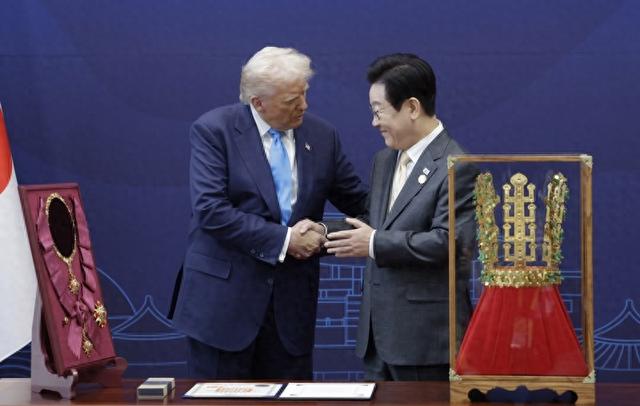
李在明一觉醒来天塌了,特朗普突然对韩国加税,给出一个荒唐理由
Sou Hu Cai Jing· 2026-01-27 14:13
Group 1 - The core point of the article is that President Trump's sudden announcement to impose tariffs on various South Korean products, including automobiles and pharmaceuticals, has caught the South Korean government off guard, indicating a shift in the U.S.-South Korea trade relationship [1][3][12] - The tariffs were raised from 15% to 25%, and the announcement was made late at night in South Korea, leading to an urgent response from the South Korean government [1][3] - This action reflects Trump's impatience with South Korea's slow progress on a trade agreement signed in July 2025, which has not been ratified by the South Korean National Assembly as of 2026 [6][14] Group 2 - Trump's direct approach, bypassing traditional diplomatic channels, suggests a strategy to pressure South Korea into compliance, using tariffs as a tool to assert dominance rather than foster cooperation [8][10][12] - The lack of prior communication from the U.S. signals a shift in the perception of the U.S.-South Korea relationship, portraying South Korea more as a subordinate than an ally [12][20] - The incident may lead to increased tensions in U.S.-South Korea relations, with potential long-term implications for diplomatic interactions and South Korea's willingness to cooperate on future issues [13][21] Group 3 - The tariffs may serve as a precursor to further demands from the U.S., including increased defense spending and procurement of American military equipment, as the U.S. seeks to have its allies bear more responsibilities [16][18] - This incident raises concerns about the reliability of the U.S. as a partner, as previous agreements have not guaranteed stable relations, leading to a growing skepticism among other nations regarding U.S. intentions [20][23] - The article suggests that while South Korea may have to compromise in the short term, the broader implications of U.S. tactics could lead to increased caution among other allies, potentially affecting future negotiations [21][23]
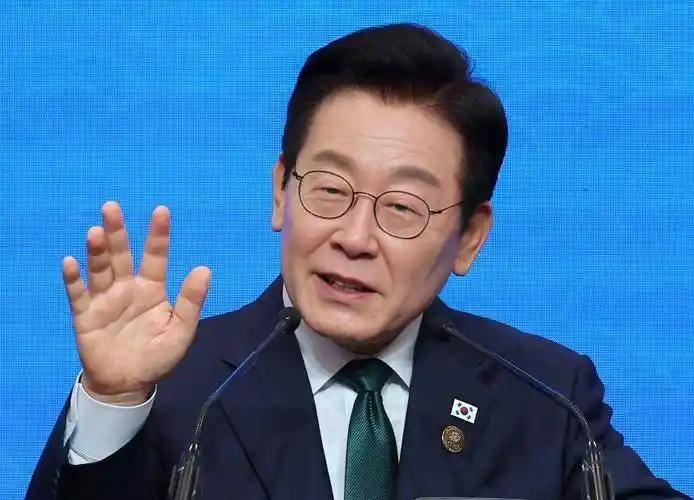
李在明还在睡梦中,特朗普突然下手了!美国宣布:对韩国加税10%
Sou Hu Cai Jing· 2026-01-27 12:44
Core Viewpoint - The recent announcement by President Trump to increase tariffs on various products imported from South Korea from 15% to 25% has created significant turmoil in South Korean politics, highlighting the fragile nature of trade agreements and the pressure on South Korea to comply with U.S. demands [1][3][20]. Group 1: Tariff Increase and Immediate Reactions - President Trump announced a 10% increase in tariffs on products imported from South Korea, raising the rate from 15% to 25% [1]. - The South Korean government reacted swiftly, holding an emergency meeting and sending the industry minister to negotiate in the U.S. [1]. - The tariff increase was not entirely unexpected, as it followed a trade agreement signed in 2025 that many viewed as unfavorable to South Korea [3][20]. Group 2: Trade Agreement Context - The 2025 trade agreement required South Korea to increase investments in the U.S. and purchase more American energy products, while the U.S. would reduce tariffs on certain goods [3][5]. - The scale of the required investments has caused significant concern among South Korean financial officials [3][5]. - Internal political divisions in South Korea regarding the need for parliamentary approval of the agreement have stalled its implementation [5][7]. Group 3: Political and Economic Implications - The delay in executing the agreement has led to increased public dissent in South Korea, questioning the benefits of the deal and the rationale behind supporting the U.S. energy sector [7][14]. - The situation has been exacerbated by the perception that the U.S. is willing to impose tariffs on allies, as seen with Canada also facing threats of high tariffs [9][12]. - The U.S. has demonstrated a clear willingness to use tariffs as a diplomatic tool, which raises concerns for South Korea's economic stability and political autonomy [14][20]. Group 4: Future Considerations for South Korea - South Korea faces a critical decision: either push forward with the agreement despite domestic opposition or confront the U.S. to renegotiate terms [22][26]. - The current crisis serves as a wake-up call for South Korea regarding its reliance on the U.S. and the need for a more balanced foreign policy approach [22][26]. - The implications of this tariff increase extend beyond South Korea, potentially influencing how other nations reassess their relationships with the U.S. [24][26].
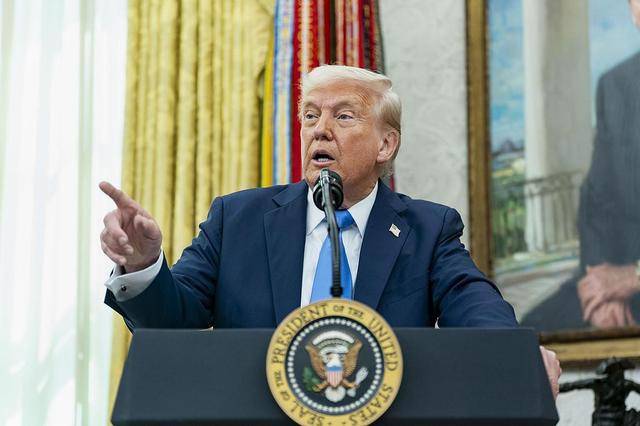
又来?特朗普威胁对韩国加征关税,真实目的是?
第一财经· 2026-01-27 08:18
Core Viewpoint - The article discusses the recent decision by U.S. President Trump to increase tariffs on South Korean goods due to the South Korean National Assembly's failure to ratify a previously agreed trade deal, which could significantly impact bilateral trade relations and the South Korean economy [3][4]. Group 1: Tariff Increase and Trade Agreement - Trump announced that tariffs on South Korean products, including automobiles, wood, and pharmaceuticals, will rise from 15% to 25% due to the lack of legislative approval of a trade agreement made in July 2025 [3][4]. - The South Korean government has not received formal notification from the U.S. regarding the tariff increase and is currently assessing the situation [4][5]. - The trade agreement initially included a commitment from South Korea to invest $350 billion in the U.S. and purchase $100 billion worth of energy products, which was expected to lower tariffs from 25% to 15% [7]. Group 2: Economic Implications - The Bank of Korea has expressed concerns that U.S. tariffs could negatively affect the South Korean economy by reducing competitiveness and leading to a decline in exports to the U.S. [10]. - The South Korean government is preparing to address the potential economic fallout, with the Minister of Trade planning to visit the U.S. for discussions [6][7]. - The uncertainty surrounding tariffs, particularly in the semiconductor sector, poses risks to the global semiconductor industry and could lead to increased production costs for South Korean companies [8][10]. Group 3: Investment Commitments and Currency Fluctuations - South Korea remains committed to fulfilling its initial investment pledge of $200 billion, although project selection delays may hinder timely execution [11]. - The recent volatility of the South Korean won against the U.S. dollar has added complexity to investment planning, with companies needing to reassess costs and risks associated with currency fluctuations [11].

又来?特朗普威胁对韩国加征关税,真实目的是?
Di Yi Cai Jing· 2026-01-27 06:29
Group 1 - The core viewpoint is that the implementation of the Korea-US trade agreement this year is worth observing, especially in light of the recent increase in tariffs by the US on Korean goods due to the lack of approval from the Korean National Assembly [1] - President Trump announced an increase in tariffs on Korean products from 15% to 25% on various items including automobiles, wood, and pharmaceuticals, citing the failure of the Korean legislature to ratify the trade agreement [1] - The Korean government has not received formal notification from the US regarding the tariff increase and is currently assessing its response [4] Group 2 - The Korean Minister of Industry will urgently travel to the US to discuss the situation with the US Secretary of Commerce, indicating the seriousness of the issue [4] - The trade agreement initially included a commitment from Korea to invest $350 billion in the US and purchase $100 billion worth of energy products, with a previous reduction of tariffs from 25% to 15% [4][5] - The Korean government is facing challenges in balancing domestic market needs while committing to significant investments in the US, which may complicate the implementation of the trade agreement [1][6] Group 3 - The Bank of Korea has expressed concerns that the US tariffs will negatively impact the Korean economy through trade, financial markets, and business confidence, predicting a significant decline in exports to the US [6] - The Korean government is committed to fulfilling its initial investment commitment of $200 billion, but the selection process for projects is lengthy, making it unlikely to complete in the first half of the year [6][7] - Fluctuations in the Korean won have added pressure on Korean companies, leading them to reassess the costs and benefits of their investments in the US [7]
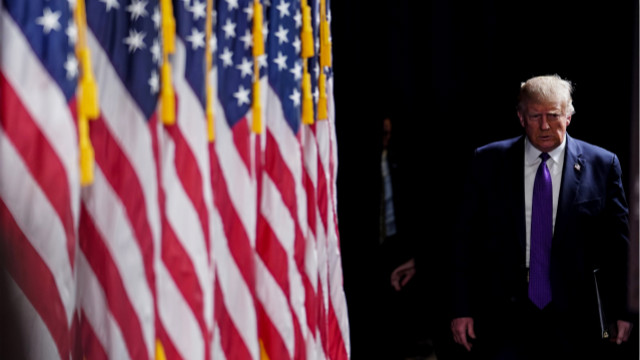
韩国总统府:将向美方表达履行韩美关税协议意愿
Xin Lang Cai Jing· 2026-01-27 04:21
Group 1 - The core viewpoint of the article is that the South Korean government is preparing to respond to U.S. President Trump's announcement of increased tariffs on South Korean products, including automobiles, due to the lack of approval of the U.S.-Korea trade agreement by the South Korean National Assembly [1] - The South Korean government held a meeting to discuss countermeasures and expressed its intention to convey its willingness to adhere to the U.S.-Korea tariff agreement [1] - President Trump announced on social media that tariffs on South Korean exports to the U.S., including automobiles, wood, and pharmaceuticals, would be raised from 15% to 25% [1]
韩总统府称将向美方表达履行关税协议意愿
Yang Shi Xin Wen· 2026-01-27 03:51
Core Viewpoint - The South Korean government is preparing to respond to U.S. President Trump's announcement of increased tariffs on South Korean products, including automobiles, from 15% to 25% due to the lack of approval of the Korea-U.S. trade agreement by the South Korean National Assembly [1] Group 1 - The South Korean government held a meeting to discuss countermeasures in response to the U.S. tariff increase [1] - The South Korean presidential office expressed its intention to communicate its commitment to the Korea-U.S. tariff agreement [1] - The U.S. President's announcement includes tariffs on South Korean automobiles, timber, pharmaceuticals, and other so-called "reciprocal tariffs" [1]
国际银回调压力增大 特朗普威胁韩国关税加征
Jin Tou Wang· 2026-01-27 03:33
Group 1 - International silver is currently trading above $109.23, with a recent opening at $103.93 per ounce and a current price of $110.53, reflecting a 6.38% increase [1] - The highest price reached today was $111.12, while the lowest was $103.34, indicating a short-term volatile trading pattern [1] Group 2 - Despite the relative strength index (RSI) being in the overbought territory, silver prices continue to rise, although they have not reached extreme levels [2] - If silver prices break through $120 per ounce, it could pave the way for a challenge at the $130 level, with a further target of $150 if the upward trend continues [2] - Initial support for silver is at $100, and if it falls below this level, the next support zone will be around $96.14, potentially leading to a drop towards the $90 area [2]