
有色

Search documents
如何看待当前市场的分化格局?丨每周研选
Shang Hai Zheng Quan Bao· 2026-01-25 16:08
Core Viewpoint - The A-share market is experiencing a volatile upward trend, with significant recovery in profitability, while major indices show mixed performance and increasing market style differentiation [1] Group 1: Market Performance - The overall A-share market is showing a trend of oscillation upwards, with high trading volume and noticeable recovery in profitability [1] - Major broad-based indices are performing unevenly, with large-cap indices like the Shanghai 50 and CSI 300 lagging behind, while mid and small-cap indices such as CSI 500 and CSI 1000 are leading the gains [1] - The recent redemption of broad-based ETFs has increased, highlighting varying levels of support across different sectors and stocks [3] Group 2: Investment Strategy - The current market environment suggests that sectors with relatively low valuations and growth logic, particularly in the consumer chain, are poised for recovery from now until March [3] - Investors are advised to increase allocations in non-bank sectors (such as securities and insurance) and consider domestic demand sectors (like duty-free, aviation, and building materials) to enhance returns [3] - The focus should also be on sectors with strong pricing power in resources and traditional manufacturing, particularly in chemicals, non-ferrous metals, new energy, and power equipment [3] Group 3: Seasonal Trends - February is historically one of the months with the highest win rates for major indices, suggesting potential upward momentum as the market approaches a liquidity-rich period before the Spring Festival [4][5] - The spring market is expected to continue its upward trajectory, supported by ample liquidity and a favorable environment for incremental capital inflow [7][9] Group 4: Sector Rotation and Focus - The market is witnessing accelerated sector rotation, with a notable preference for small-cap stocks over large-cap stocks, and growth sectors outperforming value sectors [16] - High-growth sectors such as technology and cyclical leaders in non-ferrous metals and chemicals are expected to remain key focus areas [9][21] - The upcoming earnings announcements are likely to shift market focus towards performance metrics, with high-growth segments anticipated to show strong results [12][14]
【十大券商一周策略】春季行情仍在途,注意总体赚钱效应已逼近高位
券商中国· 2026-01-25 14:11
Group 1 - The core viewpoint of the article emphasizes the ongoing recovery of market confidence, with potential for sector and stock recovery, particularly in consumer and real estate chains before the Two Sessions [2] - The article highlights the significant outflow of funds from broad-based ETFs, with a notable impact on sectors and stocks that are underweight by institutions [2] - It suggests that sectors with strong fundamentals and logical narratives, particularly those not heavily weighted in broad-based indices, are likely to see recovery [2] Group 2 - The spring market is characterized by a transition towards a more stable phase, with the potential for a perfect spring market driven by increased profitability [3] - The article notes that the overall profitability effect is nearing a high point, indicating that the market may face limitations in time and space for further growth [3] - It anticipates a correction phase following the spring market, where the focus will shift to clearer industrial trends and performance digestion [3] Group 3 - The article discusses the supportive role of abundant liquidity in driving the current spring market, stemming from various factors including insurance capital and foreign fund inflows [4] - It emphasizes the importance of focusing on fundamental performance as companies begin to disclose annual reports, with particular attention to sectors like AI hardware, batteries, and pharmaceuticals [5] Group 4 - The article identifies the current market phase as a structural bull market, transitioning from the second consolidation phase to the third upward phase [6] - It suggests that the market may face a correction after reaching a temporary high between 4200 and 4300 points, with a focus on the support levels and core sectors [6] Group 5 - The article advocates for a dual focus on technology and resource sectors, highlighting the importance of macroeconomic conditions and liquidity in shaping investment strategies [7] - It identifies key sectors such as semiconductors, AI, and new energy as central to current market trends, with a positive outlook for resource industries [7] Group 6 - The article suggests that the market's optimism is necessary, particularly in light of the recent volatility and the need to consider the relationship between market optimism and regulatory cooling [8] - It emphasizes the importance of focusing on physical assets and Chinese assets in investment strategies, with a recommendation for sectors like equipment exports and consumer recovery [9] Group 7 - The article indicates that the current market is entering a phase of high volatility and differentiation, with expectations for policy-driven demand expansion [10] - It highlights the potential for the non-ferrous metals sector to benefit from both industrial trends and financial attributes, particularly in light of geopolitical factors [11] Group 8 - The article notes that the A-share market is returning to a slow bull trend, with an increasing importance of sector rotation and fundamental performance [12] - It emphasizes the need to focus on structural investment opportunities, particularly in technology innovation and manufacturing sectors [12] Group 9 - The article suggests that the current market may be entering the latter half of the spring market, with a focus on sectors with strong performance and clear industrial trends [13] - It highlights the potential for price increases in sectors like basic chemicals and new energy materials, as well as opportunities in export-driven sectors [13] Group 10 - The article maintains that the slow bull trend is likely to continue, with a focus on technology, resource sectors, and industries with high growth potential [14] - It suggests that the current market conditions provide ample opportunities for investment, particularly in sectors with strong earnings forecasts [14]





零碳工厂迎来国家级“施工图”丨美丽中国·寻找零碳先锋
中国能源报· 2026-01-25 13:35
Core Viewpoint - The article discusses the implementation of a national-level guideline for the construction of zero-carbon factories in China, marking a significant step towards industrial green and low-carbon development, shifting focus from regional "parks" to individual "factories" [1][3]. Group 1: Zero-Carbon Factory Construction - The Ministry of Industry and Information Technology (MIIT), along with other governmental bodies, has issued guidelines to create a clear roadmap for the transition of factories to zero-carbon operations [1][3]. - Zero-carbon factories are seen as essential units that support the construction of zero-carbon parks and promote regional green and low-carbon development [3][5]. - The construction of zero-carbon factories is defined as a process that involves continuous reduction of CO2 emissions through technological innovation, structural adjustments, and management optimization [3][4]. Group 2: Implementation Strategy - The guidelines propose a phased approach to zero-carbon factory construction, prioritizing industries with urgent decarbonization needs and lower difficulty in achieving carbon reduction [7]. - By 2026, a selection of zero-carbon factories will be identified as benchmarks, with a goal to cultivate a number of such factories in sectors like automotive, lithium batteries, and photovoltaics by 2027 [7]. - The strategy emphasizes a gradual expansion to traditional high-energy industries such as steel and cement by 2030, exploring new decarbonization pathways [7]. Group 3: Comprehensive Carbon Reduction System - The construction of zero-carbon factories is viewed as a systemic transformation of manufacturing models, aiming to enhance efficiency and drive green transitions across the industry [9]. - The guidelines outline six key pathways for zero-carbon factory construction, including improving carbon accounting systems, enhancing energy efficiency, and promoting the use of renewable energy [9][10]. - A focus on energy use is highlighted, with an emphasis on increasing the share of renewable energy and optimizing production processes to achieve significant reductions in carbon emissions [11]. Group 4: Policy and Standards - The construction of zero-carbon factories is a complex system project that requires integrated innovation across energy supply, production processes, and policy standards [13]. - The guidelines stress the importance of policy guidance, standard provision, and market-driven approaches to create a collaborative ecosystem for carbon reduction [12][13]. - There is a need for a unified national standard system for zero-carbon factories to ensure consistency and reliability in implementation, with ongoing efforts to develop comprehensive standards and guidelines [14][15].

每周研选 | 如何看待当前市场的分化格局?
Xin Lang Cai Jing· 2026-01-25 13:14
来源:上海证券报·中国证券网 上证报中国证券网讯(记者 汪友若)近期A股整体呈现震荡上行格局,市场成交维持高位,赚钱效应明 显修复。与此同时,主要宽基指数涨跌互现,市场风格分化进一步加剧。代表大盘蓝筹的上证50和沪深 300指数表现较弱,而中证500和中证1000等中小盘指数则大幅领涨。逆周期调节政策落地后,春季行情 将如何演绎?市场结构性分化会否延续?请看本周机构研判。 中信证券:市场信心持续恢复中 消费链的增配时点就是当下 近期宽基ETF的赎回规模继续放大,在此背景下,不同行业和个股的承接力相差较大。从结构上来看, 主动型机构超配的板块和个股在宽基ETF赎回潮中反而超额收益更明显。往后看,市场信心处于持续恢 复过程中,只要估值处于相对低位、具备增长逻辑且非宽基权重股的行业,预计都将出现修复。其中消 费链的增配时点就是当下到3月前后,地产链亦可能在此阶段发生明显修复。 此外,在"资源+传统制造定价权重估"的基本思路下,围绕化工、有色、新能源、电力设备构建的基础 组合,仍然是优先配置方向。在此基础上,投资者可逢低增配非银(证券、保险),同时通过部分内需 品种(如免税、航空、建材等)或高景气品种(半导体设备、材 ...
东方财富策略陈果团队:产业主题与涨价链共舞下的春季行情
Xin Lang Cai Jing· 2026-01-25 12:06
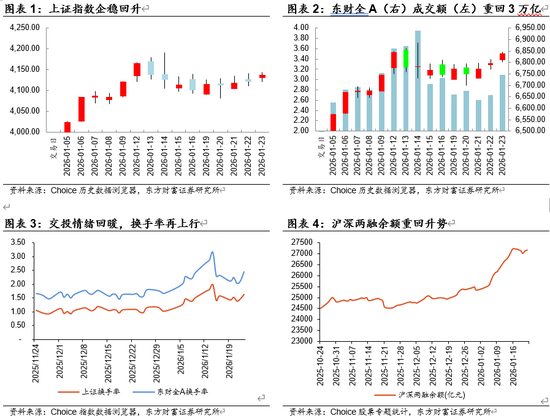
Core Viewpoint - The A-share market has shown a rebound in trading activity, with transaction volume exceeding 3 trillion yuan, indicating strong internal confidence and capital inflow amidst domestic asset scarcity and expectations of RMB appreciation [1][29]. Market Structure and Trends - The market structure has shifted compared to late last year and early this year, with increased activity in the real estate chain, resource products, and price increase chains, reflecting the inflow of medium to low-risk preference capital [1][6][39]. - Recent signals of expanding domestic demand policies have emerged, with expectations of policy enhancements, particularly in real estate prices, infrastructure investment, and service consumption, which are key areas of focus for medium to low-risk preference capital [1][39]. - The expansion of cyclical stocks indicates rising market confidence in re-inflation, with performance spreading from non-ferrous metals to chemicals, building materials, and coal, suggesting strong confidence in the PPI recovery trend this year [1][11][42]. Sector Performance - The small-cap stocks have outperformed large-cap stocks, with indices like the CSI 500 and CSI 1000 showing significant gains of 4.34% and 4.04% respectively, indicating increased participation and liquidity support for small-cap stocks [5][35]. - The real estate chain and cyclical resource products have benefited from warming policy expectations and re-inflation, with recent policy announcements aimed at reversing funding dilemmas in the real estate sector [39][42]. - The communication sector has faced declines, raising concerns about the sustainability of previously favored stocks, as institutional holdings in this sector have not consistently yielded excess returns [19][44]. Investment Focus - Key sectors to watch include semiconductors, non-ferrous metals, computing, media, chemicals, and military industries, with themes such as commercial aerospace, AI applications, robotics, controllable nuclear fusion, intelligent driving, and innovative pharmaceuticals being highlighted [31][37]. - The price increase chain remains a significant investment focus, particularly in areas experiencing supply-demand mismatches, such as AI hardware and upstream raw materials like lithium carbonate and PTA [20][21][23].

兴业证券:后续还有哪些催化值得期待?
智通财经网· 2026-01-25 11:55
Core Viewpoint - The report from Industrial Securities emphasizes that the recent cooling in the market affects the rhythm and structure rather than the overall trend, with the core logic supporting the upward spring market remaining unchanged. The current spring market is still in progress, and although the market rhythm has slowed, the upward trend continues, with the profit effect expanding to a broader range [1]. Group 1: Liquidity and Catalysts - A liquidity-rich environment is the core driving force supporting the upward trend of the spring market, stemming from the strong performance of insurance funds and the influx of foreign capital due to the appreciation of the RMB [1][2]. - Insurance funds have shown impressive performance in the "opening red" period, with individual insurance premium growth rates exceeding 30% for leading companies, and some companies' individual insurance premiums surpassing 10 billion [1]. - The first half of this year is expected to see a peak in the maturity of residents' fixed deposits, creating an important window for residents to increase their allocation to equity assets [2]. - The continuous appreciation of the RMB is attracting foreign capital back to the market, with a record high of $99.9 billion in bank foreign exchange settlement surplus in December 2025, including a $11.5 billion surplus in securities investment [2]. Group 2: Market Structure and Performance - The current market is characterized by a warm macro environment and supportive policies, which are enhancing market risk appetite and driving the profit effect to expand across various sectors [3]. - The upcoming week will feature a concentrated window for industry catalysts, particularly with the earnings reports from North American tech giants, which may influence the domestic market [4]. - The earnings preview period is approaching its peak, with a disclosure rate expected to reach around 55%, which will significantly impact market structure [4][7]. Group 3: Earnings Forecasts and Sector Focus - As of January 23, 2025, 889 A-share listed companies have released earnings forecasts, with 304 companies expecting net profit growth exceeding 50%, primarily in sectors such as computing, chemicals, new energy, pharmaceuticals, and computer technology [5][6]. - The sectors with high growth or exceeding expectations in earnings forecasts include storage, new energy (battery storage, grid equipment), chemicals, and innovative pharmaceuticals [6][7]. - The report highlights that industries with low price increases during the current market rally include AI hardware, new energy, and various cyclical sectors [8]. Group 4: Future Market Outlook - February is anticipated to be a core window for bullish market activity, with a typical pattern of market volatility driven by liquidity and risk appetite, particularly in small-cap and growth sectors [9]. - The report suggests that themes such as AI applications, commercial space, and energy narratives should be revisited as they may gain renewed attention in February [9].
中信证券:本周宽基ETF的赎回规模继续放大 目前仍然未见放缓迹象
Zhi Tong Cai Jing· 2026-01-25 10:13
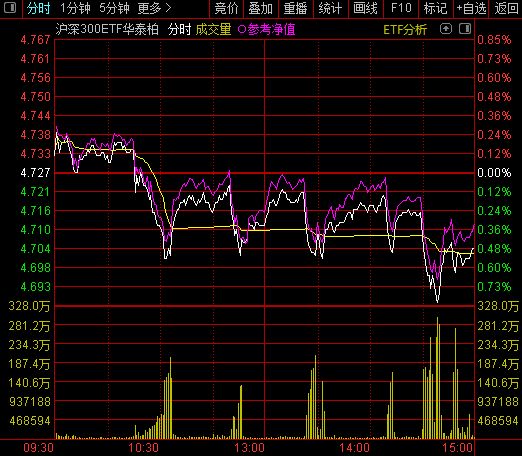
Core Viewpoint - The redemption scale of broad-based ETFs continues to expand without signs of slowing down, impacting various industries and individual stocks differently, with a notable effect on sectors and stocks that institutions are underweighting [1][2][3] Group 1: ETF Redemption Dynamics - The redemption of broad-based ETFs has led to a significant change in the ETF market structure, with cumulative net redemptions of 8,458 billion yuan since October 2024, while industry/theme ETFs have seen net subscriptions of 5,864 billion yuan [3] - As of January 23, 2026, the total scale of broad-based ETFs is approximately 20,574 billion yuan, with industry/theme ETFs at 15,115 billion yuan, representing 42% of the total [3] - The redemption behavior of broad-based ETFs is perceived more as a profit-taking strategy rather than a means to cool down the market, indicating strong market sentiment and active trading [4] Group 2: Sector Performance and Opportunities - During the recent redemption period, 86 stocks in the CSI 300 index outperformed the index by over 2%, primarily in the electronics, electric new energy, and chemical sectors, while 121 companies underperformed, mainly in non-bank financials and pharmaceuticals [5] - The consumer chain is expected to see increased allocation from now until the Two Sessions, with travel consumption leading the recovery, and the market is pricing in positive changes in consumer sentiment [7][8] - The real estate chain may also experience significant recovery, with signs of market stabilization in new home transactions and rental yields in major cities [9] Group 3: Investment Strategies - A strategy focusing on "resources + traditional manufacturing pricing power" is recommended, emphasizing sectors like chemicals, non-ferrous metals, new energy, and power equipment, which are expected to provide stable returns amid market fluctuations [10] - Investors are encouraged to increase allocations to non-bank financials and select domestic demand sectors, such as duty-free, aviation, and quality real estate developers, to capture potential policy changes and enhance returns [10]
市场选择了阻力最小的方向!两大主线王者归来?
Mei Ri Jing Ji Xin Wen· 2026-01-25 09:42
Group 1 - The mysterious funds continue to control the market rhythm and sentiment, while small-cap stocks have attracted significant capital, with the Micro-cap and CSI 500 indices rising over 4% this week, and the National 2000 and CSI 1000 indices increasing by around 3% [1][17] - The market liquidity is abundant, leading to a search for opportunities, particularly in small-cap stocks, as large-cap stocks face pressure from mysterious funds [1][18] - The speculative sentiment in the market has been significantly suppressed, particularly in the commercial aerospace and AI application sectors, which have returned to normal levels [3][19] Group 2 - The mysterious funds' control over the market rhythm is expected to gradually diminish, as their selling of broad-based ETFs has lasted for 8 trading days, indicating that the intensity of control may not remain as strong [2][18] - Historical patterns suggest that the intervention of mysterious funds does not last long, with previous instances showing a maximum of 16 trading days of influence [3][19] - The CSI 500, CSI 1000, and National 2000 indices have all reached new highs, indicating a favorable environment for small-cap stocks, which supports the notion that a "spring" for small-cap stocks is likely [6][22] Group 3 - The commercial aerospace and AI application sectors are identified as the two main investment themes, with the commercial aerospace index showing signs of a potential second wave of growth [9][25] - The AI hardware supply chain has shown positive signals, with leading companies exceeding market expectations in their performance, and several sub-sectors experiencing stock price increases [11][27] - Recent reports indicate that Samsung Electronics plans to raise NAND flash supply prices by over 100% in Q1, significantly exceeding market expectations, highlighting price increases across various segments in the electronics industry [29]
中信证券:市场信心持续恢复 “资源+传统制造定价权重估”继续加深
Jin Rong Jie· 2026-01-25 08:56
Core Viewpoint - CITIC Securities reports that market confidence is continuously recovering, and sectors that are relatively low and logically sound, but not in broad-weighted industries, are expected to see recovery [1] Group 1: Market Recovery - The consumer chain is identified as a key area for allocation, particularly from now until after the Two Sessions, focusing on expected trading [1] - The real estate chain may also experience significant recovery during this period, with the construction materials sector already showing signs of improvement [1] Group 2: Investment Strategy - A foundational portfolio is constructed around chemicals, non-ferrous metals, new energy, and power equipment, based on the principle of "resources + traditional manufacturing pricing power" [1] - This portfolio serves as an anxiety-reducing allocation choice amid the contradiction between the desire for growth and regulatory counter-cyclical adjustments [1] - There is a recommendation to increase allocation in non-bank sectors (securities, insurance) at low points, while enhancing returns through certain domestic demand varieties or high-prosperity sectors [1]
固收专题报告:追风不如乘风
ZHONGTAI SECURITIES· 2026-01-25 08:53
Report Industry Investment Rating - The industry rating is "Overweight", expecting a gain of more than 10% relative to the benchmark index in the next 6 - 12 months [19] Core Viewpoints of the Report - Since the beginning of 2026, the A - share market style has changed from unilateral upward movement to high - frequency rotation. It is better to hold the core main line firmly than to chase the market in high - frequency rotation. The AI industry chain remains the market consensus, and the current market cooling is a "slope adjustment" rather than a "trend end" [3] - The acceleration of industry rotation is a benign spread of funds from "point" to "surface". The market is seeking a pricing balance between technology and prosperous industries [3] - The net inflow of industry ETFs has increased, showing a configuration pattern of "cycles as shields and technology as spears". It is recommended to adopt a "dumbbell - shaped" configuration strategy [3] Summary by Directory Market Focus Always on the Main Line, AI Industry Chain Remains the Consensus - From the perspective of trading volume proportion, industries such as electronics, computers, and national defense and military industry have always been at the core of the market. Even with short - term disturbances, the electronics sector's trading volume proportion remains at a high level of 17% - 20%, and that of national defense and military industry has gradually recovered, indicating strong capital stickiness [3][8] - The current market cooling is a "slope adjustment" rather than a "trend end". The high concentration of the chip structure proves that the AI industry chain is an investment main line with in - depth consensus, and high activity provides strong resilience and upward elasticity [3][8] Liquidity Spillover, the Advantage of "Technology + Prosperity" Portfolio Highlights - As the market enters the adjustment period, liquidity begins to spread from high - consensus varieties to prosperous industries with catch - up logic. When the technology main line adjusts, funds flow to industries such as chemicals, non - ferrous metals, and banks [10] - This shows that it is not the ebb of the main line but the natural spread of liquidity from "point" to "surface". The market is seeking a pricing balance between technology and prosperous industries [11] - Since the beginning of the year, some sectors have shown high weekly and year - to - date excess returns. The strategy of holding the AI bottom position and combining bull - market varieties has a higher winning rate than blind rotation [12] ETF Fund Flows: Driven by the Resilience of Prosperity and Technology - Although the broad - based ETFs are still experiencing net outflows (the weekly outflow of CSI 300ETF is 724.2 billion yuan), the industry ETFs are in a state of net buying, with a cumulative net inflow of 78.82 billion yuan [13] - There has been a significant pulsed inflow of funds into the non - ferrous sector without siphoning other sectors. The technology sector also has a large net inflow, especially software and satellite sub - industries, showing a configuration pattern of "cycles as shields and technology as spears" [14] It's Better to Be Part of the Wind Than to Chase It - The main line of this bull market is clear, with technology being the best offensive variety. It is recommended to adopt a "dumbbell - shaped" configuration and hold firmly [3][17] - One end of the "dumbbell" is the technology main line, including storage, equipment, advanced packaging, AI applications, commercial aerospace, and robots. The other end is the prosperous cyclical sectors such as non - ferrous metals and chemicals, and also pay attention to stable sectors like home appliances and transportation [3][17]