
金属冶炼

Search documents
需求萎缩速度超过供应 预计锡价短期震荡偏弱
Jin Tou Wang· 2025-08-08 08:47
Core Insights - The tin market is experiencing fluctuations with a slight upward trend in futures prices, while the physical market shows varying premiums for different brands of tin [1][2]. Market Prices - As of August 8, the market prices for 1 tin ingots (Sn99.90) are reported as follows: - Shanghai: 268050 CNY/ton - Guangdong Province: 268250 CNY/ton - Guangdong Nanchu: 268000 CNY/ton - The Shanghai Futures Exchange's main tin contract closed at 267780 CNY/ton, with a slight increase of 0.09% [2]. Inventory and Supply - The London Metal Exchange (LME) reported a total tin inventory of 1710 tons, with a decrease of 60 tons, and registered warrants at 1390 tons, down by 70 tons [3]. - The Shanghai Futures Exchange reported a decrease in tin warehouse receipts to 7332 tons, down by 26 tons from the previous trading day [4]. Supply and Demand Analysis - According to Donghai Futures, the supply side shows a significant recovery in the operating rates of Yunnan and Jiangxi, reaching 59.23%, which is the highest level since March 21, with a 12.39% increase from previous lows. However, refined tin production cuts are less than expected, and mining licenses are being issued, indicating a potential easing in supply [5]. - On the demand side, there is a noted weakness, particularly in the photovoltaic sector, with a 38% year-on-year decrease in new installations in June. The overall downstream orders are declining, leading to an increase in inventory by 367 tons to 10325 tons, indicating a faster decline in demand compared to supply [5].
美俄商讨元首会晤可能:申万期货早间评论-20250808
申银万国期货研究· 2025-08-08 00:44
Core Viewpoint - The article discusses the recent developments in international trade, particularly focusing on the potential meeting between the US and Russia, as well as the performance of key commodities like crude oil, methanol, and lithium carbonate [1][2][4]. Trade and Economic Indicators - In July, China's total goods trade value reached 3.91 trillion yuan, a year-on-year increase of 6.7%, marking the highest growth rate of the year [1]. - Exports amounted to 2.31 trillion yuan, growing by 8%, while imports were 1.6 trillion yuan, up by 4.8% [1]. Crude Oil - Crude oil prices continued to decline, with reports indicating that Russia and the US are preparing for a high-level bilateral meeting [2]. - The US has imposed an additional 25% tariff on Indian imports, which could impact India's status as a major buyer of Russian oil [2]. Methanol - Methanol prices fell by 0.38%, with domestic coal-to-methanol production facilities operating at an average load of 81.05%, a decrease of 0.24 percentage points [3]. - As of July 31, methanol production facilities had an overall operating load of 71.54%, up by 1.17 percentage points from the previous month [3]. Lithium Carbonate - Lithium carbonate prices have seen significant fluctuations due to mining qualification issues in Jiangxi, with recent price declines [4]. - Chile's lithium salt exports are projected to increase by 40% month-on-month and 22% year-on-year by July 2025 [4]. Foreign Exchange and Gold Reserves - As of the end of July, China's foreign exchange reserves stood at $329.22 billion, a decrease of $25.2 billion from the end of June [7]. - China's gold reserves increased to 73.96 million ounces, marking the ninth consecutive month of gold accumulation [7]. Industry News - The Ministry of Industry and Information Technology, along with six other departments, issued guidelines to promote the innovation and development of brain-computer interface technology, setting development goals for 2027 and 2030 [8].


Ferroglobe(GSM) - 2025 Q2 - Earnings Call Presentation
2025-08-06 12:30
Financial Performance - Q2 2025 sales increased by 26% to $386.9 million compared to $307.2 million in Q1 2025[34] - Adjusted EBITDA improved significantly from $(26.8) million in Q1 2025 to $21.6 million in Q2 2025[34] - Adjusted EBITDA margin increased from (9)% in Q1 2025 to 6% in Q2 2025[34] - Adjusted diluted EPS improved from $(0.20) in Q1 2025 to $(0.08) in Q2 2025[34] - The company generated positive operating cash flow of $15.6 million in Q2 2025 compared to $19.4 million in Q1 2025[44] Market and Operations - The company withdrew guidance due to uncertainty and limited visibility in the market[12, 50] - Silicon metal revenue increased 24% to $130 million in Q2 2025[38] - Silicon-based alloys revenue increased 23% to $112 million in Q2 2025[41] - Manganese-based alloys revenue increased 43% to $106 million in Q2 2025[43] Strategic Outlook - The company expects EU safeguards and the U S silicon metal trade cases to improve 2026 results[12]

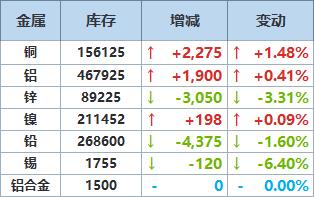
8月5日LME金属库存及注销仓单数据
Wen Hua Cai Jing· 2025-08-06 09:05
》查看更多金属库存信息 | 金屋 | 阵 | 増減 变动 | | --- | --- | --- | | 铜 | 156125 | T +2,275 1 +1.48% | | 品 | 467925 | 1 +1,900 1 +0.41% | | 锌 | 89225 | - -3.050 J -3.31% | | 寝 | 211452 | 1 +198 ↑ +0.09% | | 铝 | 268600 | ب -4,375 J -1.60% | | 锡 | 1755 | - -120 ↓ -6.40% | | 铝合金 | 1500 | 0 - 0.00% | | LME库存 | | --- | | 我屋 | 阵 | 注册仓单 | 变动 | 注销仓单 | | 变动 | | 注销占比 上日占比 | | --- | --- | --- | --- | --- | --- | --- | --- | --- | | 铜 | 156125 | 145200 | T +2.36% | 10925 | | -8.96% | 7.00% | 7.80% | | 铝 | 467925 | 453700 | 1 +0.17% | 1 ...
铜冠金源期货商品日报-20250806
Tong Guan Jin Yuan Qi Huo· 2025-08-06 01:46
1. Report Industry Investment Rating No relevant content provided. 2. Core Views of the Report - Overseas, the market is pricing in the risk of a cooling US economy and an escalation of tariff threats. The US ISM Services PMI in July dropped to 50.1, indicating rising stagflation risks, while the Markit Services PMI rose to 55.7. Trump announced potential tariff hikes, and the appointment of a new Fed Chair is anticipated. In the domestic market, the Chinese Services PMI in July reached a 14 - month high. A - shares showed a bullish trend, and the bond market was volatile. In August, with limited domestic policy and event expectations and increasing overseas uncertainties, the equity market may oscillate, and opportunities in the bond market should be monitored [2][3]. - For precious metals, supported by interest - rate cut expectations, gold and silver continued to rebound. The market expects the Fed to start cutting rates in September, and Trump's tariff announcements may further boost risk - aversion sentiment [4][5]. - In the copper market, the US service industry is at risk of stagnation, but the expectation of a September rate cut has increased. With overseas concentrate shortages and mine restart issues, and inventory rebounds, copper prices are expected to find support and then stabilize [6][7]. - Aluminum prices are under pressure. Although the decline in the US Services PMI has increased speculation of a Fed rate cut, global economic uncertainties and trade policies have affected demand. With rising inventory, aluminum prices are expected to remain under pressure [8][9]. - Alumina prices are expected to be under pressure and oscillate. With an increase in warehouse receipts and a relaxation of market supply, and stable consumption, the market shows a mixed situation [10]. - Zinc prices are expected to be under pressure below the moving average. With a weakening economy, weak consumption, and increasing supply, the expectation of an oversupply is strong, but the short - term decline may be limited [11][12]. - Lead prices are expected to remain weak. With limited consumption improvement, supply increases, and potential cost support weakening, lead prices lack upward momentum [13][14]. - Tin prices may have limited upward momentum. Although supply has marginally recovered, consumption is weak, and the market is in a destocking phase. The price rebound driven by capital reduction may face pressure [15]. - Industrial silicon prices may stop falling. With the increase in production during the southwest's wet season and the rebound of warehouse receipts, and the recovery of anti - involution sentiment, the prices are expected to stabilize [16][17]. - Lithium carbonate prices are weak. Affected by the cooling of anti - involution governance, prices are returning to fundamentals. Technically, there is still room for decline, but policy risks remain high [18][19]. - Nickel prices are expected to oscillate. With weakening terminal demand and an expected supply surplus, but a solid cost base, and fluctuating macro - expectations, nickel prices will remain volatile [20]. - Crude oil prices are weak. With the potential reduction of US sanctions on Russia and OPEC+'s production increase plan, along with rising stagflation concerns, oil prices are expected to be weak, but Middle - East geopolitical risks should be watched [21]. - Steel prices are expected to be slightly bullish. With stable spot trading, the output of major steel products is stable, and demand is mixed. With the expected supply reduction due to the northern parade limit, prices may oscillate upwards [22][23]. - Iron ore prices are expected to oscillate. With a slight increase in port inventory, stable supply, and high steel - mill iron - water production, prices will remain range - bound, and the impact of northern parade - related production limits should be monitored [24]. - Soybean and rapeseed meal prices may oscillate. With normal precipitation in US soybean - growing areas, slow export sales of new - crop soybeans, and the upcoming arrival of Argentine soybean meal, prices will show wide - range oscillations [25]. - Palm oil prices may oscillate and adjust. With concerns about a potential US stagflation, falling oil prices, and expectations of an inventory increase in Malaysian palm oil, but support from Indonesia's B40 policy, and the entry of long - position funds, palm oil prices are in an oscillatory phase [26][27]. 3. Summary by Related Catalogs 3.1 Metal Main Varieties' Trading Data - Presents the closing prices, price changes, price change percentages, trading volumes, and open interest of various metal futures contracts such as SHFE copper, LME copper, SHFE aluminum, etc., along with their price units [28]. 3.2 Industrial Data Perspective - For copper, it shows the price changes of SHFE copper and LME copper, as well as data on inventory, spot quotes, and other indicators from August 4th to 5th [29]. - For nickel, it provides price changes of SHFE nickel and LME nickel, and data on inventory, spot quotes, and other aspects from August 4th to 5th [29][32]. - For zinc, it presents price changes of SHFE zinc and LME zinc, and data on inventory, spot quotes, and other indicators from August 4th to 5th [30][32]. - For lead, it shows price changes of SHFE lead and LME lead, and data on inventory, spot quotes, and other aspects from August 4th to 5th [30][32]. - For aluminum, it provides price changes of SHFE aluminum and LME aluminum, and data on inventory, spot quotes, and other indicators from August 4th to 5th [30][32]. - For alumina, it shows the price changes of SHFE alumina and the national average spot price, and data on inventory, spot quotes, and other aspects from August 4th to 5th [30][32]. - For tin, it presents price changes of SHFE tin and LME tin, and data on inventory, spot quotes, and other indicators from August 4th to 5th [30][32]. - For precious metals, it shows price changes of SHFE and COMEX gold and silver, and data on inventory, spot quotes, and other aspects from August 4th to 5th [30][32]. - For steel products, it provides price changes of SHFE rebar and hot - rolled coil, and data on inventory, spot quotes, and other indicators from August 4th to 5th [30][32]. - For iron ore, it shows price changes of DCE iron ore, and data on inventory, spot quotes, and other aspects from August 4th to 5th [30][32]. - For coking coal and coke, it presents price changes of DCE coking coal and coke, and data on inventory, spot quotes, and other indicators from August 4th to 5th [30][32]. - For industrial silicon, it shows price changes of GFEX industrial silicon, and data on inventory, spot quotes, and other aspects from August 4th to 5th [30][32]. - For soybean and rapeseed meal, it provides price changes of CBOT soybeans, DCE soybean meal, and CZCE rapeseed meal, and data on inventory, spot quotes, and other aspects from August 4th to 5th [30][32].
振华股份20250803
2025-08-05 03:15
Summary of Key Points from the Conference Call Industry Overview - The conference call discusses the **chromium metal industry**, highlighting the surge in demand driven by **AI data centers**, **commercial aircraft**, and **European military needs**. The industry is expected to face a significant supply-demand gap, projected to reach **280,000 tons by 2028** due to limited capacity expansion caused by safety concerns [2][3]. Core Insights and Arguments - **Gas Turbine Demand**: The demand for gas turbines is rapidly increasing, primarily benefiting from the construction of AI data centers. The delivery volume is expected to grow by approximately **70% year-on-year in the second half of 2026** [2][4]. - **Commercial Aircraft Engine Orders**: There has been a substantial increase in commercial aircraft engine orders, but the delivery cycle is lengthy. The global commercial aircraft fleet is projected to grow from **1,266 aircraft in 2024 to 2,800 by 2028**, with a maintenance ratio of **40%-50%** [4][24]. - **European Military Orders**: European military orders are increasing, with Rheinmetall's military orders rising from **€23 billion to €60-105 billion**. However, this demand has limited impact on domestic chromium metal consumption [5][27]. Production and Profitability Expectations - **Zhenhua Co. Production Forecast**: Zhenhua Co. anticipates a steady increase in production from **940,000 tons in 2024 to 1,060,000 tons by 2028**. The net profit is expected to rise from **¥770 million in 2025 to ¥1.3 billion in 2027**, with a valuation level of **7.8 times** [2][7]. - **Chromium Price Trends**: The price of chromium metal is closely linked to the price of chromium ore. Recent price declines are attributed to raw material price drops and seasonal factors, but the price of chromium oxide remains stable, indicating a tighter market for certain products [8][37]. Supply Chain Dynamics - **Global Supply Chain Expansion**: Overseas companies like Siemens Energy and Mitsubishi Power are expanding gas turbine production capacity, while Chinese suppliers are entering the global supply chain. Exports from the chromium industry have increased by **64% year-on-year** in the first half of the year [2][6]. - **Complexity in Production**: The production process from chromium ore to chromium metal is complex, particularly in handling sodium chromate and sodium dichromate due to the hazardous nature of hexavalent chromium waste [10]. Market Position and Future Outlook - **Global Chromium Production**: Global chromium production capacity is approximately **1.07 million tons**, with China accounting for **520,000 tons**. Major producing countries include Kazakhstan, Turkey, and South Africa [11][35]. - **Zhenhua Co. Future Prospects**: Zhenhua Co. plans to expand its capacity significantly, potentially increasing production by **40%** through acquisitions and operational improvements. The company is expected to generate substantial free cash flow and improve return rates [36]. Additional Insights - **High-Temperature Alloy Applications**: Chromium metal is widely used in high-temperature alloys for gas turbines and aircraft engines, with a growing demand expected in the coming years [13][14]. - **Export Growth**: China's chromium powder exports have surged, with a notable increase from **1,300 tons in 2022 to 19,000 tons in the first quarter of 2025** [34]. This summary encapsulates the critical points discussed in the conference call, providing a comprehensive overview of the chromium metal industry, its dynamics, and future expectations.

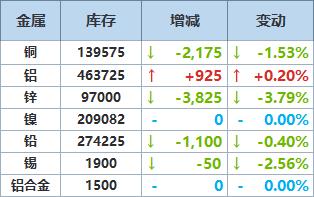
8月1日LME金属库存及注销仓单数据
Wen Hua Cai Jing· 2025-08-04 08:53
Group 1: Inventory Changes - Copper inventory decreased by 2,175 tons, a decline of 1.53%, bringing the total to 139,575 tons [1][4] - Aluminum inventory increased by 925 tons, a rise of 0.20%, resulting in a total of 463,725 tons [1][5] - Zinc inventory fell by 3,825 tons, a decrease of 3.79%, now totaling 97,000 tons [1][9] - Tin inventory decreased by 50 tons, a drop of 2.56%, with a current total of 1,900 tons [1][11] Group 2: Registered and Cancelled Warehouse Receipts - For copper, registered warehouse receipts are at 127,500 tons, with a cancellation of 12,075 tons, leading to a cancellation rate of 8.65% [2][4] - Aluminum registered warehouse receipts stand at 452,225 tons, with 11,500 tons cancelled, resulting in a cancellation rate of 2.48% [2][5] - Zinc registered warehouse receipts are at 51,350 tons, with 45,650 tons cancelled, leading to a cancellation rate of 47.06% [2][9] - Nickel registered warehouse receipts total 196,770 tons, with a cancellation of 12,312 tons, resulting in a cancellation rate of 5.89% [2][13]
省“三首两新”拟认定名单公示 句容6项技术产品入围
Zhen Jiang Ri Bao· 2025-08-01 15:49
Group 1 - The "Three Firsts and Two New" recognition system aims to accelerate the transformation and market promotion of innovative products through clear standards and support [1][2] - Jiangsu Tiangong Technology Co., Ltd. is a leading manufacturer of key strategic materials and titanium alloy products in China, recognized as a national-level specialized and innovative "little giant" enterprise [1] - Jiangsu Gaoguang Semiconductor Materials Co., Ltd. has achieved significant technological advancements in the new display industry, breaking foreign monopolies and addressing critical supply chain issues [1] Group 2 - The six recognized technologies and products demonstrate innovation in fundamental principles, core technologies, and product functions, contributing to high-quality industrial development in the city [2]
有色金属周度报告-20250801
Xin Ji Yuan Qi Huo· 2025-08-01 10:34
Report Summary 1. Report Industry Investment Rating No relevant information provided. 2. Core Viewpoints of the Report - Most metal prices in the domestic market declined this week, with significant drops in industrial silicon, lithium carbonate, and other varieties. The prices of some metals' spot and futures showed different trends. The inventories of copper in the three major exchanges continued to rise, and the copper concentrate processing fee remained at a historical low. The demand side of copper presented a mixed situation, with growth in the automotive and new - energy vehicle sectors but declines in the real - estate and photovoltaic sectors. Under the background of the "anti - involution" policy, the output of industrial silicon and polysilicon increased in July, and the futures prices of related varieties may be adjusted in the short term and face long - term over - capacity issues [2][11][16][30]. 3. Summary by Related Catalogs 3.1 Domestic Main Metal Spot Price Trends - This week, the prices of most metals in the domestic market declined. The futures prices of copper, aluminum, zinc, lead, nickel, industrial silicon, lithium carbonate, and polysilicon all decreased, with the largest decline of 14.41% in the lithium carbonate 2509 contract. The spot prices of copper, aluminum, zinc, lead, nickel, and industrial silicon also decreased, while the spot prices of alumina, lithium carbonate, and polysilicon increased, with the largest increase of 5.71% in lithium carbonate [2]. 3.2 Copper Inventory Trends in the Three Major Exchanges - As of July 25, the SHFE copper inventory was 84,600 tons, a week - on - week increase of 3,100 tons (+3.80%). As of August 1, the LME copper inventory was 141,800 tons, a week - on - week increase of 13,300 tons (+10.35%). As of July 24, the COMEX copper inventory was 257,900 tons, a week - on - week increase of 10,000 tons (+4.03%). The inventories in the three major exchanges continued to rise, and non - US copper inventories flowed back [11][16]. 3.3 Copper Supply and Demand - **Supply**: As of July 31, the spot TC of copper concentrate dropped to - 42.50 dollars per ton, a slight increase of 0.4 dollars per ton. The expectation of a tight supply at the mine end still exists, and the processing fee remains at a historical low [19]. - **Demand**: In June, the production and sales of automobiles and new - energy vehicles increased. The production and sales of new - energy vehicles increased by 35% and 36.9% year - on - year respectively, accounting for 45.8% of the total new vehicle sales. From January to June, the new construction area of housing decreased by 20%, and the completion area decreased by 14.8%. In June, the newly - added photovoltaic installed capacity was 14.36GW, a year - on - year decrease of 38% and a month - on - month decrease of 84.54% [23][25][27]. 3.4 "Anti - Involution" Policy Summary - Since 2024, a series of policies have been introduced to address "involution - style" competition, including measures to promote large - scale equipment updates, eliminate backward production capacity, and prevent low - price and disorderly competition. In June and July 2025, specific policies such as setting a price floor for polysilicon, raising the access threshold for new projects, and strengthening governance of low - price competition were introduced [28]. 3.5 Strategy Recommendations - **Short - term**: Pay attention to position management and beware of repeated risks. - **Long - term**: Entering the wet season, focus on the inventory clearance speed of the industry, and the long - term over - capacity situation remains [31][32]. 3.6 Key Variety Weekly Summary - This week, the three varieties on the GZEX adjusted across the board. The weekly decline of the industrial silicon 2509 contract was 12.60%, the polysilicon 2509 contract was 3.58%, and the lithium carbonate 2509 contract was 14.41%. The polysilicon market fluctuated widely this week, mainly due to the spread and clarification of a "small composition" about polysilicon storage. The output of industrial silicon and polysilicon increased in July. In the short term, the futures prices may be adjusted, and attention should be paid to repeated risks [30].
广发早知道:汇总版-20250731
Guang Fa Qi Huo· 2025-07-31 03:48
1. Report Industry Investment Rating No relevant content provided. 2. Core Views of the Report - The A - share market experienced a decline and adjustment, with the consumer sector rising against the trend. The four major stock index futures contracts showed mixed trends. The bond market was affected by the Politburo meeting and Sino - US trade negotiations, with a short - term improvement in sentiment. Precious metals prices dropped due to a strong US economy and the Fed's decision to hold rates. The shipping futures market was expected to be weak and volatile. The prices of most non - ferrous metals were under pressure, and the agricultural product market had different trends based on supply and demand and policy factors [2][3][5][8][11][13][15][16][56]. 3. Summary by Relevant Catalogs Financial Derivatives - Financial Futures Stock Index Futures - The main stock indexes showed mixed trends on Wednesday. The Shanghai Composite Index rose 0.17%, while the Shenzhen Component Index and the ChiNext Index declined. The four major stock index futures contracts had different performances, with IF2509 and IH2509 rising, and IC2509 and IM2509 falling. The high - dividend sector rose, while the TMT sector significantly corrected. It was recommended to take profit on the long position of IM futures and replace it with a small amount of short positions in the MO put option with an exercise price of 6300 in the far - month contract [2][3][4]. Treasury Futures - Treasury futures closed up across the board. The Politburo meeting had a mild statement on anti - involution and did not introduce unexpected growth - stabilizing policies, which was a sign of the end of negative factors for the bond market. It was recommended to be long in the short - term and pay attention to economic data [5][6][7]. Financial Derivatives - Precious Metals - Trump announced tariffs on India and Brazil, and the US economy showed strong performance. The Fed kept interest rates unchanged, causing the US dollar to rise and precious metals to fall sharply. Gold and silver prices dropped, and it was recommended to buy gold at low levels and pay attention to the support level. Silver prices were affected by market sentiment and had a relatively large decline, with the price seeking support above 37 dollars [8][9][11]. Financial Derivatives - Container Shipping Futures - The spot quotes of container shipping were weak, and the shipping indexes declined. The futures market was expected to be weak and volatile, and it was recommended to short the 08 and 10 contracts at high prices [13][14][15]. Commodity Futures - Non - Ferrous Metals Copper - The spot price of copper was high, and the trading sentiment was poor. The market's expectation of a 50% tariff on electrolytic copper was disappointed, and the price was under pressure. The supply was expected to be loose, and the demand was weak. It was recommended to pay attention to the price range of 77000 - 79000 [16][17][20]. Alumina - The spot price of alumina increased slightly. The supply was expected to be in a state of slight excess, but there was a risk of a short squeeze due to low warehouse receipts. It was recommended to wait and see in the short - term and short at high prices in the medium - term [20][22][23]. Aluminum - The spot price of aluminum increased slightly. The market was in a traditional off - season, with weak demand and a strong expectation of inventory accumulation. The price was expected to be volatile at a high level, and the reference price range was 20200 - 21000 [23][24][25]. Aluminum Alloy - The spot price of aluminum alloy remained unchanged. The industry was in an off - season, with weak demand and high inventory. The price was expected to be volatile, and the reference price range was 19600 - 20400 [26][27][28]. Zinc - The spot price of zinc increased slightly. The supply was expected to be loose, and the demand was weak. The price was expected to be weak and volatile, and the reference price range was 22000 - 23000 [28][29][31]. Tin - The spot price of tin increased slightly. The supply was tight, and the demand was weak. The price was expected to be volatile, and it was recommended to wait and see [31][33][34]. Nickel - The spot price of nickel increased slightly. The supply was high, and the demand was weak. The price was expected to be adjusted within a range, and the reference price range was 120000 - 128000 [34][35][37]. Stainless Steel - The spot price of stainless steel increased slightly. The raw material prices were loose, and the supply was under pressure. The demand was weak, and the price was expected to be volatile within a range, with a reference price range of 12600 - 13200 [37][38][40]. Lithium Carbonate - The spot price of lithium carbonate declined slightly. The supply was affected by mining issues, and the demand was stable. The price was expected to be volatile around 70,000, and it was recommended to wait and see [41][42][44]. Commodity Futures - Black Metals Steel - Steel prices declined, and the basis strengthened. The cost increased, but the steel mill profits improved. The supply was expected to increase, and the demand was stable. The price was expected to be volatile, and it was recommended to buy on dips [45][46][47]. Iron Ore - The spot price of iron ore showed mixed trends. The demand was strong, and the supply was expected to increase slightly. The price was expected to be affected by steel production and policies, and it was recommended to be cautiously long and consider the arbitrage strategy of long hot - rolled coils and short iron ore [48][49]. Coking Coal - The coking coal futures price fluctuated sharply, and the spot price was stable and strong. The supply was tight, and the demand was high. The inventory was at a medium level. It was recommended to be cautiously long and consider the arbitrage strategy of long coking coal and short iron ore [50][51][52]. Coke - The coke futures price fluctuated, and the spot price was expected to rise. The supply was limited, and the demand was strong. The inventory was at a medium level. It was recommended to be cautiously long and consider the arbitrage strategy of long coke and short iron ore [53][54][55]. Commodity Futures - Agricultural Products Meal - The domestic meal spot price increased. The US soybean was under pressure due to a high - yield expectation, while the domestic soybean meal had support due to import concerns. It was recommended to wait and see [56][57][58]. Live Pigs - The live pig spot price was weak. The supply and demand were both weak, and the short - term price was not optimistic. The near - month contract was under pressure, and the far - month contract was affected by policies [60][61]. Corn - The corn spot price was stable. The market was affected by multiple factors, and the price was expected to be volatile [62].