
汽车

Search documents
【早报】伊朗提出停战六项条件;宇树科技IPO获受理
财联社· 2026-03-22 23:11
Industry News - The Central Cyberspace Administration of China is guiding platforms to standardize short video content labeling, requiring specific tags and making labeling a necessary step for video publication [5] - The National Internet Emergency Center and the China Cybersecurity Association released a safety usage guide for OpenClaw, providing security recommendations for users, enterprises, cloud service providers, and developers [5] - The Shanghai Stock Exchange accepted the IPO application of Yushu Technology Co., Ltd. on the Sci-Tech Innovation Board, aiming to raise 4.202 billion yuan [6] - Tesla is set to launch its in-house chip factory "Terafab," aiming to produce over 1 terawatt of computing power annually, with 80% allocated for space and 20% for ground use [7] - The price of spot gold has fallen below $4,500, with a cumulative decline of approximately 10.49% since last week, affecting jewelry prices from major brands [7] - The global first invasive brain-computer interface medical device was approved for market on March 13, 2026, marking a significant step for the brain-computer interface industry [8] Company News - Mindray Bio announced an expected loss of 50 million to 75 million yuan for the fiscal year 2025, with a net loss of 15 million to 25 million yuan, potentially leading to a delisting risk warning [9] - Sanan Optoelectronics announced that its actual controller, Lin Xiucheng, has been placed under investigation by the National Supervisory Commission [9] - Sinopec reported a total revenue of 2.78 trillion yuan for the fiscal year 2025, with a net profit attributable to shareholders of 32.476 billion yuan, translating to earnings per share of 0.268 yuan [9] - Shuangliang Energy announced that it and its controlling shareholder may face a fine of 4 million yuan for disseminating misleading information related to SpaceX overseas orders [9]


吉利汽车(00175):Q4业绩基本符合预期,蓄力高质量发展
Soochow Securities· 2026-03-22 14:55
Investment Rating - The investment rating for Geely Automobile is "Buy" [1] Core Views - The Q4 performance of Geely Automobile is generally in line with expectations, with total revenue of 105.76 billion yuan, reflecting a year-on-year increase of 22.1% and a quarter-on-quarter increase of 18.6% [8] - The company aims for a sales target of 3.45 million units in 2026, representing a year-on-year growth of 14% [8] - The introduction of new models, such as the Zeekr 8x and Lynk & Co 07, is expected to drive sales growth, with a notable increase in high-end model sales [8] Financial Summary - Total revenue projections for Geely Automobile are as follows: - 2024: 240.19 billion yuan - 2025: 345.23 billion yuan - 2026: 412.87 billion yuan - 2027: 476.83 billion yuan - 2028: 518.64 billion yuan - Year-on-year growth rates are projected at 34.03% for 2024 and 43.73% for 2025 [1] - Net profit attributable to the parent company is forecasted as follows: - 2024: 16.63 billion yuan - 2025: 16.85 billion yuan - 2026: 20.80 billion yuan - 2027: 24.44 billion yuan - 2028: 28.19 billion yuan - Year-on-year growth rates are projected at 213.32% for 2024 and 1.32% for 2025 [1] - The latest diluted EPS is projected to be: - 2024: 1.54 yuan - 2025: 1.56 yuan - 2026: 1.92 yuan - 2027: 2.26 yuan - 2028: 2.60 yuan [1] - The P/E ratios are expected to be: - 2024: 10.80 - 2025: 10.66 - 2026: 8.63 - 2027: 7.35 - 2028: 6.37 [1]

中国宏观经济展望
2026-03-22 14:35
Summary of Key Points from the Conference Call Industry Overview - The macroeconomic outlook for China indicates a significant supply-demand imbalance, with strong supply but relatively weak domestic demand. Policy adjustments will focus on increasing quality consumption supply, reducing inefficient investments, promoting consumer welfare, and addressing debt issues, which will impact various industries differently [1][4]. Core Insights and Arguments - **Economic Growth Projections**: China's economy is expected to grow by approximately 5% in 2026, with inflation anticipated to be higher than in 2025. This suggests that nominal growth will outperform this year, positively influencing secondary market investments. Structural opportunities will primarily be found in technology and consumption sectors, driven by both economic and cultural factors [3]. - **Export Performance**: Exports in 2025 exceeded expectations, and growth in 2026 is projected to be at least as high as this year, potentially exceeding 6%. The share of exports to emerging markets is increasing, while direct exports to the U.S. are declining, although overall dependency is rising. Despite falling export prices, corporate profit margins are stabilizing due to technological advancements and cost reductions [5][13]. - **Weak Domestic Demand**: The primary reasons for weak domestic demand are the transformation of the real estate sector and heavy debt burdens, which have adversely affected the income of businesses, governments, and households. This situation is reflected in accounts receivable and payable metrics, indicating potential risks [6]. - **"Anti-Involution" Policy**: This systemic initiative differs from historical capacity reduction measures and will intensify in certain sectors such as glass, chemicals, photovoltaics, non-ferrous metals, and coal in 2026. This indicates that structural opportunities will increasingly manifest in specific industries [7]. - **Economic Policy Trends**: The economic policy for 2026 will continue a trend of moderate acceleration, focusing on increasing quality consumption supply and reducing inefficient supply. This approach has been emphasized since the 2022 strategic planning outline and the 2025 "14th Five-Year Plan" [9][8]. Important but Overlooked Content - **Sectors to Watch**: Key areas for increasing quality consumption supply include yachts, private jets, automobiles, and services in sports and high-end healthcare. Inbound consumption is also significant. Collectively, these sectors represent about 3% of 2024's GDP, with a potential growth of 10%, translating to a 0.3 percentage point increase in GDP [10]. - **Fiscal Policy Measures**: The overall fiscal deficit rate is expected to rise, including a narrow deficit rate of 3%-4% and a broader fiscal support rate. Adjustments in the use of special bonds aim to enhance efficiency, with the 2025 special bond scale at 4.4 trillion yuan, indicating a shift in usage compared to previous years [11]. - **Monetary Policy Expectations**: The monetary policy is expected to remain accommodative in 2026, with interest rate cuts likely and sufficient room for reserve requirement ratio reductions compared to 2025 [12]. - **Investment and Consumption Outlook**: Investment is anticipated to improve slightly next year due to moderate increases and structural adjustments. Consumption levels are expected to remain stable, supported by policies like trade-in programs and increased social welfare spending, alongside enhanced quality consumption supply. Export expectations are optimistic, with a projected growth of 6% or higher, aided by easing U.S.-China trade tensions and advancements in Chinese technology [2][13]. - **Potential Growth Space**: China's potential growth rate exceeds 5%, indicating substantial growth opportunities. With sufficient policy support, higher growth can be achieved. Overall, a combination of supply-side and demand-side measures will allow the economy to reveal more positive aspects, with significant development opportunities across various sectors [14].
高盛闭门会-亚洲阿尔法脉冲-小米
Goldman Sachs· 2026-03-22 14:35
Investment Rating - The report indicates a strong investment rating for Xiaomi, highlighting favorable risk-reward dynamics despite recent stock price fluctuations [2]. Core Insights - Xiaomi's revenue structure for 2026 is projected to be 40% from portable devices (with 35% from smartphones), 30% from automotive, 20% from IoT, and less than 10% from internet services [1]. - Internet services and IoT are identified as core profit pillars, expected to contribute 90% of total profits by 2025, with internet business gross margins reaching 25%-30% [1][4]. - The company holds $26 billion in net cash and $12.5 billion in investment book value, providing a strong valuation buffer with an estimated per-share value of approximately $11 [1][6]. - Xiaomi's AI strategy has shifted towards foundational large models, with MemoV2Pro ranking in the top eight globally, enhancing its position in AI development [1][7]. - The automotive business employs a blockbuster strategy, with over 550,000 units of SU7/YU7 delivered, and plans to launch a new extended-range SUV in the second half of 2026 [1][10]. Revenue and Profit Structure - In 2026, the revenue composition is expected to be 40% from portable devices, 30% from automotive, 20% from IoT, and less than 10% from internet services, while the gross profit structure shows that smartphones contribute over 10% to total gross profit [3][4]. - The core profit sources include IoT, internet services, investment income, and interest income, which are more stable and expected to offset potential profit fluctuations from automotive or smartphone businesses [4][9]. High-End Strategy and Market Positioning - Xiaomi's high-end strategy has been successfully implemented, with over 25% of smartphone shipments in China being high-end models by 2025 [4][5]. - The company is adjusting smartphone specifications and pricing to manage semiconductor price fluctuations, with expected smartphone losses of approximately $7.5 billion in 2026 due to rising component costs [5][6]. Supply Chain Management - Memory costs account for 10%-20% of smartphone pricing, with a projected three-digit percentage increase in memory prices in 2026, potentially impacting smartphone profit margins by up to 10 percentage points [5]. - Xiaomi is managing supply chain risks through component specification adjustments, price increases, and faster new model launches to reflect rising costs [5][6]. Financial Health - Xiaomi's balance sheet is a significant value support, with $26 billion in net cash and $12.5 billion in investment book value, generating $2-3 billion in free cash flow annually [6]. - The company has repurchased about 1% of its market value since 2026, which supports its stock price [6]. AI and Ecosystem Integration - Xiaomi's AI strategy focuses on becoming a leading foundational large language model company and integrating AI capabilities into its ecosystem across smartphones, IoT, and automotive products [7][8]. - The introduction of large language models is transforming Xiaomi's smart capabilities from device-level to whole-home system-level intelligence [8][11]. Internet Services Growth - The internet services business is a core profit source, contributing 25%-30% of gross profit, with expectations to exceed 100% of net profit by 2026 [9]. - Revenue growth is primarily driven by advertising, with a 10% year-on-year increase in monthly active users, although overall smartphone shipment pressures may slow growth [9][10]. Automotive Business Development - Xiaomi's automotive strategy began five years ago, with the launch of the SU7 and YU7 models, achieving over 550,000 deliveries [10]. - The upcoming launch of a new extended-range SUV is crucial for expanding into a new customer demographic, targeting older families [10]. Ecosystem Connectivity - Xiaomi's ecosystem leverages its proprietary operating system and Mi Home app for unified device control, with over 100 million monthly active users in China [11]. - The integration of AI assistants enhances user experience, allowing devices to learn user habits and automate operations [11].

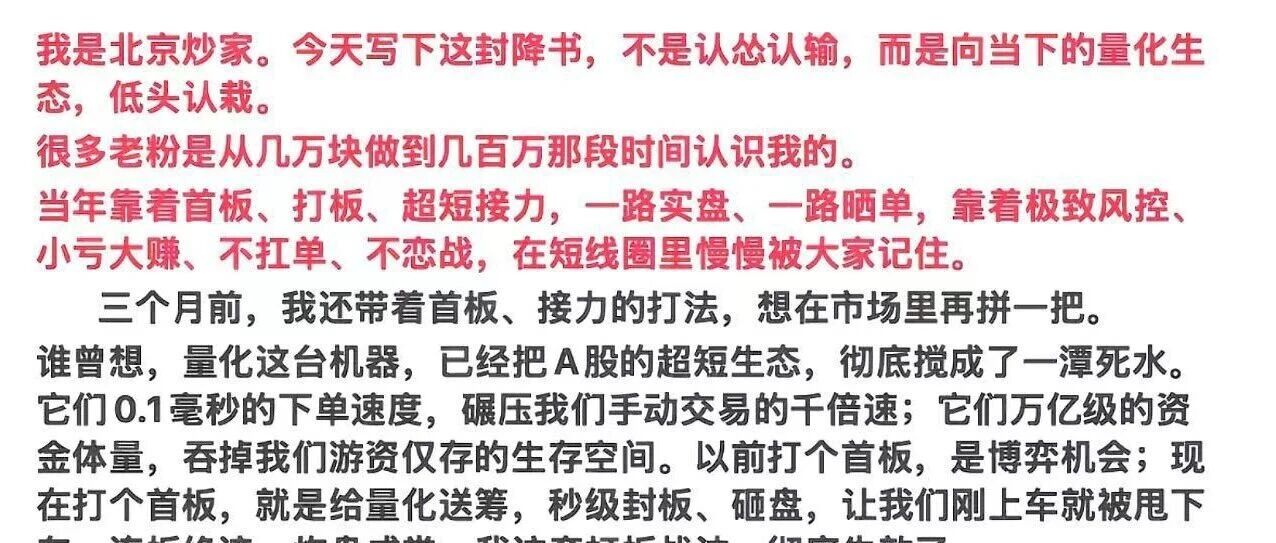
游资“投降”——A股一周走势研判及事件提醒
Datayes· 2026-03-22 14:13
Group 1 - The core viewpoint of the article highlights the significant shift in trading strategies, with retail investors, particularly short-term traders, withdrawing from the market in favor of quantitative trading strategies, which are becoming dominant in the A-share market [1][5] - Retail trading seats have seen a decline in transaction volume, reaching a three-year low, indicating a potential shift in market dynamics as notable traders exit or pause their operations [1][5] - Quantitative private equity funds have expanded significantly, surpassing traditional subjective long-only funds for the first time, indicating a shift in market influence [5] Group 2 - The market's recent decline is attributed to absolute return-oriented funds reducing their positions, rather than institutional reallocation, with certain sectors experiencing mismatched performance [7] - Investors are advised to remain patient and calm amid market fluctuations, as the period from April to May is expected to be crucial for decision-making [7] - Certain sectors, such as energy storage and domestic AIDC chains, are recommended for investment due to their potential resilience against geopolitical tensions and high oil prices [8] Group 3 - In the Hong Kong market, the short-selling volume has reached historical highs, similar to the bear market of 2021-2022, indicating limited upward potential [11] - However, high short-selling does not necessarily predict market declines; a market recovery could trigger a short squeeze, enhancing rebound strength [11] Group 4 - The article discusses the geopolitical tensions in the Middle East, with both the U.S. and Iran signaling a willingness to negotiate, which could impact market sentiment and investment strategies [12][15] - The U.S. seeks to include specific conditions in any agreement, while Iran has outlined six demands that must be met for negotiations to proceed [15] Group 5 - The article outlines various sectors that are expected to perform well, including renewable energy, particularly in wind and solar, as well as energy storage technologies, which are anticipated to benefit from ongoing geopolitical tensions and market demands [23][24] - The semiconductor and AI sectors are also highlighted, with significant investments and developments expected in the coming years, particularly in chip manufacturing and AI infrastructure [17][19][20]

宏观经济周度高频前瞻报告:经济周周看:未来高度关注出口景气度-20260322
ZHESHANG SECURITIES· 2026-03-22 14:06
Economic Indicators - The latest GDP weekly high-frequency prosperity index as of March 21 is 5.3%, a slight increase from the previous value of 5.2%[9] - The industrial prosperity index is at 8.2%, up from 8.1%, while the service sector index rose to 3.2% from 3.0%[10] Production Sector - The service sector shows stable progress, with real estate transactions improving significantly, while metro passenger volume in 11 cities has decreased compared to last year[2] - The automotive steel tire operating rate continues to rise, nearing levels from the past two years, indicating a stable industrial sector[11] Demand Insights - Domestic consumption growth is projected at 3.5%, slightly up from 3.4%, influenced by fluctuations in oil prices[22] - The construction sector is recovering slowly post-holiday, with a funding availability rate of 50.7%, up 7.9 percentage points from the previous week[32] Real Estate Market - New housing sales in 30 major cities reached 166.49 million square meters, a 0.47% increase week-on-week, but a 17% decrease year-on-year[45] - Land transaction volume decreased by 342 million square meters compared to the previous week, reflecting a 5.11% year-on-year decline[45] Export Performance - Container throughput increased to 659,800 TEUs, up from 603,800 TEUs the previous week, with a year-to-date growth of 10.97%[51] - Global energy pressures are expected to positively impact China's export share, with ongoing strong external demand[2]
海外“滞涨”担忧下,A股或存在波动
AVIC Securities· 2026-03-22 14:06
Market Overview - Global capital markets are focused on the ongoing Middle East conflict, which is expected to persist in the short term, leading to sustained high oil prices[5] - The market's expectation for a Federal Reserve rate cut this year has decreased, with a slight probability of a rate hike emerging, reinforcing global "stagflation" trading consensus[5] - Major global stock markets have largely declined in unison, reflecting these concerns[5] Historical Context - Following the outbreak of the Russia-Ukraine conflict in 2022, oil prices surged, significantly driving inflation and causing substantial volatility in global equity markets[7] - During the initial downturn, all sectors weakened, with coal, real estate, and banking showing the least decline, each with a drop of less than 9%[7] - The subsequent recovery phase saw the new energy sector lead the market, with power equipment, automotive, and non-ferrous metals showing significant gains, particularly power equipment which rebounded over 55%[7] Investment Strategy - Short-term recommendations focus on dividend and stable styles due to ongoing geopolitical tensions and high oil prices, which may lead to volatility in A-shares[29] - Mid-term strategies should target the new energy sector and high-growth HALO industries benefiting from AI expansion, with a focus on sectors like photovoltaic equipment and battery manufacturing, which are expected to see significant profit growth by 2026[3][29] HALO Industry Insights - The HALO (Heavy Assets, Low Obsolescence) concept is gaining traction, characterized by business models based on large physical assets with low technological obsolescence risk[17] - The top ten HALO industries expected to see the highest net profit growth by 2026 include photovoltaic equipment, coking, batteries, and shipping ports[3] Risk Factors - Potential risks include domestic policy implementation falling short of expectations, geopolitical events exceeding forecasts, and overseas liquidity conditions not meeting projections[30]
1000亿美元!亚马逊贝索斯拟成立新基金,收购传统制造企业
证券时报· 2026-03-22 13:26
Core Viewpoint - Jeff Bezos is planning to raise $100 billion to establish a new fund aimed at acquiring traditional manufacturing companies in key industrial sectors such as aerospace, semiconductor manufacturing, and defense, with a focus on modernizing and automating these industries through artificial intelligence (AI) technology [2]. Group 1: Fund and Acquisition Strategy - The fund is closely linked to Bezos's AI startup, Project Prometheus, which focuses on developing advanced AI models to address manufacturing and engineering challenges in industries like aerospace and automotive [4]. - The fund aims to acquire traditional manufacturing companies with established industrial foundations, enabling the application of Prometheus AI models to enhance production processes and efficiency [4]. - Bezos has been actively seeking funding support for this initiative, engaging with investment institutions in regions such as Singapore and the Middle East [4]. Group 2: AI Focus and Industry Impact - The new AI company, Project Prometheus, symbolizes inspiration and potential risks, reflecting the ongoing global debate about the risks and rewards of AI technology [7]. - The initiative aims to apply AI in manufacturing and engineering within the computing, automotive, and aerospace sectors, potentially reshaping the landscape of traditional manufacturing [7]. - If the fund successfully launches, the combination of $100 billion in funding and advanced AI technology could significantly accelerate the integration of AI into traditional industries [7]. Group 3: Comparison with Government Initiatives - In contrast to Bezos's private efforts, the Chinese government has implemented policies to promote AI in manufacturing, including a 2026 initiative to enhance the intelligence of equipment manufacturing and various industry sectors [8].

北交所科技成长产业跟踪第六十八期(20260322):工信部等三部门部署开展氢能综合应用试点工作,北交所氢能产业链标的梳理-20260322
Hua Yuan Zheng Quan· 2026-03-22 13:24
Investment Rating - The report does not explicitly provide an investment rating for the hydrogen energy industry or specific companies within it. Core Insights - The hydrogen energy comprehensive application pilot work has been initiated, aiming to reduce the average terminal hydrogen price to below 25 RMB/kg by 2030. This initiative is part of a broader strategy to promote the high-quality development of the hydrogen energy industry through large-scale applications and technological innovations [1][5]. - China is the world's largest hydrogen producer, with an annual production of approximately 33 million tons. The demand for hydrogen is expected to reach 37.15 million tons by 2030 and 130 million tons by 2060, with industrial hydrogen usage accounting for 60% of total demand [1][17]. - The report identifies 13 companies in the hydrogen energy industry chain listed on the Beijing Stock Exchange, covering various sectors such as carbon fiber, silicon materials, and gas distribution [1][32]. Summary by Sections Section 1: Hydrogen Demand and Applications - By 2030, China's hydrogen demand is projected to reach 37.15 million tons, with industrial hydrogen remaining the dominant demand structure. By 2060, industrial hydrogen demand could reach approximately 77.94 million tons [1.2][30]. - The pilot program aims to expand hydrogen applications from fuel cell vehicles to various industrial sectors, enhancing the supply capacity of clean hydrogen [1.1][5]. Section 2: Market Performance - The median price-to-earnings (P/E) ratio for the mechanical equipment industry on the Beijing Stock Exchange is reported to be between 3.68% and 43.4X. The median market capitalization for electronic device companies has decreased from 2.26 billion RMB to 2.08 billion RMB [2][34]. Section 3: Company Announcements - Yintu Network plans to invest in establishing Beijing Hongjing Crystal Energy Technology Co., Ltd., contributing 5.1 million RMB for a 51% stake [4][34]. Section 4: Hydrogen Industry Chain Companies - The report lists 13 companies involved in the hydrogen energy industry chain, including Jilin Carbon Valley, Silane Technology, and Tianli Composite, among others, detailing their business focus and market capitalization [1][32][33].
行业周报:AIToken消耗指数级增长,云计算行业提价-20260322
KAIYUAN SECURITIES· 2026-03-22 13:01
Investment Rating - The industry investment rating is "Positive" (maintained) [1] Core Insights - The online retail sector is experiencing a recovery in growth rates, with a year-on-year increase of 10.3% in online goods retail sales for January-February 2026. This improvement is attributed to the normalization of national subsidies and reduced impacts from e-commerce taxes and delivery price hikes [14][16] - Major companies are significantly increasing their investments in AI, with Alibaba aiming for $100 billion in cloud and AI application commercialization revenue over the next five years. Tencent plans to double its investment in AI new products to 18 billion yuan by 2026 [16] - The AI application landscape is evolving from Chat to Agent, which is expected to accelerate commercialization and increase token consumption exponentially. The number of active intelligent agents in China is projected to exceed 350 million by 2031, with a compound annual growth rate of over 135% [5][22] Summary by Sections Internet Sector - Online retail sales are showing structural recovery, with a year-on-year growth of 9.2% in online goods and services retail. The growth in categories such as food, clothing, and daily necessities is notable, with increases of 20.7%, 18.0%, and 4.7% respectively [14][16] - Major companies are expected to leverage their super app capabilities and full-chain ecosystem collaboration to enhance competitive advantages, focusing on AI deployment and cost optimization [16] AI and Cloud Computing - The demand for AI is anticipated to drive the cloud computing industry out of low-price competition, entering a new phase centered on AI computing power premiums. This shift is supported by the rapid growth of domestic AI models and the increasing complexity of tasks handled by agents [22] - On March 18, 2026, Alibaba Cloud announced price adjustments for AI computing and intelligent storage products, with increases ranging from 5% to 34% for core computing resources [17][19] Investment Recommendations - In the internet sector, companies such as Alibaba, Pinduoduo, and Baidu are recommended due to their strong positions in AI commercialization and application expansion. Tencent is also highlighted as a beneficiary [6][35] - In the computing sector, companies like Kingsoft Cloud and MiniMax are recommended as they are expected to benefit from increased IT spending by state-owned enterprises [6][35] - In the automotive and autonomous driving sector, companies like XPeng Motors, Xiaomi, and Tesla are positioned to benefit from advancements in high-level autonomous driving technology [6][35]