
必需消费品

Search documents
增长前景和盈利改善,高盛时隔一年重新看好印度股市
Hua Er Jie Jian Wen· 2025-11-10 10:04
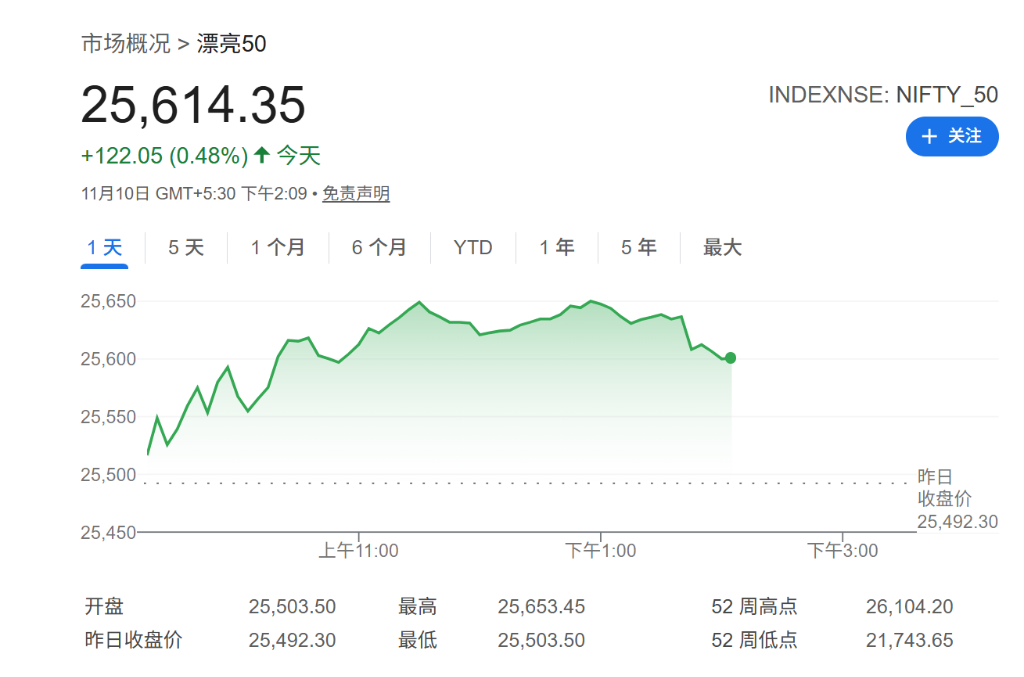
Core Viewpoint - Goldman Sachs has shifted its stance on the Indian stock market to a positive outlook, upgrading its rating to "Overweight" due to supportive government policies, improved corporate earnings prospects, and low foreign investor holdings [1][3] Market Performance - The Nifty 50 index target for the end of 2026 is set at 29,000 points, indicating a potential upside of approximately 14% from current levels [1] - Since 2025, the Indian stock market has underperformed compared to regional markets, marking the largest lag in over two decades [3][4] Factors Supporting Optimism - **Supportive Policies**: The Indian central bank has implemented several easing measures, including interest rate cuts and tax reductions, which are expected to boost economic growth and consumer spending [5] - **Earnings Recovery**: Corporate profit growth for MSCI India index constituents is projected to accelerate from 10% in 2025 to 14% in 2026 [3][5] - **Low Foreign Holdings**: Foreign institutional investors have significantly reduced their holdings in Indian stocks, creating potential for recovery as earnings improve [5] - **Valuation Defense**: Despite being one of the most expensive emerging markets, the valuation premium has decreased from 85-90% to 45%, approaching historical averages [5][6] Investment Recommendations - **Sectors to Favor**: Goldman Sachs recommends focusing on sectors benefiting from domestic economic growth, including financials, consumer goods, and defense [7][8] - **Cautious on Exports**: The firm has downgraded the information technology sector to "Underweight" due to low growth visibility and uncertainties related to AI [8]


降息利好≠普涨!投资者如何挑选赢家?花旗给出答案
智通财经网· 2025-09-15 08:21
Group 1 - The core viewpoint is that the upcoming interest rate cuts by the Federal Reserve will not solely determine market winners, but will heavily depend on the economic backdrop and the shape of the yield curve [1] - The current market has largely priced in expectations of a "soft landing" or a mild recovery, but historical patterns show that significant rate cuts typically occur during periods of economic weakness or recession [1] - In scenarios of declining interest rates, a steepening yield curve, and improving economic data, sectors such as real estate, consumer discretionary, and information technology are expected to perform well, while utilities are likely to underperform [1] Group 2 - In scenarios of declining interest rates, a steepening yield curve, and deteriorating economic data, traditional defensive sectors like utilities, real estate, healthcare, and consumer staples are expected to perform better, while sectors like information technology and energy may struggle [2] - The traditional view suggests that the federal funds rate must reach a stimulative level for the market to shift from defensive to cyclical sectors [2] - Citigroup predicts that the Federal Reserve will implement five consecutive rate cuts of 25 basis points each, accompanied by slow but positive economic growth, influencing investment strategies significantly [2]

广发策略:港股在美联储重启降息之后表现更加强劲
智通财经网· 2025-09-14 23:36
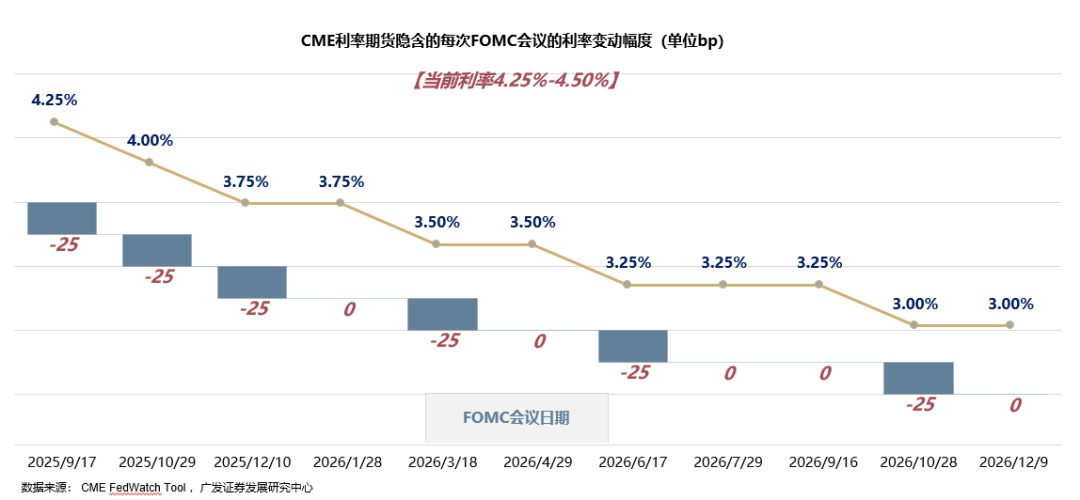
Core Viewpoint - The likelihood of a rate cut cycle restarting in September is high following the release of the US August CPI and employment data, with a total of 100 basis points cut since the cycle began in September 2024, and the Federal Reserve has paused rate cuts four times since March this year [1][2]. Market Performance Post Rate Cut - After the restart of the rate cut cycle, the Hong Kong stock market is expected to perform strongly, similar to the US stock market. In non-recession scenarios (1995, 2020, 1998), indices tend to rise, while in recession scenarios (2002, 2008), there may be a further decline for about three months before a recovery [1][4]. - Over the 12 months following a rate cut restart, the best-performing sectors are healthcare (+106.7%), technology (+88.0%), consumer staples (+55.2%), and consumer discretionary (+52.6%). The worst-performing sectors are utilities (+2.3%) and telecommunications (+13.3%) [1][4]. Asset Class Performance - In the 12 months following a rate cut restart, equity markets show significant performance. In non-recession scenarios, the S&P 500 averages a gain of 22.5%, while the Hang Seng Index averages a gain of 35.4%. Commodities like oil and copper also see substantial increases, reflecting pricing in of economic recovery [5][6]. Sector Performance in US Markets - In the US market, the sectors that perform best in the 12 months following a rate cut restart are technology (+47.8%), industrials (+22.9%), consumer discretionary (+22.0%), and materials (+20.2%). In non-recession scenarios, technology's average gain reaches +60.2%. The sectors that perform poorly include utilities (-0.5%), real estate (+3.7%), consumer staples (+5.4%), and telecommunications (+8.6%) [9][11]. Index Style Performance - In the US market, small-cap indices (Russell 2000) tend to outperform large-cap indices (Russell 1000) and the Nasdaq outperforms the Dow Jones Industrial Average, indicating a shift towards smaller-cap stocks following the restart of the rate cut cycle [13][15]. Hong Kong Market Performance - The Hong Kong market is expected to show stronger performance post rate cut restart, with healthcare, technology, consumer staples, and consumer discretionary sectors leading the gains, while utilities and telecommunications lag behind [1][4][19].

ava爱华集团热点:非农数据大幅下修 三大指数 黄金再走高
Sou Hu Cai Jing· 2025-09-10 07:29
Group 1 - The U.S. Labor Department's preliminary benchmark revision data revealed a downward adjustment of 910,000 non-farm jobs for the year ending in March, marking the largest downward revision since 2000, indicating a weak labor market [1][3] - The unemployment rate rose to 4.3% in August, the highest in four years, with job losses accelerating in cyclical-sensitive industries [3] - Despite weak employment data, the stock market remained optimistic, with the Dow Jones up 0.43% to 45,711.34 points, the S&P 500 rising 0.27% to 6,512.61 points, and the Nasdaq increasing 0.37% to 21,879.49 points [1] Group 2 - The yield curve for U.S. Treasuries steepened, with the 2-year yield dropping to 3.47%, the lowest since 2022, and the 10-year yield down by 8 basis points, reflecting deteriorating long-term growth expectations [4] - The bond market has fully priced in a 50 basis point rate cut in September, with the annual rate cut expectation rising to 72 basis points [4] - Gold prices surged, with COMEX gold reaching a historical high of $3,715, supported by strong buying interest, as indicated by Goldman Sachs' report of an 8:1 buying power ratio [4] Group 3 - Defensive sectors such as utilities and consumer staples outperformed the market, reflecting concerns over economic slowdown [4] - The market is facing a policy balancing act for the Federal Reserve amid political pressure and inflation risks, with a potential 50 basis point cut in September possibly undermining policy credibility [4] - Upcoming PPI/CPI data will be crucial in adjusting market expectations, with potential inflation surprises possibly leading to profit-taking in gold [4]

关税突围战与分裂的消费席卷股市 大摩揭斩获“阿尔法”的秘诀:AI、半导体设备与必需消费
智通财经网· 2025-08-26 10:12
Core Investment Trends - Morgan Stanley identifies three core investment themes for the stock market over the next 12 months: AI computing power leaders and software giants benefiting from the AI wave, semiconductor equipment themes benefiting from favorable policies under the Trump administration, and essential consumer goods leaders amid a fragmented consumption chain [1][2]. AI Computing Power and Software Giants - The demand for AI computing power is experiencing explosive growth, driven by significant investments in AI infrastructure by the U.S. government and tech giants, indicating a bullish outlook for companies like Nvidia, TSMC, and Broadcom [6][10]. - Analysts predict that major tech companies, including Google, Microsoft, Meta, and Amazon, will spend over $350 billion on AI computing infrastructure in 2023, representing a nearly 50% year-over-year growth [6][10]. - By 2025, AI-related capital expenditures in tech companies are expected to reach 28%, up from 12% in 2023, with AI applications driving significant increases in efficiency and productivity [7][11]. Semiconductor Equipment Beneficiaries - The "One Big Beautiful Bill Act" (OBBBA) is expected to significantly boost free cash flow for U.S. manufacturing companies, particularly in the semiconductor equipment sector, as companies shift production back to the U.S. [13][14]. - Semiconductor equipment leaders are positioned to benefit from the unprecedented demand for AI chips, with companies like ASML and Applied Materials playing crucial roles in the manufacturing process [15][16]. Essential Consumer Goods Amid Consumption Fragmentation - The market is witnessing a divergence in performance, with essential consumer goods companies expected to show resilient growth while discretionary spending is under pressure [17][18]. - High-income consumers are less affected by inflation and continue to spend on non-essential items, while low-income consumers are shifting towards cheaper alternatives, leading to a stark contrast in consumption patterns [18].


风险资产抛售潮黄金未能独善其身
Jin Tou Wang· 2025-08-26 03:13
Group 1 - International gold is currently trading around $3,386.27, with a latest price of $3,376.48 per ounce, reflecting a 0.32% increase, and has seen a high of $3,386.27 and a low of $3,350.89 during the session, indicating a short-term bullish trend [1] - U.S. Treasury yields have generally risen, with the two-year yield increasing by 4 basis points to 3.728% and the ten-year yield rising by 1.3 basis points to 4.271%, leading to a flattening of the yield curve to 54 basis points [2] - The stock market saw a collective decline, with the S&P 500 down 0.43% to 6,439.32 points, the Nasdaq down 0.22% to 21,449.29 points, and the Dow Jones falling 0.77% to 45,282.47 points, reflecting a shift to a cautious investor sentiment [2] Group 2 - The monthly chart shows gold prices have formed four consecutive candlesticks with upper shadows, establishing a solid foundation for a bearish trend [3] - The impact of tariff factors has been fully priced in by the market, and new tariff policies are unlikely to have the same strong shock effect as during the early Trump administration [3] - The geopolitical influence has significantly weakened, with conflicts being mostly small-scale and lacking substantial involvement from major powers [3] - The expectation of Federal Reserve rate cuts has been a topic of speculation for two years, with the narrative of "the wolf is coming" repeatedly emerging [3] - Future gold prices are expected to gradually decline, potentially testing support levels at $3,120 and $3,268, with a final target area around $3,000 to $2,950 [3] - There remains uncertainty in the short to medium-term regarding whether gold will first break through resistance at $3,400 to $3,410 before declining or if it will be directly constrained by this resistance and experience a sharp decline [3]
【环球财经】权重科技股拖累 纽约股市三大股指19日涨跌不一
Xin Hua Cai Jing· 2025-08-19 22:30
Market Overview - The New York stock market showed mixed results on August 19, with the Dow Jones Industrial Average rising by 10.45 points to close at 44,922.27, a gain of 0.02%. In contrast, the S&P 500 index fell by 37.78 points to 6,411.37, a decline of 0.59%, and the Nasdaq Composite Index dropped by 314.822 points to 21,314.952, a decrease of 1.46% [1] Sector Performance - Among the eleven sectors in the S&P 500, seven experienced gains while four declined. The real estate sector led with a rise of 1.80%, followed by the consumer staples sector with a 0.99% increase. Conversely, the technology sector and communication services sector saw declines of 1.88% and 1.16%, respectively [1] Company-Specific Developments - Nvidia's stock fell over 3% due to skepticism regarding AI valuations, impacting other major tech stocks such as Apple, Microsoft, Amazon, Alphabet, and Meta Platforms, which also saw declines, contributing to the overall downturn in the technology sector [1] - Home Depot reported second-quarter earnings that fell short of expectations but raised its full-year guidance, resulting in a 3.17% increase in its stock price on August 19 [3] Investment Insights - Lincoln Financial Group's Chief Investment Officer noted that while AI-related trading may not have collapsed, a pause is likely as the Nasdaq has risen over 40% since April. This adjustment is seen as normal amid recalibrations of market expectations regarding economic data and Federal Reserve policies [2] - Pioneer Financial's founder suggested that remarks from Federal Reserve Chairman Jerome Powell at the upcoming Jackson Hole meeting could serve as a turning point for the market, with expectations of potential interest rate cuts in September [2] - There is a belief that as investors begin to reflect on next year's earnings in the latter half of the year, stock valuations may have room for further increases, especially with clearer monetary policy and tariff outlooks [2]
衰退式降息阴云笼罩,欧股牛市逻辑面临重估?
Hua Er Jie Jian Wen· 2025-08-18 06:38
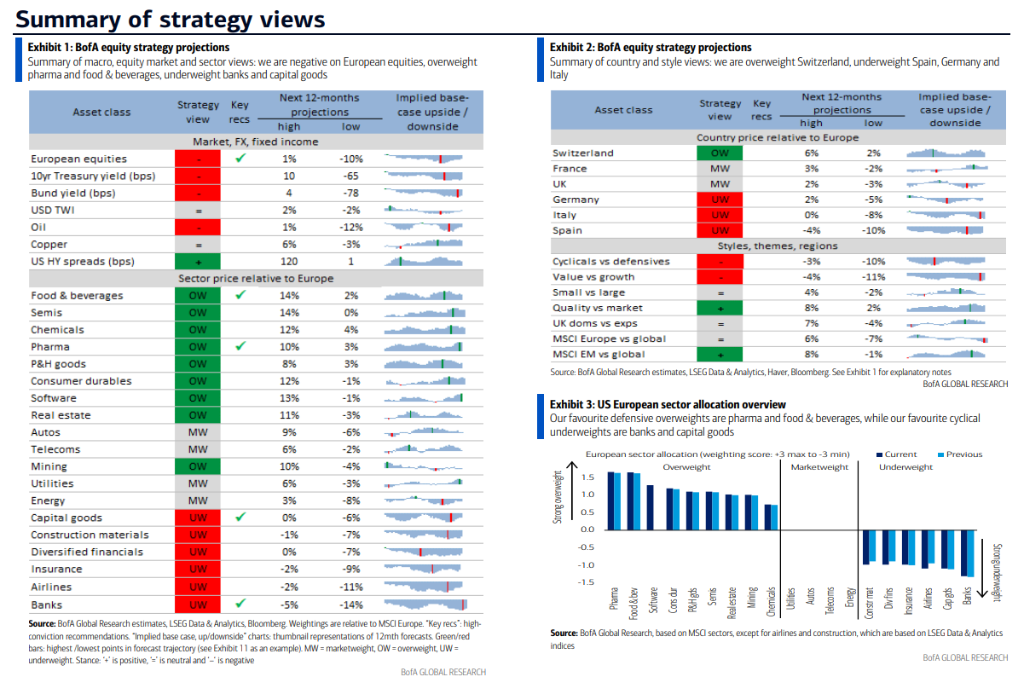
Group 1 - The U.S. labor market is significantly slowing down, with the average employment growth over the past three months dropping to only 35,000, well below last year's levels, raising concerns about the Federal Reserve potentially implementing "bad rate cuts" in response to labor market deterioration rather than inflation decline [1] - European equities are expected to face approximately a 10% correction pressure, with defensive sectors likely to benefit from this environment [1] - The decline in bond yields is anticipated to lead to downward adjustments in earnings expectations and valuation multiples, resulting in a stock market downturn amid slowing economic growth [1] Group 2 - If central banks adopt a more dovish stance due to falling inflation ("good rate cuts"), the decline in risk-free rates may not lead to a corresponding rise in risk premiums, thus supporting market growth [5] - Conversely, if rate cuts are in response to labor market and broader economic weakness ("bad rate cuts"), risk premiums are likely to rise, leading to a decrease in stock market valuations during economic slowdowns [5] - The global composite PMI new orders are projected to decline from the current 52 points to 49 points by the first quarter of next year, indicating rising risk premiums and downward adjustments in EPS expectations [5][6] Group 3 - The Stoxx 600 index is projected to face about a 10% downside, potentially dropping to 490 points by early next year, with a year-end target of 520 points [8][14] - European cyclical sectors are expected to decline relative to defensive sectors, with value stocks projected to underperform growth stocks by about 10% [8] - The pharmaceutical and food & beverage sectors are viewed positively, while the banking and capital goods sectors are expected to lag due to their recent strong performance [17]
报告下载 | 数据洞察报告:利用数据获取投资策略洞见
彭博Bloomberg· 2025-07-15 05:56
Core Insights - The article emphasizes the increasing value of data in constructing investment strategies, highlighting the growing demand for high-quality data in the market [1] - It introduces a series of "Data Insights" articles by Bloomberg's quantitative and data science team, aimed at financial professionals to effectively utilize data for investment logic, asset tracking, and scenario analysis [1] - The report covers a wide range of topics including inflation and pricing pressures, supply chain dynamics, environmental risks and opportunities, and key events impacting market trends [1] Inflation and Pricing Pressure - The analysis of consumer transaction data provides insights into company performance and consumer trends, allowing analysts to track important revenue and key performance indicators (KPIs) across industries [10] - The consumer transaction data can be aggregated to monitor industry trends, particularly in the essential consumer goods sector, revealing a year-over-year growth rate that leads the U.S. core CPI index by three months [10][11] Supply Chain Dynamics - The integration of financial data with supply chain data is crucial for identifying industry-level risks and opportunities, as demonstrated by the analysis of the European automotive sector [13] - The study indicates that the declining sales momentum of European car manufacturers was evident in the performance of their suppliers, highlighting the predictive value of combining financial and supply chain information [13][14] Market-Driven Events - The article discusses the impact of AI cost reductions on companies, particularly through the analysis of stock pricing data around the launch of the DeepSeek platform [7] - A list of the top 10 technology companies affected by the DeepSeek announcement is provided, with notable mentions including NVIDIA, which has a market cap of $2,857 billion and experienced a maximum drawdown of 24% [8]

美国银行客户对美股采取防御性立场,为最近六周首次
news flash· 2025-06-17 14:51
Core Viewpoint - The strategist team led by Jill Carey Hall indicates that U.S. bank clients have adopted a defensive stance towards U.S. stocks for the first time in six weeks, with net inflows into defensive sectors and outflows from cyclical sectors [1] Summary by Category - **Client Behavior** - Clients overall are net buyers, with a total net inflow of $800 million [1] - **Sector Performance** - Inflows were observed in technology, energy, healthcare, and consumer staples stocks [1] - The largest outflows were from consumer discretionary stocks, followed by industrials and utilities [1]