财政金融

Search documents
印尼视角|印尼财政换将:一场关乎国运的转向?
Sou Hu Cai Jing· 2025-09-15 00:10
Group 1 - The core issue in Indonesia's fiscal policy is the tension between international investors focused on financial stability and ordinary citizens concerned about living costs, particularly fuel prices and food subsidies [1][5] - The recent change in the finance minister reflects Indonesia's difficult choice between maintaining fiscal discipline and prioritizing social welfare [1][5] - Sri Mulyani, the former finance minister, was known for her strict adherence to fiscal rules, which helped stabilize the economy during crises but also led to public dissatisfaction due to perceived neglect of everyday concerns [3][4][6] Group 2 - Mulyani's policies, while praised internationally for maintaining a low debt-to-GDP ratio and fiscal discipline, resulted in increased living costs for the average citizen, leading to public discontent [4][7] - The structural economic contradictions in Indonesia highlight the challenge of balancing foreign investment confidence with domestic welfare needs, as millions still live on the edge of poverty [5][8] - The new finance minister, Sri Mulyani's successor, aims to reconstruct the balance between fiscal discipline and social welfare, indicating a potential shift in Indonesia's fiscal policy approach [5][6]


全球财政:共振预期与长期困境 - 从海外政治风波说起
2025-09-10 14:35
Summary of Key Points from the Conference Call Industry or Company Involved - The discussion primarily revolves around the global fiscal landscape, particularly focusing on developed economies such as the United States, Japan, Germany, and the European Union. Core Insights and Arguments - Political turbulence in multiple countries is closely linked to fiscal policies, with governments facing pressure to adjust their fiscal strategies due to declining public support [1][3] - The long-term and ultra-long-term interest rates in developed economies have risen significantly, indicating market pricing for potential fiscal expansion [1][4] - A collective fiscal expansion across multiple economies is anticipated in 2026, with significant stimulus measures expected from the US, Japan, Germany, and the EU [1][6] - The trend of de-globalization is increasing inflationary pressures and limiting monetary easing, making large-scale fiscal expansion a necessary response to economic downturns [1][7] - Political polarization poses challenges to timely implementation of fiscal policies, potentially destabilizing the bond market and reducing the effectiveness of fiscal expansion [1][8][9] - Structural issues in developed economies, such as Japan's aging population and Europe's investment shortfalls, limit the effectiveness of fiscal policies [1][10] Other Important but Possibly Overlooked Content - The US faces rapidly rising interest expenditures, which could strain fiscal sustainability, while Europe and Japan are constrained by mandatory social security expenditures [2][11] - The effectiveness of fiscal stimulus may be compromised by political polarization and the inability to convert fiscal measures into effective economic growth [1][8] - Gold is highlighted as a reliable safe-haven asset amid rising inflation concerns and fiscal expansion, with industrial metals also presenting potential investment opportunities in the near future [1][12]
广西财政引金融“活水”赋能民营经济
Sou Hu Cai Jing· 2025-08-22 11:28
Group 1 - The Guangxi Finance Department is enhancing financial support for the private economy by utilizing various policy tools such as fiscal interest subsidies, financing guarantees, and guiding funds to direct more financial resources towards the private sector [1][2] - In 2024, Guangxi plans to allocate 3.05 billion RMB in interest subsidies, guiding financial institutions to provide 231.734 billion RMB in loans under the "Guihui Loan" program, with 182.428 billion RMB specifically for private enterprises, benefiting 102,500 businesses and reducing their financing costs by 2.307 billion RMB [1] - The "Guangxi Financial Support for Enterprises Three-Year Action Plan (2025-2027)" has been introduced, focusing on supporting private enterprises through the creation of "Inclusive Business Loans" [1] Group 2 - The Guangxi Finance Department is guiding the establishment of market-oriented investment funds, including a minimum 10 billion RMB artificial intelligence industry fund, to invest in technology-driven private enterprises and facilitate their transformation towards high-end, intelligent, and green development [2] - For cross-border trade, enterprises engaging in over 500 million RMB in cross-border RMB trade settlement will receive a reward of 0.1% of the settlement amount, with a maximum annual reward of 1 million RMB per enterprise, aiding private enterprises in expanding into international markets [2] - The Guangxi Finance Department plans to continue optimizing fiscal policy supply and enhancing the collaboration of financial policy tools to ensure that policy benefits reach private economic entities accurately [2]
超级宏观周后,美国后市展望
Tebon Securities· 2025-08-07 08:08
Economic Fundamentals - The U.S. economy shows signs of weakening internal growth, with Private Domestic Final Sales (PDFP) growing only 1.2%, the lowest since early 2023[3] - The unemployment rate in July rose to 4.2%, with non-farm payrolls increasing by only 73,000, the smallest gain since October of the previous year[21] - The Consumer Price Index (CPI) is expected to rise moderately, with the core Personal Consumption Expenditures (PCE) index at 2.8%, indicating inflationary pressures remain but are limited[25] Fiscal and Monetary Policy - The recently passed "Inflation Reduction Act" (OBBBA) is projected to increase borrowing by $4.1 trillion by 2034, with $5.9 trillion in tax cuts and spending increases contributing to the deficit[34] - The U.S. Treasury expects net borrowing to reach $1.007 trillion from July to September, significantly higher than previous estimates[39] - The Federal Reserve maintained the federal funds rate at 4.25%-4.5% during the July FOMC meeting, with no immediate plans for rate cuts despite concerns over labor market weakness[42] Market Outlook - The U.S. dollar index has fallen nearly 9% since the beginning of the year, reflecting market concerns over trade tensions and fiscal sustainability[4] - U.S. equities may face short-term adjustments due to rising uncertainty and high valuations, but sectors like AI infrastructure and semiconductors are expected to offer medium-term opportunities[4] - The 10-year U.S. Treasury yield is currently around 4.2%, with expectations of a trading range between 4.1%-4.5% for the year[4]
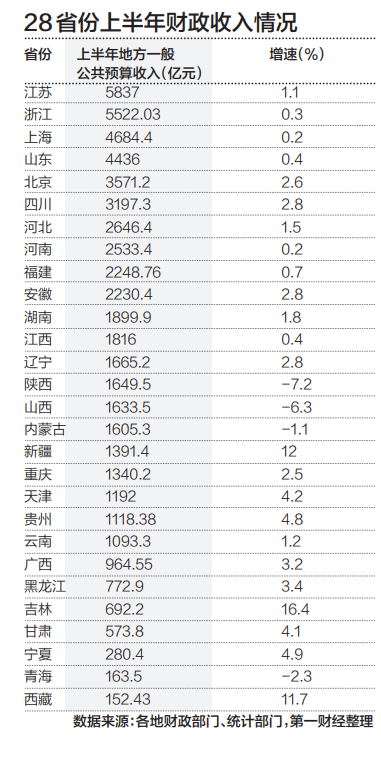
28省份上半年财政数据出炉,下半年收支矛盾仍突出
Di Yi Cai Jing· 2025-08-06 13:10
Core Viewpoint - Local government fiscal revenue is expected to continue growing in the second half of the year, with potential fluctuations in the third quarter, necessitating close monitoring and timely fiscal policy adjustments [2][3]. Revenue Summary - In the first half of the year, local general public budget revenue increased by 1.6% year-on-year, driven primarily by non-tax revenue growth, indicating a weak recovery [2][3]. - Among 31 provinces, 27 reported revenue growth, with Jilin showing the highest increase at 16.4%, while four provinces, including Shaanxi and Shanxi, experienced declines [3][4]. - The average growth rate of local general public budget expenditure was 2.6%, surpassing revenue growth, as 24 out of 28 provinces maintained expenditure increases to support livelihoods and stabilize the economy [1][3]. Expenditure Summary - Despite overall revenue growth, many provinces face significant fiscal pressure due to rising rigid expenditures, such as debt repayments and social welfare [9][11]. - Local governments are implementing measures to balance budgets, including increasing revenue through legal tax collection and optimizing asset management [10][11]. - The focus remains on ensuring the "three guarantees" (basic livelihood, wages, and operational stability) are met, with many regions prioritizing these expenditures [10][11]. Regional Disparities - There are notable disparities in fiscal performance at the municipal and county levels, with some areas experiencing robust growth while others struggle with fiscal difficulties [6][7]. - For instance, in Fujian, 75.6% of counties reported positive revenue growth, while some regions continue to face challenges due to low real estate tax revenues and land transfer income [6][8]. Future Outlook - The fiscal landscape remains complex, with ongoing pressures expected in the second half of the year, particularly in revenue generation [9][10]. - Local governments are urged to adopt stringent measures to control non-essential expenditures while ensuring essential services are funded adequately [10][11].
全球财政赤字挑战与应对|封面专题
清华金融评论· 2025-08-06 08:26
Core Viewpoint - A significant trade rebalancing is occurring globally, with domestic fiscal policy becoming a key driver of economic growth. This shift necessitates effective legal measures and a transparent debt disclosure system to prevent historical debt crises from recurring [2][3]. Group 1: Global Trade Rebalancing - The U.S. has imposed high import tariffs on other countries, marking a clear trend that began nearly a decade ago with the abandonment of the Trans-Pacific Partnership. This trend has been exacerbated by the Trump administration's tariff measures and the Biden administration's industrial subsidies aimed at promoting domestic green industries [3]. - In response to U.S. tariff policies, regions like Europe and China are implementing stronger fiscal stimulus measures to boost domestic demand and reduce reliance on U.S. consumers and financial markets [3]. Group 2: Fiscal Measures in Crisis Response - Germany has amended its constitution to relax strict fiscal rules, launching a €1 trillion investment plan to increase spending in defense, infrastructure, research, digitalization, and climate protection [5]. - China is exploring various options to stimulate long-delayed domestic consumption, requiring structural reforms in social security, financial systems, and gender balance [5]. Group 3: Debt Constraints and Risks - Many governments are facing debt constraints, lacking sufficient resources to meet basic payment obligations and return to inflation targets. Low-income and emerging market countries are particularly at risk of debt crises [7]. - The global supply of dollar-denominated assets is contingent on U.S. fiscal capacity, which is currently under pressure from the debt ceiling crisis and uncertainties surrounding proposed U.S. budget plans [7]. Group 4: Fiscal Transparency and Supervision Mechanisms - Following the last debt crisis, developed countries undertook debt clean-up, while emerging economies engaged in debt restructuring. However, the world is once again facing the risk of a global debt crisis, raising questions about the effectiveness of oversight by institutions like the IMF and World Bank [9].

上调82%!美财政部三季度借款预期破万亿,债务上限提高后加速发债
Hua Er Jie Jian Wen· 2025-07-28 20:55
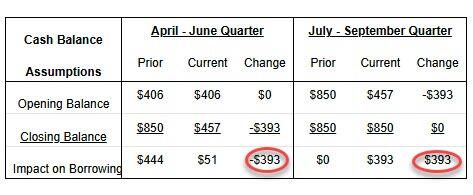
Core Viewpoint - The U.S. Treasury Department is significantly increasing its borrowing forecast for the third quarter of 2023, expecting net borrowing to reach $1.007 trillion, a substantial increase of over 82% from the previous estimate of $554 billion due to the lifting of the debt ceiling [1][3]. Group 1: Borrowing Forecast and Debt Ceiling Impact - The Treasury's borrowing forecast for July to September has been raised by more than $450 billion, reflecting the acceleration of debt issuance following the increase of the debt ceiling by $5 trillion [1][3]. - The actual borrowing in the second quarter was only $65 billion, far below the anticipated $514 billion, primarily due to a lower-than-expected cash balance at the end of June [3][4]. - The cash balance at the end of June was reported at $457 billion, significantly lower than the previously assumed $850 billion, leading to a $393 billion shortfall that contributed to the increased borrowing needs [2][3]. Group 2: Cash Management and Future Projections - The Treasury aims to restore its cash balance to $850 billion by the end of September, primarily through the issuance of short-term debt [4][6]. - For the fourth quarter (October to December), the Treasury projects net borrowing of $590 billion, assuming the cash balance will recover to $850 billion [2][4]. - The Treasury's cash management strategy remains stable, with expectations that the debt issuance plan will align with previous quarterly refinancing levels [6]. Group 3: Revenue Changes and Economic Implications - Tariff revenues have increased significantly, with customs duties expected to rise further, although corporate tax revenues are projected to decline, partially offsetting tariff gains [5]. - In June, the U.S. recorded a fiscal surplus of over $27 billion, attributed mainly to customs tariff revenues, marking the first surplus for June since 2017 [5]. - The total tariff revenue for the fiscal year to date has reached $113 billion, an 86% increase year-over-year, setting a record for a single fiscal year [5].
2025年6月财政数据快评:一二本账分化,一般公共支出继续下行
Guoxin Securities· 2025-07-26 08:27
Revenue Analysis - In the first half of 2025, the national general public budget revenue was 1,155.66 billion yuan, a year-on-year decrease of 0.3%[2] - Tax revenue amounted to 929.15 billion yuan, down 1.2% year-on-year, while non-tax revenue increased by 3.7% to 226.51 billion yuan[2] - In June, the general public budget revenue showed a monthly year-on-year decline of 0.3%, compared to a previous value of 0.1%[3] Expenditure Insights - Total general public budget expenditure reached 1,412.71 billion yuan in the first half, reflecting a year-on-year growth of 3.4%[2] - Central government expenditure was 199.14 billion yuan, up 9%, while local government expenditure grew by 2.6% to 1,213.57 billion yuan[2] - In June, general public expenditure increased by only 0.4% year-on-year, marking the slowest growth since 2019[3][14] Fund Budget Performance - Government fund budget revenue surged by 20.8% in June, primarily driven by a 21.9% increase in land transfer income[4] - Government fund expenditure in June skyrocketed by 79.2%, with land-related expenditures rising to 5.9%[4] - For the first half of the year, the second budget's revenue decreased by 2.4%, while expenditure grew by 30%[4] Overall Fiscal Trends - The broad fiscal expenditure growth rate was significantly up at 17.6% in June, compared to 4% previously[5] - Broad fiscal revenue showed a year-on-year increase of 2.8% in June, reversing a previous decline of 1.2%[5] - Year-to-date, broad fiscal revenue has decreased by 0.6%, with a completion rate of 47.8%[5]
油气收入影响俄罗斯财政状况
Sou Hu Cai Jing· 2025-07-25 22:21
Core Insights - The Russian federal budget deficit has expanded significantly in the first half of the year, nearing the planned annual limit, primarily due to insufficient oil and gas revenues [1][2][3] Revenue Analysis - Total federal budget revenue for the first half of the year reached 17.59 trillion rubles, a year-on-year increase of 2.8% [1] - Non-oil and gas revenue amounted to 12.85 trillion rubles, growing by 12.7%, while oil and gas revenue fell to 4.74 trillion rubles, a decline of 16.9% [1] - The decline in oil and gas revenue is attributed to falling average oil prices, with June's oil and gas revenue at 494.8 billion rubles, down 33.7% from the previous year [2] Expenditure Analysis - Federal budget expenditures for the first half were estimated at 21.28 trillion rubles, reflecting a 20.2% increase year-on-year [1] - The government has faced challenges in balancing expenditures, with rigid government spending on procurement and low energy revenues contributing to the deficit [2] Deficit Overview - The current federal budget deficit stands at 3.69 trillion rubles, accounting for 1.7% of GDP, compared to 0.3% in the same period last year [2] - The planned deficit for the year is 3.79 trillion rubles, also 1.7% of GDP, indicating that the deficit is approaching the annual target [2] Future Outlook - Experts suggest that maintaining current spending levels could exacerbate the deficit and inflation, while strict spending controls could hinder economic growth [3] - There is a possibility of improved fiscal revenue in the second half due to stable energy exports and a potential gradual depreciation of the ruble [4] - The Ministry of Finance emphasizes the need for balanced budgets at both federal and regional levels, focusing on national development goals [4]
31省×3因子:地产、出口、政策
一瑜中的· 2025-06-27 15:50
Core Viewpoint - The weakening support of real estate for the economy in recent years and the uncertainty of exports as a future factor, especially for major economic provinces, necessitates a focus on the economic uncertainty factors related to real estate and exports, as well as the corresponding policy countermeasures [2][12]. Group 1: Economic Uncertainty Factors - The economic uncertainty factor is constructed by merging real estate and export factors, with specific indicators measuring the reliance of local economies and finances on these sectors [12][15]. - The correlation coefficients for economic uncertainty factors and policy factors with GDP national share are 0.70 and 0.72, indicating that larger provinces face greater economic uncertainty and have larger policy factors [3][15]. - Provinces are categorized into three groups based on their economic uncertainty and policy factors: 1. Economic uncertainty factor > Policy factor (14 provinces, 48% of national GDP share) 2. Economic uncertainty factor < Policy factor (16 provinces, 48% of national GDP share) 3. Economic uncertainty factor ≈ Policy factor (1 province, Beijing) [3][16]. Group 2: Real Estate Factor - The real estate industry chain's contribution to GDP and land finance dependency are key indicators, with major economic provinces showing higher reliance [5][21]. - In 2024, the real estate industry chain's GDP contribution for major provinces is 14.1%, compared to the national average of 13.5%, indicating a higher concentration in major provinces [5][19]. - Land finance dependency for major provinces is 41%, significantly higher than the national average of 24.3%, with provinces like Jiangsu and Sichuan exceeding 40% [21][23]. Group 3: Export Factor - The export factor is more pronounced in eastern provinces, with major provinces accounting for 65% of national exports while only representing 44% of national GDP [6][26]. - The export-to-GDP ratio for eastern provinces is significantly higher than the national average, with Zhejiang at 43.3% and Guangdong at 41.6% [6][27]. - Some central and western provinces also show notable export dependencies, particularly in exports to the U.S., with Shanxi at 27.9% and Henan at 22.1% [7][29]. Group 4: Policy Factor - The policy factor is linked to economic strength, with major provinces receiving lower shares of fiscal resources compared to their GDP contributions [8][34]. - In 2024, the total fiscal resources for major provinces amount to 5.62 trillion yuan, accounting for 30.3% of the national total, which is lower than their GDP share of 44.4% [9][38]. - Financial resources for major provinces are substantial but have seen a decline in national share, dropping from 53% in 2022 to 48% in 2024 [40][42].