
建筑

Search documents
能否期待-开门红
2026-01-05 15:42
Summary of Key Points from Conference Call Records Industry Overview - The conference call discusses the Chinese asset revaluation process and its challenges, drawing comparisons with Japan's economic history in the 1990s and 2000s [1][5][12]. Core Insights and Arguments - **Chinese Asset Revaluation Drivers**: The revaluation is primarily driven by valuation enhancement, AI industry growth, and capital inflows. However, challenges such as population issues, real estate, and local government debt persist [1][4][12]. - **Market Performance**: The Hong Kong stock market experienced a significant rise during the New Year holiday, with the Hang Seng Index up nearly 3%. However, the lack of substantial trading volume and capital inflow raises questions about the sustainability of this rally [2][4]. - **Sector Performance**: The non-ferrous metals sector is expected to perform strongly in 2026, driven by geopolitical factors, green energy transitions, and AI technology. Prices for gold, copper, and aluminum are anticipated to reach new highs due to supply constraints and demand recovery [2][19][21]. - **Policy Changes**: The 2025 national subsidy policy emphasizes quality and efficiency, with adjustments in energy efficiency product subsidies and a focus on stabilizing market expectations [1][13][23]. Important but Overlooked Content - **Japan's Economic Lessons**: Japan's experience in the 1990s highlights the importance of avoiding reliance on infrastructure investment, timely real estate reforms, and addressing structural issues to ensure long-term economic stability [5][11][12]. - **Investment Trends**: Historical data indicates that fixed asset investment in the first year of a five-year plan may not significantly exceed the previous year, suggesting a need for careful observation of specific investment volumes [14][15]. - **Service Consumption**: There are signs of improvement in service consumption, which is crucial for overall economic recovery. Monitoring upcoming data, especially during the Spring Festival, will be essential [20]. Conclusion - The conference call emphasizes the need for China to learn from Japan's past economic challenges while navigating its own asset revaluation process. The focus on policy adjustments, sector performance, and investment trends will be critical for future economic stability and growth [1][5][12].
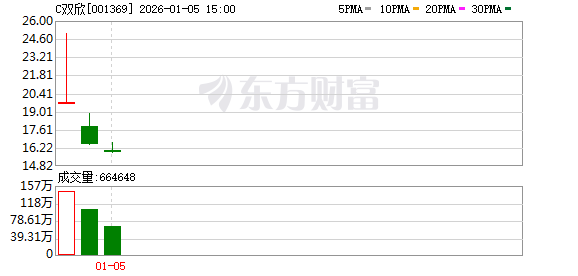
双欣环保:目前公司特种纤维产品主要应用在工业、建筑、防护和特种纺织品行业
Mei Ri Jing Ji Xin Wen· 2026-01-05 11:25
Group 1 - The company specializes in special fiber products primarily used in industries such as industrial, construction, protective, and specialty textiles [2] - Currently, the company's special fiber products have not been applied in the aviation sector [2]

成都成华在建工地塔吊坍塌致5死事故调查报告公布
Xin Lang Cai Jing· 2026-01-05 10:27
Core Viewpoint - The investigation into the crane accident in Chengdu revealed significant failures in safety management and regulatory oversight, leading to five fatalities and substantial economic losses [1][2][4]. Group 1: Accident Overview - The crane accident occurred on September 1, 2025, resulting in five deaths and direct economic losses of approximately 13.63 million yuan [1]. - The accident was attributed to inadequate safety responsibility, flawed construction plans, and violations during the disassembly process [1][3]. Group 2: Investigation and Findings - The investigation was conducted by a team including various government departments and experts, focusing on the accident's causes and the responsibilities of involved parties [2][5]. - Key findings indicated that improper handling of the crane disassembly led to structural failure, with specific issues identified in the safety protocols and training of personnel [3][4]. Group 3: Accountability and Recommendations - The investigation recommended accountability measures against four individuals from the company responsible for the accident, with criminal charges being pursued [5]. - Suggestions for corrective actions were made to address the identified safety management deficiencies and improve regulatory compliance in the construction sector [6].
北新路桥(002307.SZ)中标约1亿元市政道路及基础设施配套项目
智通财经网· 2026-01-05 09:53
Core Viewpoint - The company, Beixin Road and Bridge (002307.SZ), has been awarded a construction project for municipal roads and infrastructure in the Barktu Port Pilot Area, with a contract value of approximately 100 million yuan [1]. Group 1: Project Details - The project involves the construction of 3.76 kilometers of new roads, including 2.77 kilometers of main roads with a width of 40 meters and 0.99 kilometers of secondary roads with a width of 20 meters [1]. - The project will also include the installation of supporting infrastructure such as water supply, drainage, recycled water, natural gas, and electrical pipelines [1].

建材、建筑及基建公募REITs半月报(12月20日-1月2日):北京市优化地产政策,《求是》强调地产政策不能采取添油战术-20260105
EBSCN· 2026-01-05 07:05
1. Report Industry Investment Rating No specific industry investment rating is provided in the report. 2. Core Views of the Report - Beijing optimized and adjusted housing purchase restriction policies, and "Qiushi" emphasized that real - estate policies should not adopt a piecemeal approach. The continuous introduction of real - estate policies further supports demand, and the pace of subsequent policy introduction may accelerate. Although the new construction of the real - estate chain still faces multiple pressures, the industry bottom is approaching as the base gradually decreases. Sales data (new + second - hand houses) remains the leading indicator for driving the sector's valuation [3][7]. - Anti - involution is the main line for cyclical products. In the new field, attention should be paid to electronic cloth, clean rooms, and commercial aerospace. For the cement and glass industries, the effective reduction of supply is the key point to observe in the next stage. The glass fiber sector has relatively good profitability, and there is a possibility of a staged price increase. In the new field, the high - growth of the AI supply chain in 26H1 is the most certain direction, and the semiconductor/storage capital expenditure at home and abroad drives the performance and valuation of the clean - room sector. The theme investment in commercial aerospace is constantly catalyzed [4][8]. 3. Summary According to the Directory 3.1 Anti - involution is the Main Line for Cyclical Products, and Attention is Paid to Electronic Cloth, Clean Rooms, and Commercial Aerospace in the New Field - **Real - estate Policy**: On December 24, 2025, Beijing optimized real - estate policies, including relaxing the conditions for non - Beijing households to purchase houses, supporting the housing needs of multi - child families, optimizing personal housing credit policies, and adjusting the project approval method for real - estate development. On January 1, 2026, "Qiushi" proposed that policies should be sufficient at one time to avoid a game between the market and policies [3][7]. - **Cyclical Products**: For the cement and glass industries, with demand declining, the effective reduction of supply is crucial. Currently, the average profitability of the cement and float glass industries has fallen below the break - even line. The cold - repair reduction of glass production capacity in Q1 will determine the price recovery space of float glass from March to April. The glass fiber sector has relatively good profitability, with stable demand growth and potential for staged price increases [4][8]. - **New Fields**: The high - growth of the AI supply chain in 26H1 is the most certain direction. Special electronic cloth has high demand elasticity and limited short - term supply, so its price is elastic. The increasing semiconductor/storage capital expenditure at home and abroad drives the performance and valuation of the clean - room sector. The theme investment in commercial aerospace is constantly catalyzed [4][8]. 3.2 Profit Forecast and Valuation of Main Covered Companies The report provides the profit forecast, valuation, and investment ratings of 28 companies from 2024 to 2027, including Punaite, China Jushi, and Conch Cement. Most of the investment ratings are "Buy" or "Increase", and all ratings remain unchanged [10]. 3.3 Weekly Market Review - **Industry Index**: The construction index, building materials index, etc. had different changes. The construction index decreased by 1.4%, and the building materials index decreased by 0.6% [13]. - **Sub - sectors of Construction**: The building decoration II index increased by 9.33%, and the garden engineering index increased by 1.92%, while some sub - sectors had negative growth [15]. - **Infrastructure Public REITs**: The report provides the weekly, monthly, and annual - to - date price changes of 70 infrastructure public REITs. The average weekly decline was 0.47%, and the average annual - to - date increase was 9.29% [23][24][25]. 3.4 Aggregate Data Tracking - **Real - estate Data**: It includes the cumulative year - on - year changes in real - estate new construction, construction, completion, and sales areas, land transaction data, real - estate transaction data, social financing data, and infrastructure investment growth rates [28][37][47]. - **New Contracts of Eight Major Construction Central Enterprises**: The report shows the quarterly new contract amounts and year - on - year growth rates of eight major construction central enterprises from 2022Q1 to 2025Q3 [73]. - **Special Bond Issuance**: It shows the monthly and cumulative issuance amounts of new and replacement special bonds from 2022 to 2025 [75][77]. 3.5 High - frequency Data Tracking - **Building Materials Data**: It includes the price trends, cost - profit differences, inventory, and other data of cement, float glass, photovoltaic glass, glass fiber, carbon fiber, magnesium sand, alumina, and other building materials [83][90][98]. - **Upstream Raw Material Prices**: It shows the price trends of asphalt, waste paper, PVC, HDPE, etc. [137][138]. - **Physical Workload Data**: It includes the price trends of acrylic acid, titanium dioxide, and the rental rate of high - altitude machines, asphalt average start - up rate, etc. [144][147].


假期消费温和增长,文旅消费多元扩容
China Post Securities· 2026-01-05 06:05
Group 1: Consumer Trends - During the New Year's holiday, inter-regional mobility increased by 19.62% year-on-year, with a total domestic travel expenditure of CNY 847.89 billion, up 6.35% from 2024, reflecting a compound annual growth rate of 3.12%[1][12] - The average ticket price for domestic flights reached CNY 684.6, a 9.8% increase compared to 2025, indicating a strong recovery in travel demand[16] - Dining consumption showed robust growth, with key provinces reporting increases of 18% in Zhejiang and 36.5% in Nanjing, while overall dining consumption in Guangxi rose by 5.8%[17] Group 2: Economic Indicators - The manufacturing PMI returned to the expansion zone at 50.1%, reflecting a 0.9 percentage point increase, indicating improved economic conditions[2][18] - The construction sector's PMI rose to 52.8%, a 3.2 percentage point increase, benefiting from favorable weather and ongoing policy support[23] - The service sector's PMI was at 49.7%, showing a slight recovery but still below the expansion threshold, indicating mixed performance across industries[24] Group 3: Policy and Market Outlook - The "Two New" policies are expected to provide support for stable consumption, despite a potential mild contraction in funding scale for 2026[26] - International commodity prices are rising, which may pressure corporate profits and indirectly affect employment, potentially limiting demand recovery[26] - The government has initiated a CNY 295 billion investment plan for key projects, including the Guangzhou New Airport, to stabilize investment growth[26]
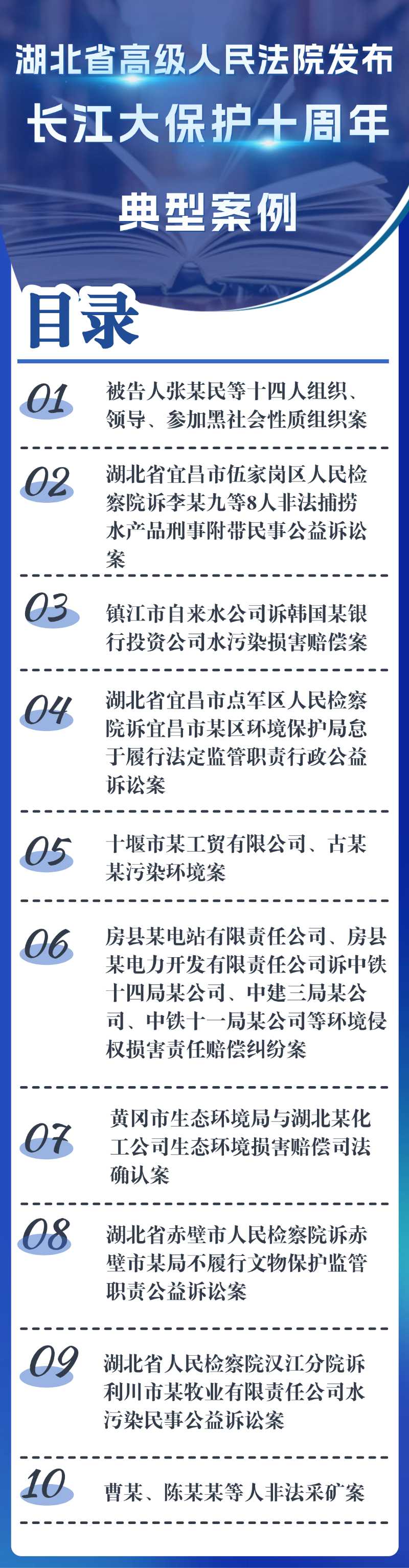
湖北省高级人民法院发布长江大保护十周年典型案例
Xin Lang Cai Jing· 2026-01-05 04:16
Core Viewpoint - The article emphasizes the importance of ecological protection along the Yangtze River, highlighting the judicial efforts made by Hubei courts over the past decade to enforce environmental laws and protect the river's ecosystem [1]. Group 1: Judicial Actions and Cases - Hubei courts have published ten typical cases that demonstrate their commitment to ecological protection, addressing issues such as illegal sand mining, illegal fishing, and water pollution [1]. - The case involving Zhang Moumin, who led a criminal organization engaged in illegal sand mining, resulted in severe penalties, including a death sentence with a two-year reprieve, showcasing the judiciary's strict stance against organized crime affecting the environment [7]. - In a case of illegal fishing, eight defendants were sentenced to prison for using electric fishing methods, with a requirement to restore fish populations, reflecting the courts' focus on ecological restoration [11]. Group 2: Environmental Protection and Accountability - The article discusses various cases where companies and individuals were held accountable for environmental damage, such as a chemical company that polluted groundwater, leading to a compensation agreement for ecological restoration valued at over 21 million yuan [30][31]. - A case involving a pig farming operation highlighted the importance of regulatory compliance, with the court mandating the company to cease illegal discharges and restore the affected environment [39][40]. - The judiciary's role in enforcing environmental laws is further illustrated by a case against a construction company for dumping waste in a reservoir, where the court prioritized ecological restoration over financial penalties [27][28]. Group 3: Significance of Judicial Decisions - The cases serve as precedents for environmental protection, demonstrating the judiciary's commitment to upholding ecological laws and promoting sustainable practices [24][41]. - The article highlights the collaborative efforts between judicial and administrative bodies to enhance environmental governance, ensuring that ecological restoration is prioritized in legal proceedings [47]. - The judicial decisions reflect a broader commitment to integrating ecological considerations into economic development, promoting a balance between environmental sustainability and economic growth [47].
地缘黑天鹅扰动市场,国内经济有所回暖
Guo Mao Qi Huo· 2026-01-05 03:02
1. Report Industry Investment Rating - No relevant information provided 2. Core Viewpoints of the Report - Geopolitical risks have suddenly changed, and the commodity market may experience new fluctuations. The Fed meeting minutes did not provide more information to boost market sentiment. Domestic policies are gradually taking effect, and new policies will be introduced to achieve a stable economic start. Geopolitical factors, such as the US's new actions against Venezuela, will disrupt commodities like crude oil and drive a phased rebound in energy prices [3] 3. Summary by Relevant Catalogs PART ONE: Main Viewpoints - **Market Review**: This week, domestic commodities fluctuated. During the Christmas and New Year holidays, the news was relatively quiet, and market trading was dull [3] - **Overseas Factors** - The Fed meeting minutes showed internal disagreement on policy paths. The Fed has entered a "wait - and - see" policy stage, and future interest rate decisions will be more data - dependent [3] - The US manufacturing PMI in December 2025 was 51.8, lower than November's 52.2 and the market expectation of 52, indicating a significant slowdown in manufacturing expansion [3] - US President Trump postponed the tariff increase plan for imported soft furniture, kitchen cabinets, and bathroom cabinets on December 31, 2025 [3] - The US military's action in Venezuela on January 3, 2026, a geopolitical "black swan" event, briefly pushed up the risk premium of crude oil and stimulated safe - haven assets. However, the impact on oil prices is limited and unsustainable due to the global oil supply glut [3] - **Domestic Factors** - In December, China's manufacturing, non - manufacturing, and composite PMI all rose into the expansion range, indicating an overall recovery of the economic climate. There was an improvement in supply and demand, a continuation of the price recovery, and a return of the non - manufacturing business activity index to the expansion range [3] - The National Fiscal Work Conference in December 2025 implemented the fiscal policy tone, showing policy continuity and stability [3] - During the New Year's Day holiday in 2026, the domestic consumption and travel markets had a strong start [3] - The National Development and Reform Commission and the Ministry of Finance jointly issued a notice on large - scale equipment renewal and consumer goods trade - in policies in December 2025, optimizing support scope, subsidy standards, and implementation mechanisms, and advancing 62.5 billion yuan in special treasury bond funds [3] PART TWO: Overseas Situation Analysis - **Interest Rate Decision**: The Fed cut the federal funds rate by 25 basis points to 3.50% - 3.75% in December 2025, but the number of opposing votes was the highest since 2019, revealing internal differences on the policy path [3] - **Manufacturing PMI**: The US manufacturing PMI in December 2025 was 51.8, the lowest in five months, showing a slowdown in manufacturing expansion [3][10] - **Tariff Policy**: The US postponed the tariff increase on imported soft furniture, kitchen cabinets, and bathroom cabinets [3][13] - **Geopolitical Event**: The US military action in Venezuela on January 3, 2026, affected the oil market, but the impact was limited due to the global oil supply surplus [3][16] PART THREE: Domestic Situation Analysis - **PMI Index**: In December 2025, China's manufacturing, non - manufacturing, and composite PMI rose to the expansion range, with improvements in supply, demand, price, and business expectations [3][21] - **Fiscal Policy**: The National Fiscal Work Conference in December 2025 implemented the fiscal policy for 2026, showing policy continuity [3] - **Consumption and Travel**: The domestic consumption and travel markets had a strong start during the New Year's Day holiday in 2026 [3][27] - **Policy Optimization**: The equipment renewal and consumer goods trade - in policies in 2026 were optimized in support scope, subsidy standards, and implementation mechanisms, with 62.5 billion yuan in special treasury bond funds advanced [3][29][30] PART FOUR: High - Frequency Data Tracking - **Industrial Production**: The operating rates of the polyester industry chain and the blast furnace operating rates showed certain trends [33][37] - **Automobile Sales**: Automobile wholesale and retail data had specific changes [42][45] - **Agricultural Product Prices**: The average wholesale prices of vegetables, pork, and fruits, as well as the agricultural product wholesale price index, fluctuated [47]
2026海南安居房新政炸场!六折+五年可售,引爆四大万亿风口
Sou Hu Cai Jing· 2026-01-05 02:13
Core Insights - The new housing policy in Hainan, effective from January 1, 2026, allows for affordable housing at 60% of the market price, with the ability to sell after five years and full ownership after fifteen years, significantly benefiting homebuyers and attracting capital investment [1][3] Group 1: Policy Highlights - The affordable housing price is set at no more than 60% of the previous year's average market price in the respective city or county, with prices in Sanya as low as 12,800 yuan per square meter, over 50% cheaper than market rates [3] - Homebuyers can apply to sell their property after five years or purchase government equity, providing flexibility and preventing asset lock-in [3] - The policy covers a wide range of applicants, including local residents, introduced talent, and non-residents with two years of residence and social security contributions [3] - The focus is on practical housing types, primarily under 100 square meters, with larger units available for families with multiple children, and increased public housing loan limits [3] - By the end of 2025, Hainan has initiated over 110,000 affordable housing units, with more than 50,000 allocated and an additional 60,000 in inventory or under construction, meeting the demand for first-time buyers [3] Group 2: Infrastructure Development - The policy mandates that infrastructure development must accompany affordable housing projects, with plans to build 250,000 units during the 14th Five-Year Plan, ensuring that transportation and public services are developed in tandem [4] - Transportation upgrades include enhancing rural roads and urban networks, with 100 kilometers of new village roads and improvements to irrigation facilities [4] - Each affordable housing area will include essential services such as schools, clinics, and community centers, aiming for a 90% compliance rate for township health clinics [4] - Urban renewal efforts will also be implemented, improving old neighborhoods and revitalizing existing land, as seen in Haikou's integration of affordable housing with urban renewal [4] Group 3: Consumer Market Expansion - The affordable housing initiative is expected to stimulate a significant increase in consumer spending, with estimates suggesting that furnishing a 100 square meter home could cost between 100,000 to 150,000 yuan, contributing to a multi-trillion yuan market [4] - Major consumer goods such as home renovations, appliances, and furniture are anticipated to see increased demand, with Hainan's public housing loans reaching 8.688 billion yuan in 2025, driving home improvement projects [4] - The influx of residents in affordable housing areas will create demand for community businesses, including supermarkets and restaurants, accelerating the development of local commercial ecosystems [4] - Service sectors such as education, healthcare, and tourism are expected to experience growth due to increased population, enhancing Hainan's wellness and tourism industries [5] Group 4: Agricultural Opportunities - The population growth from affordable housing is projected to open new avenues for Hainan's agriculture, enhancing both local supply and external sales [5] - To support the increased population, Hainan plans to maintain 4.07 million acres of grain planting and establish 150,000 acres of vegetable bases, promoting local food security [5] - The initiative includes branding efforts for Hainan's agricultural products, with plans to develop 35 new agricultural brands and improve logistics for nationwide distribution [5] - Technological advancements in agriculture will be supported through platforms like "Southern Breeding Silicon Valley," focusing on high-quality crop breeding and efficiency improvements [5] Group 5: Technological Integration - The construction of affordable housing will emphasize smart building practices, with a target of 80% of new constructions being prefabricated by 2025, promoting green building technologies [6] - Digital services will be enhanced, including zero-material approvals for public housing loans and rapid processing for rental withdrawals, increasing the demand for digital governance and smart community solutions [6] - Collaboration with technology firms will drive the integration of smart security, green energy, and intelligent property management into affordable housing projects, fostering growth in AI and IoT sectors [6]

行业景气度系列十:去库延续,需求仍待改善
Hua Tai Qi Huo· 2026-01-05 01:16
Report Industry Investment Rating - Not provided in the given content Core Viewpoints Manufacturing - Overall: In December, the manufacturing PMI's five - year percentile was at 57.6%, with a change of 37.3%. Four industries had their manufacturing PMI in the expansion range, 4 less than the previous month and 3 less than the same period last year [4]. - Supply: Slightly declined. The 3 - month average of the manufacturing PMI production index in December was 50.5, a 0.1 - percentage - point decrease from the previous month. Five industries showed month - on - month improvement, while 10 industries declined [4]. - Demand: Still needed improvement. The 3 - month average of the manufacturing PMI new orders in December was 49.6, a 0.4 - percentage - point increase from the previous month. Three industries showed month - on - month improvement, and 12 industries declined [4]. - Inventory: Continued destocking. The 3 - month average of the manufacturing PMI finished - goods inventory in December remained flat at 47.9. Five industries saw inventory increase, and 10 industries saw inventory decrease [4]. Non - Manufacturing - Overall: In December, the non - manufacturing PMI's five - year percentile was at 22.0%, with a change of 10.2%. Eleven industries had their non - manufacturing PMI in the expansion range, 5 more than the previous month and 1 more than the same period last year [5]. - Supply: Employment remained at a low level. The 3 - month average of the non - manufacturing PMI employee index in December was 45.5, a 0.4 - percentage - point increase from the previous month. Both the service and construction sectors increased by 0.4 percentage points [5]. - Demand: Still needed improvement. The 3 - month average of the non - manufacturing PMI new orders in December was 46.3, a 0.4 - percentage - point increase from the previous month. The service sector's new orders increased by 0.2 percentage points, and the construction sector's new orders increased by 1.7 percentage points [5]. - Inventory: Continued destocking. The 3 - month average of the non - manufacturing PMI inventory in December was 45.3, with no change from the previous month. The service sector's inventory remained unchanged, and the construction sector's inventory increased by 0.8 percentage points [5]. Summary by Directory Overview - Manufacturing PMI: In December, the manufacturing PMI's five - year percentile was at 57.6%, with a change of 37.3%. Four industries had their manufacturing PMI in the expansion range, 4 less than the previous month and 3 less than the same period last year [10]. - Non - Manufacturing PMI: In December, the non - manufacturing PMI's five - year percentile was at 22.0%, with a change of 10.2%. Eleven industries had their non - manufacturing PMI in the expansion range, 5 more than the previous month and 1 more than the same period last year [10]. Demand - Manufacturing: The 3 - month average of the manufacturing PMI new orders in December was 49.6, a 0.4 - percentage - point increase from the previous month. Three industries showed month - on - month improvement, and 12 industries declined. - Non - Manufacturing: The 3 - month average of the non - manufacturing PMI new orders in December was 46.3, a 0.4 - percentage - point increase from the previous month. The service sector's new orders increased by 0.2 percentage points, and the construction sector's new orders increased by 1.7 percentage points. Five industries showed month - on - month improvement, and 10 industries declined. Pay attention to the improvement in textiles and pharmaceuticals and the decline in petroleum [16]. Supply - Manufacturing: The 3 - month average of the manufacturing PMI production index in December was 50.5, a 0.1 - percentage - point decrease from the previous month. Five industries showed month - on - month improvement, and 10 industries declined. The manufacturing PMI employee index in December was 48.3, a 0.1 - percentage - point decrease from the previous month. Five industries showed month - on - month improvement, and 10 industries declined. - Non - Manufacturing: The 3 - month average of the non - manufacturing PMI employee index in December was 45.5, a 0.4 - percentage - point increase from the previous month. The service and construction sectors both increased by 0.4 percentage points. Eleven industries showed month - on - month improvement, and 3 industries declined. Pay attention to the decline in non - ferrous metals and农副食品 and the improvement in ferrous metals [25]. Price - Manufacturing: The 3 - month average of the manufacturing PMI ex - factory price index in December was 48.2, a 0.2 - percentage - point increase from the previous month. Seven industries saw their ex - factory prices improve, and 8 industries declined. In terms of profit, the profit trend in December increased by 0.4 percentage points, and the overall continued to converge. - Non - Manufacturing: The 3 - month average of the non - manufacturing charge price index in December was 48.3, a 0.2 - percentage - point increase from the previous month. The service sector increased by 0.3 percentage points, and the construction sector decreased by 0.2 percentage points. Eight industries showed month - on - month improvement, and 7 industries declined. In terms of profit, the profit in December remained unchanged. The service sector decreased by 0.1 percentage points, and the construction sector increased by 0.5 percentage points. Pay attention to the improvement in non - ferrous metals and the decline in petroleum [34]. Inventory - Manufacturing: The 3 - month average of the manufacturing PMI finished - goods inventory in December remained flat at 47.9. Five industries saw inventory increase, and 10 industries saw inventory decrease. The manufacturing PMI raw - material inventory in November decreased by 0.2 percentage points to 47.5. Seven industries saw inventory increase, and 8 industries saw inventory decrease. - Non - Manufacturing: The 3 - month average of the non - manufacturing PMI inventory in December was 45.3, with no change from the previous month. The service sector's inventory remained unchanged, and the construction sector's inventory increased by 0.8 percentage points. Five industries saw inventory increase, and 10 industries saw inventory decrease. Pay attention to the destocking of non - metallic products and the increase in construction inventory [42]. Main Manufacturing Industry PMI Charts - The report provides data on the PMI of various manufacturing industries, including general equipment, special equipment, automobiles, computers, motors, pharmaceuticals,农副食品, textiles, non - ferrous metals, petroleum, chemicals, ferrous metals, non - metallic products, metal products, and chemical fiber and rubber products, showing values, month - on - month changes, three - year averages, and year - on - year changes [53][54][57][58][59][66][67][68].