
镍矿

Search documents
国泰君安期货所长早读-20250718
Guo Tai Jun An Qi Huo· 2025-07-18 01:48
1. Report Industry Investment Ratings No specific industry investment ratings are provided in the report. 2. Core Views of the Report - The market is influenced by various factors including geopolitical events, economic data, and supply - demand dynamics in different industries. For example, the potential change in the 20% tariff on Chinese goods due to the fentanyl issue between the US and China is worth attention [7]. - Different commodities have different trends. Some are expected to rise, some to fall, and some to move within a range. For instance, gold is expected to oscillate upward, while tin's price is weakening [14][35]. 3. Summary According to Relevant Catalogs 3.1 Fentanyl Issue - Trump believes China will soon sentence fentanyl traffickers to death and is optimistic about reaching an agreement on illegal drugs with China. However, the Chinese Foreign Ministry stated that the fentanyl problem is the US's own issue, and the US's imposition of tariffs on fentanyl has damaged Sino - US cooperation in the anti - drug field. The 20% tariff on Chinese goods due to the fentanyl issue remains in effect, and whether it will change is worthy of attention [7]. 3.2 Commodity Recommendations by the Director - **Bean Meal**: Since mid - July, the domestic bean meal futures have stopped falling earlier than US soybeans and broken through the technical resistance level. The reasons are the strong sentiment in the domestic commodity market and the low - valuation advantage of bean meal. Although the short - term fundamentals are weak, there are no additional negative impacts. Once the US soybean price recovers, the bean meal price will break through. After the current rally, there is a risk of a pullback, and attention should be paid to the fundamentals such as the trade agreement, US soybean weather, and the August USDA report [8][9]. - **Caustic Soda**: In the short term, the supply and demand of the caustic soda market have not changed much, with sufficient supply and increased shipments to major downstream industries. The spot has no upward momentum, and the futures have been weak in the past two days. In July, the maintenance capacity of caustic soda has decreased significantly compared to June, and new capacity of 1.1 million tons may be added in July - August. The new capacity pressure is basically digested by exports. The demand is in the off - season, but the cost is strongly supported by the weak liquid chlorine. It is recommended to participate in the 10 - 1 spread arbitrage [11]. 3.3 Commodity Research Morning Report - **Precious Metals**: Gold is expected to oscillate upward, and silver is expected to break through and rise. The trend intensity of both is 1 [14][18][23]. - **Base Metals**: - **Copper**: The good US economic data supports the copper price. The trend intensity is 0 [14][26][29]. - **Zinc**: It is expected to move within a range, with a trend intensity of 0 [14][30]. - **Lead**: The downside may be limited, with a trend intensity of 0 [14][32][33]. - **Tin**: The price is weakening, with a trend intensity of - 1 [14][35][39]. - **Aluminum**: Attention should be paid to the marginal change in inventory. The trend intensity is 0. Alumina is expected to oscillate strongly with a trend intensity of 1, and cast aluminum alloy is weaker than electrolytic aluminum with a trend intensity of 0 [14][40][42]. - **Nickel**: The news affects market sentiment, and the fundamentals are under pressure. The trend intensity is 0. Stainless steel is in a game between reality and macro factors, and the steel price oscillates. The trend intensity is 0 [14][43][47]. - **Energy and Chemicals**: - **Carbonate Lithium**: Supply - side disturbances have emerged again, and the short - term trend may be strong. The trend intensity is 1 [14][48][50]. - **Industrial Silicon**: Warehouse receipts are accumulating, and attention should be paid to market sentiment. The trend intensity is 0. Polysilicon's futures may rise and then fall, with a trend intensity of 0 [14][51][55]. - **Iron Ore**: Supported by macro expectations, it oscillates strongly. The trend intensity is 0 [14][56]. - **Rebar and Hot - Rolled Coil**: The market sentiment remains strong, and they oscillate widely. The trend intensity of both is 1 [14][59][61]. - **Silicon Ferrosilicon and Manganese Silicide**: The steel procurement sentiment remains strong, and they oscillate widely. The trend intensity of both is 0 [14][63][65]. - **Coke and Coking Coal**: Coke has completed the first round of price increase and oscillates widely. The trend intensity is 0. Coking coal oscillates widely, and the trend intensity is 1 [14][66][68]. - **Steam Coal**: The daily consumption is recovering, and it oscillates and stabilizes. The trend intensity is 0 [14][70][73]. - **Log**: It oscillates widely [74].
镍、不锈钢:日内延续震荡走势
Nan Hua Qi Huo· 2025-07-17 02:34
Report Summary 1. Report Industry Investment Rating No information provided in the given content. 2. Core Viewpoints - The intraday trend of Shanghai nickel continued to fluctuate. The nickel ore support weakened due to the increase in the inventory of nickel ore arriving from the Philippines, and the second - stage nickel ore benchmark price in Indonesia in July also decreased, mainly affected by weak downstream demand. The transaction price of ferronickel continued to decline, affected by the negative feedback from the stainless - steel industry, and iron plants suffered serious losses. Stainless steel also continued to fluctuate, with cost support weakening, and some large manufacturers entered the production - cut cycle again. The new - energy link still maintained a production - based - on - sales situation. Attention should be paid to the subsequent cooperation between Indonesia and the United States after they reached a tariff agreement [4]. - There are both positive and negative factors in the market. Positive factors include the continued cobalt - mine ban in Congo, Jinhai's entry into the production - cut cycle, Indonesia's shortening of the nickel - ore quota license period from three years to one year, and potential impacts on the nickel industry chain from the Indonesia - US tariff negotiation. Negative factors include high pure - nickel inventory, stainless steel entering the traditional off - season with slow de - stocking, and deepening contradictions in the ferronickel industry chain with an unchanged oversupply situation [5][7]. 3. Summary by Relevant Catalogs 3.1. Shanghai Nickel Price Forecast and Management Strategy - **Price Range Forecast**: The predicted price range of Shanghai nickel is 117,000 - 126,000 yuan/ton, with a current 20 - day rolling volatility of 15.17% and a historical percentile of 3.2% [3]. - **Inventory Management Strategy**: When the product sales price falls and there is a risk of inventory depreciation, sell Shanghai nickel futures according to the inventory level to lock in profits and hedge against the risk of spot price decline (60% hedging ratio, strategy level 2); sell call options (50% hedging ratio, strategy level 2) [3]. - **Procurement Management Strategy**: When the company has future production and procurement needs and is worried about rising raw - material prices, buy Shanghai nickel forward contracts according to the production plan to lock in production costs in advance on the disk (strategy level 3); sell put options (strategy level 1); buy out - of - the - money call options (strategy level 3) [3]. 3.2. Nickel and Stainless - Steel Market Data - **Nickel Disk Daily Data**: The latest value of the Shanghai nickel main - continuous contract is 120,550 yuan/ton, with a 0% change. The Shanghai nickel continuous - one contract is 120,710 yuan/ton, up 1.11%; the continuous - two contract is 120,820 yuan/ton, up 1.09%; the continuous - three contract is 120,970 yuan/ton, up 1.09%. The LME nickel 3M is 15,215 US dollars/ton, up 1.02%. The trading volume is 131,554 lots, and the open interest is 54,128 lots. The number of warehouse receipts is 21,555 tons, up 1.22%. The basis of the main contract is - 180 yuan/ton, down 77.8% [8]. - **Stainless - Steel Disk Daily Data**: The latest value of the stainless - steel main - continuous contract is 12,670 yuan/ton, with a 0% change. The stainless - steel continuous - one contract is 12,670 yuan/ton, down 0.20%; the continuous - two contract is 12,740 yuan/ton, up 0.51%; the continuous - three contract is 12,735 yuan/ton, down 0.24%. The trading volume is 151,703 lots, and the open interest is 100,817 lots. The number of warehouse receipts is 110,991 tons, down 0.05%. The basis of the main contract is 375 yuan/ton, up 5.63% [9]. - **Nickel Industry Inventory Data**: The domestic social inventory of nickel is 39,173 tons, an increase of 1,144 tons; the LME nickel inventory is 207,288 tons, an increase of 708 tons; the stainless - steel social inventory is 990.8 tons, an increase of 12.8 tons; the nickel - pig - iron inventory is 33,233 tons, a decrease of 4,301 tons [10].
印尼坐拥全球60%镍储量,65%产能却血亏停产,300亿出口化泡影
Sou Hu Cai Jing· 2025-07-16 04:35
Core Insights - The nickel prices on the London Metal Exchange have plummeted to a five-year low of $14,000 per ton, nearing Indonesia's production cost of $9,000 to $10,000, leading to the shutdown of numerous nickel smelting plants [2] - Indonesia's nickel industry has dramatically shifted from a minor player with a 6% share in the global refined nickel market four years ago to a dominant position with a 65% share in 2024, showcasing an annual production capacity of 2.2 million tons [4] - The initial expectation was that Indonesia's nickel industry would thrive, contributing $30 billion in annual exports and creating hundreds of thousands of jobs, but the reality has turned into a nightmare [4] Market Dynamics - Indonesia's miscalculation regarding China's nickel demand led to a ban on nickel ore exports in 2020, aiming to secure Chinese investment in its processing facilities [6][8] - The rapid advancement of battery technology in China, particularly the rise of lithium iron phosphate batteries, has reduced the necessity for nickel, leading to a significant decrease in demand [10] - By the end of 2024, China is expected to increase its strategic nickel reserves by 100,000 tons, capitalizing on the low nickel prices [12] Industry Challenges - Indonesia now faces a paradox of having the world's largest nickel production capacity while becoming a victim of market changes, with domestic consumption unable to keep pace, leading to imports of nickel ore from the Philippines [14] - The broader trend of "de-China" has led many countries to pursue similar ambitions in critical mineral sectors, but without the necessary technological capabilities, they face significant challenges [18] Technological Implications - The success of China's nickel industry is attributed to technological innovation rather than mere resource extraction, with a focus on the entire supply chain from mining to recycling [21] - Countries attempting to replicate China's model must recognize that resource abundance alone is insufficient; technological prowess and strategic stability are crucial for success [25][28]

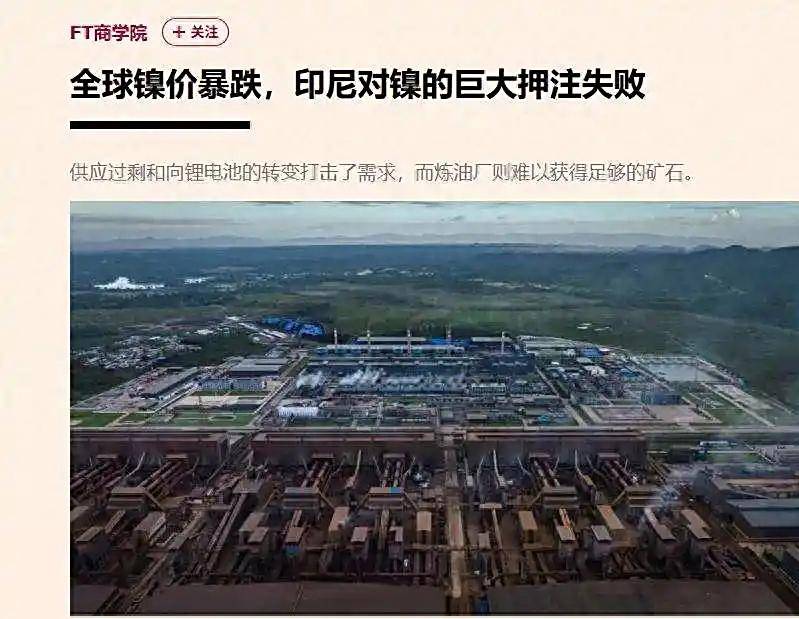
镍价 震荡寻底趋势未变
Qi Huo Ri Bao· 2025-07-16 02:08
Core Viewpoint - The nickel market is experiencing a downward trend in prices due to oversupply, with expectations for the second half of the year to focus on short-selling and selling call options [1][8]. Nickel Price Trends - Nickel prices fluctuated widely in the first half of the year, reaching a high of 136,000 yuan/ton in Q1 due to tight supply and favorable macro conditions, but fell back in Q2 due to oversupply [1]. - The price dynamics were influenced by various factors, including Indonesia's RKAB quota adjustments and the Philippines' export bans, which significantly impacted market reactions [1][2]. Policy Impact on Supply - Indonesian and Philippine nickel policies aim to increase industry revenue, categorized into "quantity" and "price" controls, with quantity controls having a more direct but challenging implementation [2]. - The likelihood of significant supply cuts is low, as both countries face resistance to drastic measures that could impact production and employment [2]. Production and Cost Trends - Nickel iron costs have risen due to tight supply of high-grade nickel ore, while demand from stainless steel has weakened, leading to price pressures [3][4]. - The production capacity of MHP and high-nickel products continues to expand, but the pace of new project launches may slow due to declining nickel prices [3][4]. Demand Dynamics - Stainless steel, which accounts for over 60% of nickel demand, has seen production growth, but overall demand is expected to remain weak due to high inventory levels and lackluster real estate market performance [6][8]. - The electric vehicle sector, a significant source of nickel demand, is facing challenges as competition increases and the market share of lithium iron phosphate batteries rises [7]. Market Outlook - The overall outlook for nickel prices remains bearish, with expectations for seasonal supply increases in Q3 potentially leading to further price declines [8]. - Despite the downward pressure, there may be temporary price increases due to conflicting interests between resource countries and market dynamics [8].
340亿美元大单落地,印尼突然变脸?中国稀土底牌,正被慢慢破解
Sou Hu Cai Jing· 2025-07-12 15:46
Core Viewpoint - Indonesia's recent trade agreement with the United States, valued at $34 billion, marks a significant shift in its economic strategy, driven by the need to mitigate economic pressures from U.S. tariffs and to capitalize on its natural resources, particularly nickel, which is crucial for the global renewable energy sector [1][3][9]. Group 1: Trade Agreement Details - The trade agreement includes substantial purchases of natural gas, agricultural products, electronics, machinery, and medical equipment from the U.S., alongside Indonesia's commitment to implement near-zero tariffs on over 1,700 U.S. goods [5][7]. - Indonesia is also easing investment restrictions for U.S. companies, indicating a welcoming stance towards American investments [7]. Group 2: Economic Context - Indonesia's economy heavily relies on its natural resources, with nickel being a key component, as it is one of the world's major suppliers of nickel, which is increasingly in demand for electric vehicle batteries [11][38]. - The U.S. has expressed a need to reduce its dependence on China for rare earth elements, prompting Indonesia to seek collaboration in supplying nickel and other critical minerals [13][34]. Group 3: Regional Implications - The trade dynamics in Southeast Asia are shifting, with countries like Vietnam and Cambodia also making concessions to the U.S. under similar pressures, highlighting a broader trend of smaller nations adapting to the geopolitical landscape [30][50]. - The agreements reflect a strategic pivot in the region, where economic survival often necessitates alignment with larger powers, showcasing the complexities of global trade relationships [32][50]. Group 4: Financial Trends - There is a notable trend towards "de-dollarization" among Southeast Asian nations, as they increasingly seek alternatives to the U.S. dollar for trade settlements, with the Chinese yuan gaining traction [42][46]. - This shift may indicate a significant change in the global financial landscape, driven by the pressures exerted by U.S. policies on these countries [46].

突发!美国宣布:制裁!
券商中国· 2025-07-12 10:25
Group 1 - The U.S. Department of State announced sanctions against Cuban President Díaz-Canel and other senior officials, which may affect their ability to attend international events in the U.S. [2][3] - The sanctions are part of a broader strategy to strengthen economic sanctions against Cuba, including updating the list of restricted entities [3][4] - Cuba's Foreign Minister Rodríguez stated that U.S. sanctions have caused annual economic losses of billions of dollars, with cumulative losses exceeding $164.1 billion due to decades of economic and financial blockades [1][6] Group 2 - Cuba's economy is heavily reliant on key sectors such as nickel mining, sugar production, and tourism, with significant mineral resources including nickel, cobalt, and iron [5][6] - The country faces severe shortages of essential goods due to U.S. sanctions, which cover nearly all aspects of daily life, leading to a significant decline in living standards [6][7] - In 2023, Cuba's GDP was reported at 51.237 billion Cuban pesos (approximately $1.9 billion), with major exports including nickel, seafood, and tobacco [6]
新能源及有色金属日报:不锈钢盘面拉涨,现货小幅跟涨-20250711
Hua Tai Qi Huo· 2025-07-11 03:18
新能源及有色金属日报 | 2025-07-11 不锈钢盘面拉涨,现货小幅跟涨 镍品种 市场分析 2025-07-10日沪镍主力合约2508开于119140元/吨,收于121140元/吨,较前一交易日收盘变化1.41%,当日成交量为 102155手,持仓量为65815手。 沪镍主力合约夜盘开盘小幅上冲后横盘振荡,日盘继续横盘振荡振荡,午后快速拉升突破上方阻力后继续上涨, 收大阳线。成交量较上个交易日有所减少,持仓量较上个交易日有所减少。国家发展改革委城市和小城镇改革发 展中心近日表示,锚定到2035年基本实现新型城镇化目标,紧抓城镇化动力仍然较强的关键时期,高质量推进新 型城镇化四大行动,为中国式现代化提供有力支撑。菲律宾方面,苏里高矿区降雨仍存,加之季节性台风影响, 装船出货效率迟缓。印尼方面,镍矿供应紧缺问题因印尼当地园区各冶炼厂出现减产得以缓解。7月(一期)内贸 升水维持+24-25。现货市场方面,金川镍早盘报价较上个交易日上调约450元/吨,市场主流品牌报价均出现相应上 调,盘面镍价快速回升,重回12万,需求未见明显增长,部分贸易商下调现货升贴水以促成交,下游企业按需采 购为主,现货成交一般。其中金川镍 ...
新能源及有色金属日报:盘面拉涨后回落,不锈钢成交低迷-20250709
Hua Tai Qi Huo· 2025-07-09 05:12
Report Summary 1. Industry Investment Rating No industry investment rating is provided in the report. 2. Core Views - For the nickel market, with nickel ore prices slightly decreasing, intermediate product supply slightly increasing, recent resurgence of tariff issues, and general market demand, it is expected that nickel prices will be under pressure in the near - term, seeking support downward. The medium - to - long - term strategy remains to sell on rallies for hedging [3]. - For the stainless steel market, due to steel mill production cuts, nickel iron production cuts, a slight decline in nickel ore prices, and the market being in the off - season with general spot transactions, it is expected that stainless steel will oscillate weakly within a range in the near - term, and the medium - to - long - term strategy also remains to sell on rallies for hedging [5]. 3. Summary by Related Contents Nickel Market - **Market Performance**: On July 8, 2025, the main contract 2508 of Shanghai nickel opened at 120,860 yuan/ton and closed at 120,370 yuan/ton, a change of - 0.67% from the previous trading day's close. The trading volume was 88,116 lots, and the open interest was 67,223 lots. The main contract had a small gap - up opening at night, rebounded but was blocked, then oscillated and declined. During the day session, it continued to decline, found support, and then oscillated sideways, closing with a negative line. The trading volume and open interest decreased slightly compared to the previous trading day [1][2]. - **Supply and Demand Factors**: - **Supply**: In the Philippines, rainfall in the Surigao mining area and seasonal typhoons affected shipping efficiency. In Indonesia, the shortage of nickel ore supply was alleviated due to production cuts at local smelters. In June 2025, Indonesia's ferronickel metal production was 24,600 tons, a month - on - month increase of 51.68% and a year - on - year decrease of 29.28%. The estimated production in July was 26,600 tons, a month - on - month increase of 8.00% and a year - on - year decrease of 22.31%. In June, Indonesia's nickel hydrometallurgical intermediate product nickel metal production was 38,500 tons, a month - on - month decrease of 2.14% and a year - on - year increase of 42.98%. The estimated production in July was 40,000 tons, a month - on - month increase of 3.98% and a year - on - year increase of 48.41% [2]. - **Demand**: In the spot market, Jinchuan nickel's morning quotation was about 900 yuan/ton lower than the previous trading day, and the prices of mainstream brands also decreased accordingly. With the decline in nickel prices on the disk, refined nickel was in sufficient supply, demand did not show significant growth, and downstream enterprises mainly purchased as needed. Spot transactions were average [2]. - **Inventory**: The previous trading day's Shanghai nickel warehouse receipt volume was 20,833 (1.0) tons, and LME nickel inventory was 202,620 (150) tons [2]. - **Strategy**: - **Unilateral**: Mainly conduct range - bound operations. - **Others**: No suggestions for inter - period, inter - variety, spot - futures, or options operations [3]. Stainless Steel Market - **Market Performance**: On July 8, 2025, the main contract 2508 of stainless steel opened at 12,660 yuan/ton and closed at 12,700 yuan/ton. The trading volume was 103,281 lots, and the open interest was 90,238 lots. The main contract had a small gap - up opening at night, rebounded but was blocked, then oscillated sideways. During the day session, it continued to decline, found support, and then rebounded slightly, but declined in the afternoon, closing with a hanging - man positive line. The trading volume increased slightly, and the open interest increased compared to the previous trading day [4]. - **Supply and Demand Factors**: - **Supply**: In the Philippines, rainfall in the Surigao mining area and seasonal typhoons affected shipping efficiency. In Indonesia, the shortage of nickel ore supply was alleviated due to production cuts at local smelters. Indonesian nickel iron production lines were converted to produce ferronickel, and some small smelters cut production. Some domestic smelters also stopped production. On the 8th, a major steel mill in South China inquired at a price of 900 yuan/nickel (including tax at the hold), and several thousand tons of nickel iron were traded. The overall negotiation range of nickel iron prices shifted downward [4]. - **Demand**: In the spot market, stainless steel prices on the disk first rose and then fell. Market inquiry activity was low, and it was difficult to make transactions even with price concessions. The price of stainless steel in Wuxi market was 12,725 yuan/ton, and in Foshan market was also 12,725 yuan/ton. The premium of 304/2B was 105 - 255 yuan/ton [4]. - **Strategy**: - **Unilateral**: Neutral. - **Others**: No suggestions for inter - period, inter - variety, spot - futures, or options operations [5].
不能低估对手!外媒:中国储备了10万吨镍,欧洲在囤积中国稀土…
Sou Hu Cai Jing· 2025-07-08 21:57
Group 1 - The core argument emphasizes the importance of resource accumulation, particularly in the context of geopolitical tensions, suggesting that current resource abundance may not last forever [1] - China has purchased 100,000 tons of nickel since December last year, storing it as a national reserve to secure its supply chain amid rising tensions with the US [1] - The European Union is actively seeking to build rare earth reserves to counter China's influence, indicating a competitive dynamic in resource acquisition [1][2] Group 2 - China has not weaponized its rare earth exports but has optimized its export policies in response to international pressures, requiring importers to disclose usage and client information [2] - The relationship between China and Europe is characterized by mistrust, with Europe imposing high tariffs on Chinese electric vehicles, prompting retaliatory measures from China [2] - China's strategy includes maintaining a stronghold on rare earth resources, which are crucial for Western military and advanced electronic industries, thereby enhancing its bargaining power [2][5]
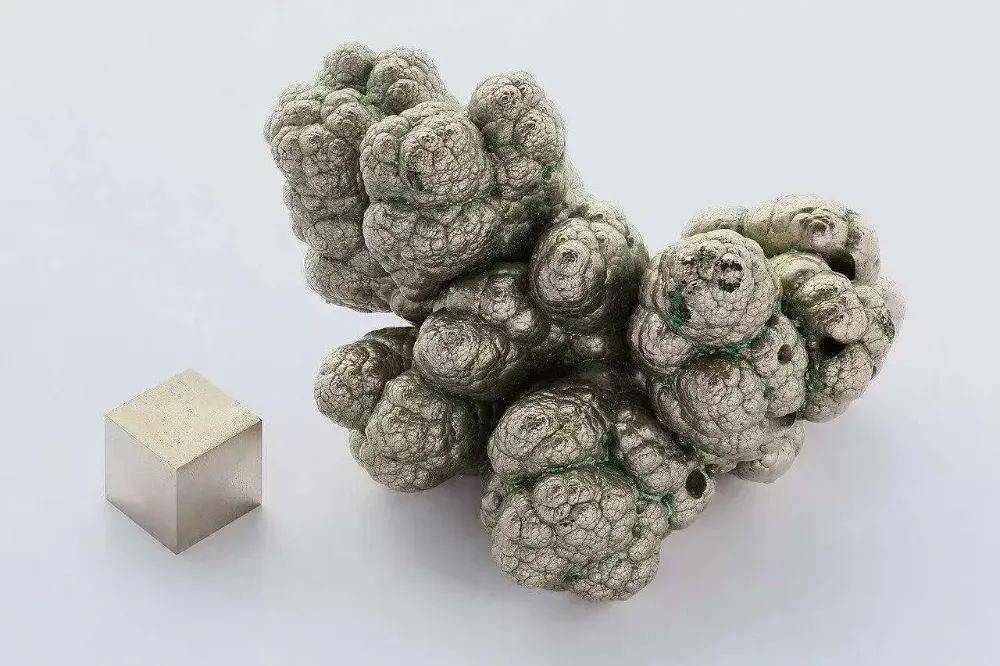
新能源及有色金属日报:关税问题重现,镍价回落-20250708
Hua Tai Qi Huo· 2025-07-08 09:23
1. Report Industry Investment Rating - Not provided in the content 2. Core Viewpoints of the Report - For nickel, with nickel ore prices slightly decreasing, an increase in intermediate product supply, the resurgence of tariff issues, and average market demand, it is expected that nickel prices will face pressure in the near - term and seek support downward. The medium - to - long - term strategy is to sell on rallies for hedging [3]. - For stainless steel, due to steel mill and nickel - iron production cuts, a slight decline in nickel ore prices, and the market being in the off - season with average spot transactions, it is expected that stainless steel will oscillate weakly within a range in the near - term, and the medium - to - long - term strategy is also to sell on rallies for hedging [5]. 3. Summary by Related Catalogs 3.1 Nickel Market Analysis - **Futures Market**: On July 7, 2025, the main contract of Shanghai nickel 2508 opened at 121,730 yuan/ton and closed at 120,540 yuan/ton, a change of - 1.58% from the previous trading day's close. The trading volume was 99,191 lots, and the open interest was 69,366 lots. The contract showed a downward trend with a large negative line on the daily chart, with slightly lower trading volume and slightly higher open interest compared to the previous day [1][2]. - **Macroeconomic Factors**: Trump announced that the US government would release tariff letters or agreements with trading partners at 12:00 noon on July 7, and planned to impose up to 70% tariffs on some countries' goods starting from August 1. Any country aligning with the BRICS anti - US policy would face an additional 10% tariff. In June, the global manufacturing PMI was 49.5%, up 0.3 percentage points from the previous month. As of the end of June 2025, China's foreign exchange reserves were 3.3174 trillion US dollars, up 3.22 billion US dollars from the end of May, an increase of 0.98% [2]. - **Supply - Side Factors**: In the Philippines, heavy rainfall and seasonal typhoons in the Surigao mining area slowed down shipping efficiency. In Indonesia, the shortage of nickel ore supply was alleviated due to production cuts at local smelters. In June 2025, Indonesia's ferronickel metal production was 24,600 tons, a month - on - month increase of 51.68% and a year - on - year decrease of 29.28%. The estimated ferronickel metal production in July was 26,600 tons, a month - on - month increase of 8.00% and a year - on - year decrease of 22.31%. In June 2025, Indonesia's nickel wet - process intermediate product nickel metal production was 38,500 tons, a month - on - month decrease of 2.14% and a year - on - year increase of 42.98%. The estimated production in July was 40,000 tons, a month - on - month increase of 3.98% and a year - on - year increase of 48.41% [2]. - **Spot Market**: Jinchuan nickel's morning quotation was about 1,500 yuan/ton lower than the previous trading day, and the prices of mainstream brands in the market also decreased accordingly. The spot supply of refined nickel was sufficient, and downstream enterprises mainly purchased as needed, with average spot transactions. Jinchuan nickel's premium changed by - 50 yuan/ton to 2,050 yuan/ton, imported nickel's premium remained at 300 yuan/ton, and nickel beans' premium was - 450 yuan/ton. The previous trading day's Shanghai nickel warehouse receipts were 20,832 (- 227.0) tons, and LME nickel inventory was 202,470 (0) tons [2]. 3.2 Nickel Strategy - **Unilateral**: Mainly operate within a range. - **Cross - period**: None. - **Cross - variety**: None. - **Futures - Spot**: None. - **Options**: None [3]. 3.3 Stainless Steel Market Analysis - **Futures Market**: On July 7, 2025, the main contract of stainless steel 2508 opened at 12,760 yuan/ton and closed at 12,640 yuan/ton. The trading volume was 111,639 lots, and the open interest was 90,442 lots. The contract showed a downward trend with a medium - sized negative line on the daily chart, with slightly higher trading volume and open interest compared to the previous day [4]. - **Supply - Side Factors**: Similar to the nickel market, heavy rainfall and typhoons in the Philippines' Surigao mining area affected shipping. In Indonesia, the nickel ore supply shortage was alleviated by production cuts. Some nickel - iron production lines in Indonesia were converted to produce ferronickel, and some small smelters cut production. Some domestic smelters also stopped production. Nickel - iron quotes were mainly in the range of 915 - 920 yuan/nickel (including bottom - hold tax) [4]. - **Spot Market**: The stainless - steel futures market was weak, with low market inquiry activity and insufficient transaction follow - up. The stainless - steel price in Wuxi market was 12,725 yuan/ton, and in Foshan market was also 12,725 yuan/ton. The premium of 304/2B was 125 - 275 yuan/ton. The ex - factory tax - included average price of high - nickel pig iron remained unchanged at 907.5 yuan/nickel point [4]. 3.4 Stainless Steel Strategy - **Unilateral**: Neutral. - **Cross - period**: None. - **Cross - variety**: None. - **Futures - Spot**: None. - **Options**: None [5].