
光伏

Search documents
行业比较周跟踪:A股估值及行业中观景气跟踪周报-20260301
Shenwan Hongyuan Securities· 2026-03-01 11:51
Valuation Summary - The overall valuation of A-shares as of February 27, 2026, shows the CSI All Share (excluding ST) PE at 22.8x and PB at 1.9x, positioned at the historical 83rd and 53rd percentiles respectively [2] - The Shanghai Stock Exchange 50 PE is at 11.5x and PB at 1.3x, at the historical 58th and 37th percentiles [2] - The CSI 300 PE is at 14.1x and PB at 1.5x, at the historical 64th and 38th percentiles [2] - The CSI 500 PE is at 38.8x and PB at 2.7x, at the historical 71st and 63rd percentiles [2] - The CSI 1000 PE is at 52.3x and PB at 2.8x, at the historical 75th and 63rd percentiles [2] - The National Index 2000 PE is at 64.8x and PB at 3.0x, at the historical 79th and 72nd percentiles [2] - The ChiNext Index PE is at 43.3x and PB at 5.7x, at the historical 43rd and 66th percentiles [2] - The Sci-Tech 50 PE is at 165.6x and PB at 6.5x, at the historical 95th and 72nd percentiles [2] - The ChiNext Index/CSI 300 PE ratio is 3.1 and PB ratio is 3.8, at the historical 29th and 62nd percentiles [2] Industry Valuation Comparison - Industries with PE valuations above the historical 85th percentile include Real Estate, Automation Equipment, Retail, Electronics (Semiconductors), and IT Services [2] - Industries with PB valuations above the historical 85th percentile include Industrial Metals, Minor Metals, Defense, Electronics (Semiconductors), and Communications [2] - The White Goods industry has both PE and PB valuations below the historical 15th percentile [2] Sector Insights New Energy - In the photovoltaic sector, upstream polysilicon futures prices fell by 4.8% and spot prices by 3.7%, with weak demand affecting sentiment [2] - In the battery materials sector, cobalt and nickel prices increased by 3.2% and 2.2% respectively, while lithium carbonate and hydroxide prices rose by 19.7% and 16.8% [2] Technology TMT - The Philadelphia Semiconductor Index decreased by 2.0%, while the Taiwan Semiconductor Index increased by 4.8% [3] - The DRAM output value index rose by 3.6%, with NAND prices increasing by 5.6% [3] Real Estate Chain - The price of rebar fell by 1.1%, while futures prices increased by 0.4% [3] - The national cement price index decreased by 0.4%, while glass prices rose by 1.0% [3] Consumer Sector - The average price of live pigs fell by 7.7%, and wholesale pork prices decreased by 3.6% [3] - The wholesale price index for liquor saw a slight increase of 0.03% [3] Midstream Manufacturing - Heavy truck sales increased by 46.0% year-on-year in January 2026, driven by tax incentives and subsidies [3] Cyclical Industries - The price of Brent crude oil futures rose by 1.2% to $72.52 per barrel, influenced by geopolitical tensions [3] - The price of thermal coal increased by 4.0% to 751 RMB/ton, while coking coal prices fell by 2.0% to 1501 RMB/ton [3]
电力设备与新能源行业2月第4周周报:国家能源局定调新能源发展,津巴布韦暂停锂精矿出口-20260301
Bank of China Securities· 2026-03-01 11:04
Investment Rating - The industry maintains a rating of "Outperform the Market" [1][35]. Core Insights - The report highlights that global sales of new energy vehicles are expected to continue growing rapidly, driving demand for batteries and materials, with a focus on the impact of recent price fluctuations in battery materials due to Zimbabwe's ban on lithium concentrate exports [1][2]. - Solid-state batteries are entering a critical phase of engineering validation, with attention on the progress of related materials and equipment companies [1]. - The photovoltaic sector is expected to see investment driven by "anti-involution" and "space photovoltaics," with increased demand for high-power components and a potential rise in component prices [1][2]. - Wind power demand is projected to grow continuously, with government support for significant new projects in the next five years [1][2]. - The energy storage sector remains highly favorable, with a recommendation to focus on energy cell and large-scale storage integration manufacturers [1][2]. - Hydrogen energy is anticipated to open up new demand for green hydrogen, with a focus on downstream applications and the evolving relationship between green electricity, green hydrogen, and green fuels [1][2]. - The report emphasizes the long-term potential of nuclear fusion as a future energy direction, suggesting attention to core suppliers in this area [1]. Summary by Sections Industry Performance - The electricity equipment and new energy sector rose by 1.89% this week, underperforming the Shanghai Composite Index, which increased by 1.98% [10][13]. - The report notes significant price movements in various segments, with power generation equipment up by 10.16% and lithium battery indices down by 4.74% [10][13]. New Energy Vehicles - In January, China's new energy vehicle production and sales reached 1.041 million and 945,000 units, respectively, marking year-on-year growth of 2.5% and 0.1% [24]. - The domestic power battery installation volume in January was 42.0 GWh, a month-on-month decrease of 57.2% but a year-on-year increase of 8.4% [24]. Energy Storage - The new energy storage installation data for January shows an increase of 3.8 GW/10.9 GWh, representing year-on-year growth of 62% and 106% [24]. Company Updates - Companies like Gotion High-Tech and BASF have signed a strategic cooperation memorandum to develop next-generation solid-state battery technology [24]. - Gree Electric Appliances is expected to report a net profit of 136 million yuan, while JinkoSolar anticipates a loss of 6.786 billion yuan [26].
人形机器人惊艳亮相春晚,储能电芯集采涨价
Huaan Securities· 2026-03-01 10:45
Investment Rating - The industry investment rating is "Overweight" [2] Core Insights - The report highlights a significant increase in demand for energy storage, driven by rising prices of energy storage cells and the establishment of a European factory by Sungrow [5][18] - The wind energy sector continues to experience high demand, with notable growth in both onshore and offshore wind installations in China [20][21] - The photovoltaic sector achieved a record high of 316.57 GW in new installations for 2025, indicating strong growth potential [22][23] - The hydrogen energy sector is accelerating due to supportive policies and the establishment of a comprehensive hydrogen energy industry system in regions like Beijing-Tianjin-Hebei [25][26] - The electricity grid equipment sector is undergoing reforms to enhance market efficiency and support the integration of renewable energy sources [32] Summary by Sections Energy Storage - Energy storage cell procurement prices are rising, and there is a clear demand support for energy storage in the future [5] - The report suggests focusing on large-scale energy storage and overseas household storage expectations [19] Wind Energy - The ranking of wind turbine manufacturers in China has changed, with Goldwind, Yunda, and Mingyang leading the market [20] - In 2025, China is expected to add 110 GW of onshore wind and 6.59 GW of offshore wind capacity [21] Photovoltaics - The National Energy Administration reported a total of 316.57 GW of new photovoltaic installations in 2025, marking a historic high [22] - The report emphasizes the importance of expanding green electricity applications and the role of solar energy in future power production [23] Hydrogen Energy - The hydrogen energy industry is experiencing rapid development, with significant policy support and a focus on building a comprehensive hydrogen energy ecosystem [25][27] - The report highlights the successful demonstration of fuel cell vehicles in the Beijing-Tianjin-Hebei region [26] Electricity Grid Equipment - The State Council has issued opinions to deepen electricity system reforms, aiming to enhance market mechanisms and improve resource allocation [32] - The report notes that the electricity market has seen significant growth, with market transactions increasing substantially since 2015 [32] Electric Vehicles - New tariffs in the U.S. favor energy storage cells, and there is a recommendation to invest in undervalued battery segments [35] - The report mentions Tesla's plans to increase investments in AI and energy sectors in China [36] Humanoid Robots - Humanoid robots made a significant appearance at the Spring Festival Gala, showcasing advancements in motion control and human-robot interaction [38] - The report suggests investing in the robotics supply chain, particularly in companies demonstrating technological breakthroughs [42]





【广发宏观贺骁束】高频数据下的2月经济:价格篇
郭磊宏观茶座· 2026-03-01 10:05
Core Viewpoint - The article discusses the fluctuations in various commodity prices and indices in February, highlighting the impact of geopolitical events, seasonal trends, and market dynamics on pricing across different sectors. Group 1: Commodity Price Trends - The BPI index recorded 947 points as of February 27, reflecting a 1.0% decrease from the end of January, with energy and non-ferrous metal indices showing month-on-month changes of -0.1% and -6.1% respectively [1][5][6] - In the industrial construction sector, prices for thermal coal, rebar, and glass increased, while coking coal and chemical products adjusted downwards, with the cement price index slightly declining by 1.1% month-on-month [9][10] - The South China Sea thermal coal spot price increased by 6.8%, rebar by 1.2%, while coking coal decreased by 5.7% and glass by 0.3% month-on-month [9][10] Group 2: Real Estate Market - The second-hand housing prices in major cities like Beijing, Shanghai, and Shenzhen showed signs of recovery, with Shanghai and Shenzhen experiencing price increases for two consecutive months [12] - As of February 16, the second-hand housing price indices for Beijing, Shanghai, Guangzhou, and Shenzhen recorded changes of 0.9%, 0.3%, -0.8%, and 0.6% respectively compared to the last week of January [12] Group 3: Emerging Manufacturing Prices - Prices for lithium carbonate and rare earths in the emerging manufacturing sector remained strong, while the photovoltaic industry composite index fell by 1.7% month-on-month [2][10] - The lithium carbonate futures price increased by 11.5% month-on-month, influenced by export policies from Zimbabwe [13] Group 4: Electronics Pricing Trends - There is a trend of price increases for electronic products, with new smartphone models expected to rise by 100-600 yuan compared to previous generations, and mid-range models also seeing price hikes [16] - Major brands are likely to initiate a new round of price adjustments for their entire product lines starting in early March [16] Group 5: Shipping and Logistics - The export shipping sector saw a decline in prices, with the CCFI index dropping by 11.1% as of the fourth week of February [16][17] - The WCID container freight indices for routes from Shanghai to Los Angeles and New York decreased by 10.3% and 6.7% respectively [16][17] Group 6: Food Prices - Food prices exhibited mixed trends, with the average wholesale price of pork falling by 4.9% and key vegetable prices decreasing by 5.7% month-on-month [20][21] - The average wholesale price of seven monitored fruits remained stable, while yellow corn futures increased by 2.8% [20][21] Group 7: Consumer Price Index Trends - The ICPI index, representing non-food prices, showed a seasonal decline, recording a value of 99.93 as of the fourth week of February, down from 100.21 in January [24] - The BCI index for intermediate goods prices showed a decrease, while the consumer goods price index rose significantly, indicating a shift in price expectations in the consumer sector [25]


光伏就这样半途而废了?
猛兽派选股· 2026-03-01 09:38
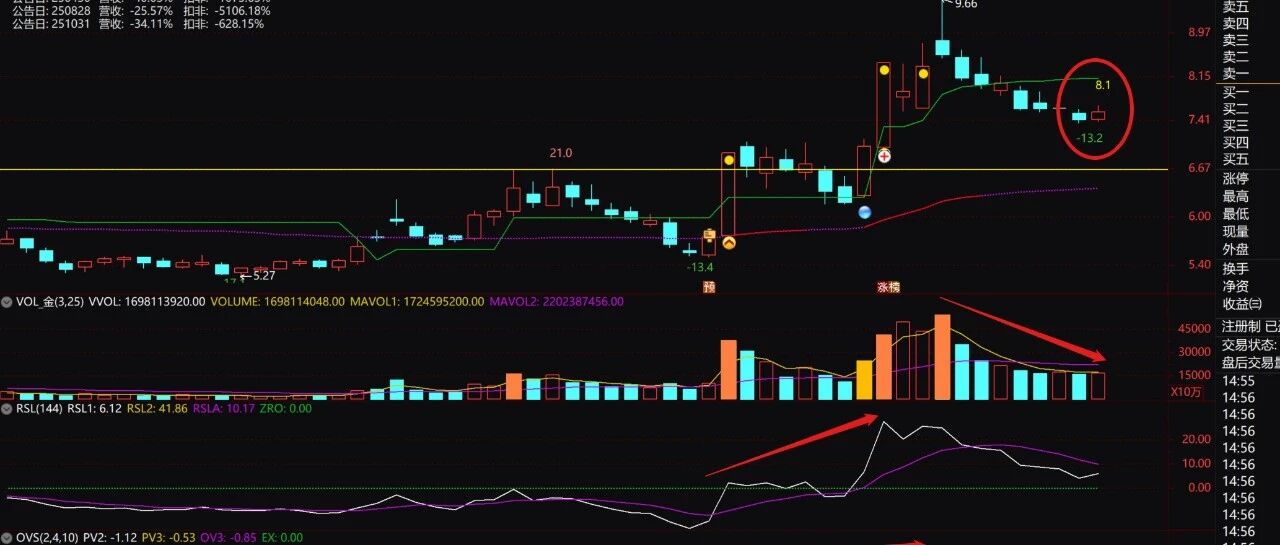
Group 1 - The core viewpoint of the article highlights a significant price increase of 30-50% for high-end components announced by JinkoSolar, indicating a shift in the solar industry dynamics [1] - The article discusses the rising cost of silver paste, which has surged from 3.4% to 29% of the component cost, directly increasing the per watt cost by 0.08-0.2 yuan, primarily due to the price hikes of precious metals [2] - The expectation of price increases for photovoltaic (PV) materials, particularly the PV glue film, is underscored, especially following Jinko's substantial price hike [4] Group 2 - The article notes that the equipment sector is experiencing a more significant pullback compared to components and auxiliary materials, suggesting a potential for a high-level consolidation structure [7] - It emphasizes the importance of combining narrative and graphical analysis in practical trading, warning against over-reliance on either approach [7] - The article reflects on the historical patterns of successful stocks, suggesting that current leading stocks are following similar trajectories due to unchanging human behavior, characterized by clear main lines and compact structural movements [9]
——电新环保行业周报20260301:看好Token出海背景下电力运营商价值重估-20260301
EBSCN· 2026-03-01 09:26
Investment Ratings - The report maintains a "Buy" rating for both the power equipment and environmental sectors [1]. Core Insights - The report emphasizes the potential revaluation of power operators due to the advantages of Token deployment overseas, including lower electricity costs and digital tax exemptions [3]. - It highlights a cyclical bottom and expected reversal in the electricity market, suggesting that power operators are currently undervalued and may enter a new upward cycle post-2027 if economic growth accelerates [3]. - The report anticipates that carbon policies will become a key focus in the upcoming "14th Five-Year Plan," with specific measures to control carbon emissions and enhance carbon pricing mechanisms [3]. Summary by Sections Power Operators - Focus on power operators due to the advantages of Token deployment overseas, including low electricity costs and digital tax exemptions [3]. - Current electricity supply-demand dynamics suggest a cyclical bottom, with potential for upward movement if economic conditions improve [3]. - Investment strategy includes selecting companies with computational power layouts and low PB valuations, with a preference for regional and clean energy companies [3]. Carbon Policy Outlook - The report predicts that carbon constraints will be a significant aspect of the "14th Five-Year Plan," with specific targets for carbon emissions and consumption [3]. - It suggests that carbon pricing mechanisms will mature, promoting international certification and market development [3]. Investment Recommendations - Continued optimism for hydrogen, ammonia, and methanol sectors, with specific companies recommended for investment [4]. - Emphasis on the synergy between electricity and computational power in new energy operators, with a focus on specific companies [4]. - Recommendations for investments in green electricity connections and zero-carbon parks, highlighting relevant companies [4]. Wind Power - Forecasts for wind power installations indicate a significant increase in onshore and offshore capacities for 2024 and 2025, with specific growth percentages noted [7][11]. - The report highlights the competitive bidding landscape for wind power equipment, with substantial increases in tender capacities [11][20]. Lithium Battery Sector - The report discusses the dynamics of lithium carbonate pricing and the impact of supply constraints on market sentiment [21]. - It notes the expected recovery in production rates for large-scale energy storage batteries, driven by demand trends [23]. - Investment logic focuses on the supply-demand gap and the anticipated recovery in lithium battery demand [23][24].
太空光伏研究专题:逐梦航天,太空光伏技术与市场前景展望
Guoxin Securities· 2026-03-01 08:32
Investment Rating - The report rates the space photovoltaic industry as "outperforming the market" [2]. Core Insights - The space photovoltaic technology involves deploying photovoltaic systems in space environments, primarily for powering spacecraft, with potential future applications. The interest in space photovoltaics has surged since 2025 due to the rapid development of commercial space and space computing, with a significant increase in low Earth orbit satellite constellations [3][6]. - The main technology currently used in space photovoltaics is gallium arsenide (GaAs) multi-junction solar cells, which are highly reliable and stable but face cost and resource limitations for large-scale applications. Future technology routes include heterojunction (HJT) silicon and perovskite solar cells, which show potential for lightweight applications [3][6]. - The estimated market value for GaAs solar cells in 2025 is over 8 billion yuan, with projections for the market to grow significantly over the next 20 years, reaching close to 100 billion yuan in the mature phase [3][79]. Summary by Sections Market Outlook - The space photovoltaic market is expected to see a significant increase in demand due to the rapid growth of commercial space and satellite deployments, with a projected market size growth from approximately 10 billion yuan to nearly 100 billion yuan in the mature phase [3][79]. - The report highlights the need for low-cost, large-scale solutions in various application scenarios, including satellite power, space station infrastructure, and deep space exploration [9]. Technology Analysis - The report identifies three main technology routes for space photovoltaics: GaAs multi-junction cells, HJT silicon cells, and perovskite cells. GaAs cells are currently dominant but expensive, while HJT and perovskite cells offer potential for cost reduction and lightweight applications [3][41]. - Perovskite cells are noted for their high efficiency and lightweight potential, making them suitable for future space applications [3][40]. Application Scenarios - The report categorizes space photovoltaic applications into five main areas: spacecraft power supply, large in-orbit infrastructure, deep space exploration, planetary surface power systems, and new space energy infrastructure [9]. - Each application scenario has specific power requirements and emphasizes the need for reliable, long-lasting, and cost-effective solutions [9].

电力设备行业周报:欧洲海风本土单桩产能再紧张,“十五五”期间将加大氢能政策支持力度
GOLDEN SUN SECURITIES· 2026-03-01 08:24
Investment Rating - The report maintains a positive outlook on the power equipment sector, particularly in renewable energy, with specific focus on solar, wind, hydrogen, and energy storage technologies [10][12]. Core Insights - The report highlights the tightening capacity of offshore wind single piles in Europe and anticipates increased policy support for hydrogen energy during the 14th Five-Year Plan period [2][3]. - In the solar sector, silicon prices are under pressure while battery module prices remain stable, indicating a potential market adjustment as production capacity is curtailed [14][15]. - The energy storage sector shows significant growth, with a marked increase in EPC project scale and expectations of rising lithium carbonate prices impacting storage system costs [4][20]. Summary by Sections Solar Energy - Silicon prices are declining, with N-type G10L monocrystalline silicon wafer prices averaging 1.10 RMB per piece, down 8.33% from previous levels [14][15]. - The average price for N-type battery cells remains stable at 0.44 RMB per watt, with distributed component prices ranging from 0.75 to 0.88 RMB per watt [14][15]. - Key companies to watch include Tongwei Co., Xiexin Technology, Longi Green Energy, and JA Solar, focusing on supply-side reform and new technology opportunities [15][18]. Wind Energy & Grid - Ørsted has terminated its contract with SeAH Wind for the Hornsea 3 offshore wind project due to production delays, highlighting the tight capacity in the European offshore wind sector [2][16]. - New suppliers have been contracted for the project, and domestic companies like Daikin Heavy Industries and Tianjun Wind Power are expected to expand internationally [2][16]. - The report suggests monitoring companies involved in high-voltage cables and wind turbine components, such as Dongfang Cable and Jinlei Co. [2][16]. Hydrogen Energy - The National Energy Administration plans to enhance policy support for hydrogen energy during the 14th Five-Year Plan, aiming for over 250,000 tons/year of renewable energy hydrogen production capacity by the end of 2025 [3][18]. - Recommended companies include Shuangliang Eco-Energy, Huadian Heavy Industries, and leading hydrogen compressor manufacturers [3][18]. Energy Storage - In January 2026, the domestic energy storage EPC market saw a total installed capacity of 4.92 GW/12.42 GWh, with a 30% increase compared to the same period in 2025 [4][19]. - The report emphasizes the importance of large-scale energy storage solutions, recommending companies like Sungrow Power and Atersa [4][24]. New Energy Vehicles - In March 2026, domestic battery production is projected at 149.59 GWh, reflecting a 21.93% month-on-month increase, indicating robust demand despite concerns over subsidy reductions [5][25]. - Key players in the battery sector include CATL, Penghui Energy, and Guoxuan High-Tech, with a focus on maintaining demand resilience [5][26].




计算机行业周报:太空光伏“破晓”:商业航天的能源革命与万亿机遇
HUAXI Securities· 2026-03-01 02:45
Investment Rating - Industry Rating: Recommended [3] Core Insights - The commercial space industry is accelerating, and space photovoltaics are opening up growth opportunities. The demand for space photovoltaics is surging due to the commercialization of space, with the U.S. and China leading global commercial launches. Space photovoltaics offer significant advantages over ground-based solar, including unobstructed sunlight, 24-hour power generation, and high energy density, making them essential for AI data centers and satellite constellations [1][14]. - Countries are rapidly positioning themselves in the space photovoltaic sector, with China holding key advantages. The Chinese photovoltaic industry dominates global production, accounting for 92% of silicon wafer capacity and over 80% of battery and module production. This positions China to meet the substantial equipment procurement needs arising from Elon Musk's 200GW production plan [2][15]. - China is entering a dense phase of reusable rocket launches, marking 2026 as a breakthrough year for commercial space. Both state-owned and private companies are making significant advancements in reusable rocket technology, which will reshape the economic model of commercial space and reduce launch costs [5][16]. Summary by Sections Section 1: Commercial Space Acceleration - The commercial space sector is entering a new era, with the U.S. and China as the main players. In 2025, the U.S. is expected to conduct 167 launches, while China will have 92, both showing year-on-year growth. Low Earth orbit satellites are becoming central to development, driven by the need for satellite internet and resource allocation [19][25]. Section 2: Global Positioning in Space Photovoltaics - Major global tech giants are competing in the space photovoltaic arena through differentiated strategies. The U.S. has a "three giants" competition, while China employs a "state-owned + private enterprise" collaborative model. Chinese companies are increasingly entering the supply chain of SpaceX, with significant procurement opportunities anticipated [2][28]. Section 3: Reusable Rocket Launches in China - 2026 is set to be a pivotal year for China's commercial space sector, with multiple core rockets entering key validation stages. The advancements in reusable rocket technology are expected to significantly lower launch costs and create new opportunities in satellite networking and space infrastructure [5][34]. Section 4: Investment Recommendations - Beneficiary companies in space photovoltaics include JunDa Co., Maiwei Co., Liancheng CNC, Laplace, Dongfang Risheng, Yujing Co., Jiejia Weichuang, Gaoce Co., Aotewei, and Jingsheng Mechanical [6][17]. - In the SpaceX and North America sector, recommended companies include Western Materials, Xinwei Communication, and Tongyu Communication [6][18]. - For rockets, key companies include Aerospace Power, Chaojie Co., Zaiseng Technology, Aerospace Machinery, Aerospace Hongtu, GaoHua Technology, Aerospace Electronics, and Tianli Composite [6][18]. - In the space computing sector, recommended companies are Shunhao Co., Zhenlei Technology, Putian Technology, Zhongke Xingtou, Jiayuan Technology, Qianzhao Optoelectronics, and Shanghai Port [6][18]. - Satellite-related companies include Xicet Testing, Tianyin Machinery, Xinwei Communication, Tongyu Communication, and China Satellite [6][18]. - For communication payloads and laser communication, recommended companies are Aerospace Electronics, Fenghuo Communication, New Light Optoelectronics, Shanghai Hanhua, and Zhenlei Technology [6][18]. - Ground stations and user terminals include Haige Communication, Beidou Xingtong, Shuo Beid, Huace Navigation, and Mengsheng Electronics [6][18]. Section 5: Industry Trends and Future Outlook - The space photovoltaic industry is transitioning from "engineering productization" to "scale industrialization." Future efforts should focus on technology, engineering, manufacturing, and system collaboration to seize the vast market opportunities presented by commercial space [33].

计算机行业周报:太空光伏“破晓”:商业航天的能源革命与万亿机遇-20260301
HUAXI Securities· 2026-03-01 02:24
Investment Rating - Industry Rating: Recommended [3] Core Insights - The commercial space industry is accelerating, and space photovoltaics are opening up growth opportunities. The demand for space photovoltaics is surging due to the commercialization of space, with the U.S. and China leading global commercial launches. Space photovoltaics offer significant advantages over ground-based solar, including unobstructed sunlight, 24-hour power generation, and high energy density, making them essential for AI data centers and satellite constellations [1][15][20]. - Countries are rapidly positioning themselves in the space photovoltaic sector, with China holding key advantages. The Chinese photovoltaic industry dominates global production, accounting for 92% of silicon wafer capacity and over 80% of battery and module production. This positions China to meet the substantial equipment procurement needs arising from Elon Musk's 200GW production plan [2][16][30]. - China is entering a dense phase of reusable rocket launches, marking 2026 as a breakthrough year for commercial space. Both state-owned and private companies are making significant advancements, with multiple launches planned, which will reshape the economic model of commercial space and reduce launch costs [5][17][37]. Summary by Sections Section 1: Commercial Space Acceleration - The commercial space sector is entering a new era, with the U.S. and China as the main players. In 2025, the U.S. is expected to conduct 167 launches, while China will have 92, both showing year-on-year growth. Low Earth orbit satellites are becoming central to development, driven by the need for satellite internet and resource allocation [20][27]. Section 2: Global Positioning in Space Photovoltaics - Major global tech companies are competing for strategic advantages in space photovoltaics. The U.S. has a "three giants" competition, with Musk's SpaceX leading with a 40GW capacity plan. China is leveraging a "national team + private enterprise" model, with state-owned enterprises and private companies collaborating to capture market share [2][30]. Section 3: Reusable Rocket Launches - 2026 is set to be a pivotal year for China's commercial space sector, with numerous core rockets entering key validation stages. The advancements in reusable rocket technology will fundamentally change the commercial space economic model, leading to lower launch costs and new opportunities in satellite networking and space infrastructure [5][17][37]. Section 4: Investment Recommendations - Beneficiary stocks in the space photovoltaic sector include JunDa Co., Maiwei Co., Liancheng CNC, and others. For SpaceX and North America, recommended stocks include Western Materials and Xinwei Communication. In the rocket sector, stocks like Aerospace Power and Chaojie Co. are highlighted [6][18][19].