
证券业

Search documents
中国内部审计协会举办“2025内部审计助力中国式现代化”论坛
Xin Hua Wang· 2025-12-31 06:44
Core Insights - The forum "2025 Internal Audit Supporting Chinese Modernization" was held in Beijing, focusing on the role of internal audit in promoting modernization in China, gathering over 600 attendees from various sectors [2][5][8] - The event featured a diverse lineup of speakers, including leaders from multiple government departments and industry experts, aiming to create a multi-level communication platform for internal audit [2][5][10] Group 1: Forum Overview - The forum was the second edition, building on the first forum's foundation with enriched content and format, including keynote speeches, roundtable discussions, and parallel sub-forums [2][6] - Keynote speeches highlighted the achievements of internal audit during the 14th Five-Year Plan and outlined strategies for the upcoming 15th Five-Year Plan, emphasizing the importance of leadership and technological integration [8][10] Group 2: Keynote Highlights - Huang Zheng emphasized the need for internal audit to align with the 15th Five-Year Plan, focusing on enhancing the effectiveness of audit results and integrating technology and talent into the audit process [8][10] - Xu He discussed the internal audit practices within state-owned enterprises, advocating for a framework that matches the new missions of these enterprises and promotes value creation [10][12] Group 3: Research and Development - The establishment of the Digital Audit Sub-Committee and the release of three significant reports, including the "National Internal Audit Digital Transformation Development Research Report (2025)," were key outcomes of the forum [14][18] - The reports aim to provide a theoretical and practical foundation for the development of internal audit, injecting new momentum into the field [14][18] Group 4: Thematic Discussions - The roundtable discussions addressed the understanding of scientific and standardized auditing, challenges faced in research and practice, and strategies for advancing internal audit in the context of the 15th Five-Year Plan [19][21] - Parallel sub-forums focused on specific themes such as financial risk prevention, energy transition under carbon neutrality goals, and the integration of digital technology in internal audit practices [21][23][25][27]


黄金、白银,太疯狂!
Sou Hu Cai Jing· 2025-12-31 06:13
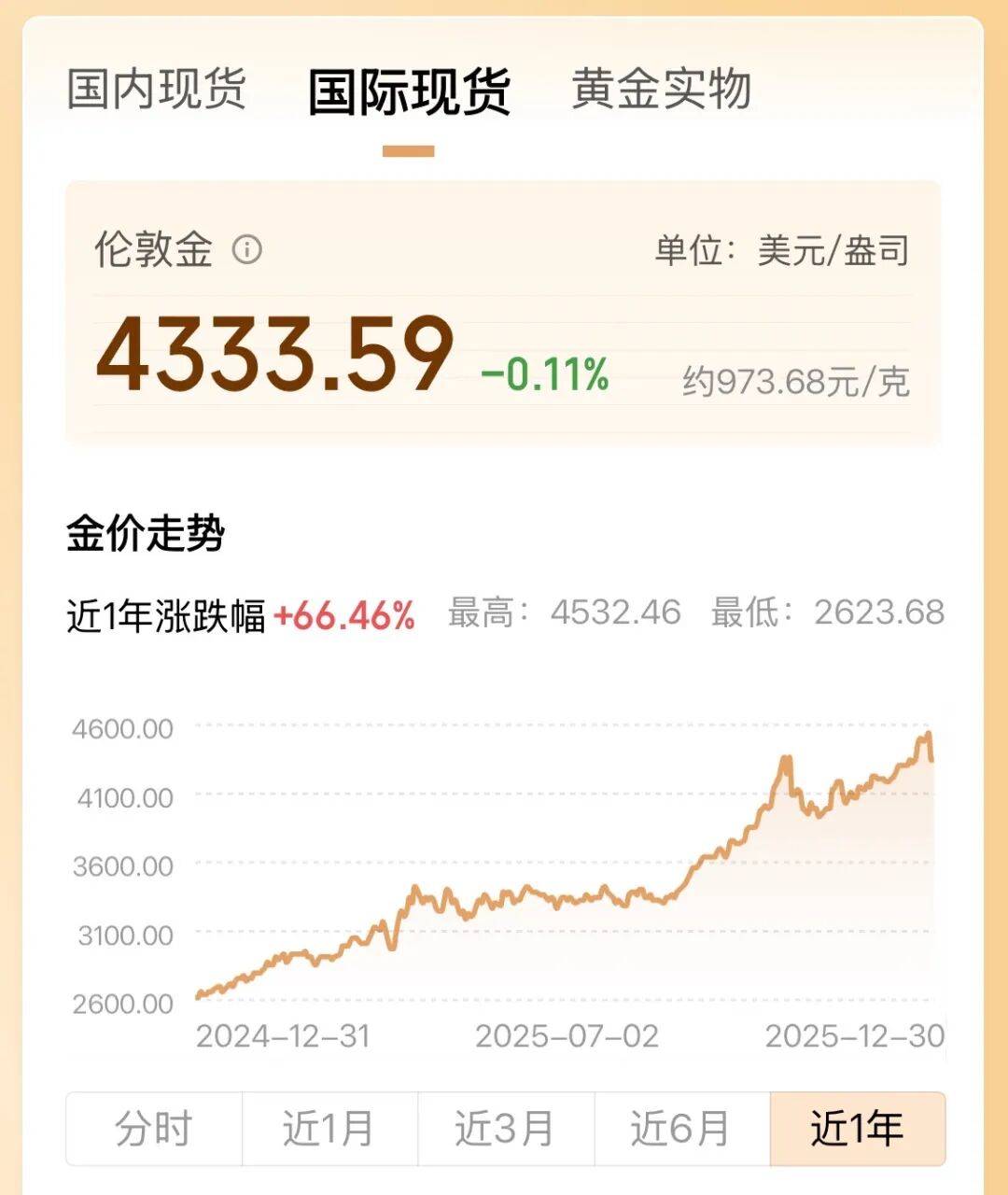
Group 1 - The Federal Reserve's December meeting minutes reveal increasing internal disagreements regarding future interest rate cuts, leading to cautious expectations for further rate reductions in early 2026 [1][2] - Following the release of the minutes, traders adjusted their expectations to two rate cuts in 2026, down from three previously anticipated [1] - The U.S. stock market experienced slight declines, with the Dow Jones Industrial Average falling by 0.2% to 48,367.06 points, the S&P 500 down 0.14% to 6,896.24 points, and the Nasdaq down 0.24% to 23,419.08 points [1] Group 2 - Gold prices have surged significantly, reaching a peak of $4,550 per ounce by year-end, with an annual increase of up to 70%, making it one of the best-performing asset classes [1] - JPMorgan analysts predict that gold prices could rise over 10% in the next year, potentially exceeding $4,000 per ounce by 2025 and reaching $5,055 by the end of 2026 due to strong demand from ETFs and central banks [4] - Central banks are expected to remain a key support for the gold market, with projected purchases of 755 tons in 2026, which, while lower than previous years, is still significantly above the average of 400-500 tons prior to 2022 [4] Group 3 - Silver prices have shown extreme volatility, with COMEX silver futures rising from approximately $31 per ounce at the beginning of the year to around $73 per ounce, achieving a return of over 138% [7] - The World Silver Association reports that industrial demand for silver is expected to grow, driven by sectors such as solar energy, electric vehicles, and artificial intelligence, which will continue to boost silver's industrial applications [7][8] - The current tight supply of silver is reflected in the low inventory levels, with LBMA silver stocks dropping to historical lows of about 27,000 tons as of November [7]
资讯早班车-2025-12-31-20251231
Bao Cheng Qi Huo· 2025-12-31 01:34
1. Report's Industry Investment Rating No relevant information provided. 2. Core Views of the Report - The 2026 national subsidy program for consumer goods replacement is released, with changes in subsidy targets and amounts [2][13]. - Multiple factors are driving copper prices to new highs, and the price is expected to continue rising in 2026 [5]. - The Fed agreed to cut interest rates in December, but officials have significant differences. Further rate cuts may be appropriate if inflation declines as expected [3][15]. - The real - estate market has new policies, such as a reduction in the VAT rate for short - term housing sales, which will impact the market [14]. 3. Summary by Relevant Catalogs 3.1 Macro Data - In Q3 2025, GDP grew at a 4.8% year - on - year rate, down from 5.2% in the previous quarter but up from 4.6% in the same period last year [1]. - In November 2025, the manufacturing PMI was 49.2%, slightly up from 49.0% in the previous month but down from 50.3% last year [1]. - The non - manufacturing PMI business activity in November 2025 was 49.5%, down from 50.1% in the previous month and 50.0% last year [1]. 3.2 Commodity Investment 3.2.1 Comprehensive - The 2026 national subsidy plan for equipment renewal and consumer goods replacement is announced, including subsidy details for new cars and home appliances [2][13][14]. - The list of state - owned trading enterprises for tungsten, antimony, and silver exports from 2026 - 2027 is released [2]. - On December 30, 2025, there were 31 positive - basis and 37 negative - basis domestic commodity varieties [3]. 3.2.2 Metals - On December 30, 2025, COMEX gold futures rose 0.20% to $4352.30 per ounce, and COMEX silver futures rose 7.88% to $76.02 per ounce [4]. - Indonesia plans to cut nickel production in 2026 to balance supply and demand [5]. - Multiple factors are driving copper prices to new highs, and it's expected to continue rising in 2026 [5]. 3.2.3 Coal, Coke, Steel, and Minerals - As of mid - December 2025, the price of coke (quasi - first - class metallurgical coke) decreased 2.79% month - on - month, hitting a new low since late October [7]. 3.2.4 Energy and Chemicals - On December 30, 2025, WTI crude oil futures fell 0.22% to $57.95 per barrel, and Brent crude oil futures fell 0.24% to $61.34 per barrel [9]. - OPEC+ is expected to maintain the suspension of production increases [9]. 3.2.5 Agricultural Products - Since 2025, domestic pig prices have declined, and it's expected to recover in the second half of 2026 [10]. - In 2025, the national grain purchase volume reached 830 billion jin, remaining stable for three years [10]. 3.3 Financial News 3.3.1 Open Market - On December 30, 2025, the central bank conducted a 7 - day reverse repurchase operation of 312.5 billion yuan, with a net injection of 253.2 billion yuan [12]. 3.3.2 Key News - The 2026 national subsidy plan for consumer goods replacement is released [2][13]. - The VAT rate for short - term housing sales is reduced from 5% to 3% starting in 2026 [14]. - The Fed agreed to cut interest rates in December, but officials have differences [3][15]. 3.3.3 Bond Market - The sentiment of ultra - long bonds has recovered slightly, while other maturities are still weak. Bond futures show differentiation [20]. - Currency market interest rates mostly rose, with some short - term rates hitting new highs or lows [22]. 3.3.4 Foreign Exchange Market - The on - shore RMB against the US dollar closed at 6.9901 on December 30, 2025, up 197 points [25]. - The US dollar index rose 0.22% to 98.22 in New York trading [25]. 3.3.5 Research Reports - Huatai Fixed - income believes that the bond market will remain volatile and slightly weak in Q1 2026 [26]. - CICC Fixed - income believes that the overall credit risk of central and state - owned real - estate enterprises is controllable in 2026 [26]. - CITIC Securities expects a more active fiscal policy and a moderately loose monetary policy in 2026 [27]. 3.4 Stock Market - The A - share market had a narrow - range adjustment, with the Shanghai Composite Index slightly down, and the Shenzhen Component Index and ChiNext Index up [30]. - The Hong Kong stock market rose, with the Hang Seng Index up 0.86% and the Hang Seng Tech Index up 1.74% [30]. - In 2025, the Hong Kong IPO scale ranked first globally. It's predicted that about 160 new stocks will be listed in 2026 [31].
每日债市速递 | 央行公开市场连续净投放
Wind万得· 2025-12-30 22:44
Group 1: Open Market Operations - The central bank conducted a 7-day reverse repurchase operation on December 30, with a fixed rate and a total amount of 312.5 billion yuan, at an interest rate of 1.40% [1] - On the same day, 59.3 billion yuan of reverse repos matured, resulting in a net injection of 253.2 billion yuan [1] Group 2: Liquidity Conditions - The central bank's continuous net injection has led to a stable and slightly loose liquidity in the interbank market, with the overnight repo weighted average rate (DR001) slightly decreasing to around 1.24% [3] - The overnight quotes in the anonymous X-repo system remained at 1.23%, with supply exceeding 100 billion yuan [3] - The latest overnight financing rate in the U.S. is reported at 3.76% [3] Group 3: Interbank Certificates of Deposit - The latest transaction rate for one-year interbank certificates of deposit among major banks is around 1.64%, unchanged from the previous day [7] Group 4: Government Bond Futures - The 30-year main contract rose by 0.17%, while the 10-year main contract fell by 0.02%, the 5-year main contract fell by 0.01%, and the 2-year main contract rose by 0.01% [11] Group 5: Key Economic Meetings and Policies - The Central Rural Work Conference held from December 29 to 30 emphasized stabilizing grain and oil production and enhancing agricultural disaster prevention capabilities [12] - A new VAT implementation regulation will take effect on January 1, 2026, detailing taxable transactions and taxpayer classifications [12] - The core value added of the digital economy in 2024 is projected to be 14,089.1 billion yuan, accounting for 10.5% of GDP, with the highest contribution from digital technology applications [13] Group 6: Global Economic Insights - Axis International, controlled by billionaire Pankaj Oswal, has filed for arbitration with the World Bank, seeking at least $28.9 billion from Guinea for the alleged illegal revocation of mining rights [15] - Barclays Bank reports a decline in UK consumer spending via debit and credit cards by 0.2% in 2025, marking the first annual drop since the COVID-19 pandemic [15] Group 7: Bond Market Developments - GCL Group has led the first fire power holding-type real estate ABS listing on the Shanghai Stock Exchange [17] - CITIC Construction Investment plans to pay interest on a 2.05% perpetual subordinated bond amounting to 2.1 billion yuan [17]

中央网信办举报中心2025年依法受理处置仿冒假冒网站平台1418个
Yang Shi Wang· 2025-12-30 09:28
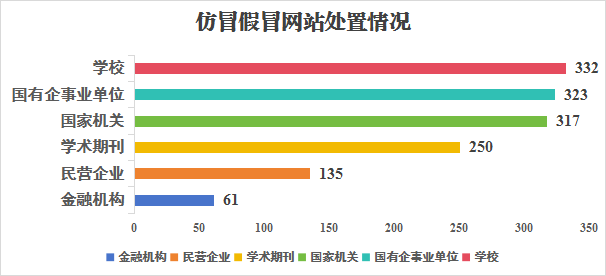
央视网消息:据"网信中国"微信公众号消息,今年以来,中央网信办举报中心持续畅通网络举报渠道,强化涉仿冒假冒网站举报受理处置工作,根据网 民提供的线索,协调有关部门逐一查证、及时处置违法违规仿冒假冒网站平台1418个,较去年同比增加1.7倍。 主要类型及情形 仿冒假冒网站通常以"领取补贴""充值消费""期刊征稿""商业合作""投资理财""考试招生"等名义,违规收集网民个人信息,诱导注册账号并缴费,实施诈 骗行为,相关网站服务器多设在境外,域名频繁跳转,侵害人民群众的合法权益和财产安全,社会危害大。 1.仿冒人社部、国家税务总局等国家机关网站317个。冒用国家机关名义,发布虚假"综合工薪补贴"、"退税通知"等,诱导网民输入身份证号码、银行卡 号码等个人隐私信息,导致信息泄露。 2.仿冒国家电网、中国石化等国有企事业单位网站323个。发布虚假投资、充值信息,诱导网民购买虚拟商品、虚假充值加油卡等,导致网民受骗。 3.仿冒《中国校外教育》《中华护理教育》等学术期刊网站250个。假借期刊名义骗取论文审稿费、版面费等费用,造成网民财产损失和个人文章泄露。 4.仿冒齐鲁制药、蜜雪冰城等民营企业网站135个。诱导网民开展虚假 ...
跨年资金波动,债市大幅走弱
Dong Fang Jin Cheng· 2025-12-30 07:45
Report Summary 1. Investment Rating - No investment rating for the industry is provided in the report. 2. Core View - On December 29, overnight funds were abundant, but the contradiction of cross - year stratification still existed. The concern over ultra - long bond supply and cross - year fund fluctuations led to a significant weakening of the bond market. The main indexes of the convertible bond market closed down collectively, and most convertible bond issues declined. Yields of U.S. Treasuries across all maturities generally decreased, and yields of 10 - year government bonds of major European economies also generally declined [2]. 3. Summary by Directory 3.1 Bond Market News - **Domestic News** - The People's Bank of China issued an action plan for digital RMB, and a new generation of digital RMB measurement framework, management system, operation mechanism, and ecosystem will be officially launched on January 1, 2026 [4]. - From January to November, the total operating income of state - owned enterprises was 756257.6 billion yuan, a year - on - year increase of 1%; the total profit was 37194.5 billion yuan, a year - on - year decrease of 3.1%; the payable taxes were 52803 billion yuan, a year - on - year increase of 0.2%. As of the end of November, the asset - liability ratio of state - owned enterprises was 65.2% [4]. - Starting from January 1, 2026, the State Council Tariff Commission will adjust the import tariff rates and tariff items of some commodities, including implementing temporary import tariff rates lower than the most - favored - nation rates for 935 commodities and canceling the temporary import tariff rates of some commodities [5]. - As of the end of November, the net asset value of public funds in China reached 37.02 trillion yuan, an increase of about 60 billion yuan from the end of October, breaking through the 37 - trillion - yuan mark for the first time and setting a new high for eight consecutive months [6]. - **International News** - The minutes of the December meeting of the Bank of Japan suggested more interest rate hikes as many members thought the real interest rate was still very low. The meeting raised the benchmark interest rate to 0.75%, a 30 - year high. Economists expect another rate hike in about six months, with most believing the terminal rate of this hiking cycle will be 1.25% [7]. - **Commodities** - On December 29, WTI February crude oil futures rose 1.84% to $58.08 per barrel; Brent February crude oil futures rose 2.14% to $61.94 per barrel; COMEX gold futures fell 4.47% to $4349.20 per ounce; NYMEX natural gas prices fell 10.81% to $3.943 per ounce [8]. 3.2 Funding Situation - **Open Market Operations** - On December 29, the central bank conducted 4823 billion yuan of 7 - day reverse repurchase operations at a fixed - rate and quantity - tender method, with an operating rate of 1.40%. The net investment of funds on the day was 4150 billion yuan [10]. - **Funding Rates** - On December 29, the central bank increased the net investment scale. Overnight funds were abundant, but the cross - year stratification contradiction still existed. DR001 decreased by 1.39bp to 1.242%, and DR007 increased by 7.07bp to 1.594%. Other funding rates also showed different changes [12][13]. 3.3 Bond Market Dynamics - **Interest - rate Bonds** - The local bond issuance plan announced by Shandong on December 29 triggered concerns about ultra - long bond supply, and combined with cross - year funding fluctuations, the bond market weakened significantly. As of 20:00, the yield of the 10 - year Treasury active bond 250016 rose 2.25bp to 1.8580%, and the yield of the 10 - year CDB active bond 250215 rose 3.30bp to 1.9395% [15]. - **Credit Bonds** - One industrial bond, "H0 Zhongnan 02", had a trading price deviation of over 10% on December 29. There were also announcements from many real - estate and other companies regarding bond repayment, resumption of trading, debt restructuring, etc. [18][19]. - **Convertible Bonds** - On December 29, the three major A - share indexes showed different trends. The convertible bond market followed the equity market and adjusted. The main convertible bond indexes closed down collectively, and most convertible bond issues declined. Shenyu Convertible Bonds will be listed on December 30 [20][21]. - **Overseas Bond Markets** - **U.S. Bond Market**: Yields of U.S. Treasuries across all maturities generally decreased on December 29. The 2 - year U.S. Treasury yield decreased by 1bp to 3.45%, and the 10 - year yield decreased by 2bp to 4.12%. The 2/10 - year U.S. Treasury yield spread narrowed by 1bp to 67bp; the 5/30 - year yield spread remained unchanged at 113bp. The 10 - year inflation - protected Treasury (TIPS) break - even inflation rate decreased by 1bp to 2.22% [22][23][24]. - **European Bond Market**: Yields of 10 - year government bonds of major European economies generally decreased on December 29. The 10 - year German government bond yield decreased by 3bp to 2.83%, and those of France, Italy, Spain, and the UK also decreased [25][26]. - **Price Changes of Chinese - funded U.S. Dollar Bonds**: The report shows the daily price changes of some Chinese - funded U.S. dollar bonds as of the close on December 29, including the daily and monthly changes in yields and prices of different bonds [27].
冲顶行情进入末段!顶级经济学家警告:信贷泡沫支撑的繁荣或将崩塌
Ge Long Hui· 2025-12-30 04:12
Core Viewpoint - Leading economist Henrik Zeberg warns that global financial markets are approaching a dangerous blow-off top phase, reflecting his long-standing pessimistic view on the economy. Despite weakening economic fundamentals, stock and other risk asset prices have surged to unsustainable extreme levels [1]. Group 1: Market Conditions - The current market exuberance can be traced back to the post-2008 financial crisis policy environment, where central banks lowered interest rates to zero and initiated large-scale quantitative easing [1]. - The stock market has reached historical highs, with the S&P 500 index increasing over 900% since the 2009 low, significantly outpacing economic growth [1][2]. Group 2: Asset Valuations - Housing prices have surpassed pre-crisis real estate bubble peaks, and speculative tech companies are being assigned high valuations despite weak earnings [2]. - By 2025, the total market capitalization of the U.S. stock market is projected to exceed 225% of GDP, surpassing the peak levels seen in 1929 and 2000 [2]. Group 3: Economic Discrepancies - The current market rally is increasingly detached from fundamentals, with economic growth slowing while stock prices continue to rise, a divergence that historically signals potential severe reversals [2]. - A significant portion of the "apparent wealth" in the system is built on credit, making it vulnerable to reversal as the business cycle reasserts itself [2].
打破华尔街预期,“中国央行稳住货币政策”
Sou Hu Cai Jing· 2025-12-30 02:51
Core Viewpoint - The People's Bank of China (PBOC) has adopted a cautious approach in response to changing economic conditions and U.S. trade policies, with only a minimal interest rate cut of 10 basis points this year, the smallest since 2021, contrasting with higher expectations from financial institutions for a more significant reduction [1][3]. Group 1: Monetary Policy and Economic Conditions - The Loan Prime Rate (LPR) has remained unchanged for seven consecutive months, with the one-year LPR at 3% and the five-year LPR at 3.5%, both down by 10 basis points from the previous period [1]. - Analysts attribute the stability of the LPR to strong export performance and rapid development in new productive sectors, which have supported economic resilience against external pressures, allowing for a projected annual growth rate of around 5% [1][3]. - The PBOC has shifted focus from broad monetary easing to more unconventional measures, including targeted liquidity injections and support for the stock market, while maintaining a stable policy rate [4][6]. Group 2: Future Expectations and Economic Strategy - Economists predict that the PBOC may implement a cumulative interest rate cut of 20 basis points and a 50 basis point reduction in the reserve requirement ratio by 2026, although some institutions believe key policy rates may remain unchanged throughout that year [6][8]. - The central bank's reluctance to lower rates significantly is influenced by concerns over bank profitability and the stability of the banking sector, as further cuts could exacerbate vulnerabilities amid rising non-performing loans [6][7]. - Fiscal policy is expected to take precedence in 2026, with a focus on structural reforms and increased government spending to address consumption challenges, indicating a departure from reliance on macroeconomic easing to solve structural issues [8].

资讯早班车-2025-12-30-20251230
Bao Cheng Qi Huo· 2025-12-30 02:43
1. Report Industry Investment Rating No relevant content provided. 2. Core Views of the Report - The global economic and financial markets are experiencing significant fluctuations, with various industries showing different trends. For example, the metal market has seen extreme price swings, the energy market has supply - related changes, and the stock and bond markets have their own performance characteristics [4][10][30] - China is implementing a series of economic policies, such as tariff adjustments and promoting the development of digital RMB, which will have an impact on domestic and international trade and the financial system [2][15] 3. Summary by Relevant Catalogs Macro Data - GDP in Q3 2025 grew by 4.8% year - on - year, slightly lower than the previous quarter's 5.2% [1] - In November 2025, the manufacturing PMI was 49.2%, and the non - manufacturing PMI for business activities was 49.5%, both showing certain trends compared to the previous month and the same period last year [1] - Social financing scale, M0, M1, M2, and other monetary indicators also had corresponding changes in November 2025 [1] Commodity Investment Comprehensive - From January 1, 2026, China will implement import provisional tax rates lower than the most - favored - nation rates for 935 commodities to enhance resource linkage and expand high - quality supply [2] - On December 29, 2025, 40 domestic commodity varieties had positive basis, and 26 had negative basis [2] Metal - Precious metals had a volatile "Black Monday". Silver first soared and then plunged, dragging down other precious metals. International and domestic metal prices and futures contracts showed significant declines [4][5] - On December 29, 2025, CME Group raised metal futures trading margins, triggering price drops [5] - In 2025, silver prices broke a 45 - year record and were higher than crude oil prices, driven by industrial and investment demand [5] Coal, Coke, Steel, and Ore - Bauxite miner Axis has filed a $29 billion claim against Guinea [9] Energy and Chemicals - U.S. refineries are expected to have capacity outages in the coming weeks, with the scale increasing [10] - India's oil imports from Russia in December 2025 are expected to exceed 1 million barrels per day [10] Agricultural Products - China's grain output in 2025 was 1.43 trillion jin, a 1.2% increase from the previous year, mainly due to the increase in corn production [12] - As of December 2025, the autumn grain purchase volume exceeded 200 million tons, a year - on - year increase of 32 million tons [13] Financial News Open Market - On December 29, 2025, the central bank conducted 482.3 billion yuan of 7 - day reverse repurchase operations, with a net investment of 415 billion yuan [14] Important News - The Chinese military conducted the "Justice Mission - 2025" exercise around Taiwan [15] - China will start to pay interest on digital RMB from January 1, 2026 [15] Bond Market - The bond market was generally weak, with treasury bond futures falling and bond yields rising [21] Foreign Exchange Market - The on - shore RMB against the US dollar closed at 7.0098 on December 29, 2025, down 13 points from the previous trading day [26] Research Report Highlights - Xingzheng Fixed Income believes that in the short term, the bond market carry strategy is relatively certain, and there is room for the repair of long - end bonds [27] - CITIC Securities suggests paying attention to high - grade state - owned enterprise perpetual bonds in industries such as public utilities, transportation, and construction [27] Stock Market - A - shares showed a divergence between large and small indexes. The Shanghai Composite Index rose 0.04%, while the Shenzhen Component Index and the ChiNext Index fell [30] - Hong Kong stocks fluctuated, with the Hang Seng Index falling 0.71% [30]
东海增裕债券型发起式证券投资基金基金份额发售公告
Shang Hai Zheng Quan Bao· 2025-12-29 18:29
Fund Overview - The fund is named Donghai Zengyu Bond Type Initiated Securities Investment Fund, with a minimum total subscription of 10 million units and a minimum fundraising amount of 10 million RMB [13][2]. - The fund is a contract-based open-end bond fund, with an indefinite duration [13][14]. Fund Management and Custody - The fund is managed by Donghai Fund Management Co., Ltd., and the custodian is Bank of Communications Co., Ltd. [1][46]. Fund Subscription Details - The fund will be publicly offered from January 6, 2026, to April 3, 2026, with a maximum fundraising period of three months [19][19]. - The minimum subscription amount for both initial and additional subscriptions is 1 RMB, including subscription fees [22][29]. Subscription Process - Investors must open a fund account with the management company to purchase the fund, and only one account per investor is allowed [6][30]. - Subscription applications must be fully paid, and any incomplete payments will be deemed invalid [20][22]. Fees and Interest Handling - The A-class fund shares will incur a subscription fee that decreases with the amount subscribed, while C-class shares do not have a subscription fee [22][24]. - Interest accrued on valid subscription funds during the fundraising period will be converted into corresponding fund shares for the investors [25][43]. Risk Management - The fund may face various risks, including market risk, credit risk, and liquidity risk, particularly due to its investment in securities and futures markets [5][7]. - The fund has specific provisions for managing large redemption requests through a side pocket mechanism [11][10]. Investor Eligibility - The fund is open to individual investors, institutional investors, qualified foreign institutional investors, and other investors permitted by laws and regulations [17][18]. Sales Channels - The fund will be sold through direct sales and other sales institutions, with specific details available in the fund's sales announcement [15][18].
