
机电

Search documents
焦点访谈|延续回升向好态势 中国经济展现韧性与活力
Yang Shi Wang· 2025-06-20 13:42
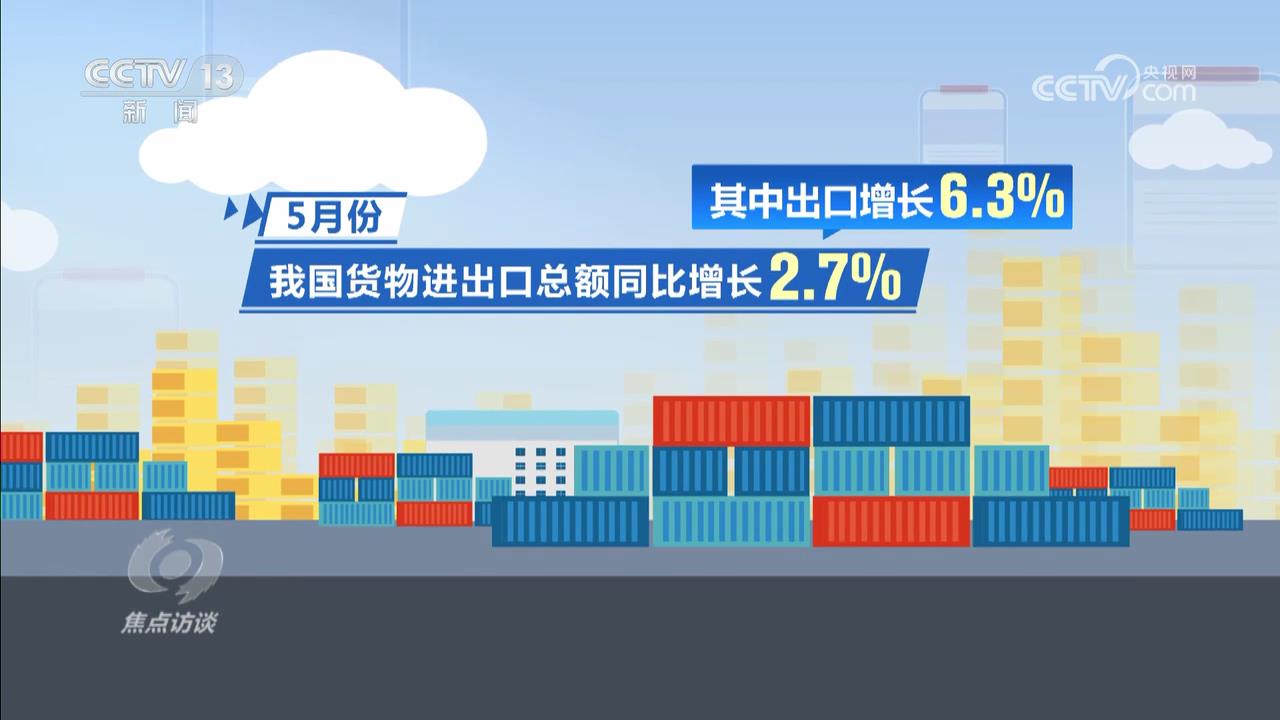
央视网消息(焦点访谈):今年以来,外部环境复杂变化,单边主义、保护主义抬头,严重冲击国际经贸秩序。大家都很关心,我们的外贸扛不扛得住?中 国经济稳步增长、向新向好的势头会不会受影响?近日,国家统计局等部门发布了5月份和今年前5个月的一些宏观经济数据,我们从这些数据中去寻找答 案。 今年以来,外部环境发生急剧变化,让外贸成为人们关注的焦点。数据显示,5月份,我国货物进出口总额同比增长2.7%,其中出口增长6.3%。 对外经济贸易大学中国WTO研究院院长屠新泉:"最近这几个月的外贸政策环境变动非常大,所以大家非常关心5月份外贸数据出台。从这个结果来看,应 该说好于大家的普遍预期,尤其是出口能增长6.3%,这是个相当不错的成绩。一方面还是会有惯性,5月份表现出来的出口数据可能很多是以前下的订单。 另外,确实出口增长反映了制造业的竞争力确实非常强,韧性非常强。" 面对巨大的不确定性,中国一直在拓展更广阔的全球市场。虽然对美国进出口下滑,但对我们的主要贸易伙伴东盟和欧盟,包括共建"一带一路"国家进出口 都持续增长。5月份,我国对东盟、欧盟出口分别增长16.9%、13.7%,对非洲出口增长达到了35.3%。 屠新泉:"在 ...

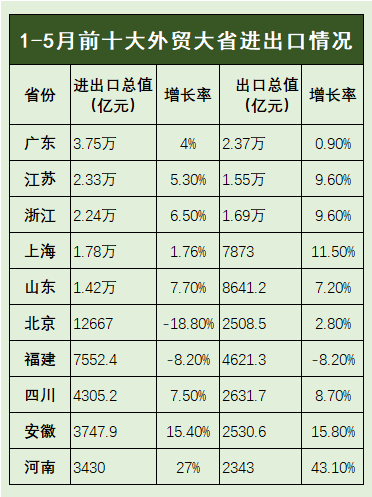
10打外贸省份前五月出口数据公布:江苏、浙江增9.6%,河南增43.1%,福建收窄至-8.2%
Guan Cha Zhe Wang· 2025-06-20 01:42
Core Insights - The export data for the first five months of this year shows that most of the top ten foreign trade provinces in China experienced growth, with only Fujian showing a decline, although its decline is narrowing [1][6][9]. Group 1: Export Performance by Province - Guangdong, the largest foreign trade province, saw a modest export growth of 0.9%, while Jiangsu and Zhejiang, the second and third largest provinces, reported a significant export growth of 9.6% [2][15]. - Fujian's export decline narrowed to -8.2%, with traditional industries in Fuzhou and Quanzhou experiencing notable drops, although the growth in machinery and electrical products helped mitigate the decline [1][6]. - Henan province reported an impressive export growth of 43.1%, driven by electric vehicles and silver processing, ranking third in national foreign trade growth [10][12]. Group 2: Key Export Products and Trends - In Zhejiang, machinery and electrical products accounted for a substantial portion of exports, with a growth rate of 12.6%, contributing significantly to the overall export growth [3][4]. - The export of electric vehicles in Zhejiang surged by 86.0%, while shipbuilding also showed strong performance with an 18.2% increase [3]. - In Henan, machinery and electrical products made up over 60% of exports, with a notable growth of 66.6% in this category [10][12]. Group 3: Market Dynamics and Challenges - Fujian's reliance on traditional industries, such as textiles and footwear, has led to a decline in export growth, highlighting the need for upgrading to higher value-added products [7][8]. - The shift of some orders to Southeast Asia and Latin America due to international supply chain restructuring has weakened Fujian's traditional manufacturing export advantages [6][7]. - Zhejiang's exports to emerging markets, including the EU and ASEAN, have shown robust growth, indicating a positive outlook for diversification in trade [4].
辽宁前5个月出口同比增长12.1%
Sou Hu Cai Jing· 2025-06-19 00:57
Group 1 - The total value of foreign trade in Liaoning Province reached 304.8 billion yuan in the first five months of this year, with exports increasing by 12.1% to 161.55 billion yuan, setting a historical record for the same period [1] - Despite a slight year-on-year decline of 1.8% in total import and export value, the decline has narrowed by 1.4 percentage points compared to the first four months, indicating a clear trend of stabilization and recovery [1] - Private enterprises have emerged as the main force in foreign trade, with an import and export value of 158.68 billion yuan, a year-on-year increase of 9.9%, accounting for 52.1% of the province's total, up 5.5 percentage points from the same period last year [1] Group 2 - The structure of trade methods is optimizing, with general trade totaling 195.74 billion yuan, accounting for 64.2% of the total. Bonded logistics have surged, with imports and exports reaching 48.62 billion yuan, a significant increase of 28.2% [1] - Liaoning's trade with the EU and ASEAN remains strong, with import and export values of 44.78 billion yuan and 43.58 billion yuan respectively. Trade with ASEAN has shown a robust growth rate of 14% [2] - Exports of electromechanical products, a key pillar, reached 80.36 billion yuan, a year-on-year increase of 6%, accounting for 49.7% of total exports [2] Group 3 - The increase in exports to emerging markets and free trade partners, along with the significant rise in the share of private enterprises, reflects the effectiveness of national and local policies aimed at stabilizing foreign trade [3] - The achievements in foreign trade are indicative of the successful transformation and upgrading of Liaoning's industries, enhancing the international competitiveness of its enterprises [3] - The strong performance in foreign trade is expected to provide solid external support and confidence for the comprehensive revitalization of Northeast China [3]
据港交所文件:深圳市兆威机电股份有限公司向港交所提交上市申请书
news flash· 2025-06-18 11:48
据港交所文件:深圳市兆威机电(003021)股份有限公司向港交所提交上市申请书。 ...
英洛华(000795) - 000795英洛华投资者关系管理信息20250618
2025-06-18 01:56
Production Capacity and Utilization - The company has a magnetic material production capacity of approximately 13,000 tons, with a utilization rate of about 80% [1] - In 2024, the sales volume of finished magnetic materials is expected to exceed 6,200 tons, with exports accounting for 20-30% [1] Raw Material Procurement and Inventory - The company maintains long-term relationships with major raw material suppliers, employing a combination of long-term contracts and flexible procurement strategies [2] - Raw material inventory is kept at around two months, with procurement strategies adjusted based on price trends [2] Export Licenses and Market Applications - The company has actively applied for export licenses for permanent magnetic products since the implementation of export control policies, with some orders already approved [3] - The company's electromechanical products are primarily used in health mobility, smart home appliances, agricultural machinery, and security systems, with exports accounting for 60-70%, mainly to Europe, America, and Asia [3] Health Equipment Business Development - The health equipment segment, focusing on electric wheelchairs and mobility scooters, has a significant overseas business share of about 70-80% [3] - Growth in this sector is attributed to brand development, new material applications, market expansion, and ongoing automation and cost optimization efforts [3] Future Business Development Plans - The Vietnam base will primarily support the production of motors, health equipment, and acoustic products [4] - The company plans to expand its electronic acoustic product line, focusing on high-end automotive audio and consumer electronics [4] Strategic Positioning and Value Management - The company aims to enhance its core business by focusing on precision in electromechanical products, strengthening magnetic materials, and optimizing downstream applications [6] - Ongoing efforts will be made to improve operational performance and enhance intrinsic value, with a commitment to reasonable returns for investors through cash dividends and share buybacks [6]

潍坊市前5个月进出口总值达1539.4亿元,民企占比超八成
Qi Lu Wan Bao Wang· 2025-06-17 12:53
Group 1 - The total import and export value of Weifang City reached 153.94 billion yuan in the first five months of 2025, an increase of 5.1% compared to the same period last year [1] - Exports amounted to 104.25 billion yuan, growing by 4.8%, while imports were 49.69 billion yuan, increasing by 5.7% [1] - Private enterprises accounted for over 80% of the total import and export value, with foreign investment and state-owned enterprises also experiencing double-digit growth [1] Group 2 - The export of electromechanical products accounted for nearly half of the total exports, with a value of 50.03 billion yuan, growing by 11.4% [2] - Key products such as diesel engines and agricultural machinery saw significant growth, with exports of 1.74 billion yuan and 1.66 billion yuan, respectively, increasing by 36.3% and 27.8% [2] - The import of crude oil and electromechanical products also grew rapidly, with crude oil imports reaching 23.53 billion yuan, up by 28.1% [2]
无惧变化,转型延续——经济数据与当下宏观热点
2025-06-16 15:20
Summary of Key Points from Conference Call Records Industry Overview - The conference call discusses the macroeconomic environment in China, focusing on industrial growth, consumer spending, and investment trends for 2025. [1][2][8] Core Insights and Arguments - **Industrial Growth**: In May 2025, industrial added value exceeded expectations with a month-on-month growth rate higher than previous years, indicating resilience in the production sector. The probability of GDP growth exceeding 5% in the first half of the year is high. [1][2] - **Investment Trends**: Real estate investment continues to decline, with a drop of 10.7% in May 2025. However, manufacturing and infrastructure investments show growth, with manufacturing up 8.5% and infrastructure up 10.4%. Adjustments in local government debt limits are expected to support major project construction in the second half of the year. [5][8] - **Consumer Spending**: Retail sales growth reached 6.4% year-on-year in May 2025, the first time exceeding 6% since last year. The "trade-in" policy and promotional events significantly boosted sales, particularly in home appliances and communication equipment. [6][9] - **Employment Stability**: The urban surveyed unemployment rate remains stable at 5%, consistent with the previous year, indicating a solid overall employment situation that supports economic development. [7][8] - **Economic Outlook**: The economic growth in the second half of 2025 is expected to be weaker than the first half, but fluctuations are anticipated to be minor. The foundation laid in the first half, along with increased local budgets and expanded major project space, supports the likelihood of achieving annual targets. [8][11] Additional Important Insights - **Impact of Policies**: The "trade-in" policy has led to significant sales, with total sales reaching 1.1 trillion yuan from January to May 2025, supported by approximately 130 billion yuan in fiscal funding. However, some regions have adjusted or paused the policy due to rapid fund usage. [4][10] - **Trade Dynamics**: Exports showed a mixed performance, with a 34.5% decline in exports to the U.S. attributed to extreme tariff impacts. Despite this, the reliance of the U.S. on Chinese imports remains high, suggesting a potential for recovery in trade. [15][16] - **Financial Data**: The growth rate of social financing has narrowed, with weak credit performance. Government bond issuance has become a key factor in supporting the economy, and the financial system's support for the real economy has strengthened. [19][20] - **Macroeconomic Policy**: There is a call for maintaining macroeconomic policy stability while promoting domestic demand to foster long-term growth. The necessity of existing policies is emphasized, even with some economic data exceeding expectations. [21] This summary encapsulates the key points discussed in the conference call, providing insights into the current economic landscape and future expectations for the industry.
商务部回应中美经贸磋商进展
2 1 Shi Ji Jing Ji Bao Dao· 2025-06-12 11:50
Group 1 - The core viewpoint of the article highlights the progress in the China-US economic and trade consultation mechanism, with both sides reaching a principled consensus on measures to implement the important consensus from the June 5 call between the two heads of state [1] - The Chinese government is committed to responsibly managing rare earth exports, ensuring compliance with legal regulations while considering the reasonable needs of other countries in the civilian sector [1] - The external trade situation in China is characterized by resilience and vitality, with various supportive policies for foreign trade enterprises showing effectiveness [1] Group 2 - Three characteristics of the external trade situation were summarized: first, a more diversified "friend circle," with imports and exports to Belt and Road countries growing by 4.2%, ASEAN by 9.1%, and Africa by 12.4% in the first five months [2] - The second characteristic is the accelerated gathering of "new momentum," with high-tech and high-value-added products showing increased competitiveness; for instance, exports of electromechanical products grew by 9.3%, accounting for 60% of total exports, with integrated circuit exports rising by 18.9% [2] - The third characteristic is the vitality of foreign trade entities, with private enterprises' imports and exports growing by 7%, making up 57.1% of total imports and exports, and the number of foreign-funded enterprises with import and export performance increasing to 73,000 [2]
商务部召开例行新闻发布会(2025年6月12日)
Shang Wu Bu Wang Zhan· 2025-06-12 08:34
Core Viewpoint - China's foreign trade has shown resilience and vitality in the first five months of the year, with a total trade value growth of 2.5% year-on-year, and exports increasing by 7.2% [2][3] Group 1: Trade Performance - In the first five months, China's total goods trade value increased by 2.5% year-on-year, with exports growing by 7.2% [2] - Emerging markets contributed significantly to trade growth, with imports and exports to Belt and Road countries increasing by 4.2%, ASEAN by 9.1%, and Africa by 12.4% [2] - The export of high-tech and high-value-added products has strengthened, with mechanical and electrical products' exports rising by 9.3%, accounting for 60% of total exports [2] Group 2: Trade Dynamics - The vitality of foreign trade entities is evident, with private enterprises' imports and exports growing by 7%, making up 57.1% of total trade [3] - Foreign-funded enterprises have maintained growth for four consecutive months, with the number of foreign enterprises engaged in trade increasing to 73,000 [3] Group 3: Future Outlook - The Ministry of Commerce aims to expand high-level openness and respond to external uncertainties with high-quality development [3] - The implementation of the "Ten Partnership Actions" announced at the China-Africa Cooperation Forum is expected to enhance economic cooperation with African countries [5][6] Group 4: U.S.-China Trade Relations - The first meeting of the U.S.-China economic and trade consultation mechanism discussed the consensus reached during the June 5 call between the two heads of state, making progress on mutual economic concerns [4][8] - China opposes unilateral tariff measures and urges the U.S. to adhere to WTO rules for stable and sustainable economic relations [4]
2025年5月贸易数据点评:出口:回归正常化
Haitong Securities International· 2025-06-12 02:05
Export and Import Trends - In May 2025, China's export growth rate was 4.8%, down from 8.1% in April, while import growth was -3.4%, compared to -0.2% previously[4] - Month-on-month, exports decreased by 0.2% in May, and imports fell by 3.0%, both below seasonal levels[7] - The trade surplus slightly increased in May 2025[7] Country-Specific Insights - Exports to the US dropped significantly by 34.5%, while exports to ASEAN and Latin America also slowed to 14.8% and 2.3%, respectively[12] - Exports to other regions increased to 11.8%, up from 10.4% previously, indicating resilience in non-US trade[12] Product-Specific Performance - Agricultural products and labor-intensive goods saw significant declines, while machinery and raw materials remained stable[17] - Integrated circuits and ship exports continued to perform strongly, with automotive exports showing signs of recovery[17] Market Sentiment and Future Outlook - Optimists believe that the decline in May's export growth is temporary, expecting a rebound in June due to reduced tariffs, while pessimists fear a significant drop in orders due to preemptive exports in April[24] - The report suggests that while export momentum may normalize, a drastic decline is unlikely, with potential further decreases in year-on-year comparisons in Q4 due to high base effects[21] Risks and Considerations - Potential risks include judicial friction over tariffs that could lead to further reductions in US tariffs[26]