
电子

Search documents
2.27犀牛财经早报:IDC预计全球智能手机市场今年将萎缩13%
Xi Niu Cai Jing· 2026-02-27 01:31
Group 1 - The People's Bank of China has decided to lower the foreign exchange risk reserve ratio for forward foreign exchange sales from 20% to 0% starting March 2, 2026, to support enterprises in managing exchange rate risks and promote the development of the foreign exchange market [1] - The A-share merger and acquisition market has seen over 500 transactions since the beginning of the year, with a total value of approximately 130 billion yuan, marking a year-on-year increase in activity, particularly in the hard technology sector [1] Group 2 - In 2026, China plans to implement two manned spaceflight missions and one cargo supply mission, while also advancing the construction of lunar landing support facilities [2] - IDC forecasts a 12.9% decline in the global smartphone market in 2026 due to an unprecedented shortage of storage chips, which poses a significant threat to many smartphone manufacturers' business models [2] Group 3 - The cement industry is experiencing a positive start to 2026 with major projects commencing, although overall cement prices are expected to decline throughout the year [3] - The AI industry is entering a phase focused on commercial viability, with significant investment opportunities emerging in domestic AI chip development [3] Group 4 - Several domestic chip companies have announced price increases of at least 10% due to rising costs of upstream raw materials and key precious metals [5] - The controlled nuclear fusion sector is attracting significant investment from state-owned and industrial capital, indicating a growing interest in this technology as a potential solution to energy supply issues [5] Group 5 - Netflix has opted not to increase its bid for Warner Bros, allowing Paramount to win the acquisition, as Netflix deemed the deal financially unattractive [6] - Li Ka-shing's companies have agreed to sell their 100% stake in UK Power Networks for over 110 billion Hong Kong dollars, which will provide substantial accounting gains and cash for future investments [6] Group 6 - Stellantis reported a net loss of 22.3 billion euros for 2025, primarily due to restructuring costs, despite signs of recovery in the latter half of the year [7] - A dental robotics company, Shanghai Yangshan Medical Technology, has completed nearly 100 million yuan in Pre-A financing, led by a strategic investment from Aidi Tech [7] Group 7 - Jianghe Creation announced that an independent director is unable to perform duties due to involvement in a legal case, although it does not affect the company's operations [8] - Luyuan Energy reported a 20.49% decline in net profit for 2025, attributed to exchange rate fluctuations and increased management costs [12] Group 8 - The stock price of Beiliang Technology fell significantly due to a 28.94% decline in revenue and a net loss of approximately 89.3 million yuan for 2025 [14] - Teruide has submitted an application for H-share listing on the Hong Kong Stock Exchange [16]
宏观金融类:文字早评2026/02/27星期五-20260227
Wu Kuang Qi Huo· 2026-02-27 01:26
Report Industry Investment Rating No relevant information provided. Core Viewpoints of the Report In the short - term, the market may enter an oscillation and volatility - reduction cycle. The overall market atmosphere is under certain suppression, but in the medium - to - long - term, the commodity bull market is expected to continue. Different industries have their own supply - demand situations and influencing factors, and corresponding investment strategies are proposed based on these [39][45]. Summary by Directory Macro Finance Stock Index - **Market Information**: The annualized basis ratios of IF, IC, IM, and IH for current month, next month, current quarter, and next quarter are presented. For example, IF's ratios are 4.70%/2.97%/5.48%/4.74% [2]. - **Strategy View**: Affected by factors such as the US - Iran conflict, US tariff policy, RMB exchange rate, and AI business, the stock index is expected to have a relatively strong performance [3]. Treasury Bond - **Market Information**: The closing prices and changes of TL, T, TF, and TS main contracts on Thursday are provided. There are also news about Sino - US economic and trade consultations and the stance of the Bank of Japan. The central bank conducted 320.5 billion yuan of 7 - day reverse repurchase operations, with a net withdrawal of 79.5 billion yuan [4]. - **Strategy View**: Although inflation recovery has potential suppression on the bond market, and the endogenous power of economic recovery is not stable, the capital side is expected to remain loose. The bond market is expected to continue to oscillate [6]. Precious Metals - **Market Information**: The prices of Shanghai gold and silver, COMEX gold and silver have declined. The US 10 - year Treasury yield and the US dollar index are reported. The precious metal prices are in horizontal consolidation, with support from Trump's tariff plan and the US - Iran nuclear negotiation, and resistance from the Fed's officials' statements and the expectation of stable US short - term interest rates [7]. - **Strategy View**: The precious metal prices are expected to remain in high - level oscillation. It is recommended to wait and see, with the reference ranges of 11,300 - 12,000 yuan/gram for Shanghai gold and 22,000 - 23,000 yuan/kilogram for Shanghai silver [9]. Non - ferrous Metals Copper - **Market Information**: Affected by the US - Iran negotiation and other factors, copper prices are in oscillatory adjustment. LME inventory has increased, and domestic social and bonded area inventories have also changed. The spot discount in the East China region has expanded [11]. - **Strategy View**: The US tariff policy provides emotional support, but the refined copper supply is relatively excessive. Short - term copper prices are expected to be oscillatory, with reference ranges of 101,000 - 103,000 yuan/ton for Shanghai copper and 13,100 - 13,400 US dollars/ton for LME copper [12]. Aluminum - **Market Information**: Aluminum prices have adjusted. LME inventory has decreased, and domestic inventory has increased. The spot discount in the East China region has narrowed [13]. - **Strategy View**: The short - term price support is strong. The reference ranges are 23,400 - 23,900 yuan/ton for Shanghai aluminum and 3,100 - 3,170 US dollars/ton for LME aluminum [14]. Zinc - **Market Information**: Zinc prices have declined. The social inventory of zinc ingots in China has increased, and the downstream enterprise start - up rate is average [15][16]. - **Strategy View**: The zinc industry in China shows a weak trend. Zinc prices may follow the rise of copper and aluminum prices. The zinc ore TC has stopped falling and stabilized [16]. Lead - **Market Information**: Lead prices have increased. Both domestic and foreign inventories have risen rapidly, and the industrial situation is weak [17]. - **Strategy View**: The strategic stockpiling of battery enterprises may support the lead price in the short - term. It is necessary to observe the start - up of downstream battery enterprises after the Spring Festival [17]. Nickel - **Market Information**: Nickel prices have declined. The prices of nickel ore are stable, and the price of nickel iron has increased [18]. - **Strategy View**: The supply of nickel is shrinking, and nickel prices are expected to rise. It is recommended to go long on dips, with reference ranges of 120,000 - 160,000 yuan/ton for Shanghai nickel and 16,000 - 20,000 US dollars/ton for LME nickel [19]. Tin - **Market Information**: Tin prices are in oscillatory operation. The inventory has decreased, and the supply and demand are marginally loose [20]. - **Strategy View**: Tin prices are expected to oscillate widely in the short - term. It is recommended to wait and see, with reference ranges of 380,000 - 450,000 yuan/ton for domestic tin and 48,000 - 53,000 US dollars/ton for LME tin [21]. Lithium Carbonate - **Market Information**: The price of lithium carbonate has increased. The production has increased, and the inventory has decreased [22]. - **Strategy View**: Affected by the export ban, the short - term spot shortage is expected to continue. It is necessary to be cautious about the increase of selling orders. The reference range for the 2605 contract is 164,000 - 180,000 yuan/ton [23]. Alumina - **Market Information**: The alumina index has declined. The spot price in Shandong has increased, and the overseas price is stable. The inventory has increased [24]. - **Strategy View**: The over - capacity situation in the alumina smelting end is difficult to change in the short - term. It is recommended to wait and see, with a reference range of 2,750 - 2,950 yuan/ton for the AO2605 contract [26]. Stainless Steel - **Market Information**: Stainless steel prices have increased. The raw material prices have changed, and the inventory has increased [27]. - **Strategy View**: The supply pressure will be relieved, and the price has a strong bottom support. It is recommended to be bullish, with a reference range of 14,000 - 14,500 yuan/ton [28]. Casting Aluminum Alloy - **Market Information**: The price of casting aluminum alloy has increased. The inventory has changed, and the trading volume has increased [29]. - **Strategy View**: The cost has support, and the demand is expected to improve. The short - term price is expected to oscillate strongly [30]. Black Building Materials Steel - **Market Information**: The prices of rebar and hot - rolled coil have declined. The inventory and trading volume have changed [32]. - **Strategy View**: The black series is in a bottom - game stage. It is expected to oscillate within a range with a weak center of gravity in the short - term. It is necessary to focus on the demand recovery and policy trends [33]. Iron Ore - **Market Information**: Iron ore prices have declined. Some steel enterprises in North China will implement emission reduction measures during important meetings [34]. - **Strategy View**: The overseas supply has recovered, and the demand is okay. The price is expected to oscillate weakly and stably. It is necessary to pay attention to domestic terminal demand and policy guidance [35]. Coking Coal and Coke - **Market Information**: The prices of coking coal and coke have declined. The spot prices have different changes, and the basis is positive [36]. - **Strategy View**: In the short - term, the upward catalysis of coking coal is weak. It may face a callback risk in March - May, but it may rise in the second half of 2026 [39]. Glass and Soda Ash - **Market Information**: Glass prices have declined, and the inventory has increased. Soda ash prices are stable, and the inventory has increased [40][42]. - **Strategy View**: Glass is expected to oscillate, with a reference range of 1,025 - 1,100 yuan/ton. Soda ash is expected to oscillate weakly and stably, with a reference range of 1,140 - 1,200 yuan/ton [41][43]. Manganese Silicon and Ferrosilicon - **Market Information**: Manganese silicon prices have increased, and ferrosilicon prices have also risen slightly [44]. - **Strategy View**: The future market is mainly affected by the black market and cost factors. It is recommended to pay attention to manganese ore supply and "dual - carbon" policies [45][46]. Industrial Silicon and Polysilicon - **Market Information**: Industrial silicon prices have declined, and polysilicon prices have also decreased [48][50]. - **Strategy View**: Industrial silicon prices are expected to be weak. Polysilicon prices are expected to oscillate weakly. It is recommended to wait and see [49][51]. Energy and Chemicals Rubber - **Market Information**: Rubber prices are in oscillatory operation. The start - up rates of tire enterprises are low, and the inventory has increased [53][54]. - **Strategy View**: It is recommended to trade according to the short - term trend of the disk and set stop - losses. It is also recommended to go long on NR and short on RU2609 [56]. Crude Oil - **Market Information**: Crude oil prices have declined, and the inventory data of related products have changed [57]. - **Strategy View**: It is recommended to take profits on rallies and focus on medium - term layout [58]. Methanol - **Market Information**: Methanol prices have changed, and the MTO profit has increased [59]. - **Strategy View**: It is recommended to go long on dips in the medium - term [60]. Urea - **Market Information**: Urea prices have changed, and the basis is negative [61]. - **Strategy View**: It is recommended to short urea due to the expected negative fundamentals [62]. Pure Benzene and Styrene - **Market Information**: The prices and basis of pure benzene and styrene have changed. The supply and demand sides have different performances [63]. - **Strategy View**: It is recommended to take profits gradually as the non - integrated profit of styrene has been significantly repaired [64]. PVC - **Market Information**: PVC prices have declined. The supply is strong, and the demand is weak [66]. - **Strategy View**: The domestic supply - demand situation is poor, and the fundamentals are weak [67]. Ethylene Glycol - **Market Information**: Ethylene glycol prices have declined. The supply and demand sides have changed, and the inventory has increased [68]. - **Strategy View**: The supply - demand pattern needs to be improved by increasing production cuts. There is a risk of rebound [69]. PTA - **Market Information**: PTA prices have declined. The supply and demand sides have changed, and the inventory has increased [70]. - **Strategy View**: The inventory cycle is about to end. It is recommended to go long on dips in the medium - term [71]. p - Xylene - **Market Information**: p - Xylene prices have declined. The load and inventory have changed [72]. - **Strategy View**: It is recommended to go long on dips following crude oil in the medium - term [73]. Polyethylene (PE) - **Market Information**: PE prices have declined. The supply and demand sides are weak, and the inventory has changed [74]. - **Strategy View**: The PE valuation has room to decline, and the demand is in a seasonal off - season [75]. Polypropylene (PP) - **Market Information**: PP prices have declined. The supply and demand sides are weak, and the inventory pressure is high [76]. - **Strategy View**: It is recommended to go long on the PP5 - 9 spread on dips [78]. Agricultural Products Live Pigs - **Market Information**: Pig prices have different changes. The actual supply pressure has been reduced [80]. - **Strategy View**: The spot price is expected to be weak, but there may be support for the far - month contracts [81]. Eggs - **Market Information**: Egg prices are mainly stable. The supply is normal, and the market digestion speed is okay [82]. - **Strategy View**: The short - term spot price decline is limited. It is recommended to wait and see or trade short - term [83]. Soybean and Rapeseed Meal - **Market Information**: The export and production data of soybeans in the US and Brazil are provided. The domestic soybean inventory has changed [84]. - **Strategy View**: The protein meal price may be bottoming out due to the increase in import costs [86]. Oils and Fats - **Market Information**: The production, export, and inventory data of palm oil in Malaysia and Indonesia are provided. The domestic oil inventory has increased [87]. - **Strategy View**: The short - term soybean oil price is stronger. It is recommended to buy when the oil prices stop falling at low levels [88]. Sugar - **Market Information**: The production data of sugar in India, Brazil, and Thailand are provided. The domestic import data are also given [89][90]. - **Strategy View**: It is not advisable to be overly bearish on the international sugar market. The domestic sugar price is suppressed by high inventory. It is recommended to wait and see in the short - term [91]. Cotton - **Market Information**: The US cotton export data and the domestic cotton inventory data are provided [92]. - **Strategy View**: It is recommended to buy on dips if the downstream start - up rate after the Spring Festival is good [93].
西部证券晨会纪要-20260227
Western Securities· 2026-02-27 01:24
Core Conclusions - The report indicates a moderate increase in the market, with a focus on the upcoming "golden March and silver April" and policy expectations from the Two Sessions [1][3]. Domestic Market Indices - The Shanghai Composite Index closed at 4,146.63, down 0.01% - The Shenzhen Component Index closed at 14,503.79, up 0.19% - The CSI 300 Index closed at 4,726.87, down 0.19% - The Shanghai 180 Index closed at 10,389.00, down 0.16% - The SME Index closed at 8,841.13, up 0.61% - The ChiNext Index closed at 3,344.98, down 0.29% [2]. Industry Review - On February 25, the North Exchange A-share trading volume reached 18.656 billion yuan, an increase of 2.277 billion yuan from the previous trading day - The North Exchange 50 Index closed at 1,547.201, up 0.77%, with a PE_TTM of 65.09 times - The North Exchange Specialized and New Index closed at 2,597.61, up 1.22% - Among 294 companies on the North Exchange, 208 rose, 6 remained flat, and 80 fell, with the top five gainers being Tonghui Information (10.3%), Anda Technology (8.2%), Tianli Composite (6.3%), Naconoer (6.3%), and Henghe Co., Ltd. (6.1%) [3]. Key Announcements - Deere Chemical announced an expected revenue of 726.01 million yuan for 2025, a decrease of 7.21% year-on-year, with a net profit of 57.26 million yuan, down 33.54% - Hongzhi Technology expects a revenue of 47.23 million yuan for 2025, a decrease of 1.61% year-on-year, with a net profit of 2.94 million yuan, down 16.96% [4]. Investment Recommendations - The North Exchange shows significant structural characteristics, aligning with the cyclical stocks leading the A-share market, particularly in rare earths, phosphorus chemicals, and small metals - Market themes such as state-owned enterprise reform and the Western Development policy are expected to boost market sentiment alongside rising prices of cyclical goods - The recent easing of U.S. IEEPA tariff policies alleviates trade friction concerns, while escalating Middle East tensions introduce uncertainty for the energy sector - The market is anticipated to continue structural opportunities, supported by new productivity policies and price elasticity in resource products, benefiting high-end equipment and new materials sectors - Recent refinancing optimization measures from the North Exchange are expected to improve the financing environment for companies and enhance market vitality [5].
四大证券报精华摘要:2月27日
Zhong Guo Jin Rong Xin Xi Wang· 2026-02-27 01:22
Group 1 - In February, nearly 240 listed companies were surveyed by various institutions, with over half achieving positive returns during the same period, and some stocks seeing cumulative gains exceeding 80% [1] - The mechanical equipment and electronics sectors were the primary focus of institutional surveys, with significant attention also given to cyclical sectors like basic chemicals [1] - Institutions are optimistic about investment opportunities in humanoid robots, upstream AI infrastructure, and certain chemical sector stocks that offer high elasticity and dividends [1] Group 2 - In January 2026, domestic automobile sales reached 2.346 million units, with the top ten companies accounting for 1.962 million units, representing 83.6% of total sales, indicating a high concentration in the market [2] - The automotive market is characterized by "steady start and structural differentiation," with increased competition among top manufacturers as they launch new products and technologies [2] - The pharmaceutical and biotechnology sectors saw 80 companies receive institutional surveys, with a focus on brain-computer interface stocks and the trend of innovative drugs going global [2] Group 3 - Several securities firms have held spring strategy meetings earlier than usual, reflecting changes in the competitive landscape of the industry [3] - The shift from "commission for research" to "service for income" is becoming more pronounced among brokerage firms [3] - The AI industry is entering a more pragmatic phase, focusing on revenue and profit, with significant investment opportunities in AI inference computing and domestic AI chips [3] Group 4 - Lithium carbonate futures surged by 11.83% to a high of 187,700 yuan/ton, driven by Zimbabwe's adjustments to lithium export policies, which may tighten global supply in the short term [4] - UBS predicts a potential third price cycle for lithium, raising the average price expectation for 2026 to around 180,000 yuan/ton [4] Group 5 - The A-share merger and acquisition market remains vibrant, with over 500 transactions disclosed since the beginning of the year, totaling over 100 billion yuan [5] - More than 50% of these transactions are driven by industrial synergy, highlighting a core market trend [5] - The hard technology sector is a primary battleground for mergers and acquisitions, with increased participation from the Sci-Tech Innovation Board and the Growth Enterprise Market [5] Group 6 - The Hong Kong Stock Exchange reported record highs in trading volume and revenue for 2025, reaffirming its position as a global leader in new stock financing [6] - The exchange aims to enhance market convenience and competitiveness while continuing to invest strategically in emerging business areas [6] - Export-oriented companies are actively implementing measures to hedge against currency risks amid fluctuations in the renminbi exchange rate [6] Group 7 - Regions like Guangdong, Anhui, and Hubei are strategically positioning themselves in advanced fields such as AI, quantum technology, and high-end manufacturing [7] - The development of future industries relies heavily on original innovation and disruptive technologies, which are still in early stages [7] - Policies are increasingly systematic and comprehensive, supporting innovation from inception to market application [7] Group 8 - NIO's chip subsidiary, Anhui Shenji Technology Co., completed its first round of equity financing, raising 2.257 billion yuan, with a post-investment valuation nearing 10 billion yuan [8] - The financing attracted diverse capital participation, including state-owned capital and semiconductor industry funds, indicating market confidence in the company's technology and production capabilities [8] - The involvement of local state capital aligns with Hefei's ongoing investment in the integrated circuit industry [8]


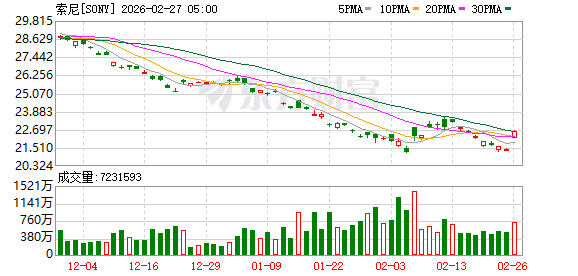
索尼股价大涨7%
Mei Ri Jing Ji Xin Wen· 2026-02-27 00:22
Group 1 - Sony's stock price surged by 7% on February 27 [2]


上证早知道|可回收火箭将密集发射;华为云码道公测版发布;这家公司今日复牌
Shang Hai Zheng Quan Bao· 2026-02-26 22:57
Company News - BeiGene reported a total revenue of 38.205 billion yuan for 2025, representing a year-on-year increase of 40.4%, with product revenue reaching 37.770 billion yuan, up 39.9% year-on-year [7] - Furi Group announced that Anxin Investment has cumulatively increased its stake in the company by 5 million shares, accounting for 0.53% of the total share capital, with an investment amount of approximately 57.6 million yuan [7] - Mindray Electronics plans to issue A-shares to raise no more than 1 billion yuan, with 700 million yuan allocated for high-voltage power semiconductor components and integrated circuit wafer foundry projects, and 300 million yuan for working capital [7] - Purun Co. expects to achieve an operating revenue of 2.32 billion yuan in 2025, a year-on-year increase of 28.62%, while net profit attributable to shareholders is projected to decline by 28.79% to 208 million yuan [7] - ST Dali signed a framework agreement for equipment procurement with a leading new energy company, with a contract value of approximately 88.8794 million yuan, which is expected to positively impact the company's future operating performance [7] Industry Insights - The National Energy Administration has announced the inclusion of 43 projects, including a friendly new energy power station project in Huainan City, Anhui Province, as part of the first batch of pilot projects for enhancing new power system construction capabilities [2] - The Chinese AI model API aggregation platform OpenRouter reported that from February 9 to 15, 2026, the call volume for Chinese models reached 41.2 trillion tokens, surpassing the U.S. models for the first time [6] - The commercial rocket industry in China is entering a period of intensive testing and verification, with multiple reusable rockets scheduled for launches, indicating a shift towards scalable, reusable, and cost-effective solutions [5][4] - The market for AI coding tools is projected to reach a value of 26 billion USD by 2030, driven by advancements in large model programming capabilities and the dual drivers of open-source ecosystems and enterprise payments [3]

机构2月调研近240家上市公司 人形机器人等投资机遇获重视
Zhong Guo Zheng Quan Bao· 2026-02-26 21:09
Group 1: Market Overview - Since February, nearly 240 companies have received institutional research, with over half achieving positive returns during this period [1][3] - The A-share market has maintained a high-level fluctuation, with some companies seeing cumulative gains exceeding 80% [1][4] Group 2: Key Companies and Performance - TianShun Wind Power has been the most favored, receiving 237 institutional research visits and experiencing a nearly 32% increase in stock price since February [2][3] - Other notable companies include NaiPu Mining Machinery, Huanxu Electronics, and Daikin Heavy Industries, each receiving over 100 institutional visits [3] Group 3: Industry Focus - The mechanical equipment and electronics sectors are the primary focus for institutional research, with over 30 companies in each sector being investigated [6] - The basic chemical sector has also gained attention, with a cumulative increase of 18.10% since 2026, ranking fourth among all sectors [7] Group 4: Investment Opportunities - Investment opportunities in humanoid robots and AI infrastructure are highlighted, with recommendations to focus on companies that can capitalize on these trends [6][7] - In the electronics sector, there is a strong interest in AI-related applications, particularly in data processing and AI infrastructure [7] - The basic chemical sector is expected to see continued demand recovery, with leading companies poised for long-term growth [7]

机构2月调研近240家上市公司人形机器人等投资机遇获重视
Zhong Guo Zheng Quan Bao· 2026-02-26 20:28
Core Insights - In February, nearly 240 companies in China have received institutional research, with over half achieving positive returns during this period, and some stocks seeing cumulative gains exceeding 80% [1][2] - The mechanical equipment and electronics sectors are the primary focus of institutional research, with significant attention also on cyclical sectors like basic chemicals [1][5] - Investment opportunities are anticipated in humanoid robots, upstream AI infrastructure, and certain chemical sector stocks that offer high elasticity and dividends [1][6] Company Highlights - TianShun Wind Power has been the most favored company, receiving 237 institutional research visits since February, with its stock price rebounding nearly 32% during this period [1][2] - The company is expected to benefit from accelerated offshore wind project bidding and construction in Guangdong, with plans to enhance its logistics capabilities through local assembly in Europe [2][3] - Other companies like Nipe Mining, Huanxu Electronics, and Daikin Heavy Industries have also attracted significant institutional interest, each receiving over 100 research visits [2] Market Performance - As of February 26, 155 out of the nearly 240 companies that received institutional research reported positive returns, indicating a favorable market sentiment [3][4] - Oulai New Materials has seen a remarkable cumulative gain of 81.11% since February 26, driven by its advancements in high-performance sputtering targets and strong profit support despite rising raw material costs [3][4] Sector Analysis - The mechanical equipment and electronics sectors remain the focal points for institutional investment, with over 30 companies in each sector receiving research attention [5][6] - The basic chemicals sector has gained traction, with a cumulative increase of 18.10% since the beginning of 2026, indicating a robust outlook for leading companies in this space [7]
A50期指和港股全线暴跌、恒生科技指数重挫近3%、A股依然稳定!
Sou Hu Cai Jing· 2026-02-26 16:41
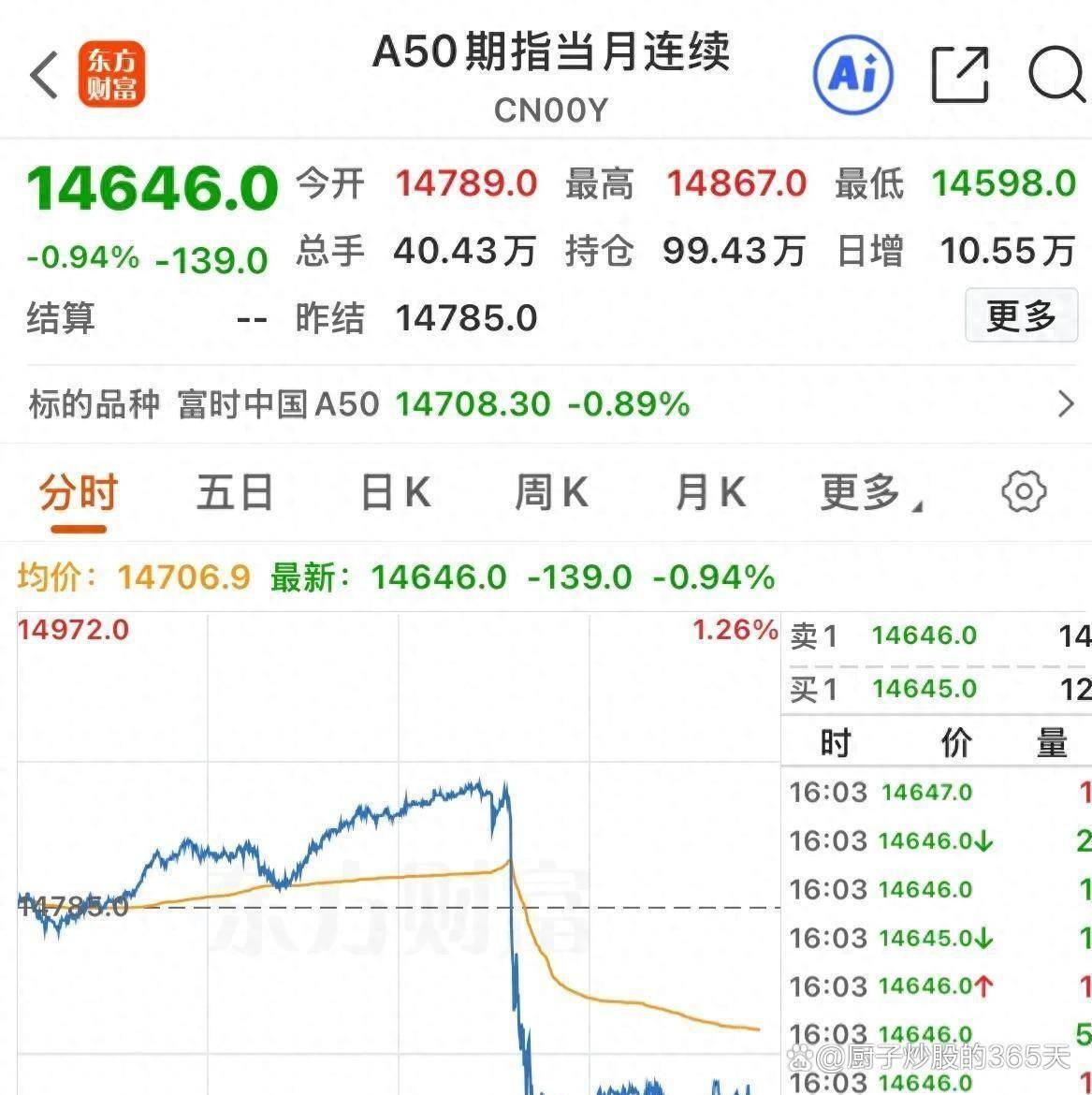
Market Overview - The FTSE China A50 index futures experienced a significant drop, moving from a gain of 0.52% to a loss of 1.13%, reflecting a nearly 1.8% swing within a short period [2] - The A50 index has been on a downward trend for nearly two months, declining from approximately 15670 points to 14664 points, representing a cumulative drop of 6.5% [2] Hong Kong Market Performance - The Hang Seng Index initially rose by 1.05% at the open but closed down 384.7 points, or 1.44%, with the Hang Seng Tech Index falling by 2.87% [3][5] - The Hang Seng Tech Index has dropped over 21% from its peak in October 2025, entering a bear market [5] A-Share Market Dynamics - In contrast to the Hong Kong market, the A-share market showed resilience, with the Shanghai Composite Index closing nearly flat and the Shenzhen Component Index rising by 0.19% [6] - The trading volume in the Shanghai and Shenzhen markets reached 25.566 trillion yuan, an increase of 757 billion yuan from the previous trading day, indicating strong market activity [6] Sector Performance - The A-share market displayed a clear sector rotation, with significant gains in "new productivity" sectors such as hard technology and high-end manufacturing, while traditional sectors like film and real estate faced downward pressure [6][7] - The CPO (Co-Packaged Optics) concept led the market with a gain of 3.87%, supported by positive sentiment from Nvidia's earnings report [7] Capital Flow Insights - There was a notable outflow of over 8 billion yuan from traditional financial sectors, while the AI hardware industry saw a net inflow exceeding 30 billion yuan [9] - The shift in capital from "old economy" sectors to "new economy" sectors is a key driver of the market's divergent performance [9] Technical Market Structure - The technical indicators for the A-share market remain bullish, with key support levels holding firm, indicating a healthy market structure despite recent adjustments [12] - The decoupling of the A-share market from the Hong Kong market highlights a shift towards domestic economic drivers and a focus on technology and innovation [12]
开源晨会0227-20260226
KAIYUAN SECURITIES· 2026-02-26 14:46
Group 1: Financial Engineering and Convertible Bonds - The convertible bond market shows a recent upward trend, with the equal-weight index rising by 2.51% and the high-price index by 2.45% as of February 13, 2026 [5] - The "hundred-yuan conversion premium rate" is at a rolling three-year percentile of 99.30%, indicating that convertible bonds are currently overvalued compared to their underlying stocks [7] - The overall cost-effectiveness of convertible bonds is low, with the median "adjusted YTM - credit bond YTM" at -5.69% as of February 13, 2026 [8] Group 2: AI Industry Insights - NVIDIA reported a revenue of $68.1 billion for FY2026 Q4, a 73% year-on-year increase, driven by a 75% growth in data center revenue [20] - Major cloud service providers are significantly increasing their capital expenditures, with Amazon's Q4 2025 spending at $38.5 billion, a 48% increase year-on-year, and Google’s capital expenditure reaching $27.9 billion, up 95% [21] - The global AI industry is expected to benefit from trends in "light, liquid cooling, domestic computing power, and satellites," with several recommended stocks listed [22] Group 3: Automotive Industry Developments - Bertel's acquisition of a 50.97% stake in Yubei Steering is aimed at enhancing its control and expanding its product offerings in the steering system sector [24] - Yubei Steering, a leading player in the industry, achieved revenues of 3.18 billion yuan in 2025, with a market share of 20% in steering gear sales [25] - The acquisition is expected to strengthen Bertel's position in the chassis sector and capitalize on the transition to steer-by-wire technology [27] Group 4: Real Estate Market Adjustments - Shanghai has announced a reduction in housing purchase restrictions and an increase in housing provident fund loan limits to stimulate the real estate market [31] - The new policies are expected to improve transaction volumes, with January seeing a year-on-year increase of 35.8% in new home sales [32] - The adjustments aim to support first-time buyers and improve market sentiment, potentially leading to a recovery in the housing market [35] Group 5: Food and Beverage Sector Analysis - Yuran Agriculture, a leading player in the livestock sector, is expected to benefit from rising raw milk and beef prices, with projected net profits of 1.367 billion yuan in 2026 [36] - The dairy price cycle is anticipated to stabilize in 2026, benefiting upstream livestock companies as supply constraints tighten [37] - The company’s strategic partnerships and operational efficiencies position it well to capitalize on market trends [38]
