建筑

Search documents
宁夏银川多维联动深化冬季欠薪治理 筑牢农民工薪资权益防线
Zhong Guo Xin Wen Wang· 2025-12-16 12:48
Core Viewpoint - The city of Yinchuan in Ningxia is actively implementing measures to protect the wage rights of migrant workers during the winter wage arrears governance action, recovering over 70 million yuan for more than 5,600 workers [1][2]. Group 1: Actions Taken - Yinchuan has established a joint working mechanism led by the human resources department, with local responsibilities assigned to various districts, and a case management system for significant wage arrears cases [1]. - The city is focusing on source control by integrating real-name management and wage payment into daily inspections, achieving a 95% coverage rate of real-name attendance systems in construction projects [1]. - Legal collaboration among human resources, police, and courts has been enhanced, resulting in the handling of 10 illegal wage collection cases and providing legal aid 1,008 times [2]. Group 2: Monitoring and Enforcement - The city is strengthening dynamic monitoring of high-risk industries, particularly in the service sector and new employment forms, to prevent wage arrears [1]. - A comprehensive online and offline complaint handling system has been established, integrating various channels for workers to report wage issues [2]. - Yinchuan is intensifying efforts to address wage arrears, especially as the New Year and Spring Festival approach, ensuring that workers receive their full wages [2].
中游供需矛盾进一步改善——11月经济数据点评
一瑜中的· 2025-12-16 06:56
Core Viewpoint - The article emphasizes the improvement of supply-demand contradictions in the midstream sector, indicating a potential shift from "strong supply and weak demand" to "weak supply and strong demand" in the coming years [2][3]. Group 1: Midstream Supply-Demand Analysis - The analysis method involves measuring the difference between demand growth and investment growth, where a positive difference indicates alleviation of supply-demand contradictions [2][5]. - Key indicators include upstream demand from material exports and construction investment, midstream demand from machinery exports and equipment investment, and downstream demand from labor-intensive product exports [5][12]. - In November, the midstream demand growth was 8.9%, slightly down from 10.3% in September, while midstream investment growth was 1.3%, down from 4.2% in September, leading to a demand-investment growth difference of 7.6% [6][13]. Group 2: Future Projections - Historical data suggests that the midstream demand-investment growth difference is likely to remain positive, with expectations for the midstream PPI (Producer Price Index) to stop declining and potentially rise by 2026 [3][14]. - The midstream PPI showed a month-on-month increase of 0.04% in November, marking the first positive change since June 2024, indicating a potential upward trend in midstream ROE (Return on Equity) [7][14]. Group 3: November Economic Data Overview - In November, industrial production growth was 4.8%, while service sector production index growth was 4.2%, indicating a slight weakening in supply-side performance [19]. - Consumer retail sales growth was 1.3%, down from 2.9% in October, while exports rebounded to a growth of 5.9% from a decline of 1.1% [19][21]. - Real estate sales area decreased by 17.3% year-on-year, and fixed asset investment saw a decline of 12.0% in November [19][22]. Group 4: Employment and Price Trends - The urban unemployment rate remained stable at 5.1%, with a slight decrease in the unemployment rate for migrant agricultural workers to 4.4% [23]. - The CPI (Consumer Price Index) rose to 0.7% year-on-year, while the PPI fell by 2.2%, indicating ongoing deflationary pressures in the economy [21][22].


享受先进制造业增值税加计抵减应如何填写报表?填写方法
蓝色柳林财税室· 2025-12-16 06:49
Core Viewpoint - The article aims to assist taxpayers in understanding tax policies and procedures, specifically focusing on the key points for filling out the VAT deduction form for advanced manufacturing industries [1]. Group 1: VAT Deduction Form Filling Guidelines - Taxpayers eligible for the additional deduction policy should fill out lines 6 to 8 of the form, reflecting their deduction situation [2]. - The first column "Beginning Balance" should include the previous period's ending balance of the additional deduction amount, which is zero for first-time applicants [3]. - The second column "Current Period Amount" should reflect the additional deduction amount calculated at 5% of the deductible input VAT for the current period [3]. - For enterprises engaged in export business, the "Current Period Amount" will prompt a section to fill in the input VAT corresponding to export business, which cannot be deducted [5]. - The third column "Current Period Adjustment Amount" should be filled with 5% of the amount of input VAT that is reversed during the current period [6]. - The "Current Period Deductible Amount" is calculated as "Beginning Balance" + "Current Period Amount" - "Current Period Adjustment Amount" [8]. - The "Actual Deductible Amount" for the current period is determined based on whether the "Current Period Deductible Amount" is greater than or equal to zero, with two specific scenarios outlined for filling this out [10][11]. - The ending balance is calculated as "Current Period Deductible Amount" - "Actual Deductible Amount," which reflects the remaining additional deduction amount to be carried over to the next period [13]. Group 2: Tax Filing Extensions - Taxpayers can apply for an extension of tax filing under unforeseen circumstances such as natural disasters or public health emergencies that prevent timely filing [18]. - Extensions may also be granted for special financial processing reasons when accounting is not completed, making it difficult to calculate taxable amounts [18]. Group 3: R&D Expense Deduction Policy - Certain industries, including real estate, are not eligible for the additional deduction policy for R&D expenses, as specified by tax regulations [20]. - An example illustrates that a construction company investing in energy-saving technology cannot benefit from the R&D expense deduction due to its classification in the real estate sector [20].

帮主郑重:房价连跌8个月!数据背后的“危”与“机”,中长线视角怎么看?
Sou Hu Cai Jing· 2025-12-15 12:13
Core Viewpoint - The recent data on housing prices indicates a continued decline for the eighth consecutive month, highlighting a significant shift in market dynamics and investor sentiment [1][3]. Market Trends - Housing prices in 70 cities have shown a dual decline both month-on-month and year-on-year, with first-tier cities demonstrating stronger resilience compared to second and third-tier cities, which are under greater pressure [3]. - The downward pressure on new home prices is generally greater than that on second-hand homes, reflecting a broader issue of weak confidence and expectations in the market [3]. Policy Shifts - The focus of government policy has shifted from "de-leveraging and risk prevention" to "risk prevention, market stabilization, and promoting transformation," indicating a more supportive environment for the real estate sector [3]. - Initiatives such as financial support for reasonable financing of real estate companies and optimization of purchase restrictions in key cities aim to transition the market from a "free fall" to a "soft landing" [3]. Investment Strategies - Investors should adopt a "survivor mentality" when selecting real estate stocks, focusing on financially stable companies with low financing costs and high operational efficiency, rather than betting on a broad industry rebound [4]. - Opportunities may arise in the long industrial chain associated with real estate stabilization, particularly in upstream sectors like building materials and home furnishings, as well as downstream areas linked to property management and home appliances [4]. - The emergence of new models, such as affordable housing and urban village renovations, driven by policy support, could create a new market segment, offering stable business growth for related construction and service companies [4]. Conclusion - The recent housing price data serves as a summary of past trends rather than a definitive forecast for the future, signaling the end of an old cycle and the challenging establishment of a new balance [5].

英国政府承诺新增5万个学徒制岗位
Shang Wu Bu Wang Zhan· 2025-12-15 09:56
Group 1 - The UK government is significantly expanding its apprenticeship program, aiming to provide 50,000 apprenticeship positions to address rising youth unemployment [1] - The number of young people starting apprenticeship training has decreased by nearly 40% over the past decade, prompting government action [1] - The government will eliminate the 5% levy for apprentices under 25 and introduce new apprenticeship opportunities in sectors such as artificial intelligence, hospitality, engineering, and defense [1] Group 2 - An additional £820 million will be invested to assist young people on Universal Credit in finding employment [2] - From April 2026, 55,000 fully subsidized internship positions will be launched in six areas with the highest youth unemployment rates, targeting young people who have been on benefits for 18 months or more [2] - The overall goal of the government is to create 350,000 training and work experience opportunities [2]
广发宏观:有效需求不足凸显,政策加力空间打开
GF SECURITIES· 2025-12-15 08:30
Economic Overview - Effective demand remains significantly insufficient, with industrial added value in November increasing by 4.8% year-on-year, slightly down from 4.9% in the previous period[3] - Retail sales growth has notably slowed to 1.3% year-on-year, down from 2.9% previously[3] - Fixed asset investment year-on-year remains stable at approximately -11%, consistent with the previous value of -11.2%[5] Sector Performance - High-tech industry added value rose by 8.4% year-on-year, up from 7.2% previously[4] - Exports showed resilience with a year-on-year growth of 5.9%, recovering from a decline of 1.1%[3] - Real estate sales area decreased by 17.1% year-on-year, an improvement from a 18.6% decline previously, while sales revenue fell by 24.7%, worsening from a 24.1% decline[5] Investment Trends - Fixed asset investment in November decreased by 11.1% year-on-year, with manufacturing investment down by 4.5% and real estate investment down by 30.1%[5] - The construction area for new projects fell by 27.6% year-on-year, while the area under construction dropped by 40%[5] - The total investment in fixed assets for the first 11 months of the year showed a year-on-year decline of 2.6%, with non-real estate fixed asset investment increasing by 0.8%[5] Policy Implications - The central economic work conference highlighted the need to address the "strong supply and weak demand" contradiction and to stimulate investment and consumption[7] - The potential for policy measures to strengthen demand has opened up following the release of November's economic data[7]
反内卷、新周期——能源周期2026投资策略
2025-12-15 01:55
Summary of Key Points from Conference Call Records Industry Overview Chemical Industry - The chemical industry is expected to experience both cyclical and growth opportunities in 2026 due to domestic supply-side reforms and demand-side expansion policies, alongside improved overseas demand. Oil prices are projected to stabilize around $60 per barrel, alleviating inventory pressure on chemicals. [4][12] - Key sectors to focus on include spandex, nylon, and rigid demand sectors like pesticides and fertilizers, particularly those with strong demand resilience. [4] Power Industry - The power industry is segmented into thermal, hydro, nuclear, and renewable energy, each presenting unique investment opportunities. [5][6] - Thermal power's capacity price has increased to over 50%, enhancing profitability, although its share of installed capacity is expected to decline. [5] - Hydro power is benefiting from improved water conditions, while nuclear power is set to experience a production peak between 2026 and 2027, indicating strong growth potential. [6][7][8] Non-Ferrous Metals Industry - The non-ferrous metals index has surged by 78% by the end of 2025, indicating a new upward cycle. Valuations remain within a safe range, with expectations of price increases driven by Fed rate cuts and improved US-China trade relations. [12] - Specific opportunities include increased demand for gold and silver, as well as investment prospects arising from copper supply shortages. [12] Building Materials Industry - The building materials sector is recovering confidence due to factors like the Western Development strategy and anti-involution policies. The fiberglass manufacturing sector has led the market with a 68% increase. [28][29] - Structural investment opportunities are anticipated in 2026, particularly in traditional materials like cement and glass, driven by urban renewal and new energy demands. [29][30] Key Investment Opportunities Lithium Battery Sector - The lithium battery sector is expected to maintain strong growth despite concerns over slowing demand for electric vehicle batteries. The sector is projected to grow at a rate of 10% to 15% in 2026, with significant demand from the energy storage market. [34][35] - Key materials such as electrolyte additives, particularly VC additives, are expected to see price increases due to their sensitivity and tight supply conditions. [37] Gold Market - The passage of the "Great Beauty Act" is anticipated to increase the US fiscal deficit, negatively impacting asset credit and accelerating global central bank gold purchases, supporting gold prices. A 10% increase in gold prices is expected by 2026. [3][14] - A-share gold companies are entering a growth phase in mining output, with performance expected to improve significantly. [14] Construction Sector - The construction industry should focus on urban renewal and major engineering projects, as well as opportunities arising from mergers and acquisitions. [18][27] - Key players in the construction of clean energy projects in the western regions, such as China Power Construction and China Energy Engineering, are recommended for tracking. [20][19] Additional Insights - The hydro power sector is expected to see strong support from improved water conditions, with significant growth potential in the long term. [7] - The nuclear power sector is projected to have a compound annual growth rate of around 10% due to a peak in new production. [8][9] - The building materials sector is expected to benefit from urban renewal policies and the demand for high-quality green materials as the real estate market evolves. [32][33]
全线跳水!日韩股市大跌
Zhong Guo Ji Jin Bao· 2025-12-15 01:26
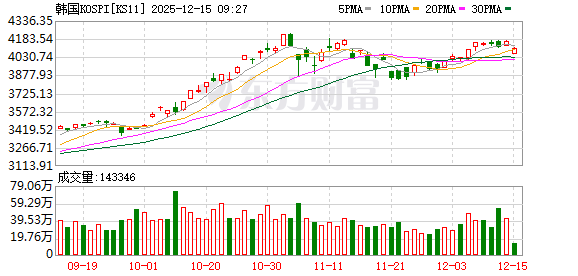
一起来看下日韩股市的最新情况。 韩国股市开盘大跌 12月15日上午,日韩股市大幅走低,首尔综合指数一度大跌2.75%,随后震荡拉升。 【导读】日韩股市大幅走低,首尔综合指数一度大跌2.75% | 首尔综合指数 | | | | | | --- | --- | --- | --- | --- | | 指 HQ.KOSPI | | | | | | 4076.97 -90.19 -2.16% | | | | | | 12-15 08:21:00 | | | | | | 今开 4053.74 最高 4084.30 | | | | | | 昨收 4167.16 最低 4052.65 | | | | | | 分时 園K をK | 日K | 目K | 更多, | | | 均价:4075.34 最新:4076.97 -90.19 -2.16% | | | | | | 4281.67 | | | | 2.75% | | 4167.16 | | | | 0.00% | | 4052.65 | | | | -2.75% | | 08:00 11:15 | | | | 14:30 | | MACD = [12,26,9] MACD : ...
弄潮江海 南通向新
Shang Hai Zheng Quan Bao· 2025-12-14 20:14
"遨游半在江湖里,始觉今朝眼界开。"站在江苏南通狼山之巅极目远眺,江水浩荡,奔流向海,气势磅 礴。 南通,这片江海相拥的土地,曾是中国近代民族工业的重要发祥地之一,以敢为人先的实践点燃了实业 救国的星火,留下了"近代第一城"的历史印迹;曾作为首批14个沿海开放城市之一,以"纺织之乡""建 筑铁军"等名片,在改革开放的春风里激流勇进。如今,站在"十四五"收官与"十五五"启航的历史交汇 点,面对多重战略机遇叠加的天时,"左右逢源""南通好通"的地利,南通正在加快打造江苏高质量发展 重要增长极,建设长三角北翼中心城市,书写跨江向海、通向未来的新篇章。 解码万亿南通产业升级路 ——南通耐心资本何以拔节生长 下个万亿,看海洋 ——南通构筑海洋经济发展新高地 张謇企业家精神何以穿越百年 详见5—8版 稳住"压舱石" 敢摘"未来星" ...

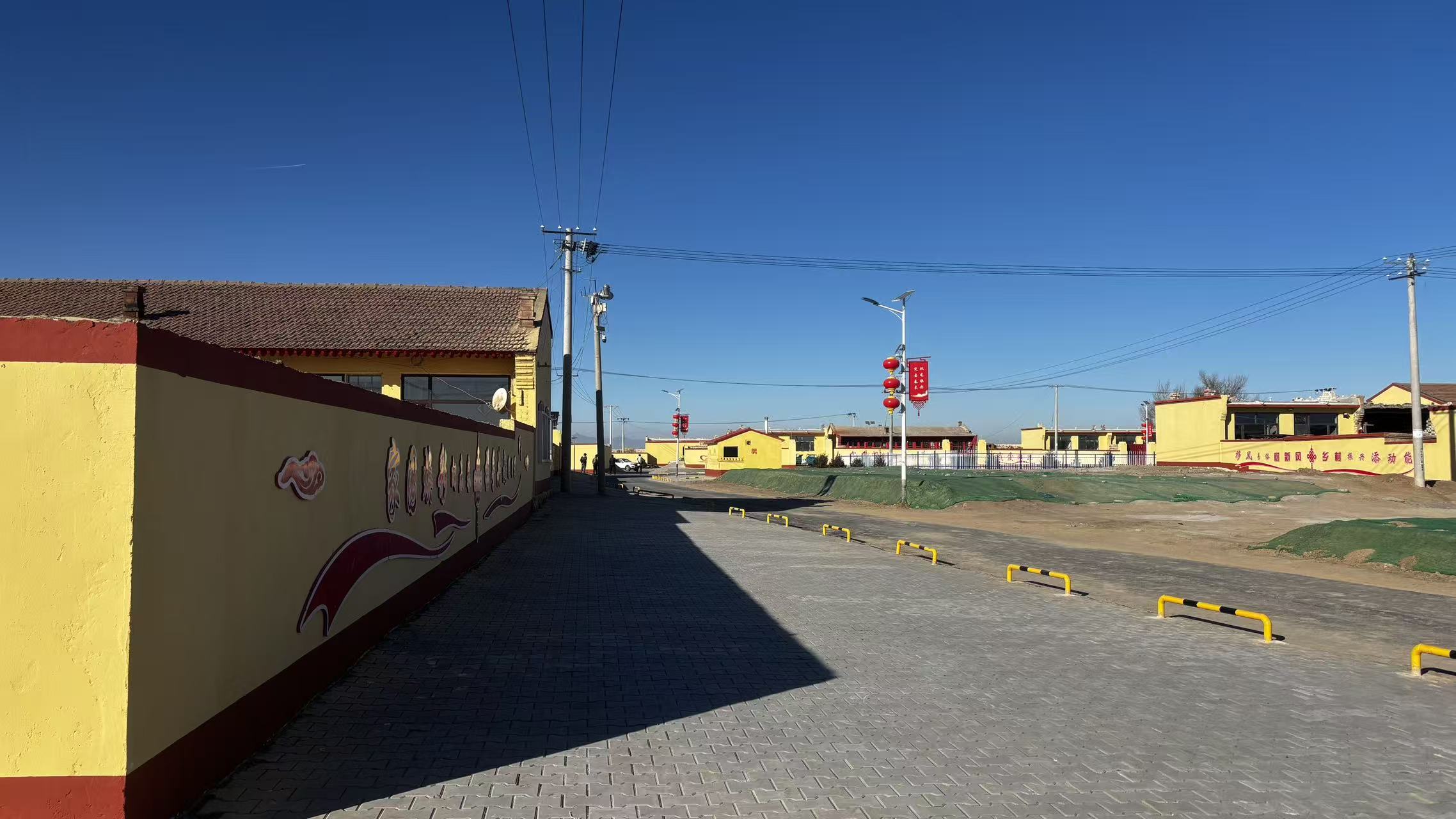
重建家园 温暖过冬 内蒙古包头市土默特右旗:让受灾群众有住处 更有奔头
Yang Shi Wang· 2025-12-14 02:34
Core Points - The Chinese government emphasizes the importance of disaster recovery and ensuring the well-being of affected communities during winter [1] - Multiple joint working groups have been dispatched to severely affected provinces to assess the situation and implement relief measures [1] - The reconstruction efforts in affected areas have been swift, with significant improvements in housing and infrastructure [2][3] Group 1: Disaster Recovery Efforts - The government has organized the safe relocation of affected residents and initiated comprehensive reconstruction efforts by mid-September [2] - By November 15, all reconstruction projects in the four severely affected villages were completed, ensuring proper accommodation for over 3,000 displaced residents [2] - New infrastructure projects include rainwater drainage, sewage treatment, and energy-efficient housing, enhancing the sustainability of the recovery efforts [2] Group 2: Community Support and Livelihood - The local government has implemented a "one household, one plan" approach to provide targeted assistance to 157 households, covering housing, subsidies, employment, and water safety [4] - Residents have been offered public welfare jobs, with monthly wages contributing to their financial stability [6] - The agricultural sector is being supported through insurance claims, with a total compensation amounting to 50.8 million yuan, aimed at restoring agricultural production [6] Group 3: Long-term Development Strategy - The local government is focusing on a comprehensive recovery model that integrates housing security, livelihood development, and long-term governance [3] - Initiatives include land circulation for agriculture and adjustments in industrial structure to support sustainable development [3] - The government aims to ensure that affected communities not only recover but also improve their living standards in the long run [3]