
证券业

Search documents
2025腾冲科学家论坛——“科技+金融”论坛成功举办
清华金融评论· 2025-12-07 11:33
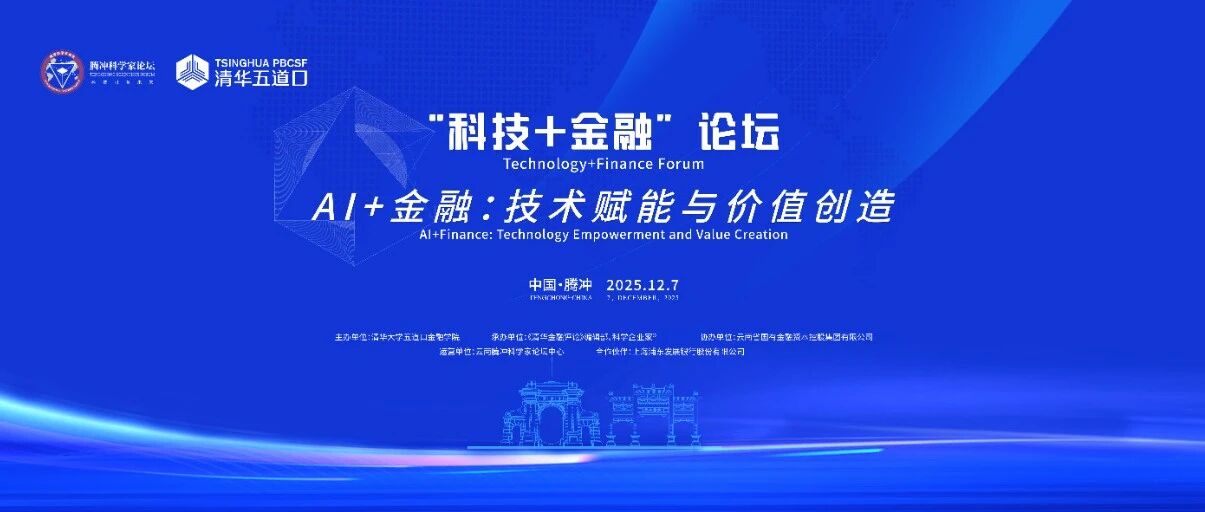
Core Insights - The forum held on December 7, 2025, in Tengchong focused on the theme "AI + Finance: Technology Empowerment and Value Creation" [1] - Key discussions revolved around the integration of AI and finance, and how AI technology is reshaping the financial ecosystem [1] Group 1: Key Speakers and Contributions - Notable speakers included Gu Binglin, an academician from the Chinese Academy of Sciences and former president of Tsinghua University, and Xu Hao, the Vice Governor of Yunnan Province [4] - Keynote speeches were delivered by Zhang Yaping, a researcher at the Kunming Institute of Zoology, and Liang Tao, former vice chairman of the China Banking and Insurance Regulatory Commission [4] Group 2: High-Level Discussions - A high-level dialogue moderated by Professor Tian Xuan featured insights from Ma Weihua, former president of China Merchants Bank, and Hu Jianhua, former managing director of China Merchants Group, discussing the mutual benefits of AI and finance [6] - Topics included the positive interaction between AI and finance, as well as risk governance [6] Group 3: Roundtable Forum - The roundtable forum included discussions on the deep application of AI in the financial sector, leading to the emergence of a new financial industry ecosystem [9] - Participants included Zhang Wei, assistant dean of Tsinghua University’s Wudaokou School of Finance, and other industry leaders who shared insights on the profound changes AI brings to the financial industry [9] Group 4: Organizers and Collaborators - The forum was organized by Tsinghua University’s Wudaokou School of Finance, with support from various institutions including the Yunnan Provincial State-owned Financial Capital Holding Group [9]

七家协会联合发布关于防范涉虚拟货币等非法活动的风险提示|政策与监管
清华金融评论· 2025-12-06 10:28
Core Viewpoint - The article emphasizes the risks associated with virtual currencies and related activities, highlighting that they are not recognized as legal tender in China and warning against illegal financial activities linked to them [1][3][4]. Group 1: Nature of Virtual Currencies - Virtual currencies are not issued by monetary authorities and do not hold the same legal status as national legal tender, thus cannot be circulated as currency within China [1][3]. - Certain virtual currencies, such as "air coins" (e.g., π coin), lack substantial technological innovation and clear commercial applications, leading to significant fraud and market manipulation issues [3][5]. - Stablecoins currently fail to meet customer identification and anti-money laundering requirements, posing risks of being used for money laundering and fraudulent fundraising [3][5]. Group 2: Prohibited Activities - Domestic institutions and individuals engaging in the exchange of legal currency for virtual currencies or issuing and financing real-world asset tokens are involved in illegal financial activities [4][5]. - Member institutions are prohibited from participating in the issuance and trading of virtual currencies and real-world asset tokens, and must not provide any related services [5]. - Financial institutions must conduct thorough customer due diligence to identify potential risks related to virtual currencies and report any suspicious activities to relevant authorities [5]. Group 3: Public Awareness and Caution - The public is urged to remain vigilant against various forms of virtual currency and real-world asset token activities, which are often linked to speculation and fraud [5]. - Individuals should enhance their risk awareness and avoid participating in virtual currency-related activities, including illegal fundraising under the guise of "mining" [5]. - Any suspicious activities related to virtual currencies should be reported to regulatory authorities or law enforcement [5].

存款“不香了”?年轻人理财青睐“新三金”,寻找“可持续的小收益”!
Sou Hu Cai Jing· 2025-12-06 05:12
Core Viewpoint - The trend of young investors shifting towards stable and low-risk financial products, termed "New Three Golds," reflects a broader change in asset allocation strategies in response to declining deposit rates and a desire for more secure investment options [1][6]. Group 1: Investment Trends - Young investors are increasingly favoring diversified asset allocations, moving away from traditional gold jewelry to "New Three Golds," which include money market funds, bond funds, and gold ETFs [3][6]. - As of April, 9.37 million individuals from the post-90s and post-00s generations have adopted the "New Three Golds" strategy on platforms like Alipay [3]. - The shift in investment preferences is driven by a combination of low deposit rates and a growing aversion to investment risks among young people [6]. Group 2: Deposit Flow and Market Dynamics - Recent adjustments in deposit products by banks, including the cancellation of high-interest long-term deposits, indicate a significant change in the banking landscape [4]. - The People's Bank of China reported an increase of 23.32 trillion yuan in RMB deposits over the first ten months of the year, with household deposits rising by 11.39 trillion yuan [4]. - The trend of reallocating savings from banks to other assets reflects a broader reconfiguration of household asset management strategies [5]. Group 3: Banking Sector Transformation - The banking industry is undergoing a transformation, shifting from a focus on scale to optimizing structure and enhancing service offerings in response to sustained pressure on net interest margins [7][9]. - Banks are increasingly adopting a customer-centric approach, emphasizing comprehensive financial solutions to retain clients and stabilize funding sources [7]. - The ongoing pressure on net interest margins is pushing banks to diversify into wealth management, investment banking, and non-interest income-generating activities [9].
七家权威协会联合行动:虚拟货币相关业务一律禁止
Sou Hu Cai Jing· 2025-12-06 04:46
Core Viewpoint - A comprehensive regulatory action has been initiated in China to prohibit all virtual currency-related activities, marking a significant response to the rapid rise of concepts like stablecoins and RWA tokens under the guise of financial innovation [2][5]. Group 1: Regulatory Actions - The joint statement from seven major financial associations in China establishes a strict regulatory framework, clearly delineating the boundaries of what is prohibited across various sectors including banking, securities, and internet finance [5][6]. - Financial institutions, particularly banks and payment agencies, are mandated to refrain from providing any services related to virtual currency transactions, effectively cutting off the funding channels for such activities [6][7]. - Securities, funds, and futures institutions are explicitly banned from engaging in any activities that could facilitate virtual currency trading, thereby preventing the infiltration of virtual currencies into the formal financial market [6][7]. Group 2: Risks Associated with Virtual Currencies - Virtual currency activities have evolved beyond mere investment risks, now encompassing illegal fundraising, pyramid schemes, and money laundering, which have been identified as significant threats [3][4]. - Specific examples, such as the π token, illustrate how these schemes operate under deceptive premises, leading to substantial financial losses for investors [3][4]. - Stablecoins, despite claims of price stability, have been flagged for failing to meet regulatory requirements for customer identification and anti-money laundering, making them tools for illicit activities [4]. Group 3: Implications for the Financial Market - The regulatory measures reflect a broader strategy to maintain financial stability by addressing the cross-industry risks posed by virtual currencies, which have been shown to disrupt monetary sovereignty and financial oversight [4][8]. - The announcement serves as a clear signal to the market that there is no room for compliance in virtual currency-related activities, aiming to correct public misconceptions and curb speculative behaviors [8][9]. - The regulations are designed not to stifle technological innovation but to ensure that such innovations remain within legal boundaries, promoting healthy development in compliant areas like supply chain finance and cross-border payments [9].

外卖推荐性国标落地,摩尔线程中一签赚近27万 | 财经日日评
吴晓波频道· 2025-12-06 00:30
Group 1: Global Economic Outlook - Major global economies are expected to end their interest rate cuts by the end of 2026, with the OECD predicting only two more rate cuts by the Federal Reserve, bringing the rate down to 3.25%-3.50% [2] - The European Central Bank is set to begin its easing cycle in June 2024, with a total of eight rate cuts anticipated [2] - Japan is experiencing a unique tightening cycle, potentially accelerating rate hikes to counter inflation pressures from new government policies [3] Group 2: China's Monetary Policy - The People's Bank of China conducted a 10 trillion yuan reverse repurchase operation, indicating a focus on maintaining liquidity in the market [4] - Despite the need for more aggressive monetary policy due to slowing economic growth, the central bank has remained silent on interest rate cuts, emphasizing long-term policy adjustments [5] Group 3: E-commerce and Delivery Standards - New national standards for food delivery platforms have been implemented, focusing on the rights of delivery personnel and ensuring fair labor practices [6] - The standards require platforms to calculate delivery times based on a maximum speed of 15 km/h for electric bike riders, which may impact delivery efficiency [7] Group 4: Real Estate Market Trends - The second-hand housing market in major cities like Beijing, Shanghai, Guangzhou, and Shenzhen showed significant increases in transaction volumes in November, driven by demand for affordable housing [8] - The overall market remains in a state of price-volume exchange, with some cities showing signs of price stabilization, but the recovery foundation is still fragile [9] Group 5: E-sports Industry Growth - The Chinese e-sports industry is projected to generate 29.331 billion yuan in revenue by 2025, with a year-on-year growth of 6.4% [10] - Live streaming continues to dominate revenue sources, accounting for over 80% of total income, indicating a reliance on consumer engagement [10][11] Group 6: Meta's Strategic Shift - Meta's CEO Mark Zuckerberg plans to cut the budget for the metaverse project by up to 30%, shifting focus towards AI and related hardware products [12] - The metaverse sector has seen slow technological advancement, leading to a strategic pivot towards AI, which presents clearer business opportunities [12] Group 7: Stock Market Performance - The stock market experienced a rebound, with significant gains in the Shanghai Composite Index and the ChiNext Index, driven by expectations of potential interest rate cuts [14] - The trading volume increased significantly, indicating active market participation and a potential shift in investor sentiment [14][15]

12.4债市午盘,利率债大幅下跌,投资者心凉意冷
Sou Hu Cai Jing· 2025-12-05 22:20
Group 1 - The bond market is experiencing a significant downturn, with the yield on 10-year government bonds rising over 3 basis points in the morning, indicating a bearish sentiment among investors [1][3] - Various types of bonds, including government bonds, credit bonds, and interbank certificates, are all trending downward, while the stock market remains relatively stable with a slight increase of 0.04% in the Shanghai Composite Index [3] - The liquidity in the market is tightening, as evidenced by the weighted average rate of DR007 being around 1.42% at the beginning of the month, and a net withdrawal from the open market for five consecutive trading days, shifting sentiment from loose to neutral [3] Group 2 - There is a noticeable increase in transaction volume, signaling a significant sell-off of government bonds, with banks and insurance companies taking the opportunity to increase their positions while funds and brokerages are primarily selling [4] - The trading sentiment is declining, with both government and credit bond transaction ratios falling below 50%, indicating a lack of enthusiasm in the market [5] - The performance of pure bond funds is generally poor, particularly with 30-year government bonds experiencing significant volatility, while mixed bond funds show a mixed performance, suggesting a shift in market dynamics [7][9]

天津市委金融办举行“金融走进天开园”活动
Zhong Guo Fa Zhan Wang· 2025-12-05 16:10
搭建合作桥梁,促进多维共建。资本市场服务联盟成员单位现场与天开园运营机构、有关政府部门和行 业协会及科技型企业代表签署战略合作协议10余项。天津市科技金融路演中心分别与3家国有大型商业 银行签署框架合作协议。园区企业代表进行现场推介,与金融机构深入交流促进精诚合作。 宣介政策案例,精准服务对接。市委金融办、人民银行天津市分行、渤海银行、天津银行、天津医药集 团、天津创投、海河产业基金、人保财险天津分公司、天津OTC等从金融创新服务科技创新和产业创 新、科技创新债券、股权融资、科技保险等维度进行专题宣讲,解读金融政策、推广应用金融工具,获 得与会企业热烈反响。 下一步,天津市委金融办将会同各有关单位,持续开展"金融走进"系列活动,充分发挥天津市资本市场 服务联盟和科技金融路演中心等载体功能作用,为以天开园为代表的科创园区和广大科技型企业提供综 合金融支持,以金融之为更好赋能科技自立自强与新质生产力培育发展。 中国发展网 李揽月 记者朱波报道 为深入学习贯彻党的二十届四中全会精神,全面贯彻落实习近平总书 记关于金融工作的重要论述和视察天津重要讲话精神,认真落实市委、市政府关于以金融创新服务赋能 高质量发展、推动科 ...
日元加息,全球资产即将巨震!股市,黄金等都会被冲击...
Sou Hu Cai Jing· 2025-12-05 14:02
Core Viewpoint - Japan is set to initiate a historic interest rate hike in December, which is expected to have a significant impact on global capital markets, comparable to a nuclear bomb in the investment landscape [1]. Group 1: Impact on Global Markets - The immediate effects will be felt in the US dollar, US stocks, gold, and Bitcoin, all of which are dollar-denominated assets [1]. - Changes in the dollar and dollar-denominated assets will transmit to other countries' investment markets, including China's RMB and RMB-denominated stocks [1]. - The current yield on Japan's 10-year government bonds has reached 1.946%, the highest since August 2007, marking a significant increase from -0.28% six years ago, a rise of 224 basis points [1]. Group 2: Interest Rate Comparisons - Japan's 10-year government bond yield is now higher than China's, which stands at 1.8%, indicating a significant shift in the interest rate landscape [6]. - This inversion of rates suggests that Japan, once known for its low rates, is now in a position where China has become the country with the lowest interest rates globally [6][8]. Group 3: Debt and Economic Implications - Japan's national debt, which is 250% of its GDP, poses a risk as the country moves to normalize interest rates, potentially leading to severe economic consequences [8]. - The scale of Japan's debt is comparable to major global asset bubbles, making it a significant player in global finance [7]. Group 4: Global Capital Flow Dynamics - The anticipated interest rate hike may trigger a massive sell-off of US stocks, bonds, Bitcoin, and gold as global investors rush to repay debts incurred through yen carry trades [8][9]. - The recent fluctuations in the US stock market and other assets can be attributed to the impending changes in Japan's monetary policy [8]. Group 5: Currency Valuation Effects - The expected appreciation of the yen due to the interest rate hike will lead to a depreciation of the dollar, which in turn will affect other currencies, including the RMB [9][13]. - The shift in capital flows may lead to a reevaluation of asset pricing globally, particularly for dollar-denominated assets [13]. Group 6: Future Outlook - The interest rate hike is not expected to be a one-time event but rather the beginning of a new cycle of rate increases in Japan, which will increasingly influence global markets [17]. - The transition from Japan's low-rate environment to a higher rate landscape may create opportunities for RMB to replace yen in carry trades [20].

七家协会联合发布风险提示,事关防范涉虚拟货币等非法活动
Qi Huo Ri Bao· 2025-12-05 13:31
Core Viewpoint - The Chinese financial regulatory authorities have issued a risk warning regarding virtual currencies and related illegal activities, emphasizing that virtual currencies are not legal tender and warning the public against participating in such activities [1][4][5]. Group 1: Regulatory Actions - On December 5, multiple financial associations in China jointly released a risk warning to prevent illegal activities related to virtual currencies [1]. - The warning highlights that virtual currencies are not issued by monetary authorities and do not have the same legal status as legal tender, thus cannot be circulated or used within China [4]. Group 2: Risks Associated with Virtual Currencies - Recent trends show a rise in illegal activities related to virtual currencies, including illegal fundraising and Ponzi schemes, often disguised as stablecoins or asset-backed tokens [4]. - Specific tokens like π coin are identified as lacking substantial technological innovation and clear commercial applications, leading to significant fraud and market manipulation risks [4]. - The warning outlines that stablecoins currently do not meet requirements for customer identity verification and anti-money laundering, posing risks of being used for money laundering and illegal fundraising [4]. Group 3: Prohibitions for Financial Institutions - Domestic institutions and individuals are prohibited from engaging in activities related to the exchange of legal tender for virtual currencies and the issuance of asset-backed tokens [5][6]. - Financial institutions, including banks and payment service providers, are instructed not to offer any services related to virtual currencies or asset-backed tokens, including mining operations [6]. Group 4: Public Awareness and Precautions - The public is urged to remain vigilant against various forms of virtual currency and asset-backed token activities, which are often associated with speculation and illegal activities [7]. - Individuals are advised to enhance their risk awareness and avoid participating in any virtual currency-related activities, including those disguised as mining operations [7].
2026年债市展望:从利率比价视角看当前债市
Shanxi Securities· 2025-12-05 11:51
Report Summary 1. Report Industry Investment Rating - Not mentioned in the provided content. 2. Core Viewpoints - Interest rates and their price - ratio relationships are important for macro - economic equilibrium and resource allocation. Different financial instruments form price - ratio relationships, and through the arbitrage mechanism, funds flow to higher - return areas, guiding investment and financing activities and resource allocation [2]. - Maintaining a reasonable interest rate price - ratio relationship is necessary for the smooth transmission of monetary policy. In the real world, the price - ratio relationship may be imbalanced, hindering the effectiveness of monetary policy [3]. 3. Summary of Related Catalogs Five important interest rate price - ratio relationships - **Relationship between central bank policy rates and market rates**: In a normal situation, short - term money market rates revolve around the policy rate center. In early 2025, the DR007 rate deviated from the 7 - day reverse repurchase rate, but now the price - ratio relationship is reasonable. In the future, the guiding role of policy rates on market rates will be strengthened [4]. - **Relationship between commercial banks' asset - end and liability - end rates**: Deposit rates are the main liability cost, and loan rates are the main asset yield. Before 2024, their trends deviated, narrowing the net interest margin. After 2024, the pressure was relieved, stabilizing the relationship and increasing the space for counter - cyclical monetary policy adjustment [5]. - **Relationship between different types of asset yields**: There are differences between loan rates and bond yields. Bond yields are more market - oriented and may deviate from loan rates. For the same entity, the cost of bond financing and loan rates should not differ too much [5]. - **Relationship between different - term rates**: The difference between short - term and long - term rates reflects the term premium. Currently, the term spread of Treasury bond yields is still narrow, and the yield curve may face steepening pressure. The odds of long - bond rate decline are relatively limited [6]. - **Relationship between different - risk rates**: The difference in financing costs of different credit - rated entities reflects the risk premium. It is unreasonable and unsustainable for corporate financing rates to be lower than Treasury bond yields [6]. 2026 Bond Market Outlook - The guiding role of policy rates on market rates will be strengthened. The long - end bond positions are still crowded, and the long - bond rate decline odds are limited, suitable only for trading - oriented funds. Short - term varieties are more valuable and suitable for allocation - oriented funds [6].