黑色金属冶炼

Search documents
广发早知道:汇总版-20250612
Guang Fa Qi Huo· 2025-06-12 01:05
Report Industry Investment Ratings No relevant information provided. Core Views of the Report - The overall market shows a complex trend with different performances in various sectors. In the stock index futures market, the major financial sector leads the upward movement, and the stock index rebounds comprehensively. In the bond market, the short - term uncertainty of treasury bond futures weakens, and the trend is relatively strong. In the precious metals market, gold rises due to factors such as lower - than - expected US inflation and Middle - East geopolitical tensions. In the commodity futures market, different metals and agricultural products have their own supply - demand and price trends [2][5][8]. Summary by Directory Financial Derivatives - Financial Futures Stock Index Futures - **Market Situation**: On Wednesday, major indices opened higher and closed higher. The Shanghai Composite Index rose 0.52% to 3402.32 points. The four major stock index futures contracts also rose, with IF2506 and IH2506 rising 0.89% and 0.79% respectively, and IC2506 and IM2506 rising 0.75% and 0.83% respectively. The large - financial sector strengthened, and the basic metals, insurance, and automobile sectors led the gains, while the daily chemical, port, and pharmaceutical sectors declined [2][3]. - **News**: In domestic news, the Sino - US economic and trade consultation mechanism's first meeting made progress. Overseas, the latest US inflation data remained moderate, with the May CPI rising 2.4% year - on - year and 0.1% month - on - month [3]. - **Operation Suggestion**: The index has stable support below but faces pressure to break through above. It is recommended to sell put options on the CSI 1000 index with an exercise price around 5800 in July to collect option premiums [4]. Treasury Bond Futures - **Market Performance**: Treasury bond futures closed up across the board. The 30 - year, 10 - year, 5 - year, and 2 - year main contracts rose 0.23%, 0.06%, 0.07%, and 0.02% respectively. The yields of major interest - rate bonds in the inter - bank market declined [5]. - **Funding**: The central bank conducted 1640 billion yuan of 7 - day reverse repurchase operations on June 11, with an operating rate of 1.40%. The net withdrawal on the day was 509 billion yuan. The short - term inter - bank market interest rate was slightly affected, and the long - term capital interest rate was slightly higher [5][6]. - **Policy**: The Sino - US economic and trade consultation mechanism's first meeting reached a framework consensus. - **Operation Suggestion**: The short - term uncertainty of treasury bond futures weakens. If there are no sudden changes in trade negotiations this week, the treasury bond futures may continue to fluctuate strongly. In the medium - to - long - term, pay attention to the capital situation in mid - to - late June. Unilateral strategy: appropriately allocate long positions on dips. For the spot - futures strategy, pay attention to the TS2509 contract's positive arbitrage strategy. For the curve strategy, there is more room to steepen the curve in the medium - term [6][7]. Financial Derivatives - Precious Metals - **Market Review**: US inflation growth was lower than expected, and Trump continued to call on the Fed to cut interest rates. The Middle - East situation heated up, driving up the price of gold. The international gold price rose 0.97% to $3355.005 per ounce, while the international silver price showed a different trend, closing at $36.215 per ounce with a 0.85% increase [9][11]. - **Outlook**: In the context of de - dollarization, the long - term upward trend of gold remains unchanged. Currently, trade negotiations and geopolitical conflicts disturb the market. Gold is expected to fluctuate within the range of $3200 - $3400 per ounce in the short - term. It is recommended to continuously sell out - of - the - money gold option straddles to earn time value. For silver, pay attention to the flow of speculative funds [11]. Financial Derivatives - Container Shipping Index (European Line) - **Spot Quotes**: As of June 11, the spot quotes of major shipping companies showed different ranges. The SCFIS European line index rose 0.5% as of June 2, and the SCFI composite index rose 30.68% as of May 30 [13]. - **Fundamentals**: As of June 10, the global container shipping capacity increased by 8.4% year - on - year. The demand in the eurozone and the US showed certain trends in the manufacturing and service sectors [14]. - **Logic**: The futures market fluctuated. The 90 - day tariff freeze period will be extended, which is beneficial to the 08 contract. If shipping companies raise spot prices, the 08 contract may rise. - **Operation Suggestion**: Consider buying the main contract on dips, with the price expected to fluctuate between 1900 - 2200 [14]. Commodity Futures - Non - Ferrous Metals Copper - **Spot**: As of June 11, the average price of SMM electrolytic copper and SMM Guangdong electrolytic copper increased, but the spot trading weakened due to high prices [15]. - **Macro**: The spread between COMEX and LME widened again, and the US continued to replenish copper stocks, which boosted copper prices [15]. - **Supply**: The supply of copper concentrate is expected to be restricted, and the production of refined copper in May increased. It is expected to decrease slightly in June [16]. - **Demand**: The processing and terminal demand of copper showed different trends. The short - term domestic demand has resilience, but the "rush - to - export" demand may lead to pressure on the demand side in Q3 [17]. - **Inventory**: COMEX inventory continued to increase, while domestic inventory decreased slightly [17]. - **Logic**: The combination of "strong reality + weak expectation" makes the copper price fluctuate in the short - term. - **Operation Suggestion**: The main contract is expected to fluctuate between 77000 - 80000 [18]. Zinc - **Spot**: On June 11, the average price of SMM 0 zinc ingots increased, but the spot trading was mediocre [18]. - **Supply**: The supply of zinc ore is expected to be loose, and the production of refined zinc in May decreased slightly and is expected to increase in June [19][20]. - **Demand**: The initial consumption of zinc showed a slight recovery, but the terminal demand was expected to be weak after the peak season [21]. - **Inventory**: Domestic social inventory increased, while LME inventory decreased slightly [22]. - **Logic**: In the medium - to - long - term, zinc is in a supply - loose cycle. The zinc price may maintain a high - level shock or decline. - **Operation Suggestion**: The main contract is expected to fluctuate between 21000 - 23000 [22]. Tin - **Spot**: On June 11, the price of SMM 1 tin increased, and the spot premium remained unchanged. The actual trading was light [23]. - **Supply**: The supply recovery progress was slow, and the supply of tin ore was tight. The ban on tin ore transportation in Thailand may affect the domestic supply [23][25]. - **Demand and Inventory**: The solder开工 rate increased slightly in April, but the demand is expected to be weak in the future. The inventory decreased [24]. - **Logic**: The slow supply recovery and improved macro - sentiment drive up the tin price, but the demand is expected to be weak. - **Operation Suggestion**: Adopt a short - selling strategy after the sentiment stabilizes [25]. Nickel - **Spot**: As of June 11, the average price of SMM1 electrolytic nickel decreased slightly, while the average price of imported nickel increased slightly [26]. - **Supply**: The production of refined nickel is at a relatively high level, and the monthly production is expected to decline slightly [26]. - **Demand**: The demand for electroplating and alloys is relatively stable, but the demand for stainless steel and nickel sulfate is weak [26]. - **Inventory**: Overseas inventory remained high, while domestic social inventory decreased slightly [27]. - **Logic**: The macro - situation is temporarily stable, and the cost support of refined nickel is slightly loose. The medium - term supply is loose, and the short - term market lacks driving force. - **Operation Suggestion**: The main contract is expected to fluctuate between 118000 - 126000 [28]. Stainless Steel - **Spot**: As of June 11, the price of 304 cold - rolled stainless steel increased slightly, and the basis decreased [29]. - **Raw Materials**: The supply of nickel ore was still tight, the price of nickel iron was weak and stable, and the price of chrome iron was weak [29][30]. - **Supply**: The production of stainless steel in June is expected to be slightly higher than that in May, and the overall supply is in an oversupply pattern [30]. - **Inventory**: Social inventory decreased, and the futures inventory decreased [30]. - **Logic**: The stainless steel market is affected by the cost and demand. The short - term supply - demand contradiction still exists, and the market is expected to fluctuate weakly. - **Operation Suggestion**: The main contract is expected to fluctuate between 12400 - 13000 [31]. Lithium Carbonate - **Spot**: As of June 11, the price of battery - grade lithium carbonate increased slightly, while the price of lithium hydroxide decreased slightly [31]. - **Supply**: The supply of lithium carbonate is still at a relatively high level, and the supply pressure is still obvious [32]. - **Demand**: The demand for lithium carbonate is relatively stable, but the downstream is entering the off - season, and the demand may face pressure [32]. - **Inventory**: The overall inventory of lithium carbonate increased last week, with the upstream and trading inventory increasing and the downstream inventory decreasing [33]. - **Logic**: The futures price of lithium carbonate rose due to market sentiment, but the fundamentals have not changed significantly. The short - term market still has pressure. - **Operation Suggestion**: Observe the performance around 62,000 yuan first [34][35]. Commodity Futures - Black Metals Steel - **Spot**: The spot price of steel was stable with a slight increase, and the basis weakened [36]. - **Supply**: The steel production decreased slightly from the high level, and the production of hot - rolled coils increased [36]. - **Demand**: The apparent demand for steel decreased, affected by the off - season and tariffs [37]. - **Inventory**: The steel inventory was approaching the inflection point of accumulation, and the hot - rolled coil inventory increased [38]. - **Cost and Profit**: The cost support of steel was weak, and the profit of different steel products varied [39]. - **View**: The steel price rebounded recently, but the overall demand is expected to be weak. Consider short - selling on rebounds [40]. Iron Ore - **Spot**: The price of mainstream iron ore powder decreased slightly [41]. - **Futures**: The iron ore futures price decreased slightly [41]. - **Basis**: The basis of PB powder was 57 yuan per ton [41]. - **Demand**: The daily average pig iron production decreased slightly, and the blast furnace operating rate decreased [41]. - **Supply**: The global iron ore shipment increased, and the arrival volume at Chinese ports increased [41][42]. - **Inventory**: The port inventory of iron ore decreased, and the steel mill inventory decreased [42]. - **View**: The short - term iron ore price is expected to fluctuate weakly, and the medium - to - long - term is bearish [42]. Coking Coal - **Futures and Spot**: The coking coal futures price fluctuated strongly, while the spot price was weak [43][45]. - **Supply**: The domestic coal mine production decreased slightly, and the Mongolian coal price decline slowed down [45]. - **Demand**: The coking plant operating rate decreased slightly, and the downstream demand still had some resilience [44][46]. - **Inventory**: The coal mine inventory increased, and the downstream inventory was at a medium level [44][46]. - **View**: The coking coal futures price is expected to rebound, but the spot fundamentals are lagging. Adopt an interval operation strategy [45][46]. Coke - **Futures and Spot**: The coke futures price fluctuated strongly, while the spot price was weak [47][48]. - **Supply**: The production of coke decreased slightly, affected by environmental protection [48]. - **Demand**: The demand for coke decreased slightly, and the blast furnace operating rate continued to decline [48]. - **Inventory**: The coking plant inventory increased, the port inventory decreased, and the steel mill inventory decreased [48]. - **View**: The coke futures price is expected to rebound, but the spot fundamentals are still loose. Adopt an interval operation strategy [48]. Ferrosilicon - **Spot**: The price of ferrosilicon in the main production areas was stable [49]. - **Futures**: The ferrosilicon futures price was stable [49]. - **Cost and Profit**: The cost of ferrosilicon was difficult to stabilize, and the profit was negative [49][50]. - **Supply**: The production of ferrosilicon increased, mainly due to the resumption of production in Ningxia [50]. - **Demand**: The demand for ferrosilicon in steelmaking was expected to decline slightly in June, and the non - steel demand was weak [50]. - **View**: The supply - demand contradiction of ferrosilicon increased, and the price is expected to follow the coal price [50]. Manganese Silicon - **Spot**: The price of manganese silicon in the main production areas was stable [51]. - **Futures**: The manganese silicon futures price decreased slightly [51]. - **Cost**: The cost of manganese silicon was relatively high, and the profit was negative [51]. - **Supply**: The production of manganese silicon increased slightly, and the supply pressure still existed [52]. - **Demand**: The demand for manganese silicon in steelmaking decreased slightly, and the overall demand was relatively stable [53][54]. - **View**: The supply pressure of manganese silicon still exists, and the price is expected to follow the coal price [55]. Commodity Futures - Agricultural Products Meal - **Spot Market**: The price of domestic soybean meal increased slightly, and the trading volume increased significantly. The price of rapeseed meal increased slightly, and the trading volume was 4200 tons [56]. - **Fundamentals**: The US may have heavy rainfall, which may affect soybean production. Brazil's soybean production and export are expected to be high [56][57]. - **Market Outlook**: The Sino - US trade negotiation may ease the market sentiment, and the domestic soybean meal price is expected to fluctuate strongly, but be cautious about chasing the rise [57]. Live Pigs - **Spot Situation**: The spot price of live pigs fluctuated slightly, with different trends in different regions [58][59]. - **Market Data**: The profit of live pig breeding varied by scale, and the secondary fattening sales ratio decreased [59]. - **Market Outlook**: The live pig market supply - demand situation improved slightly, but the demand was weak due to hot weather. The market is expected to fluctuate [59]. Corn - **Spot Price**: The price of corn in the northeast and north - central regions increased slightly, and the port price also increased [60]. - **Fundamentals**: The inventory of corn in Guangdong Port decreased, and the inventory in the northern four ports decreased [60][61]. - **Market Outlook**: The price of corn is expected to fluctuate at a high level, affected by the supply - demand situation and the wheat price [61]. Sugar - **Market Analysis**: The global sugar supply is expected to be loose, and the international sugar price is expected to fluctuate weakly. The domestic sugar price is supported by high sales and low inventory, and is expected to fluctuate at a low level [62].
申万宏观·周度研究成果(5.17-5.23)
赵伟宏观探索· 2025-05-24 15:09
Group 1 - The article discusses the monitoring framework for the economic impact of tariffs in the U.S., focusing on trade, prices, and risks [6] - It highlights the significant effects of tariffs on the Producer Price Index (PPI) and the support for the core Consumer Price Index (CPI) due to improved consumer demand [18] - The article emphasizes the need for a comprehensive approach to address "involution" in various industries, identifying sectors that may be caught in this competitive spiral [8][27] Group 2 - The analysis of April economic data indicates a transition from strong "old forces" to a recovery phase for "new forces" in the economy [15] - The article points out the challenges in service consumption recovery, which is facing a supply-demand dilemma beyond just income factors [11] - It notes the differentiation in shipping prices and the stable operation of industrial production, alongside improvements in infrastructure construction [24]


申万宏观·周度研究成果(5.17-5.23)
申万宏源宏观· 2025-05-24 09:48
Deep Dive - The article discusses a monitoring framework for assessing the economic impact of tariffs in the U.S., focusing on three main modules: trade, prices, and risks [6]. Hot Topics - The concept of "anti-involution" is introduced, highlighting the government's new approach to address "involution-style" competition, identifying industries potentially caught in this phenomenon [8]. - The article examines the blind spots affecting consumer recovery, noting that while goods consumption is returning to normal, service consumption faces supply-demand challenges [11]. Economic Data Review - The analysis indicates that the previous strong "old forces" in the economy are entering a decline phase, while "new forces" continue to build momentum for recovery [15]. - The fiscal data review suggests that there is still room for acceleration in fiscal policy, with tariffs significantly impacting PPI, but improving consumer demand providing substantial support for core CPI [18]. High-Frequency Tracking - The article reports on the recent U.S. CPI data, which was weaker than market expectations, while retail sales showed stronger performance [20]. - Domestic industrial production remains stable, with improvements in infrastructure projects, although shipping prices are showing divergent trends [24]. Policy Insights - The article outlines recent policy measures aimed at maintaining fair competition in the market and addressing "involution-style" competition [27]. Top Charts - The discussion on the "irreplaceability" of Chinese manufacturing highlights certain phenomena that demonstrate this characteristic [29].

广发早知道:汇总版-20250521
Guang Fa Qi Huo· 2025-05-21 01:58
广发早知道-汇总版 广发期货研究所 电 话:020-88830760 E-Mail:zhaoliang@gf.com.cn 目录: 金融衍生品: 金融期货: 股指期货、国债期货 贵金属: 黄金、白银 集运指数 商品期货: 有色金属: 铜、锌、镍、不锈钢、锡、碳酸锂 黑色金属: 钢材、铁矿石、焦煤、焦炭、铁合金 农产品: 油脂、粕类、玉米、生猪、白糖、棉花、鸡蛋、花生、红枣、苹果 能源化工: 原油、PTA、乙二醇、苯乙烯、短纤、尿素、瓶片、烧碱、PVC、LLDPE、 PP 特殊商品: 橡胶、玻璃纯碱、工业硅、多晶硅 2025 年 5 月 21 日星期三 投资咨询业务资格: 证监许可【2011】1292 号 组长联系信息: 张晓珍(投资咨询资格:Z0003135) 电话:020- 88818009 邮箱:zhangxiaozhen@gf.com.cn 刘珂(投资咨询资格:Z0016336) 电话:020-88818026 邮箱:qhliuke@gf.com.cn 叶倩宁(投资咨询资格:Z0016628) 电话:020- 88818017 邮箱:yeqianning@gf.com.cn 周敏波(投资咨询资格:Z00 ...
【申万宏观 | 热点思考】“反内卷”的新意?
赵伟宏观探索· 2025-05-20 16:01
Core Viewpoint - The article emphasizes the need for "anti-involution" measures in various industries due to increasing competition and supply-demand imbalances, particularly in the context of government policies aimed at fostering a more sustainable and efficient market environment [1][2][20]. Group 1: Reasons for Emphasizing "Anti-Involution" - The industrial sector in China is facing significant supply-demand imbalances, highlighted by a decline in capacity utilization and persistent negative growth in the Producer Price Index (PPI), which has been negative for 31 consecutive months as of April 2025 [2][8]. - Capacity utilization rates have dropped from 77.7% in Q3 2021 to 75.1% in Q1 2025, indicating underutilization of resources [2][8]. - Local governments are increasingly competing for investment, leading to "involution" in certain sectors, characterized by concentrated efforts in similar industries, aggressive policy competition, and a lack of sustainable project management mechanisms [2][14]. Group 2: Industries with Potential "Involution" Competition - The focus of the "anti-involution" policy is on four key industries: photovoltaic, e-commerce, automotive, and steel, with measures including industry regulations, anti-monopoly enforcement, and capacity adjustments [3][22]. - Based on data indicators, industries such as black metal smelting, electrical machinery, and non-metallic products are identified as having a high degree of "involution" competition due to low capacity utilization and negative PPI growth [4][24]. - Other industries potentially affected include coal mining, automotive manufacturing, chemical raw materials, and pharmaceutical manufacturing, which exhibit similar characteristics of "involution" [4][47]. Group 3: New Aspects of the Current "Anti-Involution" Measures - The current round of "anti-involution" emphasizes industry self-discipline and market mechanisms, contrasting with previous supply-side reforms that focused primarily on traditional heavy industries [5][49]. - There is a stronger emphasis on regional collaboration and technological upgrades, aiming to create a differentiated and complementary industrial development structure while promoting high-quality growth [6][49]. - The government aims to eliminate outdated capacity and improve inefficient production through targeted policies that leverage digital and green technologies [6][49].

“反内卷”系列专题之一:“反内卷”的新意?
Shenwan Hongyuan Securities· 2025-05-20 03:14
宏 观 研 究 "反内卷"系列 2025 年 05 月 20 日 "反内卷"的新意? ——"反内卷"系列专题之一 2025 年政府工作报告明确提出"综合整治'内卷式'竞争";哪些行业可能存在"内卷 式"竞争,本轮"反内卷"有何不同?本文系统分析,可供参考。 ⚫ 为何当前时点强调"反内卷"?产能利用率与 PPI 双重承压,地方招商引资竞争加剧 当前我国工业领域面临供需失衡压力攀升,突出表现为产能利用率与价格体系的双重承压。 截至 2025 年 4 月,PPI 已连续 31 个月同比负增长,仅短于 2012-2016 年时期。工业产 能利用率自 2021 年三季度的 77.7%持续回落,2025 年一季度降至 75.1%。 同时,近年来各地招商引资竞争加剧,或助长部分领域"内卷式"竞争。国研院调查研究 报告显示,目前地方招商"内卷化"主要表现为四"集中":一是集中在相同产业领域进 行招商;二是集中比拼政策优惠力度;三是集中在"大项目""大企业""全产业链"方 面招商;四是集中在"招项目"的环节上发力,"管项目"方面缺少可持续性机制。 在此背景下,2024 年底以来,政府和业界越发重视"反内卷"。2024 年中央政 ...
4月份经济数据释放了哪些信号?专家解读来了
Huan Qiu Wang· 2025-05-19 08:00
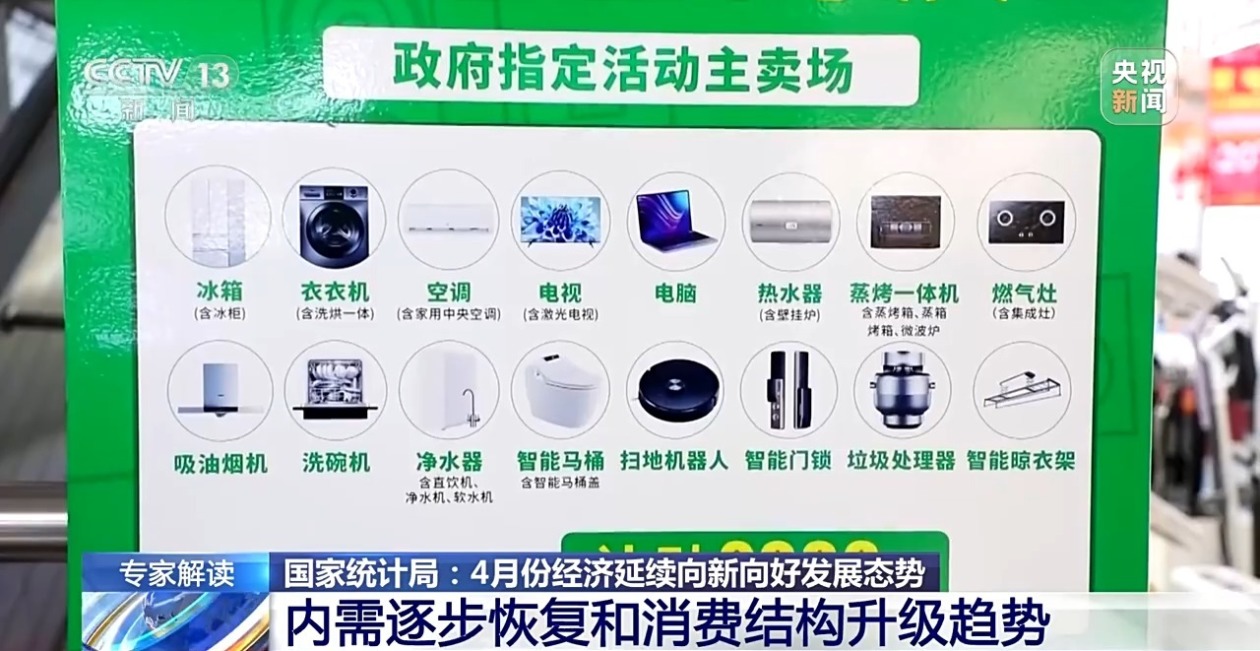
Economic Resilience and Growth - China's economy demonstrated significant resilience in April amidst a complex international environment, with multiple core indicators showing positive changes, indicating both resilience and structural breakthroughs [1] Consumer Trends - There is a noticeable recovery in consumption and an upgrade in service consumption, with retail sales of consumer goods showing a significant year-on-year growth, particularly in communication equipment and home appliances, which saw growth rates exceeding 19% and 13% respectively [3] - The trend towards green and smart products is evident, driven by policies such as trade-in programs, and offline consumption in leisure and dining sectors is also on the rise, reflecting an increasing attractiveness of the Chinese consumer market globally [3] Industrial Growth - Industrial growth is showing resilience, particularly in high-tech industries, with industrial added value and manufacturing growth exceeding 6%. The automotive manufacturing sector, especially in new energy vehicles, has seen remarkable growth [5] - Despite a decline in international commodity prices, the price drop in certain sectors is narrowing, indicating strong investment in infrastructure and equipment renewal, supported by a significant increase in local government bond issuance [5] Foreign Trade Dynamics - Foreign trade resilience is evident, with structural optimization occurring despite U.S. tariffs. Exports exceeded market expectations, particularly to ASEAN and India, while the share of exports to the U.S. is declining [7] - Policies supporting trade diversification have been effective, with integrated circuit exports showing a year-on-year growth of over 20% [7] Price Stability and Financial Environment - Overall price levels and the financial environment remain stable, with the Consumer Price Index (CPI) showing a shift from decline to increase in April, and core CPI remaining stable [9] - The financing scale in April indicates that net financing of government bonds has become a major driving force, with measures such as reserve requirement ratio cuts injecting long-term liquidity into the economy [9] Future Outlook - The economic data from April suggests that new momentum is being cultivated amidst challenges, with a focus on boosting confidence, expanding domestic demand, and enhancing innovation to transform external pressures into opportunities for upgrading the economy [9]
2025年4月物价数据点评:油价拖累,通胀低位运行
Shanghai Securities· 2025-05-15 05:50
Group 1: CPI and PPI Analysis - In April 2025, the Consumer Price Index (CPI) decreased by 0.1% year-on-year, remaining unchanged from the previous month[11] - The CPI increased by 0.1% month-on-month, reversing a previous decline of 0.4%[12] - Energy prices fell by 4.8% year-on-year, with gasoline prices dropping by 10.4%, contributing approximately 0.38 percentage points to the CPI decline[13] - The Producer Price Index (PPI) decreased by 2.7% year-on-year, with the decline widening by 0.2 percentage points compared to the previous month[11] Group 2: Economic Implications and Policy Outlook - The low inflation environment provides room for policy adjustments, with both monetary and fiscal policies expected to be more proactive[4] - The decline in oil prices has led to a decrease in domestic prices across related industries, impacting overall economic stability[4] - The core CPI, excluding food and energy, rose by 0.5%, indicating stable demand despite the overall CPI decline[14] - The report suggests that the current economic conditions allow for a more aggressive macroeconomic policy response to external uncertainties[30] Group 3: Risks and Market Considerations - Potential risks include worsening geopolitical events, changes in international financial conditions, and unexpected shifts in US-China policies[5] - The report emphasizes the importance of monitoring external factors that could impact domestic economic performance and inflation trends[30]
中泰期货晨会纪要-20250512
Zhong Tai Qi Huo· 2025-05-12 05:42
1. Report Industry Investment Ratings There is no information provided regarding the report's industry investment ratings in the given content. 2. Core Views of the Report - For股指期货, small - and medium - cap stocks have high crowding levels, and weighted indices may continue to rise. Pay attention to style drift [8]. - For国债期货, it may be better to cautiously steepen the yield curve rather than taking a unilateral position, and it's advisable to remain moderately cautious [9]. - For集运欧线, the market will focus on whether the spot price will decline further and if shipping companies will raise prices in June. The overall price is likely to fall rather than rise [10]. - For棉花, the domestic cotton market is expected to operate weakly at a low level, and attention should be paid to macro - situation changes, US cotton planting, and export situations [10][11]. - For白糖, the sugar price will fluctuate due to sufficient short - term supply and uncertain production - demand gaps [12]. - For油脂油料, short palm oil and soybean meal at high prices, while being aware of policy changes, abnormal weather, and soybean arrivals [13]. - For鸡蛋, the short - term decline in egg prices may slow down, but the supply pressure may increase in the future. A bearish approach to egg futures is recommended [15]. - For苹果, a light - position positive spread strategy is recommended [15]. - For红枣, close short positions in batches and monitor downstream demand and abnormal changes in production areas [15]. - For生猪, with the futures price deeply discounted and a stalemate between bulls and bears, short - term waiting and watching is recommended [16]. - For燃料 oil, crude oil is expected to continue to rebound, and fuel oil prices will follow, with the short - term increase being stronger than that of crude oil [17]. - For塑料, both L and PP should be configured bearishly [18]. - For甲醇, it should be treated with a bearish and volatile mindset, and short positions can be considered on rebounds [19]. - For烧碱, the Shandong region's production is expected to be stable. The futures price may be strong if the 32% alkali price is firm; otherwise, it may fall. A bearish and volatile approach is recommended [20][21]. - For纯碱玻璃, the supply of soda ash may improve marginally in May, but the long - term high - supply situation remains. Glass demand is expected to be weak, and prices will likely fluctuate weakly [22]. - For沥青, crude oil is expected to continue to rebound, and asphalt futures will repair the basis, with prices expected to fluctuate around 3400 [23]. - For聚酯产业链, polyester varieties may continue to rebound in the short term, but short - selling opportunities should be awaited [24]. - For纸浆, the weak demand and high inventory situation remain unchanged, and it will be weak in the short term. Attention should be paid to raw material and finished - product inventory rhythms [24]. - For原木, short - term oscillations are expected. Short positions can be taken on rebounds, and long positions in out - of - the - money call options can be considered in the long term [24]. - For urea, the UR2509 contract will oscillate in the short term, and a bearish approach should be taken after a significant increase [24]. - For铝, the price is expected to oscillate strongly, and long positions can be taken at low prices. For alumina, it is expected to oscillate weakly, and short positions can be taken at high prices [25]. - For碳酸锂, the price may oscillate, and short - term factors focus on supply - demand changes [26]. - For工业 silicon, a bearish approach is recommended before the effective supply reduction in the wet season. For polysilicon, short - selling on rebounds or selling out - of - the - money call options can be considered [26]. - For螺矿, short - term support at the valley - electricity price and 3000 should be monitored, and the market is expected to remain weak in the long term [28]. - For煤焦, without large - scale production cuts or a decline in Mongolian coal imports, there are no conditions for going long [30]. - For铁 alloy, go long on ferrosilicon during the day, and close the short - put option position on silicomanganese's 06 contract [31]. 3. Summaries Based on Relevant Catalogs 3.1 Macro Information - In April, China's goods trade imports and exports were 3.84 trillion yuan, a 5.6% year - on - year increase. Exports were 2.27 trillion yuan (up 9.3%), and imports were 1.57 trillion yuan (up 0.8%). The trade value with the US was 3269.2 billion yuan [8]. - The State Council Executive Meeting planned key economic and social development work for the "15th Five - Year Plan" period, promoted common prosperity, and supported free trade zones in service trade and data cross - border flow [8]. - The central bank will implement a moderately loose monetary policy, emphasizing boosting consumption, the sustainability of government debt expansion, and promoting a reasonable rise in prices [8]. - China - US economic and trade high - level talks were held in Geneva. The CPI in April rose 0.1% month - on - month and fell 0.1% year - on - year. The core CPI rose 0.2% month - on - month and 0.5% year - on - year. The PPI fell 0.4% month - on - month and 2.7% year - on - year [8]. - Many small and medium - sized banks lowered deposit interest rates, and experts expect further cuts [8]. - The US Commerce Secretary warned that US - Japan - South Korea tariff negotiations would take time, and Trump stated a minimum 10% tariff on trading partners [8]. 3.2 Futures Strategies 3.2.1 Stock Index Futures The crowding level of small - and medium - cap stocks is high, and weighted indices may continue to rise. The market is digesting the "Action Plan for Promoting the High - Quality Development of Public Offering Funds," and there may be a re - allocation of under - weighted sectors. The Q2 GDP growth rate may be revised upwards [8]. 3.2.2 Treasury Bond Futures It may be better to steepen the yield curve rather than taking a unilateral position. The inter - bank funds rate has declined, and the bond market was affected by foreign trade data and expectations of China - US tariff negotiations. The key is whether the capital center can reach 1.4%, and there may be disturbances from the fundamentals and China - US tariffs [9]. 3.3 Commodity Market Analysis 3.3.1 Shipping The market for container shipping to Europe will focus on spot price trends and shipping companies' price - raising actions. The supply - demand imbalance and overflow of US - bound shipping capacity are putting downward pressure on prices [10]. 3.3.2 Agricultural Products - **Cotton**: The domestic cotton market is weak due to concerns about demand. International factors such as trade tensions and US cotton exports also affect prices. Attention should be paid to the 5 - month supply - demand report [10][11]. - **Sugar**: The sugar price will fluctuate due to sufficient short - term supply and uncertain production - demand gaps. The focus is on the production in South America and the export situation of major producers [12]. - **Oils and Fats**: Short palm oil and soybean meal at high prices. Palm oil may be affected by production increases and changes in demand, while soybean meal is affected by US soybean planting and domestic oil - mill production [13][14]. - **Eggs**: The short - term decline in egg prices may slow down, but the supply pressure may increase in the future due to high production capacity and inventory [15]. - **Apples**: A light - position positive spread strategy is recommended. The spot market is stable, but the new - season apple production needs further assessment [15]. - **Jujubes**: Close short positions in batches and monitor downstream demand and abnormal changes in production areas. The market supply is sufficient, and the price may oscillate at the bottom [15]. - **Pigs**: With the futures price deeply discounted and a stalemate between bulls and bears, short - term waiting and watching is recommended. The supply pressure may increase in May, and demand may weaken seasonally [16]. 3.3.3 Energy and Chemicals - **Fuel Oil**: Crude oil is expected to continue to rebound, and fuel oil prices will follow, with the short - term increase being stronger than that of crude oil. The market needs to assess the impact of trade wars on demand [17]. - **Plastic**: Both L and PP should be configured bearishly due to a weak supply - demand situation and trade uncertainties [18]. - **Methanol**: It should be treated with a bearish and volatile mindset, and short positions can be considered on rebounds. The downstream demand is weak, and international trade affects exports [19]. - **Caustic Soda**: The Shandong region's production is expected to be stable. The futures price may be strong if the 32% alkali price is firm; otherwise, it may fall. The current comprehensive profit of chlor - alkali enterprises is good [20][21]. - **Soda Ash and Glass**: The supply of soda ash may improve marginally in May, but the long - term high - supply situation remains. Glass demand is expected to be weak, and prices will likely fluctuate weakly. Attention should be paid to terminal demand and market sentiment [22]. - **Asphalt**: Crude oil is expected to continue to rebound, and asphalt futures will repair the basis, with prices expected to fluctuate around 3400. Refineries are in the复产 period [23]. - **Polyester Industry Chain**: Polyester varieties may continue to rebound in the short term, but short - selling opportunities should be awaited. The increase is due to factors such as crude oil price increases and supply reductions [24]. - **Paper Pulp**: The weak demand and high inventory situation remain unchanged, and it will be weak in the short term. Attention should be paid to raw material and finished - product inventory rhythms [24]. - **Logs**: Short - term oscillations are expected. Short positions can be taken on rebounds, and long positions in out - of - the - money call options can be considered in the long term. Attention should be paid to downstream construction starts and port inventories [24]. - **Urea**: The UR2509 contract will oscillate in the short term, and a bearish approach should be taken after a significant increase. The market is currently stable and strong, but the industry association has called for price adjustments [24]. 3.3.4 Metals - **Aluminum and Alumina**: Aluminum prices are expected to oscillate strongly, and long positions can be taken at low prices. Alumina is expected to oscillate weakly, and short positions can be taken at high prices. The inventory of aluminum is decreasing, while alumina has issues such as new capacity and falling ore costs [25]. - **Lithium Carbonate**: The price may oscillate, and short - term factors focus on supply - demand changes. The impact of tariffs on finished - product demand is not obvious, and the focus is on energy - storage demand and technological breakthroughs [26]. - **Industrial Silicon and Polysilicon**: For industrial silicon, a bearish approach is recommended before the effective supply reduction in the wet season. For polysilicon, short - selling on rebounds or selling out - of - the - money call options can be considered. The supply of industrial silicon is in excess, and polysilicon has issues such as low component demand and supply recovery expectations [26]. 3.3.5 Ferrous Metals - **Steel and Iron Ore**: Short - term support at the valley - electricity price and 3000 should be monitored, and the market is expected to remain weak in the long term. The downstream demand is weak, and the supply is increasing. Attention should be paid to policies and cost factors [28]. - **Coking Coal and Coke**: Without large - scale production cuts or a decline in Mongolian coal imports, there are no conditions for going long. The demand for coal and coke may improve, but the second - round price increase for coke has not been implemented [30]. - **Ferroalloys**: Go long on ferrosilicon during the day, and close the short - put option position on silicomanganese's 06 contract. The short - term fundamentals of ferrosilicon and silicomanganese have little change, and the silicomanganese contract has repaired the discount quickly [31].
【广发宏观郭磊】3月物价数据与后续政策线索
郭磊宏观茶座· 2025-04-10 09:38
Group 1 - The core viewpoint of the article highlights the current economic situation, focusing on the CPI and PPI data for March, indicating a slight improvement in CPI but a continued decline in PPI, suggesting ongoing deflationary pressures in the economy [1][4][5] - In March, the CPI year-on-year was -0.1%, an improvement from -0.7% in the previous month, while the PPI year-on-year was -2.5%, down from -2.2% [1][4] - The simulated deflation index, based on the weighted contributions of CPI and PPI, is approximately -1.06%, indicating a persistent low price level since October of the previous year [1][4] Group 2 - Energy and food prices are identified as the main contributors to the downward trend in inflation, with core CPI showing zero growth month-on-month in March [1][2] - Pork prices have been in a downward adjustment cycle since late January, and fuel prices for transportation have also decreased significantly [1][6] - Positive signals in CPI include a 2.8% month-on-month increase in household appliance prices, stabilization in the rental market, and seasonal increases in alcohol prices post-holiday [1][6][7] Group 3 - The PPI in March showed a month-on-month decline of 0.4%, with oil and coal prices being the primary downward forces [2][7] - The article notes that the impact of global trade tariffs is expected to continue affecting commodity prices, which will have implications for future CPI and PPI [2][8] - The government has emphasized the importance of price stability, with recent policies aimed at strengthening price governance mechanisms [3][9] Group 4 - Historical experience suggests that in response to external shocks like tariffs, policies typically focus first on stabilizing liquidity before addressing the fundamental economic conditions [10] - The central bank has indicated readiness to provide sufficient re-lending support to stabilize liquidity, which is seen as a "expectation anchor" for the market [10] - Key areas of focus for economic resilience include consumer spending, real estate investment, and maintaining supply-demand balance and profit margins in the corporate sector [10]