农业

Search documents
瞭望 | 自贸港探路示范
Sou Hu Cai Jing· 2026-01-19 08:17
Core Viewpoint - The establishment of Hainan Free Trade Port represents a significant step in China's commitment to high-level opening-up and serves as a model for institutional innovation in reform and opening-up efforts [2][9]. Group 1: Policy and Institutional Framework - Hainan Free Trade Port has developed a policy system focused on trade and investment freedom, marking a transition to a more mature operational model with the full island closure set for December 18, 2025 [2][6]. - The policy framework includes "zero tariffs, low tax rates, and simplified tax systems," with the proportion of zero-tariff goods increasing from 21% to 74% post-closure [6][12]. - Hainan is aligning its regulations with international standards, such as the Comprehensive and Progressive Agreement for Trans-Pacific Partnership (CPTPP) and the Digital Economy Partnership Agreement (DEPA) [7]. Group 2: Economic Impact and Growth - From 2020 to 2024, Hainan's total trade in goods and services grew at an average annual rate of 31.3% and 32.3%, respectively, with trade with ASEAN countries increasing from 23.7 billion yuan to 57.9 billion yuan [11]. - The actual foreign investment in Hainan reached 102.5 billion yuan from 2020 to 2024, with an average annual growth rate of 14.6% [12]. - By the end of 2025, Hainan is expected to have imported goods worth 29.22 billion yuan under the zero-tariff policy, benefiting over 560 enterprises [13]. Group 3: Strategic Positioning and Global Integration - Hainan's geographical location positions it as a strategic hub connecting China with ASEAN and the broader global market, enhancing cross-border resource flow [10]. - The Free Trade Port is seen as a bridge for economic cooperation, facilitating deeper ties between China and other countries, thus promoting a new model of global economic integration [13]. - Hainan's development is not just about local growth but aims to contribute to national strategies, including becoming a center for international tourism and a hub for modern service industries [14][15]. Group 4: Innovation and Future Development - Hainan is focusing on high-quality development through institutional innovation, aiming to create a modern industrial system centered on tourism, high-tech industries, and efficient agriculture [14]. - The Free Trade Port is expected to foster a competitive environment for global production factors, attracting advanced technologies and high-end talent [16]. - Collaborative initiatives with other regions, such as the Guangdong-Hainan advanced manufacturing cooperation, are being developed to enhance regional economic integration [16].


人民日报丨2025年全社会用电量超10万亿千瓦时,意味着什么?
国家能源局· 2026-01-19 07:39
Core Viewpoint - The article highlights that by 2025, China's total electricity consumption will exceed 10 trillion kilowatt-hours for the first time, marking a significant milestone in global energy consumption trends [3][4]. Group 1: Electricity Consumption Growth - In 2025, China's total electricity consumption is projected to reach 10.3682 trillion kilowatt-hours, more than double that of the United States and higher than the combined consumption of the EU, Russia, India, and Japan [3]. - The electricity consumption in 2025 will be nearly double that of 2015, showcasing an unprecedented growth rate among major economies [4]. Group 2: Industrial and Sectoral Changes - The second industry is expected to consume 66,366 billion kilowatt-hours, accounting for approximately 64% of total electricity consumption, with significant contributions from high-value-added and technology-intensive sectors [5]. - The demand for electricity in the semiconductor industry is surging, with companies like Huahong Semiconductor reporting over a 43% year-on-year increase in electricity consumption due to rising production needs [5]. - The third industry will see electricity consumption nearing 2 trillion kilowatt-hours, with a year-on-year growth of 8.2%, driven by sectors like electric vehicle charging and information technology services [6]. Group 3: Electrification and Energy Efficiency - The electrification rate of end-use energy is around 30%, surpassing that of major developed economies, which is contributing to increased electricity consumption [7]. - Investments in smart irrigation systems and rural electrification projects are enhancing agricultural productivity and electricity demand in rural areas [7][8]. Group 4: Power Supply and Infrastructure - China has the world's largest power supply system, with renewable energy sources accounting for over one-third of total electricity generation, and wind and solar capacity surpassing that of coal [9]. - The construction of ultra-high voltage transmission lines is facilitating the transfer of clean energy from resource-rich western regions to eastern load centers, enhancing the reliability of electricity supply [10]. - The national electricity market is evolving, with a significant increase in market transaction volumes, reflecting a more dynamic and responsive electricity supply system [11].

国家统计局:国民经济运行总体平稳 经济发展向新向优
Guo Jia Tong Ji Ju· 2026-01-19 07:38
Economic Overview - In 2025, China's GDP is projected to exceed 140 trillion yuan, reaching 1401879 billion yuan, with a year-on-year growth of 5.0% [2] - The contribution rates to economic growth from various sectors are: primary industry at 5.8%, secondary industry at 32.8%, and tertiary industry at 61.4% [2] Sector Performance - Agricultural production is stable, with an increase in the value added of agriculture, forestry, animal husbandry, and fishery by 4.1%, contributing 0.3 percentage points to economic growth [3] - Industrial growth is robust, with a year-on-year increase of 5.8%, contributing 1.7 percentage points to economic growth, while manufacturing increased by 6.1% [3] - The service sector shows strong support, with information transmission, software, and IT services growing by 11.1% and leasing and business services by 10.3%, together contributing 1.0 percentage points to economic growth [3] Domestic Demand and Trade - Final consumption expenditure contributed 52.0% to economic growth in 2025, with a higher contribution of 52.9% in the fourth quarter [5] - Capital formation contributed 15.3% to economic growth in 2025, with 16.0% in the fourth quarter [5] - Net exports showed resilience, contributing 32.7% to economic growth in 2025, with 31.1% in the fourth quarter [5] High-Quality Development - The digital economy is thriving, with a year-on-year revenue growth of 11.9% in the information transmission, software, and IT services sector [7] - The value added of equipment manufacturing and high-tech manufacturing increased by 9.2% and 9.4% respectively, outpacing overall industrial growth [7] - Investment in high-tech services grew by 3.5%, exceeding the overall fixed asset investment growth rate [7]
聚焦12个方面重点工作,济南这样谋篇布局“十五五”
Qi Lu Wan Bao· 2026-01-19 06:55
Core Viewpoint - The government work report presented at the Jinan Municipal People's Congress outlines the main goals and tasks for the city's economic and social development during the 14th Five-Year Plan period, emphasizing modernization, innovation, and sustainable growth. Group 1: Economic Development - Accelerate the construction of a modern industrial system, focusing on building a northern advanced manufacturing base and enhancing the "13+34" industrial chain [1] - Implement strategies to expand domestic demand and optimize investment structures, including modern infrastructure projects and support for private capital in major projects [2] - Promote high-quality development in the commercial logistics sector by establishing a comprehensive transportation hub and enhancing the modern commercial circulation system [2] Group 2: Innovation and Education - Implement a strategy to strengthen education and talent development, aiming to build a regional technology innovation hub and enhance the integration of technological and industrial innovation [1][2] - Optimize the layout of innovation resources and strengthen the role of enterprises in innovation, targeting breakthroughs in key technologies and advanced equipment [1] Group 3: Urban and Rural Development - Advance agricultural modernization and rural revitalization, ensuring food security and improving rural governance [4] - Promote urban renewal and the construction of a modern urban area that is innovative, livable, and resilient [3] Group 4: Environmental Sustainability - Promote green and low-carbon transformation, focusing on pollution prevention and ecological restoration, while implementing a dual control system for carbon emissions [4] - Develop a new energy system and promote a waste-free city initiative [4] Group 5: Cultural and Social Development - Enhance cultural development and support the growth of cultural industries, while promoting the core socialist values and protecting historical cultural sites [5] - Focus on improving public services and social welfare to ensure common prosperity and enhance the quality of life for residents [5] Group 6: Security and Governance - Implement a comprehensive national security strategy to safeguard the new development framework, ensuring food, energy, and infrastructure security [6] - Strengthen public safety governance and enhance social governance to build a safer and more law-abiding city [6]
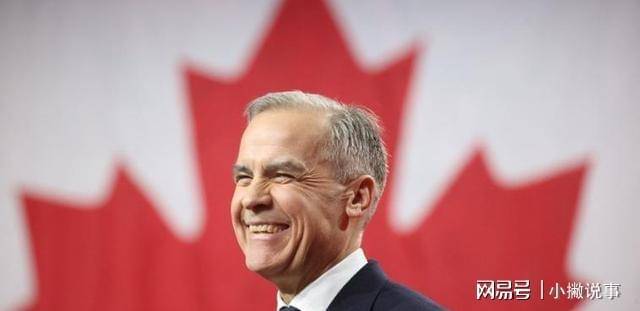
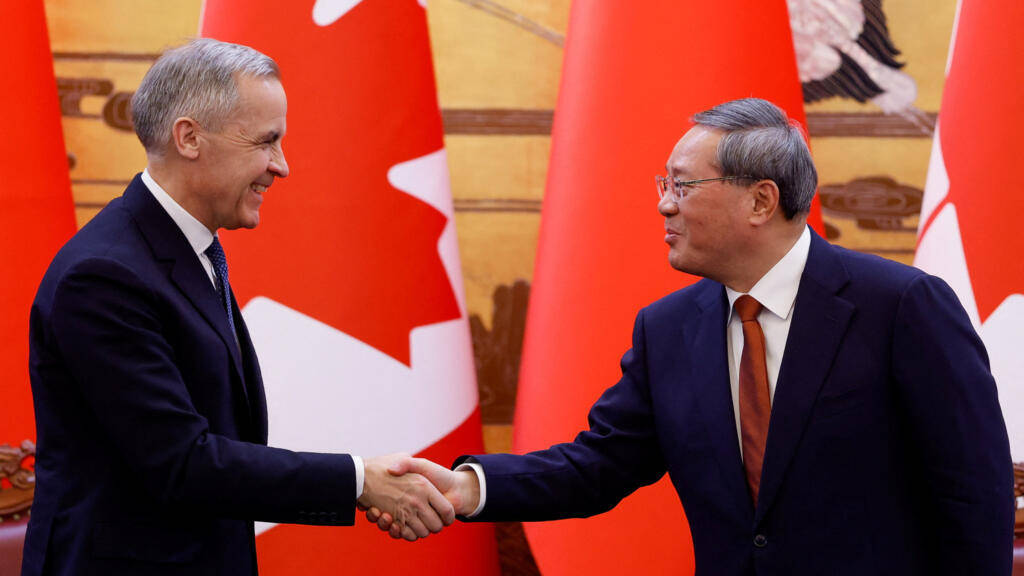
抵达北京后,加拿大总理发现接待人员不一般,悬着的心总算落地了
Sou Hu Cai Jing· 2026-01-19 04:13
Group 1 - The core message of the news is the significant reduction of electric vehicle tariffs in China from 106% to 6%, along with a quota of 49,000 vehicles, which is expected to increase next year [1][3] - The signing of the "China-Canada Economic and Trade Cooperation Roadmap" on January 15 includes 28 detailed cooperation items across various sectors such as energy, agriculture, green trade, and e-commerce, indicating a shift from previous negotiations to a more structured ministerial dialogue [3][5] - The concept of a "new strategic partnership" is introduced, emphasizing collaboration not only in economic terms but also in managing shared affairs, with Canada reaffirming its one-China policy, which is seen as a diplomatic gesture towards China [5][7] Group 2 - The atmosphere during the meetings was pragmatic, with high-level officials, including the head of China's customs, personally involved, reflecting a strong desire for cooperation without unnecessary formalities [7][9] - The implications for the electric vehicle market in China suggest that the distribution of the 49,000 vehicle quota will influence consumer choices between brands like Tesla and BYD [7] - For Canadian farmers, the reduction in canola seed tariffs is expected to alleviate storage issues, allowing them to sell their products rather than resorting to feeding them to livestock [7][9]
加中战略合作落地:中国电车绕过美国,北美防线出现裂口
Sou Hu Cai Jing· 2026-01-19 04:13
Group 1 - Canada has decided to eliminate 100% tariffs on electric vehicles from China, marking a significant shift in its trade policy and a move away from U.S. influence [1][3] - The agreement allows 49,000 Chinese electric vehicles to enter Canada at a reduced Most Favored Nation tax rate of 6.1%, while China will lower tariffs on Canadian canola from 84% to approximately 15% by March 1 [1][5] - This deal is seen as a strategic maneuver for Canada to address domestic agricultural issues and to gain access to the Chinese market, which is crucial for its resource-dependent economy [3][5] Group 2 - The relationship between Canada and the U.S. has become strained, with Canada feeling that U.S. policies have been detrimental to its interests, particularly in the context of tariffs on aluminum, steel, and softwood [3][5] - The Canadian government under Prime Minister Carney is taking a calculated risk by engaging with China, as it seeks to stabilize its economy and support its agricultural sector while potentially facing U.S. retaliation [5][7] - This shift indicates a broader trend of allies seeking more flexible relationships and prioritizing national interests over traditional alliances, reflecting a potential decline in U.S. hegemony [7]
综合晨报-20260119
Guo Tou Qi Huo· 2026-01-19 03:12
1. Report Industry Investment Ratings - No investment ratings are provided in the report 2. Core Views - The report analyzes various commodities and financial markets, including energy, metals, agricultural products, and financial derivatives. It assesses the impact of geopolitical events, supply - demand dynamics, and policy changes on prices and provides trading strategies for each sector [2][3][4] 3. Summary by Commodity Categories Energy - **Crude Oil**: Geopolitical risks in Iran are controllable, and the geopolitical risk premium has declined. In Q1 2026, global crude oil supply exceeds demand, and inventory pressure is significant, which suppresses oil prices [2] - **Fuel Oil & Low - Sulfur Fuel Oil**: Geopolitical risks continue to affect the fuel oil market. Geopolitical threats may tighten Asian supply, supporting high - sulfur cracking spreads in the short term, but the supply of high - sulfur heavy raw materials will gradually ease. Low - sulfur fuel oil supply is increasing, and its weak pattern is expected to continue [22] - **Asphalt**: Asphalt follows crude oil price movements but with a relatively limited amplitude. The market is in an oscillating pattern, and attention should be paid to the arrival of Venezuelan crude oil [23] - **Urea**: The weekend urea spot market was stable. With the approaching spring demand and macro - positive factors, the market is expected to oscillate strongly [24] - **Methanol**: After the Iranian geopolitical situation cooled, the methanol market had a large - amplitude rise and then a fall. Overseas plant operation rates are low, and port inventories are decreasing. However, demand is weakening, and the short - term market is in a multi - empty game [25] Metals - **Precious Metals**: US economic data shows resilience, and the Fed's short - term interest rate cut is unlikely. Geopolitical tensions support a long - term bullish view on precious metals [3] - **Base Metals**: - **Copper**: The Shanghai copper market oscillated around 100,000. Attention should be paid to geopolitical situations, LME spot premiums, and domestic copper social inventories. The "15th Five - Year Plan" investment in the power grid has a 7% annual compound growth rate. Continue the strategy of selling call options at high levels [4] - **Aluminum**: The short - term funds' sentiment is volatile. Wait for the volatility to decline before participating. Aluminum smelters can sell and hedge at high prices in the current range [5] - **Zinc**: After the market digested the news, it will gradually return to fundamental trading. High prices have a negative impact on consumption, but the supply pressure is not large. The Shanghai zinc price may correct to 24,000 yuan/ton [8] - **Lead**: There are both maintenance and restart of lead smelters. The refined - scrap price difference is 200 yuan/ton. The Shanghai lead price has a large downward pressure at the 17,800 yuan/ton level, and attention should be paid to the 17,000 yuan/ton support [9] Agricultural Products - **Grains and Oils**: - **Soybeans & Soybean Meal**: The Brazilian soybean production is expected to increase by 2.5% in 2026. The market is mainly trading on the South American bumper harvest expectation. Attention should be paid to US soybean exports and South American weather [36] - **Soybean Oil & Palm Oil**: The US biomass fuel policy is expected to improve the marginal demand for US soybean oil. Palm oil has short - term high - inventory pressure. The overall view is for range - bound oscillations [37] - **Rapeseed & Rapeseed Oil**: The China - Canada trade agreement may lead to a marginal relaxation of domestic rapeseed supply, putting short - term pressure on rapeseed prices [38] - **Other Agricultural Products**: - **Corn**: The Dalian corn futures oscillated. The national corn spot price was stable with a slight increase. The short - term trend is wide - range oscillation, and seasonal risks should be noted later [40] - **Cotton**: The US cotton signing data is good, but the domestic Zhengzhou cotton market is in adjustment. The downstream demand is average, and the short - term fundamental driving force is weakened [43] - **Sugar**: The international sugar market is affected by different production progress in India and Thailand. The domestic market's trading focus is on the production volume difference. The Zhengzhou sugar's rebound is expected to be limited [44] - **Apple**: The apple futures price rose and then fell. The market's trading focus is on demand. The high acquisition price and strong reluctance to sell may affect the inventory reduction speed [45] Financial Derivatives - **Stock Index**: The A - share market opened high and closed low. The stock index is expected to change from a one - way rapid rise to an oscillatingly strong trend. The upward slope will slow down. Attention should be paid to the transition of the upward driver and geopolitical disturbances [48] - **Treasury Bonds**: The treasury bond futures showed a differentiated performance, and the curve continued to steepen. The market is expected to oscillate narrowly. There may be an opportunity to flatten the curve when the 30 - 10y spread reaches 50bp [49] - **Shipping Index**: The near - month contracts of the container shipping index (European line) will oscillate in the short term, and the long - term contracts are under the pressure of the resumption of shipping. The contract rules will be adjusted [21]
华绿生物:拟收购确山华源100%股权以巩固金针菇项目长期经营
2 1 Shi Ji Jing Ji Bao Dao· 2026-01-19 03:12
Core Viewpoint - The company, Hualv Biotechnology, plans to acquire 100% equity of Queshan Huayuan Biotechnology Co., Ltd. from the Queshan County Finance Bureau, aiming to secure long-term operational stability and enhance investment outcomes in Queshan County [1] Group 1: Acquisition Details - The acquisition will be based on the total investment amount of approximately 239 million yuan, which includes main engineering, ancillary works, equipment, and supervision fees [1] - The payment for the acquisition will be made in installments: 50% within five working days after signing the formal equity transfer agreement, 40% within ten working days after completing the industrial and commercial change registration, and the remaining 10% as a performance guarantee within twelve months after the equity transfer [1] Group 2: Project Background - Queshan Huayuan is a platform company designated by the Queshan County People's Government and is wholly owned by the Queshan County Finance Bureau [1] - The first mushroom factory constructed by Queshan Huayuan has been completed and handed over to Hualv Biotechnology, with the factory's operational status meeting the company's expectations [1]
消费行业2026年春节机会
2026-01-19 02:29
Summary of Conference Call Records Industry Overview - **Consumer Industry**: The consumer industry is expected to see opportunities during the 2026 Spring Festival, particularly in the export chain and food sectors. Key companies like Jiangxin Home, Zhongxin Co., and Gongchuang Turf are projected to maintain steady growth in 2026 [1][2]. - **Agriculture Sector**: The 2026 Central Document No. 1 will focus on food security, poverty alleviation, and agricultural technology. Grain production has exceeded 1.4 trillion jin for two consecutive years, but supply and demand remain tight, necessitating improvements in yield [1][4]. - **Alcohol Industry**: The white liquor market is facing a pessimistic outlook for the Spring Festival, with expected sales declines of nearly double digits due to the impact of alcohol bans and high inventory levels from the previous year [1][7]. Key Companies and Their Performance - **Jiangxin Home**: Transitioning from OEM to OBM, with over 1,000 brand stores established. Stable performance is expected despite short-term stock price fluctuations due to currency changes [3]. - **Zhongxin Co.**: Anticipated profits exceeding 600 million yuan in 2026, with a current PE ratio of about 13 times. The company is performing well in Thailand's pulp molding production [3]. - **Gongchuang Turf**: Expected to maintain a 20% growth rate in 2026, with double-digit revenue growth continuing into the fourth quarter [3]. - **Anjixin Foods**: Projected revenue growth of nearly 20% in December, indicating a rebound in the food supply sector [1][9]. Investment Opportunities - **Export Chain**: Companies in the light industry are expected to perform well, with a positive outlook for Jiangxin Home, Zhongxin Co., and Gongchuang Turf [2]. - **Research Services**: Companies like Haoyuan Pharmaceutical, Baiaosaitu, and Nami Technology are well-positioned to benefit from the overseas expansion of innovative drugs [2][13]. - **AI in Home Appliances**: The potential for AI applications in home appliances is significant, with companies like Ugreen launching AI NAS to integrate localized computing power [2][14]. Agricultural Focus Areas - **High-Standard Farmland Construction**: Aiming to build 1.35 billion mu of high-standard farmland by 2030, with an investment of over 150 billion yuan annually [5]. - **Biotechnology**: Continued emphasis on the commercialization of genetically modified crops, with a focus on increasing planting areas and supporting regulations [5][6]. Consumer Behavior Insights - **White Liquor Sales**: The sales rhythm for white liquor during the Spring Festival is unclear, with expectations of a significant decline in sales due to changing consumer purchasing habits [7]. - **Non-Alcoholic Gifts**: Demand is shifting towards non-alcoholic gifts, including snacks and beverages, as consumers adapt to new purchasing trends [8]. Travel and Dining Sector - **Travel Industry**: Companies like Ctrip are expected to benefit from increased travel flow during the Spring Festival, with significant growth in hotel bookings and dining reservations [10][12]. - **Dining Sector**: Haidilao is highlighted as a key investment opportunity due to its improving turnover rates and potential for rapid expansion under new leadership [10][11]. Challenges and Innovations - **Smart Home Industry**: The smart home sector faces challenges such as high costs and the need for standardization across devices, but it remains a promising area for future growth [17][19]. - **Robotic Innovations**: Companies like Roborock are innovating in the robotic cleaning space, enhancing user interaction through AI capabilities [20]. This summary encapsulates the key insights and opportunities discussed in the conference call, providing a comprehensive overview of the consumer, agriculture, and technology sectors.
国家统计局:2025年我国国内生产总值突破140万亿元 增长5.0%
Jing Ji Guan Cha Bao· 2026-01-19 02:25
Economic Overview - In 2025, China's GDP reached 1401879 billion yuan, growing by 5.0% year-on-year, with the first, second, and third industries growing by 3.9%, 4.5%, and 5.4% respectively [1] - Quarterly GDP growth rates were 5.4% in Q1, 5.2% in Q2, 4.8% in Q3, and 4.5% in Q4, with a 1.2% increase in Q4 on a quarter-on-quarter basis [1] Agriculture - National grain production totaled 71488 million tons, an increase of 838 million tons or 1.2% from the previous year [2] - Livestock production reached 10072 million tons, a 4.2% increase, with pork production at 5938 million tons, growing by 4.1% [2] Industrial Production - Industrial value-added for large enterprises grew by 5.9%, with manufacturing increasing by 6.4% and high-tech manufacturing by 9.4% [3] - The production of 3D printing equipment, industrial robots, and new energy vehicles saw significant increases of 52.5%, 28.0%, and 25.1% respectively [3] Services Sector - The service sector's value-added grew by 5.4%, with information transmission and software services increasing by 11.1% [4] - The service industry business activity index was at 49.7 in December, indicating stable growth [4] Retail and Consumption - Total retail sales of consumer goods reached 501202 billion yuan, growing by 3.7%, with online retail sales increasing by 8.6% [5] - The retail sales of essential and upgraded goods showed strong growth, with communication equipment sales up by 20.9% [5] Investment Trends - Fixed asset investment decreased by 3.8% to 485186 billion yuan, with manufacturing investment growing by 0.6% [6] - High-tech industries, particularly information services and aerospace manufacturing, saw investment growth of 28.4% and 16.9% respectively [6] Trade Performance - Total goods import and export value reached 454687 billion yuan, a 3.8% increase, with exports growing by 6.1% [7] - Private enterprises accounted for 57.3% of total trade, reflecting a 1.8 percentage point increase from the previous year [7] Price Stability - The Consumer Price Index (CPI) remained stable year-on-year, with food prices decreasing by 0.7% [8] - Core CPI, excluding food and energy, rose by 0.7%, indicating mild inflationary pressure [8] Employment and Income - The urban unemployment rate averaged 5.2% for the year, with a slight decrease to 5.1% in December [9] - Per capita disposable income reached 43377 yuan, with rural income growth outpacing urban income growth [11] Demographic Changes - The total population decreased by 3.39 million to 140489 million, with an urbanization rate of 67.89%, up by 0.89 percentage points [12] Economic Outlook - The economy is expected to face challenges from external changes and domestic supply-demand imbalances, necessitating proactive macroeconomic policies [13]