纺织服装

Search documents
哈森股份12月15日龙虎榜数据
Zheng Quan Shi Bao Wang· 2025-12-15 09:58
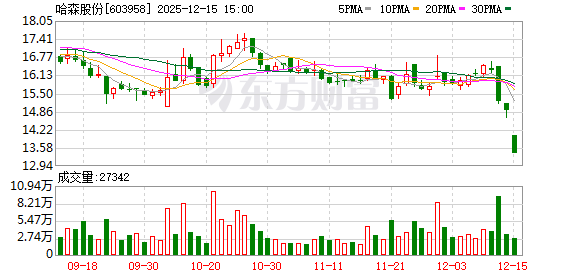
哈森股份(603958)今日跌停,全天换手率1.25%,成交额3683.33万元,振幅4.48%。龙虎榜数据显示, 营业部席位合计净卖出481.48万元。 上交所公开信息显示,当日该股因日跌幅偏离值达-9.46%上榜,营业部席位合计净卖出481.48万元。 证券时报·数据宝统计显示,上榜的前五大买卖营业部合计成交1611.46万元,其中,买入成交额为 564.99万元,卖出成交额为1046.47万元,合计净卖出481.48万元。 具体来看,今日上榜营业部中,第一大买入营业部为中国国际金融股份有限公司北京建国门外大街证券 营业部,买入金额为175.54万元,第一大卖出营业部为方正证券股份有限公司昆明西昌路证券营业部, 卖出金额为538.21万元。 资金流向方面,今日该股主力资金净流出1693.62万元,其中,特大单净流出453.86万元,大单资金净流 出1239.76万元。近5日主力资金净流出2861.60万元。 (文章来源:证券时报网) 10月28日公司发布的三季报数据显示,前三季度公司共实现营业收入10.58亿元,同比增长86.36%,实 现净利润-1847.44万元。(数据宝) 哈森股份12月15日交易公 ...


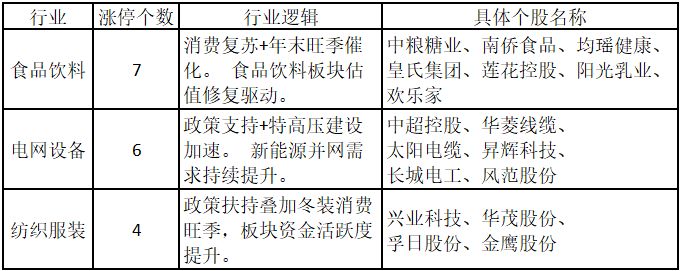
航天板块多股被主力资金抢筹涨停!大消费板块涨停人气高涨
Mei Ri Jing Ji Xin Wen· 2025-12-15 08:44
各位投资者,大家好。 涨跌停板数据,不仅是反映板块和个股强弱的重要指标,更是体现市场情绪与资金流向的重要参考。那 么,今日的涨停个股有哪些特点呢?哪些涨停股又值得重点关注? 今日,上证指数收盘下跌0.55%,深证成指下跌1.10%,沪深A股涨跌幅的中位数为下跌0.27%。 涨停板方面,今日市场资金打板情绪有所消退。航天板块则延续涨停热度,有9只航天概念股涨停,涨 停数量位居前列。主力资金净流入金额排名前5的涨停股中,有4只属于航天板块。不过,今日涨停最多 的是大消费板块,有18只个股涨停,涨停人气明显增加。 消息面上,12月14日,商务部办公厅、中国人民银行办公厅、金融监管总局办公厅联合印发《关于加强 商务和金融协同更大力度提振消费的通知》,指导地方相关部门和金融机构加强协同,精准施策推动惠 民生和促消费紧密结合,形成提振和扩大消费的更大工作合力。 12月15日,国家统计局发布的数据显示,今年1月份至11月份,社会消费品零售总额456067亿元,同比 增长4.0%。其中,除汽车以外的消费品零售额411637亿元,同比增长4.6%。 一、市场总览及板块特征 从概念特征来看,今日涨停板个股中,大消费、航天、智能电 ...

——2025年棉花市场回顾与2026年展望:棉花:千寻深处探春温一绽云裳上玉墀
Fang Zheng Zhong Qi Qi Huo· 2025-12-15 05:12
1. Report Industry Investment Rating - No relevant content provided. 2. Core Viewpoints of the Report - In 2025, the cotton futures market was in a bottom - building phase, with the annual trend mainly influenced by Sino - US trade relations, a significant decline in imports, and a notable increase in Xinjiang's cotton production. The price reached a low due to Sino - US trade tensions, rose due to supply concerns from import decline, and then fell back due to higher - than - expected new cotton production [1]. - In 2026, whether cotton prices continue to build the bottom or rebound depends on supply - side drivers. There is a risk of reduced planting globally, and the price is expected to move upward. The operating range of the cotton 2601 contract is expected to be 13200 - 14000, and that of the 2605 contract is estimated to be 13400 - 14500. It is recommended to focus on buying opportunities at low prices, and downstream industrial customers can consider buying hedging opportunities at the lower end of the range [2][127]. 3. Summary by Relevant Catalogs 3.1 Long - term Cotton Trends and 2025 Market Review 3.1.1 Long - term Historical Review - Since the listing of Zhengzhou cotton futures in 2004, its price has fluctuated greatly, with a historical low of around 9800 and a high of 34870. The price is affected by economic cycles, weather, and policies. The long - term trend can be divided into ten stages, including supply - demand balance, bull and bear markets, and periods affected by events such as the European debt crisis, Sino - US trade frictions, and weather disturbances [11]. 3.1.2 2025 Futures Market Summary - In 2025, domestic cotton futures showed a typical range - bound pattern. From January to April, the price declined due to unmet demand expectations and Sino - US trade frictions. From May to August, it rose due to supply concerns and eased trade relations. From September to November, it fell back as new cotton production pressure emerged [20][21]. 3.1.3 2025 Spot Market Summary - In 2025, the domestic cotton spot market showed a pattern of "range - bound with a slight shift in the center of gravity." The annual average price of 3128B cotton was 14791 yuan/ton, slightly up from the beginning of the year but down year - on - year. The price declined from January to April due to trade frictions, rose from May to July due to improved expectations and supply concerns, and fell again from August to November due to new cotton production expectations and weak demand [22][23]. 3.1.4 Futures Trading Volume and Open Interest - In 2025, the trading volume and turnover of cotton futures decreased. From January to October, the cumulative trading volume was 61340818 lots, a 24.41% year - on - year decline, and the cumulative turnover was 41646 billion yuan, a 31.3% year - on - year decline. The open interest was relatively stable, with a slight increase in October. As of the end of October, the open interest was 918452 lots, higher than the same period last year [25]. 3.2 Global Cotton Market Fundamental Analysis 3.2.1 Global Cotton Supply Market Analysis - **2025/26 Annual Global Cotton Production Growth**: In 2025/26, global cotton production is expected to reach 120 million bales (about 26.13 million tons), a 0.67% year - on - year increase. The growth mainly comes from Brazil and China, while the production of other major cotton - producing countries such as the US and India is flat or slightly declining. The final output of Australia is the main uncertainty [32][33]. - **2026/27 Annual Global Cotton Production Forecast**: In 2026/27, global cotton planting enthusiasm is generally expected to be average, and the area expansion motivation is limited. The core variable of future production will focus on yield performance. Brazil's production is expected to be stable but slightly decreased [38][39]. 3.2.2 Global Cotton Demand Market Analysis - **2026/27 Global Economic Growth Forecast**: The global economic growth is expected to slow down in 2026. Although the growth in 2025 was slightly higher than expected, factors such as high tariffs, public debt, and geopolitical tensions pose threats to the global economy in 2026 [46]. - **Textile and Apparel Markets in Developed Countries**: In 2025, the US textile and apparel market showed some resilience, with moderate growth in consumption and imports. The EU market had strong import growth, and the Japanese market had a moderate increase in both volume and value. However, in 2026, high tariffs will pose challenges to the US consumer market [47][52][55]. - **Asian Textile Markets**: In 2025, India's clothing exports increased by diversifying markets, Bangladesh's exports were stable but faced some challenges, and Vietnam's textile industry had a complex situation of "upstream production increase, downstream production decrease, and export value increase" [57][60][62]. 3.2.3 Performance of US Cotton Prices during the Fed's Interest - Rate Cut Cycle - Since 2000, during the Fed's four major interest - rate cut cycles, the impact of interest - rate cuts on US cotton prices was limited. Cotton prices are mainly determined by supply - demand fundamentals, and macro - monetary policies only have an indirect impact [67][69]. 3.2.4 US Cotton Futures Prices Continue to Build the Bottom - In 2026, the pressure on the global cotton supply side will weaken. The planting enthusiasm for global cotton is decreasing, and the US cotton price has fallen below the production cost line. The demand side has high uncertainty due to economic growth slowdown and trade policies. The trend of US cotton futures prices in 2026 will focus on "bottom - building," and weather conditions will be the key factor [72][74]. 3.3 Domestic Cotton Market Fundamental Analysis 3.3.1 Domestic Cotton Supply Situation Analysis - **This Year's Production Expansion and Next Year's Policy Impact**: This year, domestic cotton production has significantly increased, mainly due to the expansion of planting area. Next year, the planting area is expected to remain stable. The key factors affecting production will be policies and weather [75][78]. - **2025/26 Import Volume Forecast**: In 2025, China's cotton imports decreased significantly. In 2026, the import volume is expected to remain low, with the estimated range between 1.1 million and 1.4 million tons [81][83]. 3.3.2 Domestic Cotton Demand Situation Analysis - **2025 Textile Industry Performance**: In 2025, the Chinese textile industry showed a trend of "stable production but reduced profits." The production was stable, but the profit margin shrank due to weak market demand and high costs [87][92]. - **2025 Domestic Sales Market**: In 2025, the domestic textile and apparel sales market was "stable in retail but under pressure in profits." The retail sales increased moderately, but the production enterprises faced operational pressure. In 2026, the market is expected to run smoothly under policy support [98][100]. - **2025 Textile and Apparel Exports**: In 2025, textile and apparel exports were under pressure due to factors such as global economic slowdown and US tariff policies. In 2026, the export situation will still be challenging, although the tariff advantage of Southeast Asian countries to the US is narrowing [103][105]. - **Substitution Competition of Polyester Staple Fiber and Viscose Staple Fiber**: The substitution competition between polyester staple fiber, viscose staple fiber, and cotton is still strong. In 2026, the substitution pressure is expected to continue, and the price difference between cotton and chemical fibers will be the key factor [110][111]. 3.3.3 Domestic Cotton Supply - Demand Balance Sheet - In the 2025/26 period, the domestic cotton market is expected to maintain a general supply - demand balance, with a slight increase in total supply and a slight decrease in consumption, resulting in a small inventory accumulation [112]. 3.4 Arbitrage Opportunity Analysis - It is recommended to focus on short - selling opportunities for the 5 - 9 spread. Based on the expected decline in imports, the support for the far - month price is gradually strengthening [116]. 3.5 Seasonal Analysis - According to the seasonal chart of the cotton futures index, the probability of price increases is relatively high in April and December, and the probability of price declines is relatively high in February and May [121]. 3.6 Cotton Market Viewpoint Summary and Operation Suggestions - In 2026, the supply side pressure is not significant, and the focus is on processing rhythm, planting area and yield expectations, and import market changes. The demand side faces challenges, mainly from the export market and substitution pressure. The price trend depends on supply - side drivers, and it is recommended to focus on buying opportunities at low prices [124][127]. 3.7 Cotton Option Market Analysis and Operation Strategies - For upstream enterprises, it is recommended to sell out - of - the - money call options. For downstream enterprises, it is recommended to sell out - of - the - money put options. For speculators, it is recommended to sell a wide - straddle combination strategy [134]. 3.8 Related Stock Price Changes - The report lists the price changes of some cotton - related stocks from January 2, 2025, to December 12, 2025, with different stocks showing varying degrees of increase or decrease [136].
港股异动 | 体育用品股集体走高 11月纺织服装出口环比好转 机构指运动鞋服板块经营韧性强
智通财经网· 2025-12-15 02:28
Core Viewpoint - The sportswear sector is experiencing a collective rise in stock prices, driven by improved export conditions and positive market sentiment towards key players in the industry [1] Group 1: Stock Performance - Yue Yuen Industrial Holdings (00551) increased by 4.46%, reaching HKD 17.35 [1] - Li Ning (02331) rose by 4.58%, trading at HKD 18.49 [1] - 361 Degrees (01361) saw a 3.07% increase, priced at HKD 6.05 [1] - Xtep International (01368) gained 2.98%, with a share price of HKD 5.53 [1] Group 2: Market Analysis - Shenwan Hongyuan reported that the optimization of China-US tariff policies has led to a month-on-month improvement in textile and apparel exports in November, boosting the overall export chain's performance [1] - Recent revenue tracking for November shows that Feng Tai, Yue Yuen (footwear business), and Ju Yang experienced year-on-year revenue changes of -11.8%, -2.4%, and +0.5% respectively, with Yue Yuen and Ju Yang showing month-on-month improvements [1] - The report highlights ongoing optimism regarding the recovery of the Nike supply chain, presenting opportunities in the sports manufacturing sector [1] Group 3: Investment Recommendations - Guosheng Securities emphasizes the importance of focusing on high-quality stocks with stable growth or reversal potential in the branded apparel sector [1] - The report recommends Tmall, a Nike retailer in Greater China, as a key player with reversal potential [1] - It also highlights the resilience of the sports footwear and apparel sector amid market volatility, recommending quality stocks such as Anta Sports and Li Ning for long-term growth [1]

纺织服装行业周报:寒潮催化下看好波司登,Nike修复看好运动制造-20251214
Shenwan Hongyuan Securities· 2025-12-14 12:47
Investment Rating - Neutral rating for the textile and apparel industry [4] Core Insights - The textile and apparel sector underperformed the market, with the SW textile and apparel index declining by 2.6% from December 8 to December 12, lagging behind the SW All A index by 2.8 percentage points [5] - Retail sales of clothing, shoes, and textiles in China reached 1,205.3 billion yuan from January to October, showing a year-on-year growth of 3.5% [4] - In November, China's textile and apparel exports amounted to 23.87 billion USD, a year-on-year decline of 5.1% [4] - Cotton prices increased slightly, with the national cotton price B index at 14,995 yuan/ton, up 0.5% [4] Summary by Sections Textile Sector - November textile and apparel exports showed a year-on-year decline but improved month-on-month, indicating a recovery in export chain sentiment [11] - The report highlights opportunities in the sports manufacturing supply chain, particularly with companies like Nike, as the U.S.-China tariff policies improve [11] - Recommendations include focusing on companies like Shenzhou International and Huayi Group [11] Apparel Sector - A recent cold wave has spurred demand for winter clothing, particularly for outdoor and snow sports apparel [13] - The report suggests investing in Bosideng, which is expected to benefit from increased sales due to the cold weather and extended holiday shopping period [14] - The women's apparel sector is noted for potential recovery opportunities, with brands like Ge Li Si and Di Su Fashion showing signs of internal growth [14] Industry Trends - The report anticipates a gradual recovery in domestic demand in 2026, with a focus on high-growth consumption areas such as sports and outdoor apparel [4] - The global tariff situation is stabilizing, which is expected to maintain the core competitiveness of manufacturing [4] - The report emphasizes the rising prices of Australian wool, indicating a bullish long-term outlook for wool prices [12]

*ST步森终止筹划重大资产重组
Bei Jing Shang Bao· 2025-12-14 08:40
对于终止本次重大资产重组的原因,*ST步森表示,未能就交易价格、交易方案等相关核心条款达成一 致。为切实维护各方及公司股东利益,经公司充分审慎研究及与相关交易方友好协商,同意终止本次重 大资产重组事项。 *ST步森表示,本次终止的重大资产重组事项尚处于筹划阶段,截至公告披露之日,交易各方未就具体 方案最终达成实质性协议。终止本次交易是公司与各方充分沟通、审慎分析和友好协商后做出的决定, 各方对终止本次交易无需承担任何违约责任。终止本次重大资产重组不会对公司现有生产经营活动、财 务状况和战略发展造成重大不利影响,不存在损害公司及全体股东尤其是中小股东利益的情形。 公告显示,*ST步森原筹划以现金方式向南通二纺机出售陕西步森35%的股权,本次交易完成后,公司 将不再持有陕西步森任何股权。经初步测算,本次交易预计构成《上市公司重大资产重组管理办法》规 定的重大资产重组。本次交易不涉及公司发行股份,不构成重组上市,亦不会导致公司控制权的变更。 北京商报讯(记者 马换换 王蔓蕾)A股又一重大资产重组事项宣布终止。12月13日,*ST步森 (002569)披露公告称,公司终止筹划重大资产重组。 ...

国内高频指标跟踪(2025年第49期):内需仍待提振
GUOTAI HAITONG SECURITIES· 2025-12-14 07:33
Consumption - Overall commodity consumption is weak, with automotive sales declining and high-end liquor prices continuing to fall[1] - Seasonal recovery in textile and apparel demand is insufficient compared to the same period last year[1] - Service consumption shows stable population movement, with Shanghai's amusement consumption performing well in the off-season[1] Investment - Investment remains weak, with infrastructure construction slowing down and new home transactions marginally declining[1] - The area of new homes sold in 30 cities continues to decrease, with a slight narrowing of the year-on-year decline[14] - The proportion of second-hand home transactions has increased to 65.94%[14] Production - Production is expected to improve mainly due to year-end rush work, with coal inventory at ports continuing seasonal replenishment[1] - The operating rate of asphalt has slightly decreased to 27.8%, remaining at historical lows[14] - The operating rate of carbonates has increased, but remains at a relatively low level compared to the same period last year[23] Trade - The number of ships departing from ports has shown seasonal recovery, with domestic and international freight rates continuing to diverge due to demand differences[1] - Export value has increased, with a year-on-year growth rate of 17.3%[20] Prices - Industrial product prices have declined, with the PPI dropping by 0.97%[33] - CPI growth rate has decreased by 0.02 percentage points, with significant price increases in food and healthcare services[33] Liquidity - The US dollar index has fallen by 58 basis points to 98.4, influenced by the Federal Reserve's interest rate cuts[36] - The central bank's net currency injection was 4.7 billion yuan in the week of December 13[36]
中央经济工作会议:内需占主导,关注后续消费政策:家用电器
Huafu Securities· 2025-12-14 07:09
Investment Rating - The industry rating is "Outperform the Market" [7] Core Insights - The Central Economic Work Conference emphasizes domestic demand as a priority, with a focus on subsequent consumption policies to stimulate both goods and service consumption [3][15] - There is a strong emphasis on innovation, particularly in the artificial intelligence sector, highlighting investment opportunities within the AI industry chain [4][14] - The report indicates that the government will continue to implement policies to boost consumption, including potential extensions of subsidies and consumption vouchers [15] Summary by Sections Central Economic Work Conference - The conference outlined eight key points, prioritizing domestic demand and the construction of a robust domestic market, alongside innovation, reform, and external openness [3][13] - Specific actions include implementing consumption enhancement initiatives and urban-rural income increase plans, as well as optimizing the supply of quality goods and services [3][15] Market Data - The home appliance sector experienced a decline of 1.9% this week, with specific segments like white goods and small appliances seeing drops of 2.5% and 2.2% respectively [5][16] - Raw material prices showed slight fluctuations, with LME copper increasing by 0.82% and LME aluminum decreasing by 0.03% [5][16] Industry Tracking - The report tracks various segments within the home appliance industry, noting significant sales data and price trends for key brands and products [29][30][34][35] - For instance, brands like Haier and Midea have reported varying sales performance across different product categories, with some experiencing substantial declines [29][30][34] Upstream Tracking - The report includes tracking of raw material prices and shipping trends, which are crucial for understanding cost pressures within the industry [37][40] - It highlights the importance of monitoring these factors as they can significantly impact the profitability of home appliance manufacturers [37][40]
轻工制造:美国降息关注出口链,12月外盘浆价提涨
Huafu Securities· 2025-12-14 06:26
Investment Rating - The report maintains a "Strong Buy" rating for the industry, indicating a positive outlook for investment opportunities [3]. Core Insights - The Federal Reserve's decision to lower interest rates by 25 basis points in December is expected to improve demand in the U.S. real estate sector, which could positively impact related export-oriented companies [3][7]. - The price of hardwood and softwood pulp has increased by $20 per ton, with softwood pulp priced at $700 per ton and hardwood pulp at $570 per ton, providing cost support for the pulp industry [3][7]. - The actual controller of Oppein Home announced a plan to increase shareholding by investing between 50 million to 100 million yuan, highlighting the company's strong cash position and potential for dividend support [3][7]. Summary by Sections Export Chain - The Federal Reserve's recent interest rate cut aligns with market expectations, and further cuts are anticipated next year, which may lead to improved orders for export-oriented companies [7]. - Home Depot's cautious sales guidance for the upcoming year reflects consumer hesitance in making large purchases due to high-interest rates, but growth in home renovation is expected as housing market pressures ease [7]. - Shipping costs have shown slight increases, with the CCFI and SCFI indices rising by 0.3% and 7.8% respectively [7]. Home Furnishing - Oppein Home's major shareholder has initiated a share buyback plan, indicating confidence in the company's financial health and potential for future growth [7]. - The home furnishing sector is still in an adjustment phase, but valuations are at historical lows, presenting potential investment opportunities [7]. Paper Industry - As of December 12, 2025, prices for various paper products have shown mixed trends, with white cardboard prices increasing by 20 yuan per ton, while double glue paper and copper plate paper prices have decreased [7][49]. - The pulp price increases are expected to support cost structures in the paper industry, with recommendations to focus on companies like Sun Paper and Nine Dragons Paper [3][7]. Packaging - The packaging sector is experiencing changes in control among companies, with potential impacts on stock performance [7]. - The report suggests a focus on companies with strong dividend yields and stable operations in the packaging sector [7]. Light Industry Consumption - E-commerce sales for personal care products have shown positive growth, with specific brands outperforming the market [7]. - The report highlights investment opportunities in companies involved in oral care and medical products, as well as those expanding their product lines [7]. New Tobacco Products - British American Tobacco anticipates growth in its new tobacco segment, driven by the Velo brand, while facing challenges in the HNB segment due to increased competition [11]. - The report suggests monitoring companies like Smoore International for their diverse product offerings in the new tobacco market [11]. Textile and Apparel - The textile and apparel sector has shown a decline in exports, with specific categories experiencing varying performance [25][31]. - The report recommends focusing on companies that are adapting to changing consumer demands in the apparel market [25].
又一反华国家出现?官宣对华加关税,外交部回应,恐步入美国后路
Sou Hu Cai Jing· 2025-12-13 02:51
Core Viewpoint - Mexico's Congress has rapidly passed a tariff law that will impose tariffs of up to 50% on goods from several Asian countries, including China and South Korea, starting January 1, 2026, aiming to protect local industries and jobs while potentially responding to U.S. pressures [2][4][10]. Group 1: Tariff Law Details - The tariff law covers 1,463 product categories across 17 industries, including automotive parts, textiles, and plastics, with a tiered tax structure: raw materials at 10%-15%, semi-finished products at 20%-35%, and finished products at 35%-50%, with light vehicles taxed at the maximum rate of 50% [10][12]. - The proposal underwent over 750 revisions before passing, with 302 products exempted from tariffs, indicating significant governmental negotiation and adjustment [12][14]. Group 2: Economic Implications - The Mexican government claims the tariffs will strengthen local industry competitiveness and protect 325,000 jobs, projecting an additional revenue of $3.76 billion by 2026 [14][16]. - However, the law has raised concerns among Mexican businesses, with industry leaders warning that the tariffs could hinder technological development, disrupt supply chains, and increase costs for consumers [25][29][31]. Group 3: International Reactions - China's Ministry of Commerce has criticized the tariffs as unilateral and protectionist, indicating that they will closely monitor the situation and assess the impact on trade [21][23]. - The U.S. has not clearly indicated any benefits for Mexico following this tariff move, leading to speculation about Mexico's motivations and the potential for economic repercussions [33][36]. Group 4: Historical Context and Future Outlook - The article draws parallels with the U.S. experience of imposing tariffs, which led to significant cost increases for American consumers, suggesting that Mexico may face similar challenges [40][42]. - The OECD has noted that previous U.S. tariffs have already slowed Mexico's economic growth, and the new tariffs could further weaken Mexico's international competitiveness [46][48].