
能源

Search documents
今日财经要闻TOP10|2025年12月22日
Xin Lang Cai Jing· 2025-12-22 12:33
Group 1 - The People's Bank of China has announced a one-time credit repair policy, allowing individuals to have overdue information removed from the financial credit information database if they repay overdue debts of up to 10,000 RMB by March 31, 2026 [1] Group 2 - In the next two weeks, 46 routes between China and Japan will cancel all flights, with a total of 2,195 flights canceled from mainland China to Japan by December 22, 2025, resulting in a cancellation rate of 40.4% [2] Group 3 - Four new stocks in Hong Kong experienced a collective drop on their first trading day, with Mindray Hospital falling nearly 50%, marking the worst performance for new stocks this year [4] Group 4 - The U.S. Secretary of State emphasized the importance of maintaining relations with China while continuing strong partnerships with Japan, indicating a balanced approach to U.S. policy in the Asia-Pacific region [3][10] Group 5 - Zhiyuan Robotics expects to achieve sales revenue exceeding 1 billion RMB this year, with plans for significant growth in robot shipments and revenue in the coming years [4] Group 6 - The State-owned Assets Supervision and Administration Commission of China is committed to deepening cooperation with Hong Kong to enhance its status as a financial center and support the internationalization of the RMB [6] Group 7 - The Ministry of Commerce announced temporary countervailing measures on imported dairy products from the EU, effective December 23, 2025 [10]
生产端有所收敛
HTSC· 2025-12-22 11:16
Group 1: Core Viewpoints - In the third week of December, the real - estate transaction heat slightly recovered, but the overall situation of new and second - hand houses was weak, and the year - on - year readings were weaker than before due to the high base effect. House prices needed improvement, and land transaction indicators remained at a low level [3]. - In terms of production, the resilience of freight volume declined in the industrial sector, most production start - up rates were weak, the refinery start - up rate recovered, while coking, blast furnace, and automobile production were marginally weak. In the construction industry, the supply and demand of cement and black products were weak, inventory decreased slightly, and the asphalt start - up rate fluctuated at a low level [3]. - For external demand, the throughput decreased year - on - year but remained at a high level, and freight rate indicators were slightly differentiated. Comprehensive indices such as BDI and RJ/CRB were strong but marginally declined, while CCFI and SCFI indices increased [3]. - In the consumption sector, the travel heat slightly declined, and the year - on - year performance of automobile consumption was weak [3]. - Regarding prices, pork prices were weak under supply pressure, overseas interest - rate cut expectations and production - end disturbances affected crude oil and copper prices, and black - series prices recovered [3]. Group 2: Consumption - Travel heat decreased overall, with year - on - year declines in subway travel, congestion delay index, and domestic and international flights compared to the previous values [4]. - Automobile consumption was weak year - on - year, and the express delivery collection level decreased [4]. Group 3: Real Estate - The real - estate transaction heat slightly increased, with new - house transaction heat slightly recovering, and third - tier cities leading in structure; second - hand house transaction heat also slightly recovered, but with differentiated performance in high - level cities [5][10]. - The listed quantity and price of second - hand houses both decreased [11]. - The land - market premium rate remained at a low level, and land transaction volume increased seasonally [11]. - Last week, real - estate policies continued to exert force on both the supply and demand sides [12]. Group 4: Production - Railway and highway freight volume decreased, and industry start - up rates were differentiated. The start - up rates of coking and refineries increased year - on - year, while those of PTA, polyester, and Jiangsu - Zhejiang looms were weak, and the start - up rates of semi - steel and all - steel tires slightly decreased [17]. - Coal consumption decreased year - on - year, hydropower generation weakened, and coal prices increased month - on - month [13]. Group 5: Construction - Construction funds decreased month - on - month, and the supply and demand of cement and black products were weak. Cement and black - series inventories decreased slightly, and prices increased [14][15]. - The asphalt start - up rate decreased month - on - month, and prices increased slightly. The start - up rates of PVC and styrene were marginally differentiated [16]. Group 6: External Demand - Port cargo throughput and container throughput maintained resilience, and freight rates were differentiated. RJ/CRB and BDI decreased year - on - year, while CCFI and SCFI increased [5][18]. - South Korea's and Vietnam's exports maintained resilience [5]. - The US employment data was generally weak, and the euro - zone price pressure eased [5][19]. - The domestic import freight rate (CDFI) decreased month - on - month [19]. Group 7: Prices - The comprehensive indices of RJ/CRB and South China Industrial Products Index decreased. Pork and vegetable prices decreased, while black - series prices increased, and the prices of crude oil and copper were affected by various factors [6][20][21]. - Crude oil prices decreased due to supply - side factors such as expected record - high US production and sufficient Middle - East supply, and the weakening of geopolitical premiums [21]. - Black - series prices increased. Coke supply was tightened by environmental protection policies, and the supply - demand expectation of rebar slightly improved [22]. - Copper prices remained flat, supported by the supply - demand pattern but affected by different factors such as interest - rate cut expectations [22].
协鑫科技(03800.HK)附属与江苏中能续签煤炭供应协议至2028年
Ge Long Hui· 2025-12-22 10:52
Core Viewpoint - GCL-Poly Energy (03800.HK) has announced a coal supply framework agreement for the years 2026 to 2028, following the expiration of the previous agreement on December 31, 2025 [1] Group 1 - The new coal supply framework agreement was signed on December 22, 2025, between Jiangsu Zhongneng (as the customer) and GCL-Poly Energy (as the supplier) [1] - GCL-Poly Energy agrees to supply coal to Jiangsu Zhongneng from January 1, 2026, to December 31, 2028, covering a three-year period [1]

流动性环境整体向好商品短期或偏稳运行:大宗商品周报2025年12月22日-20251222
Guo Tou Qi Huo· 2025-12-22 10:50
Report Information - Report Title: Commodities Weekly Report - Report Date: December 22, 2025 - Author: Hu Jingyi from Guotou Futures - Investment Consulting Number: Z0019749 - Futures Practitioner Qualification Number: F03090299 1. Report Industry Investment Rating No relevant information provided. 2. Report's Core View - The overall commodity market rose slightly by 0.09% last week, with the black sector leading the gain at 3.04%, while the agricultural product sector fell by 2.12%. The liquidity environment is generally favorable, and the commodity market may run stably in the short - term [2][6]. - The dovish interest rate hike in Japan supported the US dollar index, but after the release of US economic and inflation data last week, market expectations for interest rate cuts increased, and short - term US dollar liquidity may remain stable. In China, the growth rate of fixed - asset investment and social retail sales slowed down in November, and economic growth continued to slow down moderately [2]. - Different commodity sectors have different short - term trends. The precious metals sector may be volatile and bullish; the non - ferrous metals sector may run stably; the black sector may fluctuate; the energy sector may fluctuate; the chemical sector's rebound space may be limited; and the agricultural products (oilseeds) sector may fluctuate [2][3][4]. 3. Summary by Relevant Catalogs 3.1 Market Review - **Overall Market Performance**: The overall commodity market rose slightly by 0.09% last week. The black, precious metals, energy - chemical, and non - ferrous sectors rose by 3.04%, 1.9%, 0.91%, and 0.79% respectively, while the agricultural product sector fell by 2.12% [2][6]. - **Top - Gaining and Top - Losing Varieties**: The top - gaining varieties were coking coal (9%), coke (8.31%), and PTA (4.45%); the top - losing varieties were rapeseed oil (- 6.45%), soybean oil (- 3.53%), and apples (- 3.36%) [2][6]. - **Volatility**: The 20 - day average volatility of the commodity market continued to rise, with only the agricultural product and precious metals sectors showing mainly declining volatility [2][6]. - **Fund Flow**: The overall market scale decreased slightly last week, and the non - ferrous, energy - chemical, and black sectors all had net capital outflows [2][6]. 3.2 Outlook for Different Sectors - **Precious Metals**: US economic data last week showed an economic cooling trend, and the November CPI data decline exceeded expectations. The core CPI reached a new low since March 2021. Fed Chair candidates Hasset and Waller believe there is still room for interest rate cuts. The sector may be volatile and bullish in the short - term [2]. - **Non - Ferrous Metals**: Overseas economic data is weak, interest rate cut expectations are rising, and the US dollar index is under pressure, with the macro environment generally positive. The inventory continued to decline last week, but the decline rate narrowed, and the spot premium was mainly weakening. However, there is still a risk of smelting contraction. The sector may run stably in the short - term [3]. - **Black Sector**: The apparent demand for rebar improved last week, production increased slightly, and inventory continued to decline. Steel mills' profitability is poor, and due to environmental protection factors, the decline in hot metal production is still large, but steel mill profits are showing marginal improvement, and the production - cut trend may slow down. For raw materials, the global shipment of iron ore increased month - on - month and was stronger than the same period last year, and the domestic arrival volume rebounded; the total coking coal inventory increased slightly. After the oversold rebound, the market sentiment has become cautious, and the sector may fluctuate in the short - term [3]. - **Energy Sector**: The Berlin negotiation between the US and Ukraine last week was very positive, leading to market concerns that an agreement may increase the supply pressure of Russian oil. EIA data showed that although crude oil inventory decreased, gasoline and distillate oil inventories increased unexpectedly. The supply - loose pattern always puts pressure on oil prices. However, the escalation of the US - Venezuela situation and the Russia - Ukraine geopolitical issue may bring phased risk premiums. Oil prices may fluctuate in the short - term [3]. - **Chemical Sector**: For polyester varieties, the expectation of tight supply led to a significant increase in PX positions and price. Stimulated by raw material price increases, downstream buyers replenished inventory at low prices, and polyester filament inventory decreased. The short - term polyester start - up rate will be maintained, but it is expected to decline later due to mid - line inventory accumulation and the Spring Festival factor. The short - term cost support is strong, but the rebound space may be limited under the background of a downward demand period [4]. - **Agricultural Products Sector**: Recently, the weather in South America has continued to improve, and the probability of La Nina turning into ENSO neutral in the first quarter of next year is 68%. The trading logic has returned to concerns about US soybean exports and expectations of a bumper harvest in South America. The US soybean futures price has fallen back to the previous bottom range, and soybean meal may follow the adjustment in the short - term. The global rapeseed supply - demand pattern is loose, and the weak rapeseed oil has also led to the weakening of soybean and palm oil. The Malaysian palm oil market still faces high inventory pressure. Although the production decreased month - on - month in November, the decline was small, and the demand was even worse. The oilseeds sector may fluctuate in the short - term [4]. 3.3 Commodity Fund Overview - Gold ETFs generally had positive returns, with the total return of gold ETFs at 0.07%. The returns of individual gold ETFs such as Qianhai Kaiyuan Gold ETF and Tianhong Shanghai Gold ETF were 1.16% and 0.98% respectively [38]. - The energy - chemical ETF (Jianxin Yisheng Zhengshang Energy Chemical Futures ETF) had a return of 2.71% [38]. - The soybean meal ETF (Huaxia Feed Soybean Meal Futures ETF) had a return of - 1.32% [38]. - The non - ferrous ETF (Dacheng Non - Ferrous Metals Futures ETF) had a return of - 0.66% [38]. - The silver fund (Guotou Ruixin Silver Futures (LOF)) had a return of 3.47% [38]. - The total return of commodity ETFs was 0.24% [38].
宝钜证券周报-20251222
宝钜证券· 2025-12-22 08:29
Report Summary - **Report Title**: Baoju Securities Weekly Report - **Report Date**: December 22, 2025 Report Industry Investment Rating - No industry investment rating is provided in the report. Report Core View - Global economic slowdown and inflation trends affect various asset markets, including stocks, bonds, commodities, and foreign exchange. Market participants are closely watching central bank policies, economic data, and geopolitical events to assess investment opportunities and risks. Summary by Related Catalogs Global Stock Market - **European Stocks**: Economic slowdown and inflation concerns lead to fluctuations in European major stock indices. The European Central Bank maintains interest rates, and the market awaits PMI data to judge the possibility of a mild recovery in early 2026 [3][4]. - **Chinese Stocks**: Weak domestic demand and real - estate market issues pressure the Chinese market. Beijing may introduce new stimulus measures. Investors are looking for blue - chip stocks with clear profit prospects for portfolio layout [3][4]. - **Hong Kong Stocks**: The Hang Seng Index rebounds after being affected by the US inflation data. Market liquidity may improve with the expansion of regulations and IPO activities, but returns depend on foreign capital inflows and the stability of the RMB exchange rate [3][4]. - **US Stocks**: The decline in the November CPI data boosts expectations of interest rate cuts, leading to a rebound in the S&P 500 and Nasdaq indices. The market focuses on year - end spending and profit expectations, and the AI sector's technical changes increase market volatility [3]. Global Bond Market - **Government Bonds**: The FTSE World Government Bond Index falls 0.04%. Although the decline in the US CPI boosts interest - rate cut expectations, the hawkish stances of the Fed and the Bank of England limit gains. Prices remain range - bound due to year - end liquidity tightening and policy uncertainty [5]. - **High - Yield Bonds**: The Bloomberg Global High - Yield Bond Index rises 0.29%. Spreads narrow and economic optimism boost risk appetite. However, emerging - market debt faces challenges due to the strong US dollar, despite China's stimulus measures. High - yield bonds will remain popular in 2026, and emerging - market performance depends on exchange - rate stability and fiscal progress [5]. Commodities - **WTI Crude**: WTI crude oil falls 1.36% to $56.66 per barrel. The progress of Russia - Ukraine negotiations and global economic growth concerns lead to a second - consecutive - week decline. In 2026, expected production surpluses and stable OPEC+ output may put pressure on oil prices, and the market focuses on year - end inventory data [8]. - **Gold**: Gold prices rise 0.91% to $4338.88 per ounce. The decline in the US CPI boosts interest - rate cut expectations, and year - end hedging operations drive up gold prices. Interest - rate cuts and central - bank demand support gold prices moving towards $4400, but the Fed's hawkish remarks may trigger profit - taking [9]. - **Bloomberg Commodity Spot Index**: The index falls 0.16% to 580.08. Weak energy prices offset the rise of gold and soft commodities. The market is weighing 2026 growth expectations, and commodities will remain range - bound. Upcoming PMI data are crucial for assessing metal and energy demand [10]. Foreign Exchange - **US Dollar Index**: The US dollar index rises 0.20% to 98.60. Weak CPI data boost expectations of 2026 interest - rate cuts, but the Fed's hawkish remarks provide support. The index is expected to fluctuate around the current level, with technical support at 98.00 [11]. - **RMB against the US Dollar**: The RMB falls 0.20% to 7.0411. Weak domestic demand and the real - estate market pressure the RMB, but the optimistic 2026 fiscal expansion outlook limits the decline. The RMB's trend depends on the pace of fiscal stimulus and the overall strength of the US dollar [12]. Main Indices and Economic Data - **Main Indices**: The report provides price and cumulative return data of major global stock indices such as the Hong Kong Hang Seng Index, the Shanghai Composite Index, the US Dow Jones Index, etc., as of December 19, 2025 [16]. - **Economic Data**: It includes data on non - farm payrolls, unemployment rates, PMI, CPI, and other economic indicators in the US and Europe, with comparisons between previous values, market expectations, and actual values [17]. Bond/Foreign Exchange Index - **Bond Index**: It shows the price, change percentage, and yield of various government bonds such as US, Chinese, Japanese, German, and British bonds as of December 19, 2025 [18]. - **Foreign Exchange Index**: It provides price and cumulative return data of major currency pairs including the Hong Kong dollar, the US dollar, the euro, etc., as of December 19, 2025 [18].
A股收评:沪指重返3900点,超百股涨停!海南板块爆发
Ge Long Hui A P P· 2025-12-22 07:36
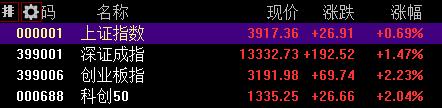
Market Overview - The A-share market saw a significant increase, with the Shanghai Composite Index rising by 0.69% to 3917 points, the Shenzhen Component Index up by 1.47%, the ChiNext Index increasing by 2.23%, and the STAR Market 50 Index rising by 2.04% [1][2] - The total market turnover reached 1.88 trillion yuan, an increase of 133.5 billion yuan compared to the previous trading day, with nearly 3000 stocks rising, including 105 stocks hitting the daily limit [1][2] Sector Performance - The Hainan Free Trade Port officially launched its full island closure operation, leading to a surge in Hainan-related stocks, with over 20 stocks hitting the daily limit, including Shen Nong Agricultural and Hainan Airport [2][4] - The duty-free sales in Sanya exceeded 100 million yuan for three consecutive days, boosting the duty-free concept stocks, with China Duty Free Group and others hitting the daily limit [2] - Precious metals stocks surged as international gold and silver prices reached historical highs, with notable increases in stocks like Xiaocheng Technology and Hunan Silver [6][7] - The CPO concept was active, while sectors such as education and health saw declines, with companies like Huaren Health dropping over 9% [2][14] Notable Stocks - Shen Nong Agricultural saw a rise of 20.03% to 7.13 yuan, while Kangzhi Pharmaceutical increased by 19.96% to 13.22 yuan [5] - Xiaocheng Technology rose by 7.42% to 31.12 yuan, and Hunan Silver increased by 7.20% to 6.70 yuan [7][10] - The robot concept stocks experienced a broad increase, with Sanfeng Intelligent rising by 8.84% to 9.36 yuan [11][12] Future Outlook - The market is entering a critical window for cross-year layout as 2026 approaches, with expectations for policy benefits to be released early, focusing on structural opportunities in sectors aligned with policy guidance and industry prosperity [22]

股息率近7%吸引力凸显,港股红利低波ETF(520550)年内获超10亿增仓
Sou Hu Cai Jing· 2025-12-22 06:32
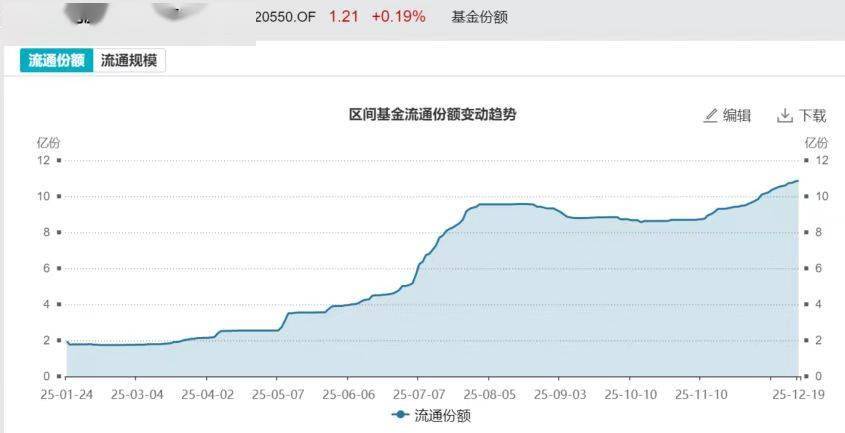
Group 1 - The core viewpoint is that high dividend and low volatility assets are becoming a key focus for capital allocation as the year-end approaches, with significant net inflows into the Hong Kong dividend low volatility ETF (520550) indicating its role as a market "safe haven" strategy [1][3]. Group 2 - The continuous inflow of funds is driven by the ETF's attractive valuation and dividend returns, with the latest dividend yield reaching nearly 7%, making it particularly appealing in the current interest rate environment [3][4]. Group 3 - The ETF's low volatility characteristic aligns with current risk-averse demands, as it selects stocks with historically low volatility, resulting in overall volatility significantly lower than the Hong Kong market, thus serving as an ideal "ballast" in investment portfolios during uncertain macroeconomic conditions [4][5]. Group 4 - Overall, the sustained inflow of funds reflects a market preference for stable cash flow assets amid rational economic recovery expectations and declining risk-free interest rates, with ongoing policy support for corporate dividends further solidifying the long-term allocation value of dividend assets [5].
银河期货每日早盘观察-20251222
Yin He Qi Huo· 2025-12-22 02:46
1. Report Industry Investment Ratings No relevant content provided. 2. Core Views of the Report - The stock index futures are expected to have upward momentum at the beginning of the week, but face integer - level pressure. The conversion of contract months may lead to an expansion of basis. The bond market for treasury futures is cautiously optimistic in the short - term, with short - term trading opportunities in the TL contract [21][23]. - Agricultural products have different trends. Protein meal prices are under pressure, sugar is expected to bottom - oscillate, and the cotton - cotton yarn market is strong due to factors such as good sales of new cotton [27][32][54]. - Black metals show different characteristics. Steel prices are range - bound, coking coal and coke may rebound from the bottom, and iron ore prices are volatile [58][61][64]. - Non - ferrous metals also vary. Precious metals like gold and silver are likely to continue their strong trend, while base metals such as copper, aluminum, and zinc have different price trends due to various factors [70][84][91]. - Energy and chemical products have diverse situations. Crude oil prices are bottom - oscillating, asphalt has support, and fuel oil is weakly - oscillating [116][120][124]. 3. Summary by Relevant Catalogs 3.1 Financial Derivatives Stock Index Futures - **Investment Logic**: The market was first down then up last week. The Shanghai Composite Index faces the 3900 - point decision. There may be a style switch, and the acquisition plan of Shenhua may drive large enterprises. Futures contracts' basis may expand after the contract - month change, and short - selling forces have increased [21]. - **Trading Strategy**: Adopt a high - selling and low - buying strategy for unilateral trading; wait for the basis to expand for IM\IC long 2603 + short ETF cash - and - carry arbitrage; use a double - buying strategy for options [21]. Treasury Futures - **Investment Logic**: The bond market is less sensitive to weak economic data. The capital supply is loose, increasing the market's expectation of interest - rate cuts. The short - and medium - term bonds are relatively stable, while the long - term bonds' recovery is uncertain [23]. - **Trading Strategy**: Short - term, buy low and sell high for the TL contract [23]. 3.2 Agricultural Products Protein Meal - **Investment Logic**: The global soybean supply is abundant. Domestic soybean meal has an uncertain supply, and rapeseed meal is expected to oscillate [27]. - **Trading Strategy**: Adopt a bearish view for unilateral trading; narrow the MRM spread for arbitrage; sell a wide - straddle strategy for options [28]. Sugar - **Investment Logic**: Internationally, the Brazilian sugar supply pressure is easing, and the northern hemisphere is in an increasing - production cycle. Domestically, new sugar production is increasing, but there is cost support [31][32]. - **Trading Strategy**: For unilateral trading, watch for the support at previous lows; for arbitrage, go long on the January contract and short on the May contract; for options, wait and see [32]. Oilseeds and Oils - **Investment Logic**: Domestic soybean oil inventory is decreasing, but the overall supply is sufficient. There is a lack of positive drivers for oils, but the downward space is limited [35]. - **Trading Strategy**: For unilateral trading, go long on palm oil after it stops falling and rebounds, and wait and see for soybean oil and rapeseed oil; for arbitrage and options, wait and see [35]. 3.3 Black Metals Steel - **Investment Logic**: The steel price is range - bound. The replenishment expectation has not been fulfilled, and the cost has support, but the upward space is limited [58]. - **Trading Strategy**: For unilateral trading, maintain the oscillating trend; for arbitrage, short the coil - coal ratio and hold the short position in the coil - rebar spread; for options, wait and see [59]. Coking Coal and Coke - **Investment Logic**: The coking coal auction situation has improved, but the price increase is not widespread. The coking coal supply may improve in the future, but the price fluctuation is large [61]. - **Trading Strategy**: For unilateral trading, wait and see or go long lightly at low prices; for arbitrage and options, wait and see [62]. Iron Ore - **Investment Logic**: The iron ore supply is abundant, and the demand is weak. The price increase space is limited [64]. - **Trading Strategy**: For unilateral trading, the price is oscillating; for arbitrage and options, wait and see [65]. 3.4 Non - ferrous Metals Precious Metals - **Investment Logic**: The obstacles to interest - rate cuts have decreased, and gold and silver are likely to continue their strong trend [70]. - **Trading Strategy**: For unilateral trading, hold long positions in gold and silver based on the 5 - day moving average; for arbitrage, wait and see; for options, buy out - of - the - money call options [72]. Base Metals - **Investment Logic**: Different base metals have different price trends due to factors such as supply and demand, cost, and policies [79][85][91]. - **Trading Strategy**: Each metal has different trading strategies, including unilateral trading, arbitrage, and options trading, mainly depending on its specific situation [79][85][91]. 3.5 Energy and Chemical Products Crude Oil - **Investment Logic**: Geopolitical factors cause frequent disturbances, and the oil price is bottom - oscillating. The supply - demand surplus pressure is significant [116]. - **Trading Strategy**: For unilateral trading, the price is weakly oscillating; for arbitrage, the domestic gasoline is neutral, the diesel is weak, and the oil - price spread is weak; for options, wait and see [117]. Asphalt - **Investment Logic**: The raw - material risk is difficult to prove false, and the asphalt price has support. The supply - demand fundamentals may weaken [120]. - **Trading Strategy**: For unilateral trading, the price is oscillating; for arbitrage and options, wait and see [120]. Fuel Oil - **Investment Logic**: The fundamentals of high - and low - sulfur fuel oils are weakly oscillating. The supply is increasing, and the demand is weakening [124]. - **Trading Strategy**: For unilateral trading, go short; for arbitrage, the low - sulfur and high - sulfur crack spreads are weak; for options, wait and see [124].
项目为王 精准“滴灌”——看广西如何走出资源高效配置新路径
Guang Xi Ri Bao· 2025-12-22 02:11
Core Viewpoint - The article emphasizes the importance of project construction as a key driver for economic development, investment growth, and high-quality development in Guangxi, highlighting the implementation of three major mechanisms to support project land use and resource allocation [2][10]. Group 1: Project Construction and Land Use - The Guangxi Natural Resources Department has prioritized project construction as a central focus for development, implementing a provincial-level coordination model to optimize land use indicators and ensure major projects are executed efficiently [2][3]. - A total of 29,100 acres of land use indicators have been guaranteed through the new land use verification mechanism, covering various sectors such as energy, transportation, and livelihood [3][4]. - The Guangxi government has established a "point-to-point" service model for major projects, ensuring that land use is fully verified and supported at the provincial level, thus accelerating project implementation [3][4]. Group 2: Special Land Use Indicators - The establishment of specialized land use indicators for key areas, such as the China-ASEAN Industrial Cooperation Zone, aims to support the development of cross-border industrial chains and modern service industries [5][6]. - As of now, over 8,980 acres of these specialized indicators have been utilized, facilitating the launch of 62 major projects that have collectively attracted over 30 billion yuan in investment [5][7]. Group 3: Incentive Mechanisms - The Guangxi government has introduced an incentive mechanism that rewards regions for high-quality development and efficient land use, with a total of 18,400 acres of land use indicators allocated since 2024 [8][9]. - This performance-based reward system encourages local governments to actively seek land use indicators, fostering a culture of proactive development rather than passive acceptance [9][10]. - The implementation of these mechanisms has led to a significant increase in project initiation rates, with 231 major projects starting construction by the end of October 2025, representing a 67% year-on-year increase in certain regions [9][10].

能源化工期权:能源化工期权策略早报-20251222
Wu Kuang Qi Huo· 2025-12-22 01:57
Group 1: Report Overview - The report is an early morning strategy report for energy and chemical options dated December 22, 2025 [2] - The report covers various types of energy and chemical options, including energy, polyolefins, polyesters, alkali chemicals, and others [3] - The recommended strategy is to construct an option portfolio strategy mainly based on sellers, as well as spot hedging or covered strategies to enhance returns [3] Group 2: Underlying Futures Market Overview - The report provides the latest prices, price changes, trading volumes, and open interest of various underlying futures contracts, such as crude oil, liquefied petroleum gas (LPG), methanol, and ethylene glycol [4] Group 3: Option Factors Volume and Open Interest PCR - The report presents the volume and open interest PCR of different option varieties, which are used to describe the strength of the underlying option market and the turning point of the underlying market [5] Pressure and Support Levels - The pressure and support levels of option underlying are analyzed based on the strike prices with the largest open interest of call and put options [6] Implied Volatility - The report shows the implied volatility of different option varieties, including at-the-money implied volatility and weighted implied volatility, and provides the historical average and the difference between implied and historical volatility [7] Group 4: Strategy and Recommendations Energy Options (Crude Oil) - Fundamental analysis shows that the total US crude oil inventory decreased, while the strategic crude oil inventory increased slightly [8] - The crude oil market showed a weak trend, with large fluctuations and resistance at the upper level [8] - Option factor analysis indicates that the implied volatility of crude oil options is below the average, and the open interest PCR suggests a weak market [8] - Recommended strategies include constructing a bear spread strategy for put options, a short call + put option combination strategy, and a long collar strategy for spot hedging [8] Other Options (LPG, Methanol, etc.) - Similar analysis and strategy recommendations are provided for other option varieties, including fundamental analysis, market trend analysis, option factor research, and specific strategy suggestions [9][10][11][12][13][14] Group 5: Option Charts - The report includes various option charts for different varieties, such as price charts, volume and open interest charts, open interest distribution charts, PCR charts, implied volatility charts, and historical volatility cone charts [15][35][55][75][94][113][131][150][171][190][211][230][250][269][285][301][319]