
消费品制造

Search documents
PMI不弱,政策不急
HUAXI Securities· 2025-06-30 13:47
Group 1: PMI Overview - The manufacturing PMI for June is reported at 49.7%, matching expectations and slightly up from the previous value of 49.5%[1] - The non-manufacturing PMI stands at 50.5%, an increase from the prior value of 50.3%[1] - The average composite PMI for Q2 is 50.4%, lower than Q1's average of 50.9% and last year's Q2 average of 51.1%[1] Group 2: Demand and Price Trends - New orders in manufacturing, construction, and services have rebounded by 0.4, 1.6, and 0.3 percentage points respectively, indicating improved demand[2] - Manufacturing prices have rebounded by 1.5 percentage points, while construction and service prices increased by 0.8 and 1.6 percentage points respectively, although all remain below the expansion threshold[2] Group 3: External Demand and Employment - Manufacturing new export orders increased by 0.2 percentage points to 47.7%, still below the Q1 average of 48.0%[3] - Employment indices in manufacturing and services have decreased by 0.2 percentage points to 47.9% and 46.4%, respectively, indicating ongoing contraction in workforce[5] Group 4: Economic Outlook - The composite PMI of 50.7% in June is 0.2 percentage points lower than the Q1 average, suggesting a slower economic recovery[6] - The necessity for immediate policy stimulus is reduced, with potential policy actions expected to be postponed until August or September[6]
国家统计局:前五月宏观政策效应持续显现,投资延续平稳增长态势
news flash· 2025-06-16 07:09
Investment Overview - In the first five months of 2025, total fixed asset investment (excluding rural households) reached 191,947 billion yuan, showing a year-on-year growth of 3.7% [2] Group 1: Equipment Investment - Equipment and tool purchase investment experienced significant growth, increasing by 17.3% year-on-year, which is 13.6 percentage points higher than the overall investment growth rate; it contributed 63.6% to the total investment growth, adding 2.3 percentage points [3] Group 2: Infrastructure Investment - Infrastructure investment maintained steady growth, rising by 5.6% year-on-year, which is 1.9 percentage points higher than the overall investment growth rate; it contributed 34.5% to the total investment growth, an increase of 1.9 percentage points compared to the previous four months [4] Group 3: Manufacturing Investment - Manufacturing investment continued to grow rapidly, with an 8.5% year-on-year increase, 4.8 percentage points higher than the overall investment growth rate; it contributed 56.5% to the total investment growth, improving by 1.9 percentage points from the previous four months [5] Group 4: High-tech Service Investment - High-tech service investment showed a positive trend, growing by 11.6% year-on-year, with a 0.3 percentage point acceleration compared to the previous four months; information service investment surged by 41.4% [6] Group 5: Private Investment - Private project investment remained stable, with a year-on-year growth of 5.8% when excluding real estate development; notable growth was seen in the accommodation and catering industry at 25.3% and in cultural, sports, and entertainment sectors at 10.0% [7] Group 6: Green Energy Investment - Green energy investment grew rapidly, with a year-on-year increase of 25.4% in the electricity, heat, gas, and water production and supply sectors; this contributed 43.8% to the total investment growth, adding 1.6 percentage points [8] Group 7: Large Project Investment - Investment in projects with planned total investments of 1 billion yuan or more increased by 6.5% year-on-year, which is 2.8 percentage points higher than the overall investment growth rate, contributing 3.6 percentage points to total investment growth [9]
工企盈利视角看中报利润
Tebon Securities· 2025-06-12 09:44
Group 1: Macro Economic Outlook - The "924" policy shift in 2024 significantly improved market risk appetite, leading to increased market activity and valuation recovery in certain sectors[2] - By 2025, the macro economy shows signs of stabilization, with corporate profits beginning to recover from the bottom[2] - Despite improvements, the current macro environment remains complex, leading to increased volatility in some assets[2] Group 2: Industrial Profit Analysis - From January to April 2025, industrial enterprises' profits shifted from decline to growth, with high-tech manufacturing profits increasing by 9.0% year-on-year, outperforming the overall industrial average by 7.6%[6] - The profit margin for industrial enterprises was 4.87% from January to April 2025, a decrease of 0.13 percentage points year-on-year[7] - Equipment manufacturing remains a crucial support for profit growth, with a profit increase of 15.5% in the same period[10] Group 3: A-Share Market Predictions - A-shares are expected to reach a "profit bottom" in Q2 or Q3 2025, aligning with industrial profit trends[16] - The predicted cumulative profit growth rates for industrial enterprises in Q2, Q3, and Q4 2025 are 0.6%, 3.5%, and 3.3% respectively[16] - The upcoming mid-year reports for listed companies will be critical in assessing the effectiveness of the "924" policy and the resilience of the Chinese economy[31]
能源价格拖累5月CPI同比下降0.1%,但核心CPI涨幅略有扩大
Sou Hu Cai Jing· 2025-06-09 02:15
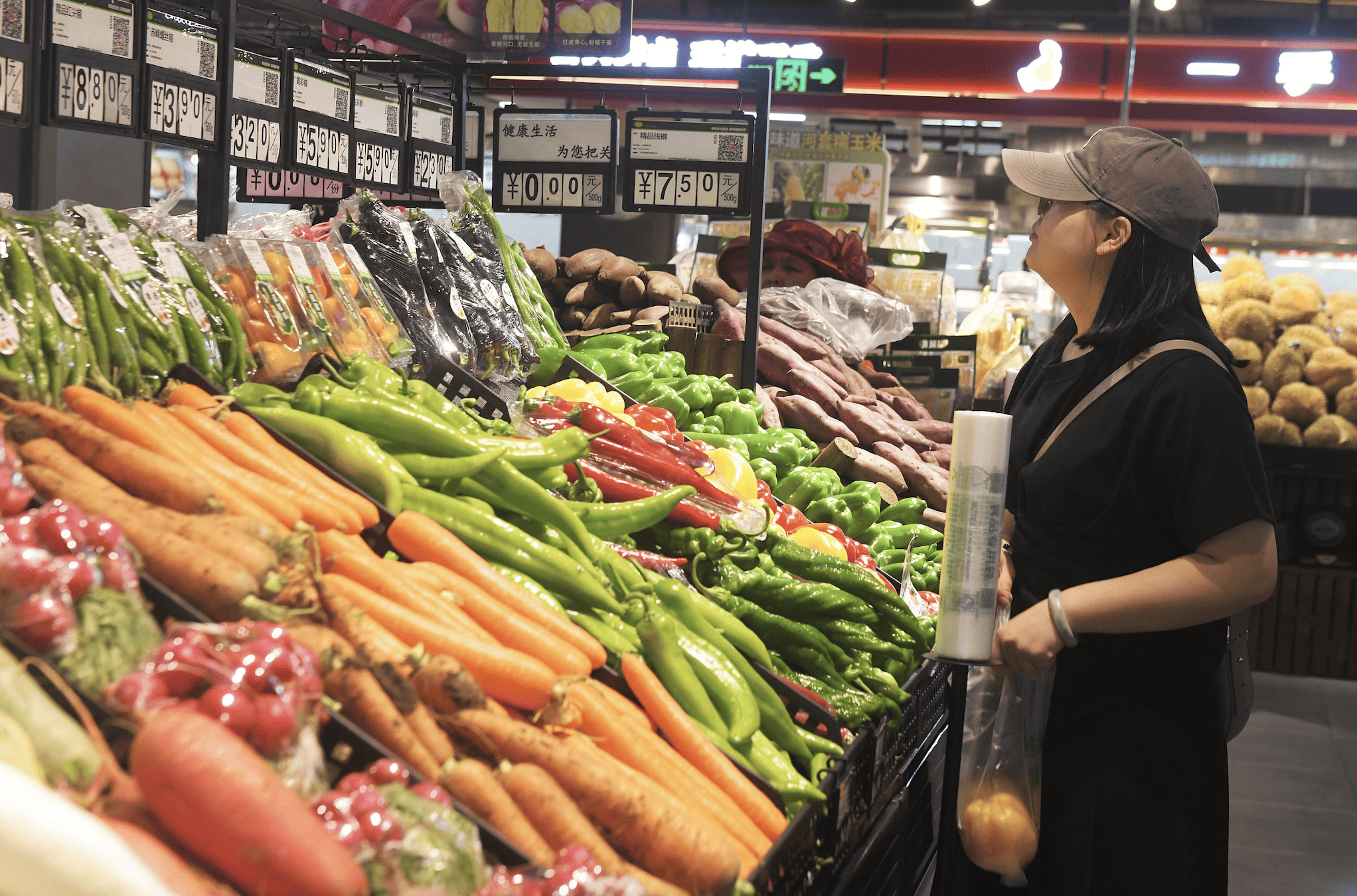
Group 1: Consumer Price Index (CPI) Analysis - In May, China's Consumer Price Index (CPI) decreased by 0.1% year-on-year, with the decline remaining consistent compared to April [1] - The main factor contributing to the CPI decline was a 6.1% year-on-year drop in energy prices, which impacted the CPI by approximately 0.47 percentage points [1] - Food prices fell by 0.4% year-on-year, with significant declines in fresh vegetable prices (down 8.3%) and a smaller increase in pork prices (up 3.1%) [1] Group 2: Core CPI and Future Outlook - The core CPI increased by 0.6% year-on-year in May, reflecting a slight improvement compared to the previous month [3] - Future price trends may be supported by consumption-boosting policies, although potential negative impacts from the US-China tariff situation and "export to domestic" pressures should be monitored [3] - There is a possibility that the CPI may remain in negative territory in June, with macroeconomic policies aimed at stabilizing price levels in the second half of the year [3] Group 3: Producer Price Index (PPI) Insights - The Producer Price Index (PPI) saw a year-on-year decline of 3.3%, with the drop widening by 0.6 percentage points compared to April [1] - Some industries are experiencing improved supply-demand relationships, leading to price recoveries in certain sectors, particularly in consumer goods [4] - The future trajectory of industrial prices will largely depend on the effectiveness of counter-cyclical policies, especially those supporting the real estate sector [4]

路透社整理发现,美贸易战已致全球企业损失超340亿美元
Sou Hu Cai Jing· 2025-05-30 03:20
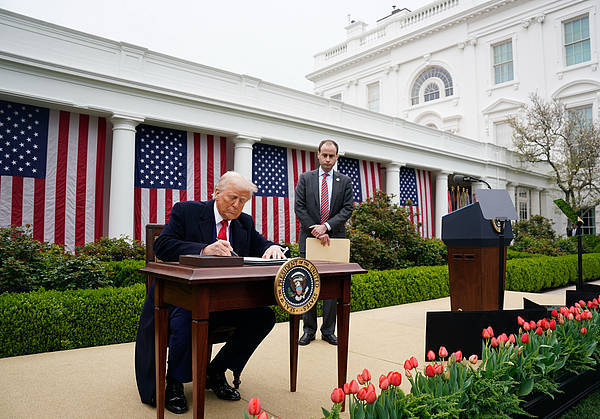
Group 1 - The trade war initiated by the Trump administration has resulted in over $34 billion in losses for global companies, with sales declining and costs rising due to tariffs [1] - Major companies such as Apple, Ford, Porsche, and Sony have significantly lowered profit forecasts or withdrawn earnings guidance due to the unpredictable nature of Trump's trade policies [1][2] - As of the recent earnings season, at least 42 companies have downgraded their earnings expectations, and 16 companies have withdrawn or suspended their earnings guidance [2][5] Group 2 - The impact of tariffs is expected to be much greater than currently disclosed, with potential chain reactions affecting consumer and business spending, as well as inflation expectations [2] - Companies are likely to seek to strengthen supply chains, pursue nearshoring, and prioritize new market expansions, all of which will increase costs [2] - The automotive, airline, and consumer goods sectors are among the hardest hit by rising tariffs on raw materials and components, leading to increased assembly costs due to fragmented supply chains [5][6] Group 3 - Companies like Walmart and Volvo have either refused to provide profit forecasts or have withdrawn future earnings predictions due to the impact of tariffs [3][5] - Kimberly-Clark has significantly lowered its annual profit forecast, citing an additional $300 million in costs due to tariffs, while also planning a $2 billion investment to expand production in the U.S. [6] - Diageo has projected a loss of $150 million in annual operating profit due to tariffs and plans to cut costs by $500 million by 2028 [6]
从经济数据看消费新势能
Xiao Fei Ri Bao Wang· 2025-05-27 02:52
Group 1 - In April, China's economy demonstrated stable growth under pressure, with retail sales of consumer goods increasing by 5.1% year-on-year, indicating a continuous release of consumption potential [1] - Investment in the consumer goods manufacturing sector grew by 13.4% from January to April, reflecting a significant transformation in the supply system [1] - High-tech manufacturing investment rose by 9.7% in the first four months, with the smart consumer equipment manufacturing sector's value-added increasing by 10% [1] Group 2 - Service retail sales grew in tandem with total retail sales, indicating a paradigm shift in consumption patterns, with experiential and scenario-based consumption reshaping demand [2] - The multiplier effect of service consumption is significant, with every additional 1 yuan in service consumption generating 0.6 yuan in related industry value, making it a key support for employment and income growth [2] - The dynamic balance of supply and demand is crucial for economic resilience, with technological iterations in consumer goods manufacturing providing the material basis for demand upgrades [2]
浙江:大力支持消费品出口转内销
news flash· 2025-05-27 01:49
浙江起草《关于进一步加强工贸联动支持企业稳产减负增效的实施意见(征求意见稿)》,向社会公开 征求意见。其中提到,大力支持消费品出口转内销。加速出口产品国内外标准转换,完善强制性产品 (CCC认证)认证制度,开辟认证绿色通道简化认证流程。联合直播平台、电商、高速服务区、线下商 超、展览会博览会等各类渠道开设浙产优品出口转内销专区,鼓励对相关流量费、展位费、租金等费用 进行优惠减免。推动外贸优品纳入消费品"以旧换新"政策实施范围,积极组织外贸企业参加国家和我省 举办的外贸优品中华行活动,推广境外旅客购物 离境退税"即买即退"服务。 ...
4月经济数据表现与资产指向
2025-05-19 15:20
Summary of Key Points from the Conference Call Industry Overview - The conference call discusses the macroeconomic performance of China in April 2025, highlighting the resilience of the economy despite external pressures such as U.S. tariffs on Chinese goods [1][2]. Core Economic Insights - China's actual GDP growth in April 2025 is approximately 5.5% year-on-year, indicating strong economic fundamentals that support the annual growth target [1][2]. - The production sector continues to show robust growth, particularly in high-tech industries such as high-end equipment manufacturing, integrated circuits, industrial robots, and the new energy vehicle supply chain [1][3]. - Consumer retail sales growth is around 5% year-on-year, with notable performance in new products, although goods consumption is currently stronger than services consumption [1][5]. - The real estate sector shows signs of stabilization, with new home sales and prices stabilizing, although supply-side indicators are declining [1][6]. - Investment growth has slightly decreased, with manufacturing investment remaining resilient, but the electronics sector is impacted by tariffs [1][7]. Production Sector Analysis - The production sector maintains strong growth, with industrial value-added growth remaining above 6%, despite a slight decline due to base effects [3]. - High-tech industries are expanding, and the overall macro environment is improving, which may help mitigate the impact of U.S. tariffs [3][9]. Consumer Sector Trends - The consumer sector continues to show structural characteristics, with significant growth in new products exceeding 20% [5]. - The expectation is that service consumption will gradually become a key support for domestic demand in the second half of the year [5]. Real Estate Sector Performance - The real estate demand is stabilizing, with new home sales and prices showing a stabilizing trend, although the supply side is experiencing a downturn [6]. Investment Sector Insights - Investment growth has slightly declined due to a decrease in real estate and marginal cooling in infrastructure and manufacturing investments [7][8]. - Infrastructure investment remains strong, particularly in new infrastructure areas such as data centers and artificial intelligence [8]. Capital Market Signals - Recent financial policies indicate a continuous supportive tone, suggesting that 2025 may be a turning point for China's macroeconomic narrative [10][12]. - The cyclical factors that have suppressed China's economy and equity performance are nearing an end, with positive changes emerging in structural factors [12]. Potential Investment Opportunities - Future investment opportunities may arise from three main areas: technological breakthroughs, confirmation of economic stability, and global economic structural changes [11]. - The overall outlook suggests that despite tariff impacts, improvements in domestic demand and new trade dynamics will support economic resilience and potential revaluation in the capital market [11][12].
经济运行开局良好,宏观政策不断加力--宏观经济信用观察季度报(2025年一季度)
Lian He Zi Xin· 2025-05-19 04:40
Economic Performance - In Q1 2025, China's GDP reached 31.8758 trillion yuan, with a year-on-year growth of 5.4% and a quarter-on-quarter increase of 1.2%[3] - The industrial added value grew by 6.5% year-on-year, while the service sector's added value increased by 5.3%[4] - Fixed asset investment rose by 4.2% year-on-year, with infrastructure investment growing by 5.8%[16][20] Trade and Exports - Total goods trade in Q1 2025 was 10.3 trillion yuan, a year-on-year increase of 1.3%, with exports at 6.13 trillion yuan, up 6.9%[28] - The export of mechanical and electrical products reached 5.29 trillion yuan, growing by 7.7%[28] - The share of domestic brand exports increased to 22.8%, reflecting a 10.2% growth in this segment[28] Price Stability - The Consumer Price Index (CPI) decreased by 0.1% year-on-year, with food prices dropping by 1.5%[31] - The Producer Price Index (PPI) fell by 2.3% year-on-year, indicating a slowdown in the decline compared to previous quarters[33] Employment and Fiscal Policy - The urban survey unemployment rate averaged 5.3% in Q1 2025, showing stability in the job market[38] - National general public budget revenue was 6.0 trillion yuan, down 1.1% year-on-year, while expenditures increased by 4.2% to 7.3 trillion yuan[40]
新华全媒+|CPI环比由降转涨 部分工业行业价格稳中向好——透视4月份物价数据
Sou Hu Cai Jing· 2025-05-10 08:27
Group 1: CPI and Core CPI Trends - In April, the national Consumer Price Index (CPI) shifted from a decrease of 0.4% in the previous month to an increase of 0.1% [1] - The core CPI, excluding food and energy prices, rose by 0.5% year-on-year, indicating stable growth [1][4] - The increase in core CPI reflects the internal resilience of the economy, supported by ongoing macro policies [4] Group 2: Price Changes in Specific Sectors - Prices in the wearable smart device manufacturing sector increased by 3% year-on-year, while aircraft manufacturing prices rose by 1.3% [1][4] - Service prices showed a steady upward trend, with significant increases in travel-related services, such as airfares rising by 13.5% and hotel accommodation by 4.5% [2] - The prices of black metal smelting and non-metal mineral products saw a narrowing decline, indicating a recovery in demand due to infrastructure projects [5] Group 3: Energy Prices and Their Impact - International oil prices fell significantly due to production increases from countries like Saudi Arabia and Russia, leading to a 4.8% year-on-year decline in energy prices [3] - The drop in gasoline prices by 10.4% contributed approximately 0.38 percentage points to the year-on-year decline in CPI [2][3] Group 4: Policy Impacts on Consumption and Prices - Various policies aimed at boosting consumption and upgrading service quality have been implemented, contributing to the recovery of service consumption [2][5] - The ongoing promotion of trade diversification has led to price increases in certain export sectors, such as integrated circuit packaging, which rose by 2.7% year-on-year [5]