通信

Search documents
未知机构:开源通信蒋颖团队Meta康宁微软财报亮眼重视硅光CPO光纤液冷投资-20260202
未知机构· 2026-02-02 02:05
Summary of Earnings Call Records Companies and Industries Involved - **Meta**: Technology and social media company - **Microsoft**: Technology company focusing on cloud services and AI - **Corning**: Technology company specializing in glass and ceramics, particularly in optical fibers - **Silicon Photonics**: Emerging technology in optical communication - **Liquid Cooling**: Technology related to cooling systems in data centers and electronics Key Points and Arguments Meta - **Q4 2025 Revenue**: Reported revenue of $59.893 billion, exceeding analyst expectations of $58.42 billion, representing a year-over-year growth of 24% [1] - **Q1 2026 Revenue Guidance**: Expected revenue between $53.5 billion and $56.5 billion, also above analyst expectations of $51.27 billion [1][1] Microsoft - **Q2 FY2026 Revenue**: Achieved revenue of $81.273 billion, a 17% year-over-year increase, driven by intelligent cloud services [2] - **Intelligent Cloud Revenue**: Revenue from the intelligent cloud segment grew by 26% to $51.5 billion, marking a significant milestone of surpassing $50 billion [2] - **Capital Expenditure**: Capital expenditure reached $37.5 billion, a 66% increase year-over-year, primarily invested in GPU and CPU technologies to meet AI and cloud demands [2][2] Corning - **Q4 2025 Core Sales**: Reported core sales of $4.41 billion, a 14% year-over-year increase, with core earnings per share of $0.72, up 26% [4] - **Q1 2026 Guidance**: Management anticipates a further acceleration in growth, with core sales expected to increase by approximately 15%, reaching between $4.2 billion and $4.3 billion [4] Investment Opportunities - **Silicon Photonics**: Recommended stocks include Zhongji Xuchuang, Xinyi Technology, and Yuanjie Technology [3] - **Liquid Cooling**: Recommended stock is Invec, recognized as a leader in the liquid cooling supply chain [2] - **Optical Fiber**: Recommended stocks include Hengtong Optic-Electric and Zhongtian Technology, with beneficiaries such as Changfei Optical Fiber and Yongding Co. [5] Additional Important Content - **Capital Expenditure Trends**: Meta's capital expenditure for Q4 2025 was $22.14 billion, with a total of $72.22 billion for the year, exceeding initial guidance of $60-65 billion [2] - **Market Outlook**: The overall sentiment in the technology sector remains optimistic, particularly in AI-driven applications and optical communication technologies, indicating potential growth and investment opportunities in these areas [1][2][4]



早盘直击|今日行情关注
申万宏源证券上海北京西路营业部· 2026-02-02 02:03
Group 1 - The core viewpoint of the article highlights a shift in the spring market, indicating a change in the market's profit-making effect, with large-cap stocks experiencing a rebound after a decline, while small-cap and tech stocks faced adjustments [1] - The market is characterized by a phase of oscillation and differentiation, moving away from a uniform upward trend to a more volatile and segmented market environment [1] - The average daily trading volume in the two markets increased to approximately 30 trillion yuan, showing a recovery compared to the previous week, with market hotspots primarily in upstream resource products and the telecommunications industry [1] Group 2 - The Shanghai Composite Index has entered a consolidation phase after a series of rebounds, with the current market features being sector differentiation and rapid industry rotation [2] - There is a need to monitor whether various classification indices can reclaim their 5-day moving averages in the short term [2]


英大证券晨会纪要-20260202
British Securities· 2026-02-02 01:47
Group 1 - The report indicates that the A-share market is currently experiencing a significant rotation of themes, shifting from technology stocks to a focus on heavyweight stocks, with a notable reduction in the profitability effect [2][13] - The market is in a cooling cycle, with a decrease in trading volume and a prevailing cautious sentiment among investors as the Spring Festival approaches, leading to potential seasonal tightening of market liquidity [2][13] - The core logic supporting the market's medium-term positive outlook remains unchanged, driven by favorable domestic policies and capital [2][13] Group 2 - The report forecasts an increase in market volatility and a trend towards balanced styles in 2026, emphasizing the importance of following the "14th Five-Year Plan" and subsequent policy directions [3][13] - Investors are advised to focus on sectors with actual performance or future earnings support, including technology growth stocks, cyclical commodities, domestic consumption, dividend stocks, and sectors with improving economic conditions [3][13] - The semiconductor sector is highlighted as a key area for investment, with expectations of continued growth driven by digital transformation and geopolitical factors, while cautioning against purely speculative stocks lacking performance support [10][12] Group 3 - The agricultural and tourism sectors are noted for their active performance, supported by government policies aimed at stimulating consumption and shifting the macro policy focus towards consumer-driven growth [8][12] - The report identifies structural investment opportunities in the consumer sector, particularly in areas aligned with demographic trends and service consumption upgrades [8][12] - The report also discusses the performance of the precious metals sector, which has seen significant price increases due to various factors, including monetary policy shifts and geopolitical tensions, but advises against chasing prices after recent gains [11][12]
崩盘的远不止金银
虎嗅APP· 2026-02-02 01:37
Core Viewpoint - The article discusses the recent sharp declines in gold and silver prices, attributing it to a reversal in market expectations regarding the Federal Reserve's monetary policy, particularly following the appointment of Kevin Warsh as the new Fed Chair, who is expected to advocate for tighter monetary policies [10][12][18]. Group 1: Gold and Silver Price Declines - Gold prices fell sharply, with COMEX gold dropping below $5000 per ounce, marking a maximum decline of 16%, while silver saw a more severe drop of 39% from its peak of $121.785 per ounce to a low of $74 per ounce [6][12]. - The market consensus shifted due to expectations of a significant reduction in Fed's balance sheet and a potential tightening of monetary policy, which negatively impacted non-yielding assets like gold and silver [10][12]. - The volatility in gold and silver prices was exacerbated by profit-taking at high levels and a temporary easing of geopolitical tensions, leading to a rapid exit of funds from these assets [12][24]. Group 2: Historical Context of Gold Prices - Historical peaks in gold prices have been associated with several factors, including Fed tightening, economic recovery, and central bank gold sales, with notable peaks in 1980 and 2011 leading to significant declines thereafter [15][16]. - The current decline in gold prices is not indicative of a fundamental deterioration in its market but rather a reaction to changing monetary policy expectations and profit-taking [17][24]. Group 3: Silver Market Dynamics - Silver's price volatility is attributed to its smaller market size compared to gold, making it more susceptible to speculative trading and rapid price movements [12][28]. - The article highlights the potential risks in the silver market, including the impact of rising margin requirements and the possibility of reduced industrial demand, particularly from sectors like photovoltaics and electric vehicles [34][37]. Group 4: Impact on U.S. Stock Market - The declines in gold and silver prices have also affected the U.S. stock market, particularly technology stocks, due to concerns over AI investment returns and the overall risk appetite of investors [43][45]. - The article notes that the market is experiencing a shift in sentiment, with some sectors benefiting from the volatility while others face significant declines, indicating a complex interplay of macroeconomic narratives and investor behavior [45][56]. Group 5: Implications for A-Share Market - The A-share market is expected to experience downward pressure due to external shocks from the U.S. market, with potential for significant declines in related sectors such as precious metals [47][48]. - Investors are advised to remain cautious and consider the fundamental performance of companies, particularly those with strong resources and cost control, as the market seeks stability amid volatility [56][60].

对白银有色等严重异常波动股票进行重点监控!三分钟看完周末发生了什么
Sou Hu Cai Jing· 2026-02-02 00:47
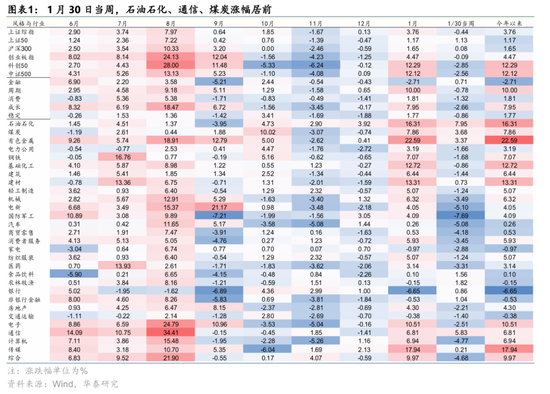
Market Overview - Global major asset performance showed mixed results, with the Korean KOSPI leading with a 4.70% increase, while the Chinese A-shares faced declines, particularly in small and growth indices [2][3] - The A-share market experienced a downturn, with the ChiNext Index falling by 2.85% and the CSI 500 down by 2.56%, indicating a shift of funds towards large-cap blue-chip stocks for safety [3][4] Industry Performance - The oil and petrochemical sector led the weekly gains with an 8.0% increase, followed by communication and coal sectors with 5.8% and 3.7% respectively [6] - Conversely, the defense and military industry saw a significant decline of 7.7%, while electric equipment and automotive sectors also faced losses of 5.1% [6][7] Commodity Market - Precious metals experienced a historic pullback, with gold prices initially rising due to safe-haven demand but later falling sharply due to profit-taking and a stronger dollar [4][22] - Oil prices remained strong due to geopolitical tensions and supply disruptions, particularly from the U.S. cold wave affecting exports [4] Strategic Insights - The nomination of Kevin Warsh as the new Federal Reserve Chair is expected to influence monetary policy, with a potential focus on interest rate cuts while being cautious about balance sheet expansion [10][11] - Market reactions to Warsh's nomination indicated a preference for his hawkish stance against balance sheet expansion, leading to a rise in U.S. Treasury yields and a decline in gold and U.S. equities [11] Economic Indicators - The official manufacturing PMI for January was reported at 49.3%, a decrease of 0.8 percentage points from the previous month, indicating a contraction in manufacturing activity [12] - The WTO ruled against the U.S. in a dispute over the Inflation Reduction Act, stating that certain clean energy subsidies violated trade rules, which may impact U.S.-China trade relations [13]


财闻早知道|今日早盘银价跌超10%后又反弹超2% 小米汽车1月登顶新势力交付榜
Sou Hu Cai Jing· 2026-02-02 00:47
Group 1 - New stock subscriptions include Yisiwei (688816 on the Sci-Tech Innovation Board) and Aide Technology (920180 on the Beijing Stock Exchange) [2] - The 2026 Spring Festival travel rush will start on February 2 and end on March 13 [2] - The first APEC senior officials' meeting of the year will be held in Guangzhou from February 1 to 10 [2] Group 2 - The U.S. stock market faced slight declines, with the Dow Jones Industrial Average down 0.36% and the S&P 500 down 0.43% [3] - The global precious metals market experienced significant declines, with silver dropping over 35% and gold nearly 13% [3] - The U.S. government is facing a shutdown crisis, inflation pressures, and geopolitical risks, which are affecting market sentiment [3] Group 3 - The London Metal Exchange saw all base metals decline, with tin down 8.14% and copper down 4.02% [4] - Crude oil prices saw slight increases, with WTI crude up 0.49% and Brent crude up 0.33% [5] Group 4 - The National Bureau of Statistics reported that China's manufacturing PMI for January 2026 was 49.3%, a decrease of 0.8 percentage points from the previous month [11] - The equipment manufacturing PMI was at 50.1%, indicating stable growth in that sector [11] Group 5 - The Ministry of Finance announced that the securities transaction stamp duty for 2025 is expected to grow by 57.8%, reaching 203.5 billion yuan [12][13] - The telecommunications service VAT adjustment will impact revenue and profits for China Mobile, China Unicom, and China Telecom [21][22] Group 6 - The top 100 real estate companies in January 2026 reported total sales of 190.52 billion yuan, a year-on-year decline of 18.9% [32] - The global AI computing power construction is accelerating, with transformer factories in China receiving orders extending to 2027 [33] Group 7 - BYD reported January sales of 205,518 passenger vehicles, with total new energy vehicle sales at 210,051 units [46] - The company expects a net loss of approximately 82 billion yuan for the full year 2025, compared to a loss of 49.48 billion yuan in the previous year [48] Group 8 - NewEase is expected to see a net profit increase of 231% to 249% for 2025, driven by growth in computing power investment [55] - The company anticipates a net loss of 90 billion to 135 billion yuan for 2025 due to significant investment losses [60]

中金:谁在买,谁在卖?
中金点睛· 2026-02-01 23:49
Core Viewpoint - The A-share market has shown significant improvement in trading sentiment, with transaction volumes reaching historical highs, indicating a strong upward trend since mid-December 2025 [1][9]. Group 1: Market Performance - The Shanghai Composite Index achieved a 17-day consecutive rise, reaching its highest level in nearly a decade, with average daily transaction volumes exceeding 30 trillion yuan since the beginning of 2026 [1]. - The market's active trading environment is characterized by a high turnover rate of 5.7%, the most active since 2015, with a record transaction amount of 3.99 trillion yuan on January 14, 2026 [1][12]. Group 2: Investor Behavior - Retail investors have been increasingly entering the market, with an average of 2.43 million new accounts opened monthly in Q4 2025, driven by a "scarcity of assets" and the relative attractiveness of the stock market [2][18]. - High-risk preference funds, including margin financing and private equity, have seen significant increases in their positions, with margin financing balances surpassing 2.7 trillion yuan, marking a historical high [1][16]. Group 3: Fund Flows - Stock ETFs have experienced a shift in growth momentum, with significant inflows into industry-themed ETFs, particularly in sectors like non-ferrous metals and aerospace, reflecting changing investor preferences [3][22]. - Northbound capital has shown a gradual return to the A-share market, with a net inflow of 117 billion yuan in Q4 2025, as global monetary conditions favor Chinese assets [4][24]. Group 4: Institutional Investment - Insurance funds have accelerated their entry into the market, with stock and securities investments reaching 5.6 trillion yuan, the highest since 2013, indicating a growing commitment to equity investments [5][26]. - Active funds have regained excess returns, with the mixed equity fund index yielding 11.6%, outperforming the CSI 300 by approximately 7 percentage points, leading to a positive trend in fund issuance and redemption [5][28]. Group 5: Sector Focus - Institutional investors have increased their focus on sectors such as non-ferrous metals and telecommunications, while reducing exposure to electronics and biopharmaceuticals, reflecting a strategic shift in portfolio allocations [8][34]. - The market is expected to maintain a relatively active trading sentiment, supported by low interest rates and a favorable environment for equity investments, with potential for further inflows from both domestic and foreign investors [9][39].

A股市场大势研判:A股大小指数分化,沪指跌近1%
Dongguan Securities· 2026-02-01 23:30
Market Performance - The A-share market showed a divergence in performance, with the Shanghai Composite Index falling nearly 1% to close at 4117.95, while the Shenzhen Component Index decreased by 0.66% to 14205.89. The CSI 300 Index also dropped by 1% to 4706.34, while the ChiNext Index rose by 1.27% to 3346.36 [2][4]. Sector Performance - The top-performing sectors included Communication (+3.44%), Electronics (+0.68%), Agriculture, Forestry, Animal Husbandry and Fishery (+0.65%), Light Industry Manufacturing (+0.54%), and Machinery Equipment (+0.21%). Conversely, the worst-performing sectors were Non-ferrous Metals (-7.80%), Steel (-2.83%), Food and Beverage (-2.78%), Real Estate (-2.47%), and Computer (-1.96%) [3][4]. Concept Performance - Among concept sectors, Genetically Modified Organisms (GMO) led with a gain of 4.25%, followed by Soybeans (+2.97%), Corn (+2.65%), F5G Concept (+2.08%), and Co-packaged Optics (CPO) (+2.04%). In contrast, the worst performers included Lead (-7.03%), Zinc (-6.75%), Gold Concept (-6.46%), Copper (-6.17%), and Nickel (-5.40%) [3][4]. Future Outlook - The report indicates that the A-share market is currently in an adjustment phase, with indices fluctuating around moving averages. The market is experiencing increased short-term volatility, and there is a lack of clear directional guidance. Investors are advised to maintain a rational approach, avoid blind chasing of trends, and focus on core assets with solid fundamentals and high profit certainty, as well as growth sectors with improving conditions [4][5].
华泰A股策略:转向胜率思维
Xin Lang Cai Jing· 2026-02-01 23:20
Core Viewpoint - The A-share market is experiencing high volatility at elevated levels, with external and internal factors limiting risk appetite ahead of the holiday season. The core drivers of the current spring market rally remain unchanged, suggesting potential opportunities for investment after adjustments [1][17]. Group 1: Market Analysis - The A-share market has shown a preference for value stocks, with a notable shift towards lower valuation sectors such as liquor and consumer goods, increasing the difficulty of capturing excess returns [1][17]. - Historical spring market adjustments are often driven by profit-taking pressures, policy and fundamental validations, and external environmental shocks. If adjustments are primarily due to fund behavior, they may provide space for subsequent increases [2][18][20]. Group 2: Economic Indicators - As of now, over 50% of annual performance forecasts have been disclosed across all A-shares, with a higher than average positive forecast rate in sectors such as non-bank financials, materials, and consumer goods. The sectors with the highest projected net profit growth include military, machinery, and consumer products [3][21]. - The overall industry prosperity index has risen for two consecutive months, indicating improvements in various sectors, including power equipment, semiconductors, and consumer goods [3][21]. Group 3: Valuation Observations - Current valuation and trading conditions indicate that sectors like computing power and materials are experiencing high levels of crowding, while consumer and export chains, as well as AI applications, are less crowded, presenting potential investment opportunities [4][22]. - The trading crowding in sectors such as semiconductors and aerospace equipment shows signs of decline, while consumer goods and financial sectors are beginning to recover from low trading crowding [4][22]. Group 4: Investment Recommendations - The market is expected to maintain volatility in the short term, with a potential continuation of the spring rally post-holiday. It is recommended to focus on high-quality, low-valuation sectors such as power equipment, semiconductors, and consumer goods [5][23]. - The investment strategy should include a shift towards sectors with high growth potential and favorable valuations, while also considering thematic investments in AI applications and consumer travel chains benefiting from the holiday season [5][23].
机构研究周报:风格转换成长“轮休”,黄金短空长多
Wind万得· 2026-02-01 22:37
Core Viewpoint - The article discusses the recent volatility in the gold and silver markets, the transition of the equity market from a "structural bull" to a "comprehensive bull," and the implications for various sectors, particularly technology and real estate [1][3][4]. Group 1: Precious Metals - On January 30, gold and silver experienced significant declines, with silver dropping 36% and gold falling over 12%, marking the largest daily declines in history [3]. - Short-term market dynamics indicate that the momentum for gold's correction is still accumulating, while the long-term fundamentals for gold remain solid, suggesting a continued bull market trend [3]. Group 2: Equity Market - According to Franklin Templeton, the domestic asset allocation for 2026 will be driven by three core logic points: a weak dollar benefiting RMB assets, low domestic interest rates leading to increased equity investments, and policy support impacting inflation [4]. - Zhejiang Securities notes that the technology growth sector has entered a phase of high-level consolidation after a strong three-week performance, while the resource sector is experiencing volatility amid global resource price fluctuations [6]. - CICC highlights that the willingness of residents to invest in the stock market remains weak, with the correlation between available funds and stock market performance being low [7]. Group 3: Industry Research - Huatai Securities indicates that the real estate sector is entering a "policy + small spring" window, with improved transaction volumes in core cities and relaxed financing conditions [10]. - China Europe Fund emphasizes a moderate bull market for A-shares in 2026, focusing on structural opportunities in overseas computing power and industrial metals [11]. - China Asset Management points out that the demand for electrical equipment exports is rising due to the urgent need for upgrades in North America's aging power grid [12].