
电力设备

Search documents
2026年2月策略观点:关注业绩,持股过节-20260201
EBSCN· 2026-02-01 12:42
Group 1 - The A-share market showed a significant upward trend in January 2026, with major indices rising, particularly the Sci-Tech 50 and CSI 500, while the Shanghai Composite Index increased by 3.8% [5][10] - Market trading volume increased significantly, with a record high of 3.99 trillion yuan on January 14, 2026, reflecting a recovery in investor sentiment [10][18] - The performance of various sectors was mixed, with non-ferrous metals and media leading gains, while banking and home appliances lagged behind [15][18] Group 2 - The report suggests maintaining a "growth + value" strategy in the Hong Kong stock market, as the overall trend is positive due to earnings recovery, improved liquidity, and low valuations [3][4] - The report emphasizes that small-cap stocks typically outperform during the spring market, driven by increased risk appetite and the influx of retail investors [71][88] - Key sectors to focus on include electronics, power equipment, machinery, non-ferrous metals, and communications, which are expected to perform well in February 2026 [3][4][73] Group 3 - The spring market is anticipated to be characterized by a focus on growth and cyclical sectors, with historical data indicating that these sectors often perform well during this period [73][88] - The report highlights that the consumer sector may receive policy support, as the government emphasizes domestic demand and market expansion [88][89] - Earnings forecasts for 2025 show improvement across various industries, particularly in non-ferrous metals, steel, and media, indicating a positive outlook for these sectors [61][81]
光大策略:关注业绩,持股过节,春节后A股或迎来新一轮的上涨行情
Xin Lang Cai Jing· 2026-02-01 11:42
Group 1 - The A-share market experienced a volatile upward trend in January 2026, with major indices showing gains, particularly the ChiNext 50 and CSI 500, while the Shanghai Composite Index rose by 3.8% [6][12][22] - The market is expected to enter a short-term correction phase before the Spring Festival, influenced by tightening liquidity and reduced trading enthusiasm among investors [4][38] - Historical data indicates that the A-share market typically performs better in the 20 trading days following the Spring Festival, with a 75% probability of gains compared to less than 45% before the holiday [38][40] Group 2 - In the upcoming spring market, small-cap stocks are anticipated to outperform, driven by increased risk appetite and the influx of retail investor capital [52][54] - The focus should be on growth and cyclical sectors, with industries such as electronics, power equipment, machinery, non-ferrous metals, and communications expected to perform well in February [2][54] - The Hong Kong market is advised to adopt a "growth + value" strategy, benefiting from earnings recovery, improved liquidity, and supportive policies [2][65] Group 3 - The spring market is characterized by a dual focus on growth and cyclical sectors, with historical trends showing that both categories often perform well during this period [54][61] - The technology sector, particularly AI and commercial aerospace, is highlighted as a key area for investment, with potential catalysts expected to drive performance [61][64] - The overall sentiment in the market is shifting from being driven by capital to being driven by earnings, indicating a transition towards long-term value investing [2][65]

一周要闻|全球市场1月30日当周回顾与下周展望
Sou Hu Cai Jing· 2026-02-01 11:26
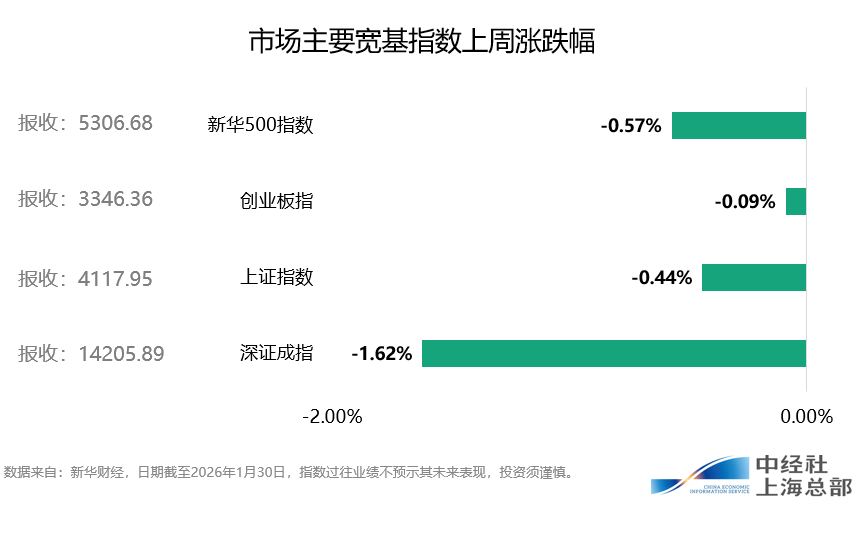
Stock Market Overview - The A-share market indices experienced declines during the week from January 26 to January 30, with the Shanghai Composite Index down by 0.44%, the Shenzhen Component down by 1.62%, the ChiNext Index down by 0.09%, and the Xinhua 500 Index down by 0.57% [1] - The Xinhua 500 Index showed increased volatility, opening at 5354.57 points and closing at 5306.68 points, with a weekly fluctuation of 3.01% and a total trading volume of 5.11 trillion yuan [1] Industry Performance - Most industry indices in the Shenwan first-level sectors declined, with the petroleum and petrochemical, telecommunications, coal, and non-ferrous metals sectors showing the largest gains, while the defense, electric equipment, automotive, and computer sectors experienced significant declines [4] US Stock Market - The US stock indices showed a mixed performance, with the S&P 500 Index rising by 0.34% for the week and 1.32% for January, marking its best monthly performance since October of the previous year [6] - The Dow Jones Industrial Average fell by 0.42% for the week but gained 1.73% in January, while the Nasdaq Composite Index decreased by 0.17% for the week and rose by 0.95% for January [6][7] Commodity Market - In the last trading week of January, precious metals experienced extreme volatility, with gold prices nearing $5600 per ounce before a significant reversal, closing down by 9.6% to around $4860 per ounce [8] - Silver prices also saw a dramatic drop, falling over 30% during the week but closing at approximately $85 per ounce [8] - Despite the weekly declines, COMEX gold futures recorded a 13% increase for January, while COMEX silver saw a monthly rise of over 20% [8][9] - International oil prices rose for four consecutive trading days, with Brent crude oil reaching $70 per barrel at one point, and WTI crude oil increasing by 7.65% for the week and 14.49% for January [8][9] Foreign Exchange Market - The US dollar index rebounded following the nomination of Kevin Warsh as the next Federal Reserve Chair, although it still fell by 0.4% for the week and 1.17% for January [10] - The euro and pound against the dollar rose for the second consecutive week, with the euro increasing by 0.2% for the week and 0.9% for January, and the pound rising by 0.29% for the week and 1.57% for January [10] Economic Indicators - The manufacturing Purchasing Managers' Index (PMI) for January was reported at 49.3%, a decrease of 0.8 percentage points from the previous month, indicating a slight contraction in the manufacturing sector [11] - The production index was above the critical point at 50.6%, while the new orders index fell to 49.2%, suggesting a decline in market demand [11]
投资策略周报:政策保驾护航,中长线资金入市仍是大趋势-20260201
HUAXI Securities· 2026-02-01 11:12
Market Review - The A-share market showed divergence this week, with the Dividend Index and Shanghai 50 leading in gains, while the North China 50, CSI 2000, and STAR 50 lagged behind. The average daily trading volume remained around 3 trillion yuan, indicating a high risk appetite among investors. The petroleum, telecommunications, and coal sectors led the gains, while defense, power equipment, and automotive sectors lagged. Low-position sectors like real estate and liquor also saw a strong rebound at one point. In the commodity market, precious metals prices plummeted, with silver and gold dropping by 26.42% and 9.25% respectively. The geopolitical tensions between the US and Iran drove international oil prices up, with WTI crude and ICE Brent rising by 7.65% and 7.32% respectively. The US dollar index exhibited a V-shaped trend, with the offshore yuan depreciating slightly against the dollar [1][2]. Market Outlook - The report emphasizes that policy support will continue to drive medium- to long-term capital inflows into the market. Despite signs of a temporary market adjustment amid increasing external disturbances, there remains ample space and opportunities for the current market trend from a mid-term perspective. The net outflow of stock ETFs has adjusted trading rhythms, but overall trading volume remains high, reflecting strong investor interest in high-growth sectors. The regulatory focus is on cultivating "patient capital" and increasing the participation of insurance and pension funds in the market, aiming to solidify the foundation for a slow bull market. The domestic demand showed marginal decline in January, but the recovery in price indices and sustained high growth in high-tech manufacturing create conditions for corporate profit recovery. With the narrowing decline in PPI, corporate profits are expected to enter a mild recovery phase in 2026 [2][4]. Economic Fundamentals - In January, the manufacturing PMI fell to 49.3%, and the non-manufacturing PMI dropped to 49.4%, both below the expansion threshold, indicating a marginal decline in domestic demand. However, improvements in prices and sustained high growth in new economic drivers were noted. The purchasing price index and the factory price index rose to 56.1% and 50.6% respectively, indicating overall price improvement in the manufacturing market, which is expected to narrow the PPI decline further. The high-tech manufacturing PMI remained above 52.0% for two consecutive months, reflecting sustained high growth in new economic drivers, while traditional sectors like consumer goods and high-energy industries showed marginal declines [3][4]. Capital Market Policies - The China Securities Regulatory Commission (CSRC) is committed to consolidating the positive momentum in the capital market and is intensifying efforts to cultivate patient capital and promote medium- to long-term capital inflows. On January 30, CSRC Chairman Wu Qing held a meeting to discuss enhancing the adaptability of regulatory frameworks, improving the quality and investment value of listed companies, and increasing the efficiency of refinancing. As of the end of 2025, various types of medium- to long-term capital held A-share circulating market value reached 23 trillion yuan, a 36% increase from the beginning of the year. Looking ahead to 2026, under the policy framework focused on stability, the regulatory authorities will continue to promote the increase in the scale of medium- to long-term capital entering the market [4][5]. Micro Liquidity - Since the beginning of the year, there has been a large-scale redemption of stock ETFs, with a cumulative net redemption of 792.2 billion yuan, primarily concentrated in broad-based ETFs like CSI 300 and Shanghai 50. Despite this, the A-share market remains active, with trading volumes around 3 trillion yuan. Financing funds saw a net inflow of 16.1 billion yuan this week, indicating strong support for high-growth sectors. Although the A-share market has shown signs of temporary adjustment, there is still ample space and opportunities compared to previous bull markets. The report suggests focusing on high-growth technology sectors such as AI, robotics, and energy storage, as well as cyclical commodities related to price increases [5][4].
2月十大金股推荐
Ping An Securities· 2026-02-01 10:36
Group 1: Market Outlook - The current market environment is characterized by ample liquidity, with structural highlights in the fundamentals indicated by high-frequency economic tracking and company performance forecasts[3] - The equity market is expected to continue its upward trend, with a focus on sectors benefiting from both domestic and external demand, particularly in technology manufacturing and cyclical industries[3] Group 2: Recommended Stocks - Beijing Junzheng (300223.SZ) has a total market value of RMB 66.2 billion, with a TTM PE of 208.6 and PB of 5.3, driven by the upward cycle in storage and L3 autonomous driving catalyzing automotive electronics[3] - Jingfang Technology (603005.SH) has a market cap of RMB 20.1 billion, TTM PE of 58.9, and PB of 4.4, benefiting from the expansion of automotive CIS demand, with a projected net profit growth of 44.41%-52.32% in 2025[3] - Haiguang Information (688041.SH) has a market value of RMB 607.3 billion, TTM PE of 256.6, and PB of 27.7, positioned to benefit from the AI wave and domestic substitution trends[3] - Hehe Information (688615.SH) has a market cap of RMB 40.6 billion, TTM PE of 91.1, and PB of 14.5, with accelerated profit growth driven by AI and overseas market expansion[3] - Jinfeng Technology (002202.SZ) has a market value of RMB 103.4 billion, TTM PE of 42.8, and PB of 3.0, with improving profitability in wind turbine manufacturing and green methanol projects[3] - Luoyang Molybdenum (603993.SH) has a market cap of RMB 55.74 billion, TTM PE of 29.6, and PB of 7.4, with copper prices expected to rise, benefiting from volume and price increases[3] - Zhongman Petroleum (603619.SH) has a market value of RMB 17.2 billion, TTM PE of 33.7, and PB of 4.0, with high growth potential amid rising oil prices[3] - Beixin Building Materials (000786.SZ) has a market cap of RMB 48.6 billion, TTM PE of 15.7, and PB of 1.8, with expected recovery in gypsum board profitability[3] - China Duty Free (601888.SH) has a market value of RMB 190.3 billion, TTM PE of 56.2, and PB of 3.4, with anticipated recovery in operations due to strategic partnerships[3] - China Pacific Insurance (601601.SH) has a market cap of RMB 414.6 billion, TTM PE of 8.5, and PB of 1.6, with stable growth in liabilities and high dividend yield[3]




刚刚公告!两大牛股,明日复牌!吴清发声!证监会,最新发布!中国变压器,全球爆单!影响一周市场的十大消息
券商中国· 2026-02-01 10:31
Group 1 - The China Securities Regulatory Commission (CSRC) is proposing to expand the types of strategic investors and clarify minimum shareholding requirements, allowing various institutional investors such as social security funds and public funds to act as strategic investors with a minimum shareholding of 5% [2][3] - The CSRC emphasizes that capital investors must hold a significant proportion of shares for a long term and participate in corporate governance, while also requiring them to have a deep understanding of the company's industrial development [3][4] Group 2 - CSRC Chairman Wu Qing held discussions with representatives from domestic and foreign listed companies to gather opinions on enhancing the capital market's adaptability and improving the quality and investment value of listed companies [3][4] - The CSRC aims to consolidate the positive momentum of the capital market, focusing on risk prevention, strong regulation, and promoting high-quality development, while also enhancing the efficiency of refinancing and supporting the globalization of listed companies [4] Group 3 - Fenglong Co. and Jiamei Packaging announced the end of their stock suspension, with Fenglong's stock set to resume trading on February 2, 2026, after confirming no significant changes in its main business [5][6] - Jiamei Packaging's stock also resumes trading on February 2, 2026, despite a significant price increase that deviated from its fundamentals, with an expected net profit decline of 53.38% to 43.02% year-on-year [6] Group 4 - The National Development and Reform Commission and the National Energy Administration have issued a notice to improve the capacity pricing mechanism for power generation, including establishing a new capacity pricing mechanism for independent energy storage [7][8] - The notice aims to enhance fair competition among different technology types in the power industry and is expected to have minimal impact on electricity costs for residential and agricultural users [8] Group 5 - The transformer industry in China is experiencing a surge in demand due to the global AI computing power boom, with many factories operating at full capacity and orders extending to 2027 [9] - China's transformer export value is projected to reach 64.6 billion yuan in 2025, representing a nearly 36% increase from 2024 [9] Group 6 - The Ministry of Finance and the State Taxation Administration announced adjustments to the VAT tax rate applicable to telecommunications services, which will affect the revenue and profits of major telecom operators [10] - The adjustment will change the applicable tax category for services provided by major telecom operators from value-added telecommunications services to basic telecommunications services, increasing the VAT rate from 6% to 9% [10] Group 7 - The semiconductor industry is witnessing a significant increase in demand, with South Korea's semiconductor exports reaching $20.5 billion in January, a year-on-year increase of over 102% [11] - Domestic chip manufacturers are raising prices across various segments, with increases of up to 80% expected to continue into the first half of 2026 [11]






北交所策略周报:“沃什交易”影响风偏,北证业绩预告密集发布-20260201
Shenwan Hongyuan Securities· 2026-02-01 10:11
Group 1 - The "Walsh trade" is impacting risk preferences, with a notable focus on the potential reversal of the "weak dollar" trade, which could significantly affect global asset allocation and market styles [11][12] - The North Exchange 50 index experienced a decline of 3.59%, while daily trading volume saw a slight increase [11][17] - Key sectors that performed well this week include space photovoltaic, seed industry, non-ferrous metals, and optical communication, with notable stock performances from companies like Liancheng CNC and Gongbika [11][12] Group 2 - New stock issuances have accelerated, with five new stocks launched in January 2026, and over 120 companies releasing performance forecasts [13][27] - As of January 30, 2026, 123 companies on the North Exchange have issued performance forecasts, with a median net profit forecast exceeding 80 million yuan [13] - The report suggests that the North Exchange needs to expand its number of companies and improve the quality of new stock issuances in 2026 [13] Group 3 - The North Exchange's PE (TTM) average is 83.89 times, with a median of 41.26 times, indicating a decline in valuation metrics [23][24] - The trading volume for the North Exchange reached 5.961 billion shares, with a trading value of 143.655 billion yuan, reflecting an increase of 9.27% and 8.82% respectively [26][29] - The report highlights the performance of individual stocks, with 43 stocks rising and 249 falling, resulting in a rise-to-fall ratio of 0.17 [36]
融资客一周扫货名单出炉!下周两大板块获投资者看好
Sou Hu Cai Jing· 2026-02-01 09:53
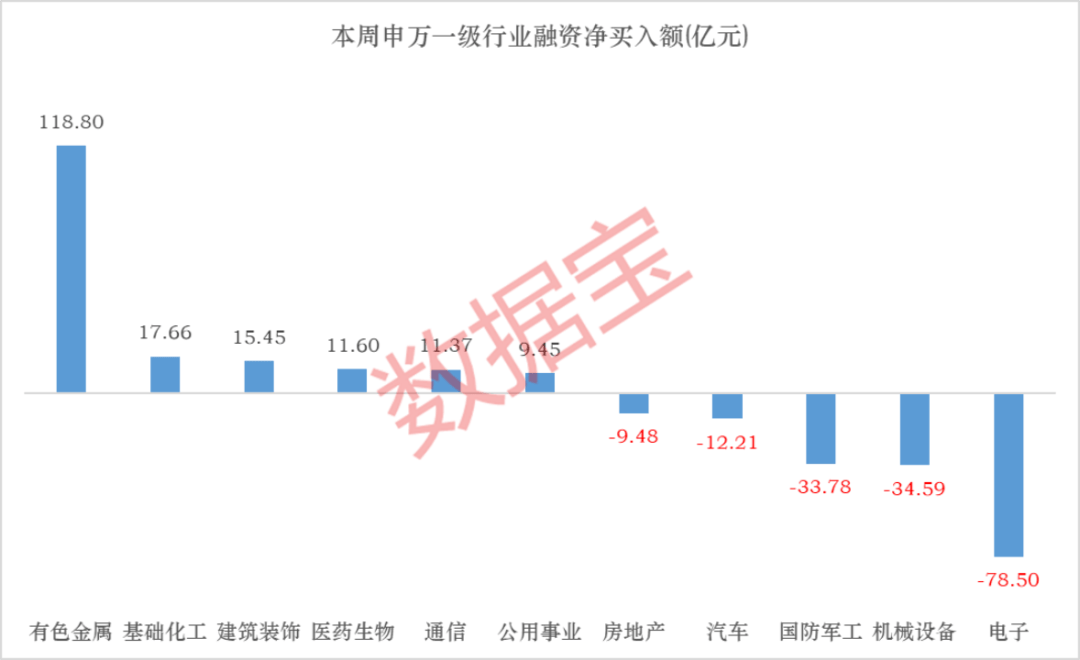
Group 1 - The core point of the article highlights that the A-share financing balance remains high at 27,222.32 billion yuan, with a net financing inflow of 5.279 billion yuan for the week [1] - In terms of industry performance, non-ferrous metals lead with a net financing inflow of 11.88 billion yuan, while sectors like basic chemicals, construction decoration, pharmaceuticals, and communications also saw inflows exceeding 1 billion yuan [1] - The electronics sector experienced significant net repayments amounting to 7.85 billion yuan, followed by machinery and defense industries with repayments over 3 billion yuan each [1] Group 2 - Individual stocks saw substantial net inflows, with Zijin Mining, Tianfu Communication, and China Ping An leading at 2.873 billion yuan, 2.559 billion yuan, and 1.254 billion yuan respectively [3] - Zijin Mining announced a strategic acquisition of all issued shares of a gold mining company, which includes significant assets in Mali and Ivory Coast, expected to enhance its position in the global gold market [3] - The non-ferrous metals sector includes multiple stocks with net inflows over 4 billion yuan, indicating strong demand driven by global energy and supply chain dynamics [4] Group 3 - The electric equipment sector, including stocks like Maiwei Co., Mingyang Smart Energy, and CATL, also attracted significant financing interest [5] - A total of 131 stocks experienced net repayments exceeding 1 billion yuan, with Industrial Fulian and China Satellite leading the repayments at 1.701 billion yuan and 1.475 billion yuan respectively [10] - The commercial aerospace sector, previously popular, faced large net repayments, indicating a shift in investor sentiment despite ongoing government support and technological advancements [8] Group 4 - The A-share market showed mixed performance, with the Shanghai Composite Index slightly down by 0.44%, closing at 4,117.95 points [11] - Investor sentiment remains neutral, with 54% expecting the market to oscillate between 4,100 and 4,200 points in the coming week [11] - The technology sector is favored for the upcoming week, with 54% of surveyed investors expressing optimism, while the enthusiasm for non-ferrous metals has decreased [13]




十大机构看后市:本轮ETF集中赎回潮结束,A股有望在春节前企稳,春节前后迎新一轮上行行情,2月上涨概率76%
Xin Lang Cai Jing· 2026-02-01 07:49
Core Viewpoint - The A-share market is experiencing adjustments, with major indices showing declines, but there are expectations for stabilization and potential upward trends in the near future [20][22][30]. Group 1: Market Trends and Predictions - The current round of ETF redemption is believed to be coming to an end, providing a repair window for heavyweight stocks, with a style shift from small-cap to large-cap stocks occurring [21]. - A short-term adjustment in the A-share market is anticipated, but the overall adjustment space is limited, with expectations for stabilization before the Spring Festival and a new upward trend afterward [22]. - The spring market is expected to continue, with a potential for a new upward phase following a period of consolidation [23][30]. Group 2: Sector Focus and Investment Strategies - Focus on sectors with competitive advantages in global pricing power, such as chemicals, non-ferrous metals, electric equipment, and new energy, while being cautious of speculative precious metals [21]. - The food and beverage and real estate sectors are viewed as short-term opportunities rather than long-term investment options [24]. - Investment strategies should consider a balanced approach between growth and value sectors, with particular attention to technology and cyclical stocks [31][32]. Group 3: Economic Indicators and Policy Impact - February is traditionally a strong month for the A-share market, with a 76% probability of index increases based on historical data [28]. - The market is expected to benefit from ongoing policy support aimed at boosting consumption and economic growth, particularly as local government meetings approach [34]. - The macroeconomic environment is likely to remain loose, supporting continued inflows into the stock market [34][35].
中信证券:脱虚向实,重视涨价线索的扩散
Xin Lang Cai Jing· 2026-02-01 07:11
Group 1 - The current wave of ETF redemptions is coming to an end, providing a recovery window for large-cap stocks [2][10] - The shift in investment style is occurring on a macro level, transitioning from small-cap to large-cap and from thematic to quality stocks [3][11] - The nomination of Waller as the next Federal Reserve Chair reflects a policy intention towards "real economy" in the U.S., which could significantly impact global risk assets [3][11] Group 2 - Price increases are expected to be a theme throughout the first quarter, driven by various sectors including upstream resources, midstream manufacturing, and downstream real estate [4][13] - The underlying commonality in cyclical sectors is the significant potential for profit margin recovery, as China's policy shifts from expansion to quality improvement [6][12] - The investment strategy should focus on industries where China has competitive advantages and is undergoing a reassessment of global pricing power, particularly in chemicals, non-ferrous metals, and new energy [7][14] Group 3 - The recovery in consumer and real estate sectors is anticipated to occur in the spring, aligning with the broader market recovery [8][15] - Current market capitalization of real estate companies is only 1.0% of the total A-share market, indicating a potential for recovery in this sector [8][15] - Recommendations for the consumer sector include focusing on duty-free, aviation, hotels, and tea beverage industries, while for the real estate sector, attention should be on quality developers and building materials [8][16]
