纺织

Search documents
14亿人消费力待释放!薪资不涨=内卷无解?3600元补贴够不够?
Sou Hu Cai Jing· 2025-08-22 06:56
Core Insights - The article highlights the paradox of China's economy, where a large population coexists with weak consumer purchasing power despite high GDP figures [1][3][4] - It discusses the struggles of low-income workers, such as delivery riders and factory employees, who face harsh working conditions and low wages, contributing to the wealth accumulation of the affluent [3][6][7] Economic Conditions - China's economic model relies on land revenue to subsidize infrastructure, resulting in low transportation costs and affordable logistics [3][4] - The country is experiencing deflationary pressures, with a significant 18% drop in foreign trade orders and a 40% decrease in land fiscal revenue compared to three years ago [4][6] Labor Market Dynamics - The minimum wage in Shanghai is only 2,690 yuan, while some workers earn as little as 2,200 yuan, highlighting the disparity between high GDP and low wages [3][6] - Many companies fail to provide basic social security for employees, with a significant number of labor disputes arising from inadequate compensation practices [6][7] Government Initiatives - The government introduced a child-rearing subsidy of 300 yuan per month per child, covering 610,000 families in its first year, but the amount is insufficient to cover basic childcare costs [6][7] - The subsidy is designed to be tax-exempt and not deducted from social welfare benefits, yet it may not effectively address the underlying economic challenges faced by low-income families [6][7]

人民币再升值:1:1兑美元有望?百姓生活将会发生什么?
Sou Hu Cai Jing· 2025-08-22 02:48
Group 1 - The recent appreciation of the RMB has led to discussions about its potential to reach a 1:1 exchange rate with the USD, with current data showing 1 USD equals 7.18 RMB, the highest in three years [3] - If the RMB continues to appreciate at a rate of 5% annually, it could take approximately 10 years to reach parity with the USD, although fluctuations in interest rates could accelerate this process [3][4] - The RMB's rise is influenced by China's growing economy and increasing foreign direct investment, with a reported 10.5% growth in outbound investment in 2024 [3] Group 2 - A 1:1 exchange rate would significantly benefit travelers and students, reducing costs for overseas travel and education, with potential savings of up to 60,000 RMB for a trip to the US [4] - Consumers engaging in cross-border e-commerce would see drastic price reductions on imported goods, with luxury items and electronics becoming significantly cheaper [4][5] - Investors could see substantial gains in the stock market, with a 1% appreciation in the RMB potentially leading to a 3% increase in stock returns, particularly for leading companies like Moutai and Tencent [5] Group 3 - Export-oriented industries would face challenges, with a potential 30% drop in orders as the RMB appreciates, leading to job losses in manufacturing sectors [7] - The agricultural sector may struggle as imported goods become cheaper, potentially leading to a 15% drop in domestic agricultural prices and impacting farmers' incomes [7] - Ordinary workers may experience rising living costs without corresponding wage increases, as imported raw material prices could drive up domestic product prices [7] Group 4 - Historical precedents, such as Japan's experience in the 1980s, highlight the risks associated with rapid currency appreciation, suggesting that the RMB's rise must be managed carefully to avoid economic pitfalls [9] - Experts recommend that individuals maintain a balanced approach to currency exchange and investment, suggesting diversification into assets like gold ETFs to hedge against inflation [10] - Upskilling is advised for workers in export industries to mitigate job loss risks, with potential for significant wage increases in emerging sectors like new energy vehicles [10] Group 5 - The appreciation of the RMB reflects China's economic strength and transition from low-end manufacturing to high-end production, but it also presents both opportunities and risks for various sectors [11]
上海贸易调整援助服务覆盖过万企业
Jie Fang Ri Bao· 2025-08-22 01:47
Core Insights - The 2025 Yangtze River Delta International Trade Risk Prevention and Development Conference was recently held in Shanghai, highlighting the government's support for over 10,000 enterprises across various sectors including textiles, chips, steel, aluminum, chemicals, and photovoltaics [1] Group 1: Trade Adjustment Assistance - Trade adjustment assistance is a government initiative aimed at helping companies facing temporary difficulties due to sudden changes in the international trade environment, surges in imports, or forced industrial relocations [1] - The Shanghai Customs reported that the Yangtze River Delta region's import and export volume reached 9.59 trillion yuan in the first seven months of this year, reflecting a year-on-year growth of 5.4% and accounting for 37.3% of the national total, an increase of 0.7 percentage points from the same period last year [1] Group 2: Government Initiatives - The conference announced the release of the "Trade Adjustment Assistance Service Guidelines (2025 Edition)" and the "National Risk Analysis Report (Yangtze River Delta Version)" [1] - A hundred training sessions under the 2025 Trade Adjustment Assistance initiative will be launched to benefit thousands of enterprises [1] - The first regional service station for trade adjustment assistance, the Hongqiao Service Station in the Yangtze River Delta, was inaugurated, and several domestic and international business associations formed the Trade Adjustment Assistance International Market Development Service Alliance to facilitate diversified international market expansion for enterprises [1]
品牌赋能制造业高质量发展,聊城市多措并举打造“聊城优品”
Qi Lu Wan Bao Wang· 2025-08-21 14:07
强化品牌培育建设。认真分析研判全市制造业品牌建设情况,创新打造"聊城优品"地方区域品牌,对照 省长质量奖、"好品山东"、山东省高端品牌等品牌标准,建立品牌培育库,遴选推出山东省宇捷轴承制 造有限公司、山东九路泊车设备股份有限公司等首批40家"聊城优品"品牌企业,夯实了全市品牌建设基 础。近年来,山东时风(集团)有限责任公司、齐鲁电缆有限公司等67家企业入围山东省高端品牌培育 企业;临清三和纺织集团有限公司、山东冠洲股份有限公司等21家企业入围"好品山东"品牌;山东阳谷 华泰(300121)化工股份有限公司入围第九届省长质量奖提名奖。 品牌是企业重要的无形资产,是企业产品转化为市场占有率和经济效益的倍增器。近年来,市市场监管 局高度重视制造业品牌建设,始终将其作为推动制造业强市的重要一环,坚持从品牌培育、品牌推广、 品牌奖励等方面发力,赋能聊城市制造业高质量发展。 近日,聊城市政府办公室印发了《聊城市支持制造业高质量发展的若干政策》(以下简称《政策》)。 8月21日,聊城市政府新闻办召开政策例行吹风会,市市场监督管理局党组书记、局长陈玉国介绍了企 业品牌建设相关情况。 强化品牌财金支持。突出品牌奖励政策宣传,提 ...
广东政观丨广东区县、镇街何以领跑全国?这三大优势得以突围
Nan Fang Du Shi Bao· 2025-08-21 11:02
Core Insights - The recent series of reports from the Saidi Research highlights the impressive performance of Guangdong's grassroots economic units, with top rankings in various categories such as "Top 500 Vibrant Streets" and "Top 100 Districts" [1][3] - The strong economic resilience of Guangdong's districts and towns is attributed to a solid industrial foundation, characterized by a diverse industrial system that includes manufacturing, digital economy, and modern services [3][4] Economic Performance - In the "2025 National Top 500 Vibrant Streets," Shenzhen's Nanshan District's Yuehai Street ranked first, showcasing the region's robust economic structure [3] - Guangdong's districts and towns have excelled in rankings due to their deep integration into the Guangdong-Hong Kong-Macao Greater Bay Area's industrial chain, with Dongguan's 28 towns all making it to the "Top 500 Town Economies" list [3] Market Dynamics - The flexible institutional mechanisms in Guangdong have fostered a competitive market environment, with active private economies and high administrative efficiency allowing for rapid market responses [4] - Historical models like "Three Comes and One Supplement" have evolved into modern strategies such as "industrial upgrading," enhancing the synergy between production and service sectors [4] Innovation and Transformation - Continuous innovation has facilitated the smooth transition of new and old economic drivers, with notable examples like Nanshan District's "Unicorn Corridor" that connects various innovation entities [4] - The presence of "invisible champions" and "small giants" in towns is indicative of the region's commitment to innovation-driven technological advancement [4] Challenges Ahead - Despite the successes, Guangdong faces challenges such as significant disparities between the Pearl River Delta core area and other regions, as well as a need for improved overall economic strength compared to other provinces [5] - The tightening of land resources poses a challenge for the Pearl River Delta, where traditional land expansion models are becoming unsustainable [5] - Many districts and towns still rely heavily on traditional manufacturing, indicating a need for enhanced innovation capabilities and brand value [5] Future Outlook - The long-term success of Guangdong's grassroots economic units is contingent upon strengthening county-level economic support, promoting digital and green transformations, and fostering coordinated development within the province [5]

安联贸易:2025全球应收账款与营运资金报告
Sou Hu Cai Jing· 2025-08-21 03:53
Core Insights - The report indicates that global working capital requirements (WCR) increased by 2 days to 78 days in 2024, marking the highest level since 2008, with no signs of relief at the beginning of 2025 [2][8][11] - Economic volatility, trade tensions, and tightening financial conditions are driving this increase, forcing companies to adapt to uncertainty and bear associated costs [2][8] - There are significant regional differences in working capital needs, with Western Europe experiencing a continuous increase of 4 days, while North America saw a decrease of 3 days [2][12] Regional Analysis - In Western Europe, companies face delayed receivables, with accounts receivable turnover days (DSO) increasing for the third consecutive year, leading to a reliance on trade credit, which is projected to reach approximately €11 billion [9][28] - North American companies have reduced their working capital needs by 3 days, primarily through inventory reduction and reallocating funds to shareholders, with stock buybacks expected to exceed $1 trillion in 2025 [2][8][29] - The Asia-Pacific region saw a slight increase of 2 days in working capital needs, with significant contributions from China and Singapore [27][12] Industry Trends - Almost all industries are experiencing an increase in DSO, particularly in transportation equipment (+11 days) and electronics (+4 days), leading to a general rebound in working capital needs [3][34] - Seven industries globally are witnessing increased working capital requirements across North America, Western Europe, and Asia-Pacific due to weak demand, while declines are more scattered [3][35] - The construction and commodities sectors are showing the most significant reversals in trends at the beginning of 2025 [3][34] Financial Dynamics - European companies are acting as "shadow banks," providing significant trade credit, which poses risks if economic growth slows or interest rates rise [9][28] - The report highlights that 35% of global companies have working capital needs exceeding 90 days, indicating a persistent challenge in cash flow management [11][18] - The report also notes that the average inventory turnover days (DIO) remain stable, with inventory still accounting for a significant portion of working capital needs [19][34]

中国出口市场韧性十足
Qi Huo Ri Bao Wang· 2025-08-21 01:28
Core Viewpoint - The article highlights China's resilience in export trade despite the pressure from the U.S. tariffs, showcasing a diversified export structure and strong adaptability in various markets [1][7]. Export Market Structure - China's export market has become increasingly diversified, reducing reliance on the U.S. market, which previously accounted for over 20% of total exports [1]. - In the first seven months of 2025, China's total exports reached $2.13 trillion, with imports totaling $1.45 trillion, resulting in a trade surplus [1]. - The top ten export destinations for China in 2025 included ASEAN, EU, U.S., Hong Kong, Latin America, Africa, Japan, South Korea, India, and Russia, collectively accounting for over 80% of total exports [2]. Changes in Export Destination - Compared to 2000, Asia's share of China's exports increased by approximately 3 percentage points, while North America's share decreased by about 9 percentage points [2]. - In the first seven months of 2025, exports to the U.S. decreased by $35.5 billion, but exports to ASEAN surged by $45.2 billion, indicating a shift in trade dynamics [2][3]. Export Growth Rates - Africa led the growth in export amounts with a 24.5% increase, followed by ASEAN at 13.5% and India at 13.4% [3]. - The U.S. experienced a decline in exports of -12.6%, highlighting the contrasting performance of different regions [3]. Product Structure of Exports - The export product structure is characterized by a balance between traditional manufacturing and high-tech products, with mechanical and electrical products making up 60% of total exports [4]. - Traditional manufacturing goods, including clothing and household items, still hold significant export value, contributing to 9% and 8% of total exports, respectively [6]. Supply Chain Advantages - China's manufacturing sector benefits from a robust supply chain, characterized by extensive raw material supply, efficient logistics, and a stable social environment, making it a dominant player in global manufacturing [5]. - The transition towards "smart manufacturing" is expected to enhance the competitiveness of traditional manufacturing sectors, keeping a significant portion of production within China [6]. Conclusion - Despite the challenges posed by U.S. tariffs, China's well-established manufacturing infrastructure and diversified export strategies position it to maintain strong export performance, which remains a crucial driver of economic growth [7].
“台独”是绝路,“跪美”无出路(日月谈)
Ren Min Ri Bao Hai Wai Ban· 2025-08-21 00:50
Group 1 - The Taiwanese government faces a significant increase in tariffs, with a new 20% tariff on top of existing rates, leading to a potentially disastrous "20%+N" tax burden on local industries [1][2] - Key sectors such as textiles, petrochemicals, steel, and machine tools are expected to be severely impacted, with the machine tool industry facing a combined tax rate of 24.7%, exacerbating competitive disadvantages against South Korean and Japanese products [2][3] - The Taiwanese government's response includes a commitment to increase investment in the U.S. by $400 billion, which is equivalent to half of Taiwan's annual GDP, indicating a willingness to spend taxpayer money to appease U.S. demands [2][3] Group 2 - The Taiwanese administration's approach of yielding to U.S. demands has not resulted in favorable outcomes, instead leading to increased pressure and unfavorable treatment compared to other trade partners [1][3] - The lack of transparency in negotiations, with claims of confidentiality, raises concerns about the effectiveness of the talks and the potential negative implications for Taiwan's economy [2] - The ongoing reliance on U.S. support while neglecting to strengthen cross-strait relations may lead to further economic challenges for Taiwan, as the government continues to pursue a confrontational stance against mainland China [3]
越南股市,亚洲第一?
Hu Xiu· 2025-08-20 12:16
Group 1 - The recent performance of the Asia-Pacific market has been strong, with Vietnam showing significant improvements due to major reforms [1][2] - The VN-Index has rebounded nearly 30% from its April low, while the VN30 index has surged almost 60%, reaching historical highs [3] - Despite the rising indices, liquidity has not significantly improved, with the main driving forces being the real estate and banking sectors [5][6] Group 2 - In the first half of the year, Vietnam's real estate loan balance skyrocketed to 3,180 trillion VND, a year-on-year increase of 140% [7] - Techcombank's real estate loans accounted for 59% of its total loans, with a growth rate of 21.5%, double the average growth rate of the bank [8] - In contrast, 144,000 companies went bankrupt in Vietnam in the first seven months of the year, a year-on-year increase of 15.1% [9] Group 3 - The disparity between the struggles of the real economy and the asset bubble is stark, reminiscent of the market crash in 2022 [11][12] - From April 2020 to January 2022, the Vietnamese stock market surged by 400%, followed by a decline of over 66% due to foreign capital withdrawal [13][14] - The current situation bears similarities to past events, raising concerns about potential market corrections [14][15] Group 4 - Vietnam's housing prices have increased by an average of 59% over the past five years, ranking first globally [57] - As of 2025, housing prices continue to soar, with average prices in Hanoi reaching approximately 8 million VND per square meter, a 5.6% increase from the previous month and a 24% increase year-on-year [59] - The average income of Vietnamese citizens only began to rise in the second half of 2022, with an increase of less than 30% since then [61] Group 5 - Vietnam's manufacturing sector faces challenges due to a lack of heavy industry foundation, which hampers capital accumulation and industrial upgrading [41][42] - The historical context of Vietnam's economic reforms since 1986 has led to a concentration of wealth and power in a few sectors, particularly real estate and banking [51][52] - The ongoing energy shortages pose a significant barrier to the growth of Vietnam's manufacturing capabilities, with electricity demand expected to outpace supply [127][128] Group 6 - The Vietnamese government has approved amendments to its population policy to stimulate population growth, addressing concerns about an aging population [82] - The country's electricity supply issues are exacerbated by inadequate infrastructure and reliance on imported coal, leading to significant operational challenges for manufacturing [90][91] - The potential for Vietnam to become a major manufacturing hub is hindered by these systemic issues, raising questions about the sustainability of its economic growth [133][134]
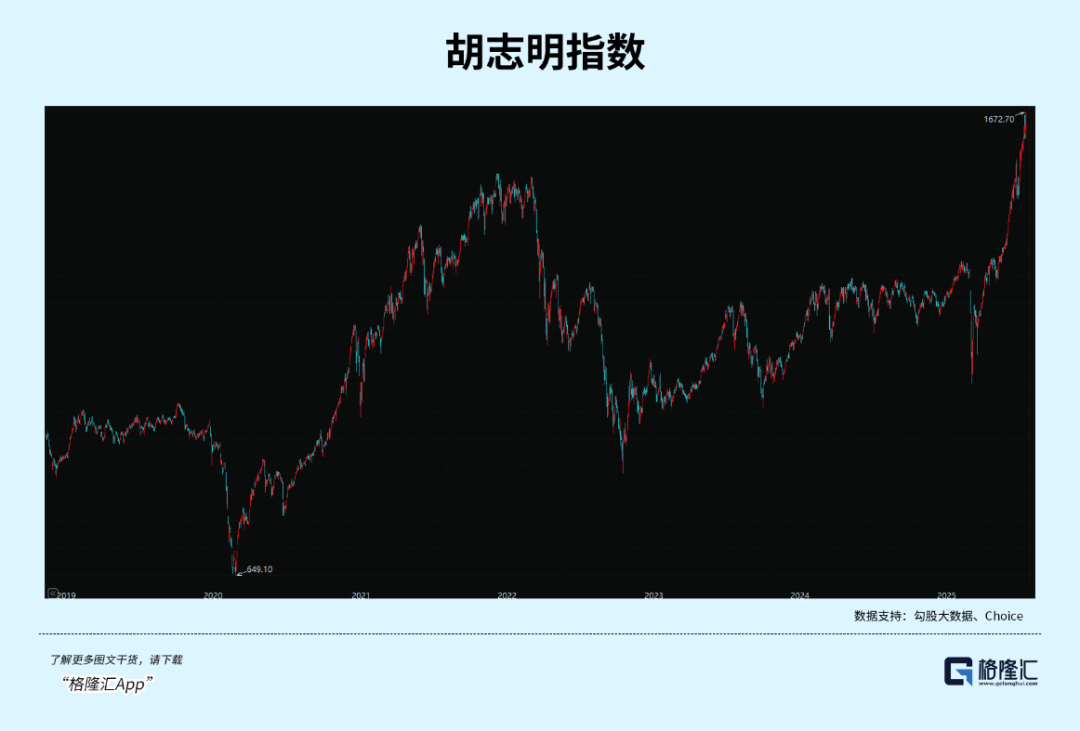
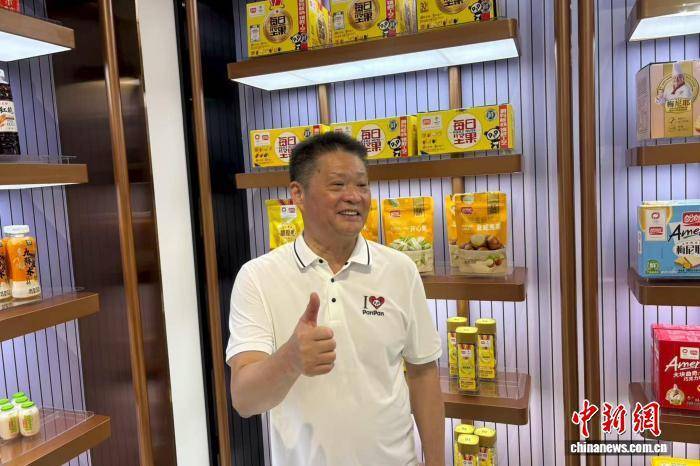
(活力中国调研行)5G+AI智造“小面包” 新科技催热中国消费名品
Sou Hu Cai Jing· 2025-08-20 10:25
Core Viewpoint - The integration of 5G and AI technologies in the production process of Panpan Foods is enhancing product quality and operational efficiency, positioning the company as a leader in China's consumer goods sector [1][2]. Group 1: Technological Advancements - Panpan Foods has implemented smart manufacturing technologies, including AI and 5G, to transform traditional food processing into a more precise, standardized, and automated operation [1]. - The production line features a "5G+AI visual inspection" system that ensures quality by automatically removing defective products [1]. - The factory's data on baking temperature and duration is transmitted in real-time via 5G, allowing for better monitoring and control of production conditions [1]. Group 2: Industry Impact - The shift towards intelligent manufacturing is not only seen in Panpan Foods but is also a trend among various consumer goods companies in Jinjiang, contributing to the vitality of "Jinjiang manufacturing" in the global market [3]. - The textile and footwear industries in Jinjiang have an annual output value exceeding 400 billion yuan, with a projected foreign trade export value of 75.37 billion yuan in 2024, reflecting a year-on-year growth of 6.47% [3]. - The implementation of the "Three Products" strategy (increasing varieties, improving quality, and creating brands) is driving high-quality development in the consumer goods industry across Fujian province [3][4]. Group 3: Future Directions - The local government is encouraging enterprises to innovate by developing new products and adopting new technologies, aiming to enhance the competitiveness of Fujian's consumer goods [4]. - The focus is on transitioning products towards higher-end, intelligent, and green solutions to better meet diverse consumer demands [4].