
证券业

Search documents
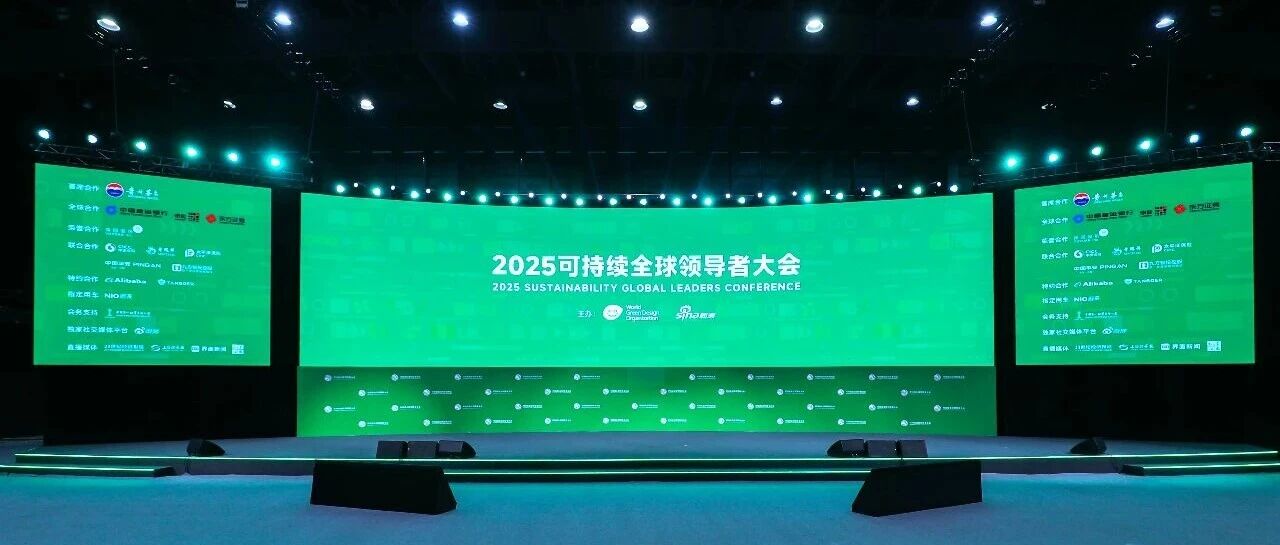
2025可持续全球领导者大会开幕:凯文·凯利现身,数十位企业家共议绿色发展
新浪财经· 2025-10-16 23:39
Core Viewpoint - The 2025 Sustainable Global Leaders Conference, held from October 16 to 18 in Shanghai, focuses on "Facing Challenges Together: Global Action, Innovation, and Sustainable Growth," aiming to explore new paths for sustainable development and inject "Chinese momentum" into global governance [2]. Group 1: Conference Overview - The conference is co-hosted by the World Green Design Organization (WGDO) and Sina Group, with support from the International Financial Reporting Standards Foundation (IFRS Foundation) [3]. - Keynote speakers include prominent figures from various sectors, including finance, academia, and business, discussing sustainable development [2]. Group 2: Sustainable Development Goals - WGDO's mission is to establish green design systems and promote global green transformation to achieve sustainable development [5]. - The conference highlights China's role as a leader in sustainable development, emphasizing the importance of innovation and collaboration [7]. Group 3: Financial Institutions' Role - Financial institutions like China Bank and Bank of Communications are actively participating in carbon market construction and promoting green finance [20][22]. - Shanghai's ESG development is characterized by a high rate of ESG report publication among listed companies, with state-owned enterprises leading the way [24]. Group 4: ESG and Sustainable Finance - The conference emphasizes the integration of ESG principles into corporate governance and financial practices, with various banks and financial institutions committing to enhance their ESG strategies [42][44]. - The need for innovative financial tools to support carbon reduction and sustainable development is highlighted, with a focus on leveraging technology [30][36]. Group 5: Industry Perspectives - Various industry leaders express their commitment to sustainable practices, emphasizing the importance of integrating environmental responsibility into business strategies [65][67]. - The conference showcases how companies across different sectors are adopting sustainable practices as a core part of their operations, reflecting a broader trend towards sustainability in the business landscape [70][72].

博道基金管理有限公司关于以通讯方式召开博道远航混合型证券投资基金基金份额持有人大会的第二次提示性公告
Shang Hai Zheng Quan Bao· 2025-10-16 23:36
Group 1 - The core point of the article is the announcement of a communication-based meeting for the holders of the Bo Dao Yuan Hang Mixed Securities Investment Fund to discuss the adjustment of the redemption fee rate and modifications to the fund contract [1][4][27] - The meeting will be held from October 10, 2025, to November 3, 2025, with specific voting procedures outlined for fund holders [2][8][18] - The agenda includes a proposal to adjust the redemption fee rate and modify the fund contract to include Hong Kong Stock Connect eligible stocks in the investment scope [4][27][34] Group 2 - The fund management company, Bo Dao Fund Management Co., Ltd., will conduct the meeting in collaboration with the fund custodian, China Merchants Bank Co., Ltd. [2][22] - Fund holders must register their rights by October 10, 2025, to participate in the voting process [4][20] - The voting process allows for both direct voting and the option to authorize others to vote on behalf of the fund holders [10][12][21] Group 3 - The proposed changes to the fund contract include adjustments to investment strategies, risk-return characteristics, and the performance benchmark due to the inclusion of Hong Kong Stock Connect stocks [27][34][38] - The adjustment of the redemption fee rate for Class A fund shares is aimed at better serving the interests of fund holders [27][34][38] - The decision requires a majority approval from the fund holders participating in the meeting for it to be effective [20][34][38]


三季度宏观数据下周发布 政策适时加力必要性上升
Sou Hu Cai Jing· 2025-10-16 17:24
Group 1: Economic Growth and Forecasts - China's GDP growth in the first half of the year was 5.3%, exceeding expectations, with third-quarter GDP growth forecasted at 4.8% [1] - The International Monetary Fund (IMF) maintained its 4.8% growth forecast for China, despite global economic challenges [2] - Economic indicators suggest a potential decline in GDP growth to 4.9% in the third quarter due to slowing investment and consumption [2] Group 2: Industrial Production and Demand - Industrial production showed resilience in September, with the manufacturing PMI at 49.8%, indicating slight improvement [3] - Predictions for September's industrial value-added growth are around 5.1%, slightly lower than the previous month [3] - Net exports are expected to support economic growth, while domestic demand continues to slow [2][3] Group 3: Consumer Spending Trends - The forecast for September's retail sales growth is 3.1%, down from 3.4% in the previous month, influenced by subsidy policy changes [4] - Significant growth in consumer electronics sales was noted, with home appliance sales up 48.3% year-on-year [5] - The automotive sector remains a major contributor to retail sales, with production and sales figures showing strong growth [5] Group 4: Investment Trends - Fixed asset investment growth is predicted to be flat at 0% for September, reflecting ongoing economic challenges [6] - Investment growth across major categories is expected to decline, with infrastructure investment remaining under pressure [6] - The real estate sector continues to show weakness, with significant declines in land transaction values [6] Group 5: Policy Measures and Economic Support - The necessity for timely policy adjustments has increased, with expectations for enhanced fiscal measures in the fourth quarter [7] - New policy tools totaling 500 billion yuan are aimed at supporting manufacturing and infrastructure investment [8] - The government is focusing on targeted monetary policies to stimulate consumption and support key sectors [8]
“存款搬家”背后原因浮出水面
财联社· 2025-10-16 14:21
Core Viewpoint - The recent data from the People's Bank of China indicates a significant increase in RMB deposits, with a notable shift in the dynamics of non-bank financial institution deposits and household savings, suggesting a reallocation of assets by residents rather than a simple "deposit migration" to the stock market [1][2]. Group 1: Deposit Trends - In the first three quarters, RMB deposits increased by 22.71 trillion yuan, with non-bank financial institution deposits rising by 4.81 trillion yuan [1]. - By the end of September, household deposits grew by 12.73 trillion yuan, a substantial increase compared to 9.77 trillion yuan at the end of August [1]. - The phenomenon of "deposit migration" is characterized as residents reallocating their savings based on changes in asset return rates, rather than a direct transfer to the stock market [1][2]. Group 2: Non-Bank Deposits - Non-bank deposits saw a significant increase in July and August, with July's increase at 2.14 trillion yuan and August's at 1.2 trillion yuan, indicating a trend of high growth [2]. - The assumption that this increase in non-bank deposits directly correlates with a migration of household savings into the stock market is deemed overly simplistic, as evidenced by the subsequent drop in non-bank deposits in September [2][3]. Group 3: Bank Strategies - Banks are increasingly relying on non-bank deposits and interbank certificates of deposit to expand their liabilities, especially when household deposit growth slows [3]. - The issuance of government bonds and special bonds in July and August created a demand for banks to increase their liabilities, leading to a rise in non-bank deposit figures [3]. Group 4: Wealth Management Products - The total scale of bank wealth management products decreased by 128.47 billion yuan by the end of September, falling to 30.82 trillion yuan [4]. - Despite a slight increase in the sales proportion of equity-linked products, there has not been a significant surge in overall sales of these products [5][6]. - The popularity of index-linked products remains high, while direct investments in specific stock market sectors are less favored [6].

国泰海通 · 晨报1017|固收
国泰海通证券研究· 2025-10-16 12:24
Core Insights - The significant decrease in non-bank deposits in September is attributed to a high base from the previous year and a weak stock market performance in 2025, which contrasts with the strong equity market in 2024 [2][4] Financial Data Summary - Non-bank deposits saw a substantial decline, with a year-on-year decrease of 19,700 million yuan, while resident deposits increased by 7,600 million yuan [4] - The total social financing (社融) in September was 35,338 million yuan, a year-on-year decrease of 2,297 million yuan, primarily due to a high base from government financing [3] - New RMB loans in September amounted to 12,900 million yuan, reflecting a year-on-year decrease of 3,000 million yuan, with short-term loans for residents decreasing by 1,279 million yuan [3] - M1 growth rate increased to 7.2%, while M2 growth rate remained stable at 8.4%, indicating a trend towards more liquid deposits among residents [3]

楼市最后防线破了?结婚人数增多、居民存款率却在下降,什么信号
Sou Hu Cai Jing· 2025-10-16 12:07
Group 1: Real Estate Market Changes - The recent loosening of purchase restrictions in Beijing and Shanghai marks a significant shift in the real estate market, which had previously maintained strict controls [2][4] - The new policies primarily target suburban areas, indicating a strategy to redirect buyers away from core urban zones, as local governments struggle with declining land sale revenues [4][6] - In Suzhou, the removal of a two-year resale restriction has led to a surge in second-hand property listings, with a notable increase of over 3,000 listings within 24 hours, while prices have dropped by 11.8% [7][9] Group 2: Marriage Trends - The marriage registration numbers saw a surprising rebound in 2025, with 353.9 million couples registered, a 10.9 million increase from the previous year, largely due to policy changes that simplified the registration process [15][18] - The increase in marriage registrations is not indicative of a genuine desire to marry among young people, as the underlying demographic trends show a decline in the eligible population [20][25] - The rise in marriage numbers is accompanied by an increase in divorce rates, suggesting that while more people are marrying, economic pressures and changing social norms are leading to higher divorce rates [20][22] Group 3: Savings and Investment Behavior - A significant drop in household savings of 1.12 trillion yuan in July indicates a shift in consumer behavior, with many opting to invest in higher-yielding financial products rather than keeping money in low-interest bank accounts [27][29] - The trend of "savings migration" reflects a broader reallocation of assets, with funds moving from traditional savings to capital markets, driven by low interest rates and a more favorable investment climate [29][30] - Despite the apparent movement towards investment, the underlying economic conditions remain weak, with traditional sectors like real estate and consumer goods still struggling [30][35]
如何解读9月金融数据?:2025年9月金融数据点评
Hua Yuan Zheng Quan· 2025-10-16 09:38
Group 1: Report Industry Investment Rating - The report is bullish on the bond market in October, with the bond market offensive preferably choosing 10Y China Development Bank bonds, 30Y Treasury bonds, and 5Y capital bonds [2] Group 2: Core Viewpoints of the Report - In September 2025, new loans increased month - on - month but significantly decreased year - on - year. Credit demand may continue to be weak, and there may be pressure for negative loan growth in October. M1 growth may have reached a peak, and M2 growth decreased slightly. Social financing growth continued to decline, and it is expected that the annual new loans (social financing caliber) will decrease year - on - year, while government bond net financing will expand significantly, with social financing growth likely to rise first and then fall, reaching about 8.0% at the end of the year [1][2] Group 3: Summary by Related Catalogs New Loans - In September 2025, new loans were 1.29 trillion yuan, with individual loans increasing by 389 billion yuan, corporate loans increasing by 1.22 trillion yuan, and non - bank inter - bank loans decreasing by 234.8 billion yuan. Credit demand may be affected by factors such as fiscal policy, local debt control, and industry over - capacity, and there may be negative growth pressure in October [2] M1 and M2 - In late September 2025, the new - caliber M1 growth rate was 7.2%, up 1.2 percentage points month - on - month, which may be related to the large - scale deposit - boosting by wealth management products and the active stock market. M1 growth may decline in the fourth quarter. The M2 growth rate was 8.4%, down slightly month - on - month [2] Social Financing - In September 2025, the social financing increment was 3.53 trillion yuan, a year - on - year decrease mainly due to loans and government bond net financing. The social financing growth rate decreased by 0.1 percentage points to 8.7% month - on - month. It is expected that the annual social financing will increase year - on - year, with the growth rate rising first and then falling, reaching about 8.0% at the end of the year [2] Bond Market Outlook - The report is bullish on the bond market in October, based on factors such as potential economic downward pressure, banks' increased bond allocation due to weak credit demand and lower liability costs, and the possibility of a policy interest rate cut in Q4. It is predicted that the 10Y Treasury bond yield will return to around 1.65%, the 30Y Treasury bond yield will reach 1.9%, and the 5Y large - bank secondary capital bond yield will reach 1.9% [2]
固收点评:存款活化进行时
Tianfeng Securities· 2025-10-16 06:13
1. Report Industry Investment Rating No information provided. 2. Core Viewpoints - In September, the growth rate of social financing continued to decline moderately, the supporting effect of government bonds weakened, and medium - and long - term corporate loans and short - term household loans remained under pressure. However, there were also structural improvements, such as reduced bill padding, better year - on - year performance of medium - and long - term household loans, and increased capital activation [1][18]. - For the bond market, the data of structural repair has not yet exerted obvious pressure, but the supporting strength is also relatively limited. The market trend may depend more on institutional behavior and marginal changes in liquidity. Attention should be paid to the impact of deposit currentization and non - bank deposit trends on the micro - structure of bank liabilities, which may amplify the instability of liabilities and periodic frictions in the money market, so caution is still needed [1][18]. 3. Summary by Directory 3.1 Social Financing Growth Rate Continues to Decline Slightly, and Corporate Bonds Perform Well - In September, the newly added social financing was 353.38 billion yuan, a year - on - year decrease of 22.97 billion yuan; the year - on - year growth rate of social financing was 8.7%, a 0.1 - percentage - point decline from the previous month; the social financing growth rate (excluding government bonds) was 5.9%, a 0.002 - percentage - point increase from the previous month [7]. - The growth rate of social financing stock continued to decline slightly, and the contribution of government bonds was negative. Due to the high - base effect of government bond issuance last August, its driving effect on social financing was limited. Without the early use of debt - resolution quotas in the fourth quarter, the social financing growth rate may continue to decline this year [2][7]. - At the end of the quarter, there was credit padding, and the year - on - year increase continued to be lower. The bill interest rate rose slowly during the month, but the padding intensity in traditional large - credit months may be relatively limited. The time - point effect was prominent in the first half of this year, but weakened in the third quarter [2][7]. - Corporate bonds showed a bright year - on - year performance. Although the overall yield to maturity of corporate bonds increased in September, it may have benefited from policy support for science and technology innovation bonds and private enterprise bonds, boosting corporate financing willingness [2][7]. 3.2 Medium - and Long - Term Household Loans Recover - In September, the newly added RMB loans were 129 billion yuan, a year - on - year decrease of 30 billion yuan. Short - term household loans decreased by 12.79 billion yuan year - on - year, medium - and long - term household loans increased by 2 billion yuan year - on - year, short - term corporate loans increased by 25 billion yuan year - on - year, medium - and long - term corporate loans decreased by 5 billion yuan year - on - year, bill financing decreased by 47.12 billion yuan year - on - year, and non - bank loans decreased by 3.56 billion yuan less year - on - year [10]. - Medium - and long - term corporate loans still faced pressure. In September, the manufacturing PMI rebounded, and sub - items such as new orders, new export orders, and production all rebounded, indicating improved demand. Affected by credit padding at the end of the quarter, the BCI corporate financing environment index and bill interest rate both increased. However, with the intensive implementation of "anti - involution" policies, the production arrangements and capital expenditure willingness of some enterprises may be cautious, suppressing financing demand. If the investment progress of new policy - based financial instruments accelerates, it is expected to boost credit and support medium - and long - term corporate loans [3][10]. - Short - term corporate loans continued to increase year - on - year in September. On the one hand, it may have benefited from the improvement in business prosperity, increasing the demand for short - term capital turnover. On the other hand, since May, short - term corporate loans have shown a bright year - on - year performance, with positive growth in all months except July, which may be supported by the expanded structural monetary policy tools at the beginning of May [3][10]. - Household credit performance was polarized, with medium - and long - term loans improving and short - term loans under pressure. The performance of commercial housing transactions improved slightly in September, which may have supported medium - and long - term household loans. Short - term loans still faced some pressure. Although the loan interest subsidy policy was implemented in September, its effect on boosting household leverage willingness needs further observation [3][11]. 3.3 The Gap between M2 and M1 Narrows to a New Low - M2 increased by 8.4% year - on - year, M1 increased by 7.2% year - on - year, and the gap between them narrowed. In September, RMB deposits were 221 billion yuan, a year - on - year decrease of 153 billion yuan. Among them, household deposits increased by 76 billion yuan year - on - year, non - financial enterprise deposits increased by 14.94 billion yuan year - on - year, fiscal deposits decreased by 60.42 billion yuan year - on - year, and non - bank deposits decreased by 197 billion yuan year - on - year [16]. - The gap between M2 and M1 further narrowed to a new low, reflecting the continuous enhancement of capital activation. Driven by the improvement of market risk appetite and the profit - making effect of the equity market, current deposits increased [4][16]. - Affected by the high - base effect of the stock market's "924" market last year, non - bank deposits decreased more year - on - year, and household deposits increased more year - on - year. However, the transfer of household deposits is not over. The equity market still attracts funds. With the maturity of high - interest time deposits in the fourth quarter, some funds may flow to asset management products or the stock market [4][16]. - In the future, the trends of deposit currentization and non - bank deposit will continue, which may lead to marginal changes in the micro - structure of bank liabilities, further amplifying the instability of liabilities. As a result, the bank system's dependence on central bank liquidity injection may increase, and periodic frictions in the money market will also intensify [4][16].
金融期货早评-20251016
Nan Hua Qi Huo· 2025-10-16 01:49
Report Industry Investment Ratings No relevant content provided. Core Views of the Report - The domestic economy is in the process of recovery, with the narrowing of the decline in CPI and PPI, and the improvement of export growth. However, the effective demand is still the core problem, and there may be incremental policies in the future to promote the stable recovery of prices [1]. - The impact of the current Sino - US trade friction on the foreign exchange market is expected to be weaker than that in April. The short - term outlook for Sino - US trade talks is not optimistic, and the uncertainty of future tariff progress is relatively high [1]. - The stock index is expected to continue wide - range fluctuations, with limited rebound space due to factors such as weak trading volume and the differentiation of leading industries [4]. - The bond market is expected to maintain a volatile trend. The impact of recent data on the bond market is neutral to positive, and short - term trading should be based on a volatile mindset [5]. - The shipping index (European line) futures may continue to fluctuate or slightly rise in the short term, but there is a risk of a decline from the high point [7]. - Precious metals are expected to be bullish in the medium and long term, but with increased short - term volatility. Copper, aluminum, and other non - ferrous metals have different trends. For example, copper has a spot premium, and aluminum is expected to be slightly bullish in the short term [8][10][12]. - In the black market, steel products may need to cut production to relieve pressure, and iron ore prices are expected to be under pressure. Coal and coke prices are affected by downstream steel demand, and ferroalloys face challenges to cost support due to weak downstream demand [21][22][26]. - Crude oil is expected to remain weak, and LPG is expected to fluctuate weakly. PX - TA and MEG - bottle chips are mainly affected by macro events, and methanol is also affected by macro trading and supply - demand factors [27][28][32]. - In the agricultural product market, for pigs, it is recommended to sell short at high prices, and for oilseeds, they are expected to fluctuate weakly. Oils may stop falling and stabilize [52][53][54]. Summary by Relevant Catalogs Macro - **Market Information**: In September, China's new social financing was 3.53 trillion yuan, new RMB loans were 1.29 trillion yuan, and the M2 - M1 gap reached a new low for the year. The decline in CPI and PPI narrowed, and the core CPI returned to 1% for the first time in 19 months. Overseas, the US government shutdown and trade policies also had an impact on the market [1]. - **Core Logic**: Although the National Day holiday had a good performance in personnel flow, there were contradictions in the consumption end. The subsequent economic recovery needs to focus on the residents' demand side. Policies are being promoted in an orderly manner, and there may be incremental policies. The export growth in September was supported by low - base effects and demand from emerging economies, and the anti - involution policy promoted the recovery of the price index [1]. RMB Exchange Rate - **Market Review**: The on - shore RMB against the US dollar closed at 7.1239 at 16:30 on the previous trading day, up 172 basis points from the previous trading day [1]. - **Core Logic**: The current Sino - US trade friction is expected to have a weaker impact on the foreign exchange market than in April. The short - term upward space of the US dollar index is limited, and the RMB exchange rate is expected to remain stable [2]. Stock Index - **Market Review**: The stock index rebounded on the previous trading day, with the Shanghai and Shenzhen 300 Index rising 1.48%. The trading volume of the two markets decreased to 5033.75 billion yuan, and the futures contracts all rose with reduced volume [3]. - **Core Logic**: The rebound of the stock index was in line with the wide - range fluctuation expectation. Although the risk - aversion sentiment eased, the trading volume decreased significantly, and the rebound space was limited. The stock market was less sensitive to economic data and more focused on Sino - US trade relations and policy expectations [4]. Treasury Bonds - **Market Review**: Treasury bond futures opened lower and closed down on Wednesday. The yield of spot bonds fluctuated during the day and slightly increased at the end of the day [4]. - **Core Logic**: The stock - bond relationship showed a seesaw effect. The recent data had a neutral to positive impact on the bond market, and the short - term trading of treasury bond futures should be based on a volatile mindset [5]. Container Shipping - **Market Review**: The container shipping index (European line) futures prices were generally volatile. Except for EC2510, the prices of other monthly contracts increased [5]. - **Core Logic**: The rise in futures prices was mainly due to the stable quotes of Maersk at the end of October and the price increase notice of Hapag - Lloyd. However, due to the unstable geopolitical and tariff issues, there was a risk of a decline from the high point [7]. Precious Metals - **Market Review**: On Wednesday, precious metal prices continued to be strong. COMEX gold 2512 contract closed at $4224.9 per ounce, up 1.48%, and silver 2512 contract closed at $52.525 per ounce, up 3.76% [8]. - **Core Logic**: The medium - and long - term trend of precious metals may be bullish, but short - term fluctuations are large. It is advisable to wait and see or conduct short - term operations [10]. Copper - **Market Review**: The overseas copper market fell in the second half of the night. Comex copper closed at $4.966 per pound, down 0.97%, and LME copper closed at $10576 per ton, down 0.02% [10]. - **Core Logic**: The spot market had a premium, and the futures price showed a Back structure. The 84000 level support was effectively broken, and the upper pressure level was at 86000 [11]. Aluminum Industry Chain - **Market Review**: The previous trading day, the main contract of Shanghai aluminum closed at 20910 yuan per ton, down 0.10%, and LME aluminum closed at $2744.5 per ton, up 0.18% [11]. - **Core Logic**: The release of the Fed's Beige Book increased the market's expectation of interest rate cuts. In the short term, Shanghai aluminum is expected to fluctuate slightly upward. Alumina is in an oversupply situation, and cast aluminum alloy is expected to follow the trend of aluminum with certain support [12]. Zinc - **Market Review**: The main contract of Shanghai zinc closed at 22015 yuan per ton on the previous trading day [13]. - **Core Logic**: The overnight opening of zinc prices was lower, possibly due to the stop of inventory reduction in LME. The domestic zinc market has a pattern of strong supply and weak demand, and the short - term price may face downward pressure [13]. Nickel and Stainless Steel - **Market Review**: The main contract of Shanghai nickel closed at 121180 yuan per ton, up 0.08%, and the main contract of stainless steel closed at 12560 yuan per ton, down 0.24% [13]. - **Core Logic**: The short - term downward driving force has weakened. The new energy sector is in the peak season, and the demand for downstream procurement is high. However, the price of nickel iron is weak, and the stainless steel market is also affected by factors such as profit pressure and demand [14]. Tin - **Market Review**: The main contract of Shanghai tin closed at 281,700 yuan per ton on the previous trading day [14]. - **Core Logic**: The fundamentals of tin remain unchanged, and it is still regarded as a long - term bullish product. The support level at 278,000 yuan is stable [15]. Lithium Carbonate - **Market Review**: The main contract of lithium carbonate futures closed at 72,720 yuan per ton on Tuesday, up 0.06% [16]. - **Core Logic**: The market demand is good, and the continuous reduction of warehouse receipts may support the futures price. It is expected to fluctuate in the range of 70,000 - 78,000 yuan per ton [17]. Industrial Silicon and Polysilicon - **Market Review**: The main contract of industrial silicon futures closed at 8570 yuan per ton on Wednesday, up 0.59%, and the main contract of polysilicon futures closed at 50,865 yuan per ton, up 1.75% [17]. - **Core Logic**: With the arrival of the dry season, the production reduction of industrial silicon enterprises may increase, and the price may rise slightly. The polysilicon market is in a game between news and fundamentals, and the market is expected to focus on relevant events such as the "October platform establishment" and "November warehouse receipt cancellation" [18][19]. Lead - **Market Review**: The main contract of Shanghai lead closed at 17,110 yuan per ton on the previous trading day [19]. - **Core Logic**: The lead price fluctuated narrowly. The supply is affected by the high silver price, and the demand is expected to have potential in the Southeast Asian market. The inventory may accumulate in the short term, and the price is expected to fluctuate with a certain downward possibility [19][20]. Black Market - **Steel Products**: The steel market continued to accumulate inventory, and the profit of steel mills continued to shrink. It may be necessary to cut production to relieve pressure, and the overall market is expected to be under pressure [21]. - **Iron Ore**: Under the premise of weak steel demand and high inventory, the iron ore price has no basis for a trend - upward. The price is expected to rise first and then fall, and remain in a range - bound oscillation [22][24]. - **Coking Coal and Coke**: The downstream steel product supply - demand contradiction has deteriorated, and the coal - coke inventory structure is under pressure. However, the "anti - involution" and "over - production inspection" policies limit the supply elasticity of coking coal in the fourth quarter, and the winter storage this year is expected to support the price [25]. - **Silicon Iron and Silicon Manganese**: The contradiction between high supply and weak demand persists. The cost support is facing challenges, and there is no obvious upward driving force in the short term [26]. Crude Oil - **Market Review**: The price of light crude oil futures for November delivery on the New York Mercantile Exchange fell 43 cents to $58.27 per barrel, and the price of Brent crude oil futures for December delivery fell 48 cents to $61.91 per barrel [27]. - **Core Logic**: The crude oil market is affected by macro - sentiment and supply - demand factors. The current supply - demand fundamentals are unfavorable, and the price is expected to remain weak [28]. LPG - **Market Review**: The LPG2511 contract closed at 4138 (+11), and the LPG2512 contract closed at 4019 (+39) [28]. - **Core Logic**: The domestic LPG fundamentals have little change. The profit - shrinking drive still exists, and the market is expected to fluctuate weakly [29]. PTA - PX - **Market Review**: The PX supply is expected to increase in October, and the PTA load has decreased. The polyester demand has a seasonal improvement, but the overall impact on the price is limited [30][31]. - **Core Logic**: The PX - TA trend is mainly driven by macro - factors and oil prices. It is recommended to wait and see on the single - side operation, and consider expanding the processing fee of TA01 below 280 [32]. MEG - Bottle Chips - **Market Review**: The inventory of East China ports has increased, and the supply of some devices has changed [32]. - **Core Logic**: The MEG fundamentals have a marginal improvement, but the valuation is under pressure. The price is expected to move in the range of 3850 - 4250, and it can consider selling put options on eg2601 - P - 3850 when there is an over - decline [35]. Methanol - **Market Review**: The methanol 01 contract closed at 2298 on Wednesday [35]. - **Core Logic**: The methanol market is affected by macro - trading and supply - demand factors. The 01 contract has high supply and high demand, but the inventory pressure has not been resolved. It is recommended to buy a small amount of bottom positions at low prices [36]. PP - **Market Review**: The PP2601 contract closed at 6595 (-7) [36]. - **Core Logic**: The PP supply is expected to increase, and the demand is weak. The price is following the cost - end decline, and it is recommended to wait and see on the single - side operation [38]. PE - **Market Review**: The plastic 2601 contract closed at 6910 (-8) [39]. - **Core Logic**: The PE supply is increasing, and the demand recovery is slow. The inventory is high, and the price is under pressure. It is recommended to wait and see on the single - side operation [41]. Pure Benzene and Styrene - **Market Review**: The BZ2603 contract closed at 5579 (-18), and the EB2511 contract closed at 6540 (-4) [42]. - **Core Logic**: The pure benzene supply is expected to be high in the fourth quarter, and the demand is weak, with a difficult - to - change inventory - accumulation pattern. The styrene supply is tightening in the short term, and it is recommended to wait and see on the single - side operation [42][43]. Fuel Oil - **Market Review**: The FU01 contract closed at 2683 yuan per ton [43]. - **Core Logic**: The fuel oil supply is tightening, and the demand is stable. The crack spread has limited upward momentum, and it is recommended to pay attention to short - selling the crack spread [43][44]. Asphalt - **Market Review**: The BU11 contract closed at 3250 yuan per ton [44]. - **Core Logic**: The asphalt supply is relatively stable, and the demand is affected by the holiday and weather. The cost is expected to decline, and the price may have a short - term upward opportunity during the demand peak season [45]. Glass, Soda Ash, and Caustic Soda - **Soda Ash**: The supply pressure in the long - term is high, and the inventory is increasing. The demand is stable, and the price is limited by high inventory but has cost support [46]. - **Glass**: The inventory is high, the production and sales are average, and the price is restricted by weak demand. It is waiting for industrial policy guidance [47]. - **Caustic Soda**: The spot market is oscillating weakly, and there is an expectation of non - aluminum replenishment in the future, but it needs to be observed [48]. Pulp - **Market Review**: The sp2601 contract closed at 5164 (-6) [48]. - **Core Logic**: The pulp market sentiment is weak, affected by factors such as the decline in the price of foreign - sourced softwood pulp, high port inventory, and weak downstream demand. It is recommended to wait and see [49][50]. Logs - **Market Review**: The lg2511 contract closed at 793 (5.5) [50]. - **Core Logic**: As the delivery approaches, the long - position receiving willingness is insufficient, and the price is expected to decline. It is recommended to pay attention to the 11 - 01 reverse spread position [50]. Agricultural Products - **Pigs**: The supply is still abundant, and it is recommended to sell short at high prices. Pay attention to the farmers' replenishment behavior and the implementation of capacity - reduction policies [52]. - **Oilseeds**: The internal market is expected to fluctuate weakly, affected by Sino - US trade relations and the supply and demand of soybeans [53]. - **Oils**: The export of Malaysian palm oil has improved, and the internal market may stop falling and stabilize [54].
M2与社融增速保持较高水平
Jin Rong Shi Bao· 2025-10-16 00:50
Core Insights - The central viewpoint of the reports indicates that the growth rates of M2 and social financing remain high, creating a favorable monetary environment for economic recovery [1][2][3] Monetary Supply and Financing - As of September 2025, the M2 balance reached 335.38 trillion yuan, with a year-on-year growth of 8.4%, which is 1.5 percentage points higher than the same period last year [1] - The social financing scale stood at 437.08 trillion yuan, with a year-on-year increase of 8.7%, reflecting a sustained high growth rate [2] - Government bonds have significantly supported the growth of social financing, with accelerated issuance this year aiding direct financing [2][3] Credit Growth and Structure - In September, the year-on-year growth of RMB loans was 6.6%, which adjusts to approximately 7.7% after accounting for local special bond replacements [4] - Corporate loans have shown strong growth, particularly in the manufacturing sector, which accounted for over half of the bank's corporate loans [4][7] - Personal consumption loans have increased due to lower interest costs and adjustments in housing purchase policies in major cities, leading to a rise in housing loan demand [5][6] Financial Support for the Real Economy - The financial system's support for the real economy is not limited to loans, as banks are also significant participants in bond investments, holding about 25% of total bank assets in bonds [3][6] - The balance of inclusive small and micro loans reached 36.09 trillion yuan, growing by 12.2%, while medium and long-term loans for manufacturing increased by 8.2% [7][8] - The structure of credit is evolving, with a shift towards supporting manufacturing and technology innovation, while traditional sectors like real estate are seeing a decrease in loan proportions [7][8]