
光伏产业

Search documents
美联储降息推动银价上涨 白银行情显现积极信号
Jin Tou Wang· 2025-09-21 23:34
Group 1 - The silver market is experiencing a bullish trend, with prices rising for the fifth consecutive trading day and reaching a 14-year high [1] - The Federal Reserve's recent interest rate cut of 25 basis points has lowered the opportunity cost of holding non-yielding assets, providing support for silver prices [2] - The rapid growth of the photovoltaic industry continues to drive demand for silver, maintaining high consumption levels [2] Group 2 - The Saudi sovereign wealth fund has been increasing its holdings in silver ETFs, indicating confidence from large institutional investors in the long-term value of precious metals [2] - A weakening dollar trend enhances the overall attractiveness of commodities, including silver [2] - Geopolitical risks have eased somewhat, which may limit the safe-haven premium for silver prices [2] Group 3 - Technically, silver found support in the $41.30-$41.50 range and is attempting to close above $42.00, with resistance concentrated between $42.30 and $42.80 [3] - If silver prices break above the resistance zone, they may challenge the yearly high of $43.50 [3] - The Relative Strength Index (RSI) is currently around 47, indicating potential bullish pressure if it rises above 50, while a drop below 45 could strengthen the case for further declines [3]
工业硅期货早报-20250917
Da Yue Qi Huo· 2025-09-17 05:57
Report Industry Investment Rating - Not provided in the content Core Viewpoints - For industrial silicon, the supply is expected to increase, demand recovery is at a low level, and cost support has weakened. The 2511 contract is expected to oscillate between 8780 - 9050 yuan/ton [6][8] - For polysilicon, the short - term supply scheduling will decrease, but it is expected to recover in the medium - term. The overall demand shows continuous recovery, and cost support remains stable. The 2511 contract is expected to oscillate between 52675 - 54665 yuan/ton [10] Summary by Directory 1. Daily Viewpoints Industrial Silicon - Supply: Last week's supply was 90,000 tons, unchanged from the previous week [6] - Demand: Last week's demand was 78,000 tons, a 3.70% decrease from the previous week. Demand remains sluggish [6] - Cost: The production loss of sample oxygen - passing 553 in Xinjiang is 3237 yuan/ton, and cost support has weakened during the wet season [6] - Other factors: On September 16th, the basis of the 11 - contract was 185 yuan/ton, with the spot at a premium to the futures. Social inventory, sample enterprise inventory, and major port inventory all increased. The MA20 of the disk is upward, and the 11 - contract futures price closed above the MA20. The main position is net short, and short positions increased [8] Polysilicon - Supply: Last week's output was 31,200 tons, a 3.31% increase from the previous week. The September production schedule is expected to be 126,700 tons, a 3.79% decrease from the previous month [10] - Demand: Last week's silicon wafer output was 13.88GW, a 0.72% increase from the previous week, and inventory decreased by 1.78%. Currently, silicon wafer production is in a loss state. The September production schedule is 57.53GW, a 2.73% increase from the previous month. Battery cell and component production also show different trends of change [10] - Cost: The average industry cost of N - type polysilicon is 35,620 yuan/ton, and the production profit is 15,380 yuan/ton [10] - Other factors: On September 16th, the basis of the 11 - contract was - 1170 yuan/ton, with the spot at a discount to the futures. Weekly inventory increased by 3.79% and is at a low level in the same period of history. The MA20 of the disk is upward, and the 11 - contract futures price closed above the MA20. The main position is net long, and long positions decreased [10] 2. Market Overview Industrial Silicon - Futures prices of various contracts showed different degrees of increase compared to the previous day. Spot prices of different grades of silicon also increased slightly [17] - Inventory: Social inventory, sample enterprise inventory, and major port inventory all increased [17] - Production: The weekly output of sample enterprises increased by 4.66% [17] Polysilicon - Futures prices of various contracts showed different degrees of increase compared to the previous day. The prices of silicon wafers, battery cells, and components remained mostly stable [19] - Inventory: The weekly inventory of silicon wafers decreased by 1.78%, and the weekly inventory of photovoltaic cells decreased by 40.85% [19] - Production: The weekly output of silicon wafers increased by 5.74%, and the monthly output of photovoltaic cells increased by 0.14% [19] 3. Price and Inventory Trends - Industrial silicon: The price - basis and delivery product price difference trends, inventory trends, production and capacity utilization trends, and cost trends are presented through multiple charts [21][27][28][36] - Polysilicon: The disk price trend, price - basis trend, and inventory trend are presented through multiple charts [24][25][65] 4. Supply - Demand Balance - Industrial silicon: The weekly and monthly supply - demand balance tables show the changes in production, import, export, consumption, and balance [38][41] - Polysilicon: The monthly supply - demand balance table shows the changes in supply, import, export, consumption, and balance [67] 5. Downstream Trends Organic Silicon - DMC: The daily capacity utilization rate remained unchanged, the profit - cost trend and weekly output trend are presented through charts [45] - Other products: The price trends of 107 glue, silicone oil, raw rubber, and D4 are presented through charts [47][48] Aluminum Alloy - Price and supply: The price trends of waste aluminum recycling, waste aluminum social inventory, aluminum scrap imports, and the import cost - profit trend of ADC12 are presented through charts [55] - Inventory and production: The monthly production trends of primary aluminum - based aluminum alloy ingots and recycled aluminum alloy ingots, the weekly opening rates of primary and recycled aluminum alloys, and the social inventory trend of aluminum alloy ingots are presented through charts [58] - Demand: The monthly production and sales of automobiles and the export trend of aluminum alloy wheels are presented through charts [59] Polysilicon - Cost and price: The cost and price trends of polysilicon are presented through charts [65] - Inventory: The total inventory trend of polysilicon is presented through charts [65] - Silicon wafers: The relevant trends of silicon wafers are presented through charts, but specific content is not detailed in the text [70]
9月17日午间涨停分析
Xin Lang Cai Jing· 2025-09-17 03:56
Group 1: Company Developments - 福晶科技 has a 61% stake in a company that provides optical components for lithography machines, having previously sourced a small quantity from ASML through a European agent [2] - 奧普光电's grating ruler is a core component in semiconductor equipment, applicable in semiconductor processing [2] - 凯美特气's subsidiary has received orders for photolithography gas products from an ASML subsidiary, with a valuation of $39 billion [2] - 景兴纸业, a leading boxboard paper company, has invested 20 million yuan in容腾基金, holding approximately 1% of the fund [2] - 均胜电子 has recently received project notifications from two major automotive brands, with a total order value expected to reach 15 billion yuan over the product lifecycle [2] Group 2: Industry Trends - The automotive industry is focusing on growth, with a new plan issued by eight departments for 2025-2026 to stabilize growth [4] - 光伏 industry players like 亿晶光电 and 嘉泽新能 are expanding their production capacities, with 嘉泽新能 achieving a grid-connected capacity of 130 MW [4] - The semiconductor industry is seeing advancements in precision components, with companies like 兄弟科技 and 科森科技 providing essential materials and services for high-tech applications [3][4] Group 3: Financial Performance - 中粮资本 reported a 35.3% year-on-year increase in net profit for the first three quarters [5] - 美克家居's net profit increased by 167.49% year-on-year, indicating strong performance in the home goods sector [9] - 飞乐音响's net profit grew by 61.1% year-on-year, reflecting growth in the automotive electronics market [9]


材料科技创新与产业发展的关系
Xin Hua Ri Bao· 2025-09-17 00:30
Group 1 - The historical development of human civilization is closely tied to materials, with significant industrial revolutions relying on specific materials such as steel, non-ferrous metals, and silicon [1] - The materials industry in China had an output value of approximately 8 trillion yuan last year, highlighting its importance as a strategic emerging industry [1] - New materials are considered the driving force behind the development of strategic emerging industries [1] Group 2 - There is a consensus in the industry that "one generation of materials leads to one generation of equipment," emphasizing the foundational role of materials in high-end equipment manufacturing [2] - The performance of battery materials is crucial for the development of the new energy vehicle industry, as it directly impacts driving range [2] - The cost of photovoltaic power generation has decreased by 85% over the past decade, primarily due to advancements in battery materials [2] Group 3 - Future dominant industries such as energy, information, and health are closely related to materials, with challenges like nuclear fusion requiring innovative materials to contain high-energy particles [3] - The development of low-energy consumption artificial intelligence technologies relies on breakthroughs in efficient ion transport materials [3] - Material science innovation must be prioritized in the overall strategy for industrial development to drive transformative changes [3]
南华期货硅产业链企业风险管理日报-20250911
Nan Hua Qi Huo· 2025-09-11 12:20
1. Report Industry Investment Rating No relevant content provided. 2. Core Views of the Report Industrial Silicon - Supply - The low - electricity - price environment in Southwest China's wet season is ending, and the growth rate of furnace - starting in Xinjiang is also slower than expected. The overall supply pressure is expected to gradually ease [4]. - Demand - The demand from the organic silicon industry has slowed, while the demand from the recycled aluminum alloy remains stable. The demand from the polysilicon sector is expected to increase steadily in the next two months [4]. - Market Outlook - If the supply - side production rate enters a downward channel and the downstream polysilicon demand improves, the oversupply situation may ease, and the industry may reach a price bottom - reversal point [4]. Polysilicon - Supply - The production plan in September is expected to increase month - on - month, exacerbating the supply - side surplus pressure. The increasing number of daily warehouse receipts also exerts pressure on the futures market [10]. - Demand - The production rhythm of silicon wafers and battery cells continues to slow, and the demand for polysilicon is restricted by factors such as lagging terminal installation demand and inventory digestion pressure [10]. - Market Outlook - If major enterprises in the industry reach effective integration agreements, it will fundamentally improve the supply - demand pattern and form long - term support for the market. Currently, investors are advised to be cautious [10]. 3. Summary by Relevant Catalogs Industrial Silicon Futures Data - The closing price of the industrial silicon main contract is 8740 yuan/ton, with a daily increase of 75 yuan (0.87%) and a weekly increase of 225 yuan (2.64%) [12]. - The trading volume of the main contract decreased by 275329 lots (44.20%) daily and 24186 lots (6.51%) weekly [12]. - The open interest of the main contract increased by 9706 lots (3.49%) daily and 10466 lots (3.77%) weekly [12]. Spot Data - The price of 99 industrial silicon in Xinjiang and Tianjin remained unchanged, while the price of 553 in Xinjiang increased by 100 yuan/ton (1.14%) [20][21]. - The price of 421 in Yunnan increased by 100 yuan/ton (1.14%), and the price of industrial silicon powder and some downstream products also had price changes [21]. Basis and Warehouse Receipts - The total number of industrial silicon warehouse receipts is 50093 lots, an increase of 48 lots (1.23%) from the previous period [34]. - The inventory in some delivery warehouses remained stable, while the inventory in Tianjin delivery warehouse increased by 198 tons (0.92%) [34]. Polysilicon Futures Data - The closing price of the polysilicon main contract is 53710 yuan/ton, with a daily increase of 825 yuan (1.56%) and a weekly increase of 1515 yuan (2.90%) [36]. - The trading volume of the main contract decreased by 133683 lots (32.45%) daily but increased by 10216 lots (3.81%) weekly [36]. - The open interest of the main contract decreased by 746 lots (0.54%) daily and 9624 lots (6.59%) weekly [36]. Spot Data - The prices of N - type polysilicon products such as N - type re - feeding materials and N - type dense materials had slight weekly increases [42]. - The prices of silicon wafers, battery cells, and components also had different degrees of changes [42]. Basis and Warehouse Receipts Data - The basis of the polysilicon main contract is - 2470 yuan/ton, with a daily decrease of 845 yuan (52.00%) and a weekly decrease of 1405 yuan (131.92%) [48]. - The total number of polysilicon warehouse receipts is 7690 lots, an increase of 320 lots (4.3%) [36].

青年台商青海“初感知”:爱风景更想看“景中人”
Zhong Guo Xin Wen Wang· 2025-09-04 12:40
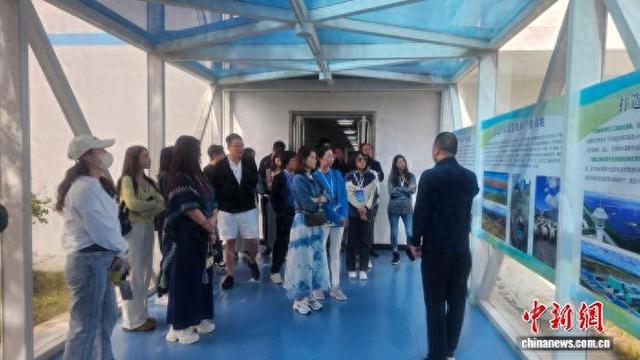
Group 1 - The core viewpoint of the article highlights the positive impressions of young Taiwanese entrepreneurs visiting Qinghai, emphasizing the unique natural beauty and cultural experiences they encountered [1][3]. - The delegation, consisting of 31 young Taiwanese businesspeople, visited various locations in Qinghai, including the Qinghai Lake and the largest photovoltaic power plant in the world, showcasing the region's diverse landscapes and resources [1][3]. - The visit aimed to foster understanding and connections between Taiwanese youth and the local culture, with a focus on how people coexist harmoniously with nature [3][5]. Group 2 - Young Taiwanese entrepreneurs expressed a desire to enhance cultural recognition and reduce misunderstandings between the two regions, emphasizing the importance of personal experiences over digital information [5]. - The event included team-building activities, such as ice curling competitions, which facilitated interactions and common interests among young entrepreneurs from both regions [5]. - Qinghai's government has been actively promoting economic and trade forums to strengthen ties with Taiwan, indicating a growing collaboration between businesses in both areas [5].
输了就是输了!法德两国劝欧盟别做无用功,一个领域不可能超中国
Sou Hu Cai Jing· 2025-09-04 04:40
Group 1 - Northvolt's bankruptcy has caused significant shock within the EU, highlighting the challenges faced by European renewable energy companies amid fierce competition from China and Southeast Asia [1] - The EU Commission's latest report indicates that the prices of solar products produced in China and Southeast Asia have fallen below the production cost of European companies, making survival increasingly difficult for them [1] - The French government has announced a tax reduction policy of up to 200 million euros for companies investing in France, aiming to establish the country as a battery manufacturing hub [3] Group 2 - A joint report from scholars in France and Germany urges the EU to reassess its industrial policies, suggesting that Europe should focus resources on more strategically significant sectors like defense, aerospace, and robotics instead of competing in solar energy [5] - China currently dominates the global photovoltaic industry, contributing approximately 75% of the world's solar cells and 70% of photovoltaic module production, with a total investment of 100 billion dollars in the past three years [7] - European industry organizations warn that imposing trade restrictions on Chinese photovoltaic products could lead to a "lose-lose" situation, increasing clean energy development costs and delaying carbon neutrality goals [9]

关注九三大阅兵
Hua Tai Qi Huo· 2025-09-03 07:13
Report Industry Investment Rating No relevant information provided. Core Insights of the Report - The Fed is expected to restart the easing cycle. Powell's dovish stance at the global central bank meeting paves the way for a September rate cut, making the path of overseas inflation more straightforward [2]. - The current commodity fundamentals are still weak, and caution should be exercised regarding the implementation of policy expectations. Commodity price volatility may remain high [2]. - With the continuous increase in risk aversion and rate - cut expectations, the prices of gold and silver have reached record highs [2]. Summary by Relevant Catalogs Market Analysis - In August, there were initial signs of rising overseas inflation. Global economic data in July remained resilient. China's official manufacturing PMI in July dropped to 49.3, while non - manufacturing remained in expansion. China's exports in July increased by 7.2% year - on - year in US dollars, higher than expected [1]. - The State Council emphasized measures to stabilize the real estate market, and the government plans to expand service consumption and investment. China's official manufacturing PMI in August slightly rebounded to 49.4, and non - manufacturing accelerated its expansion [1]. - On September 2, A - shares fluctuated and adjusted throughout the day, with the three major indices closing down. The basis of IC and IM futures of stock indices has widened, and subsequent basis changes and risks should be monitored [1]. - In the US, the ISM manufacturing PMI in August was 48.7, with the contraction rate of manufacturing activities slightly slowing down. The "Big Beautiful" Act may support subsequent consumption, and attention should be paid to the further transmission and verification of overseas inflation [1]. Fed and Global Central Banks - Powell's dovish speech at the global central bank meeting on August 22 increased the downward risk of employment, which may lead to a policy adjustment. He also abandoned the 2020 flexible average inflation target framework [2]. - The New York Fed President Williams believes that if the neutral interest rate is 1% or slightly lower, the current situation is in a restrictive area. Trump threatened to remove Fed Governor Cook, and the Fed stated that the removal needs "just cause" [2]. - The European Central Bank's July meeting minutes showed that officials considered inflation risks to be "generally balanced." The preliminary annual CPI rate in the eurozone in August was 2.1%, slightly higher than the previous month, supporting the ECB to maintain the status quo [2]. Commodity Market - Domestically, the black and new energy metal sectors are most sensitive to the supply - side. Overseas inflation expectations can focus on precious metals and agricultural products [2]. - The black sector is still dragged down by downstream demand expectations, and attention should be paid to the "anti - involution" situation. The supply constraints in the non - ferrous sector have not been alleviated, and the government will regulate the photovoltaic industry [2]. - In the medium - term, the supply of energy is expected to be relatively loose, with OPEC+ accelerating production increases. In the chemical sector, the "anti - involution" space of some varieties is worthy of attention [2]. - Agricultural products are currently driven by tariffs and inflation expectations, but they still need fundamental signals and attention should be paid to Sino - US negotiations [2]. Key News - The central bank's liquidity injection in August included a net MLF injection of 30 billion yuan, a net PSL withdrawal of 16.08 billion yuan, and a net injection of 30 billion yuan through repurchase agreements [4]. - The ceremony commemorating the 80th anniversary of the victory of the Chinese People's War of Resistance against Japanese Aggression and the World Anti - Fascist War will be held on September 3, with the parade lasting about 70 minutes [4]. - The overall market fluctuated and adjusted, with more stocks falling than rising. The trading volume exceeded 2.91 trillion yuan. The Shanghai Composite Index fell 0.45%, the Shenzhen Component Index fell 2.14%, and the ChiNext Index fell 2.85% [4]. - The US ISM manufacturing index in August was 48.7, with new orders and other sub - indices showing different trends [4]. - The preliminary annual CPI rate in the eurozone in August was 2.1%, and the core CPI also showed certain changes [4]. - The yield of UK long - term government bonds reached the highest level since 1998, putting pressure on the government. US stocks before the market opened saw a decline in European and US stocks, a surge in long - term bond yields, and a rise in gold prices [4].
新能源及有色金属日报:多晶硅现货报价继续上调,关注价格向下游传导情况-20250903
Hua Tai Qi Huo· 2025-09-03 07:13
Industry Investment Rating - Unilateral: Neutral for polysilicon; short-term range operation for polysilicon in the strategy [5][7] - Inter-temporal: None [5][7][8] - Inter-commodity: None [5][7][8] - Spot-futures: None [5][7][8] - Options: None [5][7][8] Core Viewpoints - For industrial silicon, the short-term supply and demand have marginally improved, but there are issues of overcapacity and high inventory pressure, and the supply side is still expected to increase. The industrial silicon futures market fluctuates with the overall commodity sentiment [2] - For polysilicon, the downstream production scheduling of the photovoltaic industry increased slightly in September. Self-discipline production cuts by polysilicon producers led to a slight reduction in supply, and the oversupply situation improved. The market is greatly affected by anti-involution policies, and the policy is still being promoted, causing large market fluctuations. In the medium to long term, it is suitable to build long positions on dips [7] Market Analysis Industrial Silicon - On September 2, 2025, the industrial silicon futures price was strong. The main contract 2511 opened at 8,480 yuan/ton and closed at 8,470 yuan/ton, up 1.13% (95 yuan/ton) from the previous settlement. The position of the main contract 2511 was 281,480 lots, and the number of warehouse receipts was 50,029 lots, down 371 lots from the previous day [1] - The spot price of industrial silicon was stable. The price of East China oxygenated 553 silicon was 9,000 - 9,200 yuan/ton, 421 silicon was 9,300 - 9,500 yuan/ton, Xinjiang oxygenated 553 silicon was 8,400 - 8,600 yuan/ton, and 99 silicon was 8,400 - 8,600 yuan/ton. The silicon prices in Kunming, Huangpu Port, Northwest, Tianjin, Xinjiang, Sichuan, and Shanghai regions increased slightly, and the price of 97 silicon also rose slightly [1] - The consumption of industrial silicon is expected to remain stable. The price of silicone DMC was 10,500 - 10,900 yuan/ton. Silicone enterprises face increased cost pressure, and the peak-season restocking of end consumers is average [1] Polysilicon - On September 2, 2025, the main polysilicon futures contract 2511 oscillated strongly, opening at 52,360 yuan/ton and closing at 51,875 yuan/ton, up 3.97% from the previous trading day. The position of the main contract was 145,855 lots (150,409 lots the previous day), and the trading volume was 530,778 lots [4] - The spot price of polysilicon was stable. The price of N-type material was 49.00 - 54.00 yuan/kg, and N-type granular silicon was 48.00 - 49.00 yuan/kg. The inventory of polysilicon producers and silicon wafers decreased. The latest polysilicon inventory was 21.30 (a month-on-month decrease of 14.29%), and the silicon wafer inventory was 18.05GW (a month-on-month increase of 3.68%). The weekly polysilicon production was 31,000 tons (a month-on-month increase of 6.53%), and the silicon wafer production was 13.31GW (a month-on-month increase of 8.30%) [4] - In September, most domestic silicon wafer enterprises increased their production scheduling plans, and the overall output showed an upward trend compared to August [4] - In September, the global battery production scheduling was about 60GW (a month-on-month increase of 2.3% compared to 59GW in August), and the domestic production scheduling was about 59GW (a month-on-month increase of 2.3% compared to 58GW in August) [6] - The mainstream transaction prices of components remained stable. The mainstream transaction price of PERC182mm was 0.67 - 0.74 yuan/W, PERC210mm was 0.69 - 0.73 yuan/W, N-type 182mm was 0.67 - 0.69 yuan/W, and N-type 210mm was 0.67 - 0.69 yuan/W [6] Strategy Industrial Silicon - The spot price fluctuates slightly. The short-term supply and demand have marginally improved, but due to overcapacity and high inventory pressure, and the supply side is still expected to increase. The industrial silicon futures market fluctuates with the overall commodity sentiment [2] Polysilicon - In September, the downstream production scheduling of the photovoltaic industry increased slightly. Self-discipline production cuts by polysilicon producers led to a slight reduction in supply, and the oversupply situation improved. The market is greatly affected by anti-involution policies, and the policy is still being promoted, causing large market fluctuations. Participants need to pay attention to risk management, continuously follow up on policy implementation and the downward transmission of spot prices. In the medium to long term, it is suitable to build long positions on dips [7]
TCL科技:公司2025年上半年实现经营现金流净额273亿元
Zheng Quan Ri Bao Zhi Sheng· 2025-09-02 11:13
Core Insights - TCL Technology announced that it expects to achieve a net operating cash flow of 27.3 billion yuan in the first half of 2025, primarily driven by cash flow contributions from TCL Huaxing [1] - The company reported that TCL Zhonghuan has maintained positive operating cash flow despite being at the bottom of the industry cycle [1] - The rapid growth in operating cash flow for TCL Huaxing is attributed to significant profitability growth despite high depreciation, along with improvements in inventory turnover and accounts receivable management [1] Financial Performance - TCL Technology's capital expenditures are on a declining trend as both the display and photovoltaic industries have passed their investment peaks, indicating a stable growth in future free cash flow [1] - The company plans to increase its equity stake in certain panel production lines to enhance parent company profits [1] - Management of the debt-to-asset ratio is a priority, with a focus on reducing financial costs [1] Shareholder Returns - The company has a long-standing commitment to shareholder returns and will continue to implement a proactive dividend strategy [1]
