
服务业

Search documents
2025年7月宏观数据解读:经济延续弱修复态势
ZHESHANG SECURITIES· 2025-08-15 11:37
Economic Overview - The economy in July shows signs of weak recovery, with a potential trend of high-to-low performance throughout the year, indicating increased volatility due to external uncertainties[1] - The nominal GDP is projected to reach around 140 trillion yuan, with limited elasticity in growth rates and GDP deflator index in the second half of the year[12] Industrial Growth - In July, the industrial added value increased by 5.7% year-on-year, slightly below market expectations, while month-on-month growth was 0.38%[14] - Manufacturing demand is recovering but showing signs of marginal slowdown, with the new orders index at 49.4%, indicating a decrease in manufacturing market demand[16] Consumer Spending - The retail sales of consumer goods in July grew by 3.7% year-on-year, down from 4.8% in June, with a notable decline of 1.1 percentage points[19] - Factors affecting retail sales include reduced funding for the "old-for-new" policy, which decreased from 162 billion yuan in the first half of 2025 to 138 billion yuan in the second half[21] Fixed Asset Investment - From January to July, fixed asset investment (excluding rural households) totaled 288.229 billion yuan, growing by 1.6%, which is below market expectations of 2.7%[29] - Infrastructure investment grew by 3.2%, while real estate development investment saw a significant decline of 12.0%[29] Employment Trends - The urban surveyed unemployment rate in July was 5.2%, slightly up from the previous month, reflecting seasonal pressures from the graduation season[6] - Employment policies are being implemented to mitigate youth unemployment, including support for job creation in various sectors[6] Investment Outlook - Manufacturing investment growth was 6.2% year-on-year, but July recorded a negative growth of -0.3%, the first negative reading since July 2020, primarily due to high base effects and uncertainties from trade tensions[45] - The overall investment environment remains cautious, with private investment declining by 1.5% year-on-year, particularly in the real estate sector[29]
【招银研究|宏观点评】经济减速慢行,政策空间打开——中国经济数据点评(2025年7月)
招商银行研究· 2025-08-15 10:20
Core Viewpoint - The economic data for July indicates a slowdown in China's economy, with both supply and demand sides experiencing challenges, leading to a mixed outlook for various sectors [1][3]. Consumption - Retail sales growth in July was 3.7%, below the market expectation of 4.8%, influenced by extreme weather and other short-term factors [4][5]. - The growth rate of commodity consumption fell to 4%, with notable resilience in demand for essential goods like grain and oil (8.6%) and home appliances (28.7%) [4][5]. - Service retail sales growth slightly decreased to 5.2%, with cultural and tourism consumption supported by government subsidies [7][8]. Fixed Asset Investment - Fixed asset investment growth was 1.6%, down 1.2 percentage points from the previous month, with infrastructure investment at 7.3% and manufacturing investment at 6.2% [9][12]. - Real estate investment continued to decline, with a year-on-year drop of 12%, and sales volume and value of commercial housing also decreased significantly [12][14]. Import and Export - July saw better-than-expected performance in imports and exports, with export growth in dollar terms rising to 7.2%, driven by strong demand from non-US regions [18][19]. - Trade surplus expanded to $98.24 billion, a year-on-year increase of 14.9% [18][19]. Supply - Industrial production showed stable growth, with a year-on-year increase of 5.7%, supported by resilient exports and government policies [21][22]. - The service sector maintained a growth rate of 6.0%, although there are concerns about the sustainability of this growth [21][22]. Inflation - Price pressures remained, with CPI inflation at 0% and PPI inflation at -3.6%, influenced by seasonal factors and international trade uncertainties [23][24]. Outlook - The economic outlook suggests rising uncertainties in external demand and persistent internal demand issues, with recent policies aimed at boosting consumption and investment expected to take effect gradually [25].


7月经济:“供强需弱”延续(申万宏观·赵伟团队)
申万宏源宏观· 2025-08-15 09:49
Core Viewpoints - Consumption and investment data have significantly weakened, but industrial production remains relatively resilient [3][88] - The economic indicators for July reflect some mid-term risks, but policies are being intensified, and economic growth is expected to remain within a reasonable range in the second half of the year [5][90] Consumption - In July, the year-on-year growth of social retail sales was 3.7%, down 1.1 percentage points from the previous value, primarily due to the slow disbursement of national subsidy funds [9][88] - The sales of furniture and home appliances saw significant declines, with furniture down 8.1 percentage points to 20.6% and home appliances down 3.7 percentage points to 28.7% [3][9] - Service consumption showed relative stability, with restaurant income slightly improving to 1.1% and cumulative service retail sales maintaining a high level at 5.2% year-on-year [3][9] Investment - Fixed asset investment in July fell sharply, reflecting short-term weather disturbances and mid-term impacts such as declining investment prices and the end of the equipment renewal cycle [4][13] - The year-on-year decline in fixed asset investment was 4.6 percentage points to -4.7%, marking the lowest level since Q1 2020 [4][13] - The construction progress was affected by extreme weather, with infrastructure and real estate investments experiencing greater declines than overall fixed investment [4][13] Real Estate - In July, real estate sales continued to decline, with corporate financing weakening and a lagging impact from reduced projects [4][89] - The growth rate of corporate credit financing dropped significantly by 13.5 percentage points to -15.8%, the lowest in nearly two years [4][89] - The sales area of commercial housing fell by 2.4 percentage points to -7.8%, indicating a slowdown in the release of pent-up demand [4][89] Production - Despite significant weaknesses in consumption and investment, industrial production maintained relative resilience, primarily due to improvements in export chain production [4][33] - The industrial added value year-on-year in July fell by 1.1 percentage points to 5.7%, but still remained at a high level [4][33] - Strong performance was noted in industries with robust export, such as black metal rolling and transportation equipment, while production in sectors like metal products and electrical machinery declined due to equipment renewal and internal competition [4][33] Summary - The economic indicators for July reflect some mid-term risks, with a continued pattern of weak domestic demand and strong external demand [5][90] - The second half of the year may see further declines in manufacturing and real estate investment, making it crucial to enhance service and infrastructure investment and stabilize consumer demand [5][90]
7月份经济数据解读:内生动能复苏有待宏观政策进一步呵护
Yin He Zheng Quan· 2025-08-15 08:37
Economic Overview - In July, China's economic data showed a slight contraction in both supply and demand, with GDP growth estimated at 4.8%, down from 5.4%[2] - Industrial value added grew by 5.7% year-on-year, a decrease from 6.8% in the previous month, influenced by extreme weather conditions[2] - The service sector maintained strong growth, with a production index increase of 5.8%[2] Consumer Trends - Retail sales of consumer goods increased by 3.7% year-on-year in July, significantly down from 6.4% and 4.8% in May and June respectively[2] - Dining revenue growth remained low at 1.1%, indicating weak consumer spending in the restaurant sector[5] - The "old-for-new" policy continued to show diminishing returns, with retail growth in related sectors declining for two consecutive months[5] Investment Insights - Fixed asset investment growth for January to July was recorded at 1.6%, with real estate investment declining by 12.0%[21] - Infrastructure investment growth was only 3.2%, significantly lower than seasonal expectations, with July's investment growth estimated at -5.07%[4] - Manufacturing investment saw a marginal decline of 1.3 percentage points to 6.2%, with equipment updates being the only positive contributor[24] Real Estate Market - New residential property sales area decreased by 4.0% year-on-year, with sales value dropping by 6.5%[39] - The average price of new homes in major cities showed a narrowing decline, while second-hand home prices continued to fall, indicating unstable demand[39] - Real estate development investment totaled 53,580 billion yuan, with a monthly estimated decline of 17%[45] Employment Situation - The urban unemployment rate rose to 5.2%, with local household unemployment increasing to 5.3%[58] - The demand for labor from external sources remained strong due to robust industrial production, but uncertainty in future employment needs led to higher local unemployment rates[64]
中叶私募:非农数据公布,美股与黄金走势分化,经济趋势现端倪
Sou Hu Cai Jing· 2025-08-15 06:18
Group 1: Non-Farm Payroll Data Insights - The latest non-farm payroll data indicates a stronger-than-expected increase in employment, with the unemployment rate remaining low, suggesting a robust labor market that supports ongoing economic recovery [2][4] - Employment growth is uneven across sectors, with some service and manufacturing jobs lagging, while emerging fields like technology and healthcare show strong performance, reflecting a post-pandemic economic transformation [4] Group 2: Market Reactions - Following the positive non-farm data, U.S. stock indices, including the Dow Jones, S&P 500, and Nasdaq, experienced gains, indicating increased investor confidence and expectations of improved corporate profitability [5] - The strong employment data alleviated recession fears, with analysts suggesting that a resilient labor market could help the U.S. economy avoid a downturn, although concerns remain about potential high interest rates if the job market continues to overheat [5][7] Group 3: Gold Market Dynamics - In contrast to rising stock prices, gold prices fell, reflecting a decrease in demand for traditional safe-haven assets as investor risk appetite increased following favorable economic data [6] - The strengthening U.S. dollar, driven by strong employment figures, typically pressures gold prices, and potential delays in interest rate cuts by the Federal Reserve could further limit gold's upward potential [7] Group 4: Economic Signals from Diverging Trends - The divergence between stock and gold market trends highlights differing investor perceptions regarding future economic conditions and policy directions, with improving employment supporting corporate earnings and consumer growth [8] - Despite a decline in inflation, it remains above the Federal Reserve's target, limiting the scope for monetary policy adjustments, which could lead to prolonged high interest rates affecting asset prices across the board [8]
一图读懂2025年7月份我国国民经济数据
Xin Hua Cai Jing· 2025-08-15 05:41
Economic Overview - In July, the national economy showed signs of recovery, with macro policies proving effective despite complex external environments and extreme domestic weather conditions [1] - The overall economic performance maintained a steady and progressive development trend, demonstrating strong resilience and vitality [1] Industrial Production - The industrial production experienced rapid growth, with a year-on-year increase of 5.7% in July and a month-on-month increase of 0.38% [1] - From January to July, the industrial added value grew by 6.3% year-on-year [1] Service Sector - The service sector also saw significant growth, with a year-on-year increase of 5.8% in July and a production index growth of 5.9% [2] - The business activity index for the service sector was recorded at 50.0 in July [2] Consumer Market - The total retail sales of consumer goods reached 38,780 billion yuan in July, marking a year-on-year increase of 3.7% [2] - From January to July, the total retail sales amounted to 284,238 billion yuan, with a year-on-year growth of 4.8% [2] Fixed Asset Investment - The total fixed asset investment (excluding rural households) from January to July was 288,229 billion yuan, reflecting a year-on-year increase of 1.6% [3] - Investment in the manufacturing sector grew by 24%, while real estate development investment increased by 25%, but infrastructure investment saw a decline of 12.0% [3] Trade Performance - The total import and export value accelerated, reaching 256,969 billion yuan from January to July, with a year-on-year growth of 6.7% in July [3] - Private enterprises' import and export activities increased by 7.4% [3] Employment Situation - The employment situation remained generally stable, with the urban surveyed unemployment rate at 5.2% in July [3]

【新华解读】两项贴息政策力促居民消费潜力释放 财政金融联动支持促消费、扩内需
Xin Hua Cai Jing· 2025-08-14 13:55
新华财经北京8月14日电(记者董道勇)近日,《个人消费贷款财政贴息政策实施方案》和《服务业经 营主体贷款贴息政策实施方案》两项政策正式发布,备受市场关注。 多位业内人士表示,提振消费是扩大内需的重要发力点,是当前和未来宏观政策的重中之重。两项贷款 贴息政策通过财政和金融的联动,支持促消费、扩内需,释放居民消费潜力,有助于进一步稳定和提升 居民消费弹性。 两项贷款贴息政策释放居民消费潜力 消费是经济增长的重要引擎,是畅通国内大循环的关键环节。今年政府工作报告将"大力提振消费、提 高投资效益,全方位扩大国内需求"列为十项重点任务之首。2025年3月,中共中央办公厅、国务院办公 厅印发《提振消费专项行动方案》,正式实施"提振消费专项行动",并明确"对符合条件的个人消费贷 款和消费领域的服务业经营主体贷款给予财政贴息"。 根据本次实施的《个人消费贷款财政贴息政策实施方案》,2025年9月1日至2026年8月31日期间,居民 个人使用贷款经办机构发放的个人消费贷款(不含信用卡业务)中实际用于消费的,且贷款经办机构可 通过贷款发放账户等识别借款人相关消费交易信息的部分,可按规定享受贴息政策,年贴息比例为1个 百分点,且最 ...
恒银科技:8月14日召开董事会会议
Mei Ri Jing Ji Xin Wen· 2025-08-14 11:20
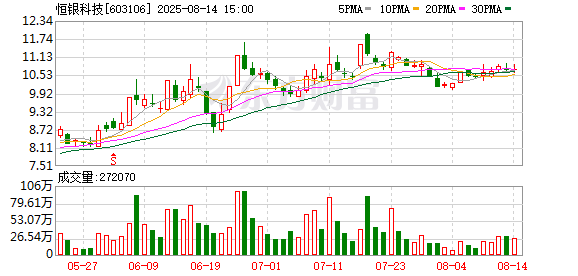
2024年1至12月份,恒银科技的营业收入构成为:制造业占比69.06%,服务业占比30.35%,其他业务占 比0.59%。 恒银科技(SH 603106,收盘价:10.73元)8月14日晚间发布公告称,公司第四届第七次董事会会议于 2025年8月14日在天津自贸试验区西八道30号恒银金融科技园A座五楼会议室以现场和通讯相结合的方 式召开。会议审议了《关于召开2025年第二次临时股东会的议案》等文件。 (文章来源:每日经济新闻) ...

长春高新:祝先潮辞去公司第十一届董事会董事职务
Mei Ri Jing Ji Xin Wen· 2025-08-14 09:35
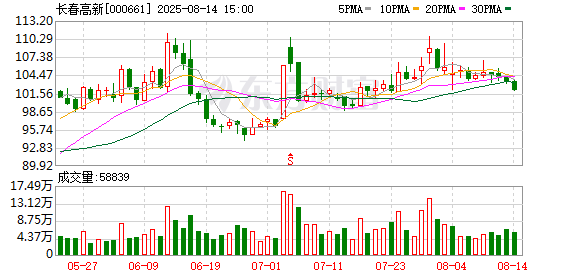
长春高新(SZ 000661,收盘价:102元)8月14日晚间发布公告称,长春高新技术产业(集团)股份有 限公司董事会于近日收到公司董事祝先潮先生的书面辞职报告,基于个人工作原因,祝先潮先生申请辞 去公司第十一届董事会董事职务(原定任期自2024年6月24日至2027年6月23日),辞职后将不再在公司 及控股子公司担任任何职务,其辞职申请自送达董事会之日起生效。 2024年1至12月份,长春高新的营业收入构成为:制药业占比94.07%,房地产占比5.61%,服务业占比 0.32%。 (文章来源:每日经济新闻) ...

长春市2024年实现地区生产总值7632.19亿元,接待国内外游客人次同比增长17%
Zheng Quan Shi Bao Wang· 2025-08-14 02:43
Economic Overview - In 2024, Changchun's GDP reached 763.22 billion yuan, growing by 4.8% year-on-year [1] - The primary industry contributed 50.73 billion yuan (6.6% of GDP), the secondary industry contributed 269.92 billion yuan (35.4% of GDP), and the tertiary industry contributed 442.57 billion yuan (58.0% of GDP) [1] - The per capita GDP for the year was 83,930 yuan, an increase of 4.6% [1] Agricultural Sector - The value added by agriculture, forestry, animal husbandry, and fishery was 52.65 billion yuan, up by 4.5% from the previous year [2] - The total grain planting area was 1.5894 million hectares, with a total grain output of 12.996 million tons, reflecting a 2% increase [2] - The number of new green food products increased by 33, and the area monitored for organic environmental standards reached 7.644 million acres [2] Industrial Sector - The industrial added value was 221.14 billion yuan, growing by 4.3% [3] - Key industries included food processing (4.5% growth), chemical manufacturing (15.7% growth), and electronic equipment manufacturing (20.8% growth) [3] - The total profit of industrial enterprises was 52.71 billion yuan, a decrease of 27.9% year-on-year [3] Service Sector - The service sector's added value was 442.57 billion yuan, increasing by 5.1% [4] - Notable growth was seen in information technology services (14.6% growth) and financial services (5.5% growth) [4] - The total revenue of large-scale service enterprises grew by 3.5% [4] Tourism Industry - Changchun received 172.52 million domestic and international tourists, a 17% increase from the previous year [5] - Total tourism expenditure reached 302.61 billion yuan, reflecting a 25.5% growth [5] - The number of travel agencies in the city was 287, with 46 national A-level tourist attractions [5]