
稀土

Search documents
中国两次打出稀土王牌制裁美国,全球96%冶炼靠我们,无法替代!
Sou Hu Cai Jing· 2025-11-27 08:08
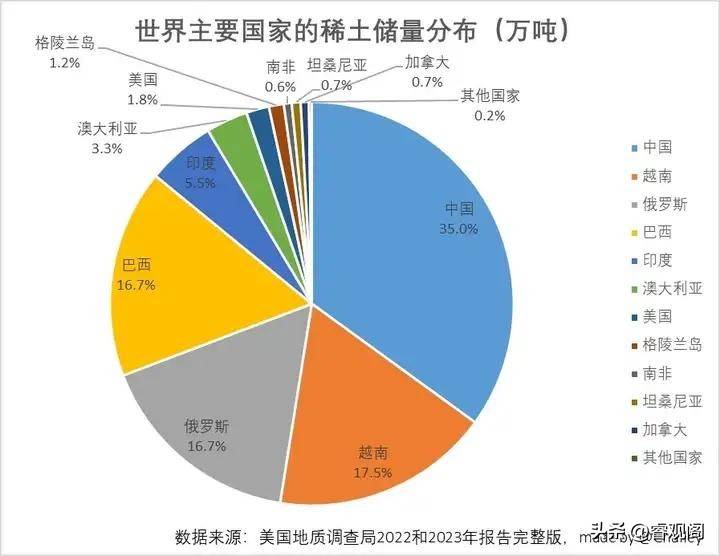
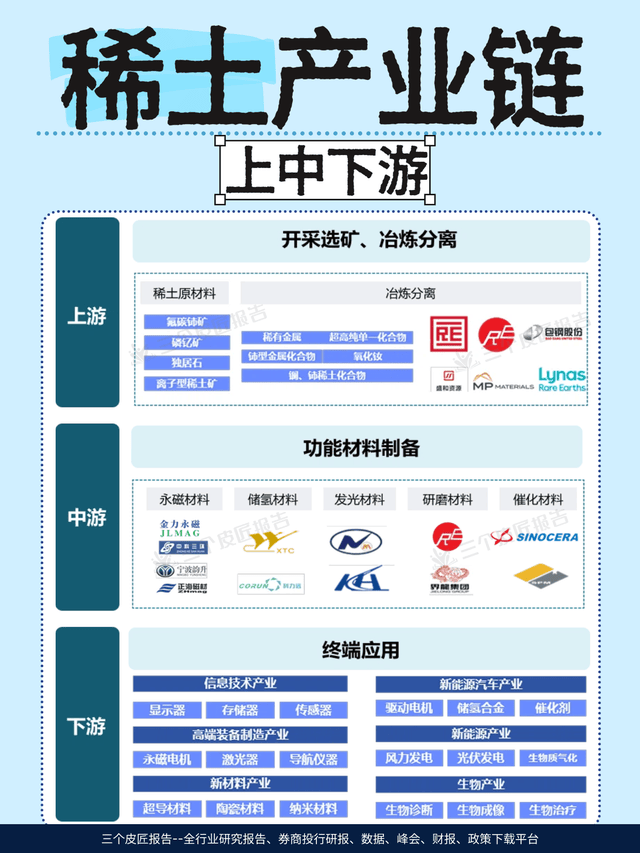
Core Viewpoint - The article discusses China's dominance in the rare earth industry and its strategic moves against the U.S., highlighting the significant increase in the A-share rare earth index and the underlying logic behind it [1]. Group 1: China's Strategic Moves - China has made two significant moves regarding rare earth exports in 2023: the first in April with export controls on certain medium and heavy rare earths, and the second in October, expanding the controls to the entire rare earth industry chain [3][11]. - The April move was described as a "point strike," while the October action was characterized as a "fatal blow" [2]. Group 2: Importance of Rare Earths - Rare earths are not scarce in terms of mineral resources, but the technology to separate and purify them from ores is what is truly scarce [4]. - Rare earths consist of 17 metal elements, with neodymium and praseodymium being crucial for the production of the strongest magnets used in electric vehicle motors and wind power generation [4]. Group 3: China's Technological Advantage - China holds a significant technological edge in rare earth processing, with the ability to achieve a purity of 99.9999% through a method developed in the 1970s [7]. - In contrast, the U.S. and Australia can only achieve a purity of 99.9%, leading to a 60% increase in costs for them compared to China's [9]. Group 4: Market Reactions - The A-share rare earth index has seen a year-to-date increase of over 100% as of mid-October 2023, reflecting market optimism regarding the future of rare earths [15]. - Key companies in the sector, such as Northern Rare Earth and Shenghe Resources, have reported significant profit increases, with Northern Rare Earth's net profit growing by 1952% in the first half of the year [15][17]. Group 5: Future Outlook - As China's supply-side reforms continue and export licensing systems improve, the domestic supply of rare earths is expected to shrink, leading to increased scarcity and price support for rare earth products [19]. - China's strategic position in the rare earth market has evolved since the 2010 supply cut to Japan, and its importance in the U.S.-China rivalry is anticipated to grow [21].

稀土还未解决,另一条命脉也被中方掐住,为摆脱对华制药原材料依赖,美国要拉上印度
Sou Hu Cai Jing· 2025-11-27 03:49
Core Insights - The trade war between the US and China has extended into a "shadow war" over pharmaceutical supply chains, which are crucial for national health and strategic leverage [1] - China holds a 45% market share in drug component registrations, significantly surpassing India's 19%, indicating a shift from "follow-on innovation" to "original innovation" in its pharmaceutical industry [1][3] - The US is heavily reliant on China for nearly 700 key drug components, with China being the sole supplier for many, raising concerns about healthcare security in the US [3] Industry Dynamics - The US faces a dilemma as its dependence on Chinese pharmaceuticals increases, with political figures warning that medical safety has become a component of national security [3] - Historical tariffs imposed by the US, such as a 145% tariff on Chinese medical devices, have raised healthcare costs domestically, complicating the narrative of bringing production back to the US [3] - The ongoing trade conflict has led to a precarious situation for the US, as it struggles to regain dominance in the pharmaceutical sector [3][6] Supply Chain Challenges - The potential for China to impose restrictions on rare earth exports could severely impact US manufacturing, highlighting the interconnectedness of the two nations' supply chains [6] - The idea of decoupling from China is viewed as unrealistic, as alternative solutions, such as partnerships with India, do not fundamentally resolve the reliance on Chinese resources [6] - China's approach to pharmaceuticals reflects a sense of responsibility, emphasizing that health should not be a geopolitical tool, and it has shown a commitment to maintaining supply chain stability [6] Future Outlook - The global pharmaceutical landscape is expected to undergo unprecedented changes, with the pain of transition likely to be felt over an extended period [8] - The competition between the US and China in the pharmaceutical supply chain is not merely an economic battle but encompasses technological innovation, national strategy, and human welfare [9] - The ongoing struggle for healthcare security will intensify, with the ultimate beneficiaries likely to be those nations prioritizing the health and well-being of their populations [9]

Rainbow Rare Earths Limited (RBWRF) Discusses Adoption of Solvent Extraction for Rare Earth Separation at Phalaborwa Project Transcript
Seeking Alpha· 2025-11-26 21:43
Core Insights - The company has decided to utilize solvent extraction (SX) as the optimal method for separating rare earths from phosphogypsum in the Phalaborwa project in South Africa [1][4] - The company is pioneering the recovery of rare earths from phosphogypsum stacks, with a focus on becoming a low-cost and high-margin producer [2] - The company has a diversified portfolio, with advanced projects in South Africa and Brazil, including a definitive feasibility study in Phalaborwa and an economic assessment in Uberaba [3] Company Overview - The company is engaged in the recovery of rare earths, specifically from phosphogypsum, and has developed unique intellectual property using proven technology [2] - The company aims to produce separated NdPr Oxide with a purity of over 99.5% [4]

Lynas Rare Earths Limited (LYSDY) Shareholder/Analyst Call Transcript
Seeking Alpha· 2025-11-26 14:43
Group 1 - The Annual General Meeting (AGM) of Lynas Rare Earths is being held, with a focus on acknowledging the traditional owners of the land, the Gadigal of the Eora Nation, and the Aboriginal and Torres Strait Islander people [1] - The AGM is being filmed and live-streamed, allowing shareholders to participate both in person and online, with provisions for submitting questions and voting [2]

再再再推稀土磁材:中稀有色诞生,板块行情启动
2025-11-26 14:15
Summary of Conference Call on Rare Earth Materials Industry Company and Industry Overview - The document discusses the rare earth materials industry, specifically focusing on Zhongxi Nonferrous Metals (formerly known as Guangsheng Nonferrous Metals) and its integration into the China Rare Earth Group [1][2][3]. Key Points and Arguments - **Company Name Change**: The renaming of Guangsheng Nonferrous Metals to Zhongxi Nonferrous Metals signifies a deeper integration of state-owned enterprises in the rare earth sector, reflecting a broader business scope that includes tungsten and copper [2][4]. - **Market Sentiment**: The name change and the transfer of 100% equity of Guangdong Rare Earth Group to China Rare Earth Group are expected to catalyze market sentiment, potentially driving the sector's performance in the coming months [2][4]. - **Asset Composition**: Zhongxi Nonferrous Metals has a comprehensive asset layout, including rare earth (Huaqi Company, New District Trade), tungsten (Shirenzhang, Hongling Tungsten Mine), and copper (Dabaoshan Copper Mine), forming a complete industrial chain from mining to smelting [1][4][5]. - **Production Capacity**: The total rare earth production capacity is expected to nearly double with the commissioning of the Zuo Gong Mine, while the smelting capacity at Fuyuan Company is also projected to increase [1][5]. - **Financial Performance**: Excluding the pressure from magnetic materials, Zhongxi's expected performance for the year is over 300 million RMB, with a valuation lower than its peers [1][5]. - **Valuation Comparison**: Zhongxi Nonferrous Metals has a price-to-earnings (PE) ratio of 60, compared to 120 for its peers, indicating significant room for valuation correction [1][6][7]. Additional Important Insights - **Market Dynamics**: The rare earth sector is experiencing a bullish trend due to several factors, including a 15% year-on-year increase in exports in October and a 20% increase in rare earth permanent magnet exports in Q3 [8][11]. - **Regulatory Environment**: The introduction of the "Rare Earth Management Regulations" and the "Total Control Management Measures for Rare Earth Mining" is expected to tighten supply and enhance the market's regulatory framework [11]. - **Supply Chain Concerns**: The anticipated closure of tin mines in Myanmar by the end of 2025 is expected to tighten supply, further supporting price increases in the rare earth sector [11]. Future Outlook - **Growth Potential**: Zhongxi Nonferrous Metals is projected to have a growth potential of 50%-100% in the short term due to favorable policies and supply-side reforms [3][9]. - **Comparative Analysis**: Baogang Co. and Northern Rare Earth are also highlighted as having significant upside potential, with Baogang expected to see a price increase of over 50% due to its valuation correction [10].
渤海证券研究所晨会纪要(2025.11.26)-20251126
BOHAI SECURITIES· 2025-11-26 10:43
Industry Overview and Price Trends - The steel industry is entering a demand off-season, leading to increasing fundamental pressure on steel prices, which are expected to fluctuate at low levels in the short term [2] - Copper supply remains tight due to accidents at major overseas mines, providing support for copper prices. China's significant waste copper imports may face constraints if the EU restricts exports, potentially tightening domestic copper supply next year [2] - Aluminum prices are expected to remain volatile due to weak demand in the domestic off-season and a lack of support from the Federal Reserve's interest rate cut expectations [2] - Gold prices face upward pressure due to better-than-expected U.S. non-farm employment data and diverging opinions among Federal Reserve officials [2] - The lithium industry shows positive fundamentals, with adjustments to trading rules for lithium carbonate contracts aimed at curbing speculative behavior, leading to increased price volatility in the short term [2] - Rare earth prices are expected to fluctuate without significant improvement in downstream demand [2] Weekly Strategy - For the steel industry, the implementation of steady growth policies is expected to improve the competitive landscape and enhance profitability, with demand in shipbuilding and construction likely to increase [3] - The copper industry is anticipated to benefit from tightening global supply due to accidents at major mines, while demand is expected to rise in key sectors such as electric power grids and new energy vehicles [3] - In the aluminum sector, the release of new alumina project capacities is expected to keep alumina prices low, while demand from new energy vehicles and high-voltage power grids may support aluminum prices [4] - Gold prices will be influenced by U.S. economic data, Federal Reserve interest rate expectations, and geopolitical tensions, with long-term factors such as central bank gold purchases enhancing gold's attractiveness [4] - The rare earth industry is expected to see a revaluation of related companies due to upgraded export controls, with strategic value in resources and advancements in robotics and new energy sectors driving future demand [4] - The cobalt market is projected to remain tight due to constrained supply from the Democratic Republic of Congo, while demand from new energy vehicles and consumer electronics is expected to support prices [5] Investment Ratings - The report maintains a "positive" rating for the steel industry and the non-ferrous metals sector, with specific companies such as Luoyang Molybdenum (603993), Zhongjin Gold (600489), Huayou Cobalt (603799), Zijin Mining (601899), and China Aluminum (601600) receiving "overweight" ratings [6]





稀土霸权:中国如何将资源优势转化为战略武器?
Sou Hu Cai Jing· 2025-11-26 07:32
Core Insights - The strategic value of rare earths, referred to as "industrial vitamins," is increasingly highlighted amid intensifying global technological competition [1] - The report analyzes the U.S.-China rare earth competition from five dimensions: resources, technology, ecology, policy, and capital, revealing China's systemic advantages and the strategic dilemmas faced by the U.S. [1] Group 1: Importance of Rare Earths - Rare earths are not "earth" but a collective term for 17 metallic elements, categorized into light and heavy rare earths [2] - Light rare earths serve as the industrial foundation due to their abundance, while heavy rare earths are critical for high-tech and military applications due to their scarcity and high value [3] Group 2: China's "Threefold Hegemony" - Resource hegemony: China holds nearly half of the global reserves and accounts for 70% of production [4] - Technological hegemony: China dominates the entire industrial chain and has a significant patent advantage [4] - Cost hegemony: China can maintain profitability even with price increases in the rare earth market [4] Group 3: U.S.-China Rare Earth Competition - The U.S. attempts to "decouple" from China but faces significant challenges [4] - China is transitioning from "export control" to "full chain control" over rare earths [4] Group 4: Comparative Analysis of U.S. and China - Technological dimension: There is a significant gap between laboratory capabilities and industrial production [4] - Ecological dimension: China benefits from industrial clusters and cost advantages [4] - Policy dimension: China exhibits strategic consistency, while the U.S. shows political fluctuations [4] - Capital dimension: The Chinese market is driven by market forces, whereas the U.S. relies on subsidies [4] Group 5: Future Demand for Rare Earths - Electric vehicles require 2-3 kg of neodymium-iron-boron per vehicle [4] - Humanoid robots will need 3.5 kg each, with demand expected to exceed 17,500 tons by 2035 [4] - eVTOL aircraft will require 10-20 kg each, with an annual compound growth rate of 40% [4] - Military applications: An F-35 uses 417 kg of rare earths, while a nuclear submarine requires 4 tons [4] Group 6: Future of China's Rare Earths - China is evolving from a "resource-exporting country" to a "supply chain controlling country" [6] - The country is implementing a traceability system for full-process monitoring from mining to product [6] - China is prohibiting the export of key technologies related to smelting, processing, and recycling [6] - The country is diversifying its resource imports from Myanmar, Africa, and other regions to address resource shortages [6] - This shift positions China as a core player with pricing power, technical standards, and supply chain security [5]
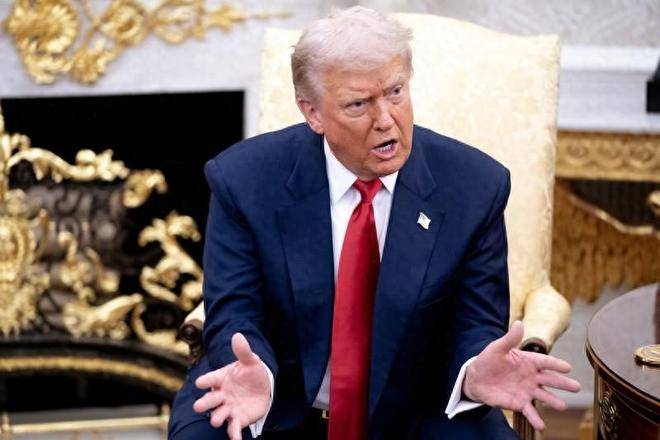
特朗普这次有点怕,准备对全球动手,但想起中国的手段,他犹豫了
Sou Hu Cai Jing· 2025-11-26 06:29
Core Viewpoint - The article discusses the hesitation of the Trump administration regarding the imposition of high tariffs on imported semiconductors, particularly in the context of U.S.-China relations and the strategic implications of such tariffs [1][3][11]. Group 1: U.S. Tariff Policy - Trump previously threatened to impose tariffs as high as 100% on imported semiconductors, but this measure has not been implemented [1]. - The current U.S. stance indicates that these tariffs may not be imposed soon, reflecting a more cautious approach from the government [3]. - The hesitation is largely due to the desire to avoid escalating tensions with China, as the semiconductor industry is crucial for both nations [3][7]. Group 2: Strategic Implications - The U.S. aims to control the semiconductor supply chain to limit China's technological advancements and strengthen its own manufacturing sector [3]. - The ongoing U.S.-China trade relationship is in a temporary ceasefire, with both sides having paused certain tariff measures [5]. - China's dominance in rare earth materials poses a significant challenge for the U.S., making it difficult to reduce reliance on Chinese supplies in the short term [5][7]. Group 3: Consequences of Tariff Imposition - If the U.S. imposes high tariffs on semiconductors, it is likely to provoke a strong response from China, particularly in the rare earth sector, leading to a potential trade war [7]. - The article suggests that a confrontation would result in a lose-lose situation for both countries, highlighting the need for a more strategic and cautious approach [7][11]. - The current dynamics indicate a shift in U.S. policy, where aggressive tariffs have become a risky move rather than a strategic advantage [9].
稀土供应要“卡壳”?日本这回是真慌了!
Sou Hu Cai Jing· 2025-11-26 06:29
Group 1 - Japan's reliance on rare earths from China remains high, with over 60% dependency as of 2025, particularly for heavy rare earths essential for electric vehicles and semiconductors [2] - Japan has invested over 50 billion yen in deep-sea mining to extract rare earths, but the technology is complex and costs are significantly higher than land mining, with commercial viability still uncertain [2] - Efforts to develop rare earth-free magnets have not yielded satisfactory results, as performance is inferior or production costs are prohibitively high, making it difficult to meet current demand [2] Group 2 - Japan's attempts to reduce dependence on China for rare earths have been extensive but ineffective, with a focus on alternative sources without addressing technological shortcomings [4] - China controls 90% of global rare earth refining technology, which poses a significant challenge for Japan's strategy to diversify supply sources [4] - The situation highlights the importance of global cooperation and the need for countries to maintain resilient supply chains rather than pursuing decoupling strategies [4]

2025年10月中国稀土进出口数量分别为0.7万吨和0.43万吨
Chan Ye Xin Xi Wang· 2025-11-26 03:52
Core Insights - The article discusses the performance of China's rare earth industry, highlighting significant changes in import and export figures for October 2025 [1] Import and Export Data - In October 2025, China's rare earth imports totaled 0.7 million tons, representing a year-on-year decrease of 26.2%. The import value was $12.7 million, showing a year-on-year increase of 2.1% [1] - In the same month, China's rare earth exports amounted to 0.43 million tons, which is a year-on-year decline of 8.6%. However, the export value reached $5.7 million, reflecting a substantial year-on-year increase of 42.9% [1] Industry Context - The article references a report by Zhiyan Consulting, which provides a competitive strategy analysis and market demand forecast for the Chinese rare earth industry from 2025 to 2031 [1] - The data presented is sourced from Chinese customs and organized by Zhiyan Consulting, indicating the reliability of the statistics [1]

