
建筑业

Search documents
住房城乡建设部:建“好房子”不等同于建“大房子”“贵房子”
news flash· 2025-06-05 11:52
Core Points - The newly implemented "Residential Project Standards" aims to enhance housing quality rather than just focusing on size or cost, emphasizing good design, construction, materials, and services [1] - The standards, effective from May 1, 2023, are seen as a baseline requirement for constructing "good houses" and are expected to support the transformation of the construction and real estate industries [1] Group 1 - The Ministry of Housing and Urban-Rural Development highlights that building "good houses" addresses pain points in living conditions and should vary by region, size, and price [1] - The implementation of the standards is crucial for standardization activities, with a focus on training and guiding relevant personnel to familiarize themselves with the new regulations [2] - The Ministry plans to support local adaptations of the standards and ensure compliance through supervision and management, including penalties for violations [2] Group 2 - The standards provide opportunities for the application of new technologies, products, and materials, which can stimulate domestic demand and consumption [1] - The Ministry will oversee the implementation of the standards, ensuring that all parties involved in construction adhere to the regulations [2] - Regular checks will be conducted to ensure that project designs, construction, and materials meet the established standards, with a focus on accountability [2]
美国就业数据爆冷 美股盘前直线跳水!特朗普怒了!
Zhong Guo Ji Jin Bao· 2025-06-04 14:01
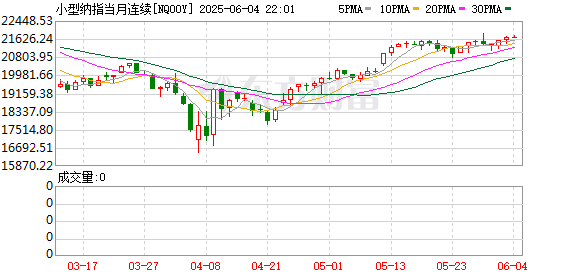
Group 1 - The core point of the article highlights a significant slowdown in U.S. hiring, with the private sector adding only 37,000 jobs in May, the lowest level in over two years, indicating weakened labor demand [1][2] - The report shows that the goods-producing sector lost 2,000 jobs, with notable declines in natural resources and mining (5,000 jobs lost) and manufacturing (3,000 jobs lost), while construction added 6,000 jobs [1][2] - In the services sector, leisure and hospitality added 38,000 jobs, and financial activities increased by 20,000, but professional and business services decreased by 17,000, and education and health services dropped by 13,000, contributing to the overall decline [2] Group 2 - Year-over-year wage growth for retained employees was 4.5%, while job switchers saw a 7% increase, indicating stable wage levels [3] - Recent economic data presents mixed signals regarding the job market, with job openings increasing unexpectedly in April, but surveys indicating a decline in hiring intentions [3] - Federal Reserve officials express optimism about the economy but voice concerns over uncertainties related to inflation and employment impacts from tariff policies [3] Group 3 - Following the release of the ADP employment data, President Trump urged Federal Reserve Chairman Jerome Powell to lower interest rates to stimulate economic growth [4] - The stock market reacted negatively, with major U.S. stock index futures dropping sharply in pre-market trading [5]

【环球财经】贸易政策担忧导致招聘放缓 美国ADP就业人数大幅低于预期
Xin Hua Cai Jing· 2025-06-04 13:46
Core Insights - In May, U.S. private sector created only 37,000 new jobs, significantly below expectations and marking the smallest increase in over two years, attributed to trade policies making companies hesitant in hiring [1][3] - The majority of new jobs in May came from the service sector, particularly leisure and hospitality, while manufacturing and natural resources/mining saw job losses [1] - The report indicates a potential weakening labor market amid increasing economic uncertainty as employers reduce hiring [3] Employment Data Summary - In May, construction employment increased by 6,000, down from 16,000 in April; manufacturing jobs decreased by 3,000, following a 4,000 increase in April; trade/transportation/utilities jobs fell by 4,000, after a 21,000 increase in April; financial services added 20,000 jobs, consistent with April; professional/business services saw a decrease of 17,000 jobs, compared to a 2,000 decrease in April [1] - Year-over-year wage growth for construction workers was 4.6% in May, down from 4.7% in April; manufacturing wage growth remained at 4.6%; trade/transportation/utilities wage growth was 4.2%, down from 4.3%; financial services wage growth increased to 5.2% from 5.1%; professional/business services wage growth decreased to 4.2% from 4.3% [2]

5月小非农“爆冷”!美国就业市场踩下急刹车?
Jin Shi Shu Ju· 2025-06-04 12:33
Group 1 - The ADP report indicates that U.S. private sector job growth slowed to a near standstill in May, with only 37,000 jobs added, the lowest level in over two years, and significantly below the market forecast of 110,000 [1][3] - The report shows a mixed picture in the labor market, with the goods-producing sector losing 2,000 jobs, while the construction industry added 6,000 jobs, partially offsetting losses in other areas [3][4] - In the services sector, leisure and hospitality added 38,000 jobs, while professional/business services and education/health services saw declines, contributing to the overall slowdown in job growth [3][5] Group 2 - The annual salary growth rate for retained employees is 4.5%, while for those who switch jobs, it is 7%, indicating a strong wage growth environment despite the slowdown in job creation [3][5] - Market sentiment remains mixed, with some economists expressing concerns about the limited hiring and low turnover rates, suggesting that the labor market may not sustain its current state for long [5][6] - Federal Reserve officials maintain an optimistic view of the economy, but there are rising concerns about the potential impact of trade policies on inflation and employment [5][6]
【宏观经济】一周要闻回顾(2025年5月28日-6月3日)
乘联分会· 2025-06-04 08:38
点 击 蓝 字 关 注 我 们 本文全文共 2461 字,阅读全文约 8 分钟 2025年1—4月份全国规模以上工业企业利润增长1.4% 2025年5月中国采购经理指数运行情况 2025年1—4月份全国规模以上工业企业利润增长1.4% 1—4月份,全国规模以上工业企业实现利润总额21170.2亿元,同比增长1.4%(按可比口径计算)。 1—4月份,规模以上工业企业中,国有控股企业实现利润总额7022.8亿元,同比下降4.4%;股份制企业实 现利润总额15596.4亿元,增长1.1%;外商及港澳台投资企业实现利润总额5429.2亿元,增长2.5%;私营企业 实现利润总额5706.8亿元,增长4.3%。 1—4月份,采矿业实现利润总额2875.0亿元,同比下降26.8%;制造业实现利润总额15549.3亿元,增长 8.6%;电力、热力、燃气及水生产和供应业实现利润总额2745.8亿元,增长4.4%。 1—4月份,主要行业利润情况如下:农副食品加工业利润同比增长45.6%,有色金属冶炼和压延加工业增 长24.5%,电气机械和器材制造业增长15.4%,专用设备制造业增长13.2%,通用设备制造业增长11.7%,计算 ...

【环球财经】5月澳大利亚工业集团产业指数上升 产业活动持续缓慢复苏
Xin Hua Cai Jing· 2025-06-04 03:33
Core Insights - The Australian Industry Group reported a 4.2-point increase in the Australian Industry Index to -12.3 in May, indicating a continued contraction in industrial activity, though at a reduced pace [1][2] - The index has remained in negative territory for 35 consecutive months, reflecting ongoing challenges in the industrial sector [1] - A slow recovery trend has been observed since the end of last year, primarily driven by improvements in the construction and commercial services sectors [1] Summary by Category Industry Index Overview - The Australian Industry Index is based on monthly surveys of a sample of national businesses, measuring changes in industrial activity [1] - An index value above 0 indicates expansion, while below 0 indicates contraction, with the distance from 0 reflecting the magnitude of change [1] Key Indicators - Activity/Sales Index rose 0.9 points to -18.3 - Employment Index increased by 6.2 points to -9.6 - New Orders Index remained unchanged at -10.3 - Input Quantity Index rose 8.6 points to -2.7 - Input Prices Index increased by 8.1 points to 47.6 - Sales Prices Index rose 0.4 points to -5.9 - Average Wage Index decreased by 0.6 points to 38.8 [2] Sector Performance - Manufacturing Performance Index (PMI) fell by 0.3 points to -23.5, influenced by global uncertainties and project delays [2][3] - Construction Performance Index (PCI) rose by 1 point to -6.4, supported by a backlog of projects despite increased competition [2][3] - Commercial Services Performance Index increased by 7.2 points to -4.3, the highest level since April 2024, benefiting from new orders and strong demand for construction materials [2][3] Challenges Faced - The manufacturing sector is struggling due to project delays, market hesitance, and increased costs from supply chain disruptions [3] - The construction industry faces reduced projects and heightened competition, leading to increased discounting strategies [3] - The commercial services sector is impacted by global economic instability, rising tariffs, and competition from countries with lower labor costs [3]
5月PMI点评:短期进出口情况有所改善
Orient Securities· 2025-06-04 03:19
Group 1: PMI Data Overview - In May 2025, the manufacturing PMI recorded 49.5%, slightly up from 49% in April[5] - The non-manufacturing business activity index was at 50.3%, down from 50.4%[5] - The composite PMI output index increased to 50.4% from 50.2%[5] Group 2: Sector Performance - In May, the production and new orders PMI were 50.7% and 49.8%, respectively, indicating improvements[5] - High-tech and equipment manufacturing sectors showed PMIs of 50.9% and 51.2%, both in the expansion zone[5] - The raw materials sector PMI was at 47%, indicating insufficient production and demand[5] Group 3: Export and Import Trends - New export orders PMI rose to 47.5% from 44.7%, signaling a key demand recovery[5] - Import PMI also increased to 47.1% from 43.4%, reflecting a significant rebound[5] - Despite improvements, external trade orders are expected to have limited long-term impact due to high tariffs[5] Group 4: Business Size Impact - Large enterprises' PMI was 50.7%, while medium and small enterprises recorded 47.5% and 49.3%, respectively[5] - Large enterprises were crucial for the PMI rebound, with their production and demand indices returning above the neutral line[5] Group 5: Price Stability and Service Sector - The factory price and major raw material purchase price PMIs were 44.7% and 46.9%, indicating price stability[5] - The service sector showed slight recovery with business activity and new orders indices at 50.2% and 46.6%[5]
什么是关税不确定性下的最佳决策?
2025-06-04 01:50
Summary of Conference Call Records Industry Overview - The records primarily discuss the tire industry and its relation to the automotive supply chain, particularly focusing on the impact of recent tariff policies in the United States and their effects on both domestic and international markets [1][2][10]. Key Points and Arguments 1. **Tariff Impact on Tire Industry**: - The operating rate of semi-steel tires was initially high in Q1 2025 but dropped to last year's levels after the implementation of equal tariffs in April and further declined with the introduction of tariffs on auto parts in May [1][2]. - This indicates a sustained negative impact from tariffs on the tire industry [2]. 2. **Consumer Behavior and Inventory Management**: - U.S. consumers showed a cautious approach to spending, with durable goods orders spiking in March but declining to the lowest growth rate of the year by April, reflecting increased uncertainty [1][3][4]. - Companies are advised to focus on inventory management and adjust production and sales strategies in response to changing demand [1]. 3. **U.S. Import Trends**: - In Q1 2025, U.S. imports accounted for nearly 13% of consumer spending, with industrial goods imports increasing by 53% year-over-year, while energy imports remained stable [5][6]. - There was a notable decline in imports of automobiles and parts, attributed to domestic price wars in the automotive sector [6]. 4. **Domestic Economic Conditions**: - The domestic economy entered a low season in May, with declines in asphalt and cement mill operating rates, and a drop in rebar demand [8]. - However, the issuance of government bonds and special bonds may support infrastructure development [8]. 5. **Economic Performance in Q2 2025**: - The overall economic performance has shown seasonal weakness, with a decline in operating rates and low PTA prices [9]. - New home sales have rebounded to last year's levels, but the second-hand housing market remains weak [9]. 6. **Manufacturing PMI Data**: - May's manufacturing PMI was reported at 49.5, indicating a slight increase but still below the growth threshold, reflecting the impact of tariffs and other uncertainties [12][18]. - The service sector showed resilience, with a business activity expectation index reaching 56.5, indicating strong performance in productive services [19]. 7. **Future Economic Predictions**: - The upcoming months are expected to be challenging due to seasonal factors and the uncertainty surrounding U.S. tariff policies, which may continue to impact manufacturing negatively [20]. - There is a need for potential policy measures to support domestic demand and stabilize production growth [20]. Other Important Insights - The records highlight the complex interplay between tariff policies, consumer behavior, and inventory management, emphasizing the need for companies to remain agile in their strategies [2][4][10]. - The discussion also touches on the broader economic cycles, indicating that the current tariff uncertainties are beginning to yield to cyclical economic pressures [10][21].
中国银河证券:基建投资增速维持高位 持续关注稳增长
智通财经网· 2025-06-04 01:29
智通财经APP获悉,中国银河证券发布研报称,4月建筑业景气度受季节性需求影响有所回落,但基建 投资增速维持高位,专项债靠前发力支撑资金来源。房地产投资承压但销售降幅收窄,政策组合拳有望 提振市场信心。推荐稳增长、出海、低空经济等主线。看好三大方向:1)低估值高分红、业绩稳健、处 于基建房建产业链的央国企;2)业绩高增长的出海国际工程企业;3)低空经济主力军设计企业。 中国银河证券主要观点如下: 建筑业景气度有所回落,固定资产投资增速放缓 房地产投资、竣工承压,销售、新开工降幅继续收窄 1-4月,全国房地产开发投资27730亿元,同比下降10.3%,降幅较1-3月扩大0.4pct;商品房销售面积28262 万平方米,同比下降2.8%,降幅较1-3月收窄0.2pct;房屋新开工面积17836万平方米,同比下降23.8%, 降幅较1-3月收窄0.6pct;竣工面积15648万平方米,同比下降16.9%,降幅较1-3月扩大2.6pct。房地产政策 组合拳发布后,奠定了房地产行业去库存的大方向,一线城市快速响应,放开限购、下调首付比例和房 贷利率,稳地产节奏加快,有望促进供需结构改善、房企融资提速,提振房地产市场信心, ...

韩经济疲软促央行再次降息
Jing Ji Ri Bao· 2025-06-03 22:15
Core Viewpoint - The Bank of Korea has lowered the benchmark interest rate by 25 basis points to 2.5% and significantly revised down its GDP growth forecast for 2023 from 1.5% to 0.8%, reflecting a pessimistic assessment of the current economic situation [1][2][3] Economic Growth Factors - The construction sector's collapse is a major contributor to the GDP downgrade, accounting for 0.4 percentage points of the total 0.7 percentage point reduction [1] - Weak exports, particularly in key industries like semiconductors and automobiles, are also negatively impacting economic growth, with a potential drag of 0.2 percentage points on GDP [2] - Private consumption has not been able to compensate for the declines in construction investment and exports, with limited recovery expected despite interest rate cuts and fiscal spending [2][3] Monetary Policy Implications - The recent interest rate cut signals the possibility of further reductions if economic conditions do not improve, with the central bank emphasizing the need for careful control of policy measures to avoid past issues of irrational real estate price increases and high household debt [3] - The effectiveness of monetary easing is diminished due to structural constraints, with the focus shifting from merely stimulating growth to preventing further economic decline and financial market volatility [3][4] Long-term Economic Challenges - Structural issues in the economy are becoming more pronounced, with a reliance on construction investment and exports proving unsustainable, while domestic consumption is hindered by high housing prices and aging labor demographics [4] - The export sector faces challenges not only from reduced demand but also from global supply chain restructuring, with potential negative impacts on employment and consumer confidence [4][5] Key Variables for Future Outlook - The coordination of fiscal and monetary policies, the adjustment of the real estate market, and changes in global trade policies will be critical in determining the future of the South Korean economy [5][6]