
煤炭

Search documents
中国神华股价涨5.13%,鑫元基金旗下1只基金重仓,持有21.38万股浮盈赚取46.39万元
Xin Lang Ji Jin· 2026-03-02 05:58
Group 1 - China Shenhua Energy Co., Ltd. saw a stock price increase of 5.13%, reaching 44.43 CNY per share, with a trading volume of 2.585 billion CNY and a turnover rate of 0.36%, resulting in a total market capitalization of 882.758 billion CNY [1] - The company, established on November 8, 2004, and listed on October 9, 2007, is primarily engaged in the production and sale of coal and electricity, as well as railway and port transportation, shipping, and coal-to-olefins business [1] - The revenue composition of the company is as follows: coal 75.23%, power generation 29.35%, railway 15.52%, port 2.51%, coal chemical 2.11%, shipping 1.19%, and undistributed projects 0.31% [1] Group 2 - Xinyuan Fund has one fund heavily invested in China Shenhua, specifically the Xinyuan CSI 800 Dividend Low Volatility ETF (563980), which held 213,800 shares in the fourth quarter, accounting for 1.76% of the fund's net value, making it the fourth-largest holding [2] - The Xinyuan CSI 800 Dividend Low Volatility ETF (563980) was established on October 24, 2025, with a current size of 493 million CNY and has generated a year-to-date return of 3.14%, ranking 3746 out of 5577 in its category, while it has an overall loss of 0.91% since inception [2] Group 3 - The fund managers of the Xinyuan CSI 800 Dividend Low Volatility ETF are Mo Zhigang and Liu Yutao, with Mo having a tenure of 7 years and 46 days, managing assets totaling 1.216 billion CNY, achieving a best return of 71.7% and a worst return of -50.4% during his tenure [3] - Liu Yutao has a tenure of 3 years and 165 days, managing assets of 3.573 billion CNY, with a best return of 52.95% and a worst return of -8.59% during his tenure [3]

伊朗局势的潜在走向:环球市场动态2026年3月2日
citic securities· 2026-03-02 05:52
Market Overview - A-shares showed mixed performance with the Shanghai Composite Index up 0.39% to 4,162.88 points, while the Shenzhen Component and ChiNext fell by 0.06% and 1.04% respectively, with total trading volume around 2.51 trillion yuan[18] - U.S. stocks experienced significant declines, with the Dow Jones dropping 521 points or 1.05% to 48,977 points, and the S&P 500 down 0.43% to 6,878 points, driven by concerns over AI and PPI data exceeding expectations[10] Commodity and Oil Market - Concerns over potential disruptions in Iranian oil supply led to a rise in oil prices, with Brent crude reaching over $80 per barrel during Asian trading on Monday[4] - New York crude oil ended a five-day decline, rising 2.78% to $67.02 per barrel, while Brent crude increased by 2.45% to $72.48 per barrel[29] Fixed Income Market - The U.S. bond market had its best performance in a year, with yields on 2-year, 5-year, and 10-year Treasury notes falling by 5.3, 6.7, and 6.7 basis points respectively, reflecting a flight to safety amid geopolitical tensions[33] - Credit spreads widened, particularly in the investment-grade sector, as market concerns about AI disruptions and geopolitical risks increased[33] Geopolitical Impact - The military conflict in Iran escalated, with significant implications for global markets, reminiscent of past Middle Eastern conflicts[6] - The U.S. and Israel's joint military actions against Iran have heightened risk premiums in oil markets, potentially pushing oil prices above $80 per barrel in the short term[16] Stock Performance - In the Hong Kong market, the Hang Seng Index rose 0.95% to 26,630.54 points, with significant gains in materials and energy sectors, while semiconductor stocks faced pressure due to declines in U.S. counterparts[12] - The S&P Mexico IPC Index saw a slight increase of 0.02%, while the IBOVESPA Index in Brazil fell by 1.16%[10] Investment Recommendations - Companies in the oil sector, particularly those with low valuations like CNOOC and PetroChina, are recommended as potential beneficiaries of rising oil prices and inflation hedges[16] - Investors are advised to monitor developments in the coal sector, as rising oil prices may positively impact coal prices and related companies[21]
三月煤价易跌难涨,关注逢高布空机会:中辉期货双焦月报-20260302
Zhong Hui Qi Huo· 2026-03-02 05:50
中辉期货双焦月报 三月煤价易跌难涨,关注逢高布空机会 中辉黑色研究团队 中辉期货有限公司 交易咨询业务资格 证监许可[2015]75号 陈为昌 Z0019850 李海蓉 Z0015849 报告日期:2026/02/27 双焦观点摘要 【后市展望】:从基本面来看,供给端国内煤矿复产加快、口岸通关量恢复,而需求侧补库意愿疲弱,预计 整体供需将由中性趋于宽松。从期货市场表现来看,节后期货市场关注度显著提升,2月焦煤主力合约持仓量 增加约11.6万手。从季节性角度考虑,对历史行情的复盘显示,3月焦煤期货上涨概率仅为30.8%,煤价下跌 或为大概率事件。同时,国内重要会议召开在即,综合宏观情绪、资金流向、季节性及估值等因素,我们认为: 短期双焦价格虽存弱支撑,但上行动能不足;中期可关注价格反弹后逢高布空的机会。焦煤主力合约参考区间 【1000,1180】,焦炭主力合约参考区间【1530,1730】。 【风险与关注】:宏观情绪、国内煤矿安全检查、进口煤增量、焦炭提涨提降、铁水产量下行等。 2 【市场概况】:2月煤焦价格偏弱运行,截至2月26日,焦煤主力合约月跌幅约4.5%,焦炭月涨幅约2.2%,整 体表现弱于黑色系其他品 ...
煤炭股继续走强,中煤能源逼近涨停,恒源煤电涨超5%
Ge Long Hui· 2026-03-02 05:36
Core Viewpoint - The A-share market for coal stocks continues to strengthen, driven by geopolitical tensions in the Middle East and potential increases in coal prices due to disruptions in coal trade logistics and reduced coal exports from Indonesia [1] Group 1: Market Performance - Coal stocks such as China Coal Energy approached the daily limit, while Huaneng Power surged over 5%, and other companies like Yanzhou Coal Mining, Shaanxi Black Cat, Yongtai Energy, China Shenhua, and Shaanxi Coal & Chemical all saw increases exceeding 4% [1] - Specific stock performance includes: - China Coal Energy: 9.16% increase, market cap of 219.6 billion, year-to-date increase of 33.12% [2] - Huaneng Power: 5.76% increase, market cap of 9.252 billion, year-to-date increase of 23.56% [2] - Yanzhou Coal Mining: 4.91% increase, market cap of 186.6 billion, year-to-date increase of 41.37% [2] - Shaanxi Black Cat: 4.43% increase, market cap of 10.6 billion, year-to-date increase of 43.37% [2] - China Shenhua: 4.33% increase, market cap of 876 billion, year-to-date increase of 8.86% [2] Group 2: Industry Insights - CITIC Securities suggests that escalating geopolitical conflicts in the Middle East could lead to rising oil prices, which may positively impact coal prices [1] - The potential impact on methanol and chemical trade logistics could increase domestic coal consumption in coal chemical industries, further supporting coal price expectations [1] - The combination of reduced coal exports from Indonesia is expected to create a favorable outlook for domestic coal prices [1]





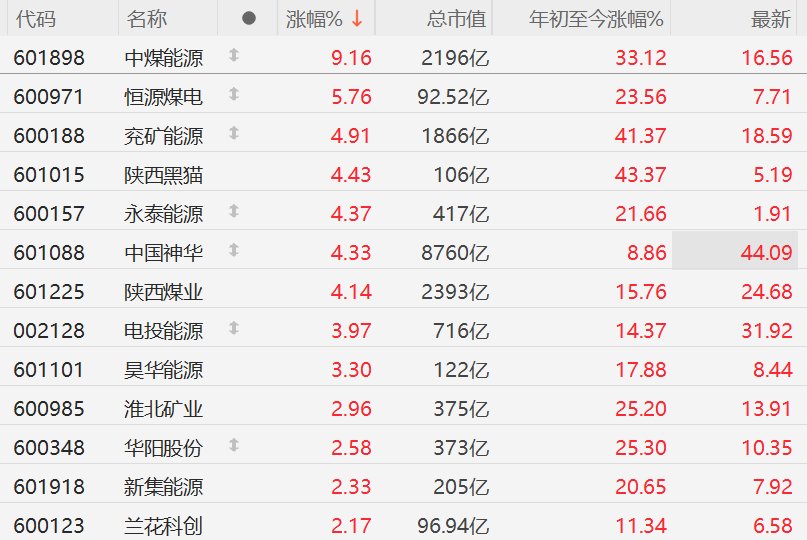
A股煤炭股继续走强,中煤能源逼近涨停,恒源煤电涨超5%
Ge Long Hui· 2026-03-02 05:30
Group 1 - The core viewpoint of the article highlights the strong performance of coal stocks in the A-share market, with companies like China Coal Energy nearing the daily limit increase and others like Hengyuan Coal Power and Yanzhou Coal Mining also showing significant gains [1] - CITIC Securities suggests that escalating geopolitical conflicts in the Middle East could lead to rising oil prices, which may positively impact coal prices [1] - The article notes that disruptions in the export of Indonesian coal, combined with increased domestic demand for coal in chemical production due to potential impacts on methanol and other chemical logistics, are expected to support a favorable outlook for domestic coal prices [1]
兖煤澳大利亚:业绩底已现,2026年有望量价齐升-20260302
GUOTAI HAITONG SECURITIES· 2026-03-02 04:40
Investment Rating - The investment rating for the company is "Accumulate" [6] Core Insights - The company's sales significantly recovered in H2 2025, and production guidance for 2026 has been raised further. The decline in performance for 2025 is primarily attributed to pricing, with signs of a bottoming out in performance, and 2026 is expected to see both volume and price increases [2][10]. Financial Summary - Total revenue for 2025 was AUD 5,949 million, a decrease of 13.3% year-on-year. Net profit was AUD 440 million, down 63.8% year-on-year. The company ended 2025 with a cash balance of AUD 2,043 million, indicating a net cash position. The total dividend for 2025 was AUD 0.182 per share, resulting in a payout ratio of 55% [4][10]. - The company achieved a commodity coal entitlement production of 38.6 million tons in 2025, a year-on-year increase of 5%, and sales volume of 38.1 million tons, a 1% increase year-on-year. The average selling price for the year was AUD 146 per ton, down 17% year-on-year [10]. - The cash operating cost for 2025 was AUD 92 per ton, a decrease of 1% year-on-year, and the cost guidance for 2026 is set at AUD 90-98 per ton [10]. Production and Sales Performance - In H2 2025, the company sold 21.5 million tons, a significant increase of 30% quarter-on-quarter, compensating for the sales shortfall in H1 2025. The production guidance for 2026 is set between 36.5 million and 40.5 million tons, reflecting an increase of 1.5 million tons from the previous year [10]. - The increase in metallurgical coal sales by 17% year-on-year was primarily due to increased production from the Yarrabee mine and improved coal quality from the Walker and Hunter Valley mines [10]. Future Outlook - The report anticipates that 2026 will see a recovery in both volume and pricing, driven by international coal price increases due to Indonesian coal production restrictions and rising demand in the U.S. [10]. - The company maintains a strong cash flow from operating activities, significantly exceeding net profit, and has consistently maintained a net cash position since 2022 [10].
动力煤或阶段性稳中偏强:动力煤月报2026年3月-20260302
Bao Cheng Qi Huo· 2026-03-02 04:28
Report's Investment Rating - No investment rating information is provided in the report. Core观点 - In February 2026, the domestic thermal coal price increased slightly. As of February 24th, the price of 5500K thermal coal at Qinhuangdao Port reported by CCTD was 724 yuan/ton, a month-on-month increase of 33 yuan/ton. The coal market currently has a mix of bullish and bearish factors. Although the medium- to long-term loose supply pattern of thermal coal has not been completely reversed, and the support from thermal coal demand will gradually weaken in March, some downstream enterprises may replenish their stocks in advance due to the spring inspection of the Datong-Qinhuangdao Railway and the disruptions in Indonesian coal supply, which will provide some support to coal prices. It is expected that thermal coal prices will maintain a narrow range in March and may show a slightly stronger oscillatory trend [3][6][64]. Summary by Directory Chapter 1: Market Review 1.1 Price Review - In February, domestic thermal coal prices rose slightly. As of February 24th, the 5500K thermal coal price at Qinhuangdao Port reported by CCTD was 724 yuan/ton, a month-on-month increase of 33 yuan/ton. In the international market, the prices of major international thermal coal indices were strong in February. As of the week of February 20th, the European ARA port coal price index was reported at $95.88/ton, flat month-on-month and 19.6% lower than the same period last year; the Newcastle NEWC6000 index was quoted at $117.4/ton, a month-on-month increase of $6.14/ton and 5.5% higher than the same period last year; the South African Richards Bay RB index was reported at $85.25/ton, flat month-on-month and 14.9% lower than the same period last year [9][10]. 1.2 Futures-Spot Price Difference - As of February 24th, the main contract of Zhengzhou coal was $74.4/ton higher than the quoted price of 5500 kcal thermal coal at Qinhuangdao Port [18]. Chapter 2: Analysis of Price Influencing Factors 2.1 Supply Side 2.1.1 Origin Situation - In December 2025, the national raw coal output was 437 million tons, a year-on-year decrease of 1.0%, but the absolute output was still high. The total national raw coal output in 2025 was 4.832 billion tons, a cumulative year-on-year increase of 1.2%. In February, before the Spring Festival holiday, the scope of coal mine shutdowns in the main producing areas continued to expand, and state-owned large mines also maintained cautious production under stricter safety supervision. After the Spring Festival, due to the approaching of the National Two Sessions, some coal mines were cautious in production, and the recovery of coal output was slow [21]. 2.1.2 Import Volume - In December 2025, China imported 58.6 million tons of coal and lignite, setting a new monthly high for the year, a month-on-month increase of 33.0% and a year-on-year increase of 11.9%. From January to December 2025, the cumulative import volume was 490.27 million tons, a year-on-year decrease of 9.6%. In the first 6 weeks of 2026 (as of February 9th), China's total marine coal imports were 38.088 million tons, equivalent to an average daily import volume of 907,000 tons, a 6.05% increase compared to the level of 855,000 tons/day in the same period last year. As of February 11th, the total customs clearance of Mongolian coal at the Ganqimaodu Port between China and Mongolia was 42,000 vehicles, a significant increase of 42.5% compared to the same period in 2025 [29]. 2.2 Intermediate Link Transportation 2.2.1 Datong-Qinhuangdao Railway - In January 2026, the Datong-Qinhuangdao Railway completed a cargo transportation volume of 31.28 million tons, a year-on-year increase of 5.0%, with an average daily transportation volume of 1.009 million tons. As of February 24th, the railway had completed a cargo transportation volume of 23.6754 million tons, a 1.7% decrease compared to the same period in January, equivalent to an average daily transportation volume of 986,500 tons [35]. 2.2.2 Bohai Rim Ports - In January 2026, the total railway coal inbound volume of the seven major ports in the Bohai Rim was 43.339 million tons, a year-on-year decrease of 0.65%, equivalent to an average daily inbound volume of 1.398 million tons. As of February 25th, the cumulative inbound volume of the seven ports in the Bohai Rim was 35.968 million tons, equivalent to an average daily inbound volume of 1.4387 million tons. In terms of outbound volume, the total outbound coal volume of the seven major ports in the Bohai Rim in January was 46.303 million tons, a year-on-year increase of 7.05%, equivalent to an average daily outbound volume of 1.4936 million tons. As of February 25th, the cumulative outbound volume of the seven ports was 36.503 million tons, equivalent to an average daily outbound volume of 1.4601 million tons. As of February 24th, the total coal inventory of the 9 ports in the Bohai Rim was 23.8 million tons, a month-on-month inventory reduction of 2.204 million tons, and 1.932 million tons less than the inventory after the Spring Festival last year [38][39]. 2.2.3 Shipping Situation - In February, the domestic and international shipping markets showed different trends. The international dry bulk market fluctuated within a narrow range. As of February 25th, the BDI index closed at 2,121 points, a month-on-month increase of 19.2% and a year-on-year increase of 104.1%. In the domestic shipping market, as of February 25th, the CBCFI index closed at 589.92 points, a month-on-month decrease of 13.1% and a year-on-year increase of 3.6% [44][45]. 2.3 Demand Side 2.3.1 Total Social Electricity Consumption - In December 2025, the total social electricity consumption was 908 billion kWh, a year-on-year increase of 2.8%. In 2025, the cumulative total social electricity consumption was 1.03682 trillion kWh, a year-on-year increase of 5.0%. From mid-to-late February, the domestic temperature was relatively warm, and during the Spring Festival, industrial and commercial electricity consumption declined, causing the daily coal consumption of power plants to reach a low point for the year. After the Spring Festival, although industrial electricity consumption gradually recovered, the peak of residential electricity consumption had passed, and the seasonal decline window was approaching, weakening the support for thermal coal demand [49][51]. 2.3.2 Power Generation Structure - In December 2025, the electricity generation of above-scale industrial enterprises was 858.6 billion kWh, a year-on-year increase of 0.1%; the average daily electricity generation was 27.7 billion kWh. From January to December, the electricity generation of above-scale industrial enterprises was 9.7159 trillion kWh, a year-on-year increase of 2.2%. In December, the decline in thermal power generation of above-scale industrial enterprises narrowed, while the growth rates of hydropower, nuclear power, wind power, and solar power generation slowed down [52]. 2.3.3 Non-Electric Coal Demand - From January to December 2025, the national real estate development investment was 8.2788 trillion yuan, a year-on-year decrease of 17.2%. In December, the national cement output was 144.164 million tons, a year-on-year decrease of 6.6%; the crude steel output was 68.1774 million tons, a year-on-year decrease of 10.3%; the refined methanol output was 9.0736 million tons, a year-on-year increase of 9.9%. Affected by the Spring Festival in February, the non-electric coal demand and industrial and commercial electricity consumption of non-electric industries contracted seasonally and will gradually recover after the Spring Festival. However, due to the National Two Sessions, some high-energy-consuming and high-polluting industries will be cautious in resuming production, and the non-electric demand for thermal coal will remain weak in the short term [57][59]. Chapter 3: Conclusion - The current coal market has a mix of bullish and bearish factors. Although the medium- to long-term loose supply pattern of thermal coal has not been completely reversed, and the support from thermal coal demand will gradually weaken in March, some downstream enterprises may replenish their stocks in advance due to the spring inspection of the Datong-Qinhuangdao Railway and the disruptions in Indonesian coal supply, which will provide some support to coal prices. It is expected that thermal coal prices will maintain a narrow range in March and may show a slightly stronger oscillatory trend [66].
2026年03月02日:期货市场交易指引-20260302
Chang Jiang Qi Huo· 2026-03-02 04:00
Report Industry Investment Ratings - **Macro Finance**: Bullish on stock indices in the medium to long term, suggesting buying on dips; expecting government bonds to trade in a range [1][6] - **Black Building Materials**: Short - term trading for coking coal, range trading for rebar, and a strategy of shorting May and going long September for glass [1][8][9] - **Non - ferrous Metals**: Short - term range trading for copper, suggesting more observation for aluminum, moderately holding long positions on dips for nickel, range trading for tin, and both gold and silver expected to be in a strong - side oscillation, with lithium carbonate in a range oscillation [1][12][15] - **Energy and Chemicals**: Range trading for PVC, low - level oscillation for caustic soda, shorting on rallies for soda ash, going long on dips but not chasing highs for styrene and rubber, range trading for urea and methanol, and a strong - side oscillation for polyolefins [1][19][21] - **Cotton and Textile Industry Chain**: Oscillating with a strong bias for cotton and cotton yarn, apples, and dates oscillating [1][29][30][32] - **Agriculture and Animal Husbandry**: Caution against shorting the May contract of live pigs, with a strategy of shorting on rebounds; if the culling of laying hens does not accelerate, shorting on rebounds for near - month egg contracts; range trading for corn due to high short - term basis; shorting on rallies for soybean meal; and a strategy of going long on dips for soybean and palm oils as oils follow international crude oil in a strong - side oscillation [1][33][34][37] Core Views - Geopolitical conflicts such as the Iran situation and trade policy uncertainties are impacting the financial and commodity markets, affecting the supply and demand and price trends of various commodities [6][13] - The supply and demand fundamentals of different industries are in a state of change, with some industries facing supply - side challenges, while others are affected by seasonal and policy factors [8][19][25] - The prices of most commodities are expected to show different trends, including oscillations, strong - side oscillations, and range trading, and investors should adopt corresponding trading strategies according to different market conditions [1] Summary by Directory Macro Finance - **Stock Indices**: Geopolitical conflicts may put pressure on stock indices in the short term, but they are bullish in the medium to long term, and investors are advised to buy on dips [6] - **Government Bonds**: With the release of policy signals and the approaching of the Two Sessions, government bonds are expected to oscillate with a strong bias [6] Black Building Materials - **Coking Coal**: After the Spring Festival, the coking coal market is weak and stable. Mines are resuming production, but trading is weak, and short - term trading is recommended [8] - **Rebar**: The rebar futures price is oscillating. It has a low static valuation and weak driving forces. It is expected to oscillate in the context of low - valuation and weak - driving, and range trading is recommended [8] - **Glass**: The glass market is in a pattern of weak reality and strong expectation. The short - term fundamentals are deteriorating, and a strategy of shorting May and going long September is recommended [9][10] Non - ferrous Metals - **Copper**: Policy uncertainties and supply - demand contradictions coexist. The short - term price is expected to oscillate in the range of 98,000 - 106,000 yuan/ton, and range trading is recommended [12][13][14] - **Aluminum**: The supply expectation is improving, but the market sentiment for being bullish on non - ferrous metals remains. It is recommended to strengthen observation [15] - **Nickel**: Affected by the reduction of nickel ore quotas in Indonesia, the ore end has strong support, and it is recommended to moderately hold long positions on dips [16][17] - **Tin**: The supply of tin ore is tight, and the downstream demand is in a state of rigid procurement. It is expected to oscillate with a strong bias, and range trading is recommended [17] - **Gold and Silver**: Due to geopolitical conflicts and the weakening of the US economic data, the mid - term price centers of gold and silver are moving up, and they are expected to oscillate with a strong bias. It is recommended to build long positions on dips after sufficient price corrections [18] - **Lithium Carbonate**: Supply disturbances reappear, and the price is expected to continue to oscillate with a strong bias, and range trading is recommended [19] Energy and Chemicals - **PVC**: The supply is high, the domestic demand is weak, and the inventory is high. However, it has a low valuation, and range trading is recommended, focusing on policies and cost disturbances [19][21] - **Caustic Soda**: The demand support is weak, there is inventory pressure in the short term, and it is expected to oscillate at a low level, focusing on supply - side maintenance and downstream replenishment [21] - **Soda Ash**: The supply is in excess, the inventory pressure is increasing, and it is recommended to short on rallies [28][29] - **Styrene**: Supported by cost and with low inventory accumulation during the Spring Festival, it is expected to oscillate with a strong bias, and it is recommended to go long on dips but not chase highs [22][23] - **Rubber**: The supply of raw materials is shrinking, and there is a short - term upward expectation. It is recommended to go long on dips but not chase highs [23] - **Urea**: After the Spring Festival, the supply and demand are both increasing. The price is expected to be strong in March and may be under pressure later, and range trading is recommended [24][25] - **Methanol**: The war in Iran may cause a supply gap, and the price may be pushed up in the short term. The supply and demand are both at a relatively high level, and range trading is recommended [27] - **Polyolefins**: Affected by geopolitical conflicts and cost support, they are expected to oscillate with a strong bias, focusing on downstream demand and inventory [28] Cotton and Textile Industry Chain - **Cotton and Cotton Yarn**: The new - year global cotton supply and demand situation is changing, and the price is expected to oscillate with a strong bias after the festival [29] - **Apples**: The apple trading is stable, and the price is expected to oscillate with a strong bias [30][31] - **Dates**: The acquisition price of Xinjiang gray dates in the 2025 production season is in a certain range, and the price is expected to oscillate [32] Agriculture and Animal Husbandry - **Live Pigs**: In the short term, the pig price is oscillating at a low level, and the May contract is recommended to be shorted on rebounds. In the long term, the price may strengthen, but the increase is limited [33] - **Eggs**: The egg price has a bottom support, but the supply is sufficient, and if the culling does not accelerate, it is recommended to short on rebounds for near - month contracts [34] - **Corn**: The short - term price is in a range oscillation, and the medium - to long - term supply - demand pattern is relatively loose, and range trading is recommended [35][36] - **Soybean Meal**: The domestic soybean meal price is under pressure, and it is recommended to short on rallies [37] - **Oils**: Oils are expected to oscillate with a strong bias following international crude oil, and it is recommended to go long on dips for soybean and palm oils [37][42]
地缘冲突升级,贵金属与能化走强
Dong Zheng Qi Huo· 2026-03-02 03:18
1. Report Industry Investment Rating No information provided in the given content. 2. Core Viewpoints of the Report - Geopolitical conflicts will drive the strength of precious metals and energy - chemical sectors next week, but the sustainability of the rise depends on the duration and intensity of the US - Iran conflict. Overall, next week, energy and precious metals > chemicals > non - ferrous metals > agricultural products > real - estate - related commodities such as black metals [2][19]. - Geopolitical conflicts are the main line of trading for various commodities. In the short term, the prices of precious metals and crude oil will soar, and rising oil prices will drive up the prices of chemicals such as PTA, styrene, and PE. Methanol will also be supported by geopolitical premiums [2][19]. - Excluding geopolitical factors, there are many positive narratives for non - ferrous metals, but price increases await the recovery of demand. The crude oil market is in a state of oversupply, chemical product price increases require inventory digestion, and the fundamentals of real - estate - related commodities such as black metals are generally weak [2][20]. 3. Summary According to Relevant Catalogs 3.1 One - Week Review and Views 3.1.1 One - Week Review: Commodities Rose Across the Board, with Precious Metals Leading - This week (02.23 - 03.01), commodity prices generally rose. In terms of sectors: precious metals > non - ferrous metals > energy > agricultural products > oil - chemical > black metals > coal - chemical. Geopolitical conflicts between the US and Iran and uncertainties in US tariff policies led to an increase in market risk - aversion sentiment, resulting in large increases in precious metals and energy [1][11]. - The Trump administration's plan to set reference prices for key minerals boosted the sentiment of non - ferrous metals. Supply - side concerns drove up the prices of tin and lithium carbonate significantly. After the Spring Festival, demand declined, causing the prices of agricultural products such as pigs to fall, but the prices of cotton and soybean oil increased [1][11]. - Shanghai's real - estate policies boosted the sentiment of black commodities, but the effectiveness of the policies remains to be seen, and the increase in black commodities was limited. Rising oil prices supported the prices of aromatic and olefin chains, but the supply and inventory of the chlor - alkali sector were high, and downstream demand was weak, resulting in weak price performance [1][11]. 3.1.2 Next - Week Outlook: Geopolitical Conflicts Intensify, Precious Metals and Energy - Chemicals Strengthen - Geopolitical conflicts will drive the strength of precious metals, energy - chemical and other sectors, but the sustainability of the rise depends on the US - Iran conflict. The positive impact of geopolitical conflicts on the non - ferrous metals sector is weaker than that on the energy sector, but the fundamentals of the non - ferrous metals sector are stronger than those of the energy - chemical sector [2][19]. - Real - estate policies have been implemented, but domestic demand cannot improve quickly, so the upward momentum of black commodities is weak. The opportunities in the agricultural products sector are structural. Overall, next week, energy and precious metals > chemicals > non - ferrous metals > agricultural products > real - estate - related commodities such as black metals [2][19]. - Geopolitical conflicts are the main line of trading for various commodities. The US - Iran situation has deteriorated sharply, and market risk - aversion sentiment will rise. In the short term, the prices of precious metals will soar. Iran's closure of the Strait of Hormuz will disrupt crude oil supply, and oil prices are expected to rise. Rising oil prices will drive up the prices of chemicals, and methanol will also be supported by geopolitical premiums [2][19]. - Whether precious metals and energy - chemical commodities can continue to rise depends on the US - Iran conflict. If the conflict intensifies and the Strait of Hormuz remains closed, geopolitical premiums may support further price increases. If the conflict subsides quickly, the short - term price increase may present a selling opportunity [20]. - Excluding geopolitical factors, there are many positive narratives for non - ferrous metals, but price increases await the recovery of demand. The crude oil market is in oversupply, chemical product price increases require inventory digestion, and the fundamentals of real - estate - related commodities such as black metals are generally weak [20]. 3.2 Exchange Rate and Interest Rate Data Tracking - The US dollar index fell slightly, and the yield of 10 - year US Treasury bonds declined. As of February 27, the US dollar index fell 0.10% to 97.6443 compared with February 20. The yield of 10 - year US Treasury bonds was 3.97%, down 11 BP from February 20. The yield spread between Chinese and US 10 - year Treasury bonds was inverted by 215.1 BP [23]. - Although the US PPI in January exceeded market expectations, due to the dovish statements of some Federal Reserve officials, the expectation of interest - rate cuts increased, and the US dollar index weakened slightly. Concerns about AI impact, adjustments in US technology stocks, and rising market risk - aversion sentiment led to a decline in US Treasury bond yields [23]. - After the US - Iran conflict escalated over the weekend, the US dollar index is expected to strengthen. The RMB has been appreciating recently, but considering the strengthening of the US dollar and the reduction of the foreign exchange risk reserve ratio for forward foreign exchange sales by the Chinese central bank, the appreciation of the RMB will slow down [24]. 3.3 Upstream Raw Material Prices - Oil prices fluctuated and rose, coal prices were reported, natural gas prices fell slightly, and industrial electricity prices were also mentioned, but specific data and analysis were not elaborated in detail in the given text [32][33]. 3.4 Production - End High - Frequency Data - The blast - furnace capacity utilization rate of 247 steel enterprises increased, and the daily average output of clean coal from 523 sample mines recovered [35]. - China's copper - tube production decreased, and China's electrolytic - aluminum production increased [36]. - The EIA US crude - oil production was mentioned, and the methanol capacity utilization rate increased. The PE capacity utilization rate increased slightly, the PTA plant operating rate increased, the PVC operating rate increased, and the operating rate of Chinese soda - ash enterprises increased slightly [37][40][42]. - The capacity utilization rate of float - glass enterprises was at a low level, the operating rate of all - steel tires for automobiles increased, the operating rate of semi - steel tires for automobiles increased, and the production of soybean meal from all - sample enterprises' pressing plants in China increased [45][46]. 3.5 Inventory - End High - Frequency Data - After the Spring Festival, the inventories of major commodities generally increased. The copper inventories of the three major exchanges continued to accumulate beyond the seasonal norm, and the corresponding basis decreased. The apparent demand for steel decreased after the Spring Festival, and the inventory continued to accumulate. The inventories of real - estate - related commodities such as PVC, glass, and soda ash generally accumulated beyond the seasonal norm. The inventories of precious metals, coking coal, and soybean meal decreased slightly [47]. 3.6 Demand - End High - Frequency Data - Shanghai announced real - estate stabilization policies this week, and some real - estate high - frequency data improved, such as the increase in the transaction area of second - hand housing in 13 cities. However, the overall improvement did not significantly exceed the seasonal level. The net financing scale of government bonds was 560.4 billion yuan, and the issuance rhythm of government bonds this year is generally ahead of schedule, and the net financing quota of government bonds is currently basically the same as that in the same period of 2025 [60]. 3.7 Key Commodity Basis - The basis of various key commodities such as gold, copper, aluminum, rebar, iron ore, coking coal, crude oil, methanol, PTA, PVC, pig, and soybean meal was mentioned, but specific data and analysis were not elaborated in detail in the given text [70]. 3.8 Commodity Price Ratios - The price ratios of various commodities such as the gold - silver ratio, gold - copper ratio, gold - oil ratio, copper - oil ratio, copper - aluminum ratio, steel - ore ratio, agricultural - industrial ratio, and pig - grain ratio were mentioned, but specific data and analysis were not elaborated in detail in the given text [78].
煤焦:价格延续震荡,关注宏观预期变化
Hua Bao Qi Huo· 2026-03-02 02:59
1. Report Industry Investment Rating - Not provided 2. Core Viewpoint of the Report - During the important national meetings, steel mills have expectations of phased emission reduction and control, putting pressure on the rigid demand for coking coal and other furnace materials; the mining end is in the resumption stage, and the supply - demand mismatch rhythm may cause the price of coking coal to perform weaker than that of finished products [3] 3. Summary According to Relevant Contents Market Performance - Last week, the coking coal futures prices fluctuated weakly, performing weaker than finished products. The spot prices in the production areas remained stable, and the prices of port resources fluctuated slightly. The intensification of overseas geopolitical conflicts during the weekend may affect commodity prices [2] Supply - side Situation - Last week, coal mines entered the peak of resumption of production, with most private coal mines resuming production. The daily production of raw coal and clean coal last week was 1.516 million tons and 649,000 tons respectively, an increase of 430,000 tons and 190,000 tons compared with the previous week. After the Spring Festival, the daily customs clearance volume at the Ganqimaodu Port for Mongolian coal has returned to a relatively high level, with a clearance volume of about 180,000 tons on February 23, and the inventory in the port supervision area is still at a high level [3] Demand - side Situation - Last week, the average daily hot metal output of steel mill blast furnaces was about 2.33 million tons. Affected by environmental protection and production restriction policies this week, the growth rhythm of hot metal output is expected to slow down. During the important meetings, steel mills have phased emission reduction and control expectations, which will put pressure on the demand for coking coal and other furnace materials [2][3] Other Influencing Factors - This week, the important national meetings will be held. On the one hand, pay attention to the changes in macro - policy expectations. On the other hand, some steel enterprises in North China will implement phased emission reduction and control from March 4th to March 11th, with blast furnace loads reducing emissions independently by no less than 30%, which will put pressure on the demand for coking coal and other furnace materials in the short term [2]