公用事业

Search documents
国信证券晨会纪要-20250923
Guoxin Securities· 2025-09-23 01:05
Group 1: AIDC Power Equipment Industry - The AIDC power equipment sector has seen significant growth, with the top three performers being uninterruptible power supplies (UPS) at +21.0%, high voltage direct current (HVDC) at +20.7%, and battery backup power (BBU) at +15.9% [7] - Key companies in the sector include Kehua Data (+34.6%), Zhongheng Electric (+27.2%), and Xinwangda (+24.3%) [7] - The industry is expected to benefit from the ongoing domestic replacement of computing chips, with a shift in the data center value chain towards Chinese companies anticipated in 2025 [7][8] - Investment in national power engineering reached 653 billion yuan in July 2025, a year-on-year decrease of 8.9%, while cumulative investment for the first seven months was 4.288 trillion yuan, up 3.1% [9] Group 2: Wind Power Industry - As of September 2025, the cumulative public tender capacity for wind turbines in China is 68.6 GW, a decrease of 13% year-on-year, with onshore wind accounting for 64.3 GW [13] - The average winning bid price for onshore wind turbines (excluding towers) in 2025 is 1,533 yuan/kW [13] - The wind power sector has shown strong performance recently, with the top three segments being bearings (+14.9%), complete machines (+12.5%), and blades (+11.7%) [13] - The industry is expected to see significant growth in offshore wind projects, with annual installations projected to exceed 20 GW during the 14th Five-Year Plan period [13] Group 3: Home Appliance Industry - In August 2025, the production and sales of air conditioners exceeded expectations, with domestic sales increasing by 1% and exports declining by 4% [17] - The overall home appliance export value decreased by 6.2% year-on-year, with air conditioner exports under pressure while refrigerator exports saw a rebound [18] - The U.S. home appliance retail sales grew by 2.6% year-on-year in August, indicating stable demand despite tariff impacts [19] - The home appliance sector's relative performance increased by 2.04% recently, with key recommendations including Midea Group, Gree Electric, and Haier Smart Home [20] Group 4: Public Utilities and Environmental Protection - In August 2025, the industrial power generation volume increased by 1.6% year-on-year, with significant developments in renewable energy projects [21] - The Guangdong provincial government has released a plan to promote high-quality development in renewable energy, with specific pricing mechanisms for offshore wind and solar projects [21][22] - The public utilities sector is expected to benefit from ongoing policy support for renewable energy, with recommendations for leading companies in the sector [22] Group 5: Gold Mining Industry - The company operates in the gold mining sector, with a focus on resource expansion and strategic partnerships, including a long-term gold stream agreement with Zijin Mining [24][25] - The average gold resource grade is 8.26 grams per ton, with a total resource volume of 55 tons, and projected revenues of 1.6 billion HKD in 2024 [24] - The company anticipates a significant increase in net profit over the next three years, with a projected growth rate of 269% in 2025 [26]
黄金股市齐创新高,本轮“泡沫”该如何交易?
Hua Er Jie Jian Wen· 2025-09-22 13:36
Core Viewpoint - The Federal Reserve is initiating interest rate cuts, leading to a surge in global asset prices and entering a bubble period driven by loose monetary policy [1] Group 1: Market Performance - As of September 22, gold has risen 35.4% year-to-date, Bitcoin is up 17.2%, and global stock markets have increased by 14.3%. High-yield bonds and investment-grade bonds have recorded returns of 8.5% and 8.3%, respectively [1] - In contrast, the US dollar index and oil prices have decreased by 9.3% and 11.4%, respectively [1] Group 2: Economic Environment - Michael Hartnett from Bank of America highlights that tariff cuts, tax reductions, and interest rate cuts create a "run-it-hot" policy environment, providing implicit "too big to fail" guarantees for the economy and stock market [1] - Despite evident bubble signs, Hartnett suggests that the market may not have peaked yet [1] Group 3: Trading Strategies - Hartnett proposes five trading strategies to navigate the current market conditions: 1. Go long on core bubble assets 2. Build a "barbell" portfolio with bubble assets on one end and cheap value stocks on the other 3. Short corporate bonds of bubble companies 4. Short US bonds 5. Go long on bond volatility and short stock volatility [1][6][11] Group 4: Historical Context - Historical analysis shows that from 1900, the average rise from market lows to peaks in 10 major bubbles was 244%, with an average peak dynamic P/E ratio of 58 times [4] - The "Magnificent Seven" tech stocks have risen 223% since their March 2023 lows, with a dynamic P/E ratio of 39 times, indicating potential for further upside [4] Group 5: Market Sentiment - Goldman Sachs trader Paolo Schiavone notes a prevailing market sentiment that favors consumption or investment over holding cash due to perceived currency devaluation, driving funds into risk assets [3] - Fund managers are compelled to chase high-risk, high-beta investments to keep up with market benchmarks as year-end bonuses approach [3] Group 6: Global Opportunities - The ongoing weakness of the US dollar presents opportunities in international markets, with a theme of "global rebalancing" emerging in the latter half of the 2020s [9] - A notable correlation between the Japanese yen and the Japanese stock market suggests a potential bull market in Japan, as both are moving in tandem [9]

每日报告精选:(2025-09-19 09:00——2025-09-22 15:00)-20250922
GUOTAI HAITONG SECURITIES· 2025-09-22 11:57
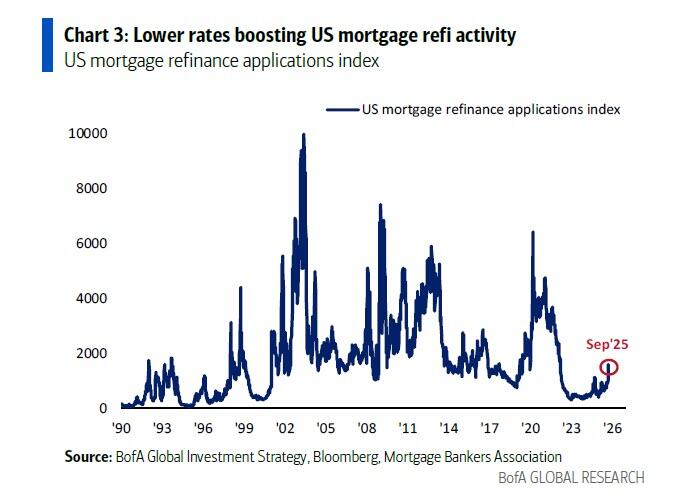
Macroeconomic Insights - Consumer spending shows improvement, with automotive retail and high-end liquor prices rebounding due to seasonal effects[5] - Infrastructure special bond issuance is accelerating, while real estate sales are recovering, although land market activity is cooling[5] - Industrial production is generally declining, with power generation and steel industries adjusting due to demand and profit impacts[5] Federal Reserve and Global Market Trends - The Federal Reserve has cut interest rates by 25 basis points, with expectations for two more cuts this year, indicating a cautious approach to monetary policy[6] - Major stock markets have generally risen, with the S&P 500 up 1.2% and emerging markets outperforming developed markets[6] - The 10-year U.S. Treasury yield increased by 8 basis points to 4.14%, reflecting market adjustments post-rate cut[6] Investment Strategy and Market Outlook - Market adjustments present opportunities, with a belief that the Chinese stock market will continue to rise, driven by a shift in asset demand and capital market reforms[8] - The consensus on economic expectations is cautiously optimistic, with signs of stabilization in corporate revenue and inventory growth[9] - Emerging technology sectors, particularly AI and semiconductor industries, are expected to lead market performance, with recommendations for strategic allocations in these areas[10] Sector Performance and Recommendations - The Hong Kong stock market is highlighted for its high dividend yield and attractive valuation compared to A-shares, with a cash dividend ratio of 44% versus 36% for A-shares[26] - The technology sector remains a focal point, with ongoing capital expenditure expansion and a favorable environment for innovation and growth[10] - Recommendations include increasing allocations in consumer sectors and traditional industries benefiting from economic recovery and policy support[10]
9月LPR将公布;全国国庆文旅消费月将启动丨一周前瞻
2 1 Shi Ji Jing Ji Bao Dao· 2025-09-22 00:49
Group 1 - The upcoming week (September 22 to September 28) will see the release of key economic data in China, including the September LPR rates and the unlocking of nearly 60 billion yuan in market value from restricted stocks in the Shanghai and Shenzhen markets [1][12] - A total of 44 stocks will face the unlocking of restricted shares, amounting to 2.821 billion shares, with a total market value of 596.86 billion yuan based on the closing price on September 19 [1][3] - The top three stocks by unlocking market value are Hehe Information (10.835 billion yuan), Ziyan Food (7.126 billion yuan), and Wireless Media (5.521 billion yuan) [1][4] Group 2 - The "High-Quality Completion of the 14th Five-Year Plan" press conference will be held, featuring key financial leaders discussing achievements in the financial sector during the 14th Five-Year Plan period [6] - A new round of fuel price adjustments will take place, with potential increases in gasoline and diesel prices based on recent crude oil price trends [6] - The National Day cultural tourism consumption month will be launched, with over 330 million yuan in consumption subsidies to stimulate tourism during the holiday period [7] Group 3 - The 2025 Eurasian Economic Forum will be held from September 23 to 25 in Xi'an, focusing on sustainable development and cooperation among Eurasian countries [8] - The Fourth Global Digital Trade Expo will take place from September 25 to 29 in Hangzhou, showcasing advancements in digital trade [9] - The 2025 World New Energy Vehicle Conference will be held from September 27 to 29 in Haikou, discussing future transportation and sustainable development [10]

南下资金年内净流入破万亿!AI仍是港股主线
证券时报· 2025-09-21 13:05
Core Viewpoint - The Hong Kong stock market is experiencing significant net inflows, with the Hong Kong Stock Connect seeing over HKD 1 trillion in net inflows year-to-date, surpassing the total for the entire year of 2024, indicating a potential record high for the year [1][4]. Group 1: Market Performance - The average daily trading volume of the Hong Kong Stock Connect has reached HKD 60.8 billion, accounting for 24.5% of the overall market [4]. - In August 2025, the Hong Kong stock market recorded a net inflow of HKD 112.2 billion, marking the ninth highest monthly inflow on record [6]. - The Southbound trading of ETFs has seen an average daily trading volume of HKD 3.8 billion in the first half of 2025, setting a new semi-annual record [6]. Group 2: Sector Analysis - The financial sector remains the largest holding in the Hang Seng Stock Connect, accounting for 32%, followed by information technology at 20% and consumer discretionary at 16% [6]. - The healthcare sector has seen the largest increase in weight from 3% to 7% year-to-date, while consumer discretionary and information technology sectors have increased by 3 and 2 percentage points, respectively [6]. Group 3: Earnings and Growth Outlook - The Hong Kong stock market has stabilized, with positive earnings growth in the first half of 2025, showing revenue and profit growth rates of 1.9% and 4.6%, respectively [8]. - The sectors of technology, healthcare, and materials are expected to maintain high growth, while some sectors like energy and utilities are still under pressure [8]. - The second half of 2025 is anticipated to see a turning point in earnings growth, with expectations for a rebound in previously underperforming sectors [8]. Group 4: Investment Trends - AI remains a key theme in the Hong Kong stock market, with internet stocks expected to benefit significantly [9]. - The demand for AI cloud services is driving revenue growth, with private cloud service providers outpacing state-owned telecom companies for the first time in four years [10].

策略周末谈:加仓中国:外资会买什么?
Western Securities· 2025-09-21 11:35
Group 1 - Foreign capital is expected to increase investment in "export advantage" assets such as new energy, chemicals, and pharmaceuticals, driven by the Federal Reserve's interest rate cuts, which typically accelerate global capital flow back to China [1][10][11] - The expansion of capital expenditure (CAPEX) in the manufacturing sector, supported by fiscal subsidies since 2019, has solidified China's global competitive advantage in high-end manufacturing, despite negatively impacting financial metrics like return on invested capital (ROIC) and free cash flow [2][16][19] - The "anti-involution" policy is anticipated to enhance the financial returns of China's manufacturing sector, with signs of improving free cash flow in some "export advantage" industries as CAPEX contracts [3][24][30] Group 2 - The Hang Seng Technology Index is expected to experience a "main rising wave" as foreign capital returns to Hong Kong stocks, driven by both southbound capital and foreign investment [4][33] - The investment strategy suggests focusing on three main lines: "hard currency" assets under globalization, "hard technology" sectors, and Chinese manufacturing benefiting from the "anti-involution" policy [5][34][37] Group 3 - The report highlights that the current market environment may lead to a phase of consolidation in A-shares, with a shift in market style towards high-quality manufacturing and technology sectors [5][34][40] - Recent economic data indicates a decline in retail sales and industrial output, suggesting potential challenges for consumer-driven sectors [51][52]
财信证券宏观策略周报(9.22-9.26):节前市场或以震荡整理为主,关注服务消费及高股息-20250921
Caixin Securities· 2025-09-21 09:33
Group 1 - The report indicates that the recent macroeconomic events are generally favorable for the market, but the A-share index has shown signs of retreat after reaching highs, suggesting a breakthrough pressure at current levels [4][7][8] - The report emphasizes that despite short-term fluctuations, the upward trend in the A-share market remains intact, with limited amplitude and duration of corrections expected [8][15] - Investment recommendations focus on service consumption sectors such as tourism, dining, duty-free, and cinema, as well as high-dividend sectors like coal, banking, public utilities, and transportation [4][15] Group 2 - The report highlights that the "anti-involution" policies are beginning to show effects, with the Producer Price Index (PPI) showing signs of stabilization after eight months of decline, indicating a potential improvement in economic conditions [8][10] - The report notes that fixed asset investment growth has slowed, with a year-on-year increase of only 0.5% from January to August 2025, reflecting challenges in infrastructure and real estate investments [8][10] - The service consumption policies are expected to continue to be implemented, with measures aimed at boosting service consumption and addressing structural unemployment [11][15] Group 3 - The report states that the overall valuation of the A-share market remains attractive, with the TTM price-to-earnings ratio at 22.10 times, which is at the 89.43 percentile of the past decade [8][15] - The report mentions that the fiscal revenue has shown signs of recovery, with a public budget revenue of 148,198 billion yuan from January to August, reflecting a year-on-year growth of 0.3% [12][13] - The report discusses the impact of the Federal Reserve's recent interest rate cut, which is expected to benefit global equity markets, particularly in emerging markets and sectors like innovative pharmaceuticals and precious metals [14][15]
为外卖骑手换电的宇谷科技,“上市”再次失败……
IPO日报· 2025-09-21 00:32
Core Viewpoint - Nanjing Public Development Co., Ltd. has terminated its cash acquisition of 68% stake in Hangzhou Yugu Technology Co., Ltd. due to failure to reach an agreement on transaction terms after nearly nine months of planning [1][3]. Group 1: Acquisition Details - The acquisition was initially announced in December 2024, with plans to purchase the stake through a combination of share issuance and cash payment, along with raising supporting funds [3]. - In July 2024, the company decided to change the acquisition method to a cash purchase after considering strategic planning, capital market conditions, and various stakeholder demands [3]. - Yugu Technology, established in 2012, specializes in battery swapping services and equipment for electric two-wheelers, reporting revenues of 559 million yuan and 902 million yuan in 2022 and 2023, respectively [3]. Group 2: IPO Attempts - Yugu Technology previously attempted an IPO on the ChiNext board, which was accepted in June 2023 but was terminated in June 2024 after two rounds of inquiries [4]. - The termination of the acquisition by Nanjing Public signifies another failure for Yugu Technology in its pursuit of a public listing [4]. Group 3: Nanjing Public's Financial Performance - Nanjing Public operates in various sectors, including real estate development, pipeline gas, and transportation, with significant revenue contributions from gas sales and real estate [6]. - The company's revenue has fluctuated significantly in recent years, with reported revenues of 3.589 billion yuan, 7.113 billion yuan, 4.632 billion yuan, and 6.569 billion yuan from 2021 to 2024 [7]. - The net profit has shown a downward trend, with figures of 98.65 million yuan, 60.53 million yuan, -90.27 million yuan, and 45.92 million yuan over the same period [7].

恒生公用跌幅居前,内银行、内房地紧随其后;恒生科技逆势收涨
Ge Long Hui· 2025-09-20 19:47
暴涨暴跌后今天市场进入休整,恒生指数全天围绕中轴上蹿下跳,最终全天走了个寂寞。其中恒生公用 跌幅居前,内银行、内房地紧随其后;恒生科技逆势收涨,工商、国指ESG等紧随其后。 内银行全天维持在中轴下方弱势盘整,截至收盘下跌0.53%。其中邮储银行大跌1.75%,农业银行下跌 1.49%,重庆农村商业银行下跌1.19%,中国银行下跌1.14%,建设银行、工商银行、交通银行等股均小 幅收跌。 恒生科技冲高回落后全天围绕中轴上蹿下跳,截至收盘小涨0.37%。其中商汤大涨4.58%,蔚来上涨 4.45%,华虹半导体上涨4.06%,小鹏汽车上涨3.44%,京东集团上涨3.35%,美的集团、携程集团、京 东健康等股涨幅均在1%上方。 内容只是个人观点,仅供参考,不作为投资依据!欢迎关注交流,互相学习、共同探讨! 恒生公用高开低走后全天震荡下行,截至收盘下跌1.06%。其中长江基建集团下跌1.97%,中华煤气下 跌1.43%,电能实业下跌1.36%,华润电力、新奥能源、中电控股等股均小幅收跌。 ...
美股牛市逻辑依然稳固?业绩指引稳步上调,财报季有望继续赚足“预期差”
Zhi Tong Cai Jing· 2025-09-19 11:13
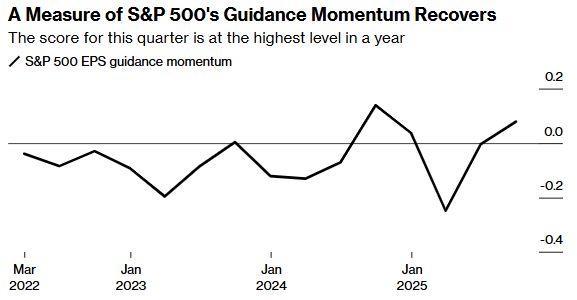
Group 1 - The US stock market is currently at historical highs, with improved expectations for corporate profit growth indicating that the upward trend may continue [1][3] - Over 22% of S&P 500 companies providing Q3 earnings guidance expect to exceed analyst expectations, the highest level in a year, while the proportion of companies issuing lower-than-expected profit guidance is at a four-year low [1][3] - Analysts predict a 6.9% growth in earnings for S&P 500 companies in Q3, up from 6.7% at the end of May, reflecting increased confidence in companies' ability to withstand the impact of tariffs [3] Group 2 - Factors driving profit growth include the Federal Reserve's upcoming interest rate cuts, which are expected to enhance corporate profit margins and performance [4][5] - Historical data shows that in the second year of a rate-cutting cycle, the S&P 500 index typically sees an average increase of nearly 27%, compared to 14% in the first year, assuming no economic recession occurs [4] - Lower interest rates historically support earnings by promoting consumer spending, capital investment, mergers and acquisitions, and stock buybacks [5] Group 3 - Companies in capital equipment, transportation, and building materials are viewed as the biggest beneficiaries of lower interest rates, with additional upside potential in the automotive, clean energy, utilities, real estate, and technology sectors [5] - Most industries are expected to receive broad support for stock valuations, particularly those with high debt leverage, interest-sensitive operations, or capital-intensive business models [5]