火锅料

Search documents
颐海国际(01579):关联方改善,盈利能力提升
GF SECURITIES· 2026-03-26 08:27
Investment Rating - The report assigns a "Buy" rating to the company with a current price of HKD 15.97 and a fair value of HKD 17.63 [10]. Core Insights - The company reported a total revenue of RMB 6.613 billion for 2025, reflecting a year-on-year growth of 1.1%, while the net profit attributable to shareholders was RMB 854 million, up 15.5% year-on-year [10]. - The second half of 2025 saw revenue of RMB 3.69 billion, a 2.0% increase year-on-year, and a net profit of RMB 540 million, which is a significant 26.3% increase year-on-year, indicating a notable improvement in profitability [10]. - The company plans to distribute a final dividend of HKD 0.5968 per share, with total cash dividends for the year amounting to approximately RMB 840 million, representing 98% of the net profit attributable to shareholders [10]. Revenue Summary - Revenue from different product segments for 2025 includes hot pot ingredients (61% of total revenue), compound seasonings (14%), and convenience foods (24%), with year-on-year changes of -1%, +16%, and -3% respectively [10]. - The company has seen a narrowing decline in revenue from related parties and stable growth from third parties, with a focus on B-end and overseas markets [10]. Profitability Summary - The company's net profit margin for 2025 was 13%, an increase of 1.6 percentage points year-on-year, with improvements in gross margin and sales expense ratio [10]. - The gross margin for 2025 was 32.7%, up 1.5 percentage points year-on-year, indicating that the optimization of channel structure has contributed to overall profitability [10]. Investment Recommendations and Earnings Forecast - The company is expected to achieve revenues of RMB 7.001 billion, RMB 7.575 billion, and RMB 8.267 billion for 2026, 2027, and 2028 respectively, with net profits of RMB 946 million, RMB 1.042 billion, and RMB 1.152 billion for the same years [10]. - The report suggests a price-to-earnings (P/E) ratio of 15x for 2026, leading to a fair value estimate of HKD 17.63 per share [10].
未知机构:再发国盛食饮安井势强餐供修复再次强调把握板块布局机会安-20260120
未知机构· 2026-01-20 02:10
Company and Industry Summary Industry: Food and Beverage Sector Key Points - **Company Focus**: The analysis centers on Anjijia, a leading player in the food and beverage sector, particularly in the frozen food market [1][2]. - **Sales Performance**: Anjijia has received positive sales feedback recently, indicating a potential strengthening of its leading market position. The company has also reduced promotional efforts on some products, suggesting a strategic shift to stabilize pricing amidst competitive pressures [1][2]. - **Product Innovation**: The company is shifting its strategy towards product innovation, with a focus on new product launches. In 2025, Anjijia plans to drive growth through new products, including the recent acquisition of the "Anzhai" brand to enter the halal market [1][2]. - **Channel Upgrades**: Anjijia is prioritizing channel upgrades, particularly in large B2B customizations, with a focus on supermarkets and new retail channels in 2025 [1][2]. - **Profit Margin Improvement**: The expected scale effects from customized products are anticipated to enhance gross margins. The company is also expected to see improvements in net profit margins as high-margin consumer products gain traction and as sales through supermarkets and new retail channels increase [3][4]. - **Seasonal Demand Recovery**: The current season is characterized by a recovery in demand for frozen food, with a gradual easing of price competition. The company is positioned to benefit from this seasonal uptick, with expectations for revenue growth driven by low base effects and improved performance in specific product categories [4]. - **Investment Opportunities**: Analysts suggest focusing on Anjijia due to its stable seasonal sales and potential for profit margin recovery. Other companies to watch include Babi, which is successfully expanding its new store formats, and Lihigh, which is benefiting from channel advantages and favorable policies [4]. Risks - **Consumer Spending**: There are risks associated with the recovery of consumer spending not meeting expectations, which could impact sales [5]. - **Increased Competition**: The food and beverage industry is facing heightened competition, which may affect pricing and market share [5]. - **Product and Channel Development**: There are concerns that the promotion of new products and the expansion of distribution channels may not proceed as planned, potentially hindering growth [5].

国盛证券:2026年白酒业有望迎来改善 大众品配置优选两条复苏与成长双主线
Zhi Tong Cai Jing· 2026-01-07 03:29
Group 1: Core Insights - The report from Guosheng Securities indicates that the liquor industry is expected to fully release risks by 2025, with improvements in supply and demand anticipated in 2026, characterized by a "supply-first, demand-gradual" recovery [1] - Current market conditions show a triple bottom in sales, pricing, and financial reports, with short-term improvements in sales expected during the Spring Festival, and mid-term recovery in sales, pricing, and financial reports anticipated [1] Group 2: Consumer Trends - The overall consumption landscape is stabilizing, but prices are under pressure, with structural growth changes continuing; the food and beverage sector saw a cumulative decline of 4% in 2025, with liquor significantly impacted, down 7% year-to-date [1] - High-end consumption is recovering first, with experiential consumption leading the way; product life cycles are shortening, and there is a clear trend towards health-oriented products and improved trust in channels [1] Group 3: Liquor Industry Analysis - The supply side is clearing, with leading companies like Kweichow Moutai and Wuliangye stabilizing prices and boosting channel confidence; the industry is expected to prioritize volume over price and focus on sales and market share in 2026 [2] - Demand is gradually recovering, with sales showing signs of improvement; the peak sales period around the Spring Festival is expected to see continued recovery, particularly for leading brands [2] Group 4: Beer and Beverage Sector - The beer sector is anticipated to benefit from restaurant recovery, with expectations for volume and price performance to exceed forecasts; key stocks include Beijing Beer and China Resources Beer [3] - The beverage industry is expanding steadily, with segments like sugar-free tea and energy drinks leading growth; companies with strong brand and channel capabilities are likely to stand out in a competitive landscape [3] Group 5: Food Sector Insights - The restaurant supply chain is seeing a recovery in demand, with price wars easing; leading companies like Anjijia are expected to navigate price pressures effectively [4] - The snack sector is focusing on retail transformation and product-driven growth, with opportunities for standout products; the dairy sector is expected to see a turning point in raw milk cycles in the second half of 2026 [4] - The health supplement market in China is still in a growth phase, with new ingredients and effects presenting explosive opportunities; companies like H&H International Holdings are highlighted for their resilience [4]



厦门上市公司“离经叛道”聘了三位董事长
Sou Hu Cai Jing· 2025-12-05 11:21
Core Viewpoint - Anjiu Food has appointed two co-chairmen, becoming the first A-share listed company with three chairmen, reflecting a unique governance structure aimed at balancing power and preparing for future leadership transitions [2][4]. Group 1: Company Governance - The recent shareholder meeting approved the appointment of Zhang Qingmiao and the original actual controller Zhang Gaolu as co-chairmen alongside the existing chairman Liu Mingming [4]. - The appointment of three chairmen is seen as a strategy to balance relationships among stakeholders following the transfer of control [4][6]. - The current largest shareholder, Guoli Minsheng, holds 22% of the shares, while Liu Mingming, the third-largest shareholder, has only 3.69% [6][9]. Group 2: Historical Context and Market Position - Anjiu Food was founded in 2001 by Liu Mingming and Guoli Minsheng, capitalizing on the underdeveloped frozen food market in China [11][13]. - The company initially focused on fish products, avoiding competition in the saturated noodle market, and later shifted its strategy to emphasize hot pot ingredients, which proved successful [13][15]. - Anjiu's market position improved significantly from 2008 to 2015, becoming a key supplier for major hot pot chains, while competitors like Sanquan and Haixin struggled [15]. Group 3: Financial Performance - In 2024, Anjiu reported record revenue of 15.1 billion yuan, but profit growth slowed dramatically from 34% in 2023 to just 0.46% [17]. - Historical data shows that Anjiu has maintained double-digit profit growth in most years since its IPO, with the only decline occurring in 2015 [17][16].

惠发食品2025年上半年营收7.35亿元 持续发力市场拓展与渠道建设
Zhong Guo Zhi Liang Xin Wen Wang· 2025-09-01 04:28
Core Viewpoint - Shandong Huifa Food Co., Ltd. reported significant improvements in its financial performance for the first half of 2025, with a revenue of 735 million yuan and a net cash flow from operating activities of 62.84 million yuan, driven by strategies focused on channel development and product innovation [1] Group 1: Financial Performance - The company achieved a revenue of 735 million yuan in the first half of 2025 [1] - The net cash flow from operating activities reached 62.84 million yuan, showing a notable improvement year-on-year [1] Group 2: Strategic Initiatives - Huifa Food is implementing a "channel deepening + product innovation" strategy, focusing on domestic and international market expansion, sales network optimization, and brand building [1] - In the catering sector, the company is utilizing a "central kitchen + smart dining" model to provide standardized ingredient supply chain services to over 200 schools and enterprises in more than 30 cities nationwide [1] Group 3: Sales and Distribution - The company is accelerating its network expansion to cover community stores and fast-food outlets, while also significantly developing live e-commerce to create a synergistic offline and online distribution model [1] - Huifa Food has engaged with the Saudi Arabian Meilingda International Group for supply chain collaboration, product customization, and halal food certification, receiving high praise for its intelligent production line and quality control system [1] Group 4: Product Development and Brand Building - The company has been recognized in the "2024 Second China International (Foshan) Pre-made Food Industry Conference" as one of the top 100 pre-made food manufacturers, with its product "Twenty-Four·Jishan Room" winning a top 3 award for functional pre-made dishes [2] - Huifa Food's sub-brand "Huifa Fresh Chef" focuses on fresh-keeping technology innovation, aligning with consumer upgrade trends [2] - The company has developed over a thousand pre-made dishes across frozen, chilled, and ambient series, utilizing digital management for quality traceability [2] Group 5: Industry Trends - As the standardization process in the pre-made food industry accelerates, Huifa Food plans to increase investments to support the development of specialty food sectors [3]

惠发食品上半年实现营收7.35亿元 持续发力市场拓展与渠道建设
Zheng Quan Ri Bao· 2025-08-29 07:06
Core Insights - The company is focusing on "channel deepening + product innovation" strategies to enhance its market presence and brand development [1][2] - In the first half of 2025, the company achieved a revenue of 735 million yuan and a net cash flow from operating activities of 62.84 million yuan, showing significant improvement year-on-year [4] Channel Development - The company is deepening its core business in "group meals + halal" by providing standardized ingredient supply chain services to over 200 schools and enterprises in more than 30 cities across the country [1] - A partnership with the government of Gansu's Linxia Hui Autonomous Prefecture aims to establish a food production and supply base targeting Central Asia and Central and Eastern Europe, leveraging local beef and lamb resources to launch the "Hezhou Flavor" product line [1] Sales Network Expansion - The company is accelerating its network penetration into community stores and fast-food outlets while significantly expanding its live e-commerce initiatives, creating a synergy between offline distribution and online sales [1] - Recent collaborations with Saudi Arabia's Meilinda International Group focus on supply chain cooperation, product customization, halal food certification, and cross-border logistics integration [1] Product Development and Brand Building - The company has been enhancing its core competitiveness through product development, with its prepared dishes business recognized among the top 100 in China for 2024 by Hurun [2] - The sub-brand "Hui Fa Fresh Kitchen" focuses on freshness technology innovation, while "Great National Flavor" targets high-end dining scenarios [2] - The company has developed over 1,000 prepared dishes across frozen, chilled, and ambient series, implementing digital management for full traceability of quality [2] Future Outlook - The company plans to increase investments in the prepared food sector as industry standardization accelerates, aiming to solidify its business layout centered on "group meals + ethnic specialty foods" and deepen economic cooperation with countries along the Belt and Road Initiative [2]
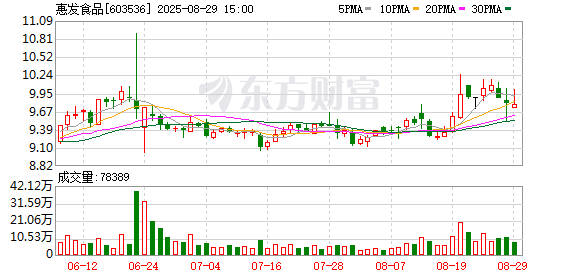
惠发食品2025年上半年营收7.35亿元,持续发力市场拓展与渠道建设
Zheng Quan Shi Bao Wang· 2025-08-29 03:47
Core Insights - The company reported a revenue of 735 million yuan for the first half of 2025, with a significant improvement in net cash flow from operating activities amounting to 62.84 million yuan year-on-year [2] - The company is focusing on a strategy of "channel deepening + product innovation" to enhance its market presence and brand development [2] Group 1: Channel Development - The company is deepening its core business in "group meals + halal" by providing standardized ingredient supply chain services to over 200 schools and enterprises in more than 30 cities nationwide through a "central kitchen + smart dining" model [2] - The company is collaborating with the government of Gansu's Linxia Hui Autonomous Prefecture to establish a food production and supply base targeting Central Asia and Central and Eastern Europe, leveraging local beef and lamb resources to launch the "Hezhou Flavor" product series [2][3] Group 2: Sales Network and International Expansion - The company is accelerating its network expansion to cover community stores and fast-food outlets while significantly developing live e-commerce, creating a synergy between offline distribution and online sales [3] - Recent collaborations with Saudi Arabia's Meilinda International Group focus on supply chain cooperation, product customization, halal food certification, and cross-border logistics integration, with positive feedback on the company's intelligent production line and quality control system [3] Group 3: Product Development and Brand Building - The company has been recognized as one of the top 100 pre-made food producers in China for 2024, with its "Twenty-Four·Jishan Fang" five-season black-bone chicken soup ranking in the top 3 for functional pre-made dishes [3] - The company has developed over 1,000 pre-made dishes across frozen, chilled, and ambient series, utilizing digital management for quality traceability [3] Group 4: Future Outlook - The company plans to increase investments in the pre-made food sector as industry standardization accelerates, aiming to solidify its business layout centered on "group meals + ethnic specialty foods" and deepen economic cooperation with countries along the Belt and Road Initiative [4]
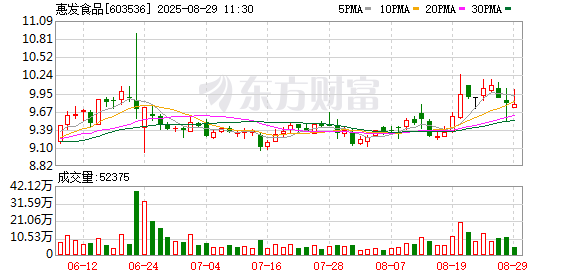
贴牌,冻品经销商的救命稻草?
3 6 Ke· 2025-08-22 00:30
Group 1 - The frozen food market is undergoing significant changes, with distributors facing unprecedented challenges due to strong brand pressures and market factors, prompting a reevaluation of their business strategies [1][3] - Historically, frozen food distributors relied on well-known brands for stable profits, but recent years have seen increased control from major brands, higher entry barriers, and intensified competition leading to price wars [3][4] - The evolving market landscape is reshaping the entire frozen food supply chain, with rising consumer demands for quality and variety, alongside the emergence of new sales channels like e-commerce and community group buying, which are squeezing traditional distributors [4][6] Group 2 - In response to these challenges, private label production has emerged as a new strategy for frozen food distributors, allowing them to create products tailored to market demands and reduce reliance on major brands [7][10] - Private label products can offer higher profit margins compared to branded products, with some distributors reporting that private label frozen dumplings can yield double the gross margin of branded ones [7][10] - However, challenges such as quality control, brand building, and increasing competition among similar private label products pose significant risks for distributors venturing into this space [8][10] Group 3 - The rise of private labels is not merely a survival tactic but also a means to foster market diversification and innovation, enhancing consumer choice and satisfaction [10][13] - The relationship between brands and distributors is evolving towards a co-creation model, where both parties leverage their strengths to better serve consumers [10][13] - Digital tools and collaborative innovation among distributors are emerging as key strategies to improve operational efficiency and product development, with some companies utilizing data analytics to better understand consumer preferences [11][13]
帮主郑重:50万亿消费大爆发!服务消费飙至46%,三招布局消费升级红利
Sou Hu Cai Jing· 2025-07-18 04:24
Group 1 - The core viewpoint is that China's retail sales are projected to reach 50 trillion yuan, driven by a significant shift towards service consumption, which now accounts for 46.1% of total consumption [1][3] - The average annual growth rate of retail sales over the past four years has been stable at 5.5%, with consumption contributing approximately 60% to GDP [1][3] - Service retail sales have surged by 7.5% year-on-year in the first half of the year, outpacing the growth of goods retail [3][4] Group 2 - The rural consumption market is growing faster than urban areas, with a 4.5% growth rate in rural consumption, 0.9 percentage points higher than urban areas [3][4] - The government has introduced 48 new policies to boost service consumption, indicating ongoing support for expanding domestic demand [3][4] - Essential consumption remains stable, with food and daily necessities showing consistent growth, while discretionary spending is more volatile but has seen significant increases in certain sectors like home appliances [4][5] Group 3 - Companies in the service consumption chain, such as those in tourism and entertainment, are expected to benefit significantly from the ongoing consumption upgrade [4][5] - The focus on county-level markets is crucial, as companies that can dominate these areas will have a competitive edge in the evolving consumption landscape [5] - Brands that resonate with national sentiment and cultural identity, such as Li Ning and Luckin Coffee, are positioned to capture the emotional spending of younger consumers [5]

200亿,大学老师辞职卖鱼丸,又去IPO了
创业家· 2025-07-04 10:05
Core Viewpoint - Anjuke Foods, a leading player in the frozen food industry, has successfully listed on the Hong Kong Stock Exchange, marking a significant milestone in its growth trajectory and reflecting the increasing trend of companies from Xiamen going public in Hong Kong [3][4]. Company Overview - Anjuke Foods was founded in 2001 and has become the largest frozen food company in China, holding a market share of 6.6% as of 2024. It leads the frozen prepared food market with a 13.8% share, significantly outpacing its closest competitor [3]. - The company reported a revenue of 15.127 billion yuan in 2024, a 7.7% increase from the previous year, while its net profit saw a marginal increase of 0.46% to 1.485 billion yuan [13]. Historical Growth - Anjuke Foods' revenue has grown from 3.484 billion yuan in 2017 to 15.127 billion yuan in 2024, showcasing a remarkable growth trajectory over eight years [3]. - The company has strategically avoided direct competition with major players by focusing on niche markets and leveraging its geographical advantages in Fujian [7][9]. Market Challenges - Despite its strong market position, Anjuke Foods faces challenges such as increased competition from new brands and fluctuating raw material prices, which have impacted its profit margins [14]. - The company's revenue growth rate has been declining, with a significant drop in net profit growth from 61.44% in 2022 to just 0.47% in 2024 [13][14]. Strategic Initiatives - To address its performance challenges, Anjuke Foods is increasing its R&D investments to innovate and launch new products that meet evolving consumer demands [14]. - The company is also focusing on expanding its market presence in Southeast Asia, particularly in Indonesia and Malaysia, where it sees significant growth potential [15]. IPO Trends in Xiamen - Anjuke Foods is part of a broader trend of Xiamen-based companies going public in Hong Kong, with over 20 companies currently in the pipeline for IPOs [4][17]. - The successful listing of Anjuke Foods is expected to enhance the visibility and attractiveness of Xiamen as a hub for capital market activities [17].