
特斯拉 Model S

Search documents
中原证券晨会聚焦-20260331
Zhongyuan Securities· 2026-03-31 00:19
Core Insights - The report highlights the performance of various sectors in the A-share market, with the battery and non-ferrous metals industries leading the gains, while sectors like insurance and banking showed weaker performance [4][12][15] - The macroeconomic environment is characterized by a recovery in industrial output and consumer spending, with national industrial value-added increasing by 6.3% year-on-year in January-February 2026 [9][11] - The report emphasizes the importance of policy support for economic recovery, with the government planning to implement measures to enhance consumer spending and optimize tax refund processes for foreign tourists [6][8] Domestic Market Performance - The Shanghai Composite Index closed at 3,923.29, with a slight increase of 0.24%, while the Shenzhen Component Index fell by 0.25% [3] - The average price-to-earnings ratios for the Shanghai Composite and ChiNext indices are 16.08 and 46.21, respectively, indicating a favorable environment for medium to long-term investments [13][15] Industry Analysis - The report discusses the brokerage sector's performance, noting a decline in the brokerage index by 2.08% in February 2026, underperforming the CSI 300 index [18] - The gaming industry is highlighted as a growth area, with major companies like Google and Apple reducing revenue share percentages, benefiting game developers [21][23] - The smart home appliance market is projected to grow significantly, with a forecasted market size of approximately $180 billion by 2026, driven by advancements in technology and consumer demand [30][31] Economic Data Insights - In January-February 2026, Henan Province's industrial value-added increased by 7.8%, with retail sales growing by 3.6%, indicating a stable economic performance [9][10] - The report notes that the automotive industry faced challenges in February 2026, with production and sales declining due to seasonal factors and policy changes [33][34] Investment Recommendations - The report suggests focusing on sectors such as batteries, non-ferrous metals, and energy equipment for short-term investment opportunities [13][16] - In the brokerage sector, it is recommended to monitor leading firms with strong wealth management capabilities and those with valuations below the sector average [20] - For the smart home appliance sector, companies like Haier, Midea, and Gree are recommended for their high dividend yields and low valuations [31][32]

每日报告精选(2026-02-13 09:00——2026-02-24 15:00)
GUOTAI HAITONG SECURITIES· 2026-02-24 10:30
Group 1: Macroeconomic Insights - In 2023, the market discussed a peak of 16 trillion yuan in "excess savings," with approximately 76-77 trillion yuan of residential time deposits maturing in 2026, indicating a historical peak[5] - The maturing deposits in the first quarter of 2026 are expected to reach 32-34 trillion yuan, highlighting a significant seasonal pattern[6] - The actual pressure from maturing deposits is limited, with a year-on-year increase of 9.6-10.8 trillion yuan in 2026, corresponding to a growth rate of 14.4%-16.3%, which is lower than the 17.7% growth rate in 2025[6] Group 2: Interest Rate and Asset Allocation - Approximately 25 trillion yuan of high-interest deposits are set to mature, with 32% of the total maturing deposits being two years or older, indicating a core pressure for renewal[6] - The renewal rate for deposits in 2025 remained close to 90%, suggesting that low interest rates do not automatically trigger a shift in risk appetite among residents[7] - The anticipated migration of deposits to other assets is expected to occur slowly and in a dispersed manner, with a potential 10% outflow rate from the 77 trillion yuan in time deposits being a marginal pricing variable for equity and bond markets[7] Group 3: Trade and Tariff Impacts - As of November 2025, the effective tariff rate in the U.S. reached 9.8%, the highest since 1946, with China facing the highest actual tariff rate of 30.9%[9] - The actual tariff increases have significantly impacted trade dynamics, with China and India experiencing the largest increases in effective tariffs compared to 2024, at 20.2 and 17.3 percentage points respectively[10] - Despite tariff pressures, China's export position remains robust, maintaining the largest share of global exports, while the U.S. has shifted its import structure towards North America and Europe[11] Group 4: Economic Recovery and Consumer Behavior - The Chinese economy is shifting focus towards domestic demand as a long-term strategy, with consumer spending projected to account for 56.6% of GDP by 2024, still below developed economies[39] - Consumer confidence is stabilizing, with improvements in disposable income growth and a reduction in the crowding-out effect of precautionary savings on consumption[40] - The recovery in domestic demand is supported by a reasonable rise in prices, which is expected to stimulate consumption and improve corporate profitability[40]
春季行情未完,持股过节
Huajin Securities· 2026-02-07 08:15
Group 1 - The report suggests maintaining a balanced allocation in technology growth, certain cyclical, and consumer sectors before the holiday, with potential outperformers including automotive, military, beauty care, machinery, and communication industries for the 2025 annual report performance [1][3] - The consumer sector's short-term rebound may be a valuation correction, with its sustainability under observation due to weak consumer confidence, lack of profit inflection points, and significant valuation recovery already observed [1][3][36] - Current valuations in growing sectors such as pharmaceuticals, automotive, computers, and machinery are relatively low, indicating potential for future growth [1][3] Group 2 - Historical analysis indicates that after adjustments in the spring market, leading sectors supported by policy and industry trends may regain their advantage, particularly technology growth and cyclical sectors [1][3][24] - The report highlights that sectors with strong annual report performance growth forecasts, such as automotive (471.5%), military (398.4%), beauty care (378.3%), machinery (275.6%), and communication (242.1%), are likely to perform well in the short term [1][3][32] - The consumer sector has shown a long-term downtrend since 2021, with six rebound instances averaging 21.56% in magnitude, driven by consumer confidence, low valuations, and profit growth [1][3][36]
国泰海通晨报-20260202
GUOTAI HAITONG SECURITIES· 2026-02-02 05:20
Macro Research - The core idea of Walsh's "pragmatic monetarism" indicates the Federal Reserve's commitment to controlling inflation while satisfying Trump's interest rate cut demands, aiming to correct market distortions caused by excessive QE and achieve convergence in a "K"-shaped economy [4][26][27] Strategy Research - The downward shift in the risk-free interest rate may accelerate the transformation of residents' asset allocation from "pure fixed income" to "fixed income+", with the stock-bond constant ratio index expected to become a significant benchmark for "fixed income+" products, particularly based on the A500 index, which offers a high risk-return ratio and tactical allocation value [4][32][33] New Stock Research - In Q4 2025, the first-day increase of new stocks reached 176%, with unprofitable new stocks significantly contributing to A1 accounts. The median return for new stock funds was 0.45%, with the most heavily weighted industries being electronics, non-ferrous metals, and power equipment [4][8][11][12]
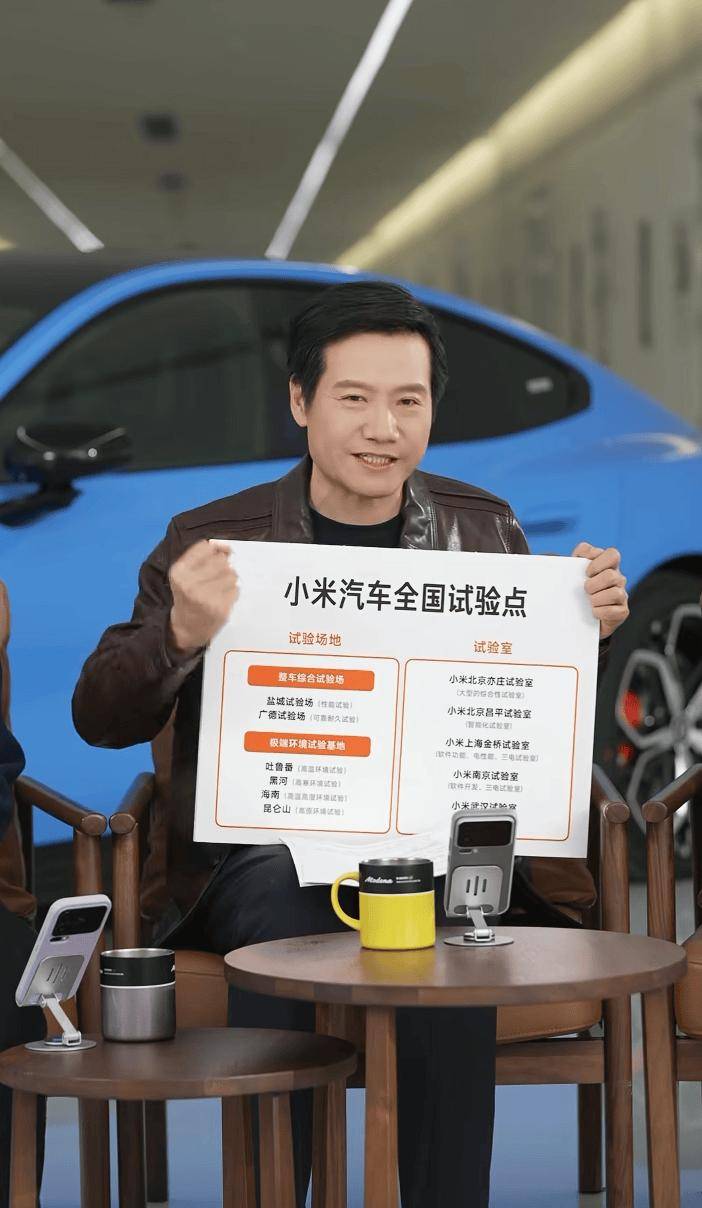
雷军:个别车商为蹭流量说小米二手车崩盘,实际上我们排在第一位
Sou Hu Cai Jing· 2026-02-01 14:43
Core Viewpoint - Xiaomi's SU7 electric vehicle has achieved the highest resale value among electric cars in China, with a 2025 projected resale rate of 86.05%, leading the market and countering negative claims from some second-hand car dealers [4][6][7]. Group 1: Company Insights - Xiaomi's founder and CEO Lei Jun discussed the development process of the new SU7 model during a live stream event [1]. - The company addressed recent controversies regarding the SU7's resale value, particularly a situation where some second-hand car dealers claimed that Xiaomi's second-hand cars were "crashing" in value [4]. Group 2: Industry Performance - According to the "2025 China Automotive Resale Report" published by the China Automotive Circulation Association and Jingzhen Estimate, the SU7's resale rate of 86.05% is the highest among electric vehicles, outperforming competitors like Porsche Taycan (80.66%) and Tesla Model S (81.72%) [6][7]. - The SU7 has consistently ranked first in resale value over the past few years, indicating strong market performance and consumer confidence [7].


每日报告精选-20251201
GUOTAI HAITONG SECURITIES· 2025-12-01 12:12
Industry Investment Rating - The steel industry maintains an "overweight" rating [49] - The real estate industry maintains an "overweight" rating [57] - The insurance industry maintains an "overweight" rating [86] Core Viewpoints - Global risk preferences have significantly declined, leading to asset price fluctuations and panic selling. However, China's capital market is expected to recover in valuation and experience significant development, with A/H shares, industrial commodities recommended for tactical overweight, and US dollars for tactical underweight [20][21] - The Fed's expected interest rate cut in December has risen significantly, and the market is highly concerned about the Fed's monetary policy. The Chinese economy is expected to gradually stabilize, and the policies of various industries will promote the improvement of industry fundamentals [8][15] - The technology theme is expected to return to the main line, and themes such as commercial space, AI applications, robots, and domestic demand consumption are worthy of attention [29] Summary by Directory Macro Reports - **Global Asset Performance**: From November 24 - 28, 2025, major global stock markets rose, commodities generally increased, the 10 - year US Treasury yield remained unchanged, the US dollar index fell, and the RMB appreciated against the US dollar [5] - **US Economy**: Manufacturing new orders increased, housing price growth slowed, and consumer growth also slowed [6] - **European Economy**: Business confidence in the eurozone stabilized [7] - **Overseas Policies**: The Fed's expected interest rate cut in December rose to 80%, the ECB President said the current interest rate was appropriate, the UK's budget faced a "technical leak", Japan's bond - issuing plan tilted towards short - term bonds, and the BOJ's December interest rate hike expectation did not increase [8][9][10] - **China's Economy**: Consumption, investment, and production showed structural differentiation. The manufacturing PMI marginally rebounded due to improved external demand, and the construction industry's business activity index also increased marginally, but the service industry's declined [13][15] Asset Allocation Report - **A/H Shares**: Tactical overweight is maintained due to multiple factors supporting China's equity performance, such as the release of micro - trading risks and the approaching policy window [20] - **Treasury Bonds**: Tactical standard allocation is maintained because of the imbalance between financing demand and credit supply, and the central bank may take action to maintain market liquidity [20] - **Industrial Commodities**: Tactical overweight is maintained as industrial metals like copper may face supply - demand imbalances, with strong demand and increasing development costs [21] - **US Dollars**: Tactical underweight is maintained as the Fed's policy adjustment and the marginal convergence of the US economy reduce the dollar's allocation value [21] Strategy Reports - **Asset Overview**: Global risk preferences recovered, stocks and commodities rose, silver and copper prices hit record highs, and the dollar index weakened. A - shares and other major global stock markets generally rebounded, and the bond market showed a pattern of a bearish steepening in China and a bullish steepening in the US [23][24][25] - **Theme Analysis**: The trading heat of hot themes was stable, the technology theme returned, and funds flowed into AI and communication. Themes such as commercial space, AI applications, robots, and domestic demand consumption are recommended [29] Overseas Strategy Reports - **Fund Flows**: North - bound funds may have a small net inflow, and south - bound funds' inflow into e - commerce and retail reached a new high since October. Overseas funds showed different flow trends in different markets [36][37] - **Policy Tracking**: Domestic policies covered macro, industrial, and local aspects, and overseas policies included diplomatic, economic, and interest - rate - related policies [39][40][43] Industry Reports - **Steel**: Demand is expected to stabilize, supply is expected to contract, and the industry's fundamentals are expected to gradually recover. Companies with product and cost advantages are recommended [45][48][49] - **Utilities**: The proportion of long - term contract electricity in 2026 is expected to decrease, electricity prices may have limited declines, and the industry's valuation is expected to improve [52] - **Real Estate**: The transaction volume in large and medium - sized cities rebounded, and the spot - housing sales are beneficial to the industry's healthy development [57][58] - **Food and Beverage**: CPI data has boosted the sector's expectations. Different sub - sectors such as liquor, beverages, and snacks have corresponding investment recommendations [62] - **Robotics**: Overseas and domestic companies have made progress in the field of humanoid robots, and investment in this field is active. Core component suppliers and整机 manufacturers are recommended [67][68][69] - **Machinery**: The weekly operating load rate of industrial gases increased, and important projects such as the second - phase of the Huanneng Jintan salt - cavern compressed - air energy - storage project advanced. Related companies are recommended [73][74][75] - **Insurance**: In October 2025, the growth rate of life and property insurance premiums declined marginally. The industry is optimistic about the growth of the life insurance's new business value (NBV) in the 2026 opening season and the continuous improvement of the property insurance's combined ratio (COR) [83][84][85] - **Agriculture**: Corn prices rose, the pet food market showed different trends at home and abroad, and the pig - breeding industry needs to pay attention to the epidemic and demand. Related companies in different sub - sectors are recommended [88][89][90] - **Textile and Apparel**: The US clothing retail industry showed growth, and the overseas K - shaped consumption trend continued. Export - manufacturing and brand - end companies are recommended [93][94][95]





2025年11月14日:环球市场动态
citic securities· 2025-11-14 04:55
Market Overview - US stocks experienced significant declines, with the Nasdaq dropping 2.3%, the S&P 500 down 1.7%, and the Dow Jones falling 1.7% due to concerns over the release of key economic data[11] - European markets also closed lower, with the pan-European Stoxx 600 index down 0.61% and the German DAX index falling 1.39% as investors opted for profit-taking after recent gains[11] Economic Indicators - The market's expectations for a December interest rate cut have diminished, with the probability now below 50%[6] - The US 10-year Treasury yield rose to 4.12%, while the 30-year yield increased to 4.71%, reflecting market reactions to hawkish comments from Federal Reserve officials[31] Commodity Trends - International gold prices fell by 0.45% to $4,194.5 per ounce, influenced by reduced rate cut expectations[28] - Oil prices saw a slight rebound after a significant drop, with NY crude oil rising 0.34% to $58.69 per barrel[28] Chinese Market Performance - The A-share market closed higher, with the Shanghai Composite Index up 0.73% at 4,029 points, driven by gains in the lithium sector and precious metals[18] - The total market turnover reached 2.07 trillion yuan, indicating robust trading activity[18] Corporate Earnings Insights - JD.com reported a 15% year-on-year revenue increase to 299.1 billion yuan, but adjusted EBIT fell sharply by 98% to 2.11 billion yuan, highlighting challenges in its electronics segment[8] - Tencent's Q3 revenue grew 15% to 192.9 billion yuan, with a notable 23% increase in its gaming business, reflecting strong performance in its core segments[14] Investment Recommendations - Focus on sectors such as technology, manufacturing, and energy infrastructure, particularly in nuclear power and military industries, as potential investment opportunities[6] - The S&P 500 is expected to see revenue and earnings growth rates of 7.3% and 15.6%, respectively, in 2026, suggesting a favorable outlook for equities[6]




电动车起火背后:被性能 “绑架” 的电池进化论
3 6 Ke· 2025-10-30 02:45
Core Insights - Recent electric vehicle fire incidents have reignited concerns over battery safety, particularly among high-end models like Xiaomi SU7 Ultra, NIO ET7, Li Auto MEGA, Mercedes EQE, and Porsche Taycan, which are priced between 300,000 to 1,000,000 yuan [1] - The evolution of battery technology has focused on increasing energy density and fast charging capabilities, allowing electric vehicles to match or exceed the performance of traditional fuel vehicles in terms of range [1] - Despite advancements in performance, safety has often been treated as a passive requirement, only highlighted by incidents of battery fires [1] Battery Technology Evolution - The first major evolution in power batteries involved a shift from lithium iron phosphate (LFP) to ternary lithium batteries, which offer higher energy density but lower thermal stability [2] - Ternary lithium batteries typically use nickel, cobalt, and manganese or aluminum, with higher nickel content leading to increased energy density but reduced thermal stability [2][3] - High-nickel batteries (NCM 811) faced significant safety issues, leading to a shift towards more balanced compositions in the industry [3] Structural Design and Safety Risks - Recent advancements in battery design have focused on increasing energy density by optimizing structural design, such as integrating more active materials into the same volume [4][6] - The transition from modular to cell-to-pack (CTP) and cell-to-chassis (CTC) designs has allowed for more energy storage but also increased the risk of thermal runaway during incidents [4][6] Fast Charging Challenges - The rise of high-voltage fast charging technology has introduced new safety challenges, with increased power leading to higher demands on insulation and protection systems [7][9] - While fast charging improves user experience, it can also shorten battery lifespan and increase the risk of thermal runaway due to rapid lithium ion movement [9][10] Ongoing Safety Improvements - The industry is exploring solid-state batteries as a potential solution for combining high performance with safety, but significant challenges remain before widespread adoption [11] - Battery manufacturers are continuously optimizing liquid battery designs to enhance safety, such as improving cooling systems and battery management systems (BMS) [11][12] - Despite rigorous testing, the transition from laboratory conditions to real-world applications presents numerous variables that can affect battery safety [13][14] Industry Response to Incidents - Each fire incident serves as a critical warning for the industry, providing valuable data for technological improvements [14][15] - Leading battery manufacturers are striving to reduce failure rates to parts per billion (ppb) levels, although the perceived risk remains significant for individual users [16][17]




人形机器人新技术专题:复合陶瓷丝杠
2025-10-22 14:56
Summary of Conference Call on Composite Ceramic Screw Technology Industry and Company Involved - The discussion revolves around the **composite ceramic screw technology** and its applications in the **robotics** and **automotive** industries, particularly focusing on **electric vehicles (EVs)** and **humanoid robots**. Core Points and Arguments 1. **Weight Reduction and Performance**: The composite ceramic screw, which replaces steel balls with ceramic balls, achieves a weight reduction of approximately **70%**, lowers noise levels, and reduces reliance on lubricants, thus preventing overheating. This technology is suitable for complex industrial scenarios and long-term operations [1][2][5]. 2. **Market Potential in Automotive Sector**: If the value of ceramic balls per vehicle reaches **200 RMB** with a penetration rate of **50%**, the global electric vehicle market could reach **6.8 billion RMB**. The demand for robots in North America is estimated between **1 million to 3 million units**, with an initial value of **4,000 to 5,000 RMB** per unit, leading to a market size of **4 billion to 10 billion RMB** [1][4]. 3. **Advantages of Composite Ceramic Screw Technology**: Key advantages include: - Weight reduction of **70%** - Low friction coefficient of **0.001**, significantly reducing noise - Self-lubricating properties, eliminating the need for additional lubricants - Superior strength and durability, enhancing reliability in high-precision applications [5][6][7]. 4. **Tesla's Adoption**: Tesla's use of composite ceramic screws in its robots offers several benefits, including lightweight design, extended lifespan due to high strength, improved interaction experience due to low noise, and expanded application range due to high-temperature and corrosion resistance [7][8]. 5. **Challenges in Manufacturing**: The manufacturing process of composite ceramic screws faces challenges such as high purity and particle size control of raw materials, complex production processes, and stringent quality control requirements [9]. 6. **Future Growth in New Energy Vehicles**: The development of new energy vehicles, particularly those with **800V and above** platforms, is expected to drive the adoption of composite ceramics, with projections indicating a significant increase in the number of new models by **2025** and **2030** [11][12]. 7. **Innovations in Robotics**: The introduction of a micro four-bar linkage transmission method in robotics enhances motion control, energy efficiency, and operational stability, with Tesla confirming its use in next-generation robotic joints [13]. 8. **Market Growth Projections**: The ceramic ball market is anticipated to grow significantly, with projections indicating a rise from **3 billion RMB** in 2025 to **12 billion RMB** by 2035 in the new energy vehicle sector, and from **3 billion RMB** to **40 billion RMB** in the humanoid robot sector [15]. Other Important but Possibly Overlooked Content 1. **Domestic Suppliers**: Key domestic suppliers of ceramic balls include **Lixun Co., Ltd.**, **Guoci Materials**, and **China National Materials**, each with unique strengths in the market [16]. 2. **Geopolitical Risk Management**: Lixun Co., Ltd. has established factories in North America and Mexico, which helps mitigate the negative impacts of geopolitical conflicts, making it a significant player in the automotive supply chain [17][18]. 3. **Investment Opportunities**: Investors are encouraged to focus on Lixun Co., Ltd. for its technological capabilities and global presence, while also considering Guoci Materials and China National Materials for their niche advantages [19].


消费专场-2025研究框架线上培训
2025-10-09 02:00
Summary of Key Points from Conference Call Records Industry Overview - The consumer industry is driven by both technology and consumption concepts, transitioning from traditional commerce to e-commerce, significantly enhancing supply chain efficiency [1][2][4] - The rise of e-commerce has disrupted traditional retail, with logistics cost reduction and changing shopping habits being key factors [1][5] - New retail and live-streaming e-commerce have emerged, creating opportunities for consumer goods companies through innovative models and traffic generation [1][8][9] Market Dynamics - The Chinese consumer market exhibits a stratified phenomenon, with significant differences in income levels, birth years, and consumption habits across regions [1][10][11] - Companies need to adopt STP (Segmentation, Targeting, Positioning) strategies to effectively market to diverse consumer groups, as demonstrated by Proya's successful market entry [1][12] - The market has shifted towards quality consumption, with approximately 390 million consumers in lower-tier cities becoming a new growth point [1][15] Investment Insights - Evaluating the market space of emerging industries or single products is crucial for making informed investment decisions in primary and secondary markets [1][18] - High ROE industries like food and beverage, and home appliances are more likely to produce "bull stocks," while industries with barriers, such as liquor, have long-term advantages [1][19][21] Consumer Behavior - The investment framework for the consumer industry requires interdisciplinary knowledge, including economics, finance, sociology, and psychology [2] - Consumer spending is influenced by population size and income levels, with a significant portion of savings remaining unspent due to changing future expectations [2] - Different consumer groups show distinct preferences, with urban consumers leaning towards high-end brands while lower-tier city consumers prefer cost-effective products [16][17] Industry Barriers and Management - Barriers in the consumer industry include brand, operational, technological, and policy barriers, with brand and operational barriers being particularly significant in general consumer goods [3][22] - A company's ability to create value is largely dependent on its management capabilities, which encompass both hardware (organizational structure) and software (corporate culture) [23] Trends and Future Outlook - The consumer industry is characterized as a "long slope, thick snow" type, indicating its potential for substantial growth and the emergence of large-cap companies [19] - The industry is expected to continue evolving with technological advancements, particularly in logistics and information flow, which have historically driven profitability in e-commerce [6][7] Conclusion - The consumer market in China is undergoing significant changes, with emerging trends in e-commerce, consumer behavior, and investment opportunities. Companies must adapt to these changes to capitalize on growth potential and navigate the competitive landscape effectively.

