Hua Er Jie Jian Wen

Search documents
OpenAI高管:工程师变成“魔法师”,AI将开启新一轮创业狂潮
Hua Er Jie Jian Wen· 2026-02-15 08:01
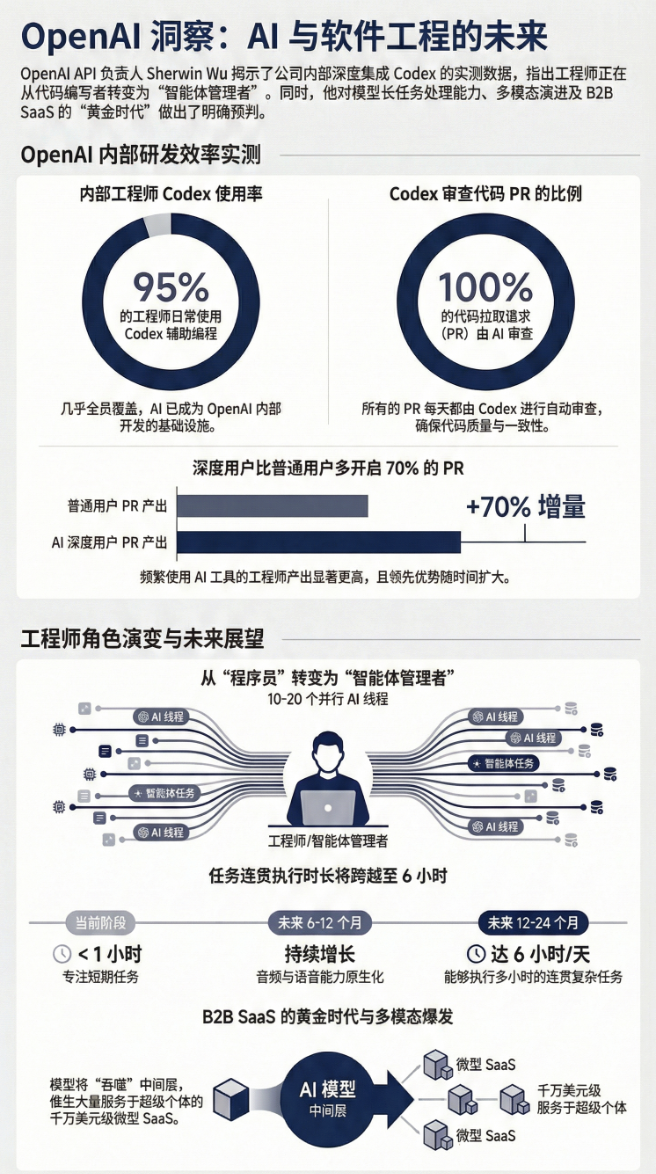
Core Insights - OpenAI's internal data reveals that 95% of its engineers are using Codex for programming, with 100% of pull requests (PRs) being reviewed by Codex, indicating a significant shift in software engineering practices [4][9][19] - The company is experimenting with a team maintaining a codebase entirely written by Codex, which could fundamentally change development methodologies [4][12] - Engineers are evolving from traditional coding roles to managing multiple AI agents, likening their work to that of "wizards" casting spells to accomplish tasks [5][6][10] Group 1: AI Integration and Impact - The deep integration of AI tools has led to engineers who use Codex generating 70% more PRs than those who do not, with this gap widening over time [4][18] - OpenAI emphasizes the need for developers to build for the future capabilities of AI models rather than their current state, as many existing scaffolding solutions may become obsolete [4][14][15] - The company views itself as an ecosystem platform aimed at enhancing the overall landscape rather than stifling startups through competition [8] Group 2: Future of Software Engineering - The next 12 to 24 months are expected to see AI models capable of executing complex tasks for several hours, marking a significant advancement in AI capabilities [7] - The rise of "one-person billion-dollar startups" is anticipated, with a corresponding increase in small SaaS companies catering to these individuals, potentially transforming the venture capital ecosystem [7][43] - The emergence of a B2B SaaS golden age is predicted, where the ease of software creation will lead to a proliferation of micro-companies [7][43][44] Group 3: Management and Workforce Dynamics - As AI tools enhance productivity, top performers are expected to leverage these tools to achieve greater efficiency, leading to a wider distribution of team productivity [36][37] - Management roles are evolving, with leaders spending more time supporting top performers and ensuring they have the resources needed to excel [37][41] - The integration of AI tools is likely to enable managers to oversee larger teams, similar to how engineers manage multiple AI agents [38][39]


上一次“软件要亡”论发生在10年前,后续如何了?
Hua Er Jie Jian Wen· 2026-02-15 07:39
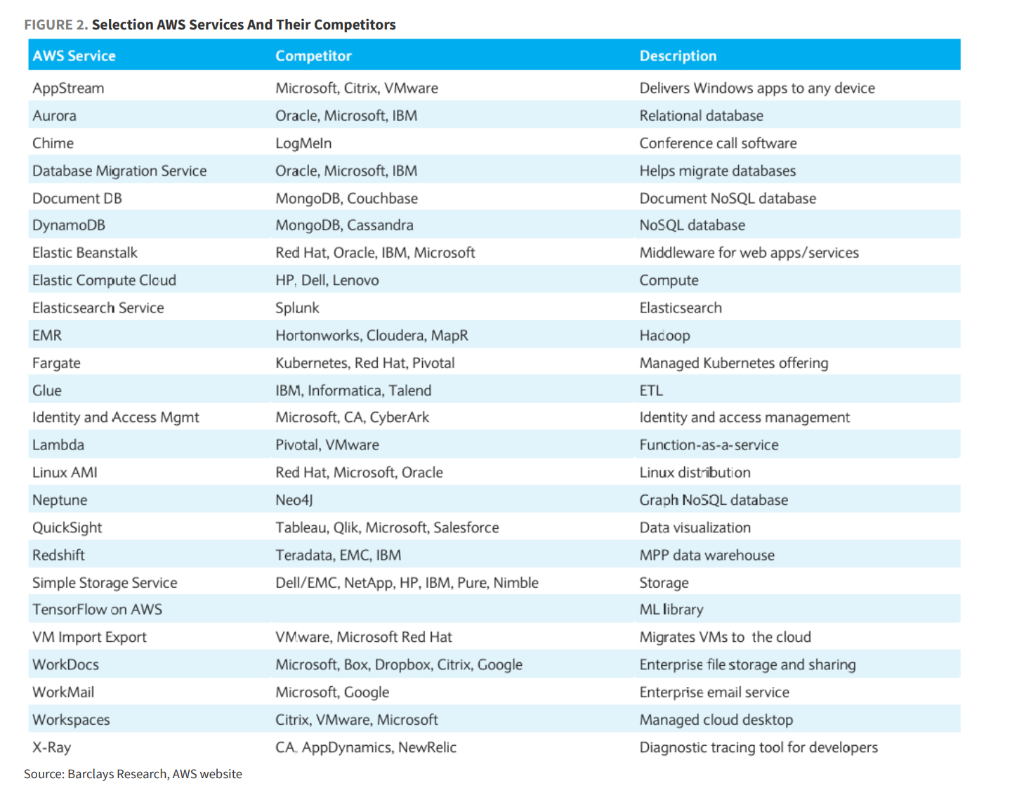
Core Viewpoint - Barclays believes that the current market panic regarding generative AI (GenAI) is based on a "worst-case scenario" assumption, predicting the extinction of traditional software companies, which mirrors the panic seen a decade ago with the rise of Amazon AWS [1][2] Historical Context - The current investor sentiment in the software sector is extremely negative, with a simplistic investment logic of buying AI newcomers and shorting traditional software [2] - This situation is reminiscent of the panic surrounding AWS's growth, where established software companies faced similar doomsday predictions, yet none went bankrupt due to AWS competition [4][5] Market Dynamics - Historical data shows that while AWS gained significant market share, it did not lead to the extinction of mature software companies; instead, these companies evolved and thrived [4][5] - The market's current indiscriminate sell-off of software stocks, with the IGV (software ETF) down approximately 24% year-to-date, is viewed as irrational [6] Mispricing Opportunities - Barclays identifies significant mispricing opportunities in the current market, particularly for companies with strong core record systems and specific domain moats that are being undervalued [1][6] - The panic selling creates an opportunity for investors to identify industry leaders that have been unfairly punished [7] Defensive Sectors - Two defensive sectors highlighted are: 1. Owners of record systems, such as Salesforce and SAP, which hold core enterprise data and are difficult to replace [9] 2. Vertical SaaS companies, like Veeva Systems and Tyler Technologies, which possess deep domain-specific data moats [9] Company Performance - Notable company performances include: - CyberArk's market cap surged from $885 million to $22.516 billion, a 2443% increase [8] - Microsoft and Google also saw significant market cap growth, with increases of 1048% and 871%, respectively [8] - Traditional companies like Teradata experienced a 73% decline, while others like Tableau and Splunk were acquired at high premiums [8]




师从茶咖的袁记云饺,能否得出中餐连锁的终极答案
Hua Er Jie Jian Wen· 2026-02-15 03:51
Core Viewpoint - The prevailing belief among restaurant investors is that "the end of dining is retail," suggesting that creating standardized, replicable food products is more profitable than traditional restaurant operations. Yuanji Yunjiao exemplifies this approach by focusing on retail and standardized production of dumplings, achieving significant growth in a short period [1][2]. Company Overview - Yuanji Yunjiao has adopted a "raw and cooked integrated" retail strategy, generating approximately 97% of its revenue from ingredient sales to franchisees. This model has allowed it to become the largest Chinese fast-food chain globally by store count, with 4,266 locations projected by September 2025, doubling from early 2023 [1][2][4]. Supply Chain and Operations - The company operates five factories and 24 self-operated warehouses, with 86% of its stores located within a 200-kilometer radius of these warehouses, enabling efficient two-day delivery. This "front store, back factory" model allows for standardized production and quick turnover of inventory, with a stock turnover period of just 12.1 days compared to the industry average of 25 days [4][6]. - Yuanji Yunjiao has strong bargaining power with franchisees, as its accounts receivable turnover days are only 2.8 and 5.3 days for 2023 and 2024, respectively, indicating rapid cash flow back to headquarters [7][8]. Financial Performance - Despite a stable gross margin, the profit per order has been declining, with gross profit per order dropping from 2.9 yuan to 2.3 yuan between 2023 and the first three quarters of 2025. This indicates a reliance on scale and high turnover to maintain profitability [9][10]. - The company's gross merchandise volume (GMV) from takeout increased from 32.4% to 44.6% from the previous year, reflecting a shift in consumer behavior towards delivery services [8]. Market Position and Challenges - Yuanji Yunjiao's rapid expansion has led to over 3,500,000 members and a quarterly repurchase rate of 32.3%. However, the growth rate of new franchisees has slowed, raising concerns about sustaining momentum [20][17]. - The company faces challenges in maintaining profitability due to rising material costs, particularly pork, which constitutes 35% of total sales costs. This makes the company vulnerable to fluctuations in the pork market [20][21]. Strategic Initiatives - To address franchisee pressures, Yuanji has reduced product prices below cost to stimulate sales. Additionally, the company is expanding its footprint into lower-tier cities, with a significant increase in store numbers in these areas [14][21]. - Yuanji is also exploring international markets, having opened its first overseas store in Singapore and planning further expansion in Southeast Asia. However, the challenge of recruiting and training labor for its "freshly wrapped" model abroad remains a significant hurdle [26][27].
“SaaS已死,SaaS到来”!Altman预言“全AI企业”时代开启
Hua Er Jie Jian Wen· 2026-02-15 03:46
奥尔特曼指出,AI 系统不再仅仅是增强工作效率,而是正在从根本上改变组织架构。在未来的工作流中,AI 将负责构建、部署和 优化,人类则负责提供战略方向。简而言之,人类决定"做什么",AI 决定"怎么做"并执行到底。这种模式下,工程能力不再是制 约因素,能够以快于人类团队的速度指导 AI 执行任务将成为核心竞争力。 市场观察人士认为,OpenAI 转向完全自主化并非简单的产品演示,而是证明了这一模型具备取代现有人类组织结构的能力。这一 变革意味着,那些仅利用 AI 加速开发流程的企业仍在优化一种濒临消亡的模式,而让 AI 充当开发者的企业将在截然不同的经济 OpenAI 首席执行官奥尔特曼在CISCO AI峰会上预言,人工智能正在从辅助人类的工具转变为完全自主的执行者,"全AI企业"的时 代即将开启。这一转变标志着传统"软件即服务"模式的终结,取而代之的是"服务即软件"的新范式。在这个新时代,企业竞争优势 不再取决于工程师的数量,而在于指挥自主AI系统的战略清晰度。 奥尔特曼近期透露,OpenAI 旗下的"AI Defense"产品很快将实现 100% 由 AI 编写代码。这并非仅仅是技术上的辅助,而是实质性 ...

财报后,美国四大云厂市值蒸发1万亿美元,市场甚至寻求对冲“大厂风险”
Hua Er Jie Jian Wen· 2026-02-15 03:15
Core Viewpoint - The recent earnings reports have led to a significant decline in the market capitalization of the four major cloud companies in the U.S., with a total loss exceeding $1 trillion, as investors express concerns over unsustainable AI infrastructure investments, cash flow pressures, and rising debt levels [1][8]. Group 1: Market Reactions - Microsoft shares have dropped 27% from recent highs, while Amazon, Meta, and Alphabet have seen declines of 21%, 16%, and 11% respectively, indicating a shift in market sentiment from "Is AI worth it?" to "Can capital expenditures be sustained?" [1][8]. - The capital expenditure of major cloud firms is projected to surge from approximately $485 billion between 2022-2024 to nearly $1.4 trillion from 2025-2027, raising concerns about potential overcapacity and elongated return cycles [8]. Group 2: Debt Market Dynamics - Concerns among debt investors are driving the rapid expansion of the credit derivatives market, with single-name credit default swaps (CDS) for companies like Meta and Alphabet becoming increasingly active [3][11]. - The CDS contracts for Alphabet and Meta are valued at approximately $895 million and $687 million respectively, reflecting heightened market activity [5][11]. - Morgan Stanley forecasts that the borrowing by major cloud firms will reach $400 billion this year, significantly higher than the $165 billion expected in 2025 [6]. Group 3: Financial Projections and Risks - Goldman Sachs anticipates that if capital expenditures reach $700 billion by 2026, it would nearly equal the total operating cash flow of major cloud firms, indicating a potential cash flow crisis [12][14]. - Only Microsoft is expected to have operating cash flow sufficient to cover its capital expenditures by 2026, while other firms may face a shift from "net debt neutral" to "net positive debt" [14]. - The issuance of bonds has reached record levels, with Oracle issuing $25 billion and Alphabet increasing its bond issuance from $15 billion to $20 billion, both attracting substantial investor interest [14]. Group 4: Market Divergence and Future Outlook - Despite strong current demand for bonds, there is a divergence in market sentiment, with some hedge funds viewing the demand for protection as a profit opportunity, while others warn of potential mispricing of credit risks [15]. - Goldman Sachs notes that to maintain investor return expectations, these companies would need to achieve annual profits exceeding $1 trillion, while current consensus estimates for 2026 profits stand at only $450 billion [15]. - The ultimate outcome will depend on whether AI investments can replicate the profitability trajectory of cloud computing, as seen with Amazon AWS achieving breakeven within three years and a 30% operating margin within ten years [16].



每千次展示60美元!OpenAI用高价拉开“AI广告”大幕
Hua Er Jie Jian Wen· 2026-02-15 03:09
曾直言广告令其感到"不安"的OpenAI首席执行官奥尔特曼,正面对商业现实做出重大妥协。为了支撑 人工智能平台目前高昂的估值并覆盖巨额资本开支,OpenAI本周正式在ChatGPT上开启广告测试,这一 举措不仅标志着该公司商业模式的根本性转变,也预示着全球数字广告市场即将迎来一场由生成式AI 引发的洗牌。 据金融时报报道,OpenAI为广告主设定的门槛颇高,起步价定为每千次展示(CPM)60美元,且要求 最低投入达到20万美元。这一激进的定价策略与Netflix在2022年底推出广告服务时的水平相当,显示出 OpenAI试图将其平台定位为高端广告渠道,并计划在今年通过此业务产生数十亿美元的收入。 目前,包括WPP、奥姆尼康和电通在内的全球顶级广告代理集团已成为其首批合作伙伴,涉及零售、 软件、旅游等多个行业的客户。对于广告主而言,ChatGPT的商业化开启了一个全新的领域,营销人员 渴望在消费者通过对话式AI寻求答案时,能够第一时间抢占其心智,这种从传统搜索引擎向"答案引 擎"的转变正在重塑数字营销的格局。 然而,这一转型并非没有风险。在试图通过广告变现以应对来自谷歌和Anthropic等对手的激烈竞争 时, ...
春节周重磅前瞻:美联储最爱通胀指标,DeepSeek V4或发布
Hua Er Jie Jian Wen· 2026-02-15 03:04
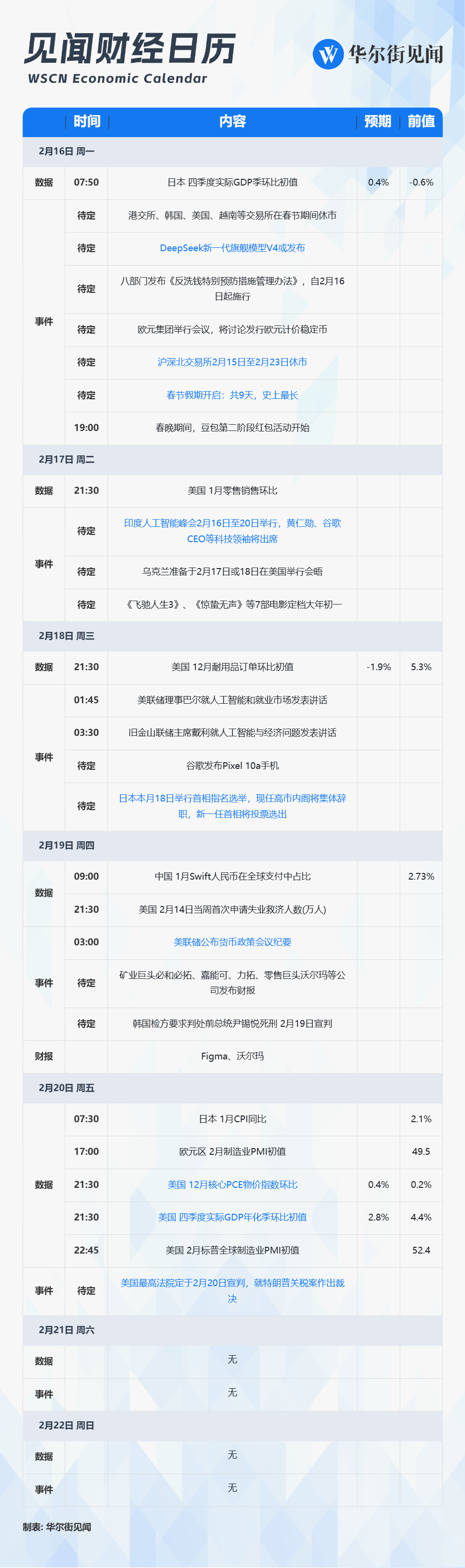
Group 1 - The core theme of the news revolves around the significant developments in the AI industry during the Spring Festival, including the anticipated release of flagship models and the first-ever AI summit in India featuring prominent tech leaders [4][6][8] - The macroeconomic landscape is highlighted by the upcoming release of key data such as the December PCE inflation and Q4 GDP, which are crucial for understanding the Federal Reserve's stance on interest rates and inflation risks [5][4] - The longest Spring Festival holiday in history, lasting nine days, is set to impact market activities, with various exchanges, including the Shanghai and Hong Kong stock exchanges, closing during this period [4][9] Group 2 - The DeepSeek V4 model is expected to be launched in mid-February, showcasing improvements in programming capabilities, potentially surpassing other leading models in the market [8][6] - The Indian AI summit from February 14 to 20 will feature key figures such as NVIDIA's CEO Jensen Huang and Google's CEO Sundar Pichai, indicating a strong focus on AI advancements [8][4] - The U.S. Supreme Court is scheduled to make a ruling on the Trump tariffs on February 20, which could have significant implications for trade policies and the economy [5][4]





哪怕投资者砸崩股价,2000亿美元也必须“烧下去”,亚马逊要“重整旗鼓”
Hua Er Jie Jian Wen· 2026-02-15 02:29
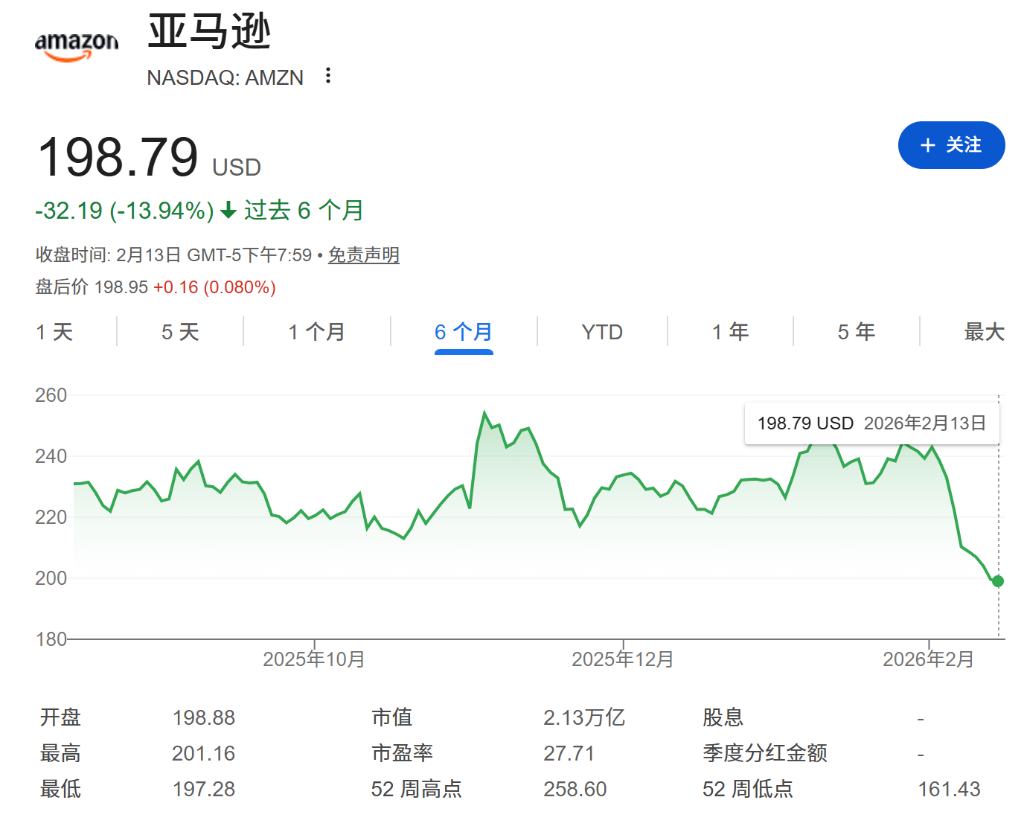
Core Insights - Amazon is initiating its largest capital expenditure plan in history, aiming to regain momentum in the AI sector and defend its leading position in cloud computing against strong competition from Microsoft and Google [1][4] - CEO Andy Jassy announced that the company's capital expenditure will rise to $200 billion this year, surpassing the spending levels of Google and Microsoft, with approximately 75% allocated to its cloud computing division, AWS [1][4] - Despite the significant investment, investor concerns about the slow conversion of spending into returns have led to a more than 20% decline in Amazon's stock price since its peak last November [1] Capital Expenditure Plan - Amazon plans to invest $200 billion, primarily focused on expanding AWS, while total spending by Microsoft, Google, and Oracle is expected to approach $400 billion this year [4] - The company aims to increase data center capacity significantly, adding nearly 4 gigawatts by 2025, equivalent to the annual energy consumption of over 3.2 million U.S. households, with plans to double this capacity by 2027 [4] - Jassy has restructured the organization to unify chip, model, and advanced research teams under a single leadership structure, emphasizing a customer-centric and agile operational approach [4] Competitive Anxiety - Despite generating nearly $130 billion in sales last year and contributing over 60% of Amazon's total profit, AWS faces predictions that Microsoft's cloud business will surpass AWS within the next three years due to the surge in demand for AI-driven cloud services [5] - Internal concerns have emerged regarding AWS's ability to secure enterprise AI contracts, with employees expressing that the company was unprepared for the rapid developments in the market [5] Strategic Partnerships and Contracts - Microsoft secured an exclusive cloud computing contract with OpenAI early on, while Amazon only signed a $38 billion agreement after OpenAI allowed for company restructuring, which pales in comparison to Microsoft's $250 billion contract [6] - Amazon's investment of $8 billion in Anthropic for data center construction came after Google had already supported the startup, indicating a reactive rather than proactive approach [6] Chip Strategy and Performance - To reduce reliance on Nvidia products and improve profit margins, Amazon is promoting its self-developed chips, with projected annual revenues exceeding $10 billion from Graviton and Trainium chips [7] - Amazon is negotiating to join OpenAI's latest funding round to ensure the adoption of its semiconductor products, although competition remains fierce, with Google successfully attracting Anthropic to purchase its TPUs [7] AI Model Development - Amazon is investing in its AI model named "Nova," positioned as a low-cost alternative to competitors, but independent benchmarks show that Nova lags behind models from OpenAI, Google, Meta, and Anthropic [8] - Some AWS employees have informally referred to Nova as "Amazon Basics," reflecting concerns about its performance, while many engineers prefer using Anthropic's Claude model over Nova [8] - The pressure to regain ground in the AI competition is palpable among employees, with fears of stagnation and decline echoing sentiments expressed by founder Jeff Bezos in 2018 [8]
影响万亿资本的市场叙事争夺:一边是“AI颠覆一切”,一边是“AI回报不够”
Hua Er Jie Jian Wen· 2026-02-15 01:29
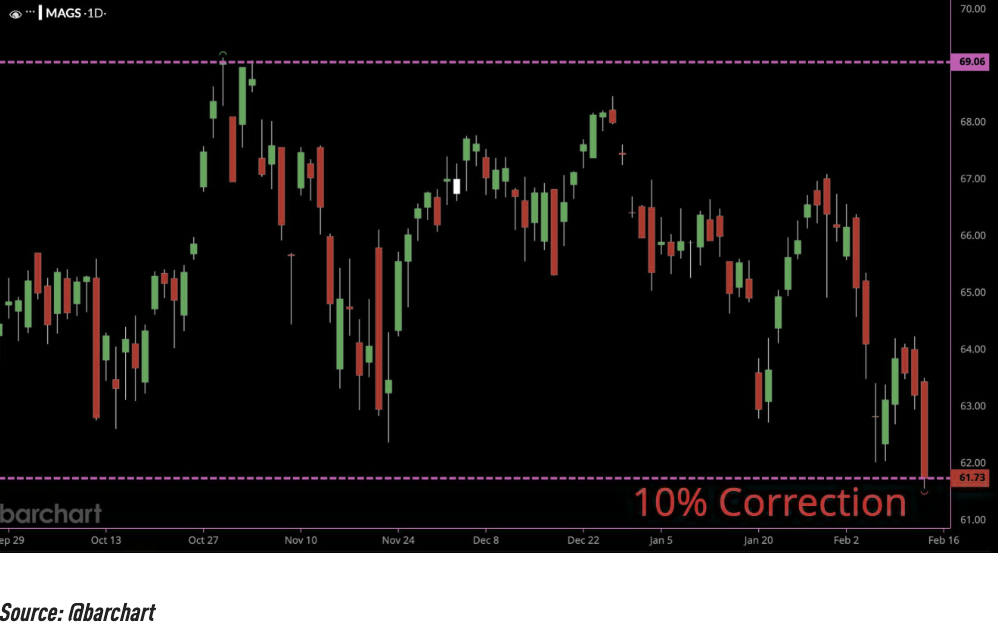
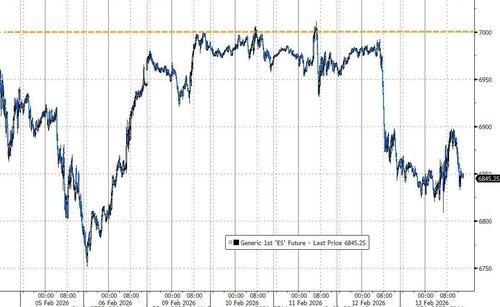
Group 1 - The current global market is experiencing a rare "high noise, high velocity" period, making it difficult for even seasoned traders to navigate. Goldman Sachs' hedge fund business head, Tony Pasquariello, noted that this level of unpredictability is reminiscent of major trauma periods like the global financial crisis or the COVID-19 pandemic [1] - The core anxiety in the market stems from two opposing narratives regarding AI: one that sees AI as a disruptive risk leading to sell-offs in "victim" sectors, and another that questions the return on investment from AI capital expenditures. This tension is causing significant volatility, with aggressive sell-offs occurring whenever marginal AI risks are perceived [1][4] - The S&P 500 index has stalled around the 7000-point mark this year, failing to break through, while beneath the surface, there are turbulent undercurrents. Goldman Sachs' "AI leaders vs. laggards" pair trade recently achieved its largest single-day gain, primarily driven by shorting "laggards" [1][4] Group 2 - Global capital allocation is subtly shifting due to crowded U.S. markets and valuation pressures, with incremental funds increasingly flowing overseas. The South Korean and Japanese stock markets have recently shown strong performance, particularly the KOSPI index, which has doubled since the end of 2024 and achieved its best weekly performance in five years [3][8] - The current market environment is filled with contradictory signals, making investment challenging. There is a rare phenomenon of simultaneous buying in both cyclical assets (like industrial stocks and raw materials) and defensive assets (like consumer staples and utilities) [4] - The debate surrounding AI's fundamental impact is intensifying, focusing on who the beneficiaries and victims are, and whether AI leads to value creation or destruction. This debate has resulted in increased volatility for related stocks and thematic baskets, particularly in the software sector [6] Group 3 - The U.S. stock market has seen a stagnation in the wake of non-farm payroll and CPI data releases, while overseas markets have experienced a surge. According to Goldman Sachs strategist Ryan Hammond, non-U.S. equity funds have seen an inflow of $89 billion this year, compared to only $16 billion for U.S. equity funds [8] - The South Korean stock market is leading this trend, with the MSCI Korea index rising 28% year-to-date in U.S. dollar terms. Goldman Sachs' chief equity strategist for Asia Pacific, Tim Moe, maintains an overweight rating and has raised the KOSPI index target to 6400 points, citing impressive earnings growth and attractive valuations [10] - The Japanese market has also performed well, with the Nikkei index recently rising by 5%. Notably, the correlation between the Japanese stock market and the currency has seemingly reversed, indicating a shift from "currency depreciation trades" to healthier "reflation trades" [12] Group 4 - Despite the uncertain macro environment, hedge funds have shown remarkable resilience. Tony Pasquariello observed that macro discretionary funds accumulated significant profit buffers in January, while long-short equity strategies have generally avoided risks [14] - Looking ahead, market trends appear to favor active management over passive investment, and liquidity is becoming more favorable for liquid assets rather than illiquid ones. Strategies that can adapt to narrative changes in this noisy and fast-paced market seem to be gaining an advantage [14]

华尔街大胆预测:为对冲劳动力缺口,沃什或容忍2.5%-3.5%的通胀!
Hua Er Jie Jian Wen· 2026-02-14 16:56
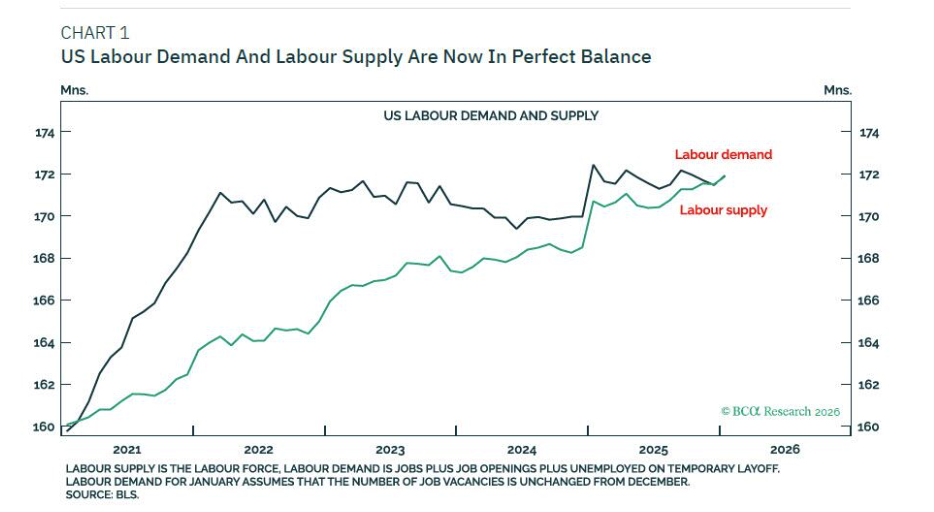
这一政策转向将深度重塑资产定价逻辑。报告预计,即便通胀中枢升至2.5%-3.5%区间,美联储仍将继续降息,推动短期实际利率加速下行。美元 将因实际利率差收窄而持续走弱,美债收益率曲线则面临"熊市陡峭化"压力,即长端收益率上行导致长期国债表现跑输现金及其他主权债券。 在此宏观背景下,股票资产有望继续领先于债券。BCA Research建议战术性超配MSCI全球可选消费板块,相对工业板块。该板块过去65个交易日 已大幅跑输近20%,存在显著的修复空间。 劳动力市场平衡带来"双重风险" 美国劳动力市场正迈入一个罕见的"平衡时刻",这也是自疫情暴发以来,供需双方首次实现数量对等。 根据定义,劳动力供给涵盖在职人员与失业人员;劳动力需求则包括在职人员、职位空缺以及暂时性失业工人。当"寻找工人的岗位"与"寻找岗位 的工人"数量相等时,市场便处于严格意义上的均衡状态。 这一平衡状态之所以罕见,在于其背后经济逻辑的根本性转变。疫情前的数十年,美国经济长期处于需求不足的状态,劳动力需求持续低于供 给。而疫情后,供需关系逆转,劳动力供给成为增长瓶颈,经济由此转入"供给约束型"运行模式。在这种模式下,需求的放缓并不会直接引发 GD ...