
Hua Er Jie Jian Wen

Search documents
美股脆弱之际,今晚CPI恐现“鹰派意外”
Hua Er Jie Jian Wen· 2026-02-13 06:32
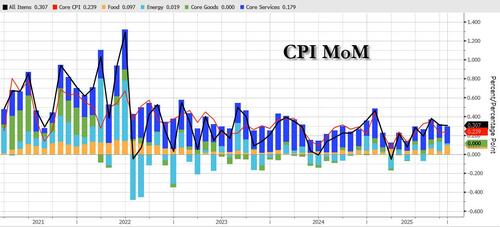
美股正经历全面抛售之际,周五将公布的1月CPI数据面临超预期风险。华尔街普遍预期核心CPI环比将 从0.2%升至0.3%,同时多家投行警告实际读数可能更高,"鹰派意外"的概率大于"温和意外",这可能给 脆弱的市场带来新一轮冲击。 北京时间今晚21:30,因政府部门关闭而推迟数日的1月CPI数据将公布,华尔街共识预期显示: 但这一预期可能低估了年初价格压力和季节性扭曲的影响。多家机构的预测更为鹰派,摩根大通预计核 心CPI环比增长0.4%,其认为年初价格压力推升1月CPI,而去年12月的数据因10月和11月初联邦政府停 摆的滞后效应而受到抑制。 本周市场情绪已明显转向防御。围绕人工智能将颠覆多行业商业模式的担忧扩散,叠加美国成屋销售降 幅创四年来最大,触发避险交易,投资者同步抛售股票,大宗商品和加密货币等风险资产。在这样的背 景下,CPI的边际变化被放大。在弱于预期的零售销售数据与强于预期的非农就业报告相互抵消的背景 下,此次公布的CPI数据显得尤为重要。 多重因素指向上行风险 摩根大通首席经济学家Michael Feroli预计,1月CPI环比将上涨0.3%(更精确为0.35%),核心CPI环比 将上涨0.4 ...


亚洲股市春节前回落,韩股逆势上涨0.9%,黄金小幅反弹,市场聚焦美国通胀数据
Hua Er Jie Jian Wen· 2026-02-13 06:24
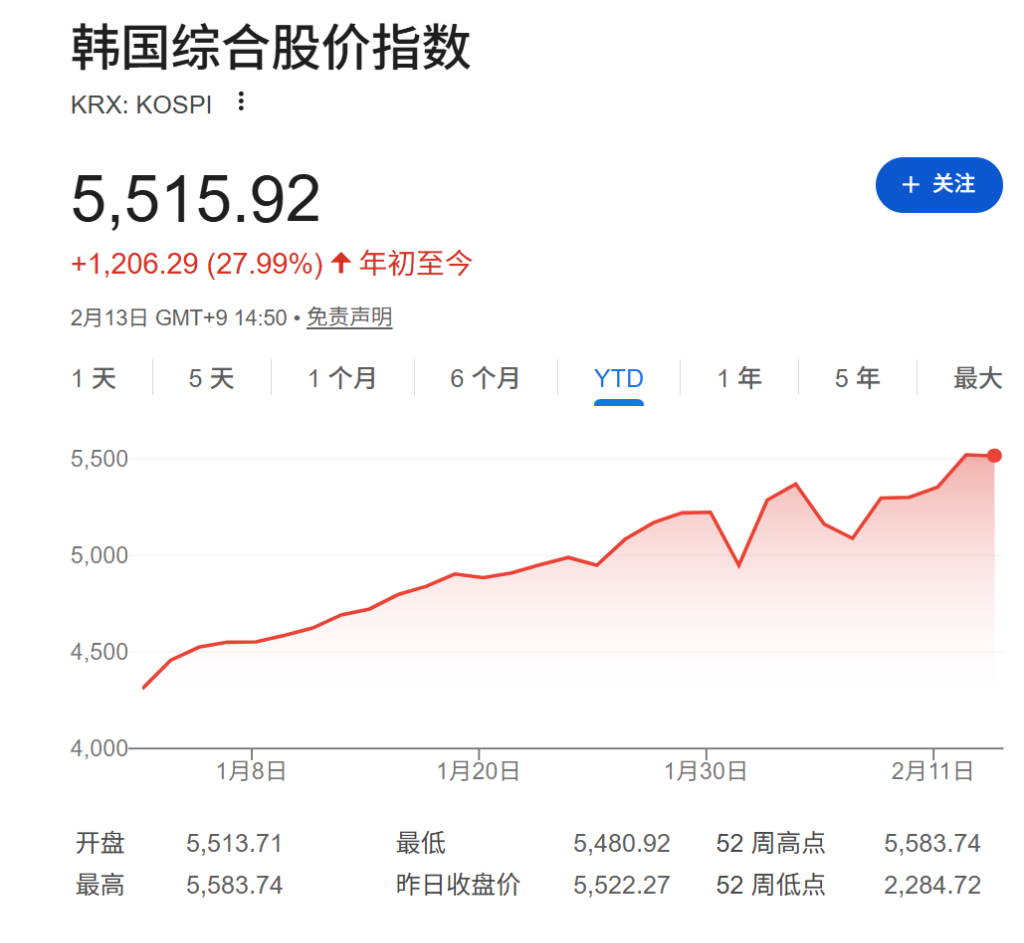
Market Overview - Asian stock markets retreated from record highs as investors locked in profits ahead of the Chinese New Year, with the MSCI Asia-Pacific index falling 0.9%, marking its first decline in six trading days [1] - The South Korean Kospi index rose 0.9%, showcasing resilience amid concerns over U.S. tech stocks due to AI-related anxieties [1][2] - The U.S. 10-year Treasury yield increased by 1 basis point to 4.11%, partially recovering from gains driven by risk aversion [1][5] Commodity Performance - Gold prices rose by 0.7% to approximately $4,950 per ounce, while silver saw a daily increase of 3%, reaching $77.46 per ounce [1][5] - Bitcoin rebounded after four consecutive days of decline, trading at $66,335.45 [5] Inflation and Interest Rate Expectations - The market is focused on the upcoming U.S. January inflation data, with expectations for the core Consumer Price Index (CPI) to rise by 2.5% year-on-year [1][8] - Traders have pushed back expectations for a Federal Reserve rate cut from June to July, with minimal likelihood of a cut in March [1][8] - Citigroup's Benjamin Wiltshire cautioned that the market may be overly optimistic about U.S. inflation prospects, suggesting that inflation expectations could be revised upward [8] AI Market Impact - The volatility in U.S. markets reflects the high risks associated with the AI boom, but the impact on Asian markets has been relatively contained so far [7] - Applied Materials' strong post-market performance indicates potential easing of AI-related concerns [7] Regional Stock Performance - The MSCI Asia-Pacific index has risen approximately 12% year-to-date, while the S&P 500 index has erased all its gains for the year, currently down 0.2% [2] - The South Korean Kospi index has surged 32% this year, making it the best-performing stock market globally [2]
伦铝跳水!报道:美国考虑部分取消铝和钢铁关税
Hua Er Jie Jian Wen· 2026-02-13 05:59
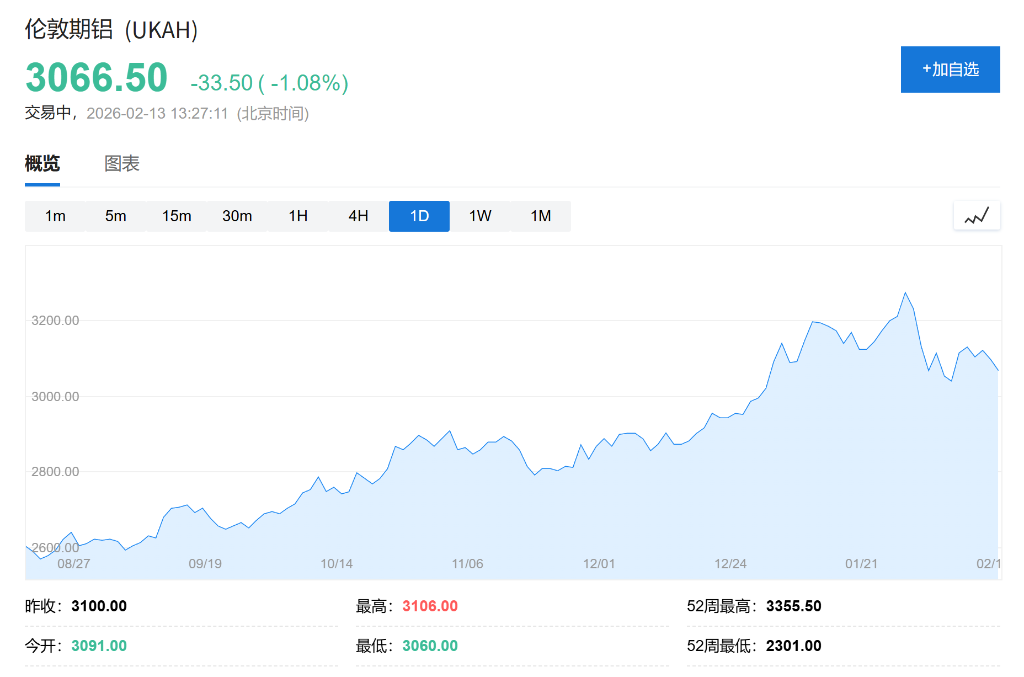
据媒体周五报道,为应对日益严峻的通胀压力并挽救中期选举前的选民支持率,特朗普政府正计划缩减针对钢铁和铝产品的关税政策。这一政策 转向表明,面对选民对生活成本危机的愤怒,白宫正试图重新调整其贸易保护主义立场的力度,以减轻对美国消费者的直接冲击。 据央视新闻此前报道,美国总统特朗普2025年2月10日签署行政命令,宣布对所有美国进口钢铁和铝征收25%的关税。 据媒体援引三位知情人士消息称,特朗普政府目前正在重新审查受关税影响的产品清单,计划豁免部分项目,并停止扩大征税范围。取而代之的 是,政府将启动更具针对性的"国家安全调查",以针对特定商品,而非实施广泛的关税打击。美国商务部和美国贸易代表办公室的官员认为,广 泛的关税推高了诸如馅饼盘、食品和饮料罐等商品的价格,正在损害消费者利益。 此次重新评估标志着特朗普政府贸易立场的软化。去年夏天,美国总统对钢铁和铝进口产品征收了高达50%的关税,并将征税范围扩大到洗衣机 和烤箱等下游金属制品,使得美国关税水平一度被推高至二战以来的最高点。然而,经济学家指出,实际上是美国人在为这些关税买单,这削弱 了总统关于外国公司将承担负担的说法。 受此消息影响,市场反应迅速。伦敦金属交 ...
谷歌DeepMind CEO:今年开启AI抗癌药物临床试验,未来18个月迎来机器人突破
Hua Er Jie Jian Wen· 2026-02-13 05:38
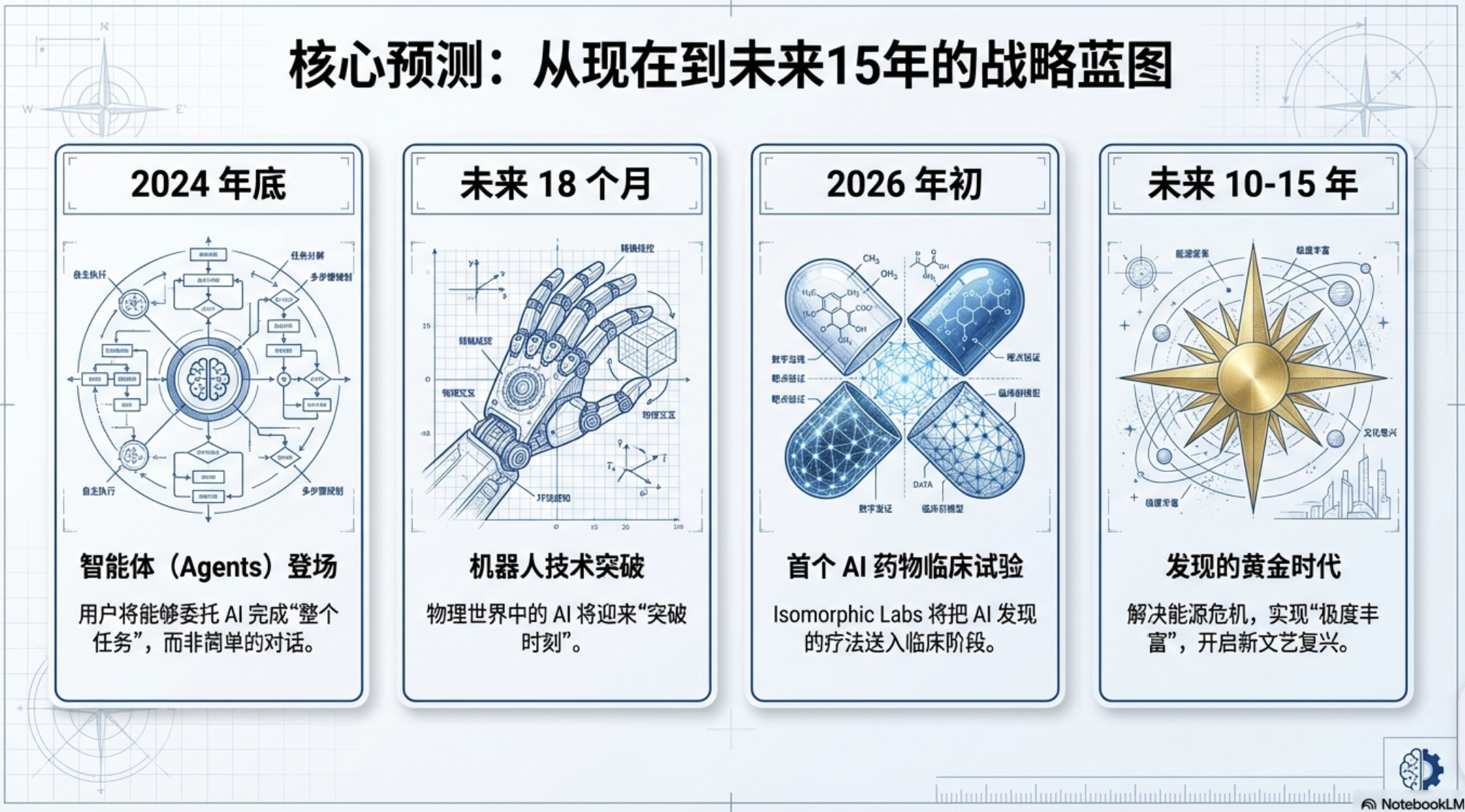
谷歌DeepMind掌门人Demis Hassabis在达沃斯论坛上描绘了AI的终极图景:不仅要在2026年将AI设计的药物送入临床试验,更预言未来10到15年人类将迎 来"发现的黄金时代"。 在瑞士达沃斯举行的世界经济论坛期间,谷歌DeepMind首席执行官德米斯·哈萨比斯(Demis Hassabis)接受了《财富》杂志的专访。 在这场关于人工智能未来的深度对话中,哈萨比斯不仅披露了谷歌大模型Gemini的最新进展,更重点阐述了AI在生物医药领域的颠覆性潜力,以及智能体 (Agents)和机器人技术的爆发时间点。 剑指"解决所有疾病":2026年或成转折点 作为AlphaFold(蛋白质结构预测模型)的缔造者,哈萨比斯正试图通过其创立的初创公司Isomorphic Labs将这一技术转化为实际的药物疗法。 他在采访中透露了一个关键的时间节点:2026年。哈萨比斯表示: "我们希望到2026年初,首个药物能进入临床试验阶段。" Isomorphic Labs目前正在研究癌症、心血管疾病和免疫学等多个领域,并已与礼来公司(Eli Lilly)及全球顶级制药巨头建立了合作伙伴关系。目前,该公 司已有17个药物项 ...


“快手可灵 vs 字节即梦”谁更强?高盛:不存在“赢家通吃”,但AI将显著改变娱乐业价值分布
Hua Er Jie Jian Wen· 2026-02-13 03:39
尽管字节跳动旗下即梦近期推出的Seedance 2.0引发了市场高度关注,但高盛认为,AI视频生成领域并 非"赢家通吃"的零和游戏,快手可灵与字节跳动即梦2.0等头部模型都将从快速扩张的市场中受益,且 AI技术的进步将重塑整个娱乐行业的价值分布。 2月13日,据追风交易台消息,在字节即梦2.0于2月12日正式向公众开放后,投资者对两大平台的竞争 格局高度关注。高盛分析师Lincoln Kong、Ronald Keung及Luqing Zhou在最新研报中表示,可灵3.0在2 月5日升级,较即梦2.0提前数日推出,两者均在音视频一致性、视频时长(15秒)及叙事控制方面实现 重大突破。 尽管部分测试者认为即梦2.0在流畅度和多场景连贯性上表现更优,但高盛强调,可灵3.0在影视级细节 和定价优势上仍保持竞争力,且在第三方基准测试中持续位居全球顶级模型行列。更重要的是,该行预 计全球AI视频生成市场规模将在未来五年增长10倍,至2030年达到约290亿美元,足以容纳多个头部玩 家共存。 可灵3.0对阵即梦2.0:技术对比与市场定位 高盛最新报告详细对比了两大平台的技术能力与市场策略。 研报称,可灵3.0系列包括Kli ...

铠侠翻身仗:打破定价枷锁,NAND价格1季度有望暴涨50%
Hua Er Jie Jian Wen· 2026-02-13 03:08
Core Viewpoint - Kioxia, a Japanese NAND flash memory manufacturer, is breaking free from a long-standing pricing dilemma that has suppressed its profitability, marking a significant turning point in the industry as it adjusts its pricing strategy in response to rising AI demand and supply constraints [1][5]. Group 1: Pricing Adjustments - Kioxia will implement a revised pricing policy starting in Q1 2026, with expected average selling prices (ASP) for major North American customers projected to increase by approximately 50% quarter-over-quarter [1][5]. - Morgan Stanley predicts an even more aggressive ASP increase of nearly 90% in Q1 2026, with adjusted gross margins reaching 66%, aligning with industry benchmarks [4][6]. Group 2: Industry Signals - The pricing changes from Kioxia signal a robust recovery for the entire NAND industry, with Goldman Sachs forecasting a 70% ASP increase for Samsung and a 45% increase for SK Hynix in Q1 2026 [4][5]. - The NAND market is entering a new profit growth cycle, driven by sustained supply constraints and disciplined capital expenditures from manufacturers [4][7]. Group 3: Supply and Demand Dynamics - Kioxia anticipates a nearly 20% growth in NAND bit demand for 2026, primarily fueled by strong data center requirements, with a long-term compound annual growth rate also expected at 20% [7]. - The supply environment is expected to remain tight throughout the year, with industry players focusing on investment conversion and product mix adjustments rather than increasing capacity [7][8]. Group 4: Profitability Recovery - The NAND industry is experiencing a significant recovery in profitability, with Samsung's NAND operating margin projected to rise from 25% in Q4 2025 to 37% in Q1 2026, and SK Hynix's margin expected to increase from 30% to 42% [9]. - Kioxia's operating margin guidance ranges from 47% to 63%, with expectations for Q1 2026 NAND ASP to increase by over 40% quarter-over-quarter [9].
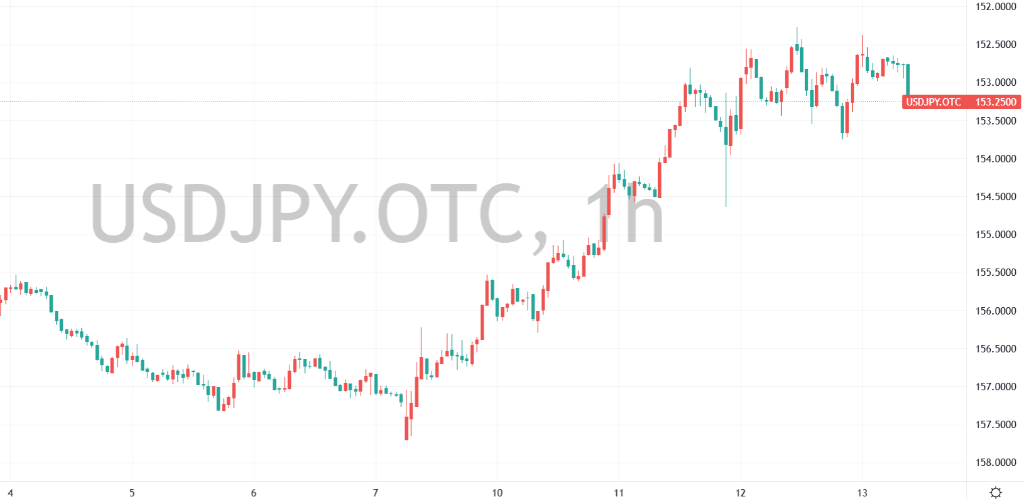
高市早苗胜选打消“财政赤字”恐慌,日元有望创2024年来最佳单周表现
Hua Er Jie Jian Wen· 2026-02-13 02:51
由于市场相信首相高市早苗的胜选将使她能够在扩大财政刺激的同时维持金融市场的信心,日元有望创下自2024年11月以来的最大单周涨幅。 周四日元涨逾0.3%,连续四个交易日走强,本周累计升值约2.8%。与此同时,随着风险资产持续遭遇抛售,避险需求也为日元提供了支撑。 (美元兑日元1小时图,坐标反转,来源华尔街见闻) 分析认为,日本首相高市早苗的胜利被解读为降低了政治不确定性,减少了最坏财政情境的风险,帮助推动日元走强,并使日本国债收益率从上 月触及的多年高点回落。 日本最高汇率官员Atsushi Mimura表示,尽管日元本周反弹,政府仍对外汇走势保持高度警惕,对政府可能干预支持日元的担忧也限制了日元的 跌幅。 Ball强调,这种政策组合的风险在于可能涉及抛售外汇储备,这将在短期内支撑日元买盘,但会增加波动性,因为市场无法预判官员愿意走多 远。 市场对日本政府干预的揣测 日本最高汇率官员对外汇走势保持的高度警惕姿态,使得市场对政府可能出手干预的担忧持续存在,这一预期本身也在限制日元的下行空间。 华尔街见闻提及,1月23日当天,日元日内最大涨幅约为1.75%,创去年8月以来最大涨幅。这一突如其来的走势引发市场对日本 ...
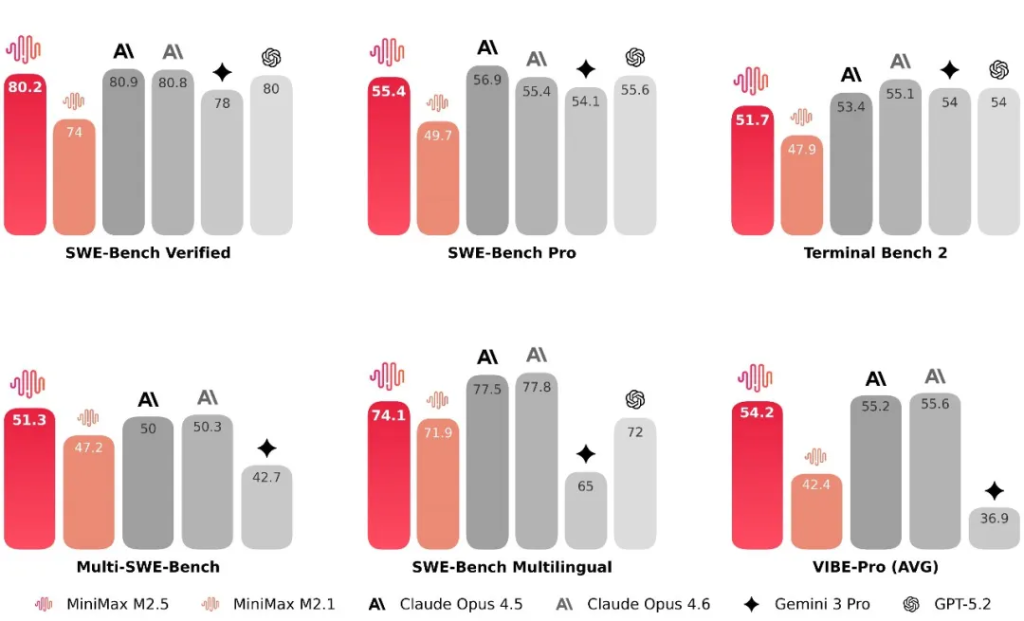
MiniMax发布M2.5模型:1美元运行1小时,价格仅为GPT-5的1/20,性能比肩Claude Opus
Hua Er Jie Jian Wen· 2026-02-13 02:15
Core Insights - MiniMax has launched its latest M2.5 series model, significantly reducing inference costs while maintaining industry-leading performance, aiming to address the economic feasibility of complex agent applications [1] - The M2.5 model demonstrates a substantial price advantage, costing only 1/10 to 1/20 of mainstream models like Claude Opus and GPT-5 at a throughput of 50 tokens per second [1][2] - The model has shown strong performance in programming tasks and has achieved first place in the Multi-SWE-Bench multilingual task, with a 37% improvement in task completion speed compared to its predecessor M2.1 [2] Cost Efficiency - M2.5 is designed to eliminate cost constraints for running complex agents, achieving a processing speed of 100 TPS, which is approximately double that of current mainstream models [3] - The model reduces the total token consumption for tasks, averaging 3.52 million tokens per task in SWE-Bench Verified evaluations, down from 3.72 million tokens in M2.1 [3] Programming Capabilities - M2.5 emphasizes system design capabilities in addition to code generation, demonstrating a native specification behavior that allows it to decompose functions and structures from an architect's perspective [4] - The model has been trained in over 10 programming languages and has shown a pass rate of 79.7% on the Droid platform and 76.1% on OpenCode, outperforming previous models [5] Task Handling Efficiency - In search and tool invocation, M2.5 exhibits higher decision maturity, achieving approximately 20% fewer rounds of consumption compared to previous versions while maintaining token efficiency [8] Office Applications - MiniMax has integrated industry-specific knowledge into M2.5's training, resulting in an average win rate of 59.0% in the Cowork Agent evaluation framework against mainstream models, capable of producing industry-standard reports and financial models [10] Technical Foundation - The performance improvements of M2.5 are driven by a large-scale reinforcement learning framework named Forge, which decouples the underlying training engine from the agent [14] - The engineering team has optimized asynchronous scheduling and tree-structured sample merging strategies, achieving approximately 40 times training acceleration [14] Deployment - M2.5 is fully deployed in MiniMax Agent, API, and Coding Plan, with model weights set to be open-sourced on HuggingFace for local deployment [15]
深圳市地方金融管理局发布进一步规范黄金市场经营行为的公开提示
Hua Er Jie Jian Wen· 2026-02-13 02:06
Core Viewpoint - The articles highlight the prohibition of illegal gold trading activities, including pre-pricing, leveraged trading, and deferred trading, emphasizing the need for compliance in the gold market [1] Group 1: Prohibited Activities - Enterprises are not allowed to engage in illegal gold pre-pricing transactions, leveraged trading, or deferred trading through internet platforms under the guise of gold recycling and pre-pricing sales [1] - Companies must refrain from conducting illegal fundraising activities that promise fixed returns under the guise of gold custody, leasing, or repurchase [1] - Enterprises are prohibited from misleading consumers into purchasing physical gold while promoting illegal gold investment activities without actual delivery of the gold [1] Group 2: Individual Participation - Individuals are not permitted to organize or participate in illegal gold pre-pricing transactions, illegal fundraising under the name of gold, or any form of illegal gold investment activities [1]
AI“超级代理”大战打响!四大赛道全面铺开,OpenAI、Anthropic正挑战微软们的软件帝国
Hua Er Jie Jian Wen· 2026-02-13 02:01
Core Insights - Major AI companies like OpenAI and Anthropic are launching enterprise-level AI products that challenge existing enterprise software markets, prompting traditional software vendors like Microsoft and Salesforce to accelerate their own AI tools and management platforms [1][2] Group 1: Competitive Landscape - The competition involves four main product categories: browser-based agents, computer-operable agents, agent-building tools, and agent management consoles [1][2] - OpenAI and Google provide browser-based agents capable of executing multi-step tasks, while Anthropic's Cowork and Google's Gemini Computer Use are examples of computer-operable agents [2] - Agent-building tools such as Salesforce's Agentforce and Google's Gemini Enterprise allow clients to create agents that can access various enterprise applications [2] - The agent management console market features competitors like Microsoft's Agent 365 and OpenAI's Frontier, raising questions about the necessity of multiple consoles for clients [2] Group 2: Adoption Challenges - Despite the promising outlook, new agent technologies face significant challenges before widespread adoption, including security concerns and usability issues [3] - Companies like OpenAI and Anthropic indicate that their computer-operable agents are still in research preview, suggesting they are not yet ready for large-scale enterprise deployment [3] - Hilton's CTO Onkar Birk expressed caution in adopting new subscriptions, highlighting the complexity and investment required for developing customer support agents [4] Group 3: Traditional Software Companies' Response - OpenAI's strategy involves positioning its agent command technology above traditional enterprise "record systems," which are critical for storing business data [5] - Traditional enterprise application companies like Salesforce and Microsoft have not yet taken steps to block AI agents from accessing or modifying data within their systems [5] - There is a recognition that traditional companies are utilizing technologies from OpenAI and Anthropic to support their own agents, even as these AI firms promote their competitive tools [5] Group 4: Market Dynamics - Snowflake, a database company, has released a product supported by AI models from OpenAI and Anthropic, enabling clients to develop agents for searching and retrieving business metrics [6] - The competitive landscape is characterized by high stakes, with industry leaders feeling pressure to either achieve a $1 trillion valuation or face potential failure [6]


