Hua Xia Shi Bao

Search documents
太空光伏站上风口!光伏企业抢滩万亿赛道,股价最高上涨125.89%
Hua Xia Shi Bao· 2026-01-23 14:17
Group 1 - The commercial space sector has become a focal point in the capital market, with space photovoltaics gaining significant attention, as evidenced by a 30.57% increase in the space photovoltaic index over nearly 60 trading days [2] - Key companies in the space photovoltaic sector include Junda Co., Ltd., Tuori New Energy, Zhonglai Co., Ltd., Jinjing Technology, Trina Solar, and Jiejia Weichuang, with Junda Co., Ltd. showing remarkable performance, with a stock price increase of 125.89% in the same period [2] - The acceleration of satellite deployment in low Earth orbit, including SpaceX's approval for 7,500 new Starlink satellites and China's application for 203,000 satellites, has driven the demand for space photovoltaics as a sustainable energy source [3] Group 2 - Space photovoltaics are favored for satellite energy supply due to their advantages, such as immunity to weather interference and simpler installation compared to traditional solar setups [4] - The high cost of space photovoltaics, primarily using gallium arsenide materials, poses a significant challenge, with current prices for space-grade gallium arsenide solar cells being over 1,000 times that of terrestrial silicon cells [4] - Perovskite materials are emerging as a potential next-generation solution for space photovoltaics, although their long-term stability and large-scale production remain to be validated [4] Group 3 - The space photovoltaic concept has gained momentum in 2026, with multiple brokerages predicting a "trillion-level market," prompting various photovoltaic companies to engage in strategic partnerships and research [5] - Recent collaborations include a strategic partnership between Dongfang Risen and Shanghai Port Construction Group to develop perovskite and p-type heterojunction battery technologies for space energy applications [5] - Trina Solar has established a comprehensive layout in three key areas: crystalline silicon batteries, perovskite tandem batteries, and III-V gallium arsenide multi-junction batteries, anticipating significant market potential as reusable rocket technology advances [6] Group 4 - Trina Solar has reported collaborations with leading aerospace companies in Europe and the U.S. for its crystalline silicon products, focusing on perovskite and silicon tandem products for satellite applications [6] - Junda Co., Ltd. has seen its stock price double since embracing the space photovoltaic concept, with a recent closing price of 90.4 yuan per share [6] - Other equipment manufacturers, such as Aotwei and Maiwei, have also experienced significant stock price increases, with Aotwei's stock rising by 74.44% and Maiwei's by 68.58% over 20 trading days [6][7]




一周两机构罚没5400万元,银盛支付“边罚边犯”
Hua Xia Shi Bao· 2026-01-23 14:17
Core Viewpoint - The payment industry is facing intensified regulatory scrutiny as evidenced by significant fines imposed on companies like Yinsheng Payment and Kailian Payment, totaling approximately 54 million yuan, marking the beginning of compliance rectification efforts for 2026 [2][5]. Group 1: Regulatory Actions - Kailian Payment was fined a total of 38.43 million yuan for seven business violations, including failure to ensure transaction information authenticity and improper risk monitoring [3]. - Yinsheng Payment received a fine of 15.84 million yuan for multiple violations, including breaches of merchant management and account management regulations [6]. Group 2: Compliance and Internal Control Issues - The fines highlight serious deficiencies in Kailian Payment's internal controls and technical operations, as the company experienced a system failure that paralyzed business operations for over 10 days [4]. - The repeated violations by companies like Yinsheng Payment indicate a disconnect between governance and business operations, as well as challenges in matching technological risk control capabilities with the complexity of business operations [8]. Group 3: Industry Implications - The regulatory environment is shifting towards a more systematic approach, emphasizing "strong regulation and zero tolerance," with a focus on core risk areas in payment operations [8]. - The introduction of a "double penalty system" aims to hold both institutions and responsible individuals accountable, reinforcing the importance of compliance in corporate governance [8].

「寻芯记」腾讯背书,难掩巨亏:燧原科技冲刺资本市场
Hua Xia Shi Bao· 2026-01-23 13:57
Core Viewpoint - Suiruan Technology, the only unlisted member of the "Four Little Dragons" of domestic GPUs, has launched its IPO application on the Sci-Tech Innovation Board, showcasing its business layout and financial status amid the booming demand for AI computing power and accelerated domestic substitution [2] Group 1: Company Overview - Suiruan Technology has been established for nearly 8 years and is backed by Tencent, which holds a 20.26% stake in the company [3] - The company aims to raise 6 billion yuan for the development and industrialization of its fifth and sixth generation AI chip series and advanced AI software and hardware collaborative innovation projects [3] - The founders, Zhao Lidong and Zhang Yalin, have extensive backgrounds in AMD, contributing to the company's technological expertise [3] Group 2: Financial Performance - Suiruan Technology has developed four generations of cloud AI chips and has achieved revenues of 90.1 million yuan, 301 million yuan, 722 million yuan, and 540 million yuan for the years 2022, 2023, 2024, and the first three quarters of 2025, respectively [4] - The company has faced significant losses, totaling over 5 billion yuan in the past three years, with losses of 1.116 billion yuan, 1.665 billion yuan, 1.51 billion yuan, and 888 million yuan for the same periods [6] - The company expects to reach breakeven by 2026, contingent on various factors including order backlog and product delivery [6] Group 3: Market Position and Risks - Suiruan Technology's revenue is highly concentrated, with the top five customers accounting for 94.97%, 96.5%, 92.6%, and 96.41% of total revenue from 2022 to the first three quarters of 2025 [4] - The company's dependency on Tencent poses a structural operational risk, as any changes in this relationship could significantly impact its business stability [5] - The domestic AI chip market is expected to grow rapidly, with predictions indicating that the AI accelerator card market could exceed 300 billion USD by 2030 [7] Group 4: Industry Challenges - The domestic GPU chip industry faces structural challenges, with Huawei dominating the market and leaving limited space for other brands to meet profitability needs [8] - There is a risk of price wars among domestic companies if they continue to focus solely on the domestic market, which could compress industry growth [8] - Companies are encouraged to explore international markets and leverage technological differentiation to create new growth opportunities [8]

「观云」AI浪潮下“矿主”们如何掘金?金山云瞄准细分市场,智算平台战略再次升级
Hua Xia Shi Bao· 2026-01-23 13:52
Core Insights - The rapid development of AI technologies, including large models and embodied intelligence, is driving cloud service providers to continuously iterate and capture revenue across various segments [2] - Kingsoft Cloud has upgraded its AI training and deployment platform, StarFlow, to a comprehensive solution that supports various AI applications [3] - The company reported a significant revenue increase and a return to profitability in Q3 2025, indicating a positive trend in its financial performance [5] Group 1: Company Developments - Kingsoft Cloud's StarFlow platform has evolved into a one-stop AI training and deployment solution, providing a full lifecycle management system for model development, training, and inference [3] - The platform integrates various core processes, including data collection, storage, annotation, model development, training, deployment, and simulation, to enhance the efficiency of AI application development [3] - The strategic shift towards tailored industry solutions is expected to improve resource utilization, delivery efficiency, and customer loyalty, establishing a competitive edge in the market [4] Group 2: Financial Performance - In Q3 2025, Kingsoft Cloud reported total revenue of 2.478 billion yuan, a year-on-year increase of 31.4% and a quarter-on-quarter increase of 5.5% [5] - The gross profit reached approximately 381 million yuan, reflecting a year-on-year increase of 25.6%, while the net loss narrowed significantly to 7.847 million yuan, down 99.26% [5] - The public cloud business, a key revenue driver, generated 1.752 billion yuan in Q3 2025, marking a substantial year-on-year growth of 49.1% [6] Group 3: Market Trends - The overall computing power in China is projected to grow rapidly, with a compound annual growth rate of 45.9% from 2020 to 2024, driven by the widespread application of AI and big data technologies [6] - The intelligent computing segment is expected to lead this growth, with a forecasted compound annual growth rate of 64.9% from 2020 to 2024 [6] - Industry experts predict that the current computing power market boom could last for another 5 to 8 years, primarily due to the ongoing demand for AI technologies [7]
别了,蓝岛!33岁京城老牌商业地标谢幕,静待新篇
Hua Xia Shi Bao· 2026-01-23 13:43
Core Viewpoint - The Blue Island Building in Beijing, after 33 years of operation, will officially close on February 28, 2024, due to declining sales and competition from new consumption trends [2][6]. Group 1: Current Status of Blue Island Building - The building, once a popular shopping destination, is now undergoing clearance sales with promotions like "up to 70% off" as it prepares to close [4][5]. - Many stores within the mall are already vacant, and some have ceased operations, indicating a significant decline in foot traffic and consumer interest [5][6]. - The mall's interior shows signs of wear, with areas marked as "under construction" but lacking active renovation efforts [5][6]. Group 2: Historical Context and Previous Renovations - Opened in January 1993, Blue Island Building was once a leading commercial entity in Beijing, achieving sales of 1.36 billion yuan in 1996 [8]. - The mall has undergone several renovations, including a partial upgrade starting in 2010 and a more recent attempt in 2021 to modernize its offerings, but these efforts have not yielded the desired results [8][9]. Group 3: Future Plans and Urban Renewal - The upcoming renovation project is part of a broader urban renewal initiative in Chaoyang District, aiming to modernize the building's facilities and design [9][10]. - The renovation will be designed by a top global architectural firm and aims to create a landmark building with a modern aesthetic [9][10]. - Experts suggest that the success of such renovations will depend on accurately targeting consumer demographics and innovating shopping experiences to avoid homogenization [10].

19.9元体验课引热议!俞敏洪开办“退休俱乐部” 盯上老年人兴趣教育
Hua Xia Shi Bao· 2026-01-23 13:26
Core Insights - The entry of New Oriental into the senior interest education sector is generating significant competition and interest, particularly with the launch of the "Beijing New Oriental Retirement Club" aimed at individuals aged 50-75 [1][2] - The growing elderly population in China presents a substantial market opportunity for senior education, with over 323 million people aged 60 and above projected by 2025 [3] Group 1: Company Initiatives - New Oriental is targeting the senior demographic with interest courses and social activities, offering free online classes and low-cost offline experiences [1][2] - The courses are taught by certified New Oriental teachers and currently include photography, Qigong, and dance, with plans to expand to other subjects like calligraphy and English [2] - New Oriental is also exploring "silver study abroad" programs, indicating a broader strategy to cater to the educational needs of older adults [4] Group 2: Market Potential - The elderly population in China is expected to exceed 323 million by 2025, representing over 23% of the total population, which provides a solid user base for the senior education market [3] - The willingness of the elderly to invest in educational opportunities is high, particularly among active seniors, referred to as the "new middle-aged" demographic [2] Group 3: Competitive Landscape - Other players in the senior education sector include Angli Education, which is integrating cultural entertainment with travel services to enhance its offerings [6] - Companies like Quantum Song and their subsidiaries are also entering the market, although some have faced challenges with service quality and customer satisfaction [7] - The entry of major companies like New Oriental is expected to improve industry standards and service quality, moving the sector from a fragmented approach to a more structured and quality-focused model [7]

业绩预警前夜套现!风语筑“夫妻档”减持之谜:四年“提款”超12亿元,公司却连续亏损
Hua Xia Shi Bao· 2026-01-23 11:12
Core Viewpoint - The company Fengyuzhu (603466.SH) is facing significant challenges, including a projected net loss for the second consecutive year, while its major shareholders have been actively reducing their stakes, raising concerns about the company's future performance and management confidence [2][3][4]. Group 1: Shareholder Actions - Non-independent director and controlling shareholder Xin Haoying reduced her holdings by 4.3034 million shares, accounting for 0.72% of the total share capital, cashing out approximately 42.17 million yuan [2]. - Since June 2021, Xin Haoying has cumulatively reduced her holdings by 87.8357 million shares, amounting to about 1.205 billion yuan, with her shareholding dropping to 17.71% [2][8]. - The combined shareholding of major shareholders, including Xin Haoying and her husband Li Hui, has decreased from approximately 67.6% to 41.2% since June 2021, indicating a significant reduction of nearly 40% [8]. Group 2: Financial Performance - Fengyuzhu's 2025 annual performance forecast indicates a net loss of between 30 million to 20 million yuan, marking the second consecutive year of losses [2][4]. - The company reported a total profit of -164 million yuan for 2024, with a net profit attributable to shareholders of -135 million yuan [5]. - Despite expected revenue growth due to successful cultural IP projects, the company continues to face strong cost pressures, particularly from labor and operational expenses, leading to ongoing losses [5][9]. Group 3: Market and Operational Insights - The company is focusing on traditional cultural IP innovation and immersive consumer experiences to drive revenue growth, aligning with current trends in cultural tourism consumption [5][9]. - The management has indicated that the key to achieving profitability in 2026 lies in optimizing cost structures and enhancing project gross margins [9]. - The company is experiencing operational cash flow net inflow, which is crucial for maintaining operations during a period of consecutive losses [9].


华夏时评:增收为本,投资于人
Hua Xia Shi Bao· 2026-01-23 10:51
Core Viewpoint - In 2025, China's economy demonstrated resilience under various pressures, achieving a GDP of over 140 trillion yuan, with a year-on-year growth of 5.0% and a per capita GDP of 13,953 USD, maintaining above 13,000 USD for three consecutive years [2] Economic Performance - China's manufacturing sector remains the largest globally, and the retail sales of consumer goods rank among the top in the world, indicating steady growth in new productive forces [2] - The economic performance in 2025 exceeded expectations in areas such as export growth, capital market performance, and breakthroughs in the technology sector [2] Macroeconomic Policy Direction - The primary task for 2026 is to "insist on demand-led growth and build a strong domestic market," focusing on strengthening domestic circulation and expanding domestic demand [3] - The National Development and Reform Commission (NDRC) plans to optimize support policies and subsidies, establish a national-level merger fund, and promote the construction of a unified national market [3] Fiscal Policy - The Ministry of Finance will implement a more proactive fiscal policy in 2026, increasing overall fiscal spending and ensuring that spending in key areas remains strong [3] - New policies include a special guarantee plan for private investment and interest subsidies for small and micro enterprises, aimed at stimulating private investment and promoting consumer spending [3] Monetary Policy - The People's Bank of China (PBOC) indicated that there is still room for further interest rate cuts and will maintain a moderately loose monetary policy to support stable economic growth and reasonable price recovery [4] - The macroeconomic policies are expected to contribute positively to China's economic performance in the first quarter of 2026 [4] Long-term Economic Strategy - The focus on stimulating domestic demand will require attention to two key areas: increasing residents' income and investing in human capital [4][5] - Proposed strategies include improving wage growth mechanisms, gradually increasing income for employees, and enhancing public services in areas such as healthcare, education, and vocational training [5]

非医保收入增速达35%!北大医疗“保险办医”模式正在颠覆什么?
Hua Xia Shi Bao· 2026-01-23 10:31
"保险办医"的实践 朱友刚以一组对比数据阐释这种重塑的初步成效。在"筛、管、治、康"的全流程服务体系下,北大医疗 的体检客户转化为门诊就诊的比例达到10%-30%,门诊患者复诊率在20%-35%,住院患者转入康复治疗 的比例亦有10%-20%。 "这些数字意味着,我们设计的健康与医疗的服务链条正在被'接通',患者在不同场景下的需求被有效 地衔接和管理起来,而不是像过去那样,检后无人管、出院即失联。"朱友刚说道。 他进一步表示, "我们的目标,是打造一个'平安版的华西医疗+凯撒医疗'。华西代表的是中国顶级的医 疗品质、学科实力和教学科研能力,这是我们的'北大底蕴'要坚守的根基。而凯撒模式,代表了保险与 医疗服务一体化的高效闭环,支付方与服务方利益高度一致,共同追求让会员更健康、费用更可控。两 者融合,并非简单相加,而是一次代际升级。"他坦言,这条道路挑战巨大,但亦是平安与北大医疗必 须坚定的长期战略。 北大医疗的探索,置身于中国医改深水区的大背景之下。国家医保局主导的DRG/DIP支付方式改革全面 推行,旨在控费提质,促使医院从粗放式扩张转向精细化运营。 公开数据显示,近年来已有大量医院面临运营困境。在此背景下 ...

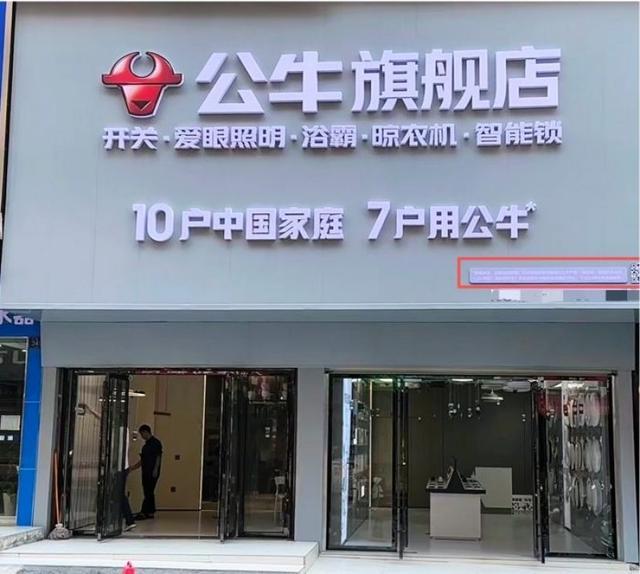
因“10户中国家庭,7户用公牛”广告语对簿公堂,公牛索赔420万元,家的电器诉其涉虚假宣传
Hua Xia Shi Bao· 2026-01-23 09:57
Core Viewpoint - The controversy surrounding the advertisement slogan "7 out of 10 Chinese families use Bull" highlights the tension between marketing innovation and legal boundaries, prompting companies to reassess their communication strategies and compliance with advertising laws [2][4]. Group 1: Background of the Dispute - The dispute began with the advertisement slogan "7 out of 10 Chinese families use Bull," which escalated from social media criticism to a legal battle involving commercial defamation [2][3]. - Bull Group, a leading player in the household electrical sector, has a significant market share in the socket market, while the competitor, Home Appliance, faces brand pressure from Bull [4][5]. - The slogan has been widely used in various advertising materials and has raised questions about compliance with advertising regulations, particularly regarding the "big font, small print" marketing tactic [4][5]. Group 2: Legal Proceedings and Claims - Home Appliance initiated a public campaign against Bull's advertisement, claiming it misrepresents market conditions and violates advertising laws [6][7]. - In November 2025, Bull Group filed a lawsuit against Home Appliance for commercial defamation, seeking 4.2 million yuan in damages [8][9]. - Home Appliance countered with its own lawsuit, alleging that Bull's advertisement constitutes false advertising and unfair competition, which was accepted by the court [9]. Group 3: Market Impact and Consumer Behavior - Despite the presence of other brands, Bull maintains a strong market presence, with consumers expressing loyalty due to the brand's reliability [5][6]. - The ongoing legal battle may have significant implications for both companies, affecting Bull's advertising strategy and Home Appliance's financial stability if they lose the case [10].