Zhong Guo Qi Che Bao Wang

Search documents
通用汽车调整高管任职,推动中国业务发展
Zhong Guo Qi Che Bao Wang· 2025-11-11 14:43
Core Insights - General Motors announced leadership changes to support the recovery of its business in China and promote global export growth [1] Group 1: Leadership Changes - Steve Hill will assume the newly created role of Senior Vice President of Global Export and Retail Innovation starting December 1, leveraging GM's global manufacturing footprint and distribution channels to accelerate export growth [1] - John Roth, currently the Global Vice President of Cadillac, will replace Steve Hill as Senior Vice President and President of GM China [3][6] Group 2: Performance and Strategy - During his tenure as President of GM China, Steve Hill led a series of business restructurings, achieving profitability for four consecutive quarters and becoming the only global automaker to gain market share this year [3] - Hill highlighted significant growth in export business, particularly through the joint venture with SAIC-GM-Wuling, contributing to GM's international profitability and future growth potential [3] - John Roth has extensive leadership experience in global markets and has successfully led Cadillac to become the fastest-growing luxury brand and the top-selling luxury electric vehicle brand [3][6]


自主品牌海外参展“急刹车”
Zhong Guo Qi Che Bao Wang· 2025-11-11 11:49
Core Insights - The 2025 Tokyo Motor Show is marked by the notable absence of many Chinese automotive brands, raising questions about the diminishing appeal of international auto shows [2][3] - In contrast, regional auto shows in Southeast Asia are gaining traction among Chinese brands, indicating a strategic shift in their global expansion approach [5][6] Group 1: Absence of Chinese Brands - The Tokyo Motor Show, one of the five major international auto shows, has seen a lack of Chinese brands, with only BYD participating, which contrasts sharply with their previous frequent appearances [2] - The North American International Auto Show and the Geneva International Motor Show have also experienced a decline in participation from Chinese brands, with only a few present at the latter [3] Group 2: Shift in Strategy - The absence of Chinese brands at major international shows reflects a strategic transition from a broad participation approach to a more focused and selective global expansion strategy [5] - The Japanese automotive market is characterized by its small size and maturity, making it less attractive for many Chinese brands due to high development costs and limited market potential [6] Group 3: Regional Focus - Chinese brands are increasingly favoring regional auto shows, such as the Bangkok International Motor Show and the Indonesia International Motor Show, where they have a stronger presence and can better target emerging markets [6][7] - The ASEAN region, particularly countries like the Philippines, Thailand, and Indonesia, has become a key market for Chinese electric vehicles, with significant export growth noted in these areas [6] Group 4: Marketing and Brand Building - The evolution of Chinese brands' international strategy includes a shift towards local production, technology collaboration, and brand building, moving from mere product export to deeper market integration [8] - Digital marketing is becoming increasingly important, as the costs of participating in international auto shows can be high, prompting brands to focus on online channels for broader outreach [9] Group 5: Importance of Local Engagement - Despite the decline in influence of physical auto shows, they still serve as a vital platform for brands to engage with consumers, especially in regions where purchasing a vehicle is a significant financial decision [9] - Chinese brands are encouraged to not only showcase their technology but also to tell compelling stories that resonate with local consumers, enhancing brand value and cultural connection [9]

以技术创新破新能源车市“内卷”
Zhong Guo Qi Che Bao Wang· 2025-11-11 09:44
Core Insights - The 32nd China Automotive Engineering Society Annual Conference and Exhibition was held in Chongqing, focusing on the theme of "Low Carbon Drives Change, Vehicle Energy Integration Innovation - Building a New Energy Vehicle Technology Ecological Chain" [2] - The forum gathered experts from academia and industry to discuss new technologies, models, and ecosystems for new energy vehicles, aiming to guide industry development in the context of global green transformation [2] Industry Trends - The development of new energy vehicles in China has shifted from policy-driven to market-driven, achieving over 50% market share in the domestic passenger car market [2] - The carbon neutrality strategy is expected to drive a transformation in the energy structure, with renewable energy potentially exceeding 60% by 2035 [2] - The integration of energy and technology is crucial, with a focus on five key new energy technology collaborations and breakthroughs in hydrogen, intelligence, and energy storage [2] Technological Advancements - Dongfeng Yipai Automotive Technology Company emphasized the need for plug-in hybrid vehicles to achieve a pure electric range of over 300 kilometers to meet urban and long-distance demands [3] - The Deep Blue Automotive's "Original Power" electric technology platform has achieved significant milestones, with over 1 million units sold from its first generation [3] - The focus on battery technology highlighted the importance of lithium iron phosphate batteries for their longevity, safety, and cost-effectiveness, with expectations for solid-state batteries to become mainstream by 2035 [4] Collaborative Efforts - A consensus was reached among 46 industry experts at the forum, opposing "involution" and advocating for technological innovation to ensure sustainable industry development [5][6] - Key collaborative efforts include enhancing automotive technology innovation capabilities, promoting demand-driven technology supply, and establishing a responsible technology communication environment [6]

纸间匠心,轮上相传:劳斯莱斯“搏动之心”首探中国千年手工纸
Zhong Guo Qi Che Bao Wang· 2025-11-11 09:37
Core Insights - Rolls-Royce is launching the "Beating! Heart" project to explore and modernize traditional Chinese craftsmanship, particularly focusing on handmade paper, which aligns with the brand's luxury ethos and customer preferences [4][6][15] Group 1: Project Overview - The "Beating! Heart" project officially started in July 2023 after a year of preparation, aiming to research and protect traditional Chinese craftsmanship while expressing it in a modern context [4][6] - The project highlights the importance of Chinese traditional craftsmanship in the luxury automotive sector, with Rolls-Royce recognizing the unique demands of Chinese customers for cultural design elements [4][6][15] Group 2: Traditional Craftsmanship - The project will initially focus on handmade paper, which has a history of over 2,000 years in China, encompassing various types such as hemp paper, bamboo paper, and rice paper [7][9] - Rolls-Royce aims to integrate traditional paper-making techniques into their bespoke automotive designs, emphasizing the artistic value and durability of handmade paper [7][13] Group 3: Customer Engagement - Since August 2023, Rolls-Royce has initiated over 40 bespoke projects at its Shanghai customization center, reflecting the growing interest of Chinese clients in personalized luxury [4][15] - The brand is adapting to a younger, more diverse Chinese customer base, focusing on creating unique, non-replicable bespoke experiences that resonate with individual creativity [17] Group 4: Future Developments - Rolls-Royce plans to launch bespoke projects inspired by traditional Chinese paper-making by the end of 2026, with ongoing engineering tests and technical certifications to ensure quality and safety [15][17] - The "Beating! Heart" project will span three years, with different themes of Chinese traditional craftsmanship introduced annually, aiming to incorporate more exceptional traditional arts into bespoke offerings [17]

第八届进博会 汽车展区尽显科技味儿与未来范儿
Zhong Guo Qi Che Bao Wang· 2025-11-11 09:36
Group 1: Automotive Industry Trends - The auto industry is transitioning towards low-carbon and zero-carbon solutions, showcasing electric, hydrogen, and solar energy vehicles at the expo [3][4] - Major brands like Volkswagen, Toyota, and Tesla presented new electric and hydrogen fuel cell vehicles, emphasizing innovation in sustainable transportation [3][4] - Michelin aims to achieve 100% sustainable materials in tire production by 2050, with 71% of showcased tires already using sustainable materials [4] Group 2: Technological Advancements - Artificial intelligence is rapidly integrating into various industries, with companies like Toyota and Volkswagen showcasing advanced autonomous driving technologies [5][6] - Nissan introduced AI-enhanced seating and smart cabin features in its new models, highlighting the trend towards intelligent vehicle interiors [6] - Companies are presenting cutting-edge technologies such as immersive interaction experiences and advanced driving assistance systems [5][6] Group 3: Emerging Markets - The low-altitude economy is gaining traction, with multiple companies unveiling electric vertical takeoff and landing (eVTOL) aircraft, indicating a competitive market [7][8] - Notable models include Shanghai's E20 and Volant's VE25-100, showcasing advancements in urban air mobility [7][8] Group 4: Robotics and Automation - Humanoid robots are becoming increasingly sophisticated, with demonstrations of their capabilities in various tasks, reflecting advancements in robotics technology [9] - Companies like Nachi and Wolong Electric are expanding into the robotics sector, offering comprehensive solutions that integrate AI and automation [9] Group 5: Classic and Custom Vehicles - The expo featured classic cars, including iconic models like Ferrari F40 and Rolls-Royce Phantom, highlighting the blend of history and automotive culture [10][11] - The presence of unique custom vehicles emphasizes the artistic aspect of automotive design and manufacturing [10][11]

第八届进博会 | 思想碰撞:开放合作锻韧性 科技创新赢未来
Zhong Guo Qi Che Bao Wang· 2025-11-11 09:36
Core Insights - The eighth China International Import Expo and the Hongqiao International Economic Forum highlighted the importance of open cooperation and technological innovation in enhancing global supply chain resilience and driving high-quality development in the artificial intelligence industry [2][5]. Group 1: Open Cooperation and Global Supply Chain Resilience - The current global landscape is marked by geopolitical risks and trade protectionism, necessitating open cooperation as a critical path for maintaining economic growth and stability [2]. - Representatives from China's State-owned Assets Supervision and Administration Commission (SASAC) and the Ministry of Commerce emphasized the need for international collaboration to stabilize supply chains, with SASAC noting that central enterprises have over 8,000 institutions and projects in more than 180 countries [3]. - The Ministry of Commerce aims to create a more resilient and vibrant global supply chain by optimizing the business environment and leveraging the Import Expo platform [3]. Group 2: Technological Innovation and AI Development - Technological innovation is seen as a powerful engine for high-quality development, with artificial intelligence reshaping industry dynamics and serving as a core driver for social progress [5]. - Experts discussed the governance challenges of AI, emphasizing the need for measurable indicators and a distributed governance model that involves multiple stakeholders rather than relying solely on government oversight [6]. - Breakthroughs in technology, such as nanogenerators, are providing sustainable energy sources for AI applications, enhancing its capabilities in various fields [7]. Group 3: Future Perspectives and Collaborative Vision - The discussions underscored the necessity of combining open cooperation with technological innovation to address global challenges and opportunities, with AI's development requiring a supportive international environment [8][10]. - Industry representatives highlighted the transformative potential of AI in sectors like agriculture and healthcare, advocating for continuous learning and skill enhancement among the workforce to adapt to evolving job requirements [9]. - A collective call was made for governments, international organizations, and businesses to work together to maintain a stable international economic landscape and promote responsible AI development [10].

远程当选新能源重卡联盟理事单位,醇氢电动破解行业痛点获认可
Zhong Guo Qi Che Bao Wang· 2025-11-11 09:30
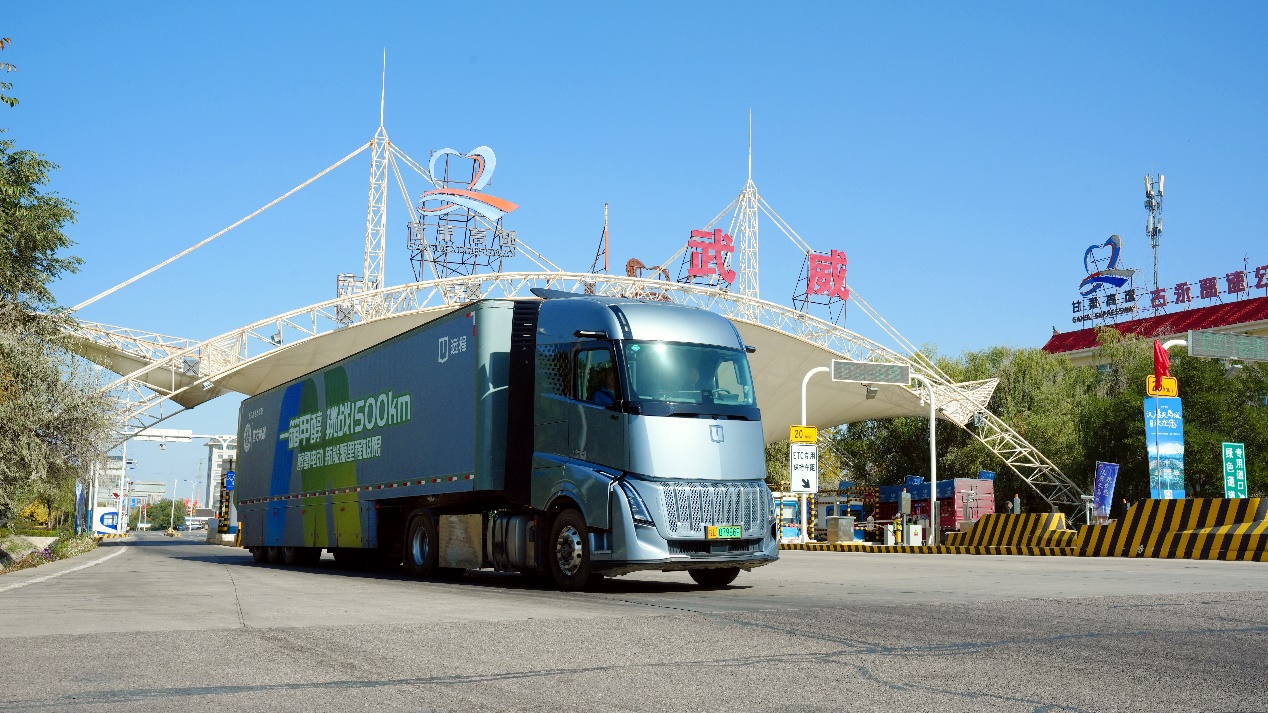
Core Insights - The 2025 China Commercial Vehicle Industry Development and Technology Innovation Conference was held in Wuhan, focusing on strategic paths for the development of the commercial vehicle industry in China [1] - The New Energy Heavy Truck Alliance was established, with nine companies including FAW Jiefang and Dongfeng as council members, aiming to create a collaborative ecosystem for new energy heavy truck manufacturers [1] - The unique "methanol-hydrogen + electric" technology route of Yuan Cheng aims to address the challenges of the heavy truck market's transition to new energy, promoting high-quality industry development [1] Industry Challenges and Opportunities - The heavy truck sector is crucial for logistics and construction, and is undergoing a significant transformation towards electrification and intelligence under China's "dual carbon" strategy [2] - Current challenges include a lack of clear national policy direction on various technology routes, which include pure electric, hydrogen fuel, and plug-in hybrid technologies [2] - The complexity of commercial vehicle applications necessitates a multi-fuel power system, with projections indicating that by 2040, over 65% of new commercial vehicle sales will be hybrid [3] Technological Advancements - Yuan Cheng has developed a "methanol-hydrogen electric" technology that significantly reduces emissions compared to traditional diesel vehicles, achieving a 98% reduction in PM pollutants and a 32%-52% cost reduction compared to diesel [4] - The technology allows for a range of over 1500 kilometers, making it suitable for long-haul logistics, and operates efficiently in cold weather conditions [4] - The company has achieved a market share of 65.9% in the methanol-hydrogen electric heavy truck segment, with a year-on-year growth of 305.9% [6] Strategic Collaborations and Infrastructure Development - Yuan Cheng collaborates with major suppliers like Bosch and ZF to enhance the value of its methanol-hydrogen electric trucks [6] - The company has established over 900 methanol refueling stations across key regions, with plans to expand to 4000 stations by the end of 2027, facilitating easier access to methanol fuel [6] - The focus on research and innovation, along with a commitment to sustainable development, positions Yuan Cheng to lead the transition of the heavy truck industry towards new energy solutions [6]
中国汽研:筑牢汽车指数安全技术内核,助力全球汽车安全协同发展
Zhong Guo Qi Che Bao Wang· 2025-11-11 09:29
Core Viewpoint - China Automotive Engineering Research Institute Co., Ltd. (China Automotive Research) has actively engaged in international industry exchanges and professional cooperation, achieving significant recognition and awards in the field of automotive safety technology [2][6]. Group 1: International Recognition and Achievements - China Automotive Research's automotive safety technology research team participated in the "SHIFT 2025" international conference in Malaysia, where they received the "ASEAN Safety Excellence Contribution Award" [2][6]. - The team also obtained the ASEAN New Car Assessment Program (ASEAN NCAP) testing authorization for 2026-2030 from the Malaysian Institute of Road Safety Research (MIROS) [2][6]. - A joint research outcome was released, focusing on motorcycle dummy targets and CPD child targets based on ASEAN road characteristics [2][8]. Group 2: Technical Collaboration and Knowledge Sharing - The head of the automotive safety technology center at China Automotive Research delivered a keynote speech on "Electric Vehicle Safety, Technology, and Evaluation," promoting advanced safety technologies and evaluation systems for new energy vehicles [5]. - A collaborative intent was established with the University of Virginia's Center for Applied Biomechanics (UVA-CAB) to advance research in injury biomechanics [2][13]. Group 3: Regional Safety Standards and Cooperation - The second China-Malaysia Automotive Road Traffic Safety Seminar was held, focusing on deepening safety cooperation and establishing clear standards for automotive safety in the ASEAN region [10]. - The Malaysian Road Safety Research Institute provided a comprehensive interpretation of safety evaluation systems for passenger cars, commercial vehicles, and motorcycles, aiding Chinese automotive companies in entering the ASEAN market [10]. - Four Chinese automotive companies were awarded the "ASEAN Road Safety Excellence Contribution Enterprise Award" for their outstanding safety performance [10]. Group 4: Future Directions and Commitments - China Automotive Research aims to enhance its role as a "testing technology lighthouse" and integrate Chinese wisdom and solutions into the global automotive safety system [14]. - The organization is committed to collaborating with top international academic institutions to address new safety challenges in the automotive industry [14].


共享汽车业开放繁荣的无限可能 ——直击第八届进博会
Zhong Guo Qi Che Bao Wang· 2025-11-11 09:13
Group 1: Event Overview - The 8th China International Import Expo (CIIE) took place from November 5 to 10, showcasing a record number of exhibitors and highlighting the vitality of China's large-scale market [2][4] - Premier Li Qiang emphasized that the CIIE serves as a bridge connecting the global economy with China's economy, reflecting China's commitment to openness [2][3] Group 2: Participation and Scale - This year's expo featured participation from 155 countries and regions, with 4,108 overseas companies, including 290 Fortune 500 companies and enterprises from 123 Belt and Road Initiative countries [4] - The automotive and smart mobility exhibition area was a focal point, showcasing cutting-edge technologies in electrification, intelligence, and low-carbon solutions [2][4] Group 3: Industry Insights - Major automotive companies like General Motors and Volkswagen expressed confidence in the Chinese market, highlighting the evolving consumer trends and technological advancements [4][5] - The automotive exhibition demonstrated a shift from traditional vehicle displays to local R&D achievements, indicating a deeper integration of foreign companies into the Chinese market [6][9] Group 4: Technological Innovations - The expo featured significant advancements in electric vehicles, with Volkswagen presenting five electric models tailored for the Chinese market [6] - Tesla showcased a comprehensive energy ecosystem, including solar power and home storage solutions, emphasizing the complete cycle of green mobility [7] Group 5: Localization and Collaboration - The trend of localization was evident, with multinational automotive groups integrating R&D, production, and innovation into the Chinese market [9][10] - Qualcomm highlighted its expanding partnerships in China, showcasing innovations across various sectors, including automotive and AI [9][10]


中集车辆携多款产品亮相2025中国国际商用车展(CCVS)
Zhong Guo Qi Che Bao Wang· 2025-11-11 07:31
Core Viewpoint - The 2025 China International Commercial Vehicle Show (CCVS) in Wuhan showcased CIMC Vehicles' commitment to high-quality development through the launch of 19 key products and innovative solutions in logistics and transportation [1][3]. Group 1: Company Developments - CIMC Vehicles emphasized its strategy to evolve into a "full value chain operator" in response to the national unified market and global southern markets [3]. - The launch of the "Only Star Link" semi-trailer for 2026 reflects CIMC Vehicles' technological capabilities and its vision for the future of the industry, focusing on efficient, green, and intelligent logistics [5]. - The company introduced the "Euro Champion M" series liquid food transport tankers, which integrate advanced European technology and materials science, providing a comprehensive solution for food safety and efficient transport [5]. Group 2: Industry Innovations - CIMC Vehicles initiated the Liquid Food Transport Industry Chain Ecological Safety Collaborative Development Alliance, aiming to create a closed-loop system for safe and standardized transport of liquid food [7]. - The global debut of the engineering-type pure electric head-mounted train solution showcases CIMC Vehicles' commitment to green transformation in the industry, addressing customer needs across the entire value chain [7]. - The joint display with Shaanxi Automobile highlighted innovations in integrated commercial vehicles, particularly the new energy integrated cold chain transport vehicle, showcasing forward-looking strategies in green logistics [9]. Group 3: Future Vision - The three main exhibition areas—brand leadership, technological empowerment, and value co-creation—form a cohesive "Star Link" ecosystem, redefining operational methods in the logistics industry [11]. - CIMC Vehicles aims to drive the commercial vehicle industry towards higher quality, efficiency, and sustainability, adopting a more open and innovative approach [11].