
Zhong Guo Qi Che Bao Wang

Search documents
神州租车南宁机场火车站双网点同步启用,为国庆租车自驾热添保障
Zhong Guo Qi Che Bao Wang· 2025-09-24 09:04
Group 1 - The domestic self-driving travel market is expected to experience a new wave of growth during the upcoming National Day holiday in 2025, with Shenzhou Car Rental launching two key service points in Nanning [1] - The new service points at Nanning Wuxu International Airport T2 terminal and Beihai Railway Station provide efficient "pick-up within ten minutes of arrival" service, enhancing the travel experience for holiday travelers [1] - Shenzhou Car Rental's Nanning branch has established a comprehensive service network covering all prefecture-level cities in Guangxi, with a total of 125 operational points as of September 2025 [1] Group 2 - As the National Day holiday approaches, Shenzhou Car Rental's Nanning branch has initiated a holiday guarantee plan to offer convenient, safe, and diverse self-driving services [2] - Vehicle booking rates for the holiday period are reported to be nearly explosive, with new energy models like the Wenjie M7, Lantu Dreamer, and BYD Qin PLUS particularly popular among customers [2] - Tourists planning to visit Guangxi during the National Day holiday are advised to plan their trips early and book vehicles through the official app or physical stores to ensure smooth travel plans [2]
众所瞩目的这一新赛道,未来将如何破局前行?
Zhong Guo Qi Che Bao Wang· 2025-09-24 06:49
Core Viewpoint - The development of hydrogen fuel cell vehicles in China faces challenges in technology, cost, and infrastructure, despite increasing demonstration and promotion efforts [2][3] Group 1: Industry Challenges - Hydrogen fuel cell vehicles have not met expectations in the passenger car market, with annual production still below 10,000 units compared to over 10 million electric vehicles [3] - The industry is exploring the unique advantages of fuel cells in commercial vehicles, long-distance logistics, and specific environments such as high altitudes and low temperatures [3][4] - The transition to green hydrogen is a core issue for the promotion of fuel cell vehicles, as achieving green low-carbon status requires significant investment [4][7] Group 2: Policy and Support - National and local policies continue to support the development of fuel cell vehicles, but the expiration of subsidy policies raises concerns about the sustainability of the industry [5][6] - The establishment of a comprehensive testing and evaluation system for fuel cell vehicles is necessary to address existing shortcomings and support the growth of the industry [5][6] Group 3: Market Application - The current market application of fuel cell vehicles is limited, primarily focused on heavy commercial vehicles, which restricts expansion into other areas [6] - Collaborative efforts among demonstration cities have led to significant progress in technology and component development, particularly in domestic substitution [6] Group 4: Future Directions - The industry must strengthen top-level design, create long-term policy support mechanisms, and explore diverse application models to enhance the development of fuel cell vehicles [7][8] - The integration of green development into the core competitiveness of fuel cell vehicles is essential for influencing consumer choices in the future [8]


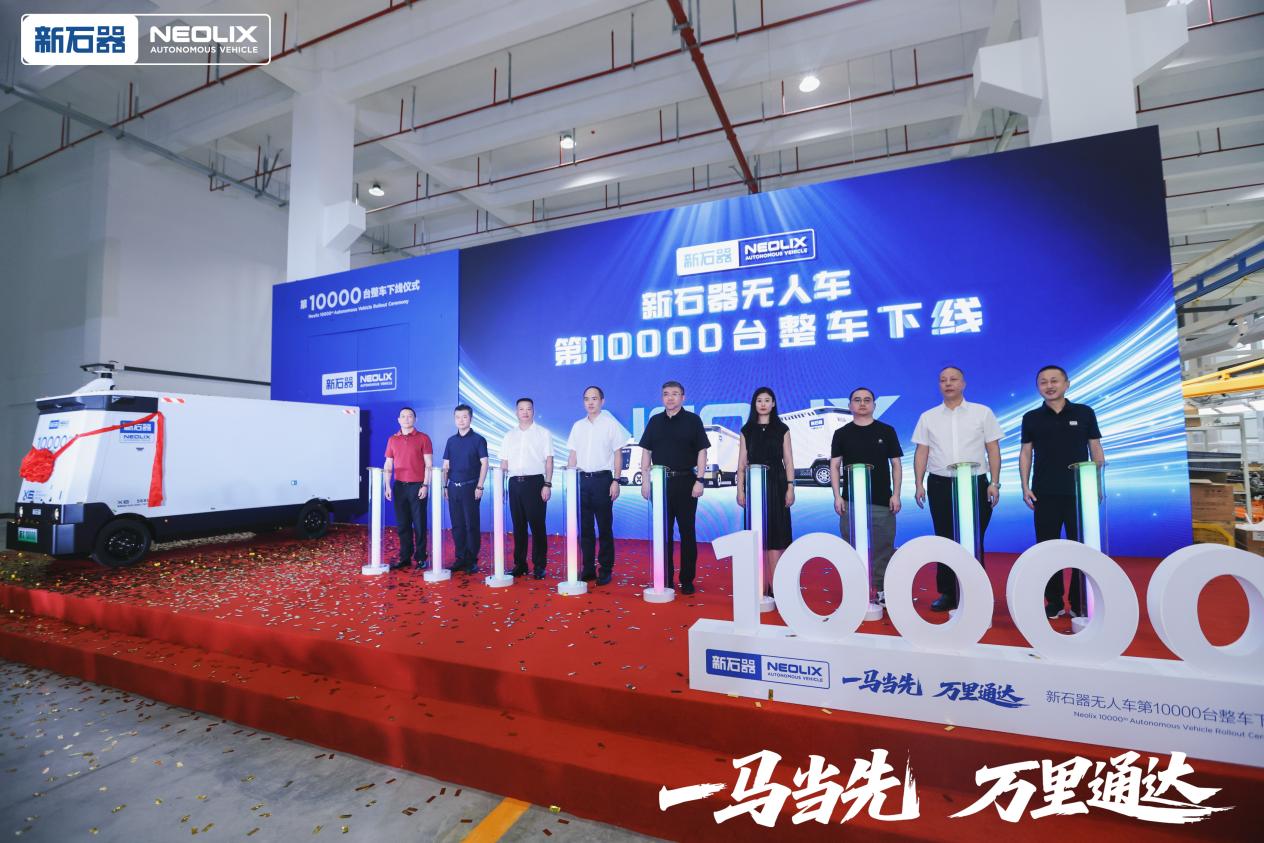
新石器完成1万台无人车下线交付
Zhong Guo Qi Che Bao Wang· 2025-09-24 06:33
9月23日,无人配送企业新石器无人车宣布,第10000台整车在浙江桐庐正式下线交付。桐庐作为民营快递之乡,聚集了3万多个覆盖全国且走向全球的 快递网点老板,在此设厂能贴近客户获取第一手需求反馈,还能吸引更多产业链上下游企业关注,形成产业集聚效应。 除快递场景外,新石器无人车还加速在即时物流、生鲜配送、医药冷链、团餐运输、社区零售等场景的部署,将成为新的增长驱动力。特别是今年下半 年以来,新石器通过与滴滴货运合作,向实时调度物流延伸。预计到今年底,新石器在快递以外场景的无人车铺设量将达4000至5000台,其中大部分用于实 时物流调度。 余恩源表示,公司原计划今年交付1万台,9-10月已提前一季度完成,剩余季度将保持2000台以上的产能和销量,全年有望突破1.5万台,力争年底现金 流转正,同时为明年国内4-5万台需求做产能准备,预计后年加上海外需求或超10万台。在海外布局上,余恩源强调中国在供应链上具有独特优势,美国等 海外竞品多仅具备算法但不具备供应链,整体成本是中国的10倍以上,目前新石器在中东、欧洲、东南亚等市场无海外竞对,但出海面临地方性法律法规及 本地化等挑战,难度堪比重新创业。 最近广东地区的台风天 ...
双星启新,畅享随行!一汽奔腾悦意双子星“畅享版”正式上市
Zhong Guo Qi Che Bao Wang· 2025-09-24 03:38
Core Viewpoint - The launch of the "Yueyi Twin Stars" models, the BenTeng Yueyi 07 and Yueyi 03, emphasizes long-range capabilities and high cost-performance ratios, providing users with greater travel freedom at lower price points [1][29]. Group 1: Product Launch Details - The BenTeng Yueyi 07, an "ultra-long-range T-powered hybrid SUV," is priced at 109,800 yuan, while the Yueyi 03, a "pure electric family SUV," is priced at 88,800 yuan, making them accessible options for consumers [1]. - The launch event featured a 82-hour live driving challenge, showcasing the vehicles' performance under real-world conditions [3]. Group 2: Performance and Efficiency - The Yueyi 07 achieved a maximum pure electric range of 243 km and a comprehensive range of 1,724 km, exceeding official ratings and setting a new benchmark for hybrid SUVs [3][4]. - The Yueyi 03 recorded a best performance of 486 km with a range achievement rate of 86%, demonstrating the reliability of its electric system [3]. Group 3: Technical Features - The Yueyi 07 boasts a thermal efficiency of 45.21% and an industry-leading electric drive efficiency of 92.5%, with a fuel consumption of only 3.9L/100km, resulting in a cost of less than 0.2 yuan per kilometer [8]. - The vehicle is equipped with a powerful engine, delivering 150 horsepower and a 0-100 km/h acceleration time of 6.9 seconds, ensuring strong performance during driving [8]. Group 4: Safety and Warranty - The Yueyi 07 features a robust body structure with 75% high-strength steel and a unique battery safety design, ensuring high levels of safety during collisions [13]. - Both models offer a lifetime warranty on the vehicle and its three electric systems, providing peace of mind for consumers without mileage limitations [24]. Group 5: Market Positioning - The Yueyi 03 stands out in its price range with a pure electric range of 565 km, significantly higher than competitors, allowing for less frequent charging during commutes [21]. - The launch reflects the company's commitment to making high-quality electric vehicles accessible to a broader audience, addressing consumer desires for convenience and freedom in daily travel [29].

40国驻华大使集体点赞极氪9X,卡塔尔大使当场下单极氪9X
Zhong Guo Qi Che Bao Wang· 2025-09-24 02:49
Core Insights - The recent luxury electric vehicle tasting event in Beijing showcased the Zeekr 9X, which received high praise from ambassadors of 40 countries, including Qatar, Saudi Arabia, and the UAE, highlighting China's advancements in high-quality electric vehicles [1][4] - The Zeekr 9X and Zeekr 009 Glorious Edition represent China's high-end luxury brand in the new energy era, emphasizing original flagship aesthetics, advanced technology, and luxurious experiences [4][11] Group 1 - The tasting event featured the Zeekr 9X, which impressed attendees with its design, luxury features, and low energy consumption due to its super hybrid solution [1][4] - Ambassadors expressed astonishment at the luxury and intelligence of the Zeekr 9X, with one ambassador even reciting a Chinese poem to convey their admiration [1][4] - The Zeekr 9X's spacious interior, innovative design inspired by ancient Chinese architecture, and advanced AI operating system were highlighted as key features that redefine luxury in the SUV segment [7][11] Group 2 - The Zeekr 9X achieved a record of 42,667 pre-orders within one hour of its announcement, indicating strong market demand and the potential to disrupt traditional luxury car brands [11] - The Zeekr 009 Glorious Edition, priced at 899,000 yuan, is positioned as a top-tier luxury vehicle, appealing to successful individuals and further solidifying Zeekr's presence in the high-end market [11] - The combination of the Zeekr 9X and Zeekr 009 aims to reshape the global luxury car market, showcasing China's capabilities in high-end manufacturing and design [11]

捷豹路虎因遭遇网络攻击停产延长
Zhong Guo Qi Che Bao Wang· 2025-09-24 02:48
塔塔汽车旗下的捷豹路虎因遭遇网络攻击,将停产延长至10月1日。此次停工影响了数千个工作岗 位,对英国汽车行业造成重大影响,波及Sonic Automotive(SAH, Financial)和Group 1 Automotive (GPI, Financial)等零售商。 ...
1000亿美元!这笔天价跨界投资背后究竟有何玄机?
Zhong Guo Qi Che Bao Wang· 2025-09-24 02:41
Core Viewpoint - Nvidia's investment of $100 billion in OpenAI to build large-scale data centers highlights the increasing overlap of interests among major tech companies in developing advanced AI systems [4][5] Investment Details - Nvidia announced a $100 billion investment in OpenAI on September 22, aimed at constructing data centers with a capacity of at least 10 GWh, equivalent to the electricity needs of over 8 million American households [4] - The investment is expected to provide OpenAI with the necessary funding and access to advanced chips, crucial for maintaining competitiveness in a rapidly evolving market [5] Computational Power and Future Economy - The collaboration is set to create a supercomputing cluster with a scale of 10 gigawatts, which will support the training of OpenAI's next-generation models, enabling breakthroughs in AI [5][10] - Nvidia's CEO emphasized that computational infrastructure will become the foundation of the future economy, with the partnership aimed at empowering both individuals and enterprises [5] Impact on Automotive Industry - The emergence of large-scale data centers is anticipated to revolutionize the automotive industry's approach to computational power, moving beyond traditional in-vehicle chip limitations [6] - The cloud-based supercomputing center will allow automakers to access vast computational resources, enhancing the capabilities of smart cockpits and accelerating the iteration of autonomous driving models [6][7] Data Utilization and User Experience - The supercomputing center will enable real-time analysis of massive amounts of data generated by connected vehicles, improving vehicle performance monitoring and personalized user services [7] - The shift towards cloud-based computational resources is seen as a critical factor in enhancing the safety and reliability of autonomous driving systems [6][7] Industry Trends and Technological Integration - The competition for computational power is becoming a focal point in the automotive industry, with partnerships between automakers and computational/data companies expected to become more common [8] - Companies are encouraged to adopt a "cloud-edge-end" collaborative research framework to leverage advanced computational capabilities for model training and optimization [9] Transformation of the Automotive Sector - The investment by Nvidia signifies a shift in the automotive industry from "mechanical civilization" to "digital civilization," emphasizing the importance of computational infrastructure as a core competitive advantage [10]


单点创新奔向聚合发展 ——记首届聚合智能产业发展大会
Zhong Guo Qi Che Bao Wang· 2025-09-24 02:40
Group 1 - The core idea is the integration and collaborative development of the automotive, intelligent robotics, and low-altitude flight industries, emphasizing the need for practical implementation beyond mere rhetoric [2][3] - The establishment of the first Aggregated Intelligent Industry Innovation Center and the Aggregated Intelligent Industry Committee (EAI100) in Wuhan signifies a commitment to fostering innovation in these interconnected sectors [2] - AI technology serves as the foundational layer for smart terminal products across these three industries, facilitating a shift from isolated industry perspectives to a more integrated approach [3] Group 2 - The three industries share commonalities in technology, supply chains, and applications, which can significantly reduce development costs through component reuse [3][4] - Current applications in urban management and intelligent transportation highlight the potential for diverse combinations of autonomous vehicles, drones, and robotics in logistics [4] - Despite the shared goals, the industries exhibit differences in development stages and specific technological requirements, necessitating tailored approaches for each sector [5] Group 3 - The development of low-altitude transportation faces challenges such as certification, testing, and complex urban environments, which require extensive flight testing and sophisticated modeling [6] - The concept of "aggregated development" aims to leverage the automotive supply chain advantages to enhance manufacturing capabilities in robotics and low-altitude flight [7] - Expanding into international markets is seen as a crucial strategy for the aggregated "three major components" to drive growth and competitiveness [8] Group 4 - The need for a collaborative approach among government, industry, academia, and research institutions is emphasized to address the multifaceted challenges in the aggregated intelligent industry [8] - The vision from automotive companies includes leveraging their strengths in manufacturing and supply chain management to foster an ecosystem for aggregated intelligent technology [9]

鸿蒙智行秋季上新,问界M9推银境紫新色,全新问界M7、尚界H5上市
Zhong Guo Qi Che Bao Wang· 2025-09-24 02:32
2025年9月23日,鸿蒙智行秋季新品发布会于深圳举办。问界M9推出全新车色"银境紫",全新问界M7、尚界H5两款重磅新品上市,进一步丰富 鸿蒙智行产品矩阵,满足用户多元化购车需求。华为以HarmonyOS为中心,构建鸿蒙办公、鸿蒙智家、鸿蒙智行、运动健康、影音娱乐五大智慧场 景。鸿蒙智行深度赋能中国智能电动汽车产业升级,AITO问界、LUXEED智界、STELATO享界、MAEXTRO尊界、SAIC尚界"五界聚势",携手赛 力斯、奇瑞、北汽、江淮、上汽等合作伙伴共征新程。 超50项功能全量升级,问界M9新色"银境紫"上市 本次发布会,全景智慧旗舰SUV问界M9带来全新车色-银境紫,满足客户对个性审美与时尚品味的双重追求。自上市以来,问界M9累计交付超24万 辆,18个月稳居50万以上市场销量冠军,更连续8个月蝉联大型SUV保值率第一,连续两期新能源全车型用户净推荐值第一。 享六座满载天伦,大五座尽享温馨,在此基础上,问界M9推出尊四座配置套装,搭配奢享零重力座椅套装、智能隐私车窗、电动踏板,彰显高端商务 尊贵风范。同时,问界M9全系升级华为乾崑智驾®ADS 4、新增泊车车外语音远程查看及对讲、手表手势开关门 ...

曝追觅科技在德国选址建设电动汽车工厂
Zhong Guo Qi Che Bao Wang· 2025-09-24 02:25
据外媒报道,追觅科技计划在德国选址建设电动汽车工厂,并已经走访了德国的一些选址,明确将 重点放在勃兰登堡州,靠近特斯拉的德国工厂。据悉,新工厂预计将于2027年完工,规模将超过特斯拉 德国的超级工厂。 ...
