
Zhong Guo Qi Che Bao Wang

Search documents
吉利全球全域安全中心正式启用,以开放协同助力汽车安全产业升级
Zhong Guo Qi Che Bao Wang· 2025-12-13 00:58
Group 1 - Geely has officially launched its Global All-Domain Safety Center, which covers an area of over 80,000 square meters and includes 27 categories of testing capabilities, making it the largest and most functionally diverse automotive safety testing facility in the world, setting five Guinness World Records [2] - The center will be open for collaboration across the entire industry to promote resource sharing and technological synergy [2] Group 2 - The "All-Domain Safety 2.0" technology system was introduced, which expands the traditional vehicle safety perspective to an ecological safety view encompassing "people-vehicle-road-cloud-star" through the integration of AI technology [4] - Geely, in collaboration with 11 industry and academic institutions, has released the "Intelligent Vehicle All-Domain Safety Development White Paper" to guide the innovation of automotive safety technology and support the establishment of standardized safety systems for the high-quality development of China's automotive industry [4]



商务年会透变局:商用车行业迈入 “价值竞争” 新周期
Zhong Guo Qi Che Bao Wang· 2025-12-12 14:57
Core Insights - The commercial vehicle industry in China is transitioning from a focus on scale competition to value competition, emphasizing new energy, intelligence, service models, and market layout as key dimensions for future growth [1][5] Group 1: New Energy Development - The penetration rate of new energy vehicles is shifting from policy-driven to market-driven, with significant growth expected in sales and market share [2] - Shaanxi Heavy Truck aims for over 25,000 new energy heavy trucks sold in 2025, a 260% increase year-on-year, with a market share target of 35%-40% by 2026 [2] - Weichai has raised its 2026 sales target for new energy vehicles from 20,000 to 61,000 units, while JAC's new energy light trucks are now among the top three in the industry [2] Group 2: Intelligent Solutions - The focus of intelligence in commercial vehicles is shifting from mere technological showcases to practical value realization through operational scenarios [3] - JAC's "Smart Anticipation" AI system utilizes vehicle networking data for fault warnings and maintenance planning, creating a service loop [3] - Foton is integrating smart technologies to address operational pain points in key scenarios, enhancing transport efficiency and safety [3] Group 3: Service Model Transformation - Leading companies are transitioning from being "single product suppliers" to comprehensive solution providers, extending their service chains to meet evolving customer demands [4] - The shift in market dynamics from "incremental competition" to "stock game" reflects a need for integrated solutions rather than just vehicle sales [4] - Collaborative ecosystems are becoming essential for companies to navigate industry cycles, with various firms forming alliances and integrating services [4] Group 4: Market Strategy - The domestic market is optimizing its structure, with companies focusing on niche segments rather than broad offerings, such as Shaanxi Heavy Truck's focus on high-power tractors and new energy dump trucks [5] - The overseas market is emerging as a critical growth area, with Weichai setting a target of 130,000 units for 2026, indicating a shift from product export to ecosystem expansion [5] - The overall transformation in the commercial vehicle industry is marked by a move from scale-driven to value-driven strategies, emphasizing user needs and ecosystem collaboration [5]
危货运输车辆安全标准迎来重大升级
Zhong Guo Qi Che Bao Wang· 2025-12-12 14:55
02 合规化发展成行业主旋律 随着此次新国标的落地实施,危化运输行业将迎来"安全门槛"的全面提升,合规将不再是底线,而 是生存必备前提。 危化运输行业迎来重大变革。强制性国家标准GB21668-2025《危险货物运输车辆安全技术条 件》已发布,并将于2026年7月1日正式实施。作为全面替代GB21668-2008等三项旧标的新规, GB21668-2025实现了对危险货物运输车辆安全技术要求的统一整合与全面提升,将推动我国危险 货物道路运输车辆安全管理进入标准化、系统化升级新阶段。 01 构建全方位安全保障体系 危化品运输链条长、环节复杂,对安全管理有着极高要求。GB21668-2025结合近年来危险货物运 输行业发展现状与事故防控需求,进行了多维度的技术升级与内容完善,构建了覆盖车辆设计、制造、 使用全生命周期的安全技术体系,其核心升级直指行业痛点。 具体而言,在外观视觉标识方面,针对此前各种危险货物运输车辆的外观标识不一致、不齐全的问 题,新国标作出系统性改进,建立了由反光标识、橙色反光带、限速标识、安全标示牌等多元素构成的 视觉警示体系,同时将标识内容扩展至限速、危险货物联合国编号,危险性以及施救方法等 ...
专属保险牵头制定国内首个《机动车燃油加油事故处置技术规范》
Zhong Guo Qi Che Bao Wang· 2025-12-12 13:44
Core Viewpoint - The introduction of the first technical standard for handling fuel refueling accidents in China aims to address the long-standing issues of lack of unified norms, responsibility delineation, and disputes in the industry, thereby enhancing safety and efficiency in fuel refueling operations [1][4][8] Group 1: Industry Context - As of September 2025, the number of motor vehicles in China reached 465 million, with fuel vehicles still dominating the market, leading to over 6 billion refueling incidents annually [1] - The lack of standardized procedures for handling fuel refueling accidents has resulted in difficulties in defining responsibilities, inconsistent repair standards, and frequent compensation disputes [4][6] Group 2: Development of the Standard - The technical standard, titled "Technical Specification for Handling Motor Vehicle Fuel Refueling Accidents" (T/CAMRA 031-2025), was jointly developed by PetroChina Exclusive Property Insurance Co., Ltd. and the China Automobile Maintenance Industry Association [1][6] - The standard was created after collecting over a thousand accident cases from the past three years, highlighting the challenges faced by repair enterprises due to the absence of unified fault determination methods and standards [4][6] Group 3: Implications of the Standard - The new standard provides a comprehensive operational guideline from accident definition to repair operation points, marking a significant step towards standardized procedures in the industry [6][8] - It aims to enhance the safety level of oil and gas retail enterprises and improve the operational efficiency of over 300,000 frontline gas station employees [6][8] - The standard serves as a guide for consumers, clarifying the judgment of accident outcomes, repair methods, and compensation bases, thus facilitating consumer rights protection [8] Group 4: Future Actions - The insurance company plans to conduct training sessions to promote the implementation of the standard in gas stations and automotive repair enterprises [8] - There is an ongoing commitment to explore and promote more specialized technical standards to further enhance safety levels within the industry [8]

浩思动力荣获美国汽车新闻PACE大奖
Zhong Guo Qi Che Bao Wang· 2025-12-12 09:01
2025年,浩思动力旗下公司极光湾科技于近日一举斩获有着全球"汽车界奥斯卡"之称的Automotive News (美国汽车新闻)颁发的汽车供应商杰出 贡献奖-PACE大奖。 该奖项评审专家在颁奖词中指出,极光湾科技混动系统突破了传统混动技术的性能瓶颈,通过3DHT100变速箱与BHE15混动发动机的深度协同,实现 了动力性能、燃油效率与系统紧凑性的完美平衡。 该创新技术在全球范围内已获得多个国家的专利授权,其独创的三挡串并联架构与嵌入式行星齿轮设计,将混动系统的扭矩密度提升至行业领先的 41N·m/kg,轴向长度却缩短至354mm,为不同级别的车型提供了灵活高效的解决方案。 BHE15混动专用发动机,采用涡轮增压、米勒循环与低压中冷EGR技术,在1.5L排量下实现了168N·m/L的升扭矩指标。配合3DHT100变速箱的智能能 量管理策略,搭载该系统的星越L智擎车型在WLTC工况下油耗仅为4.79L/100km,0-100km/h加速时间7.9秒,综合性能全面领先同级竞品。这种小排量大性 能的技术突破,为汽车行业应对排放法规与动力需求的双重挑战树立了创新标杆。 在行业层面,浩思动力的混动系统的创新不仅改写了 ...

多款核心车型升级上市 梅赛德斯-奔驰奔赴豪华新程
Zhong Guo Qi Che Bao Wang· 2025-12-12 08:37
Core Insights - Mercedes-Benz has announced a significant upgrade for several core models, including long-wheelbase C-Class, E-Class, S-Class sedans, and GLB, long-wheelbase GLC, and GLS SUVs, introducing classic, special, and collector's editions to meet the luxury travel demands of Chinese consumers [1][14] Product Matrix Expansion - The upgrade features a substantial expansion of the product matrix, with new models added to cater to diverse consumer needs across various price ranges and usage scenarios [3] Sedan Lineup Enhancements - The long-wheelbase C-Class introduces the C 260 L Sport Sedan special edition, focusing on personalized experiences; the long-wheelbase E-Class adds the E 260 L classic version, optimizing price and configuration for high cost-performance; the flagship S-Class includes the S 400 L special edition and S 400 L Business special edition, lowering the entry barrier for luxury sedans [5] SUV Family Updates - The GLB SUV launches the GLB 220 Collector's Edition with unique features; the long-wheelbase GLC SUV adds the GLC 260 L 4MATIC classic version as a new entry-level option; the GLS SUV enhances configuration differentiation while maintaining off-road performance and luxury [5][7] Pricing Strategy - The suggested retail prices for the upgraded models range from 311,900 to 1,398,200 yuan, covering the mainstream luxury automotive market; the long-wheelbase C-Class starts at 338,300 yuan, the E 260 L classic version is priced at 429,900 yuan, and the S 400 L special edition is set at 898,800 yuan, ensuring a clear and comprehensive pricing structure [7] Intelligent and Comfort Upgrades - The product upgrades focus on enhancing intelligent technology and comfort features across all models, with significant improvements in standard configurations while maintaining safety standards [8][14] Intelligent Features - The long-wheelbase C-Class is the first in its class to feature the Qualcomm 8295 smart cockpit chip and the third-generation MBUX human-machine interface system, along with the new "mind-reading voice assistant"; the E-Class family includes the third-generation MBUX system, Qualcomm 8295 chip, and 5G connectivity for improved voice interaction and navigation [8][10] Comfort Features - Heated front seats are standard across the long-wheelbase C-Class, E 260 L, GLB SUV, and long-wheelbase GLC SUV mid-high configurations; additional comfort features like ventilated seats and 360° camera parking assist are widely available across various models [12] Safety Standards - Mercedes-Benz maintains high industry safety standards, with the long-wheelbase E-Class featuring 13 airbags and rigorous testing protocols for new models, including extensive simulation and real-world crash tests [14]

全面发力商用车动力市场 潍柴蹚出了新路径
Zhong Guo Qi Che Bao Wang· 2025-12-12 07:33
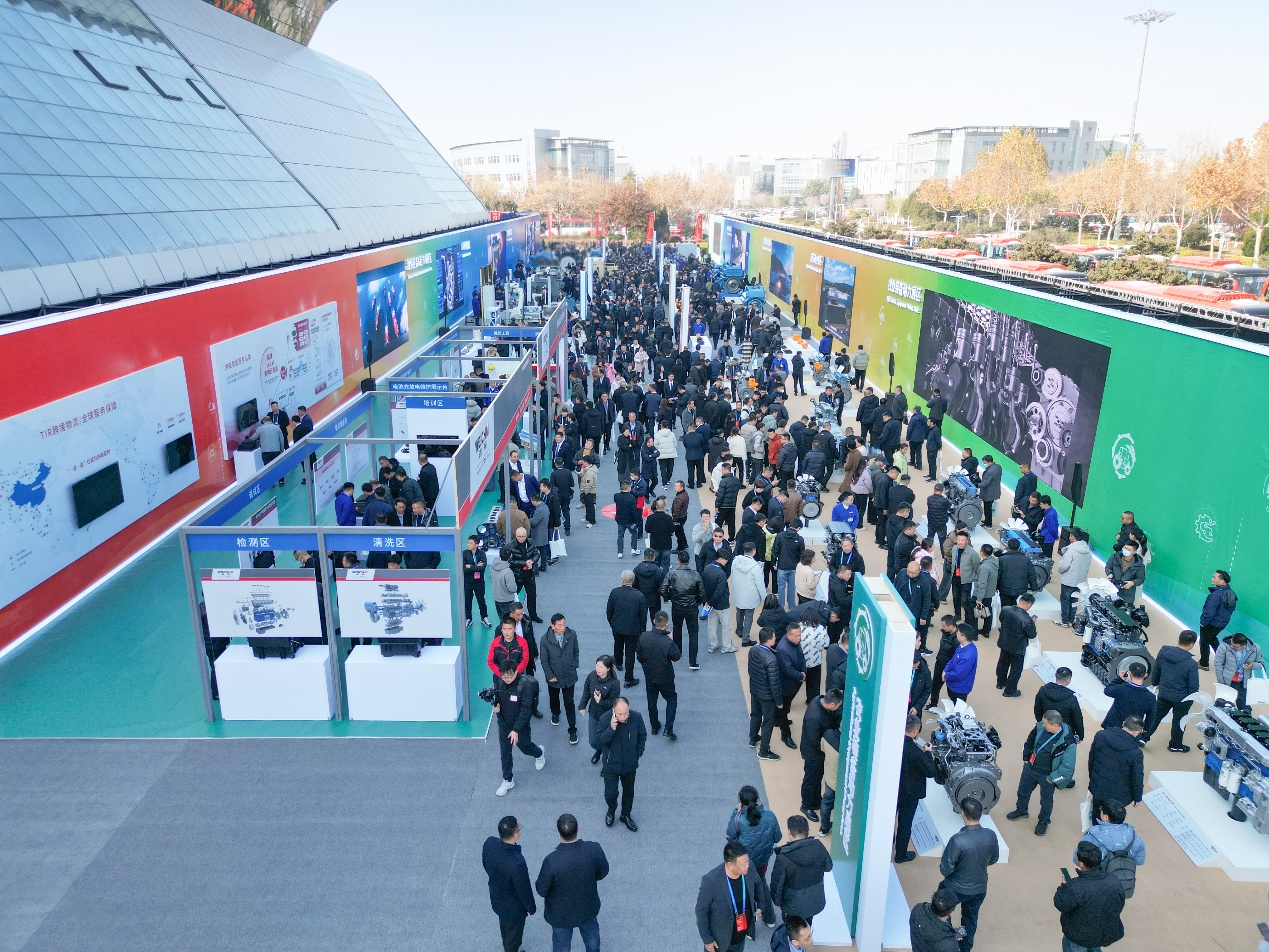
Core Viewpoint - Weichai has established a new path for "Chinese manufacturing" towards high-quality development, showcasing its comprehensive layout in both traditional and new energy sectors through the launch of seven new products at its 2026 business conference [1] Market Position and Growth - Weichai has achieved comprehensive growth in the commercial vehicle power market, maintaining a market share of 34% in heavy-duty engines with projected sales of 270,000 units by 2025, and leading the gas power sector with a 55% market share and sales exceeding 110,000 units [3][4] - The company has also projected a 10% year-on-year increase in light truck sales, expecting to surpass 710,000 units, and aims for a 52% market share in the bus segment with sales of 25,000 units [3] Product Development and Innovation - Weichai has achieved full coverage of 2-17L power in the commercial vehicle sector, launching the world's first diesel engine with thermal efficiency exceeding 53%, and introducing new high-power products aimed at enhancing fuel efficiency [4][6] - The company emphasizes transforming technical advantages into actual user benefits, with the NG4.0 platform expected to sell over 30,000 units by 2025, reflecting strong market trust and economic returns for truck drivers [6] New Energy Strategy - Weichai is positioning itself for future growth in the new energy sector, with plans for its new energy industrial park to generate sales exceeding 3.5 billion yuan in 2025 and a projected 170% increase in battery sales [10][12] - The company has developed a comprehensive product matrix in the new energy sector, including over 100 battery products and 30 motor products, focusing on safety, durability, efficiency, and lightweight design [12] Collaboration and Industry Leadership - Weichai calls for collaboration with partners to navigate the challenges of the evolving commercial vehicle industry, emphasizing the importance of market insight, service collaboration, and data sharing [13] - The company aims to build a resilient industrial ecosystem through a complete layout of traditional and new energy products, continuous optimization of classic products, and tailored services [13]
追光,成为光:岚图誓破豪华轿车市场格局
Zhong Guo Qi Che Bao Wang· 2025-12-12 07:17
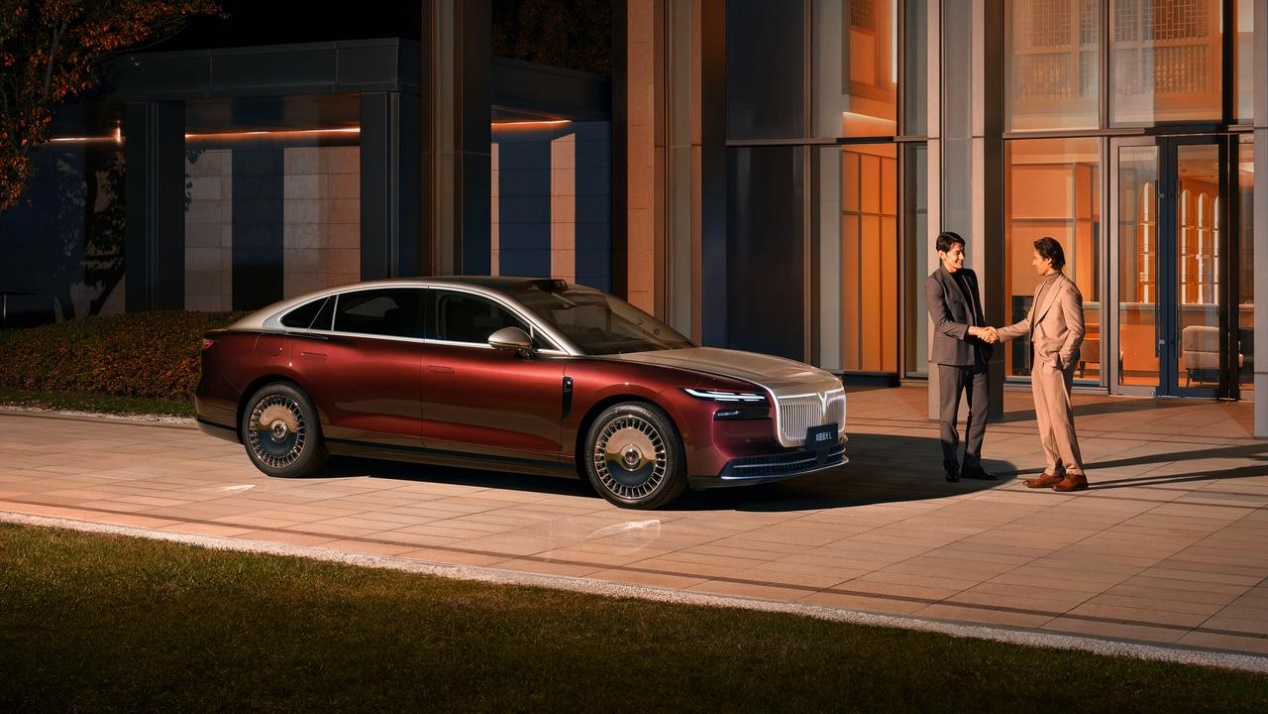
Core Viewpoint - The launch of the Lantu Zhaiguang L, priced between 279,900 and 309,900 yuan, marks a significant milestone for Lantu as it aims to disrupt the traditional luxury fuel vehicle market in China [1][3]. Group 1: Product Launch and Market Positioning - Lantu Zhaiguang L is positioned as a flagship electric sedan, reflecting Lantu's ambition to lead the luxury car segment in China [1][3]. - The vehicle is part of Lantu's strategy to enhance the image of Chinese automotive brands, particularly in the luxury sedan market, which has been dominated by German and Japanese brands [6][11]. Group 2: Technological Advancements - Lantu has developed five major technological foundations during the 14th Five-Year Plan, including an 800V intelligent super hybrid system and a high-strength body [6][10]. - The Zhaiguang L features advanced specifications such as a 4.9L/100km fuel consumption rate and a million-level magic carpet chassis, showcasing Lantu's commitment to high-quality product offerings [10][11]. Group 3: User-Centric Approach - Lantu emphasizes a user-oriented approach, continuously adapting products based on user feedback and market changes [7][10]. - The design philosophy of the Zhaiguang L incorporates Chinese aesthetics, aiming to resonate with local consumers while gaining international recognition [7][10]. Group 4: Competitive Landscape - Despite advancements, Lantu acknowledges the challenges in changing consumer perceptions of domestic luxury sedans, which have historically been influenced by established foreign brands [8][10]. - Lantu aims to differentiate itself by providing tangible luxury experiences rather than relying solely on brand storytelling [10][11]. Group 5: Global Expansion Strategy - Lantu plans to expand its global presence, targeting 500 sales service points across 60 countries by 2030, with a focus on Europe and the Middle East [15][16]. - The company has already entered 39 overseas markets and aims to enhance its brand recognition and sales internationally [15][16]. Group 6: Future Outlook - Lantu's leadership emphasizes the importance of technological innovation and user service in enhancing brand value and competitiveness in the global market [14][15]. - The successful launch of the Zhaiguang L completes Lantu's flagship product lineup, marking a step forward in its high-end and luxury branding strategy [16].
欧盟6.23亿欧元支持德国新建两家芯片厂,力避车企再“芯荒”?
Zhong Guo Qi Che Bao Wang· 2025-12-12 06:01
Core Viewpoint - The European Commission has approved a €623 million (approximately $729.16 million) aid package from the German government to support the construction of two semiconductor manufacturing plants in Germany, aimed at bolstering the automotive chip ecosystem in Europe [3][4]. Group 1: Impact on Automotive Chip Supply - The aid is seen as a crucial step for the EU in building a self-sufficient semiconductor supply chain, addressing the ongoing chip shortage in the automotive industry exacerbated by the "Nexperia incident" and other supply chain issues [5]. - The funding includes €495 million for GlobalFoundries to expand its foundry capacity, focusing on producing 28nm and more advanced chips essential for automotive electronics, which currently meet only 30% of local demand [5]. - X-FAB will receive €128 million to establish an open chip foundry, providing flexible manufacturing resources for small design firms, thereby lowering entry barriers for automotive Tier 1 suppliers [5]. Group 2: Addressing Manufacturing Shortcomings - Germany has historically relied on Asian and American suppliers for semiconductor needs, revealing vulnerabilities during the global chip shortage that led to over a million vehicle production cuts [6]. - The new plants will target automotive-grade chips, including power semiconductors and microcontrollers, which are critical for vehicle performance and safety [6]. - The initiative aims to transform Germany's position in the global automotive chip supply chain, moving from reliance on imports to local production capabilities [6]. Group 3: Short-term and Long-term Benefits - The construction of these plants is expected to provide immediate capacity relief for the German and European automotive industries, with production anticipated to start between 2027 and 2028 [7]. - Local production will significantly reduce supply chain response times, addressing the logistical challenges posed by long shipping times from Asia [7]. - In the long term, these facilities will enhance the integration of research and development with manufacturing, ensuring that chip production keeps pace with evolving automotive technology [8]. Group 4: Future Projections and Strategic Goals - Experts predict that by 2030, Europe's self-sufficiency in automotive chips could rise from 35% to 55%, reducing dependence on external suppliers and enhancing the region's bargaining power in the global supply chain [9]. - The initiative aligns with the EU's broader goal of achieving 20% of global semiconductor production by 2030, moving away from the "design in Europe, manufacture in Asia" model [10]. - The EU's conditional subsidy model may inspire similar strategies in other countries, potentially leading to a new wave of regional industrial policy competition [11].

“智驾神器”还是“凶器”?法规是不可逾越的红线!
Zhong Guo Qi Che Bao Wang· 2025-12-12 04:32
Core Viewpoint - The rise of "smart driving" technology is being undermined by the emergence of devices that deceive vehicle assistance systems, posing significant risks to road safety and legal compliance [3][4][5] Group 1: Industry Impact - The so-called "smart driving device" can trick the vehicle's assistance system into believing the driver's hands are on the wheel, allowing for hands-free driving without alerts [4] - Testing has shown that vehicles equipped with these devices can ignore traffic signals and fail to respond to obstacles, leading to severe accidents [4][5] - The use of these devices has been linked to a 70% increase in accident fatality rates when the assistance system is compromised [5] Group 2: Legal and Regulatory Aspects - The production, sale, and use of these devices are illegal under various laws, including the Criminal Law and the Road Traffic Safety Law [6] - Manufacturers and sellers of these devices face severe penalties, including imprisonment and fines, especially if their products lead to serious accidents [6] - Regulatory bodies are urged to enhance legislation and monitoring to prevent the sale and use of such dangerous products [7] Group 3: Technological Responses - Automotive companies are accelerating technological advancements to counter the challenges posed by these deceptive devices [8] - Some companies are implementing systems to monitor driver engagement with the steering wheel and using infrared cameras to assess driver attention [8] - There is a push for stricter technical standards to ensure the integrity and anti-tampering capabilities of smart driving systems [7]
