
Qi Huo Ri Bao Wang

Search documents
生态环境部:全国碳排放权交易市场累计成交额达489.61亿元
Qi Huo Ri Bao Wang· 2025-09-19 08:48
Core Insights - The press conference highlighted the importance of high-level ecological protection in promoting high-quality development, with a focus on climate change as a significant global challenge [1][2] - The Ministry of Ecology and Environment has made substantial progress in establishing a national carbon market, which is now the largest in the world, covering over 60% of the country's carbon dioxide emissions [1][2] Group 1: Carbon Market Development - The national carbon emissions trading market has achieved a cumulative trading volume of 714 million tons and a total transaction value of 48.961 billion yuan as of September 18, 2025 [2] - The market has seen improvements in the standardization, accuracy, and timeliness of carbon emissions data statistics [2] - The carbon market is recognized as a significant measure for achieving carbon peak and carbon neutrality, enhancing China's efforts to address climate change [2] Group 2: Regulatory Framework - The Ministry has initiated the establishment of a voluntary greenhouse gas reduction trading market and has issued several key documents to support the carbon market's development [1] - Over 30 regulatory measures have been formulated, contributing to a multi-tiered and relatively complete regulatory framework for the carbon market [1]
发挥期货市场功能助力镍产业链精细化管理
Qi Huo Ri Bao Wang· 2025-09-19 00:51
Group 1 - The seminar focused on the current status and development trends of the nickel industry, emphasizing the role of the futures market in supporting high-quality development and refined management within the nickel sector [1] - China is the main driver of global nickel consumption, with demand continuing to rise, while Indonesia serves as the primary source of nickel imports for China, making its supply and price fluctuations critical for the nickel market [1] - The policies of resource countries, particularly Indonesia, significantly influence pricing and cost structures in the nickel industry, with recent changes in Indonesian wet smelting processes impacting nickel product costs and profit margins [1] Group 2 - The supply-demand balance for nickel is projected to show a surplus of 154,000 tons globally and 190,000 tons in China by 2025, indicating a significant increase in supply surplus compared to the previous year [2] - Different operational conditions across the nickel industry's upstream, midstream, and downstream sectors necessitate tailored hedging strategies to stabilize production and operations [2] - The futures market has proven essential for stabilizing the nickel industry amid global economic uncertainties, with significant trading volumes and the introduction of nickel options enhancing price management capabilities for companies [3] Group 3 - In 2024, the nickel futures market recorded a total trading volume of 62.459 million contracts, with a transaction value of 840 billion yuan, indicating robust market activity [3] - The introduction of nickel options has seen a cumulative trading volume of 5.31 million contracts in the first half of 2025, with a daily average of 45,400 contracts, reflecting strong market participation [3] - The effective use of futures and options can help companies lock in raw material costs, stabilize operations, and enhance overall operational efficiency and risk management [3]
引领期货行业迈向高质量发展新征程
Qi Huo Ri Bao Wang· 2025-09-19 00:49
服务国家战略,担当时代使命 本次修订坚持协调统一,优化了加分体系。将市场竞争力指标调整为3大类9项,有利于全面评价期货公 司各项业务开展情况、整体盈利水平和资本实力。完善服务实体经济能力指标,将征求意见稿中"中长 期资金客户"表述调整为"机构客户",同时进一步扩充了机构客户类别,使指标更具包容性。调整了专 项评价,将专项评价整合和优化为服务国家战略、党建与文化建设、信息技术建设3项指标。 透过这些加分项,可以清晰地洞察监管导向。期货公司要不断强化自身综合能力建设,充分彰显专业价 值;同时,积极服务国家战略,切实发挥功能性作用;此外,还需主动承担社会责任,积极投身行业文 化建设,为期货行业的健康、可持续发展贡献力量。 9月12日,中国证监会公布对《期货公司分类监管规定》进行修订后形成的《期货公司分类评价规定》 (下称《规定》)。这是期货行业监管领域的一件大事,引发了行业内外的广泛关注与深入思考。《规 定》勾勒出了一幅"怎样的期货公司才是好公司"的清晰蓝图,是期货行业发展的"指挥棒"和"风向标"。 此次修订是贯彻落实党的二十届三中全会、中央金融工作会议和《关于加强监管防范风险促进期货市场 高质量发展的意见》要求的 ...
8月经济“成绩单”出炉稳增长政策加码可期
Qi Huo Ri Bao Wang· 2025-09-19 00:49
Economic Overview - In August, China's economic growth showed signs of slowing down, but overall economic operation remained stable due to coordinated macro policies [1][7] Production Sector - In August, the industrial added value above designated size grew by 5.2% year-on-year, down from 5.7% in the previous month, and 0.37% month-on-month [2] - From January to August, the industrial added value increased by 6.2% year-on-year, slightly lower than the previous value of 6.3% [2] - 31 out of 41 major industries maintained year-on-year growth in added value, with high-tech sectors like integrated circuit manufacturing and electronic materials showing growth rates exceeding 20% [2] Consumption Sector - In August, the total retail sales of consumer goods reached 39,668 billion yuan, growing by 3.4% year-on-year, down from 3.7% previously, but showing a month-on-month increase of 0.17% [3] - From January to August, total retail sales amounted to 323,906 billion yuan, with a year-on-year growth of 4.6% [3] - The slowdown in retail sales growth was primarily due to significant declines in the sales of home appliances, furniture, and communication equipment, influenced by factors such as reduced subsidies and high base effects [3] Investment Sector - From January to August, fixed asset investment (excluding rural households) totaled 326,111 billion yuan, with a year-on-year growth of 0.5% [5] - Infrastructure investment showed a cumulative year-on-year growth of 2.0%, while real estate development investment declined by 12.9% [5] - High-tech manufacturing investment maintained robust growth, with sectors like information services and aerospace manufacturing seeing increases of 34.1% and 28.0% respectively [5] Future Outlook - Infrastructure investment is expected to rebound in September, supported by accelerated fiscal spending and improved operational conditions [6] - The real estate market is anticipated to stabilize as major cities adjust purchasing policies and promote urban renewal projects [6] - The coordinated fiscal and monetary policies in the fourth quarter are expected to focus on stabilizing investment and promoting consumption, aiding in achieving the annual economic growth target of around 5% [7]
货币政策预期博弈游戏或刚开始
Qi Huo Ri Bao Wang· 2025-09-19 00:46
Core Viewpoint - The Federal Reserve has restarted interest rate cuts, lowering the federal funds rate target range by 25 basis points to 4.00%-4.25%, marking the first rate cut of the year, driven by weak economic data and easing inflation pressures [1][2] Economic Conditions - The Fed's decision reflects a recognition of the deteriorating labor market, with employment growth slowing and unemployment rates rising, which has become a significant factor in the rate cut [3] - Despite the rate cut, the Fed's actions are seen as lagging behind the European Central Bank, and inflation remains a core constraint on further rate reductions, with upward adjustments in inflation expectations for the next two years [3][4] Real Estate Market - The U.S. real estate market is showing signs of cooling, with weak demand and low existing home sales, which directly impacts monetary policy decisions [4] Political Influences - Political uncertainties may influence the pace of rate cuts, but the Fed's independence is expected to maintain a gradual adjustment policy, despite external pressures from political figures [5][6] - The internal decision-making dynamics within the Fed reveal complexities, with notable divisions among members regarding the extent and timing of future rate cuts [5][6]
资金动态20250919
Qi Huo Ri Bao Wang· 2025-09-19 00:38
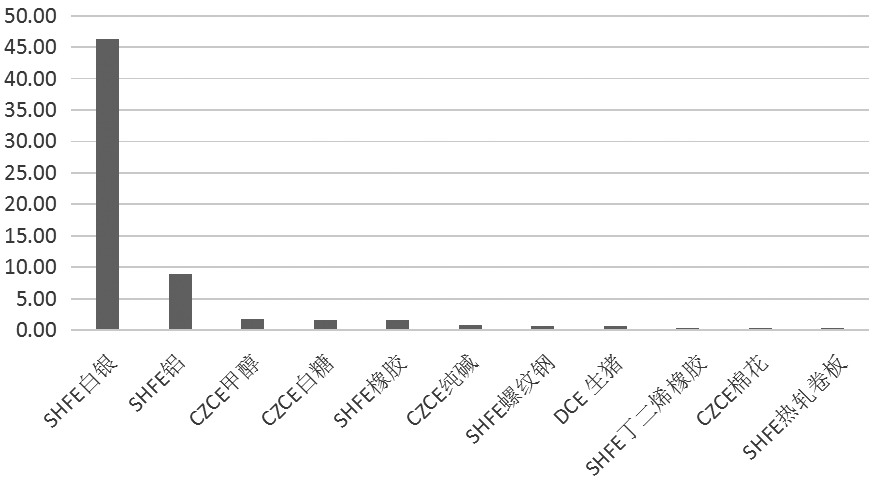
Group 1 - The main inflow of funds in commodity futures yesterday was observed in silver, aluminum, methanol, sugar, and rubber, with inflows of 4.622 billion, 0.900 billion, 0.184 billion, 0.159 billion, and 0.155 billion respectively [1] - The main outflows were seen in gold, copper, coking coal, palm oil, and soybean oil, with outflows of 1.061 billion, 0.850 billion, 0.393 billion, 0.148 billion, and 0.127 billion respectively [1] - Overall, there was a significant inflow of funds in commodity futures, particularly in the non-ferrous metals and chemical sectors, while the black, agricultural, and financial sectors experienced outflows [1] Group 2 - The focus should be on the significant inflows in silver, aluminum, methanol, and rubber, while also monitoring the outflows in gold, copper, alumina, lithium carbonate, and styrene [1] - In the black and agricultural sectors, attention should be given to the major outflows in coking coal, palm oil, and soybean oil, alongside the inflows in sugar and live pigs [1] - The financial sector highlights the importance of monitoring the CSI 1000 index futures and 30-year treasury futures [1]

上期所发布国际铜保税标准仓单等挂牌基准价
Qi Huo Ri Bao Wang· 2025-09-18 17:38
(文章来源:期货日报网) 9月18日,上期所发布通知称,根据《关于上期综合业务平台国际铜品种保税标准仓单交易上线有关事 项的通知》的相关内容,国际铜品种保税标准仓单交易的挂牌基准价为70760元/吨;根据《关于上期综 合业务平台氧化铝品种标准仓单交易上线有关事项的通知》的相关内容,氧化铝品种标准仓单交易的挂 牌基准价为2923元/吨。 ...
“银期保”为大豆种植筑起一道风险防线
Qi Huo Ri Bao Wang· 2025-09-18 17:38
Core Viewpoint - The "Yinqi Bao" project in Nenjiang has successfully provided financial protection to local soybean farmers against extreme weather and market fluctuations, demonstrating the effectiveness of the "insurance + futures" model in agricultural risk management [1][2][4]. Group 1: Project Overview - The "Yinqi Bao" project was implemented in 2024 to support soybean farmers in Nenjiang, which faced a severe drought that reduced soybean yield by 16.17% [1][2]. - The project involves collaboration among various stakeholders, including futures companies, insurance providers, banks, and grain trading companies, creating a comprehensive risk management ecosystem [2][3]. Group 2: Financial Details - The project provided income insurance for 6,000 acres of soybeans, with a target price of 4,500 yuan/ton and a total premium of 1.8936 million yuan [2]. - Due to the drought and price drop, the cooperative received a total compensation of 2.5614 million yuan, which was 135.3% of the insured amount, effectively covering the income gap caused by the adverse conditions [4][5]. Group 3: Mechanisms and Innovations - The project features a "three-card integration" account management model, ensuring efficient fund flow and timely payments for loans and insurance claims [3]. - It includes a secondary pricing mechanism that allows farmers to benefit from potential price rebounds after the harvest, enhancing their income security [3][6]. Group 4: Future Prospects - The cooperative plans to expand its participation in the "Yinqi Bao" program to include corn and soybeans for 2025, indicating strong confidence in the model [5]. - The "insurance + futures" model has evolved over ten years, aiming to enhance its coverage and flexibility while contributing to national food security and agricultural modernization [7].
畅通“产业血脉” 夯实发展之基
Qi Huo Ri Bao Wang· 2025-09-18 17:38
Core Insights - The article highlights the role of futures company branches as frontline entities that connect directly with clients, emphasizing their importance in injecting financial momentum into various segments of the industrial chain [1] Group 1: Service Framework and Strategies - Three futures company branches have established unique service frameworks tailored to their respective industrial sectors, leveraging headquarters resources and regional advantages [2] - New Lake Futures has developed a "1+6" service model that provides a solid framework for industry service [2] - Huatai Futures utilizes its proximity to industries and integrates local government and associations to offer comprehensive "futures + spot" solutions [2] - Guotou Futures emphasizes a deep understanding of the polyester textile business, enabling quick cooperation with clients and providing timely, efficient services [2] Group 2: Training and Client Engagement - New Lake Futures offers diverse services for energy and chemical clients, including weekly online events and personalized training sessions [3] - Huatai Futures has established an "online + offline" training system to enhance client understanding of futures tools [3] - Guotou Futures conducts systematic market cultivation through online classes and industry meetings to improve client engagement and understanding of futures [4][7] Group 3: Practical Outcomes and Client Solutions - Huatai Futures provided targeted services during the 2024 cotton price fluctuations, advising clients on hedging strategies that effectively reduced losses [5] - Guotou Futures tailored a hedging strategy for polyester factories facing high costs and weak demand, helping them stabilize their operations [6] Group 4: Challenges and Client Education - There are significant disparities in the understanding and use of futures tools among different-sized enterprises, with larger firms having more experience compared to smaller ones [6] - New Lake Futures is addressing these challenges by offering personalized services and organizing educational activities to enhance client knowledge [6] Group 5: Future Development Plans - New Lake Futures plans to enhance communication platforms and focus on risk management services to better serve clients [8] - Huatai Futures aims to develop industry experts and simplify hedging solutions while integrating financial products to address financing challenges [8] - Guotou Futures will focus on enhancing off-exchange derivative services and cultivating talent to support the polyester textile industry [9]