
Qi Huo Ri Bao Wang

Search documents
一个期货高手的生存法则
Qi Huo Ri Bao Wang· 2025-10-29 01:01
Core Insights - The article highlights the trading philosophy and success of Sun Hui, a champion in the national futures trading competition, emphasizing his calmness and proactive profit-taking strategy in volatile markets [1][2]. Group 1: Trading Philosophy - Sun Hui's trading philosophy is summarized in eight characters: "proactive profit-taking, withdrawing profits" which contrasts with the popular "compound interest myth" in the market [5]. - He believes that continuous victories are more important than a perfect profit-loss ratio, indicating a focus on consistent performance rather than just maximizing returns [6]. Group 2: Trading Strategy - Sun Hui prefers trading large commodities related to macroeconomic factors, such as gold, silver, and crude oil, as they provide clearer supply-demand information and test traders' ability to interpret information [6]. - His trading method involves determining the macro direction and using technical analysis for entry and exit points, emphasizing the importance of practical experience and self-learning [6]. Group 3: Risk Management - Sun Hui stresses the importance of decisive stop-loss measures, viewing them as essential for a trader's survival, and shares a significant experience during the pandemic where he faced major losses but quickly adjusted his strategy [7]. - He maintains that there are no specific standards for losses but emphasizes that accounts should never suffer unlimited losses from a single trade, showcasing a strong risk management mindset [7].
资金动态20251029
Qi Huo Ri Bao Wang· 2025-10-29 00:59
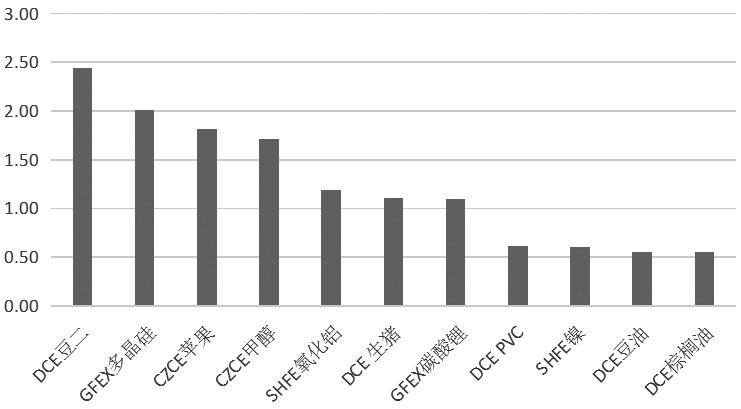
Core Insights - The article highlights significant capital inflows and outflows in various commodity futures, indicating a mixed market sentiment across different sectors [1]. Capital Inflows - The top five commodities with capital inflows include: - Soybean No. 2: 244 million yuan - Polysilicon: 201 million yuan - Apples: 182 million yuan - Methanol: 171 million yuan - Aluminum Oxide: 119 million yuan [1]. - The agricultural sector is experiencing a net inflow, particularly in soybean No. 2, apples, and live pigs, while soybean meal and vegetable oil are seeing outflows [1]. Capital Outflows - The top five commodities with capital outflows include: - Gold: 1.441 billion yuan - Silver: 778 million yuan - Copper: 510 million yuan - Aluminum: 249 million yuan - Glass: 189 million yuan [1]. - The chemical, black, and non-ferrous metal sectors are showing significant outflows, with a focus on gold, silver, copper, crude oil, and coking coal [1]. Overall Market Sentiment - Overall, the commodity futures market is experiencing a substantial outflow of funds, particularly in the chemical, black, and non-ferrous metal sectors, while the agricultural sector shows resilience with inflows [1]. - Financial futures to watch include the CSI 500 index futures and 30-year treasury futures [1].

逐日对冲锁亏损 “敲出退还”稳收益
Qi Huo Ri Bao Wang· 2025-10-29 00:55
Project Background - In the second half of 2024, the rebar steel prices are continuously declining due to the slowdown in domestic infrastructure demand and the downturn in the overseas economy [2] - Company A faces two main challenges: difficulty in stopping losses from cumulative purchase options and risks associated with post-settlement procurement and sales [2][5] - The operational model of Company A involves locking in procurement costs on a bi-weekly basis while dynamically pricing sales based on real-time market conditions, which exposes the company to inventory accumulation risks during price downturns [2] Solution Design - Huatai Great Wall Capital has customized a combination solution for Company A, including "Vanilla Buy Option Daily Settlement Cumulative Structure (Hui Xin Bao 1.0)" to hedge cumulative purchase exposure and "Shark Fin Knockout Barrier Daily Settlement Cumulative Structure (Hui Xin Bao 2.0)" to subsidize spot sales [3] - Hui Xin Bao 1.0 is designed to hedge cumulative purchase exposure, alleviating margin call pressures by compensating for daily losses when the closing price falls below the execution price [4][9] - Hui Xin Bao 2.0 aims to optimize monthly average settlement and capture volatility profits, allowing the company to manage procurement costs effectively while maintaining flexibility in sales pricing [13][19] Implementation Effects - During the observation period from July 3 to September 11, 2024, the RB24×× contract price dropped by 551 yuan/ton to 3068 yuan/ton, with Hui Xin Bao 1.0 compensating an average of 189 yuan/ton, effectively mitigating cumulative losses [12][22] - Hui Xin Bao 2.0 provided a net gain of 16 yuan/ton during its observation period, outperforming traditional hedging methods by capturing daily price fluctuations and reducing the cost of options [21][23] Project Summary - Hui Xin Bao 1.0 effectively decomposes cumulative exposure into daily risk points, dynamically hedging against floating losses and alleviating margin call pressures [22] - Hui Xin Bao 2.0 enhances profit capture through daily settlement and knockout refund mechanisms, significantly improving returns compared to traditional Asian options [23][24] - The flexible structure of the Hui Xin Bao series allows companies to adapt strategies based on market conditions, optimizing capital efficiency and reducing costs [24]

金融法治论坛与会专家:在法治轨道上推进金融发展的创新、变革和重塑
Qi Huo Ri Bao Wang· 2025-10-28 14:20
Core Insights - The forum emphasized the importance of strengthening financial legal systems to support stable and prosperous financial development in China [1][2][3] - Discussions included the need for a modernized financial adjudication system to provide stable, fair, and transparent judicial guarantees for market participants [2][3] - The integration of digital economy and legal protection of data rights was highlighted as a key issue, with suggestions for improving data ownership and classification systems [4][6] Group 1: Financial Legal System Development - The forum discussed the rapid development of China's financial sector over the past 40 years, particularly since the 18th National Congress, and the establishment of a comprehensive financial legal system [1] - Huang Wei, Deputy Director of the Legislative Affairs Commission, emphasized the need for further legislative efforts to prevent systemic financial risks and adapt to industry practices [1][2] - The importance of collaboration between legislative, enforcement, and judicial bodies to enhance the financial legal environment was stressed [2][3] Group 2: Financial Adjudication and Risk Management - Liu Guixiang from the Supreme People's Court highlighted the role of financial adjudication in guiding market behavior and preventing systemic risks [2] - The Beijing Financial Court is focusing on enhancing its financial adjudication functions and innovating its financial trial mechanisms [3][5] - The need for a stable legal framework to support cross-border financial activities and ensure compliance with laws was discussed [6] Group 3: Cross-Border Financial Challenges - The forum addressed the legal challenges of cross-border finance, with a focus on optimizing the legal environment for cross-border investments and trade [4][6] - Huang Hui from the State Administration of Foreign Exchange outlined efforts to balance development and security in foreign exchange management [4] - The importance of a robust legal framework to facilitate capital market openness and enhance the foreign legal environment was emphasized [6]
北京市政法委书记谈绪祥:北京市将进一步优化法治化营商环境 助力拓展金融发展空间
Qi Huo Ri Bao Wang· 2025-10-28 14:14
Group 1 - The core viewpoint highlights the significant growth of Beijing's financial sector, achieving a value-added of 8,154 billion yuan in 2024, a year-on-year increase of 7.6%, surpassing the national average by 2 percentage points, marking the highest growth in five years [1] - In the first half of this year, the financial sector's value-added reached 4,362 billion yuan, with a year-on-year growth of 8.1%, accounting for 17.4% of the GDP [1] - Beijing's financial industry leads the nation in various metrics, including the number of financial institutions, personnel, total assets, insurance density, and insurance depth [1] Group 2 - The city plans to enhance financial legal construction, implementing Xi Jinping's legal thought, and optimizing the legal business environment to support financial management innovation in new scenarios and models [2] - There is a focus on improving the governance level of financial law, protecting enterprises' legal rights while enhancing risk management and market expansion capabilities [2] - The strategy includes strengthening coordination among legislative, enforcement, and judicial forces to collaboratively address policy formulation, risk management, and information sharing [2]
国家外汇管理局管理检查司副司长黄卉:强化执法协同 严厉打击外汇领域违法犯罪活动
Qi Huo Ri Bao Wang· 2025-10-28 14:14
Core Viewpoint - The National Foreign Exchange Administration is committed to enhancing foreign exchange regulation and risk prevention capabilities under open conditions, while strictly enforcing laws and combating illegal activities in the foreign exchange sector to maintain national financial security [1] Group 1: Regulatory Actions - The National Foreign Exchange Administration is intensifying law enforcement collaboration to combat illegal activities in the foreign exchange sector, focusing on areas such as illegal currency exchange underground banks, export tax fraud, and cross-border gambling funding chains [1] - The administration is enhancing its technological capabilities to improve risk monitoring and clue discovery in illegal cross-border financial activities [1] - Since the beginning of the 14th Five-Year Plan, the foreign exchange management department has administratively investigated 6,100 cases of foreign exchange violations, effectively maintaining a healthy order in the foreign exchange market [1] Group 2: Collaborative Efforts - The National Foreign Exchange Administration is strengthening collaboration with multiple regulatory bodies, including the Ministry of Public Security and the People's Bank of China, to promote information sharing, joint assessments, and coordinated actions against professional underground banks and new types of foreign exchange crimes [1] - In May of this year, the National Foreign Exchange Administration and the Supreme People's Procuratorate released six typical cases of reverse connection between administrative and criminal penalties in the foreign exchange sector, promoting a closed-loop approach to combating and punishing illegal activities [1]
香港特别行政区政府律政司司长林定国:在香港发行法币稳定币必须向金融管理专员申领牌照
Qi Huo Ri Bao Wang· 2025-10-28 14:14
Group 1 - The 2025 Financial Street Forum Annual Conference focused on advancing financial development through legal frameworks, emphasizing the need for a multi-faceted enforcement mechanism in Hong Kong to address various risks and violations [1] - The Hong Kong government has implemented a licensing system for virtual asset trading platforms (VATP) to protect investors and mitigate risks to the traditional financial system, effective from June 2023 [1] Group 2 - The rise of stablecoins has prompted the introduction of the "Stablecoin Ordinance" in August 2023, requiring anyone issuing fiat-backed stablecoins in Hong Kong to obtain a license from the Financial Management Commissioner [2] - The Stablecoin Ordinance aims to enhance the regulatory framework for digital asset activities in Hong Kong, ensuring monetary and financial stability while reinforcing Hong Kong's status as an international financial center [2] - A joint consultation by the Financial Services and the Treasury Bureau and the Securities and Futures Commission was initiated to empower the SFC to regulate virtual asset service providers and custodians, with plans to revise laws to prevent misleading titles that may confuse investors [2]
北京金融法院与中国证券业协会联合发布两份重磅成果报告 资本市场“监管+司法+行业自律”协同治理格局进一步成熟
Qi Huo Ri Bao Wang· 2025-10-28 09:28
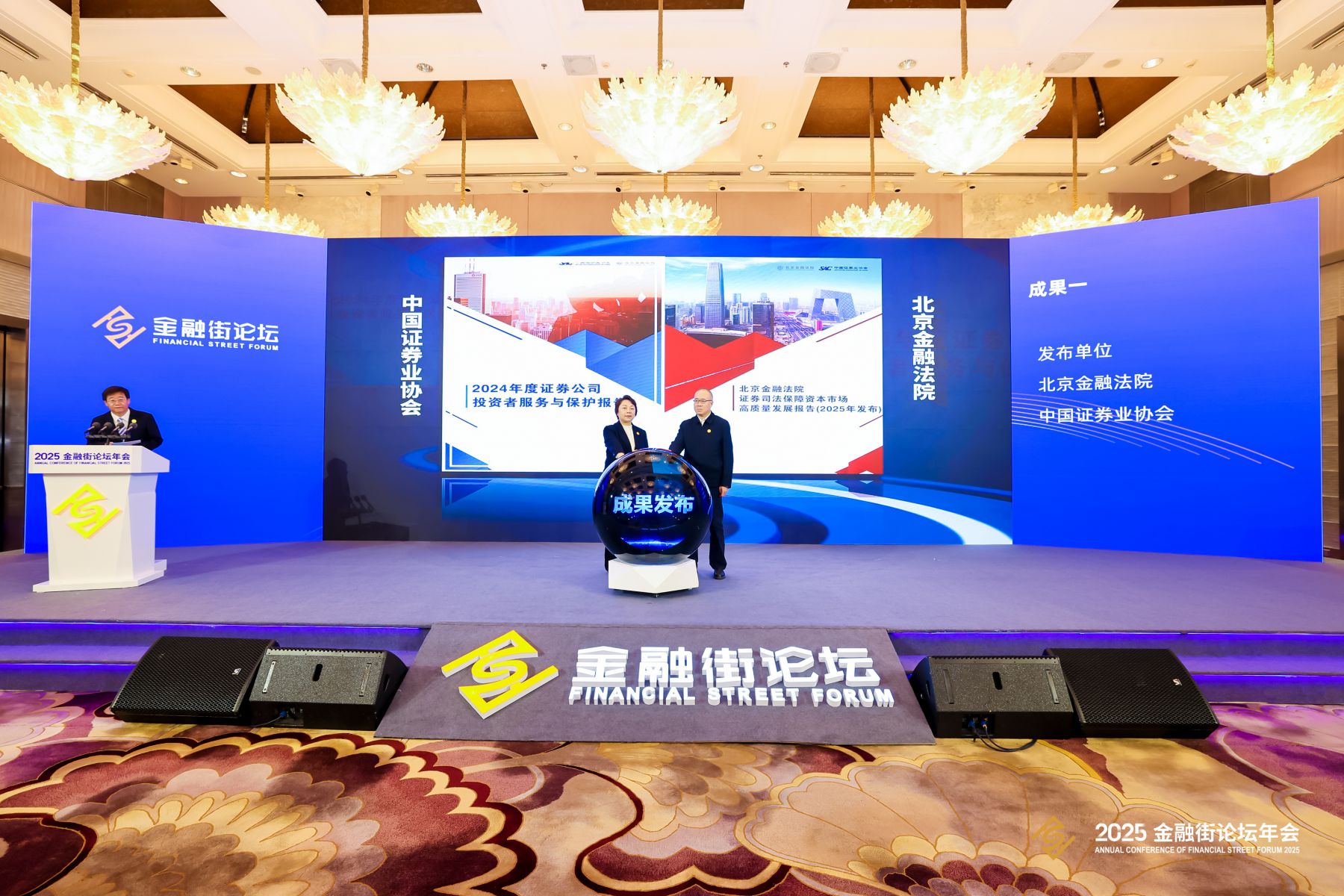
Group 1 - The core viewpoint of the news is the release of two important reports by the Beijing Financial Court and the China Securities Association, focusing on investor protection and judicial support for the high-quality development of the capital market [1][3][4] Group 2 - The "Securities Judicial Guarantee for High-Quality Development of Capital Markets Report" emphasizes the role of judicial systems in supporting capital market development, introducing various mechanisms such as a "dual-track dual-platform" dispute resolution mechanism and a "court trial Q&A" model [3] - The report outlines seven regulatory and behavioral guidelines for securities judicial actions, including the crackdown on securities violations and the establishment of accountability standards [3] - It includes ten typical cases across commercial, administrative, and execution fields to clarify responsibilities and standardize securities trading behavior [3] Group 3 - The "2024 Annual Securities Company Investor Service and Protection Report" focuses on protecting the legitimate rights and interests of investors, especially small and medium-sized investors, and introduces standards for customer follow-up and complaint handling [4] - The report showcases 100 cases of investor service and protection within the securities industry, providing a comprehensive guide from institutional design to practical implementation [4] - Overall, the joint release of these reports reflects the maturity of a multi-dimensional accountability system in China's capital market, enhancing the synergy between regulation, judiciary, and industry self-discipline [4]
生态共建:深化金融与科创产业全球协调发展——2025金融街论坛年会企业家圆桌会议举行
Qi Huo Ri Bao Wang· 2025-10-28 08:38
Core Insights - The 2025 Financial Street Forum emphasized the importance of deepening the integration of finance and technology innovation to support the development of a modern industrial system [1][2] - A series of policies have been introduced to enhance technology finance, promoting a virtuous cycle among technology, industry, and finance [1][2] - The forum highlighted the need for financial institutions to innovate products and services to support technology enterprises throughout their lifecycle [1][2] Group 1: Financial and Technological Integration - Financial and technological sectors are described as a "dual helix" relationship, where advancements in technology drive the evolution of financial services [2] - The application of new technologies like big data and artificial intelligence is accelerating the personalization and intelligence of financial services [2] - The integration of finance and technology is crucial for the high-quality international expansion of enterprises, requiring comprehensive services in cross-border financing and risk management [3] Group 2: Policy and Market Development - The National Development and Reform Commission emphasized the need to improve multi-level capital markets and enhance financing channels for technology enterprises [1] - The forum included the launch of the "Joint Initiative for Promoting High-Quality Development of the Real Economy through Finance and Technology," which outlines 12 measures to foster collaboration [4] - The event was co-hosted by various governmental and financial regulatory bodies, indicating strong institutional support for the initiatives discussed [5][6]

供应持续宽松 乙二醇反弹空间受限
Qi Huo Ri Bao Wang· 2025-10-28 08:12
Group 1 - Ethylene glycol prices have been under pressure due to multiple negative factors including a slowdown in coal price increases, a significant drop in crude oil prices, and insufficient downstream demand, leading to a decline in prices approaching the low points of the first half of the year [1] - Since late October, there has been a marginal improvement in terminal orders, which has driven polyester destocking, alongside a rebound in crude oil and coal prices, indicating a potential bottoming out of ethylene glycol prices [1][4] - The new expansion cycle for ethylene glycol is beginning, which is expected to increase supply pressure and may limit the rebound potential of prices [5] Group 2 - The production processes for ethylene glycol are primarily based on petroleum and coal, which together account for over 80% of domestic production capacity, making the price trends of crude oil and coal significantly impactful on ethylene glycol prices [2] - The escalation of the Russia-Ukraine conflict and increased sanctions against Russia have led to a strong rebound in international oil prices, with significant implications for the global oil supply [2] - Coal prices have also strengthened due to production limitations in major coal-producing regions and increased demand from non-electric sectors, particularly the chemical industry, which has supported coal price increases [3] Group 3 - Since mid-October, the rebound in energy prices has boosted market confidence, leading to an increase in weaving enterprises' new order indices and overall operating rates in Jiangsu and Zhejiang provinces [4] - The average operating rate for polyester is expected to remain at 91.5% in October and increase to 90.5% in November, which is significantly better than previous market expectations [4] - The ethylene glycol market is facing long-term supply pressure due to new production capacities coming online, with an estimated 1 million tons of new capacity expected to be added in the next three years [5][6] Group 4 - Ethylene glycol production profits are currently at a relatively high level due to lower raw material costs and improvements in production efficiency, which have led to increased production rates [6] - Domestic coal-based ethylene glycol operating rates have risen significantly, indicating a recovery in production activity [6] - The import supply of ethylene glycol remains ample, with expectations of high import volumes in the fourth quarter, contributing to a continued loose supply environment [7]