
Qi Huo Ri Bao Wang

Search documents
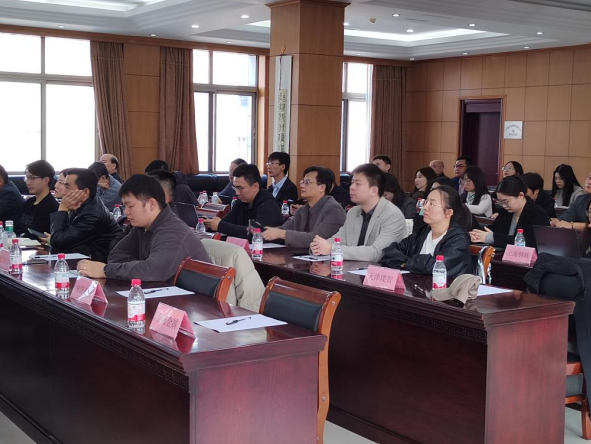
金瑞期货联合上期“强源助企”产融服务基地盛达金属成功举办2025年四季度有色行业培训会
Qi Huo Ri Bao Wang· 2025-10-28 01:20
Core Insights - The training conference organized by Shengda Metal Resources Co., Ltd. and Jinrui Futures Co., Ltd. focused on exploring new directions in the non-ferrous metal industry and the role of futures in supporting the real economy [1][3] Group 1: Market Analysis - Copper prices have broken out of a three-month range since September, marking a significant upward movement after a historical high in May 2024, with supply disruptions providing a bullish outlook [6] - The aluminum industry is experiencing explosive growth driven by China's dual carbon goals, with a cap on electrolytic aluminum production at 45 million tons, emphasizing the importance of recycled aluminum in achieving green and low-carbon objectives [7][9] - Silver prices have recently surpassed levels not seen since the 1980s, driven by macroeconomic factors and a persistent supply-demand gap, with a projected annual balance gap of 4,000 tons [10] Group 2: Expert Insights - Experts shared insights on various metals, including copper, aluminum, silver, and nickel, discussing market trends, supply-demand dynamics, and potential future developments [3][12] - The nickel market is influenced by supply disruptions in Indonesia and cost support, with expectations of a prolonged accumulation cycle and limited price movement [13] Group 3: Industry Collaboration - Jinrui Futures has been committed to integrating finance and industry, providing high-quality platforms for communication and cooperation, and enhancing risk management strategies for enterprises [13][14] - The collaboration between Jinrui Futures and Shengda Metal aims to clarify market trends and optimize risk management strategies for participating companies, thereby supporting cost reduction and risk prevention in the industry [14]


全球四大重点区域生物柴油政策的实施情况介绍
Qi Huo Ri Bao Wang· 2025-10-28 00:58
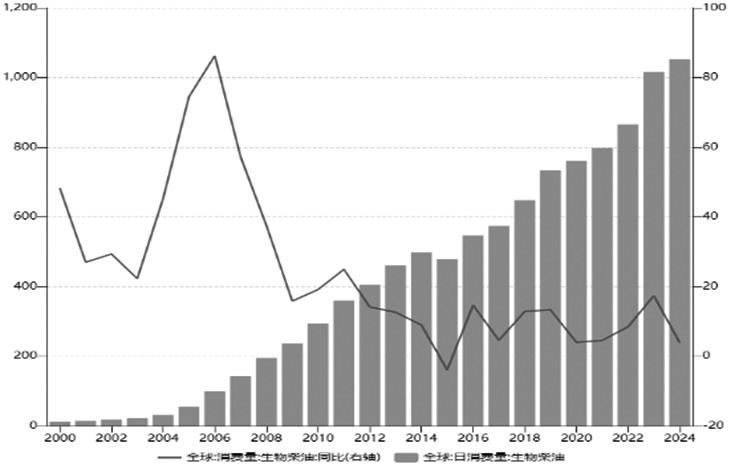
Core Insights - The global biodiesel market is experiencing significant growth driven by renewable energy policies across various countries, with the largest consumption concentrated in the EU, the US, Indonesia, and Brazil [2][25]. Group A: Biodiesel Characteristics and Production - Biodiesel is a renewable and biodegradable fuel primarily derived from vegetable oils, accounting for 80% of global production [1]. - The production cost of biodiesel is typically 1.5 times that of conventional diesel, making market-driven expansion challenging without policy support [1]. - Key measures to promote biodiesel include mandating minimum usage levels and providing subsidies to lower production costs [1]. Group B: Regional Policies and Consumption - In 2024, the EU is projected to account for 28.3% of global biodiesel consumption, followed by the US at 26.7%, Indonesia at 20.3%, and Brazil at 11.4% [2]. - The EU has established a robust framework for renewable energy, with the Renewable Energy Directive (RED) setting binding targets for renewable energy consumption [6][7]. - The US has implemented the Renewable Fuel Standard (RFS), which mandates minimum blending ratios and provides tax incentives for biodiesel producers [13]. Group C: EU Biodiesel Market - The EU's biodiesel market is characterized by a combination of mandatory and sustainable policies, with a target of 42.5% renewable energy by 2030 [7]. - The use of used cooking oil (UCO) has increased significantly, making up about 25% of biodiesel feedstock in Europe, driven by sustainability policies [10][11]. - The EU's biodiesel consumption is projected to decrease by 12.27% in 2024, indicating potential market challenges [9]. Group D: US Biodiesel Market - The US is the second-largest biodiesel consumer, with a strong agricultural base supporting biodiesel production from soy and corn [12]. - The EPA's aggressive biodiesel blending targets for 2026 and 2027 indicate a commitment to expanding the biodiesel market [13]. - The industrial use of soybean oil in the US is expected to reach 7.03 million tons in 2025, marking a 26.5% increase [15]. Group E: Indonesia's Biodiesel Strategy - Indonesia, as the largest palm oil producer, has shifted its biodiesel strategy from export-oriented to domestic consumption, implementing the B30 and B40 blending standards [16][17]. - The Indonesian government plans to increase the palm oil export tax to support biodiesel production, ensuring market competitiveness [20][21]. - The B40 policy is expected to significantly impact global palm oil supply and demand dynamics [16]. Group F: Brazil's Biodiesel Development - Brazil, the largest soybean producer, has a slower biodiesel market development despite favorable conditions [22][24]. - The Brazilian government has set a gradual increase in biodiesel blending ratios, aiming for 20% by 2030, which supports soybean demand [24][25]. - Brazil's biodiesel production is projected to reach 8.019 million tons in 2025, reflecting a 2.39% increase from the previous year [25].
河北正大玻璃巧用金融衍生品降本增效
Qi Huo Ri Bao Wang· 2025-10-28 00:56
A 产业链介绍 2024年,地产市场整体处于弱势,这也造成玻璃需求不畅,整个玻璃行业的发展难言乐观。 截至2024年10月,全国浮法玻璃日熔量先增后减,最大日熔量为17.65万吨,而彼时降至16.28万吨。考虑到产业现状,预计后期 仍有下降空间。全国浮法玻璃企业厂区库存虽然阶段性去化,但整体处于上涨阶段,彼时库存约为5884.4万重量箱,其中华北地 区的库存处于近几年中等水平,而华中、华东和华南地区的库存处于近几年较高水平。浮法玻璃日度均价自2024年3月开始持续 下跌,彼时均价约为1190元/吨。从常规行情来看,各地玻璃价格应该存在正常价差,但彼时各地玻璃价格基本接近,从侧面反 映了玻璃现货市场的弱势。 随着现货价格的下行,浮法玻璃企业利润缩水,以天然气为燃料的生产线在2024年5月陷入亏损窘境,燃煤生产线和燃石油焦生 产线则分别在9月和10月开始亏损。下游深加工行业普遍反映工程订单较少,家装订单相对较好,但综合而言,订单小、回款 差、利润低是深加工行业的常态。 河北正大玻璃位于有"中国玻璃城"之称的河北省沙河市。沙河地区的玻璃产能占全国总产能的比重较大,在产产能约占全国总 产能的10%,且产能较为集中。沙 ...
国内成品油价迎“二连跌”
Qi Huo Ri Bao Wang· 2025-10-28 00:54
Core Viewpoint - Domestic refined oil prices have been reduced for the ninth time this year, with gasoline and diesel prices decreasing by 265 yuan and 255 yuan per ton respectively, effective from October 27 [1] Group 1: Price Adjustments - The recent price adjustment will lower commuting and travel costs for the public, with a full tank of 92-octane gasoline costing 10.5 yuan less [1] - The overall trend for refined oil price adjustments this year has been characterized by "six increases, nine decreases, and six stabilities" [1] Group 2: Market Analysis - The international oil price experienced fluctuations during the pricing cycle, initially declining due to a deteriorating trade environment and geopolitical tensions, followed by a rebound as positive signals emerged from China-U.S. trade talks [1] - As of October 24, the reference crude oil price change rate was recorded at -6.09%, indicating that despite a rebound, international oil prices remain low [1] Group 3: Future Outlook - The next price adjustment window for domestic refined oil is set for November 10, 2025 [2] - The oil market is currently balancing short-term geopolitical benefits against long-term supply surplus pressures, with ongoing sanctions against Russia and tensions in U.S.-Venezuela relations contributing to market volatility [2] - Despite some support for international oil prices from recent trade negotiations, the market still faces long-term downward pressure due to OPEC+ production increases and insufficient oil consumption growth [2]
推动实施合格境外投资者资格审批与开户“高效办成一件事”
Qi Huo Ri Bao Wang· 2025-10-28 00:54
Core Points - The article discusses the implementation of reforms to optimize the Qualified Foreign Institutional Investor (QFII) system in China, as part of the directives from the 20th National Congress of the Communist Party of China [1] - The China Securities Regulatory Commission (CSRC), the People's Bank of China (PBOC), and the State Administration of Foreign Exchange (SAFE) are collaborating to streamline the approval and account opening process for QFIIs [1] Group 1 - The "Service Guide" released by the CSRC aims to achieve efficiency by reducing steps, materials, time limits, and the need for physical presence in the approval process for QFIIs [1] - The new measures are expected to shorten the process and time for foreign capital to enter the market, lower operational costs for foreign investors, and enhance the convenience of the QFII system [1] - The CSRC has also revised the approval guidelines, committing to a processing time of 5 working days for QFII applications, and has introduced a "green channel" for sovereign funds and other qualified foreign investors [1] Group 2 - The CSRC will continue to implement the central government's decisions to promote standardized, regulated, and convenient government services while ensuring proper entry standards for foreign investors [2] - The focus will be on optimizing the entry procedures for QFIIs and improving service quality to facilitate a higher level of openness in onshore channels [2]
中国证监会出台保护中小投资者政策措施
Qi Huo Ri Bao Wang· 2025-10-28 00:47
Core Viewpoint - The China Securities Regulatory Commission (CSRC) has officially released the "Several Opinions on Strengthening the Protection of Small and Medium Investors in the Capital Market," aimed at enhancing the protection of small and medium investors in response to the Central Political Bureau's meeting on September 26, 2024 [1] Group 1: Key Measures - The "Several Opinions" focus on eight key areas, including strengthening the protection of small and medium investors during the issuance and listing process, creating a fair trading environment, and holding operating institutions accountable for investor protection [1] - A total of 23 specific measures have been proposed to improve the investor protection mechanism, enhance the stability of the capital market, and effectively safeguard the legitimate rights and interests of small and medium investors [1] Group 2: Implementation and Future Steps - The CSRC will collaborate with relevant parties to ensure the implementation of the measures outlined in the "Several Opinions," with a focus on protecting the legitimate rights and interests of investors, particularly small and medium investors [2]
资金动态20251028
Qi Huo Ri Bao Wang· 2025-10-28 00:45
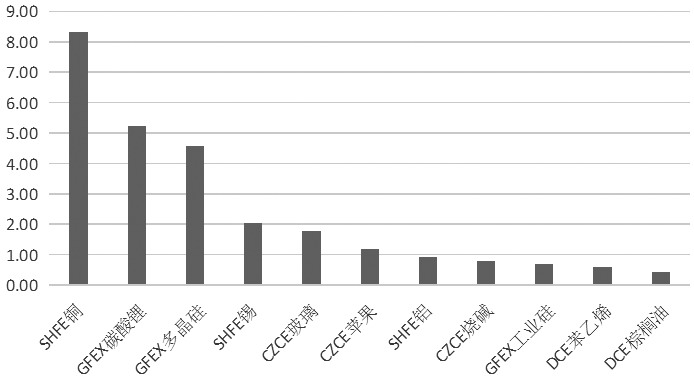
Core Insights - The main focus of the article is on the recent capital flow trends in commodity futures, highlighting significant inflows and outflows across various sectors and specific commodities [1]. Group 1: Capital Inflows - The commodities with the highest capital inflows include copper (834 million), lithium carbonate (523 million), polysilicon (457 million), tin (205 million), and glass (177 million) [1]. - The non-ferrous metals and financial sectors are experiencing a state of inflow, indicating positive investor sentiment in these areas [1]. Group 2: Capital Outflows - The commodities with the largest capital outflows are gold (900 million), silver (683 million), rebar (177 million), nickel (148 million), and stainless steel (130 million) [1]. - The chemical, agricultural, and black metal sectors are showing a trend of capital outflow, with particular attention to rebar, stainless steel, soybean oil, and No. 20 rubber [1]. Group 3: Overall Market Trends - Overall, the commodity futures market is experiencing a slight outflow of funds, with specific sectors like chemicals and agriculture facing more significant withdrawals [1]. - Attention is drawn to the contrasting trends, where glass, apples, and caustic soda are seeing inflows despite the overall outflow in other sectors [1].
9月全国期货公司营收超40亿元
Qi Huo Ri Bao Wang· 2025-10-28 00:42
本报讯 10月27日,中国期货业协会发布的公示显示,截至2025年9月末,全国共有150家期货公司,分 布在29个辖区。2025年9月代理交易额71.61万亿元,代理交易量8.35亿手,营业收入40.54亿元,净利润 11.98亿元。(齐宣) ...
吴清:推动“十五五”资本市场高质量发展
Qi Huo Ri Bao Wang· 2025-10-28 00:42
Group 1 - The core message emphasizes the need for comprehensive reform in the capital market to enhance its inclusiveness, adaptability, and competitiveness in response to global changes and technological innovations [1] - The China Securities Regulatory Commission (CSRC) aims to deepen investment and financing reforms, focusing on risk prevention, strong regulation, and promoting high-quality development [1][3] - The CSRC will implement the "1+6" policy for the Sci-Tech Innovation Board, with the first batch of new registered companies set to list, indicating a shift towards more inclusive financial services for emerging industries [2] Group 2 - The CSRC plans to introduce a refinancing framework to support mergers and acquisitions, thereby strengthening the internal stability of the capital market [3] - A new scheme to optimize the Qualified Foreign Institutional Investor (QFII) system has been launched, aimed at improving transparency and efficiency for foreign investors [3] - The CSRC is committed to enhancing investor protection through a series of practical measures, including improving the fairness of trading environments and strengthening the monitoring of market risks [4]
超越短期局限 凝聚期货行业内生动力
Qi Huo Ri Bao Wang· 2025-10-28 00:40
Core Insights - The 2025 Financial Street Forum Annual Conference and the 17th Futures Executive Conference will focus on the theme of "New Changes, New Thinking, and Jointly Advancing High-Quality Development" [1] - The conference will address the transformation and innovation within the futures industry, particularly in the context of traditional brokerage business challenges and the growth of over-the-counter derivatives [1] Group 1: Brokerage Business Transformation - Traditional brokerage business is experiencing sluggish growth and diminishing dividends, making transformation a necessity [1] - The brokerage business needs to shift from "license dividends" to "capability dividends" [1] - Three transformation directions proposed: 1. Upgrade value positioning to "wealth manager" by converting professional capabilities into standardized products or customized solutions [1] 2. Enhance service through in-depth industry research, providing comprehensive solutions for hedging and inventory management [1] 3. Reconstruct operational models using digital intelligence, increasing technology investment and optimizing processes [1] Group 2: Growth of OTC Derivatives - The over-the-counter derivatives business has seen significant growth this year, driven by regulatory guidance, demand, and industry transformation [1] - Three predicted trends for the future of OTC derivatives: 1. Competition will shift from scale expansion to quality enhancement [1] 2. Technology will evolve from being an "auxiliary tool" to a "core driver" [1] 3. Internationalization and comprehensive services will become new growth points [1] Group 3: Strategic Collaboration and Talent Ecosystem - The conference aims to explore how to transition from being a "passive service provider" to an "industry co-builder" [2] - Discussions will focus on upgrading from "single-point services" to "integrated solutions" to create a new ecosystem of efficient collaboration among institutions [2] - The need to build a resilient industry talent ecosystem to address talent competition and continuously optimize the talent framework [2]